Love and Friendship – Hardened to the justice of general reproach

This is my review of Love & Friendship [DVD] [2016].

This film is based closely on “Lady Susan” the lesser known short, unfinished novel written by Jane Austen when she was only nineteen, and never published in her lifetime. Judging by the film, this differed from her more famous works in its focus on a blatantly outrageous and manipulative anti-heroine who uses her sex appeal and wit to bamboozle men, and to a large extent gets away with it. In today’s world, she could have employed her intelligence, charm and grasp of psychology as an independent, successful career woman, but in Jane Austen’s day an impoverished (it is never explained quite why although it may have been because Lady Susan is clearly a spendthrift) widow with a teenage daughter had little option but to sponge off relatives and seek husbands for them both. Too poor to pay a servant or her daughter Frederica’s school bills, forced to hand over her jewels when unpaid tradesmen shrewdly gang up on her, Lady Susan is obliged to use her wits to find a practical solution, hopefully having her cake and eating it by hanging on to her married lover in the process.

This production reminded me of “Dangerous Liaisons”, with the same kind of cynical amorality. Towards the end, Lady Susan pays the sweet and long-suffering Frederica a rare , inevitably backhanded compliment: “My daughter has shown herself to be cunning and manipulative – I couldn’t be more pleased.” In fact, this self-absorbed woman, unable to admit to any personal faults except as some kind of virtue or wholly reasonable behaviour, is trying to make the best of a situation she has for once failed to submit to her total control.

The dialogue is wordy, but quick-fire and funny, often more explicitly acid and less subtle than I recall Austen as being, perhaps because she did not write much actual speech in what was in fact an “episotolary” novel, consisting of an exchange of letters. Yet some of the best barbed comments have been culled word-for-word from the original: “My dear Alicia, of what a mistake were you guilty in marrying a man of his age! Just old enough to be formal, ungovernable, and to have the gout; too old to be agreeable, too young to die.” Or, “where there is a disposition to dislike, a motive will never be wanting.”

Leaping from one scene to the next, and leaving a certain amount implied and left to the viewer’s imagination, the production often feels disjointed, but at least this gives it some pace. Skilfully acted and visually beautiful, the film is highly entertaining, but did not impel me to do more than download free the original novel which I suspect will remain unread while the well-dramatised plot is still fresh in my mind.

⭐⭐⭐⭐ 4 Stars

Honour among thieves

This is my review of Our Kind Of Traitor [DVD] [2016].

Bored with his job as a lecturer in poetry and perhaps too easily led in his desire for a fresh challenge, Perry holidays in Marrakesh with his high-flying barrister wife Gail, in an attempt to repair their relationship which has been damaged for reasons revealed in due course.

Perry allows himself to fall for the persuasive charms of Dima, a larger-than-life Russian who proves, somewhat improbably, to be a financial wizard who has made himself wealthy yet vulnerable money-laundering for the Moscow mafia. Beneath his hearty exterior, Dima is running scared, aware that he is about to be liquidated, regarded as no longer required but knowing too much by his ruthless Russian boss. In desperation, Dima tries to use Perry to pass to M16 information which will gain him asylum in the UK along with his family. The drama becomes tense as it becomes clear that the only member of British intelligence seriously interested in working with Dima is the maverick Hector, obsessed with the desire to expose high-ranking UK politicians who are colluding with Russian criminals.

The John Le Carré novel from 2010 on which all this is based has proved quite prescient as regards the course events have taken in the post Cold War world. Hence the shots of a London skyline disfigured by excrescences of high-rise property development financed with ill-gotten Russian investment.

The film contains striking photography, excellent acting and some tense scenes with sharp dialogue. It combines nerve-racking drama with the raising of serious issues. Yet it ultimately falls short because in an attempt to spice up what sounds like a plausible book plot, the film script introduces too many unbelievable situations. I was left feeling somewhat irritated: if this film is meant to be taken seriously, it stretches credulity too far.

⭐⭐⭐ 3 Stars

Dystopian home from home

This is my review of Dheepan [Blu-ray] [2016].

Three Sri Lankans anxious to escape the horror of the failed Tamil Tiger movement for the safety of Europe masquerade as a family unit to gain asylum in France. In what appears to be a shady arrangement, the ex-fighter who has assumed the identity of the deceased Dheepan takes the job of caretaker on an estate of the giant, grim blocks of flats which blight the suburbs of too many French cities, in this case Paris. “Daughter” Illayaal is young enough to grasp French quickly and integrate into school after some initial problems. It is harder for wife “Yalini” who has no idea how to act the part of a mother, and is clearly more drawn to the young gang leader whose disabled relative she cares for, rather than the often moody and humourless Dheepan. A hard worker, he suffers in silence over the murder of his real family, and memories of his lost homeland, symbolised by blurred images of an elephant emerging from a dense mass of quivering leaves.

Apart from showing how the threesome relate to each other and the alien culture into which they are thrown, the film draws a parallel between the unexpected violence and gang warfare of the estate, and the fighting and insecurity from which they have tried to escape.

The acting by genuine Sri Lankans is good, even remarkable in view of the main players’ lack of experience. This, together with the tackling of the fraught topic of immigration may account for the winning of the 2015 Palme d’Or prize. The plot is thought-provoking, there are some moments of subtle direction and I was prepared to tolerate a slow pace and perhaps deliberately unclear “fly-on-the-wall” delivery style provided it built up to some climax. However, this proved to be quite implausible and confusing. It may seem trivial, but I was also distracted by such practical questions as how the “mother” and “daughter” so quickly obtained a variety of good quality western and traditional clothes. How did they get to know the Tamil (?) Sri Lankans with whom they celebrated in a Hindu (?) temple with a communal picnic afterwards, and why didn’t they leave the dangerous estate to live with them? The trite final scene also appears to be quite a grave artistic error, detracting from the work.

⭐⭐⭐ 3 Stars

Knowing the cost of war

This is my review of Eye In The Sky [DVD] [2016].

British and American forces combine in the use of cutting-edge technology to locate a band of fundamentalist terrorists, with the aim of capturing them alive to stand trial in their countries of origin, making an example of those with UK or US passports. When this proves impossible, single-minded British Colonel played by Helen Mirren is determined not to let them escape, but what are the moral issues stirred up if they are to be wiped out in a drone attack by a “pilot” activating Hellfire missiles from his base thousands of miles away in the States?

Relying on moments of black humour or poignancy rather than gratuitous violence and mindless action, this at times almost unbearably tense drama presents the arguments on both sides, continually dragging the rug of certainty from under our feet, causing us to vacillate as much as the politicians and lawyers one despises for trying to pass the buck. Although it may not be technically accurate, the film highlights a troubling new aspect of war, in which one side can wreak havoc from an office desk with no personal physical risk, as if playing a computer game set in an alien environment with which one feels no connection, yet may at the same time be confronted by the image of an innocent bystander which one might not encounter as a solder in the adrenalin rush of real action on the ground. My only reservation is whether soldiers trained to be tough killers would be quite as sensitive as some of the characters.

Scoring highly on acting, direction and sets, this film is not only gripping but also provides the basis for in-depth discussion on the most effective and “ethical” use of force against extreme terrorism.

⭐⭐⭐⭐ 4 Stars

Night Train to Lisbon – Seizing the day

This is my review of Night Train To Lisbon [DVD].

The dull routine of Raimund Gregorius, fifty-something Swiss teacher of classics, portrayed by a suitably disguised Jeremy Irons in baggy jumper and pebble glasses, is transformed by his spontaneous Good Samaritan act of saving a young woman from jumping off a bridge. When she runs away, leaving only her red raincoat, he finds that the pocket contains a train ticket to Lisbon and a book containing the forty-year old writings of a young doctor turned amateur philosopher, Amadeu de Prado.

Everything about this book captivates Gregorious, from the soulful expression in Amadeu’s photograph to his insights: “We leave something of ourselves behind when we leave a place, we stay there, even though we go away. And there are things in us that we can find again only by going back there.” “So, the fear of death might be described as the fear of not being able to become whom one had planned to be.” And so on.

On an impulse, Gregorious takes the train to Lisbon to find out more about Amadeu and his circle of acquaintances. In the process, he becomes ever more aware of the emptiness of his own life in comparison.

Some reviewers of the international bestseller on which this film is based have attacked the “cod philosophy” which clearly expresses the popularised views of the author, an academic philosopher. Apart from the fact that some of this may have suffered in translation from the original German, I agree with those who have argued that the philosophy need not be regarded as the main point. The film is very successful in providing it as a backdrop to a poignant story of how the lives of idealistic young people in 1970s Portugal were disrupted, even destroyed, by the violence and menace of the revolution in which an authoritarian government tried to suppress dissent, to the extent of using torture.

The scenes of Lisbon convey the crumbling appeal of the older parts of the city and the ferry crossing. Apart from a slightly implausible and corny love interest (without giving too much away, does the auburn-haired optician need to be quite so attractive and single to boot?) the film is well-acted with an intriguing and thought-provoking plot, and deserves to be better known.

⭐⭐⭐⭐ 4 Stars

Parts much more than the sum of the whole

This is my review of Hail, Caesar! [DVD].

The Coen brothers have applied their trademark quirkiness to a parody of Hollywood in the 1950s, a world of glamorous make-believe masking the cynical commercialism of the studio bosses who railroad stars into keeping the show on the road at all costs, with hints of the grim background of kneejerk anti-communist McCarthyism.

The Coens have chosen a lightweight approach so that, without giving much, even any, thought to the underlying tensions and moral dilemmas, one can enjoy the slapstick and nostalgia over corny sets – guitar-strumming cowbow singing a ditty to the moon and mermaid siren emerging from a Busby Berkeley circle of synchronised bathing belles. So, when drunken philanderer Baird Whitlock, super star played by George Clooney is kidnapped, one does not worry about his safety, just as there is no pathos in a single mother star being ordered to undertake a fake marriage to preserve her reputation.

The lugubrious “fixer”, studio manager Eddie Mannix, presides over it all, unable to accept a more tempting job offer in the oil business (likely to involve far less wheeler-dealing), since despite himself he is bound to the role which drives him to chain smoke, instantly converting him when required into an unscrupulous monster of control who will stop at nothing to carry out his boss’s orders. He somehow squares this with his Catholic conscience, only feeling the need to confess “too often” to having broken a promise to his wife to give up cigarettes.

In spite of some entertaining if disjointed scenes, such as a “Nothing like a dame” sailors’ routine to rival Gene Kelly, I felt mostly unengaged, perhaps because the storyline is so fragmented as to disappear at times, the ham acting “on set” seems to extend into “real life” and I did not care enough about the characters, never doubting that it would all end pretty much as it began. It probably helps to know more than I did about the various real characters being parodied, but I suspect that the most positive reviews will come from those who simply enjoyed the entertainment, which surely cannot have been the Coen brothers’ artistic intention.

⭐⭐⭐ 3 Stars

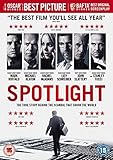
“Spotlight” [DVD] [2016] – Don’t rock the boat for a few bad apples

This is my review of Spotlight [DVD] [2016].

In 2002, the Boston Globe’s long-term investigative unit, a team of four journalists named “Spotlight”, uncovered a major scandal of child abuse by Catholic priests who were protected from public humiliation and criminal charges by the power and influence of the Catholic Church. This has been made into a gripping film, apart from the fact that some of the legal procedure and newspaper practice is a little hard to follow, which is frustrating, although I was able to “get the gist” of it.

It is interesting that even the Spotlight team were able to overlook the seriousness of the abuse, because respect for the Church had become so deeply ingrained. It takes the arrival of a “new broom” editor Marty Baron, Jewish and an outsider, to see the ethical imperative, not to mention simple newsworthiness of the allegations against John Geoghan, an unfrocked priest accused of molesting more than 80 boys.

The film’s focus is on the painstaking process of assembling evidence, spiced up with the questionable reliability of some witnesses, the predictable opposition from influential Catholics, the occasional impact of external events, notably the 9/11 destruction of the Twin Towers which delays progress for a few weeks, but most of all the succession of shocking realisations: according to an expert, 6 per cent of Boston’s priests were statistically likely to be paedophiles, giving a total or 90 to pursue; it had become standard practice for the Church to make settlements, not publicly recorded between the erring priests and the families of their victims, the lawyers taking a one third cut of the proceedings in what one “Spotlight” member calls “a cottage industry.”

Well-acted with the momentum of a strong plot to carry it a long way, some of the more “technical” scenes could have been made clearer, but overall this is highly recommended. I wonder what Catholics will make of this hard-hitting film.

⭐⭐⭐⭐ 4 Stars

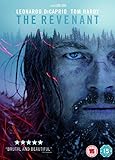
The Revenant – I ain’t afraid to die any more, I’d done it already

This is my review of The Revenant [DVD] [2016].

Based on a true story, this is an epic tale of survival in the bleakly beautiful lawless wilderness of 1820s America’s western frontier. When a hunting expedition is brutally torn apart by marauding Indians bent on stealing the valuable “pelts” to sell to the French settlers, the Americans rely on Glass to use his skills as a guide to get them back to the fort before the snows set in, but after he is horrifically wounded in what will no doubt become a famous “bear scene”, they have to decide whether to put him out of his misery, or leave him in the care of two group members.

The unrelenting pain and misfortune suffered by Glass, in an Oscar-deserving performance from Leonardo di Caprio, would be intolerable to watch but for the skill of the photography and direction – how on earth were some of the scenes produced? – and the stunning scenery, in particular the mountainous panoramas on a vast scale. Although, as is often the case, Glass is made both to suffer too much and yet to keep overcoming each setback against the most overwhelming odds, there is a fascination in seeing how he uses a mixture of ingenuity and what he has learned from the underestimated Indians in order to survive. Despite his toughness, he has a rapport with the Indians amongst whom he has lived, even fathering a half-Indian son by a woman he clearly loved. He seems genuinely to appreciate nature: at one point when he may be on the point of being murdered he appears to stop in his tracks to observe a dramatic avalanche in the distance. We gain an insight into the fragility of frontier life, where men are forced to compete for scarce resources and some like Fitzgerald are driven half-mad by past traumas.

The Director ends the drama in perhaps the only way possible to avoid corny sentimentality. My sole reservation is that it was not only the Indians and the French who needed subtitles. It was impossible at times to grasp what most of the Americans were drawling, in particular the villainous Fitzgerald. Although I could usually work out what had happened, it was frustrating to be unable to grasp it straight away.

⭐⭐⭐⭐ 4 Stars

Having the last laugh

This is my review of The Lady in the Van [DVD] [2015].

Already produced as a memoir and well-received play, the tale of the eccentric “Miss Shepherd” who squatted in a dilapidated van on the forecourt of Alan Bennett’s London home for fifteen years, has now become a film. It is marked out by Maggie Smith’s superb and flawless performance which captures a sense of the maddening, manipulative woman who is tolerated, and even helped in an ineffectual way, by a possibly somewhat caricatured group of comfortably off, self-styled liberal-minded middle class neighbours too polite to behave otherwise.

Commencing in the 1970s, the drama has the nostalgic air of past, somehow more innocent and less fraught times, predating the tight parking restrictions, health and safety concerns and care plans for the elderly (however inadequately implemented) of today. When the council comes round with a yellow-line painting machine, Alan Bennett caves in and allows the new van donated by a local titled Catholic do-gooder to be driven onto his driveway. It is not long before Miss Shepherd conducts her ritual of plastering the vehicle with yellow paint thickened with lumps of Madeira cake.

Alan Bennett uses the interesting device of cloning himself as the put upon resident and more cynical writer (given to talking to each other) who recognises Miss Shepherd’s potential to be milked for future publication. To some extent, the two main characters use each other, with the comic touch of Alan conducting a conversation with the old lady while his alter ego interjects “but this was never said – I made it up”. Such is the old lady's reticence that Bennett does not discover the full facts of her life until after her death, which lead him to reflect that, despite her years of confined existence, she has perhaps in some ways had more firsthand experience than he has, being forced to rely on observing others for his material.

The story is full of humour as when Alan’s assumption that Miss Shepherd’s claim to having been “followed home by a boa constrictor” is a sign of her madness is undermined by the discovery of a snake in a neighbour’s garden following a mass escape from a local pet shop. Yet beneath the laughter is the deep sadness of the wasted life of a talented pianist who was forced to give up playing following her insistence on becoming a nun, a calling to which she was clearly completed unsuited. There is also the tragedy of as society which cannot cope with an individual who is highly talented yet difficult to the point of being labelled mad – also the irony of the social services coming too little too late to the scene, and failing to understand Alan’s pragmatic, literally “hands off” support. Bennett pulls no punches over the squalor involved in van-life, and the acting captures all too accurately the indignities of old age, the incontinence, increasing unsteadiness, aggravated by poverty. So, one comes away laughing but also sad for a tale of lost promise and over intimations of one’s own fate in old age, and guilt over not helping elderly people more.

⭐⭐⭐⭐⭐ 5 Stars

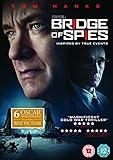
A spy going back to the cold

This is my review of Bridge of Spies [DVD] [2015].

“Bridge of Spies” is a reminder or insight, depending on your age, into the early 1960s when the Cold War was at its peak together with fear of nuclear war and the tensions in a divided Berlin which led to the construction of the infamous wall imprisoning the communist sector in a time warp free from western influence.

When successful American insurance lawyer James Donovan is virtually ordered to represent captured soviet spy Rudolf Abel, it soon becomes apparent that he is merely expected to co-operate in the rubber-stamping exercise of going through the motions of justice seen to be done. A stubborn man, as Abel shrewdly observes, Donovan tries to get Abel’s conviction overturned on appeal, then suggests that he should be spared the electric chair in order to provide a useful bargaining counter in a possible future exchange with a captured American spy. Donovan’s idea is put into practice sooner than he could have bargained when US pilot Francis Powers is shot down over Russian territory whilst photographing sensitive terrain from a height of 70,000 feet.

This is the kind of film we have come to expect from Spielberg: fleshing out in an entertaining if sometimes sentimental way an interesting real-life drama which perhaps went under-reported at the time. We see the ludicrous US government guidance to the public on how to behave in the event of a nuclear strike, the wave of uncomprehending public rage against Donovan’s attempts to apply the rule of law to a spy, the mistrust and jockeying for power between the Russian and East Germans, and the sense of culture shock when Donovan is transported into an East Berlin of bombed wastelands, poverty-stricken youths driven to crime and the gunning down of those seeking to scale the newly constructed wall to freedom.

Not a great film perhaps, but worth seeing for its period detail and intelligent, often wrily amusing, script worked up by the Coen brothers, and a compelling performance from Tom Hanks, with Mark Rylance playing the part of a chastened Thomas Cromwell caught spying. It is also an incentive to discover more about this recent history.

⭐⭐⭐⭐ 4 Stars