“A United Kingdom” [DVD] – A timely reminder that integrity can still win out

This is my review of A United Kingdom [DVD].

This heart-warming story of the power of love and clear-sighted integrity in the face of prejudice and ill-judged political expediency is worth reviving at a time when many people are too young to remember the true events on which it is based.

When London office worker Ruth Williams fell in love with a black African student who shared her love of dancing to jazz music, she did not realise what problems would be posed by his role as future King of Bechuanaland, a British Protectorate on the borders of South Africa, which was in the process of developing apartheid.

The film is effective in showing the flowering of a romance based on deep-rooted love and the couple’s shifting emotions of shock, despair, anger and defiance as the two find themselves caught between racism and hostility in both white and black communities resistant to change. It conveys a strong sense of place in foggy post-war London and the semi-arid African plains. We see how Ruth gradually begins to forge relationships with the local people, who are perhaps a little too good – gentle and law-abiding – to be true.

The drama is less successful in charting a coherent course through the political shenanigans, as entertaining but stereotyped British diplomats try to cajole, bully and trick the pair into giving up a marriage thought likely to stir up local unrest, or worse still threaten UK access to South Africa’s supplies of diamonds and uranium. Since in real life the couple were exiled from Bechuanaland for several years, perhaps the filmmakers feared the narrative would lose pace unless events were concertinaed somewhat. The weakest scenes are those involving poor look-alikes for British ministers gabbling lines at each other to explain complex geo-politics to the audience, on a set which looks nothing like the House of Commons, as intended.

Such a fascinating story does not need much tinkering to hold our interest. If anything, the film underplays Seretse Kharma’s achievement in developing an independent, much more prosperous and relatively free from corruption African country, renamed Botswana, one of the tragic continent’s few success stories.

The film inspired me to familiarise myself with the details of the original true story, is a salutary reminder of the extent to which attitudes have changed over the past sixty years, and reminds one of the overall benefits of a tolerant, open-minded society – also of the important link between individual freedom and democracy of which we may be in danger of losing sight.

⭐⭐⭐⭐ 4 Stars

Perverted faith

This is my review of The Innocents [Blu-ray].

The setting is rural Poland in the aftermath of World War Two. Unable to bear any long the anguished cries of pain which the pure-voiced chanting cannot drown out, a young nun tramps through the snow to the French Red Cross hospital to seek help, with the insistence that the Polish Catholic authorities must not get to hear of it. When a young French nurse called Mathilde is eventually prevailed upon to drive to the convent, she discovers that not only is one nun in labour, but that several others are heavily pregnant, having been raped by boorish Soviet Russian soldiers. As an atheist from a communist-sympathising background, it is hard for Mathilde to comprehend that, far from being supportive, the Catholic Church would close the convent down, causing hardship to all the nuns, who would also be rejected by their families, if the truth ever became known. A further frustration is that the nuns believe it a sin to remove their clothing, let alone be touched, as part of the essential business of giving them medical aid. If the mothers can be saved, what is to be done with the children? At what price should one place religious belief or duty over acts of basic humanity or the expression of natural human emotion?

What could be an unbearably harrowing tale is made a memorable and thought-provoking film through the well-developed plot, focusing on a few specific, clearly drawn personalities to show different points of view as events unfold. The scenes are very convincing in their apparent authenticity, the French Director Anne Fontaine having undertaken very thorough research of the real-life situations on which the film is based. There is a striking contrast between the convent and the hospital. In the former, calm routine prevails against the odds, with Mathilde finding herself moved by the beauty of the singing, but fear, grief and violence keep breaking through the delusion that rules and rituals can carry on as normal. In the crowded hospital with its makeshift operating theatre, Mathilde and the Jewish doctor who fancies her work to the point of exhaustion, then seek release in dancing, drinking vodka and casual sex in the knowledge that, in a few weeks, they maybe posted on separate ways. Meanwhile, the orphaned street children sell cigarettes for coins and clamber over a coffin for fun. The film may suggest that the flawed, secular world is more honest and humane, but the young nun Maria’s ability to maintain both her faith and her integrity support the other side of the argument.

The direction seems flawless apart from the details of a few scenes which I found confusing since the nuns tend to look so similar in their habits. The film has been criticised for a failure to analyse issues in depth and for a rather saccharine ending. Instead, I felt that the Director takes the mature approach of sparking questions in our minds, but leaving it to us to formulate our own answers, while the ending is merely a convenient stopping point, with much yet to be resolved.

⭐⭐⭐⭐ 4 Stars

Style over substance

This is my review of Nocturnal Animals (DVD + Digital Download) [2016].

The wealthy and successful owner of an avant garde New York art gallery, Susan Morrow is taking stock of her glamorous life and finding it hollow. She is drifting apart from her husband, who resents the humiliation of her casual offer to buy some new artworks to mask his financial problems. Is he having an affair and does she regret walking out years ago on Edward, the first husband she loved, but who disappointed her by his failure to write a successful novel together with his lack of ambition.

She is in a vulnerable state when, perhaps improbably after a gap of almost twenty years, Edward sends her a proof copy of the novel he has finally produced, perhaps ominously entitled “Nocturnal Animals”, a reference to his old nickname for her habits. As she reads it, at night, of course, her thoughts continually turn to memories of her life with Edward, her belief in his creativity as a kind of substitute for her lack of it, her cynical, materialistic mother’s belief that Susan will end up like her, and Edward’s frustration that Susan seems unable simply to trust in their mutual love. In his novel, Edward has stuck to his belief that all writing is ultimately about oneself, but has taken aspects of their relationship to construct a very different world from their own, in which a family’s road trip to rural Texas leads to a shocking chain of events.

The film employs the device of “a story within a story”, requiring intense concentration to avoid confusion as it flits between the two, with Jake Gyllenhaal playing both Edward the sensitive would-be writer and Tony, his fictional hero who is powerless to protect and perhaps too feeble to avenge his wife and daughter against Texan “white trailer trash”.

This psychological thriller interweaves two tales of revenge: the “fictional”, physically very violent, the other “real life”, providing more subtle forms of emotional pain. Both threads are often humorous, the characters well-observed, and scenes visually striking, be they carefully constructed shots with fashion designer turned film director Tom Ford’s obsessive eye for detail in Susan’s gallery and her ultra-modern glass-walled mansion, or on the other hand, beneath dramatic blood-red clouds at sunset, the stark, arid scrubland of Texas, sparsely inhabited by the decaying shacks of the disaffected Trump-voting poor.

Stylish and quite original, the film holds one’s attention until the abrupt, somewhat ambiguous ending leaves a sense of anti-climax, bringing the first opportunity to take stock as to exactly what the film is about. I have read that Tom Ford wants us to be forced to think, but cannot help feeling that much of the film’s impact is visual, such as the geometric pattern of flights of stairs on which Susan continually fades from view only to reappear as she makes her ascent. I find it hard to believe that such a gentle and perceptive soul as Edward would harbour destructive feelings of revenge for nineteen years, nor that either his book, inspired by but far removed from his relationship with Susan, or his ultimate behaviour towards her in any way amount to devastating retribution. So, perhaps I missed something, but I would describe this film as entertaining, visually striking, but not very moving in Susan’s unreal “real life” although Edward’s fiction is more disturbing.

⭐⭐⭐⭐ 4 Stars

The price of love

This is my review of The Light Between Oceans [DVD].

Traumatised by his experiences of World War 1, guilty to have survived, too repressed by a strict upbringing to express his emotions, Australian Tom Sherbourne escapes to the solitary role of lighthouse keeper on Janus Island. His loneliness heightened by the isolation of its bleak beauty, he decides to accept the bold suggestion of marriage made during a very brief acquaintance by the warm, impulsive Isabel Graysmith, carried away by a romanticised view of life as a lighthouse keeper’s wife. Beneath her vibrant exterior, she is very vulnerable, fragile and immature. Already suffering the loss of her two brothers in the war, the blow of two pregnancies ending in miscarriage brings her to the point of mental break-down. At this point, an unexpected event brings an opportunity for happiness, but raises an intense moral dilemma, and considerable possible long-term costs.

Michael Fassbender and Alician Vikander play powerful, intense leading roles, with a strong supporting cast. The photography of the sea and rocky shoreline in different lights and weather conditions – rarely without wind – is very striking. The screenplay retains the impression of having been created from a novel (Australian best-seller of the same title), which may have led the film to seem too long, with a few scenes which might have been better omitted. It is consistently and unashamedly a tear-jerker. There are some implausible aspects to the plot. Despite all this, it explores quite sensitively the complexity of the human problems of handling guilt, coming to terms with grief, taking responsibility for one’s actions, casting blame and demonstrates the power, both positive and negative, of love.

⭐⭐⭐⭐ 4 Stars

There but for fortune

This is my review of I, Daniel Blake [DVD] [2016].

When joiner Daniel Blake suffers a heart attack, he becomes trapped in a surreal world in which medical staff deem him unfit for work, but his Employment and Support Allowance is withheld because he scores just three points too few in a ludicrous Work Capability Assessment questionnaire delivered by a robotic “healthcare professional” employed by the private company to which the DWP has outsourced the task of reducing benefit payments. The Catch-22 nightmare deepens as Daniel struggles to deal with the hurdles of qualifying for Job Seeker’s Allowance, his only other means of obtaining benefits, forced to demonstrate that he is spending 35 hours a week job-hunting when he is not supposed to be working for health reasons, so cannot in good conscience accept a job in the unlikely event of an offer.

The damaging effect of incoherent policies is further illustrated by the plight of the young single mother of two Katie whom Daniel befriends in righteous indignation over the way she has been sent hundreds of miles from London to Newcastle where housing is cheaper, but is denied access to the money she needs to feed and clothe her children.

Leavened with wry humour and often unbearably moving, this is a hard-hitting attack on the lack of “joined up thinking” in the provision of welfare in C21 Britain, and the way in which Jobcentre Plus staff have too often become dehumanised by jargon-ridden and misapplied procedures culled from the private sector, as if they will miraculously improve the situation. Their bureaucratic rules seem designed to drive benefits claimants to give up, despite genuine need. The social costs of these crude, short-sighted and counterproductive attempts to deal with the fundamental problem of scarce resources are made all too apparent.

In a step-chain of logic, Ken Loach shows us how sick people are made even more unwell, mothers driven to desperate measures and children damaged by “the system”. The simple dignity, humanity and support which people in need often show each other are in sharp contrast to the casual contempt of those paid to help them.

Skilful in arousing our sense of injustice, Ken Loach even manages to make shoplifting and graffiti seem justifiable, and to make me realise that sanitary towels might be a more useful donation to a food bank than biscuits.

The film may gloss over obvious ways in which Daniel Blake could have helped himself more, it may caricaturise and exaggerate the crassness of the Jobcentre Plus staff but it is a powerful indictment of “austerity Britain”, and is a sobering reminder of the fickle fate that gives some of us too much while others have too little. There is of course an irony in middle-class people paying to be reduced to tears over the plight of the poor, when they could simply have used their imagination and given the money directly, although charity is a sticking plaster response to a fundamental problem.

⭐⭐⭐⭐⭐ 5 Stars

Captain Fantastic [DVD].What price freedom?

This is my review of Captain Fantastic [DVD].

This is an entertaining, by turns funny, and moving, bittersweet yarn about an anarchic, left-wing, “hippy” bringing up his six children in a remote, beautiful Rocky Mountain setting. Although the endurance programmes and survival skills training designed to develop self-sufficiency in the wild at times seem close to the child abuse of which his father-in-law accuses him, home schooling has made his offspring remarkably well-read, perceptive and questioning. Their annual celebration of “Noam Chomsky” Day, as no more ludicrous than Christmas, the bracketing together of Christianity and capitalism as the root evils of Western society, smack of brainwashing – although when one sees American consumerism through their eyes, they have a point. The nagging question is of course how they will fare if and when they have to re-enter a world in which they will often appear naïve, ignorant of basic norms and, as the eldest son at one point observes, freakish.

Matters come to a head when they receive news that their mentally sick mother who has been forced to return to the outside world for medical treatment has committed suicide.

Despite suffering from the director’s inability to resist somewhat contrived, exaggerated and extreme situations, the film causes us to question our conventional values and ways of living, and to ask how far one can and should go in forging an “alternative life style” for one’s children? To what extent is it “abuse”, even permanently damaging, to make one’s children “too different”? On the other hand, the film exposes the hollowness of our materialistic society. Why is it acceptable for children to play violent computer games, but not work as a team to kill, dismember and cook a deer for food? How can one put one’s own desire for conventional respectability above a daughter’s wish for a Buddhist cremation and ironical flushing of ashes down the toilet?

The photography is beautiful, the storyline compelling, but I was frustrated that my ear was not sufficiently attuned to quick-fire American drawl to catch all the dialogue.

⭐⭐⭐⭐ 4 Stars

Julieta [DVD] [2016]. Getting the fate we deserve?

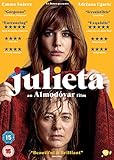
This is my review of Julieta [DVD] [2016].

Middle-aged Julieta is preparing to leave her stylish, if clinical Madrid flat for a move to Portugal with her lover, when a chance meeting brings news of the daughter Antía from whom she has been estranged for years. Immediately changing her plans, Julieta sits down to write the explanatory account of past events which she has concealed but feels Antía is now old enough to understand, if she can be persuaded to open her mind to them. This device of course takes us into a chain of flashbacks, often moving or evocative.

Based on three short stories by the celebrated writer Alice Munro, the Spanish director Almodóvar has produced an excellent film which succeeds through the combination of a well-constructed plot, with hints of Hitchcock, strong dialogue even evident in the subtitles, and skilful, sensitive acting where shifting expressions and body language often reveal more than words.

“Julieta” words on several levels as entertainment, as a study of the often devastating effects of chance, grief and guilt and as pure visual art. Almodóvar is not afraid to spin an essentially straightforward yarn, rendered remarkable with visual effects and a sustained, meticulous attention to detail. The filming draws on contrasting aspects of Spanish life: an old Madrid apartment with overpowering floral wallpaper redeemed by romantic wrought iron balconies overlooking the street; roads winding in hairpin bends to mountain views of great beauty which can also be the backdrop to moments of acute misery; the striking profile of a censorious, perhaps malevolent housekeeper who knows too much about her employer.

The folds of vivid blood-red material in the opening shots made me fear that Almodóvar would slip into the melodramatic excess which is often his trademark, but in this film at least, his continual harnessing of striking images manages to stop short of hammy overkill.

My reservations are few. Antía’s abrupt change in behaviour at one point seems unconvincing, but this does not prevent the film from being very moving. The switch in casting from the young to the older Julieta and Antía is done quite cleverly, although it takes a few moments to adjust to the distraction this creates. Perhaps the understandably mournful lover Lorenzo is a little too long-suffering, but as other reviewers have noted, the men in this film are as ever mainly foils for the female characters who are Almodóvar’s main focus of interest.

⭐⭐⭐⭐⭐ 5 Stars

Gripping, bleak yet hopeful

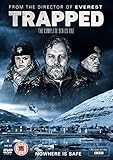
This is my review of Trapped [DVD].

This Icelandic contribution to Scandi Noir proved for me to be the most successful so far. The absorbing plot is essentially more plausible and realistic than is often the case, involving a slowly folding almost Shakespearean tragedy on the stage set of the remote coastal town of Seyðisfjörður, where some of the inhabitants are driven to crime through a complex brew of motives: panic induced by the shock of Iceland’s financial collapse in 2008, simple greed, or a gut desire for revenge. In the gradual revelation of the facts, all the main characters were developed as real people with flaws, conflicting emotions but often redeeming features at unexpected moments. The drama has the power to arouse our sympathy, if only rarely, for less appealing characters, even villains, along with flashes of impatience over, say, Andri’s self-centred ex-wife. Events unfold against the backdrop of the astonishing quantities of snow, burying cars and walls almost up to roof level, the bleak beauty of the white mountain slopes rising abruptly up from the the icy waters of the bay, the danger of an avalanche engulfing the town, which can be diverted by a dynamite explosion, itself a risky venture.

Andri Olafssun, the Reykjavik detective who has been banished to Seyðisfjörður for some misdeameanour, comes across at first as a shambling oaf, until the power and magnetism of the actor rapidly win us over. When blizzards cut the town off from the rest of civilisation, preventing the arrival of a team from the capital headed by Andri’s rival Trausti, he is forced to press ahead with investigations of the discovery of a mutilated torso, apparently connected with the arrival of a Danish ferry. This is way beyond the experience of Andri’s two junior colleagues who represent the woefully inadequate manpower at his disposal in a community in which serious crime has been a rare event. Both the earnest, quietly ambitious Hinrika and more impulsive Ásgeir, addicted to chess on the office computer after years of inaction, rise to the challenge of the sudden wave of crises. At the same time he has to deal with the stressful situation about which his parents-in-law have felt unable to forewarn him: the arrival of his ex-wife with new boyfriend, with plans to take his two young daughters back to Reyjkavik with them.

A further complication is the controversial plan for the leaders of the town to acquire land for a possible deal with the Chinese to develop Seyðisfjörður as a port, although it is unclear how, if at all, this has any bearing on the crime.

The drama combines action and suspense with a focus on showing people’s reactions to a wide range of emotions: fear, anger, regret or grief. Both the dialogue, even with sub-titles, and the acting are excellent. Often trapped in both a physical and mental sense, the characters seem like real people, not chosen for their good looks, often with crooked teeth and sagging skins, plus thick baggy jumpers to keep out the almost palpable cold. A sense of the thoughtfulness, stoicism and integrity of the Icelandic character (however illusory it may be) comes through

A few loose ends leave scope for a series to which I look forward, although doubting whether such a well-constructed and coherent drama can be created again. This drama passes the acid test of not leaving one feeling cheated at the end. My sole reservation is over Andri’s habit of running round in freezing weather with his jacket unzipped.

⭐⭐⭐⭐⭐ 5 Stars

Tale of Tales – Be careful what you wish for

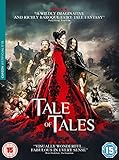
This is my review of Tale of Tales [DVD].

This is Italian director Matteo Garrone’s English language (to reach a wider audience) interweaving of three fables drawn from the Pentamerone, a 17th-century book of Neapolitan folk stories compiled by the Italian poet Giambattista Basile. He provided fodder for writers like the Brothers Grimm, to give a flavour of the macabre streak running through these bizarre tales.

Apart from the quality of the acting, casting of some remarkable faces, and fabulous costumes, the film is worth watching for the superb scenery from remote parts of Italy. There is no need for Jungle Book CGI with the potential to use striking settings like the Alcantra Gorge in Sicily, or the octagonal Castel del Monte in Puglia.

Despite the fairytale characters and magic mixed with implausibility of many scenes, one can still relate to the human emotions, clearly relevant to us now: the dangers of obsession, when a barren queen will pay any price to get a child, or a bored, self-indulgent king puts his fascination for the giant flea he has created before looking after his daughter. Two sisters desire for youth and beauty gets caught up with a sexually rapacious king’s infatuation with the idea of a woman he has only heard singing, glimpsed from a distance.

Classified as “15”, this visually powerful and entertaining (if sometimes gory or violent) film is available to those of an age to appreciate the deeper ethical points beneath the superficially childish storylines.

⭐⭐⭐⭐ 4 Stars

Loving too much

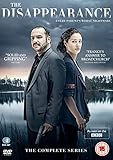
This is my review of The Disappearance [DVD].

The Morels seem like an ideal family: handsome father Julien Morel runs a Lyon restaurant with his widowed brother and good-looking son, his athletic wife combines a career with caring for the sparky eight-year-old Zoé, and is on good terms with her irresistibly beautiful elder daughter Léa, about to celebrate her seventeenth birthday. All this proves too good to be true, when following Léa’s disappearance after a festival, police investigations combined with Julien’s personal sleuthing reveal that her life was in fact a web of deceit and guilty secrets. Yet, she is not alone in this since, as Detective Molina is driven to exclaim in despair, is anyone in her family telling the truth?

Our interest is held through eight suspenseful episodes, admittedly involving what may be an excessive number of false trails and red herrings. What sets this series apart is its strength as an entertaining psychological drama, with the detailed portrayal of a family in meltdown under the pressure of fear, mistrust, grief and forgiveness – of knowing when to tell the truth rather than lie to protect others, and dealing with the consequences of past actions. The dynamics of the police team is also well-covered, centred on the driven, outwardly brusque but in fact compassionate Molina, who with a vulnerable fifteen-year-old daughter of his own, cannot help identifying with Julien despite his often damaging interference born of desperation.

The drama is gilded with alluring vistas of the sun-drenched, golden classical houses lining the river embankments at Lyon, intriguing shots of steep stone steps leading down to the water, and the leafy shores of the lake in the Tête-d’Or Park where the daytime beauty may mask more sinister nocturnal events.

After so much sustained tension and engagement with the shifting emotions of the main characters, perhaps the denouement inevitably leaves a sense of anticlimax. Although poignant rather than the all-too-often implausibly violent resolution, it was marred for me by a couple of ploys, one overused and the other unconvincing, which were avoidable.

Based, I believe, on a Spanish drama, “Disappeared” reminds me of a series of “The Killing” which explores in depth a couple’s response to the death of a child. If the producers are trying to imitate the success of Scandi-noir, they have done a good job.

⭐⭐⭐⭐ 4 Stars