Rising from the ashes

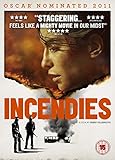
This is my review of Incendies [DVD] (2010).

Although her twin brother Simon is initially reluctant to take part, Jeanne sets out to fulfil her mother’s dying wish for her children to find the father they presumed dead and the brother they never knew they had. This involves the culture shock of a journey from Canada to an imaginary country, very close to the Lebanon in having a brutal civil war between Christians and Muslims, with the added pressure of Palestine-like refugees. Through a mixture of interviews and flashbacks, the convoluted plot is revealed. The film is an indictment of the arbitrary violence of war in which ordinary people are corrupted and driven by suffering and loss to avenge themselves on third parties, at the same time somehow retaining a capacity for love and even forgiveness.

There is particularly fine acting from the mother and daughter, with the actresses so similar in looks that at times I confused them, which in a way contributes to the plot. The portrayal of the lawyer who assists them is also a fine performance.

I was prepared to suspend my disbelief over some coincidences reminiscent of a Hardy plot, but at the end when I should have been left moved I found myself trying to work out the ages of the characters, who in their relationships to each other seem to be either too old or too young. The director could have overcome this easily with some better casting of “minor” characters and employment of a skilful makeup artist.

Based on the Lebanese-Canadian writer Wajdi Mouawad’s play entitled “Scorched” the plot lends itself to a film. Although flawed and contrived, it is a striking piece.

⭐⭐⭐⭐ 4 Stars

Borgen C18 Style

This is my review of A Royal Affair [DVD] [2012].

I join in the praise of this Danish, Swedish and Czech co-production which deserves to be more widely promoted than is likely. Both entertaining and moving, it is based on a true story little known in England, of how in the eighteenth century an English princess was packed off to marry the young Danish king, Christian V11, who proved to be mentally ill at a time when there was little understanding or treatment available for his condition.

We see examples of the ludicrous situation in which his crazy wishes are imposed on his subjects, because he is a monarch "whose word is law". Since his young wife has to endure his cruel and humiliating behaviour, it is not surprising that she falls for Struensee, the charismatic physician brought in to keep the young man under control. Struensee is an interesting character: he forms what appears to be a genuine friendship with Christian, his desire for a more equal society seems sincere, and gives him interests in common with the young queen from a country which is already a parliamentary democracy and relatively "free-thinking", but is he corrupted by the power gained from having the king's ear? Do his ends justify his means? The pain created by the complex "love triangle" is also explored, with all three arousing some sympathy in this skilful production.

Beneath a well-constructed plot, there lie some complex moral issues which may linger in your thoughts for some time. It is also interesting to see how Denmark has progressed from being a repressive and backward feudal monarchy as recently as the C18.

⭐⭐⭐⭐⭐ 5 Stars

Filmic Marmite

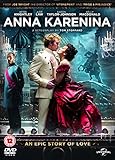
This is my review of Anna Karenina [DVD].

Since it is impossible to do justice in a two hour film to such a celebrated classic, with its focus on inner thoughts, it is probably a good decision to try a different take, in this case the ploy of setting most of the scenes in a theatre, not just on the stage but in the wings, the walk-ways above the podium, the stalls and so on.

So, the audience is watching a film of a play of a book. This has the benefit of conveying a sense of the restrictions and conventions which may have driven Anna to "break out" and give expression to her love for Vronsky, but which also made it impossible for her to be accepted by society afterwards. On the other hand, the theatrical confines may make some scenes seem too stylised, artificial and therefore less moving e.g. the whispered gossip and disapproval of Anna's affair. I was also often unconvinced by the frequent technique of freezing minor characters into the pose of statues, to highlight say, the image of Anna and Vronsky falling in love as they dance together in a world of their own.

I was glad not to need subtitles, since many scenes are quite visually complex, requiring close attention to pick up all the fleeting impressions used to convey a good deal. Tom Stoppard's script is very effective, clear and unpretentious. I could hear every word, which is often not the case. There are some striking scenes such as a horse race in the theatre in which an audience becomes a crowd of real people, only to be replaced by characters painted on a stage backdrop.

All the actors perform well. Jude Law is at last acting the wronged husband rather than the lover, and paints a sympathetic portrait of the industrious, upright bureaucrat, who tries to suppress his emotions and follow the rules, gives way to understandable hatred and vengeance, but who shows a good deal of decency and compassion in the end.

I have heard some criticism of the casting of Vronsky, but was surprised to find that it worked with Aaron Taylor-Johnson convincing as a striking young man with whom Anna might become infatuated physically.

Anna's predicament did not move me as it should have done, apart from her grief over being separated from her son. It must be a weakness in the film that I ended up feeling more sympathetic towards Karenin and even Vronsky than I did for Anna who often seems spoilt, capricious and ultimately deranged. I agree that a sense of injustice over the harsher treatment meted out to her as a "fallen woman" is enough to drive anyone off the rails. Beautifully dressed to the bitter end, she contrasts with the youthful Kitty, who settles for a life of rural bliss with Levin, the aristocratic landowner who chooses to work alongside the freed serfs and shelter his sick revolutionary brother – i.e. lead a practical life with some real worth.

Although I sympathise with those who may find the director Joe Wright's approach too contrived, this film held my interest, and gives scope for a good deal of discussion.

⭐⭐⭐⭐ 4 Stars

Shades of Ruritania

This is my review of The Scapegoat [DVD].

I read Daphne Du Maurier's "The Scapegoat" too long ago to recall how true this new TV drama/DVD is to the original. It is an entertaining psychological not-quite thriller, if you can accept the implausibility of two identical but apparently unrelated men meeting by chance, and one deciding to foist his identity on the other.

John, the Welshman without family ties who has just lost his teaching post finds that, in becoming Johnny he has gained a palatial family home, an army of respectful servants, an adoring wife and cute daughter. However, it soon becomes apparent that he is a scapegoat, since he has also been lumbered with a family business in crisis, and somehow managed to estrange both his sister and brother. Then there is the ultra-efficient and possibly sinister servant, always dressed in black, a younger version of Mrs Danvers lurking in the background.

Much of the initial entertainment lies in seeing how on earth John will manage to gain acceptance from close relatives and friends who ought to know him too well to be fooled, especially since he does not know the way to his mother's bedroom, is unclear how to distribute the presents he seems to have brought, and never knows which of the women he meets will be one of Johnny's lovers.

Although they may look so alike, the two men have very different personalities and values. So, the drama begins to focus on how John will act as he begins to learn more about the business and the individual family members.

A lightweight story on the surface proves to have hidden depths, assisted by a strong cast and careful reconstruction of life in the early 1950s, down to the novelty of the first television set.

⭐⭐⭐⭐⭐ 5 Stars

No Exit?

This is my review of Shadow Dancer [DVD] [2012].

Probably still traumatised by guilt over her part in a tragedy which occurred in her childhood, Colette takes part in terrorist activities as a member of a family with hardline IRA sympathies. When she falls into the hands of British agents, Colette is vulnerable to pressure to become an informer, because of her concern to maintain her relationship with her son.

Set mainly in the 1990s, this tense, complex thriller is visually very effective, creating a strong sense of the close-knit, claustrophobic community from which it is hard for people to break free. We see how John Major's moves to make peace had little appeal to those for whom dissidence has become a way of life.

I did not mind the slow pace of the film and would have found it compelling, despite a few too many twists to be entirely plausible, if certain key events and the identities of some of the characters had been made a little clearer, and if I had been able to hear what the actors were saying. It was not just a question of Irish accents, since Clive Owen and most of his colleagues also mumbled, often incomprehensibly. Only Owen's boss, Gillian Anderson with a posh English accent uttered every word with crystal clarity.

Since Andrea Riseborough in particular puts in a fine sensitive performance as Colette, a woman trapped by circumstance, it is a pity the director did not pay more attention to the vital issue of audibility. If you see this film, make sure it is as a DVD with sub-titles.

⭐⭐⭐ 3 Stars

Practising to Deceive

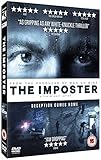
This is my review of The Imposter [DVD].

Thirteen-year-old Nicholas disappears in rural Texas and turns up just over three years later in Spain. His sister flies over and accepts him readily. But the audience is told from the outset that he is in fact a twenty-three-year-old imposter. How does he manage to fool her, and convince us that the situation is plausible? Why would the sister allow herself to be duped? Where is the real Nicholas?

This documentary mixes current interviews, past TV and home movie clips and reconstructions to weave an intriguing tale in which information is dribbled out cleverly to arouse our interest and shift our viewpoints continually.

The filming is often blurred through the use of old film footage, or the desire to make the reconstructions more convincing. At a few points the picture broke up to such a degree or the screen went black so that I thought our dodgy local film projection had failed again. Apart from this questionable attempt to add to the sense of confusion, "The Imposter" is an effective film with an unusual approach to the tragedy of the children who disappear and the long-term effects on their families.

⭐⭐⭐⭐ 4 Stars

The cost of knowing best

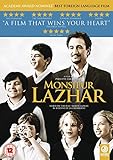
This is my review of Monsieur Lazhar [DVD] [2011].

In this well-acted and subtle French Canadian drama a school head, desperate to find a replacement quickly for the teacher who has tragically hanged herself, hires the courteous but persistent Bachir Lazhar, without asking too many questions about his past.

Despite his rather traditional teaching methods, and the fact that his pupils are traumatised by the death of their form teacher, not least because it was one of them who first saw the body and raised the alarm, Lazhar succeeds in establishing a rapport with his class. Although he is a quiet and reserved man on the surface, we come to realise that Lazhar has a kind of honesty which drives him to question authority, be it in the regime of his former homeland or in the school. In this case, he is unable to accept the decision not to discuss the suicide with his pupils, whatever the cost to himself of not "towing the line". Does he compound his problems through an unconscious arrogance? Or is it just that he is accustomed to a system where teachers are respected and allowed to speak frankly to parents?

This film explores human relationships in a moving and realistic way. For instance, we see how a bright child suffers because her well-intentioned single mother is too busy pursuing her career to pay her daughter enough attention, or how a lonely young teacher's advances towards Lazhar are rebuffed and she retreats, embarrassed but still not knowing that he is a widower still grieving for his wife.

An entertaining film with a serious and thought-provoking heart, which stays in your mind for some time afterwards.

⭐⭐⭐⭐⭐ 5 Stars

From Dust to Dust

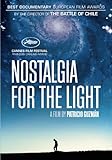
This is my review of Nostalgia for the Light [DVD] [2010] [Region 1] [US Import] [NTSC].

This patchily brilliant documentary is packed with striking images of the Atacama desert, where ancient rock carvings and bodies of native Indians, C19 miners and more recent victims of state brutality are preserved by the intensely arid climate, which also enables distant stars to be viewed in great profusion with unusual clarity. Using a poetic voice-over, the film attempts to draw parallels between the astronomers' search for knowledge of our galactic past, using high-tech telescopes installed in the desert, archaeologists investigating a more recent history amongst the rocks, and the current harrowing search by a small number of ageing women still searching for the remains of their loved ones who disappeared in the 1970s.

I tend to agree with an earlier reviewer who felt that the attempt to link astronomy with political repression does not entirely work, although I think that it could. To use the study of the stars to remind us that the dust from which we come and will return is very old and possibly extraterrestrial in origin is one way of helping us come to terms with terrible events and move on. The power and pathos of the film would have been increased for me by less use of repeated shots of simulated stardust, firm editing of interviews, such as the rather tedious exchanges with scientists gamely trying to respond to the arty questions posed, and omission of some rather lengthy contrived or staged shots. I think the film was meant to have a dreamlike quality, but at times I found it too slow. The tone of the voice-over tends at times to be a little too mawkish, but that is a matter of taste. Also, perhaps too many points are spelt out as to what we should be thinking, when we are well able to form conclusions for ourselves.

It is clearly important that the atrocities of Pinochet's regime should not be forgotten, not least in the UK where our Government gave sanctuary to a man guilty of dreadful crimes. The unusual environment of the Atacama provides an opportunity to tell the story in the distinctive way chosen here.

⭐⭐⭐⭐ 4 Stars

Shades of Hans Christian Andersen?

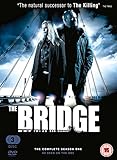
This is my review of The Bridge – Series 1 [DVD] [2011].

This dark and complex thriller begins on the Øresund Bridge linking Denmark and Sweden, where under cover of the dark and a power cut, a woman's body is found laid out across the line marking the national border, thus involving the police forces of both countries (and justifying a joint film production).

The killer, who turns out to have a fiendish imagination for unpleasant methods of torture and death combined with a twisted social conscience, proceeds to manipulate the public into anti-capitalist direct action or to blackmail the rich, by capturing victims to use as hostages, and ensuring the maximum publicity for this.

At first, "The Bridge" seems like an attempt to mirror yet outdo "The Killing", with the Swedish detective Saga Norén if anything more driven than Sarah Lund, with the added complication of "Asperger's Syndrome" which makes her the butt of some mockery from her work colleagues, although she is tolerated because of her genius in solving crimes. I felt uneasy at times about a script which encourages the audience to laugh at her, and also wondered about the accuracy of her robotic demeanour and over-literal approach. In striking contrast, her Danish counterpart is the laid back Martin Rohde, a man of strong empathy despite his history of womanising. He is intrigued by Saga, and gradually a bond of sympathy develops between them in which her emotions unfreeze – perhaps unlikely if she is autistic, I don't know. There is the implication she may in fact have been traumatised by a past tragedy.

Over its ten episodes, the story evolves from a simple "catch the villain" to a more complex drama of personal revenge. I was reminded that Denmark was the birthplace of Hans Christian Andersen, and it seems that some of the bleak morality of his tales may have rubbed off on the film makers: acts of personal betrayal have a cost for which one must pay.

There is a continual, at times somewhat bewildering, introduction of new threads, most of which are seen to have clear relevance, although there are one or two loose strands, perhaps intended as red herrings.

The filming is visually striking, often portraying the bleak underworld of homelessness, drug addiction and abandoned buildings which one does not usually associate with Scandinavia. I did wonder how Martin Rohde could afford to live in what looked like a better house than the Prime Minister in "Borgen", and about the total lack of privacy (surely dangerous for a detective?) in a wooden house which seemed to consist mainly of huge glass windows. The long-haired casual scruffiness of the detectives, even at senior level, is a nice egalitarian Scandinavian touch.

Although I was at times a little unengaged by the earlier episodes, I revised my views as the story built to the moral dilemmas of its dramatic conclusion, in which one suspects the writers may be ruthless enough to sacrifice any character.

And, of course, over it all, there looms the presence of that triumph of engineering and bleak aesthetics, the Öresund Bridge.

⭐⭐⭐⭐⭐ 5 Stars

Duty Calls

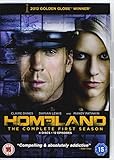
This is my review of Homeland – Season 1 [DVD].

Homeland is based on a compelling scenario. Marine Sergeant Brody (Damian Lewis complete with no doubt convincing American accent), for eight years presumed missing in action in Iraq, is discovered imprisoned in the compound of Al-Qaeda terrorist leader Abu Nasir, and returns to a hero's welcome in the States. Darker currents soon emerge. Desperate to show loyalty, his wife seeks to hide that she was on the brink of marrying his former best friend. Brody is also haunted by memories of having been forced to kill his fellow prisoner and best friend Walker, as the price of his own survival. To cap it all, working on a warning from an informer, driven CIA operations officer Carrie Mathison is convinced that Brody has been "turned" and only allowed to resume his old life in order to undertake some act of terrorism or betrayal. She is prepared to go to any lengths to prove her case, even bugging his house illegally with private cameras – but these do not reveal what is afoot in his garage. Also, Carrie's severe bi-polar disorder (the portrayal of which may irritate some sufferers) undermines her credibility.

In this slow-building but ultimately gripping drama, you are left guessing to the last episode what Brody's true intentions are, and whether and how he will carry them out. There are fine performances from all the major actors, in clearly defined and well-developed roles.

Most remarkable is the fact that this drama, although made in the States, appears anti-war and does not hold back in portraying a corrupt Government and security forces, violating human rights and trying to conceal the evidence for their own ends. Terrorists such as Abu Nasir are by contrast portrayed with a degree of understanding. It is not a simple case of enlightened western world right versus Islamic wrong, or of the good guy winning out in the end against the odds, as is often the case with American drama. Just as some of the characters may have been subverted, the viewer may for an instant understand the justice of the "wrong" cause. Relationships, such as Brody's attempts to reconnect with his children after eight years, are handled realistically without too much sentimentality.

The ending leaves the way open for a fresh series, which may be good for commerce, but not art, since it is usually best to be left wanting more of a drama. In this case, there are just enough intriguing loose ends to "get away" with one more series.

⭐⭐⭐⭐⭐ 5 Stars