Truth obscured by Fiction

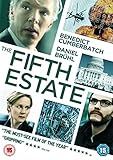
This is my review of The Fifth Estate [DVD].

Since the business of online leaking is in fact quite dry and technically beyond most of us, the film attempts to divert the audience with flashing computer screens of mumbo-jumbo and noisy gatherings of uncertain purpose while flitting frenetically between capitals to show the international scope of Assange's operation.

The "hero" and central figure in terms of viewpoint is not Assange but his former colleague Daniel Domscheit-Berg. Drawing heavily on the latter's recent book, the film traces the course of his gradual alienation from admiration to bitter disenchantment over what is portrayed as Assange's capricious arrogance and narcissistic desire to control everything. The last straw for Domscheit-Berg seems to have been Assange's alleged cavalier attitude to protecting the anonymity and therefore safety of sources, to the extent of lying to obtain his agreement for the release of data to selected newspapers, but this important point is presented in too rushed a way for me to judge the justice of the charge.

I was left unsure what to believe and uneasy as to the truth and fairness of some of the attacks on Assange. For instance, he is portrayed as "borderline autistic" and psychologically damaged by childhood experiences, but how soundly based is this analysis? Although Benedict Cumberbatch puts in a compelling performance as Assange, and heads up a strong cast including David Thelwis, Laura Linney, Stanley Tucci and even Peter Capaldi (as a somewhat miscast Alan Rusbridger since it is impossible not to keep thinking of "The Thick of It" Malcolm Tucker) the actors seemed let down by the disjointed script and at times clumsy direction. It is implausible that so many hush-hush meetings should take place in bars or trains, all the while casting nervous glances at sinister onlookers, or that Assange would enter sensitive data on board a plane only to shout and hurl his PC around on receiving an unwelcome message. The film repeats too often the device of using a vast array of computers, at some times unmanned, at others operated by clones of Assange, to highlight the fact that what was virtually a one-man band could achieve so much. Also, surely Wikileaks must have involved a team of people, even if dominated by Assange?

In the case of Wikileaks and its founder Assange, truth seems more intriguing than fiction so that I realised too late that I would rather have watched a well-made documentary.

⭐⭐⭐ 3 Stars

Madoff spin-off

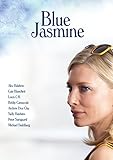
This is my review of Blue Jasmine [DVD] [2013].

Penniless and mentally fragile after the collapse of her luxurious life as the wife of an East Coast businessman, Jasmine (Cate Blanchett) takes refuge in San Francisco with her goodhearted, dark-haired (did I miss something?) sister Ginger, the divorcee who works as a supermarket cashier to support her two young sons and now has to postpone plans for her new boyfriend to move in with her. The odd physical and social disparities between the two sisters are explained by the fact they were both adopted, but the more beautiful and stylish Jeanette who renamed herself Jasmine was favoured and given delusions of grandeur.

Will Jasmine succeed in making a fresh start? Will she ruin her sister's life, which she has already inadvertently damaged? My sympathy for Jasmine was reduced by her failure to learn from adversity. With no sense of irony, she continues to sneer at Ginger's choice of men, her lowly occupation and taste in clothes.

All the actors put in a good performance, with an Oscar nomination very likely for Cate Blanchett. I thought her abrupt switches from pill-popping, boozy craziness to calm, collected calculation were a little unlikely, but this was presumably part of the script.

You may feel that, although the film is tightly plotted and the characters have distinct personalities, they tend to be somewhat stereotyped, and no one really changes or progresses, apart perhaps from Jasmine's step-son Danny. Yet, Woody Allen has not lost his touch for concocting an entertaining brew of comedy and poignancy.

⭐⭐⭐⭐ 4 Stars

Life as Art

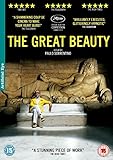
This is my review of The Great Beauty [DVD] [2013].

The “Great Beauty” is the Rome that tourists too often miss, with sunlight playing on fountains and ancient intricate carvings, the haunting voices of choirs floating from balconies, children playing tag with white-robed nuns in lush green gardens glimpsed through stone archways.

Wealthy writer Jep Gambardella knows Rome well, but his appreciation of its beauty is heightened when, in the middle of his extravagant 65th birthday party he is struck by the decadence and vacuity of his life. Later, in post-dinner balcony drinks, the shallowness and empty pretentiousness of so-called close friends becomes almost intolerable. The death of a long-lost girl friend who apparently always loved him from a distance may also remind him of what might have been.

Made sharply aware that time is running out on his dilettante life, Jep does not do much about it, apart from take up with an ageing stripper with a heart, mocked by his snobbish friends for her name Ramona and choice of a see-through dress on her first outing with him. Great beauty seems inseparable from moments of soft porn. Apart from making a visually stunning film, full of people with striking features, often reduced to “living works of art” in their designer costumes, I am unsure what the director Sorrentino is trying to achieve. I would have liked more of a plot, and although I do not mind a film that is largely about visual design combined with music and a few witty comments, at nearly two-and-a-half hours, this is not quite enough to sustain one’s interest, plus the frenetic partying became oppressive. Watching all this began to seem perhaps more questionable than the privileged self-delusion and emptiness of the existences lived out in the film.

I felt I could not win with this film which is overlong and rambling yet leaves embedded in the mind the same powerful visual images you would get from visiting a gallery of remarkable artworks. Walking out mid-way would leave a sense of having missed out on memorable scenes. Sitting it out may seem like a waste of time: one “gets the message” in the first half, and then there is nowhere else to go. I was a little disappointed that Sorrentino focuses on the idle rich, and does not show us the beauty of ordinary lives, despite their pain and disappointment.

Comment Comment | Permalink

⭐⭐⭐⭐ 4 Stars

Left in the dark

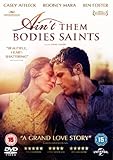
This is my review of Ain’t Them Bodies Saints [DVD] [2013].

I was drawn by positive reviews to this Texas backwoods tale of Bob and Ruth, two lovers who get caught up in a shoot-out with the local law officers. Bob takes the rap and goes to jail, leaving Ruth to bear and bring up their child, swearing to wait for him. This has all the potential for a drama of doomed love, but despite good performances from Rooney Mara as Ruth, Patrick Wheeler as the soulful sheriff waiting in the wings for Ruth's favours and Keith Carradine as the storekeeper who brought up the young couple "gone to the bad" I was left frustrated and disappointed by the film.

What one professional reviewer has described as "elliptical storytelling and dreamy magic-hour light" struck me as a very confusing presentation of key details and an underlit, wavering filming technique which often makes it well nigh impossible to see what is going on. Too often, an important scene is flashed onto the screen for a fraction of a second, leaving the viewer unsure what has happened – who shot whom or why. Worst of all, Case Affleck's drawl renders Bob incomprehensible half the time. Although clearly handsome, he comes across as monumentally stupid and dull. In order to make us care about Bob and Ruth, the writer/director needed to develop their characters, relationships and complex motives for their crime.

Although the recent "Beyond the Pines" was flawed, it succeeded better in this type of theme.

⭐⭐ 2 Stars

Trapped

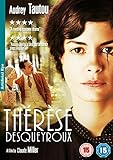
This is my review of Therese Desqueyroux [DVD] [2012].

I suspect that those who have read Mauriac's novel on which this is based will be disappointed by a film which tells us that Thérèse is troubled by strange thoughts which she hopes marriage will dispel, but gives no indication, until the end, as to what they might be.

To appreciate the story fully, one has to understand the culture of the Landes region around Bordeaux in the early C20, in which prosperous families were preoccupied with their acres of pine forest, contracting marriage with each other to consolidate their wealth and at all costs maintaining their respectability and status.

Thérèse sleepwalks into a stultifying relationship with the forceful and macho Bernard. When his sister, supposedly her best friend, falls in love with an "unsuitable" young man, is Thérèse's failure to support her the result of pressure to be a dutiful wife, or due to less forgivable envy?

Although she is clearly caught in an uneviable position, it is hard to empathise with the chain-smoking, uncommunicative, hard to read, Thérèse. I believe that Mauriac writes a good deal about the "masks" that people assume, but Thérèse is mostly so unemotional on the surface as to seem wooden, inhuman at times. I came to the conclusion that Audrey Tautou, although a beautiful and talented actress, is miscast here. The part needs to be played by a younger actress who comes across more convincingly as inexperienced and malleable, yet unpredictable.

As the plot darkens, some of the details are annoyingly unclear, but the story is unusual in taking an unexpected direction as it moves to a rather inconclusive ending. Beautifully shot and well-acted, it left me feeling unsatisfied, and I don't know whether to blame Mauriac or the director.

⭐⭐⭐ 3 Stars

Waving and drowning

This is my review of Musee Haut Musee Bas – DVD.

In this surrealistic spoof of a day in the life of a museum, we see pretentious artists, self-important or customer-unfriendly staff, and easily manipulated visitors acting out a modern version of “the emperor’s new clothes”. The whole parody is overseen by a demented curator, obsessed with removing any trace of greenery in an ongoing battle between art and nature, which he seems doomed to lose as the vegetation displays a triffid-like aggressiveness.

There are amusing incidents, such as the artist who strangles someone who has been driving him mad, with a view to exhibiting the body in a glass case, shades of Damian Hirst’s cow in formaldehyde. I enjoyed the clever examples of actors unconsciously simulating scenes from famous paintings, although you need to be more erudite than me to recognise them all.

To be fair, I believe the cast includes a number of respected French actors, and perhaps you need to be French to appreciate the humour. Sadly, what could have been sharp and original is marred by a repetitious dialogue which tries to be funny but fails for me in its lack of wry,subtle wit. The film lapses too often into slapstick or banal silliness, so that I never felt caught up in the events or forgot I was watching a film.

⭐⭐ 2 Stars

Taken for a ride

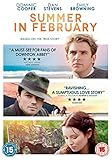
This is my review of Summer in February [DVD] [2013].

The charismatic leader of a bohemian artists' colony in the lovely Cornish coastal valley of Lamorna, A.J. Munnings was correctly predicted by his admiring friends as destined to become the leading painter of his day. As is often the way in a film, the evidence for this is somewhat lacking to the audience.

When the beautiful Florence Carter-Wood escapes from her match-making father to join the group, it is clear from the outset that her enigmatic allure, which may mask darker traits, will draw both the rakish Munnings and his perhaps unlikely best friend, the gentlemanly local land agent Gilbert Evans. One knows it cannot end well, if only because it is 1913, and the Edwardian idyll must be shattered by the debacle of World War 1.

Since this is based on a true story, one has to accept the plot despite a few major incidents which I found implausible. It is well acted, although I thought that Dominic Cooper was insufficiently larger than life to capture Munnings convincingly. The key aspects of the relationship between two male friends caught in a love triangle with the same woman, and the suffocating conventions of Edwardian morality which even bohemian artists could not completely escape needed to be developed in greater depth.

Despite the stunning scenery and pathos of the situation after the initial rumbustious jollity, I was left feeling underwhelmed but have obtained the novel of the same name on which the film is based, since I suspect that this may be more satisfying in, for instance, revealing more about Munnings as a painter, such as his contempt for modern art which is only hinted at in the film. In an infamous speech recorded shortly before his death he claimed that the work of Cézanne, Matisse and Picasso had "corrupted art".

⭐⭐⭐ 3 Stars

Uneasy sits the viewer

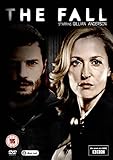
This is my review of The Fall [DVD].

Although you may believe yourself incapable of being surprised any longer by a police thriller, this is unusual in revealing the serial killer's identity from the first episode, and in contriving to make him disturbingly sympathetic so that, despite being appalled by his manipulative, brutal and creepy behaviour, shocked that an apparently normal, caring father, husband and committed bereavement counsellor can be so evil, and therefore reassured by the occasional clear evidence of madness, a part of you also wants him to escape justice.

I agree with the praise for the quality of acting, in particular the impeccable playing by Gillian Anderson of SI Stella Gibson, the ruthless, ice cool female detective with her wry put-downs of male colleagues. Belfast provides a distinctive setting – hints of the aftermath of "The Troubles" and some dramatic sub-plots, although I would have liked the thread involving the first victim's husband to have been developed in more detail.

Although it is no doubt the author's intention, the murder scenes are almost unbearably violent and voyeuristic. You feel uneasy watching them, and perhaps even more so those where the killer is shown as a loving, if deceitful, father, hiding mementos of his crimes in the loft space above the bed of his observant and understandably disturbed small daughter. The lack of any explanation of the killer's deviancy until the final episode also seems to me to reduce the depth of the drama.

The one aspect I really dislike is the tendency to intercut scenes of say, the killer abusing a victim whilst SI Stella Gibson indulges in a one night stand. This ploy came across to me as by turns too contrived, tasteless or over-sentimental, as when we are shown clips of the killer's wife comforting young single mothers over their dying premature babies, whilst a pregnant woman is being murdered elsewhere by her husband.

This is powerful and well-made popular television, although I am not sure how good it is for the psyche of the watcher.

The final twists are ingenious and unpredictable, binding together several plot lines. The ambiguous ending which I cannot give away for fear of spoilers may leave many dissatisfied but succeeded for me in leaving it open to the audience to imagine "what happens next" and paves the way for the second series commissioned even before the showing of the first was completed.

⭐⭐⭐⭐⭐ 5 Stars

Something in the Air – What it is to be young

This is my review of Something in the Air [DVD].

Apparently semi-autobiographical for the director Olivier Assayas, and entitled “Après mai” in the original French, this film recaptures the sense of confused anger and scattergun resistance against injustice which persisted after the famous Paris riots of May 1968.

Gilles is in his final year at the lycée with ambitions to be an artist, also caught up in street protests, demonstrating against the police and pasting up militant posters. We gain a vivid sense of being young in the 1960s, the sudden sense of freedom to question and attack the accepted values of society, to travel, drop out, and play with fire – a constant theme in the film – experimenting with drugs at the risk of self-destruction. It shows the uncertainty and fragility of first relationships, which one may come to value when it is too late, or, in the case of the women in the film, even when thought to have been freely chosen, prove to be a trap into some aspect of stereotyped or conventional behaviour

The film is visually very beautiful – the view over the valley where Gilles meets his first girlfriend, the apparently liberated artist he would like to be. It is also very French in portraying the heated philosophical debates and the ambience of the dry, traditional approach to teaching in school, the chickens running along the street past the old stone houses, the leafy courtyard gardens with paint peeling on the sills as the men discuss making films to show soldarity with the workers. It is well-acted and most of the main relationships are quite sensitively developed.

On the downside, apart from being about thirty minutes too long with a clear need to edit some scenes sharply, the storyline is too fragmented and meandering, at times hard to follow. Some of the political discussions to do with say, relationships between students and workers, or between workers in different countries, or the issue of how to use film to promote ideas, are presented in a rather oblique or rushed and unclear way. I also agree with reviewers who have criticised the glossing over of the irony that most of the young people clearly come from unusually wealthy and privileged backgrounds.

I left the film irritated by the sense that potentially fine ingredients had been scrambled into a dog’s breakfast. On further reflection, I am left with a growing sense of the beauty of the film, some highly amusing scenes and the portrayal of the uncertain nature of youth, half-drifiting, half-striving in search of a goal, which may end in success, annihilation or nonentity.

⭐⭐⭐ 3 Stars

A visual display that makes you want to read the book

This is my review of The Great Gatsby [DVD] [2013].

The reviewer Peter Bradshaw's description of Baz Luhrmann as "a man who can't see a nuance without calling security for it to be thrown off his set" is quite telling, but if you accept that the director's trademark is flamboyant excess, you could argue that the extravagant parties thrown by the wealthy Gatsby, the wild, escapist behaviour of "the bright young things" in the Jazz Age following the privations of World War 1, and the unthinking self-indulgence of the very rich, all lend themselves to Luhrmann's bombastic approach.

He is faithful to the details of the story, which is a "good yarn" as well as being a comment on the snobbery and corruption of 1920s American society which he develops to some extent. With events seen through the eyes of the narrator Nick Carraway (unclear why he is so poor when his cousin Daisy clearly comes from an established family accustomed to wealth), we do not at first understand his huge respect for Gatsby, to the extent of labelling him "great". We gradually come to grasp the irony of Gatsby's use of vast, recently gained wealth to try to rekindle an old love, his delusion that money can be used to regain the happiness of a past infatuation and the poignancy of "true love" blighted by the fate of "bad timing" yet still providing opportunities for honourable personal sacrifices which may go unnoticed.

I accept that this may be a shallow interpretation to those who know and love the novel, but if the film succeeds in introducing people to it, and inspires some, like me, to read Scott Fitzgerald for the first time, Luhrmann has achieved something more than simple entertainment, as he did with Romeo and Juliet.

⭐⭐⭐ 3 Stars