Not quite a bridge too far

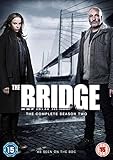
This is my review of The Bridge: Series 2 [DVD].

In this darkest of Scandinavian noir detective thrillers, the Swedish autistic workaholic Saga joins forces once again with Danish Martin, the once easy-going philanderer now estranged from his partner Mette and traumatised by a ghastly personal tragedy. The complex crime of eco-terrorism which they are required to unravel turns out to be less gripping than the relationships between the main characters. Despite Saga's frequent resemblance to a robot, lack of empathy and wooden quoting from textbooks on how to behave, her acting towards the end is excellent in showing the dawning of emotion in her face as Martin forces her to confront the past events that have so damaged her psyche, and also as she has to deal with a final dilemma. In portraying a busy office where a disparate group of officers are thrown together, working under stress, there are also frequent touches of humour in what might otherwise be a very bleak and macabre film, with frequent scenes of speeded up grey clouds streaming frenetically over ugly grey concrete blocks.

The plot twists and the continual introduction of new, seemingly unconnected storylines for the watcher to work out while contending with subtitles made me wish I had noted key events at the end of each episode. The body count was so high, and the events at times so ludicrous, that I almost gave up watching. However, I was both rehooked and quite impressed by the final two episodes, with their pace and some real depth. The writer Hans Rosenfeldt has ensured the plot "adds up", which is often not the case in this kind of drama, plus he has left at least three loose ends to justify a third series.

Even if you have reservations, the dramatic sweep of the Øresund Bridge, never fails to impress in the opening shots. This has developed to be stronger and more "multi-layered" than Series 1.

⭐⭐⭐⭐ 4 Stars

Off the rails

This is my review of The Railway Man [DVD] [2013].

Based on the 1995 memoir of Eric Lomax, the Royal Signals Officer who was tortured by the Japanese when deployed on the construction of the infamous Burma railway, this film uses flashbacks to show the reasons for his emotional repression with violent outbursts of post traumatic stress decades after the event. Colin Firth, a master in this kind of role, plays the older Lomax, with Jeremy Irvine putting in a strong performance as his younger self, earnest, floppy-haired and prepared with quiet bravery to take the rap for the assembly of an illicit radio receiver. Nicole Kidman assumes a convincing English accent to play the sympathetic new wife who is determined to extract Lomax from his mental agony. When Lomax discovers in the 1980s that Takashi Nagase, the young interpreter who played a key part in his torture, is still alive, working, of all things, as a guide at the Kanchanaburi War Museum (close to the famous bridge on the river Kwai) he is initially bent on revenge as a means of exorcising his demons.

I was disappointed by the first half: dialogues often seem stilted as in the "Brief Encounter" style meeting on a train between Lomax and his future wife Patti. Lomax looks much younger than the fellow officers with whom he has kept in contact, and he could have done with a few more scars and grey hairs. The sets "back home" have more of a 1950s feel than the 1980s as I remember them. Worst of all, the earlier scenes in the jungle are often confusing or hammy, apart from the final harrowing torture in the dreaded hut. Overall, the script and direction often appear wooden until the final resolution.

The film was saved for me by the second part of the film which is unpredictable, moving and well-developed. Throughout, the scenery is beautiful, both in the Kwai valley, despite the horror of the slave labour and brutality, and in the scenery around Lomax's stark grey house overlooking a golden beach and the sea at, I think, Berwick-upon-Tweed.

I have read that, in fact, Lomax had a first wife for the best part of forty years, whom he left for Patti, and two daughters, all largely omitted from his memoir. I understand why the director let this stand, in order perhaps to create a tighter and more focused drama, but this has been at the price of concealing and neglecting other lives directly blighted by what Lomax suffered.

The film may not do justice to the highly acclaimed autobiography.

⭐⭐⭐ 3 Stars

In the land of the free

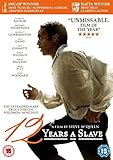
This is my review of 12 Years A Slave [DVD] [2013].

Solomon Northup, the son of a former slave, was a free man living in upstate New York when he was tricked, kidnapped and sold into slavery in 1841. He spent twelve years working for a series of masters in the sugar and cotton plantations of the swampy Louisiana bayou country until regaining his freedom against the odds. This film is based on the account of his experiences, written in conjunction with a white lawyer called David Wilson, and authenticated, including in part by the drunken and sadistic Mr Epps, his final master.

With his artist's eye , McQueen brings out the beauty of the natural landscape, red sunrise over the river, hanging branches draped in Spanish moss, or the rhythmic power of the paddle-steamer, carving furrows through the sparkling water as it transports the captives to their harsh destiny. This film renounces any sentimentality, ramming home the fact that slaves were regarded as property so could be treated without any consideration or mercy. The only reason for keeping them alive was because an owner had paid good money for them, and they could earn more for him through their labour. We see how Mr Epps could terrorise a female slave with whom he had become sexually obsessed, whilst his wife tormented the poor woman at the same time out of jealousy.

Everyone will learn something different from this drama. In my case, it was the extent to which slaves were punished for being literate, since this was seen as giving access to knowledge and revolt. Ironically, slaves were then despised for the ignorance in which they were held. Also, when their stories were written with the help of a white people, it was claimed that hardships had been exaggerated by abolitionists to strengthen their case.

The violent beatings are hard to witness. It's debatable whether these scenes are too long, the rationale being that this brings home the intolerable brutality endured. One striking moment is when the hero has to burn, out of fear of discovery, a letter which he has taken great pains to produce, in perhaps his last chance to get help. Another is when, having resolutely refused to sing the haunting spirituals, the only emotional outlet for slaves, Northup at last gives in, belting the song out lustily in his anger.

Chitwetel Ejiofor deserves all the praise that has been heaped on him, with his expressive face conveying in turn disbelief, fear, anger, despair, hope and even loss at the point of his release when he has to leave behind to suffer alone someone for whom he has come to care.

⭐⭐⭐⭐⭐ 5 Stars

What Lizzie and Darcy did next

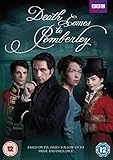
This is my review of Death Comes to Pemberley [DVD].

Not having read P.D. James's novel, which I suspect is an advantage, I found the film version entertaining. This is not a simpering costume drama, but reminded me of the vitality of the Poldark series in its earlier episodes.

P.D. James cleverly pinpoints an ideal plot thread: the existence of the embittered rogue Wickham who keeps turning up like a bad penny to threaten the reputation of Darcy's family. Wickham's apparent crime drives a wedge between Elizabeth and Darcy in quite subtly developed and moving scenes. The parallel dilemma as to whether Darcy's sister Georgiana should make a safe marriage for reasons of property and status, or a riskier one for love is also well handled.

Flashbacks to important dialogues in the original "Pride and Prejudice" are skilfully woven into the plot. Moments of humour are provided by revisiting well-loved situations such as Mrs. Bennett's vulgarity and lack of tact, and her husband's continual attempts to escape her, as in his pleasure at being able to hide in Darcy's library. There is some excellent acting of some "minor" parts, such as the stoical housekeeper with the capacity to rise to every occasion, keeping the staff under her thumb yet kindhearted with it. Trevor Eve does a good job as the cynical neighbouring landowner and magistrate. The scenes of Chatsworth, and, I believe, Yorkshire woodlands and hills are beautiful, the dialogue often sharp, and the plot neither too predictable nor ludicrous, with a suitably nail-biting climax and denouement – apart from a few small queries such as why Wickham, his wife and Denny were travelling on their fateful coach journey on the evening before the ball they intended to gatecrash. Also, Elizabeth and Darcy seem to dress rather plainly for such grand people, and to travel round with remarkably little pomp and protection. Perhaps there is also a tad too much hamminess with people almost drowning themselves out of grief or nearly ending it all with a cutthroat razor.

Although I am not a fan of this kind of sequel, it works quite well here, and I suspect the book may be even better.

⭐⭐⭐⭐ 4 Stars

The Girl on the Train – Fateful Freewheeling

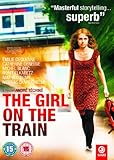
This is my review of The Girl on the Train [DVD] [2009].

Triggered by the real-life incident of a girl who claimed to be the victim of an anti-semitic attack in Paris, this is a tale of cause and effect, the consequences of a random conjunction of events.

Beautiful but scatty, Jeanne’s half-hearted attempts to obtain work as a secretary lead by chance to an interview at the office of successful Jewish lawyer Samuel Bleistein, sometime admirer of her widowed mother played by Catherine Deneuve. Jeanne’s habit of rollerblading everywhere, red hair blowing in the wind, brings her to the notice of an enigmatic, uncomfortably direct and determined young man, Frank. Through a sequence of events, we see how Jeanne is driven to take a dramatic course of action but her motivation for this remained unclear to me.

Beautifully shot with many passing insights into human behaviour and relations, some moments of humour, shock over unexpected violence, or pathos (such as sympathy for Bleistein’s grandson Nathan with his self-absorbed, capricious parents), the film has a fragmented quality, and one observes it without feeling very moved. Although the sense of building up to some kind of dramatic climax held my attention, the rather flat, admittedly realistic ending left me feeling a little dissatisfied.

⭐⭐⭐⭐ 4 Stars

Knowing when to quit

This is my review of Homeland – Season 3 [DVD].

Any mass market action thriller is likely to tie itself into knots of implausibility with dollops of repetition by its third series, and Homeland 3 is no exception. Just how many times will Brodie be confined in hideous gaols, Carrie get sectioned after failing to take her meds, or Dana be led astray by a crazy boyfriend?

Homeland 1 caught my attention with its novel approach, for an American series, of being prepared to show the United States government, military and CIA in a frequently unfavourable light, clearly flawed and lacking a monopoly of the moral high ground. The tough marine Brodie may have been brainwashed but seems genuinely drawn to Islam and able to relate to an alternative way of life.

Unfortunately, in Series 3, much of the potential for a subtle psychological thread which would enable viewers to appreciate the series at different levels has been frittered away. For the most part, the writers seem to have lost the plot, with Saul for one behaving in an increasingly bizarre way.

The drama rallies to reach an exciting and interesting climax in Episode 9, but tails off to an unsatisfying postscript to Episode 10 which left me with a bad taste in the mouth. Designed to pave the way for Series 4, was it the usual, and in this case inappropriate, corny, soft-centred American "ending" or a deliberate portrayal of the surviving characters as amoral and self-serving monsters?

Both `Borgen' and `The Killing' are claimed to have ended with Series 3, and the makers of Homeland might have done well to take the same option, not least since ironically they have reached a more clear-cut conclusion.

⭐⭐⭐ 3 Stars

Making a difference

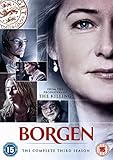
This is my review of Borgen: Series 3 [DVD].

I have met someone who enjoyed `Borgen' starting with Series 3 Episode 9, but recommend watching this from the beginning of Series 1 to understand all the relationships and the context of events!

Promoting this as the last in a series of three is a strategy worthy of Birgitte Nyborg, leaving the audience wanting more yet with the door open for another series in the future, although enough loose ends have been tied to make a 'satisfactory ending'.

Birgitte opens Series 3 as a glamorous, jet-setting corporate executive with a suave English architect as her love interest, but disappointment over the loss of principle in the Moderate party and the addictive challenge of influencing events through negotiation lure her back into Danish politics. In the second major ongoing thread of the saga, the cynical and emotionally conflicted Kaspar Juul has perhaps unconvincingly left the cut and thrust of politics for the at times trivial world of the TV political chat show. Katrine Fønsmark, now the mother of his child, is excited by the risk of leaving her star role as TV presenter to act as Birgitte's new spin doctor.

The new series takes a few episodes to 'settle down', with the political twists delivered at the usual cracking pace, and too many scenes handled in short sound-bites as one struggles to catch both the subtitles and the actors' body language. It is sometimes as if the writers cannot bear to leave any angle uncovered. Once episodes begin to concentrate on fewer issues, such as the overuse of hormones in pork, or complex questions of immigration or the rights of sex workers, real `hot topics' in many European countries, the series improves.

It's a relief yet unnerving when the subtitles disappear and Birgitte begins to converse in flawless English, somehow changing her character in the process.

'Borgen' maintains its edge over most series by covering often in some depth a range of personal issues to at least some of which everyone can relate: a woman's problem in juggling a small child with a career, the ongoing intimacy or moments of jealousy after a relationship has officially ended, the strain of working with an ambitious young boss who wants to work in a different way.

Yes, this is essentially high class soap opera, but it is often moving, humorous or thought-provoking. Consistently entertaining, it avoids a conclusion that is either corny, oversentimental or predictable in its detailed outcomes.

⭐⭐⭐⭐ 4 Stars

Hanging on for dear life

This is my review of Gravity [Blu-ray] [2013] [Region Free].

This technically brilliant film contains beautiful shots of the earth viewed from space, there are some tense moments as the two space workers (Clooney and Bullock) struggle to survive when they find themselves stranded after a disaster not of their making and it is intriguing to watch them floating about surrounded by a motley collection of objects and dealing with weightlessness in a matter of fact way, at least until calamity strikes. As with most adventure films, the desire to create ever more exciting situations sends plausibility spinning into the outer galaxies and it is probably an advantage to be ignorant of some of the basic laws of physics. At the end, despite the ludicrous twists, the film succeeds in leaving you with a sobering sense of mortality combined with the strengh of the will to survive.

“Gravity” is definitely greatly enhanced if seen on a large screen in 3D.

⭐⭐⭐⭐ 4 Stars

“Captain Phillips” [DVD] [2013] – Not here to fish

This is my review of Captain Phillips [DVD] [2013].

Paul Greengrass is well-known for his dramatization of real-life events, in this case opting for a mainstream cinema action adventure format which may give scope for more dramatic licence than the constraints of a documentary to cover the topical theme of the threats from Somali pirates.

Their target is an American container ship, ironically loaded in part with food aid for Africa, under the command of the stern, courageous but also humane Captain Phillips, who in the midst of his personal trauma is capable of feeling compassion, even sympathy for the pirates. For, beneath the suspense and menace of the plot, lies the director’s concern to show both sides of the question, understand the pressures which drive the pirates: poverty, resentment against foreign powers like America which they perceive as having taken resources from them, the tribal leaders/corrupt gang masters who force simple former fishermen to seize money through piracy, very little of which they get to keep for themselves. The two main characters are developed most fully: Phillips and the pirate leader Muse, violent when scared but clearly not innately so and capable of seeing the American captain’s decency and natural powers of leadership. He reveals in a poignant moment that all he would really like to do is escape to a “better” life in the States. However, a combination of fear and chewing of the narcotic “khat” kindles the pirates’ unpredictability, while the tight-deadlines and ruthlessness of the US rescuers add to the tension of the brew.

I was a little frustrated to be unable to hear what anyone was saying in much of the dramatic denouement, but overall this is an absorbing film which adds to one’s understanding of a serious problem. It was fascinating to see the procedures followed in the attempt to shake off the pirates, although I was left wondering why all shipping off the Somali coast does not travel in convoys with 24/7 lookouts and powerful guns for defence.

⭐⭐⭐⭐ 4 Stars

“Philomena” [DVD] – What price love?

This is my review of Philomena [DVD].

Depressed by the collapse of his high-flying career as a Labour spin doctor, Martin Sixsmith tries to distract himself with a “human interest story”. Philomena Lee wishes to make contact with the son taken from her nearly fifty years ago by Irish nuns, after they had allowed her to bond with him while slaving in the now notorious convent laundries to pay for their “charity” in giving shelter to an unmarried teenage mother.

Excellent as regards quality of script, acting and direction, this film is by turns unbearably sad and hilarious. Admittedly there are some stereotypes: the bigoted nun who feels that since she has kept her vow of chastity, anyone who has succumbed to sex outside marriage must pay the price for ever, or the hard-bitten editor who wants a good story at any price. There has probably been a good deal of dramatic licence in transferring the real characters of Martin Sixsmith and Philomena to the screen, but played by Steve Coogan and Judi Dench their personalities are strongly developed and complex. Coogan plays a man angered by injustice and determined to root it out, won over by the warm, frank and at times surprisingly broad-minded and perceptive Philomena, who does not hold back from commenting on his frequent cynicism, arrogance and dismissive attitude to those he regards as less intelligent. Dench portrays a still deeply religious yet fun-loving woman, whose simplicity and fondness for trashy TV series and happy-ever-after romantic fiction mask shrewd insight and tolerance. She realises the need to forgive others for one’s own sake, but is not above passing up the chance to expose wrongdoing. Greater love has no woman than to think her child might have achieved a better life without her, after worrying for decades that he might be suffering somewhere, perhaps a hopeless tramp. What counts as a “good outcome” when the essential tragedy of separation for decades has been suffered?

Philomena seems too old to have a son born in 1952 when she must still have been in her teens, but this is a minor point, the price to be paid for casting Judi Dench in the role.

⭐⭐⭐⭐⭐ 5 Stars