Justice between a rock and a hard place

This is my review of Mystery Road [DVD].

Of Aboriginal birth, Jay Swan has returned from a training course to work as a detective in a god forsaken outback Queensland community. Forced, ostensibly owing to staff shortages, to investigate alone the murder of a young “native” girl, Jay finds himself caught between the rock of his work colleagues’ prejudice and apparent desire to conceal some of their own shady dealings with local criminals, and the hard place of being regarded as a traitor by the native community where he grew up, everyone being a “cousin” or “brother” but reluctant to talk. He is even unable to get any information out of his daughter Crystal, now living with his estranged wife. A friend of the dead girl, it becomes painfully clear to Jay that Crystal is involved with the drug-dealing, even prostitution of the white low-lifes who are corrupting the vulnerable Aboriginal community already fractured by generations of mistreatment at the hands of white settlers.

In this slow-moving, understated film, with excellent acting from Aaron Pedersen as Jay, we are shown the workings of this outback community, with the growing evidence stacked against an honest law enforcer being able to obtain justice. The filming of the vast, flat, barren landscape with the occasional dramatic rocky scarp is very striking. Apart from a few brutal stereotypes, the characters of individuals, whether victims or villains, are often subtly developed: Jay’s bitter alcoholic ex- wife, a local drug-dealer whom he is rather unconvincingly allowed to question alone, or his boss, who may be a weak conniver or even an arch rogue. The tragedy of the Aborigines’ plight is portrayed with a conscious-churning clarity.

It was therefore a disappointment to me that the director chose to resolve Jay’s impasse with the climax of a stagy western shootout, of the kind where the good guys would in reality have been wiped out in the first few seconds.

My four stars are therefore for the work as a whole and the acting, not for the shoot-out which ruined it for me, by abruptly turning the film into an American-style western. I have to admit that many reviewers have admired this move for the quality of the direction and its arguable symbolism.

⭐⭐⭐⭐ 4 Stars

’71 – Apocalypse then in Belfast

This is my review of ‘71 [DVD].

Based on the real tragic and messy situation of 1971 Belfast, this is a tense and gripping thriller, well-filmed, with an evocative score and some excellent acting, in particular from the leading player Jack O’Connell.

Having barely finished his gruelling army training, Gary Hook is sent to Belfast as one of a unit of inexperienced young soldiers, out of their depth in peace-keeping exercises which rapidly prove to be grim urban guerrilla warfare. Against a backdrop of burning cars and housewives banging dustbin lids on the pavement in a tribal rhythm, we see the soldiers struggle to hold back a hoard of furious civilians, spitting abuse and hurling stones as they see their neighbours beaten up by RUC men, whom the army has been ordered to defend. In the mêlée, Hook becomes separated from his colleagues and is left behind, menaced from two sides by an out-of-control faction of young IRA fighters who want a soldier’s scalp, and the sinister Military Reaction Force (which was created in 1971), supposedly deployed to use their local knowledge to help the Brits, but in fact running double agents in murky, shifting partnerships about which Hook may inadvertently have learned too much. We gain a keen sense of Hook’s will to survive, his confusion when injured yet without losing basic compassion for the weak and vulnerable, and the growing realisation that fighting in the army is not what it has been cracked up to be – not, as he had perhaps thought, a promising break for a lad brought up in a children’s home. Right up to the end, you know that the director is prepared to show how the essentially good, as represented by Hook, may not escape into a happy ending.

The identity of the various factions is a little hard to work out during the film, particularly for those who cannot remember the Irish troubles of the 70s, but it is a powerful reminder of a period we should not forget.

⭐⭐⭐⭐ 4 Stars

Gone Girl: Deserving each other?

⭐⭐⭐ 3 Stars

This is my review of Gone Girl [DVD] [2014].

In the media storm over his wife Amy’s disappearance on their fifth wedding anniversary, laid-back Nick fails to show the normal reactions of anxiety and distress. Has he murdered her, and if so, for what reason, or is Amy the one playing some manipulative game? Has she been emotionally warped by her artificial, hot-house childhood as the marketing symbol of the best-selling series of “Amazing Amy” books penned by her insensitive parents, always portraying a girl enjoying popularity and success not actually experienced in real life?

This is the intriguing basis of a psychological thriller which switches back and forth in time, between the viewpoints of the two main protagonists, with unpredictable twists right up to the end.

Having read the book first, usually a disadvantage for a film, I was initially disappointed by a slow-paced, lacklustre and muffled dialogue, to my British ears. Once Nick was established as a suspect, all this began to improve. Yet, in some ways, the film remains at an inevitable disadvantage compared with the medium of a book, which alternates between two clearly unreliable narrators, enabling us to get into their thought processes. Much is left to the imagination, whereas in the film you may, for instance, witness an act of which someone is accused, leaving less doubt that it has really occurred. The book is more satisfying in several other respects: the witty patter of the writing, the stronger development of the “Amazing Amy” aspect, the deeper background to Nick’s past, including the role of his dysfunctional father. In the book, the ending seems more powerful, provoking conflicting and changing reactions whereas, in the film, I did not care much either way.

The film’s strength over the book is to provide a vivid portrayal of the ghastly intrusion and distortion of the American media, where caricatures of female presenters, ageing anorexic, dyed and lacquered, mail-box-mouthed harridans stir up the fires against Nick or restore him to the fold in a gush of sentimentality. The film is often wrily amusing, with some pithy dialogues and good acting across the board. Some of the moments of greatest realism and honesty, which are therefore the most truly moving, are between Nick and his long-suffering twin sister.

Pride – A reminder to question our values

This is my review of Pride [DVD] (2014).

Although I remember the bitterness and violence of the 1984 Miners’ Strike, the role of a gay and lesbian group in supporting them, and the miners’ act of gratitude in leading the 1985 Gay Pride march completely passed me by. This piece of recent history forms the dramatic background to the lives of ordinary individuals including a feisty young Irish gay who identifies with the miners’ cause when he sees them being vilified, and the catering student struggling to come to terms with the gayness he is concealing from his conventional family.

This uplifting film manages to be both funny about prejudice, using humour to debunk it, yet poignant in its coverage of the fear of AIDs and the grim awareness of the frequent shortness of a gay life in the 1980s. Scenes of a mining community under pressure in the breath-taking beauty of the Welsh valleys made me question the sense and morality of the rapid destruction of the coal industry in Britain. Reminders of worker solidarity made me think how skewed our values have become, as we privatise public sector services, cut the benefits of the poor to pay off deficits caused by feather-bedded bankers, and subject ourselves to the jargon of performance management and marketing.

The film is honest in showing the bickering and division, as gay men display a macho indifference to the lesbians’ demands for recognition, and the leaders of the pride march want to play down the political angle after the failure of the miners’ strike. A few characters are stereotypes and the rapid scene changes reduce some plot details to sound-bites which could make the situation hard to follow for those too young to have lived through the crisis. A few scenes fall short, such as the unlikely abortive assault on a miners’ social event by the two sons of the rampantly homophobic committee member,but the acting is mostly very convincing, with the added power of the music – one of the most moving scenes is when, starting with a lone voice, a roomful of miners’ families rise to their feet in their common knowledge of the song of solidarity, “Bread and Roses”. We must have bread, but we still need a few roses in life.

⭐⭐⭐⭐ 4 Stars

The dangers of making the world a safer place

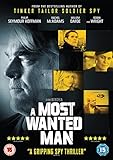
This is my review of A Most Wanted Man [DVD].

With the German authorities determined that the port of Hamburg should not be a seedbed of Islamic terrorism as it was for 9/11, the Americans and Russians are equally keen to take a hard line when Chechen dissident Issa Karpov turns up in the city. Maverick spymaster Günther Backmann, played by Seymour Hoffmann in one of his last roles, is determined to use Karpov as what he sees as a minnow to catch the barracuda of a Islamic benefactor who is suspected of siphoning off money for military purposes. Karpov's past and his current motives remain unclear, but how far can anyone be trusted?

As is usually the case, Le Carré's work requires total concentration, giving too little time to pin down possible flaws, or catch the answers to the questions which surface after the event. Yet, this film seems to me relatively clear, working towards a dramatic conclusion, which makes the mistake of dragging on just a minute or two too long. The ready assumption is that Karpov is "the most wanted man" but perhaps it is Backmann who manages to rile too many people.

The quality of acting of the main players is consistently high and mercifully audible, with generally sharp and engaging dialogues. Seymour Hoffmann stands out in his portrayal of a shambling yet astute character, capable of ruthless manipulation, perhaps a little too arrogant for his own good, yet displaying at times a surprising empathy for those he uses as pawns. This makes Hoffmann's premature death even more of a poignant waste.

⭐⭐⭐⭐ 4 Stars

Finding oneself

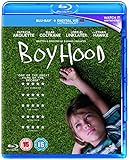
This is my review of Boyhood [Blu-ray].

The justifiably highly praised American film "Boyhood" reminds me of the BBC "Seven Up" series which featured a wide variety of characters every seven years to see how they developed. "Boyhood" was twelve years in the making, capturing aspects of a fictional boy's growing up between the ages of six and eighteen, using a cast of the same actors who are seen to be ageing over time.

Mason is a quiet, dreamy boy, upstaged by his bright, extrovert sister, played by the director Linklater's own daughter. His mother is a young single parent, desperately trying to "bring her kids up right, his father a charismatic ne'er-do-well who genuinely loves his children and makes an effort to keep in touch, forming a somewhat subversive element in their lives but maybe also encouraging Mason to "think outside the box".

Perhaps viewers who have raised children will be more engaged and moved by this film. It may fill American audiences with an element of nostalgia. For a British one, it is a fascinating portrayal of life in the States, as young schoolchildren swear their allegiance to the flag of Texas every morning, and fifteen-year-old Mason is presented with birthday gifts from a traditional old couple of an engraved bible and the family heirloom of a gun.

There are many moments of both humour and pathos, avoiding mawkish sentimentality or corniness. There are moments of the acute embarrassment, and navel-gazing of teenagers, but that is all part of the realism. Scenes in which Mason loses out in the competition with his sister to vie for his father's attention, or when young children pass a note in class to the "new boy" Mason are brilliantly acted, with the great naturalness which characterises much of the film. Dialogues are mainly convincing, if sometimes too rapid or mumbled for British ears to hear the punchlines.

I was never bored during this long film – 166 minutes – only a few scenes dragged or struck a false note for me, usually because of a weak performance from teenage actors playing minor parts. You may find it unconvincing that two of Mason's stepfathers develop a drink problem (and seem somewhat caricatured), but that could reflect Mason's somewhat conflicted mother's poor judgement in picking men.

The director enables us to feel some connection with all the main characters who are present throughout the film. It is a kind of soap, but more subtle and distinctive than any I have seen, perhaps because the scenes are selected to form a coherent thread leading to a clear conclusion. The film ends on the right note, leaving Mason on the brink of his college life, which seems likely to be fruitful, and the future open for the viewer to speculate.

⭐⭐⭐⭐⭐ 5 Stars

“Jimmy’s Hall” [DVD] – Fear of free thinking

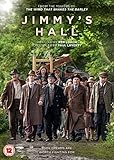
This is my review of Jimmy’s Hall [DVD].

Ken Loach’s heart is in the right place and the injustice suffered by the rural poor in Ireland is a theme which draws him back once again, although the theme seems smaller scale, the violence lower key than in “The Wind that Shakes the Barley”.

In 1932, Jimmy Gralton returns from recession-ridden New York to care for his widowed mother after his brother’s death but it soon becomes clear that he has in fact ended an exile resulting from his construction of a community hall seen as a threat by the Catholic church, since it provided education and encouraged working class people to think for themselves. A legendary local hero, he is mobbed on his return by the youngsters who wish him to revive the hall, and the lure proves too great to resist.

Apart from old political enemies, a major source of tension is the fierce opposition still presented by the local priest who seems obsessed with Jimmy, perhaps in part by the nagging sense that, although an atheist, communist and freethinker, he is in fact a man of integrity. Self-educated on the books from his mother’s former mobile library, Jimmy is also a persuasive speaker well able to counter the priest’s pulpit oratory. Soon, the hall is restored to its former glory, with the added novelty of a wind-up gramophone and the jazz records brought back by Jimmy. The free and joyous dancing to this music is of course the last straw for the priest.

Apart from Jimmy’s battle with the conservative priest,the strongest threads are his relationships with his deceptively meek and simple mother who in fact shares many of his ideals, and with his old flame Oonagh, now married, for whom his love is all the more poignant since they are so well-matched and in sympathy with each other. Despite all this, the plot is a little too thin for the length of the film (109 minutes) and the intended naturalness and apparent use of improvisation sometimes seem to fall a little flat. I agree with reviewers who have said that at times the film smacks of “political theatre” and becomes somewhat wooden or didactic. Yet, there are many engaging scenes and subtle interplay between the characters. Jimmy is convincing and charismatic, and the acting, which I sense may include a number of local extras with speaking parts, is in general very effective.

It was a problem for me that I did not possess a clear enough grasp of the internal politics of early 1930s Ireland to understand some of the political discussions which ensued. However, Loach does not miss the opportunity to draw a clear parallel between the bankers’ greed of 1920s America, which triggered the Great Depression, and the recent financial crisis.

⭐⭐⭐ 3 Stars

Outstanding mainstream drama in Bleak Valley

This is my review of Happy Valley [DVD] [2014].

Catherine Cawood, a tough but honest and decent sergeant striving to do her job in a rundown Yorkshire valley community, is consumed with anxiety over the release from jail of Tommy Lee Royce, the disturbed and violent young thug indirectly responsible for the death of her teenage daughter, by whom he fathered the grandson Catherine feels morally obliged to bring up, even at the cost of her own marriage. "What else could she do?" When Tommy becomes involved once again in serious local crime, her obsession with getting him back behind bars and out of her small grandson's life goes beyond the call of duty.

With its tongue-in-cheek title, since this must surely be one of the saddest former industrial valleys in Britain apart from the lovely scenery, the police thriller succeeds on all counts. It is compulsive viewing, filled with tense edge-of-the-seat moments, yet unlike many similar dramas is highly plausible, with no nagging holes in the plot twists. The quality of the acting is superb across the board, with a sharp script, many touches of humour to ease the frequent grimness of the theme and little need for subtitles.

It succeeds on several levels, not only as admittedly often bleak and bloody entertainment, but also in developing in depth all the characters as believable people, with their strengths and failings, and their complex relationships. The author even manages to evoke a little sympathy for most of the villains, including Royce, with some appreciation of the dysfunctional families and injustices which have moulded them. As the wealthy industrialist whose daughter is kidnapped observes at one point with unintentional irony, "all actions have consequences".

Mid-way, I began to question if some of the violence was gratuitous, but have to admit that the various murders are all "necessary for the plot" plus the skilful direction means that in fact much of the horror is in one's imagination. By the end, I was convinced that this is mainstream television drama that will be hard to better, and wish there was more produced of this standard.

⭐⭐⭐⭐⭐ 5 Stars

Compulsive viewing

This is my review of A Thousand Times Good Night [Blu-ray].

Driven by anger over injustice and the desire to make ordinary people aware of it, courageous yet impetuous, Rebecca is an internationally acclaimed war photographer. Is this fair on her longsuffering husband left to shoulder the responsibility of two daughters, or on the children themselves, the elder of whom is beginning to grasp the full extent of the risks her mother is taking? Does Rebecca get too much of a buzz out of the danger? What exactly does her work achieve, particularly when she is seriously injured in the process? These are not the kind of questions, of course, over which male war photographs are forced to agonise to the same degree.

Starting with a tense scene in which Rebecca films a young woman preparing for a suicide bomber attack, some may find the film too harrowing. Yet, it is for the most part a moving and thoughtful examination of an important current issue. The grimness is relieved by moments of humour and the beauty of the Irish coast where Rebecca's husband works – and you can't help wondering, as he does, how she can bear to swap this for the dusty mayhem of Kabul or a Kenyan refugee camp. The film presents both sides of the argument, avoids tipping over into sentimentality, and reaches an unpredictable and well-judged ending.

Juliet Binoche's acting in the main role is outstanding, and she is well-supported by those playing her often bewildered husband and children.

⭐⭐⭐⭐ 4 Stars

Janus-faced friendship

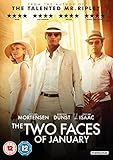
This is my review of The Two Faces Of January [DVD].

Charming and assiduous young American tourist guide Rydal, claiming to be fluent in many languages including Greek, is not above fleecing his trusting clients, mostly female, as he shows them round Athens in the early 1960s. In turn, he is intrigued by an American couple, the eye-catching Colette and her much older husband, Chester. Since this tale is based on a book by Patricia Highsmith, a gripping noirish psychological thriller soon develops. Despite his suave appearance and love of old books, Chester’s shady past catches up with him abruptly. The attempts of the three main characters to manage the situation entangle them in a downward spiral of events, compounded by provocation, jealousy and mistrust.

An interesting aspect is the portrayal of travel fifty years ago through a wilder Greece and Crete where it was easier to conceal oneself, and the parts are well-acted. The story may have lost some of the depth of the book which I have not read, but believe contains the idea that Colette reminds Rydal of a former girlfriend. Tense and exciting, the plot shows the characters’ shifting relationships and raises questions as to their motives and feelings.

As is often the way with such dramas, I felt it lost momentum towards a somewhat disappointing ending. It was as if, after a particular climactic event, either the author or the director did not quite know where to go. Overall, it is worth watching.

⭐⭐⭐ 3 Stars