“The Missing” [DVD] – Missing links

This is my review of The Missing [DVD].

On a carefree holiday in France, Tony and Emily suffer every parents’ worst nightmare when their five-year-old son Olly is abducted. With the heavy use of rapid switches back and forth in time, from the abduction in 2006 to the present day of 2014, it is often only possible to gauge the year from the colour and style of the distraught parents’ hair.

It turns out that the gripping, often unexpected plot twists of a detective thriller are in fact secondary to exploration of the psychology of losing a child. The couple pass through phases of clinging together for comfort, of anger and blame, of being brought together by occasional surges of hope, and of the simple inability to be together as before, with the constant memory of the missing Olly driving a wedge between them. Emily strives to move on and create a new life where she can be happy, but still glimpses the all too flesh-and-blood ghost of her son. Tony stubbornly refuses to give up the search, even at the cost of antagonising virtually everyone and losing his job, with only the bottle of wine he cannot afford to dull his senses.

Most of the characters are quite fully developed, with a subtlety which, for instance, can arouse some sympathy for a man struggling with paedophile tendencies. There is also the irony of the French detective Baptiste having suffered the pain of losing a child, but in a different way.

Overall, the acting, character development and settings are excellent. Although the plot twists are reasonably convincing or coherent in the main, I agree with reviewers who have felt that the drama would have been more effective with fewer episodes, achieved through editing out some of the “longueurs” of sub-plots.

There seems to be a current trend, perhaps set by “The Killing” for long, complex, gripping serials which seek to break the model of a “happy-ever-after-ending-against-the-odds-after-terrible-suffering” with an open or only partially explained conclusion. Apart from disappointing most viewers, this also leaves the cynical thought that the stage is set for another lucrative series, although in this case I have read that Series 2 involves a new, separate case. On reflection, I decided that the ending is quite clever in leaving viewers to argue over the final outcome. Also, is it one step beyond being able to cope with a sad ending to find the capacity to accept that, as in real life, you never discover for certain what happens or that matters do not work out as you might have wished?

⭐⭐⭐⭐⭐ 5 Stars

Three hundred dollars’ worth

This is my review of The Homesman [DVD] [2014].

In an unusual take on a mid-nineteenth century western, Hilary Swank produces a striking performance as Mary Bee Cuddy, an industrious and competent woman who is making a success of farming in a remote Nebraskan pioneer community. Although men respect her, no one is prepared to take such a bossy and plain woman as a wife. Instead, they trek east to find pretty, submissive women who are often completely unsuited to the hard rural life where there is no social security net to help those driven mad in the face of persistent crop failure, loneliness, infant mortality or perhaps the sheer scale of the treeless landscape which often resembles an ocean beneath the vast skies.

Mary Bee agrees to accompany three such "crazy" women on the demanding five week trek back east to the care of a kindly Iowan pastor. Realising that she cannot achieve this single-handed, she saves from a lynching the disreputable "George Briggs", no doubt one of many aliases, played by Tommy Lee Jones who also directs the picture. The outcome of the journey proves quite unpredictable, with a twist which viewers may find hard to accept, but which makes sense on reflection.

Apart from being well-acted, with superb photography and a haunting opening musical theme, this film has stunning photography of the bleak beauty of the Nebraskan high plains, some moments of comedy, but is essentially a grim tale. At times it regresses into a standard "shoot `em or burn `em" western, and some scenes designed to explain further the women's insanity are hard to take, and a little too disjointed. However, overall, the film's unusual theme makes it worth watching. It made me think more deeply than before about the particular plight of women trapped in pioneering communities about which they must often have been misled in advance. It also presents a somewhat nihilistic view of life in which people nevertheless continue to do good, perhaps in spite of themselves, achieving small successes even if they are soon forgotten. The inconclusive ending is very apt.

⭐⭐⭐⭐ 4 Stars

The Imitation Game – Perhaps pale but interesting imitation

This is my review of The Imitation Game [DVD].

It is common knowledge that Turing was an outstanding mathematician who played a key role during WW2 in developing a form of early computer (based on the Polish “bomba”) to crack the German codes which protected vital military intelligence. This may have shortened the war by two years and saved an estimated 14 million lives. The full extent of his contribution concealed by the Official Secrets’ Act, Turing ran up against the law in the early 1950s when he admitted to homosexual acts during the investigation of a burglary of his house, and chose the punishment of chemical castration rather than prison, to enable him to continue his work. Sadly, he seems to have committed suicide, perhaps to escape the side effects of the medication, or to ease his loneliness.

This is clearly a rich field for an often tense and moving drama – also managing to include a good deal of humour – , which sandwiches the wartime events between scenes of his school days and ultimate arrest. One does not know to what extent he really was an autistic child whose “oddness” and literal-mindedness singled him out for bullying. We see him courting mockery by separating orange carrots from green peas, and finding a welcome refuge in a relationship with another pupil Christopher, whose name is eventually used for the code-crunching machine. Again, the film may exaggerate the extent of Turing’s initial unpopularity at Bletchley Park, for his arrogance and stubborn focus on his machine, unleavened by the ability to socialise or recognise a joke. It seems that, in real life, it was a group decision to get support for the machine by writing to Churchill, but that would have been less dramatic in the film than Turing acting as a loner.

Unlike some reviewers, I did not find the existence of a Soviet spy in Turing’s team at all implausible. It is an interesting idea that this might have been a ploy favoured by MI6 to get information to Russia which was supposed to be an ally at the time. I was also fascinated by a dilemma which I had not considered before: after the code was broken, the knowledge gained could not be put to immediate and total use, since that would have alerted the Germans to the fact, and merely led them to switch to another code which might prove even harder to crack. We are shown how even Turing was chastened by the knowledge of the arbitrary power over life and death which this gave the code-breakers – although was it they who in practice made this choice?

The film is well-acted, with a strong and complex relationship developed between Turing and the gifted and unconventional mathematician Joan Clarke, prepared for them to love each other “in their own way”. The weakest aspect was coverage of Turing’s arrest and subsequent treatment in the early 1950s which seemed rushed and unclear in places. Although it may have altered, simplified and distorted many details into a kind of “faction”, the film does a good job in making a complex and abstruse technical theme essentially comprehensible in outline and interesting to a wide audience, and in showing the tragedy of a brilliant man being treated badly for his eccentricity (which may not have been the case to the extent shown) and persecuted for his homosexuality, which most certainly occurred.

⭐⭐⭐⭐ 4 Stars

Caught in the light

This is my review of Mr Turner [Blu-ray] [2014].

We are introduced to Mr Turner as a middle-aged man, with only hints of his past life as the talented son of a Cockney barber, or his rise to fame as a painter entertained by aristocrats and displayed at the Royal Academy. Nor is there any clear explanation of his messy personal life, with inconvenient visits from a shrewish ex-mistress, justifiably angry over his neglect of her and their two daughters, one now with a child of her own.

Timothy Spall portrays Turner as eccentric and boorish, yet capable of deep affection as shown to the jolly old father who mixes his paints and makes up picture frames, in between shopping for a pig's head in the local market. Perhaps Turner's misogyny, also suggested by the casual sexual exploitation of his downtrodden and doting servant Hannah, stems from the trauma of having a schizophrenic mother carted off to Bedlam when he was a small boy. However, painting is not the sole channel of his sensitivity and vision: he can be moved to tears by Dido's Lament, and, admittedly in a drunken haze, shows empathy for poor Effie, the oppressed wife of Ruskin, portrayed here as a ghastly prig whom Turner delights us by taking down a peg or two.

Although we are shown Turner ageing, pained to hear the public turning against his later more abstract works, and finding solace in a secretive relationship with the Widow Booth, this film is a series of scenes which combine to form a vivid impression not only of Turner as a man but also of early nineteenth century life. The film's attention to period detail is impressive with the inclusion of a myriad of characters who may appear only in passing. It is like being a fly on the wall, or bird in flight, observing Turner silhouetted against the kind of sunset light which endlessly fascinated him, leaning on the rail of a ferry bound for Margate, weaving his way along narrow crowded quays to Mrs Booths' lodging, greeting other great painters at the Royal Academy or being rowed towards the Temeraire as friends joke over the likelihood of his painting it: "I shall cogitate upon it," he drawls.

We see Turner's insatiable curiosity as when he visits a photographer for the first time, quizzing the supercilious man who mistakes him initially for an ignoramus. Or when, showing a respect for women when they demonstrate talent, he invites a natural philosopher home to demonstrate how nails may be magnetized by the colours of the spectrum – at the forefront of scientific thinking at the time.

Most scenes are low-key, often quirky yet revealing, such as Turner being pestered for money by an unsuccessful painter, or the pails set round his domestic display room to catch the drips of rainwater through the ceiling. There are also some powerful dramatic scenes, as when Turner rejects a wealthy businessman's offer to buy up his works for a vast sum, since he has resolved to leave them to the nation to be viewed "gratis". Sadly, they were not to be retained in one place as he had hoped.

On reflection, I decided this is an outstanding film which makes one think about Turner as a man, flawed and complex, and want to find out more about him and his times. Yet, the massive hyping made me expect to be impressed, so that some of the earlier scenes, such as the improbably atrocious music at an aristocratic soirée were a disappointment.

⭐⭐⭐⭐⭐ 5 Stars

Justice between a rock and a hard place

This is my review of Mystery Road [DVD].

Of Aboriginal birth, Jay Swan has returned from a training course to work as a detective in a god forsaken outback Queensland community. Forced, ostensibly owing to staff shortages, to investigate alone the murder of a young “native” girl, Jay finds himself caught between the rock of his work colleagues’ prejudice and apparent desire to conceal some of their own shady dealings with local criminals, and the hard place of being regarded as a traitor by the native community where he grew up, everyone being a “cousin” or “brother” but reluctant to talk. He is even unable to get any information out of his daughter Crystal, now living with his estranged wife. A friend of the dead girl, it becomes painfully clear to Jay that Crystal is involved with the drug-dealing, even prostitution of the white low-lifes who are corrupting the vulnerable Aboriginal community already fractured by generations of mistreatment at the hands of white settlers.

In this slow-moving, understated film, with excellent acting from Aaron Pedersen as Jay, we are shown the workings of this outback community, with the growing evidence stacked against an honest law enforcer being able to obtain justice. The filming of the vast, flat, barren landscape with the occasional dramatic rocky scarp is very striking. Apart from a few brutal stereotypes, the characters of individuals, whether victims or villains, are often subtly developed: Jay’s bitter alcoholic ex- wife, a local drug-dealer whom he is rather unconvincingly allowed to question alone, or his boss, who may be a weak conniver or even an arch rogue. The tragedy of the Aborigines’ plight is portrayed with a conscious-churning clarity.

It was therefore a disappointment to me that the director chose to resolve Jay’s impasse with the climax of a stagy western shootout, of the kind where the good guys would in reality have been wiped out in the first few seconds.

My four stars are therefore for the work as a whole and the acting, not for the shoot-out which ruined it for me, by abruptly turning the film into an American-style western. I have to admit that many reviewers have admired this move for the quality of the direction and its arguable symbolism.

⭐⭐⭐⭐ 4 Stars

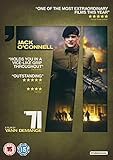
’71 – Apocalypse then in Belfast

This is my review of ‘71 [DVD].

Based on the real tragic and messy situation of 1971 Belfast, this is a tense and gripping thriller, well-filmed, with an evocative score and some excellent acting, in particular from the leading player Jack O’Connell.

Having barely finished his gruelling army training, Gary Hook is sent to Belfast as one of a unit of inexperienced young soldiers, out of their depth in peace-keeping exercises which rapidly prove to be grim urban guerrilla warfare. Against a backdrop of burning cars and housewives banging dustbin lids on the pavement in a tribal rhythm, we see the soldiers struggle to hold back a hoard of furious civilians, spitting abuse and hurling stones as they see their neighbours beaten up by RUC men, whom the army has been ordered to defend. In the mêlée, Hook becomes separated from his colleagues and is left behind, menaced from two sides by an out-of-control faction of young IRA fighters who want a soldier’s scalp, and the sinister Military Reaction Force (which was created in 1971), supposedly deployed to use their local knowledge to help the Brits, but in fact running double agents in murky, shifting partnerships about which Hook may inadvertently have learned too much. We gain a keen sense of Hook’s will to survive, his confusion when injured yet without losing basic compassion for the weak and vulnerable, and the growing realisation that fighting in the army is not what it has been cracked up to be – not, as he had perhaps thought, a promising break for a lad brought up in a children’s home. Right up to the end, you know that the director is prepared to show how the essentially good, as represented by Hook, may not escape into a happy ending.

The identity of the various factions is a little hard to work out during the film, particularly for those who cannot remember the Irish troubles of the 70s, but it is a powerful reminder of a period we should not forget.

⭐⭐⭐⭐ 4 Stars

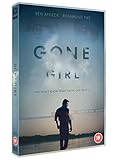
Gone Girl: Deserving each other?

⭐⭐⭐ 3 Stars

This is my review of Gone Girl [DVD] [2014].

In the media storm over his wife Amy’s disappearance on their fifth wedding anniversary, laid-back Nick fails to show the normal reactions of anxiety and distress. Has he murdered her, and if so, for what reason, or is Amy the one playing some manipulative game? Has she been emotionally warped by her artificial, hot-house childhood as the marketing symbol of the best-selling series of “Amazing Amy” books penned by her insensitive parents, always portraying a girl enjoying popularity and success not actually experienced in real life?

This is the intriguing basis of a psychological thriller which switches back and forth in time, between the viewpoints of the two main protagonists, with unpredictable twists right up to the end.

Having read the book first, usually a disadvantage for a film, I was initially disappointed by a slow-paced, lacklustre and muffled dialogue, to my British ears. Once Nick was established as a suspect, all this began to improve. Yet, in some ways, the film remains at an inevitable disadvantage compared with the medium of a book, which alternates between two clearly unreliable narrators, enabling us to get into their thought processes. Much is left to the imagination, whereas in the film you may, for instance, witness an act of which someone is accused, leaving less doubt that it has really occurred. The book is more satisfying in several other respects: the witty patter of the writing, the stronger development of the “Amazing Amy” aspect, the deeper background to Nick’s past, including the role of his dysfunctional father. In the book, the ending seems more powerful, provoking conflicting and changing reactions whereas, in the film, I did not care much either way.

The film’s strength over the book is to provide a vivid portrayal of the ghastly intrusion and distortion of the American media, where caricatures of female presenters, ageing anorexic, dyed and lacquered, mail-box-mouthed harridans stir up the fires against Nick or restore him to the fold in a gush of sentimentality. The film is often wrily amusing, with some pithy dialogues and good acting across the board. Some of the moments of greatest realism and honesty, which are therefore the most truly moving, are between Nick and his long-suffering twin sister.

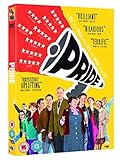
Pride – A reminder to question our values

This is my review of Pride [DVD] (2014).

Although I remember the bitterness and violence of the 1984 Miners’ Strike, the role of a gay and lesbian group in supporting them, and the miners’ act of gratitude in leading the 1985 Gay Pride march completely passed me by. This piece of recent history forms the dramatic background to the lives of ordinary individuals including a feisty young Irish gay who identifies with the miners’ cause when he sees them being vilified, and the catering student struggling to come to terms with the gayness he is concealing from his conventional family.

This uplifting film manages to be both funny about prejudice, using humour to debunk it, yet poignant in its coverage of the fear of AIDs and the grim awareness of the frequent shortness of a gay life in the 1980s. Scenes of a mining community under pressure in the breath-taking beauty of the Welsh valleys made me question the sense and morality of the rapid destruction of the coal industry in Britain. Reminders of worker solidarity made me think how skewed our values have become, as we privatise public sector services, cut the benefits of the poor to pay off deficits caused by feather-bedded bankers, and subject ourselves to the jargon of performance management and marketing.

The film is honest in showing the bickering and division, as gay men display a macho indifference to the lesbians’ demands for recognition, and the leaders of the pride march want to play down the political angle after the failure of the miners’ strike. A few characters are stereotypes and the rapid scene changes reduce some plot details to sound-bites which could make the situation hard to follow for those too young to have lived through the crisis. A few scenes fall short, such as the unlikely abortive assault on a miners’ social event by the two sons of the rampantly homophobic committee member,but the acting is mostly very convincing, with the added power of the music – one of the most moving scenes is when, starting with a lone voice, a roomful of miners’ families rise to their feet in their common knowledge of the song of solidarity, “Bread and Roses”. We must have bread, but we still need a few roses in life.

⭐⭐⭐⭐ 4 Stars

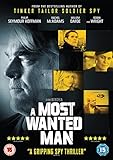
The dangers of making the world a safer place

This is my review of A Most Wanted Man [DVD].

With the German authorities determined that the port of Hamburg should not be a seedbed of Islamic terrorism as it was for 9/11, the Americans and Russians are equally keen to take a hard line when Chechen dissident Issa Karpov turns up in the city. Maverick spymaster Günther Backmann, played by Seymour Hoffmann in one of his last roles, is determined to use Karpov as what he sees as a minnow to catch the barracuda of a Islamic benefactor who is suspected of siphoning off money for military purposes. Karpov's past and his current motives remain unclear, but how far can anyone be trusted?

As is usually the case, Le Carré's work requires total concentration, giving too little time to pin down possible flaws, or catch the answers to the questions which surface after the event. Yet, this film seems to me relatively clear, working towards a dramatic conclusion, which makes the mistake of dragging on just a minute or two too long. The ready assumption is that Karpov is "the most wanted man" but perhaps it is Backmann who manages to rile too many people.

The quality of acting of the main players is consistently high and mercifully audible, with generally sharp and engaging dialogues. Seymour Hoffmann stands out in his portrayal of a shambling yet astute character, capable of ruthless manipulation, perhaps a little too arrogant for his own good, yet displaying at times a surprising empathy for those he uses as pawns. This makes Hoffmann's premature death even more of a poignant waste.

⭐⭐⭐⭐ 4 Stars

Finding oneself

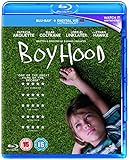
This is my review of Boyhood [Blu-ray].

The justifiably highly praised American film "Boyhood" reminds me of the BBC "Seven Up" series which featured a wide variety of characters every seven years to see how they developed. "Boyhood" was twelve years in the making, capturing aspects of a fictional boy's growing up between the ages of six and eighteen, using a cast of the same actors who are seen to be ageing over time.

Mason is a quiet, dreamy boy, upstaged by his bright, extrovert sister, played by the director Linklater's own daughter. His mother is a young single parent, desperately trying to "bring her kids up right, his father a charismatic ne'er-do-well who genuinely loves his children and makes an effort to keep in touch, forming a somewhat subversive element in their lives but maybe also encouraging Mason to "think outside the box".

Perhaps viewers who have raised children will be more engaged and moved by this film. It may fill American audiences with an element of nostalgia. For a British one, it is a fascinating portrayal of life in the States, as young schoolchildren swear their allegiance to the flag of Texas every morning, and fifteen-year-old Mason is presented with birthday gifts from a traditional old couple of an engraved bible and the family heirloom of a gun.

There are many moments of both humour and pathos, avoiding mawkish sentimentality or corniness. There are moments of the acute embarrassment, and navel-gazing of teenagers, but that is all part of the realism. Scenes in which Mason loses out in the competition with his sister to vie for his father's attention, or when young children pass a note in class to the "new boy" Mason are brilliantly acted, with the great naturalness which characterises much of the film. Dialogues are mainly convincing, if sometimes too rapid or mumbled for British ears to hear the punchlines.

I was never bored during this long film – 166 minutes – only a few scenes dragged or struck a false note for me, usually because of a weak performance from teenage actors playing minor parts. You may find it unconvincing that two of Mason's stepfathers develop a drink problem (and seem somewhat caricatured), but that could reflect Mason's somewhat conflicted mother's poor judgement in picking men.

The director enables us to feel some connection with all the main characters who are present throughout the film. It is a kind of soap, but more subtle and distinctive than any I have seen, perhaps because the scenes are selected to form a coherent thread leading to a clear conclusion. The film ends on the right note, leaving Mason on the brink of his college life, which seems likely to be fruitful, and the future open for the viewer to speculate.

⭐⭐⭐⭐⭐ 5 Stars