Navel-Gazing

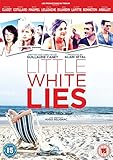
This is my review of Little White Lies [DVD].

This French approach to a "Three Weddings and a Funeral" type drama introduces us to a group of mainly thirty-something longstanding friends. Although shocked when one of them is seriously injured in a motorcycle crash, the rest decide not to be deflected by his coma from their plan to spend a seaside break at the holiday home of Max, a successful restaurant owner. Older than the others, Max is a tense and driven control freak, who forms the focus of many of the more amusing scenes, not least when another character, obsessed with his own sexuality, confesses the love for Max that he has been desperately trying to conceal.

Most of the group members turn out to have secret problems and to be telling each other "little white lies". There is the young man who drives the others mad as he agonises over how to keep his girlfriend and gets totally confused when they offer conflicting advice. Even the successful actress is found to be troubled by her "biological time clock" and failure to find the right man.

Despite the many amusing, and occasionally moving situations, I can understand why some people have been left cold, or irritated, by the unrelenting navel-gazing and angst of privileged people who don't really have much to moan about.

I agree that the film is too long, and probably self-indulgent towards the end. The only thing that really bugged me is the sentimental English pop music included in what are meant to be solemn moments- perhaps this doesn't sound so crass to French people who don't appreciate the banality of the lyrics!

⭐⭐⭐ 3 Stars

Beautiful Lies – Farced Forward

This is my review of Beautiful Lies [DVD] (2010).

This is the latest in a spate of well-made, “feel good” films flowing out of France. Any irritation over its silliness is offset by the magnetic presence of Audrey Tautou, as Émilie Dandrieux, the to be honest rather capricious and devious joint owner of a hair salon. Not realising that an anonymous love letter has been sent to her by Jean, the salon’s handsome odd-job man, Tautou retrieves this from the waste bin, and uses it verbatim to concoct a letter from an imaginary secret admirer to her mother Maddy. Émilie is convinced that this will serve to shake Maddy, sympathetically played by Nathalie Baye, out of her longstanding grief over being abandoned by her callous husband.

In the style of true French farce, the misunderstandings pile up as you may well imagine.

There are many amusing scenes, as when Émilie is forced to admit that she has sacked Jean, because the discovery that he is multilingual and Harvard- educated (he’s lost his position as an interpreter owing to a nervous breakdown) makes her feel inadequate and uncertain about how to speak grammatically in his presence.

The denouement is cringe-making in places, the emotions superficial – except for Jean’s at times inexplicable fancy for Émilie – and the ultimate happy ending not in doubt, but a little light-hearted entertainment probably never did anyone much harm, and it is a way of practising one’s French. You may also like the fact that the main characters are all flawed in various ways, especially Émilie, which may make them appear more human.

My only query is why the title was changed from “De Vrais Mensonges” which translated literally as “Real Lies” seems more apt.

⭐⭐⭐ 3 Stars

Fabriqué en Dagenham à la française.

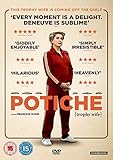
This is my review of Potiche [DVD] [2010].

This tale involving a strike at a French umbrella factory reminds me of the recent “Made in Dagenham” about the 1968 Ford dispute over equal pay for women, but it is purely fictional, and a more lighthearted comedy.

Catherine Deneuve arouses immediate sympathy as Suzanne Pujol, the underestimated middle-aged “trophy wife” of Robert, the ghastly man who has taken over her father’s business and driven the staff to mutiny through his heavy-handed management style. When Robert is incapacitated by a heart attack, Suzanne is persuaded to take over and proves a remarkably emollient and creative director. Of course, when he has recovered, she is expected to get back on her ornamental shelf. But after a taste of power, combined with her discovery of his philandering, how can she return to being a simple “potiche”? Also, where will the loyalties of the couples’ son and daughter lie?

There is the added complication of the Suzanne’s long ago fling with Maurice Babin, the town’s socialist mayor, played by Gerard Depardieu, whose help she needs at first to pacify the angry strikers.

Recommended for a well-acted and humorous evening’s entertainment.

⭐⭐⭐⭐ 4 Stars

Amusing Take on Nostalgia for a Lost Paris

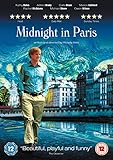
This is my review of Midnight in Paris [DVD][2011] [2012].

During a holiday in Paris with his prospective in-laws, Gil, a young Hollywood screenwriter who longs to get a novel published , finds himself transported each night on the stroke of midnight into the world in which he nostalgically thinks he should have been born – the 1920s Paris of Scott Fitzgerald and Hemingway. At first, I thought this sounded too silly and feared the film would be full of pretentious arty allusions that I did not “get”.

In fact, the encounters with an array of writers, painters, film-makers and so on prove highly amusing even if you know little about them. The audience laughed out loud at the sight of Adrien Brody made up to resemble Dali, and there is the ongoing humour of Gil causing confusion by letting slip his knowledge of what is going to befall the various characters. There is also his infectious joy every time he recognises some famous face.

The modern-day scenes are also entertaining, with each character possessing a distinct personality even down to the minor characters of Michael Sheen’s “pedantic” academic, with an eye to an affair with Gil’s sexy but petulant fiancée Inez, or Carla Bruni acting quite well, if out of character, as a self-effacing tour guide.

The opening scenes of Paris, in sun and rain, remind us of the timeless allure of this city, and the background of Woody Allen’s beloved slow saxophone jazz, and the Cole Porter and Noel Coward tunes from the `20s, also help to capture the nostalgia for Paris which we all begin to understand if we don’t already feel it.

Owen Wilson is very effective as a mouthpiece for Woody Allen, capturing him even in the slightly scatty and bewildered air and tone of voice, but of course not resembling him at all in being tall, blond and blue-eyed.

This is light, with no claims to anything deep, and turns out to be very enjoyable and in some ways unexpectedly quite wise and thought-provoking about the way, no matter in which age they are born, people tend to hark back to an earlier golden age.

⭐⭐⭐⭐ 4 Stars

An Innocent Ensnared at the C16 French Court

This is my review of The Princess Of Montpensier [DVD].

Visually very beautiful and well-acted, this is the tale of how the innocent young Marie De Mezieres falls for the handsome, swashbuckling Henri De Guise but is forced for political reasons to marry the cold and unappealing young Prince of Montpensier. Still very young, she continues to receive lessons from the Prince's tutor, and some of the most moving and occasionally tense aspects of the film arise from the older man's love for her, which has to remain suppressed and unexpressed.

Many of the characters are two-dimensional, prone to sudden unconvincing changes in behaviour, or are caricatured (the tutor came across to me as the most "real" person), and the scenes are often too stylised for one to be deeply affected by the drama. I found myself more moved by the tutor's plight than the fate of the princess, which I do not think was the author's intention. Lacking a grounding in French history, I found some of the details hard to follow, but the bitter mistrust between the Catholics and Protestants forms an interesting background and overall it is quite entertaining.

⭐⭐⭐ 3 Stars

The webs we weave

This is my review of The Debt [Blu-ray] [Region Free].

This is an exciting drama which also manages to be much more moving than I had expected, and to raise some complex moral issues, rather than be simplistically pro-Mossad as I had feared.

Intense concentration is required to catch all the details and nuances, as the plot is revealed in brief, fast-moving scenes switching back and forth between the 1960s and the 1990s. It is hard to summarise the plot without giving away too much, as I think some previous reviewers may have tended to do.

Essentially, in the '60s, three driven young members of Mossad have been tasked to capture a notorious Nazi doctor,"the surgeon of Birkenau", now practising gynaecology, of all things, in an East Berlin hospital, and to bring him back for trial in Israel. Although there are some major hitches, the three claim to have managed to kill him and are feted as heroes for the next three decades. This accolade is of course questionable since the man has been denied a fair trial, which would have shown the Israelis to be morally superior to their oppressors.

It becomes apparent that the facts are not quite what they seem. The film becomes less of a righteous if fanatical Nazi hunt and more of a psychological drama – the relationship between the three agents, two men and a beautiful woman. The "leader" Stephan is ambitious, David is traumatised by the loss of his entire family, and Rachel also often appears too emotionally vulnerable for the task.

Under pressure, the trio begin to behave in often all too understandably flawed and "human" ways. We see how the captured Doctor Vogel plays on this. I disagree that he comes across as "too nice" because he seems to love his wife: in his lack of real remorse for past crimes, his crude anti-semitism and his ability to manipulate and goad his youthful captors, he is particularly chilling and sinister.

There is also plenty of scope to debate the three agents' various motives for their actions, which cover a wide range: fear, altruism, ambition, personal advantage, to maintain status and the love of others, or simple pragmatism. How should they have behaved at each stage? How would we?

Although some plot details do not hold water when you think about them afterwards, I do not agree that the film tries to cover too much. The complexity seems to me to add to its value and effectiveness. I also do not feel that it loses its way at the end when the fifty-something Rachel sets off for the Ukraine to honour "a debt" and conclude unfinished business. The end of the film is not what you would expect, and leaves matters slightly open for you to draw your own conclusions, which is often the mark of a good film.

⭐⭐⭐⭐ 4 Stars

Subtle Version of Much-filmed Enduring Classic

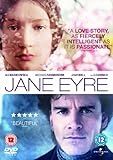
This is my review of Jane Eyre [DVD] [2011].

Why should anyone want to make yet another film of "Jane Eyre"? It is not just that this classical page-turner lends itself to the big screen with the harsh, menacing beauty of the Yorkshire moors (particularly with a backdrop of dark bands of rain on a red horizon), the sharp-witted heroine with the inner strength to survive against the odds, and the irresistibly attractive but tortured Mr Rochester.

This version of the tale brought out aspects I had forgotten, or perhaps failed to notice as a teenage reader. There is Jane's sense of being trapped in her life, the desire to see the world beyond her limited experience. Rochester's passion for Jane is more than merely physical. He recognises in her the purity and innocence which he imagines can save him: "It is your soul I want, Jane."

The film helps you to see how remarkable the story was for its day. How did the daughter of a strict parson, brought up in such isolation, come to formulate such radical thoughts? Although Jane cannot bring herself to live with Rochester as his mistress, there is the implication that a relationship outside the convention of an unhappy marriage may be the better course. Similarly, there is the strong suggestion of the possibility of equality, regardless of class or gender.

The film does not neglect the subtle touches of say, the unexpected kindness of the housekeeper Mrs Fairfax (Judi Dench), far from the simple-minded old woman that the arrogant Rochester supposes, or of Jane capturing in her idle sketch of the clergyman St.John Rivers a sense of the uncompromising fanatic beneath his kindly exterior.

With creative writing courses as yet unheard of, how did Charlotte Bronte come to know "all the tricks of the trade" plot wise , as regards, for instance, the growing sense of menace (something nasty in the attic) and the two great twists of the revelation of Rochester's guilty secret, and the final drama which enables Jane to remain with him?

Some reviewers have felt that this latest version "lacks something" and comes across as rather "soulless and heartless". This may be to miss the point that, faithful to the book, the film respects the conventions of the nineteenth century. It is true not only to the complex, yet very expressive language of the day, but also to the habit of being dutiful and repressing strong feelings.

This film is worth seeing both as an entertaining, well-acted and beautifully filmed drama and also for the discovery or reminder of Charlotte Bronte's great talent as a writer of both "Jane Eyre" and other moving novels.

⭐⭐⭐⭐⭐ 5 Stars

Bridging the cultural divide

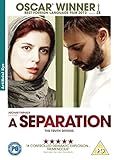
This is my review of A Separation [DVD] [2011].

At a time of great ignorance in the west of life in modern Iran this film provides some useful insights. I was struck by how similar the issues are in some ways to those of a British couple facing separation, yet also by the extent of the cultural differences. The wife wants to leave the country with her daughter, but her husband has the power to forbid it. The perceptive teenage daughter is caught between her parents, and chooses at first to stay with her father in a desperate attempt to keep her parents together. The wife goes off to live with her own parents, leaving her estranged husband with the problem of how to obtain day care for his father, who suffers from dementia. The woman who is hired for this task through a casual arrangement proves unable to cope. There is a fascinating scene in which, concerned for the old man who is incontinent, she phones an imam for advice as to whether it is permissible for her to help her charge to clean himself. The husband returns home to find the flat empty and his father in a state, and matters turn violent when the carer comes back without a good explanation. In the ongoing dispute, the complexity of the issues is clearly shown, with right on both sides, and one’s sympathies are divided.

This is a tightly plotted and entertaining drama, despite the at times grim theme – a kind of middle eastern update of Kramer versus Kramer (American film about a divorced couple with Meryl Streep and Dustin Hoffman) and in my view much deeper. We are thrust into the midst of some very convincing dramatic exchanges. The Iranian justice system is intriguing as we see the various protagonists crammed into an office, arguing loudly with each other and with the official whose task it is to decide on what seems an arbitrary basis who should be charged and who should be held in jail pending trial. Although harsh, Iranian society seems in some ways more deeply moral and concerned with fairness and right versus wrong than our own. Ironically, as in Britain, the better educated and wealthier couple’s rights win out over those of the poorer family.

“Separation” is not just a drama with an appeal which crosses cultural boundaries. It also increased my understanding of Iranian culture and deserves to be more widely viewed to break down our ill-founded prejudices.

⭐⭐⭐⭐⭐ 5 Stars

Cold War revisited with Subtle Menace

This is my review of Tinker Tailor Soldier Spy [DVD] [2011].

This film requires intense concentration, as the scenes switch back and forth in time, and are often so momentary that you could miss an important piece of information. As is so often the case these days, the quality of acting is excellent – I could hear every word – together with the artistry of the photography and the careful construction of scenes with background music to bring back a sense of the 1970s.

Although one of the actors has warned in an interview that the film is hard to follow if you are unfamiliar with the plot, I think I "got" most of it. In some ways, not knowing the details beforehand may have been an advantage as I could not get annoyed over any omissions or new twists. My slight disappointment over the denouement – unmasking of the suspected mole in MI6 – may be because, when pared down to fit into two hours, the essential plot seems rather slight with a few of the usual "But what about?" flaws. It rose in my estimation when I was reminded that Le Carré has been a real spy, and that his novel, on which the film is based, was inspired by the defection of Kim Philby. If the mole's reasons for treachery seem rather unconvincing, they are no more shallow than those of the real-life traitor – I gather that this privileged lover of the good life had a hard time adapting to the grim reality of Soviet Moscow.

Although some scenes are slow in pace, perhaps to reflect the bureaucracy and stuffiness of M16, the need for a spy to watch and wait patiently, there is a persistent sense of menace and impending violence. Played by Gary Oldman, the ruthlessness behind George Smiley's impeccable manners and measured approach is subtle yet very apparent, as is his repressed grief over his wife's infidelity. In another subtle touch, Ann Smiley is never seen fully, just "in flagrante" in a shady conservatory during a party, or as a shadow returning home – enough to arouse a rare, barely visible smile as Smiley comes back to work at "the Circle". Oldman acts out very well his recollection of a meeting when he tried to "turn" Karla, the "Moriati" of the KGB. Would this have been better as a flashback with Karla "in person"?

I suspect that the story may have suffered from being squeezed into two hours but the film is worth seeing, if only to bring back memories of the Cold War and prompt you to go and read one of Le Carré's novels or look at the DVD of the 1970s TV version of "Tinker Tailor" with Alec Guinness.

⭐⭐⭐⭐ 4 Stars

The Skin I live in – Skin Deep

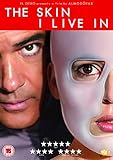
This is my review of The Skin I Live In [DVD] [2011].

Almodovar is so celebrated as a film director that one expects any criticism to be construed by “connoisseurs” of his art as a sign of one’s own lack of sensibility.

I can live with a ludicrous plot and tolerate a certain level of sex and violence for a good reason, but I want something more as well. In this case, a criminally insane surgeon, grief-stricken by the loss of his wife in a car which caught alight, is bent on developing a skin immune to burning. He uses as a guinea pig a beautiful young woman called Vera who is a prisoner in his house, continuously observed via camera on vast screens. How and why does she resemble so much his dead wife? Is the surgeon falling in love with his own creation, thus making himself too vulnerable? So far so good, but the plot proceeds in jerky steps and unrealistic scenes so that I began to lose interest. At one point, the maid has to explain to Vera what is going on, a crude device for relieving the audience of its growing perplexity.

It is true that scenes are often visually very striking. With infinite care, Almodovar has paid attention to every detail of a shot. In particular, he displays his love of fabrics, colours, textures and costumes. The arrival of the maid’s violent son, dressed as a tiger, provides a cue to indulge this love. This also provides an example of the bizarre, sinister, no holds barred physicality beloved by Almodovar. Fabrics also give rise to striking images – the dummies in the shop window of a fashion store – where we encounter Vicente, another key character in Almodovar`s crazy weaving of violent sexual fantasies with rational explanations.

Eventually the strands of the plot twine together to achieve an ending which reviewers have described as a twist, although it seemed to me quite predictable.

Even admirers of Almodovar admit this film is “tosh” but love it for the visual effects. Doesn’t a film need to be more than a beautifully embroidered duvet cover in an unsettling (when you know the facts) sex scene, the guzzling of scraps of torn dresses in a hoover nozzle, the curves of a slender body in a yoga pose, or a startling red gown in a shop window?

“A Clockwork Orange”, although withdrawn by Kubrick himself for its “gratuitous violence” shows by comparison how a bizarre and visually striking tale can also have a coherent plot and a thought-provoking message.

⭐⭐⭐ 3 Stars