Shades of Ruritania

This is my review of The Scapegoat [DVD].

I read Daphne Du Maurier's "The Scapegoat" too long ago to recall how true this new TV drama/DVD is to the original. It is an entertaining psychological not-quite thriller, if you can accept the implausibility of two identical but apparently unrelated men meeting by chance, and one deciding to foist his identity on the other.

John, the Welshman without family ties who has just lost his teaching post finds that, in becoming Johnny he has gained a palatial family home, an army of respectful servants, an adoring wife and cute daughter. However, it soon becomes apparent that he is a scapegoat, since he has also been lumbered with a family business in crisis, and somehow managed to estrange both his sister and brother. Then there is the ultra-efficient and possibly sinister servant, always dressed in black, a younger version of Mrs Danvers lurking in the background.

Much of the initial entertainment lies in seeing how on earth John will manage to gain acceptance from close relatives and friends who ought to know him too well to be fooled, especially since he does not know the way to his mother's bedroom, is unclear how to distribute the presents he seems to have brought, and never knows which of the women he meets will be one of Johnny's lovers.

Although they may look so alike, the two men have very different personalities and values. So, the drama begins to focus on how John will act as he begins to learn more about the business and the individual family members.

A lightweight story on the surface proves to have hidden depths, assisted by a strong cast and careful reconstruction of life in the early 1950s, down to the novelty of the first television set.

⭐⭐⭐⭐⭐ 5 Stars

No Exit?

This is my review of Shadow Dancer [DVD] [2012].

Probably still traumatised by guilt over her part in a tragedy which occurred in her childhood, Colette takes part in terrorist activities as a member of a family with hardline IRA sympathies. When she falls into the hands of British agents, Colette is vulnerable to pressure to become an informer, because of her concern to maintain her relationship with her son.

Set mainly in the 1990s, this tense, complex thriller is visually very effective, creating a strong sense of the close-knit, claustrophobic community from which it is hard for people to break free. We see how John Major's moves to make peace had little appeal to those for whom dissidence has become a way of life.

I did not mind the slow pace of the film and would have found it compelling, despite a few too many twists to be entirely plausible, if certain key events and the identities of some of the characters had been made a little clearer, and if I had been able to hear what the actors were saying. It was not just a question of Irish accents, since Clive Owen and most of his colleagues also mumbled, often incomprehensibly. Only Owen's boss, Gillian Anderson with a posh English accent uttered every word with crystal clarity.

Since Andrea Riseborough in particular puts in a fine sensitive performance as Colette, a woman trapped by circumstance, it is a pity the director did not pay more attention to the vital issue of audibility. If you see this film, make sure it is as a DVD with sub-titles.

⭐⭐⭐ 3 Stars

The cost of knowing best

This is my review of Monsieur Lazhar [DVD] [2011].

In this well-acted and subtle French Canadian drama a school head, desperate to find a replacement quickly for the teacher who has tragically hanged herself, hires the courteous but persistent Bachir Lazhar, without asking too many questions about his past.

Despite his rather traditional teaching methods, and the fact that his pupils are traumatised by the death of their form teacher, not least because it was one of them who first saw the body and raised the alarm, Lazhar succeeds in establishing a rapport with his class. Although he is a quiet and reserved man on the surface, we come to realise that Lazhar has a kind of honesty which drives him to question authority, be it in the regime of his former homeland or in the school. In this case, he is unable to accept the decision not to discuss the suicide with his pupils, whatever the cost to himself of not "towing the line". Does he compound his problems through an unconscious arrogance? Or is it just that he is accustomed to a system where teachers are respected and allowed to speak frankly to parents?

This film explores human relationships in a moving and realistic way. For instance, we see how a bright child suffers because her well-intentioned single mother is too busy pursuing her career to pay her daughter enough attention, or how a lonely young teacher's advances towards Lazhar are rebuffed and she retreats, embarrassed but still not knowing that he is a widower still grieving for his wife.

An entertaining film with a serious and thought-provoking heart, which stays in your mind for some time afterwards.

⭐⭐⭐⭐⭐ 5 Stars

Shades of Hans Christian Andersen?

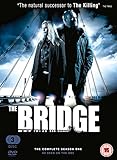
This is my review of The Bridge – Series 1 [DVD] [2011].

This dark and complex thriller begins on the Øresund Bridge linking Denmark and Sweden, where under cover of the dark and a power cut, a woman's body is found laid out across the line marking the national border, thus involving the police forces of both countries (and justifying a joint film production).

The killer, who turns out to have a fiendish imagination for unpleasant methods of torture and death combined with a twisted social conscience, proceeds to manipulate the public into anti-capitalist direct action or to blackmail the rich, by capturing victims to use as hostages, and ensuring the maximum publicity for this.

At first, "The Bridge" seems like an attempt to mirror yet outdo "The Killing", with the Swedish detective Saga Norén if anything more driven than Sarah Lund, with the added complication of "Asperger's Syndrome" which makes her the butt of some mockery from her work colleagues, although she is tolerated because of her genius in solving crimes. I felt uneasy at times about a script which encourages the audience to laugh at her, and also wondered about the accuracy of her robotic demeanour and over-literal approach. In striking contrast, her Danish counterpart is the laid back Martin Rohde, a man of strong empathy despite his history of womanising. He is intrigued by Saga, and gradually a bond of sympathy develops between them in which her emotions unfreeze – perhaps unlikely if she is autistic, I don't know. There is the implication she may in fact have been traumatised by a past tragedy.

Over its ten episodes, the story evolves from a simple "catch the villain" to a more complex drama of personal revenge. I was reminded that Denmark was the birthplace of Hans Christian Andersen, and it seems that some of the bleak morality of his tales may have rubbed off on the film makers: acts of personal betrayal have a cost for which one must pay.

There is a continual, at times somewhat bewildering, introduction of new threads, most of which are seen to have clear relevance, although there are one or two loose strands, perhaps intended as red herrings.

The filming is visually striking, often portraying the bleak underworld of homelessness, drug addiction and abandoned buildings which one does not usually associate with Scandinavia. I did wonder how Martin Rohde could afford to live in what looked like a better house than the Prime Minister in "Borgen", and about the total lack of privacy (surely dangerous for a detective?) in a wooden house which seemed to consist mainly of huge glass windows. The long-haired casual scruffiness of the detectives, even at senior level, is a nice egalitarian Scandinavian touch.

Although I was at times a little unengaged by the earlier episodes, I revised my views as the story built to the moral dilemmas of its dramatic conclusion, in which one suspects the writers may be ruthless enough to sacrifice any character.

And, of course, over it all, there looms the presence of that triumph of engineering and bleak aesthetics, the Öresund Bridge.

⭐⭐⭐⭐⭐ 5 Stars

Duty Calls

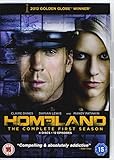
This is my review of Homeland – Season 1 [DVD].

Homeland is based on a compelling scenario. Marine Sergeant Brody (Damian Lewis complete with no doubt convincing American accent), for eight years presumed missing in action in Iraq, is discovered imprisoned in the compound of Al-Qaeda terrorist leader Abu Nasir, and returns to a hero's welcome in the States. Darker currents soon emerge. Desperate to show loyalty, his wife seeks to hide that she was on the brink of marrying his former best friend. Brody is also haunted by memories of having been forced to kill his fellow prisoner and best friend Walker, as the price of his own survival. To cap it all, working on a warning from an informer, driven CIA operations officer Carrie Mathison is convinced that Brody has been "turned" and only allowed to resume his old life in order to undertake some act of terrorism or betrayal. She is prepared to go to any lengths to prove her case, even bugging his house illegally with private cameras – but these do not reveal what is afoot in his garage. Also, Carrie's severe bi-polar disorder (the portrayal of which may irritate some sufferers) undermines her credibility.

In this slow-building but ultimately gripping drama, you are left guessing to the last episode what Brody's true intentions are, and whether and how he will carry them out. There are fine performances from all the major actors, in clearly defined and well-developed roles.

Most remarkable is the fact that this drama, although made in the States, appears anti-war and does not hold back in portraying a corrupt Government and security forces, violating human rights and trying to conceal the evidence for their own ends. Terrorists such as Abu Nasir are by contrast portrayed with a degree of understanding. It is not a simple case of enlightened western world right versus Islamic wrong, or of the good guy winning out in the end against the odds, as is often the case with American drama. Just as some of the characters may have been subverted, the viewer may for an instant understand the justice of the "wrong" cause. Relationships, such as Brody's attempts to reconnect with his children after eight years, are handled realistically without too much sentimentality.

The ending leaves the way open for a fresh series, which may be good for commerce, but not art, since it is usually best to be left wanting more of a drama. In this case, there are just enough intriguing loose ends to "get away" with one more series.

⭐⭐⭐⭐⭐ 5 Stars

Culture Clash

This is my review of Martha Marcy May Marlene [DVD] [2011].

The combination of names "Martha", "Marcy May" and "Marlene" reflects the "different faces" and mental confusion of Martha, a young woman who has drifted into life in a cultish commune in the remote Catskill Mountains. Will we ever learn how or why? The film begins with her escape from the community to take refuge with her conventionally middle-class, materialistic sister and her new husband.

The film is unusual in cutting continually back and forth between her life with her sister, in which Martha becomes increasingly more withdrawn and disturbed, and the two years spent in the commune, under the influence of the charismatic but at times menacing, possibly psychotic Patrick, who reminded me of tales of Charles Manson. You need to concentrate hard, not only because of the fragmented storyline, but also owing to the "naturalistic" filming technique, in which people often mumble as in real life, take part in normal, mundane activities and drift across the hand-held lens, perhaps appearing fleetingly at one edge of the screen. Occasional acts of violence erupt suddenly. At times, it has something of the "amateurish" visual quality of "The Blair Witch Project". Much is implied and little specifically stated.

Martha's problems of adapting to "normal life" are portrayed well, together with her relatives' predictable reaction, as when she bathes naked in the lake because that was what she did at the commune. The clash in their values is made clear. One's perception of the commune gradually darkens. At first, it just seems a throwback to pre-female equality days, as we see the women waiting to eat after the men, or the former selecting clothes off a communal rack. Then there is the shocking scene of Martha's ritual initiation to sex with the leader, and so it all gradually gets worse as we come to understand the reasons for her acute distress, complicated by the fact that she is genuinely drawn to an unmaterialistic, commununal way of life.

Although the idea behind the film is interesting, I do not feel that it reaches its full potential. It is too slow-paced and confusing at times and although I do not expect everything to be neatly sewn up, the ending left me dissatisfied.

⭐⭐⭐ 3 Stars

New Take on Vertigo

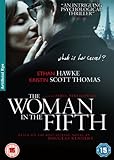
This is my review of The Woman in the Fifth [DVD].

The opening scenes promise a moving and intriguing drama as we are introduced to the confused and dysfunctional world of Tom, an American lecturer and writer, estranged from his French wife and barred from seeing his small daughter. He gradually falls under the spell of Margit, a mysterious older woman, played by Kristin Scott Thomas, "the woman in the fifth" by virtue of her address, and possibly something else as well. In the background we see the initially plain, childlike Polish waitress who who may bring Tom a truer peace than Margit,

Proceeding at a slow pace, with lingering shots of distinctive faces, a balcony with a blurred suggestion of the Eiffel Tower in the background, red insects on dark tree bark, threadlike spiders spinning webs in a police cell, this film weaves a sense of tension, even menace, and begins to insert surreal moments between scenes of clear rationality.

When it ended quite abruptly after little over 80 minutes, I was left feeling cheated, trying to work out exactly what had happened, wondering what clues I had missed, but not doing so too hard since it seemed that the director had resorted to the realms of the supernatural, or madness, to provide a denouement. This reminded me afterwards of Hitchcock's "Vertigo", recrafted for the present day.

The film is based loosely on a novel which seems to have prompted mixed reviews and perplexed readers in a similar fashion.

⭐⭐⭐ 3 Stars

A Convert to Coriolanus

This is my review of Coriolanus [DVD] [2011].

Although based on a dark, grim and bloodthirsty Shakespearean tragedy, I was very impressed by this film which I went to see with some trepidation.

Well-paced and not excessively violent (compared to what it could have been) the acting is excellent, the words spoken with such expression and clarity that the sense comes through very strongly, even to someone like me unfamiliar with the text. It does not bother me that some passages and plot details may have been omitted in the interests of making the plot easier to digest. Likewise, a dialogue which sounds at time surprisingly modern compensates for the lack of any memorable "To be or not to be"-style soliloquies which may not come across well in a film.

The modern setting is not irritating and gratuitous as is too often the case, but also enabled me to see the film's relevance to our divided and violent world. Rome is represented as a typical concrete western city, ruled by the cynical "haves" ("patricians") while the mass of "have-nots" are beginning to riot over lack of bread, although they are easily swayed by cunning politicians.

Rome is under threat from a Balkan-type community called the Volscians, against whom the professional soldier Caius Martius (Ralph Fiennes) gains a celebrated victory over the city of Corioles, thus being rewarded with the surname "Coriolanus". This leads naturally to his appointment as a consul, but "honest to a fault", he refuses to conceal his contempt for the people. His political enemies play on this to get him banished, which of course turns him from a loyal supporter of Rome to a man bent on revenge.

On a personal level, this is an interesting psychological study of pride, fanaticism and jealousy. The complex relationship between Coriolanus and his mother Volumnia, played brilliantly by Vanessa Redgrave, shows how a strong man may be controlled as a tool of his physically weaker but mentally stronger mother's ambition.

If I had studied this play at school, I think I might have hated it – although a good teacher enabled me to appreciate the drama of Julius Caesar. Hopefully, this intelligent modern rendition may enable many students – and general viewers as well – to understand and value this very interesting play.

⭐⭐⭐⭐⭐ 5 Stars

Age cannot wither

This is my review of The Best Exotic Marigold Hotel (DVD + Digital Copy).

I would be interested to know whether you need to be over (or close to) retirement age to relate to this film, or even to opt to see it in the first place.

The plot revolves round seven rather different characters who have in common the facts that they are (with one exception) middle class, retired, mostly lonely and/or hard up. An inexpensive hotel located in the exotic Indian city of Jaipur and designed for long-term stay by the elderly attracts them as a possible solution to their problems.

The hotel, run by a charming dreamer (played by Dev Patel of Slumdog Millionaire fame) is predictably shambolic, a partially ruined former palace of stunning beauty, with picturesque neglected gardens from which it is moving to watch a pure white stork as it flaps improbably, as if on the point of sinking, up into the blue.

Some members of the group adapt readily to the colourful bustle and intriguing history of India – others cannot wait to return to England. Graham, the high court judge who lived in India in his youth, harbours a secret which is gradually revealed.

Although I feared from trailers that the film would merely be a chance for seven famous actors – including Judi Dench, Maggie Smith, Bill Nighy and Tom Wilkinson, to ham it up in a visually striking location in north India, thereby boosting its tourist trade, I was relieved to find that they were given quite subtly developed roles which give scope for their skills.

There are some implausible aspects to the plot e.g. how could Bill Nighy and his self-absorbed wife be reduced to poverty by the loss of his civil service pension from unwise investment when it is likely to be paid regularly on a final salary basis? Yet overall, the story has a bittersweet quality which leaves you guessing to the very end as to whether it will end happily in general. In addition to continually amusing scenes, we see not only the vibrancy of India (perhaps the poverty is underplayed) but also hints of the new development in the slick call centre employing Indian graduates, and the concrete and glass blocks emerging on the sites of former slums and dusty makeshift cricket pitches.

This is a lightweight film, but well-made without being too cloying and sentimental.

⭐⭐⭐⭐ 4 Stars

Latin Morse

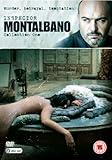
This is my review of Inspector Montalbano: Collection One (2 Disc) [DVD].

In our insatiable thirst for detective thrillers, foreign language productions have the benefit of introducing us to a different way of life in a setting which might well suggest the location of our next holiday.

In this case, the drama is set in the fictional Vigata, a quaint old stone-built town spreading over a hilly Sicilian coastline bathed in perpetual sunshine. Detective Montalbano occupies an elegant flat overlooking the Mediterranean where he can relax swimming at the end of each stressful episode.

We are introduced to a slow-paced (apart from the crimes, that is) way of life revolving round food – a man will put the enjoyment of a good meal before rushing to greet his lover – and the extended family, where relatives and workers gather on a sunny terrace to consume plentiful meals together.

Smartly turned out and astute, Montalbano somehow commands the respect of his staff despite the kind of volcanic outbursts which would have him sent on an anger management course in Britain. Like most detectives, he is on shaky terms with more senior officials, perhaps in part owing to his tendency to break the rules, but survives in his post, probably because he always seems to solve the crime in hand, usually through his ability to make deductions from very slim evidence.

The denouement is often unpredictable, partly because the very complicated plot tends to have a few twists which are hard to follow – and to be honest at times implausible. It's quite fast-moving, so with the sub-titles as an added constraint you have to concentrate.

Overall, it's worth watching as the characters are well-developed, the dialogue is amusing, the cases have intriguing aspects, and all does not end happily in every respect – there is a gritty undercurrent, say in the suffering of Tunisian immigrants in "The Snack Thief" or the continual hints at bribery and corruption amongst higher ranking officials, making the "honest" Montalbano a rarity.

⭐⭐⭐⭐ 4 Stars