Taken for a ride

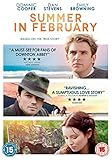
This is my review of Summer in February [DVD] [2013].

The charismatic leader of a bohemian artists' colony in the lovely Cornish coastal valley of Lamorna, A.J. Munnings was correctly predicted by his admiring friends as destined to become the leading painter of his day. As is often the way in a film, the evidence for this is somewhat lacking to the audience.

When the beautiful Florence Carter-Wood escapes from her match-making father to join the group, it is clear from the outset that her enigmatic allure, which may mask darker traits, will draw both the rakish Munnings and his perhaps unlikely best friend, the gentlemanly local land agent Gilbert Evans. One knows it cannot end well, if only because it is 1913, and the Edwardian idyll must be shattered by the debacle of World War 1.

Since this is based on a true story, one has to accept the plot despite a few major incidents which I found implausible. It is well acted, although I thought that Dominic Cooper was insufficiently larger than life to capture Munnings convincingly. The key aspects of the relationship between two male friends caught in a love triangle with the same woman, and the suffocating conventions of Edwardian morality which even bohemian artists could not completely escape needed to be developed in greater depth.

Despite the stunning scenery and pathos of the situation after the initial rumbustious jollity, I was left feeling underwhelmed but have obtained the novel of the same name on which the film is based, since I suspect that this may be more satisfying in, for instance, revealing more about Munnings as a painter, such as his contempt for modern art which is only hinted at in the film. In an infamous speech recorded shortly before his death he claimed that the work of Cézanne, Matisse and Picasso had "corrupted art".

⭐⭐⭐ 3 Stars

Come-tragedy

This is my review of Fifty Words by Michael Weller.

Very much in the vein of "Who's afraid of Virginia Woolf" and Yasmina Reza's "The God of Carnage", also featuring a son with a hamster, this intense dialogue of a play is a portrayal of a marriage on the rocks.

Their son's first "sleepover" gives architect Adam and his wife Jan a rare evening alone together. This starts off in a bantering tone leading perhaps to a night of love, but there is a lack of communication and hints of darker problems from the outset and at times the bitternesss turns to violence. I found the frequent sudden shifts of mood or topic somewhat artificial and they weakened any sense I might have had of being moved by the plight of this couple who seem both self-destructive and ill-matched. The quickfire wit also prevented me from feeling very sorry for either of them, but it is very entertaining.

I concluded that this is really a set of observations on the nature of a variety of marriages, say where women play the game and turn a blind eye to their husbands' shortcomings and infidelities, or where women have children to please and keep their husbands and then hate their partners for this. Although Adam may be technically more "in the wrong", his wife Jan certainly comes across as more neurotic and manipulative. This may be the unintentional effect of a male writer identifying more with the man in the marriage. There are too many insightful comments to retain on first viewing of a performance; probably each person will come away with some different perceptions triggered by the play.

⭐⭐⭐⭐ 4 Stars

Uneasy sits the viewer

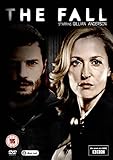
This is my review of The Fall [DVD].

Although you may believe yourself incapable of being surprised any longer by a police thriller, this is unusual in revealing the serial killer's identity from the first episode, and in contriving to make him disturbingly sympathetic so that, despite being appalled by his manipulative, brutal and creepy behaviour, shocked that an apparently normal, caring father, husband and committed bereavement counsellor can be so evil, and therefore reassured by the occasional clear evidence of madness, a part of you also wants him to escape justice.

I agree with the praise for the quality of acting, in particular the impeccable playing by Gillian Anderson of SI Stella Gibson, the ruthless, ice cool female detective with her wry put-downs of male colleagues. Belfast provides a distinctive setting – hints of the aftermath of "The Troubles" and some dramatic sub-plots, although I would have liked the thread involving the first victim's husband to have been developed in more detail.

Although it is no doubt the author's intention, the murder scenes are almost unbearably violent and voyeuristic. You feel uneasy watching them, and perhaps even more so those where the killer is shown as a loving, if deceitful, father, hiding mementos of his crimes in the loft space above the bed of his observant and understandably disturbed small daughter. The lack of any explanation of the killer's deviancy until the final episode also seems to me to reduce the depth of the drama.

The one aspect I really dislike is the tendency to intercut scenes of say, the killer abusing a victim whilst SI Stella Gibson indulges in a one night stand. This ploy came across to me as by turns too contrived, tasteless or over-sentimental, as when we are shown clips of the killer's wife comforting young single mothers over their dying premature babies, whilst a pregnant woman is being murdered elsewhere by her husband.

This is powerful and well-made popular television, although I am not sure how good it is for the psyche of the watcher.

The final twists are ingenious and unpredictable, binding together several plot lines. The ambiguous ending which I cannot give away for fear of spoilers may leave many dissatisfied but succeeded for me in leaving it open to the audience to imagine "what happens next" and paves the way for the second series commissioned even before the showing of the first was completed.

⭐⭐⭐⭐⭐ 5 Stars

Something in the Air – What it is to be young

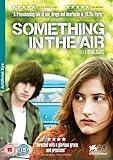
This is my review of Something in the Air [DVD].

Apparently semi-autobiographical for the director Olivier Assayas, and entitled “Après mai” in the original French, this film recaptures the sense of confused anger and scattergun resistance against injustice which persisted after the famous Paris riots of May 1968.

Gilles is in his final year at the lycée with ambitions to be an artist, also caught up in street protests, demonstrating against the police and pasting up militant posters. We gain a vivid sense of being young in the 1960s, the sudden sense of freedom to question and attack the accepted values of society, to travel, drop out, and play with fire – a constant theme in the film – experimenting with drugs at the risk of self-destruction. It shows the uncertainty and fragility of first relationships, which one may come to value when it is too late, or, in the case of the women in the film, even when thought to have been freely chosen, prove to be a trap into some aspect of stereotyped or conventional behaviour

The film is visually very beautiful – the view over the valley where Gilles meets his first girlfriend, the apparently liberated artist he would like to be. It is also very French in portraying the heated philosophical debates and the ambience of the dry, traditional approach to teaching in school, the chickens running along the street past the old stone houses, the leafy courtyard gardens with paint peeling on the sills as the men discuss making films to show soldarity with the workers. It is well-acted and most of the main relationships are quite sensitively developed.

On the downside, apart from being about thirty minutes too long with a clear need to edit some scenes sharply, the storyline is too fragmented and meandering, at times hard to follow. Some of the political discussions to do with say, relationships between students and workers, or between workers in different countries, or the issue of how to use film to promote ideas, are presented in a rather oblique or rushed and unclear way. I also agree with reviewers who have criticised the glossing over of the irony that most of the young people clearly come from unusually wealthy and privileged backgrounds.

I left the film irritated by the sense that potentially fine ingredients had been scrambled into a dog’s breakfast. On further reflection, I am left with a growing sense of the beauty of the film, some highly amusing scenes and the portrayal of the uncertain nature of youth, half-drifiting, half-striving in search of a goal, which may end in success, annihilation or nonentity.

⭐⭐⭐ 3 Stars

A visual display that makes you want to read the book

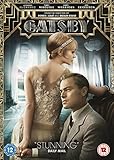
This is my review of The Great Gatsby [DVD] [2013].

The reviewer Peter Bradshaw's description of Baz Luhrmann as "a man who can't see a nuance without calling security for it to be thrown off his set" is quite telling, but if you accept that the director's trademark is flamboyant excess, you could argue that the extravagant parties thrown by the wealthy Gatsby, the wild, escapist behaviour of "the bright young things" in the Jazz Age following the privations of World War 1, and the unthinking self-indulgence of the very rich, all lend themselves to Luhrmann's bombastic approach.

He is faithful to the details of the story, which is a "good yarn" as well as being a comment on the snobbery and corruption of 1920s American society which he develops to some extent. With events seen through the eyes of the narrator Nick Carraway (unclear why he is so poor when his cousin Daisy clearly comes from an established family accustomed to wealth), we do not at first understand his huge respect for Gatsby, to the extent of labelling him "great". We gradually come to grasp the irony of Gatsby's use of vast, recently gained wealth to try to rekindle an old love, his delusion that money can be used to regain the happiness of a past infatuation and the poignancy of "true love" blighted by the fate of "bad timing" yet still providing opportunities for honourable personal sacrifices which may go unnoticed.

I accept that this may be a shallow interpretation to those who know and love the novel, but if the film succeeds in introducing people to it, and inspires some, like me, to read Scott Fitzgerald for the first time, Luhrmann has achieved something more than simple entertainment, as he did with Romeo and Juliet.

⭐⭐⭐ 3 Stars

The madness of reason

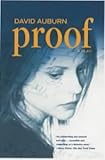
This is my review of Proof by David Auburn.

Although professional critics have marked this play down as shallow, I found it absorbing and moving – likely to prove challenging and rewarding for both the four actors involved and their audiences.

Clearly influenced by the at times tortured life of the mathematician John Nash whose intriguing blend of madness and genius has been portrayed in the probably better known "A Beautiful Mind", "Proof" focuses more on the effects of mental instability on other family members. Although mathematics lies at the heart of this play, we are never given a specific theory or real analysis but this does not matter since, apart from the fact it would be incomprehensible to most of the audience, the details are not the point.

The strength of this play is that you can take from it what you wish. What about the daughter who has sacrificed her own mathematical talents in order to care for her sick father? Has she inherited both his genius and his malady? Is this what helps her to empathise with him so strongly? Should we blame her pragmatic sister for going off and making a life of her own? She has at least supported the others financially, but are her good intentions unforgivably insensitive? How sincere is the young man so keen to trawl through the sick man's notes in search of some revolutionary proof? Is he motivated by a respect for academic achievement, or something more self-serving?

I suppose you could argue that to raise so many issues without providing any resolution of them is a weakness, but I would say that this play gives you a chance to understand and reflect on aspects of human behaviour and relationships which most people do not encounter, or, if one does have to deal with madness, this provides some thought-provoking, even comforting points of connection and reference. Despite a theme that may sound depressing, the dialogue is often funny and never dull while a slight plot is skilfully developed through a strong structure.

⭐⭐⭐⭐ 4 Stars

Too refractory

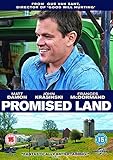
This is my review of Promised Land [DVD] [2012].

Reminiscent of Erin Brockovich but not nearly as effective, this is one of those dramas on a topical environmental theme. Matt Damon plays Steve Butler, a salesman whose success in persuading hard-up American farmers to sign contracts with a major fracking company is based on personal experience. When the closure of a caterpillar assembly plant brought depression to his own home town, it was the cheques from a fracking firm's gas extraction that gave the local farmers the opportunity to buy their kids a decent education and escape to a better life.

Inevitably, the time comes when Steve encounters major local opposition. Although it is surprising that he and his pragmatic female colleague Sue Thomason seem so ill-prepared for this, the drama develops quite well, managing to portray the pair as both sympathetic and morally compromised. Despite other reviewers' criticisms of the ending, I found it contained a neat twist which prevented the film from ending up too corny or predictable.

There are entertaining scenes and wry touches but, perhaps because fracking is a dry subject, some incidents seemed pointless padding intended to "lighten things up" yet missing the mark. The direction struck me as wooden at times, and I often felt unengaged, although interested in the issue.

A sense of rural America comes across strongly. I particularly liked the homemade shop sign proclaiming, "Guns, Groceries, Guitars and Gas". The use of folky-sounding music in the background which proved to be Milk Carton Kids' tracks like "Snake Eyes" proved a welcome discovery.

I was left feeling this was a missed opportunity to create what could have been a gripping film, with the relationships between the main characters and the arguments on both sides more strongly developed. It was as if the director was scared of boring the audience and, lacking the courage of his convictions, undestimated them.

⭐⭐⭐ 3 Stars

Strings attached

This is my review of A Late Quartet [DVD] [2012].

The "Fugue" String Quartet have played together for a quarter of a century, so it is a shock when the founder member, cellist Peter, announces that he has early-stage Parkinson's disease so will need to retire. Reacting with a mixture of denial and doubts as to whether they can continue without him, or wish to do so, the bombshell releases negative forces in the rest of the group – long-suppressed rivalry, jealousies and resentment surface abruptly.

With beautiful filming of Central Park in the snow and the interior of spacious old brownstone apartments, the main characters all put in convincing and moving performances, not least in their ability to appear to play string instruments, although I have no idea how a skilled musician would view this. The scenes are based on the rehearsal of Beethoven's last String Quartet, Opus 131, a fitting background to the theme of the film. It seems to convey very convincingly the joys and sacrifices of life in a close-knit quartet in which one must sink one's individuality to achieve the benefits of collaboration and the chance to perform far more, at a more satisfying level, than might be the case as a soloist – a point I had not considered.

Although it may appeal mainly to older viewers who are close to experiencing the effects of ageing and intimations of mortality themselves, there is also a good deal of humour with some tense moments, as normally highly disciplined musicians act out of character and indulge themselves with potentially disastrous consequences.

⭐⭐⭐⭐⭐ 5 Stars

Sins of the fathers

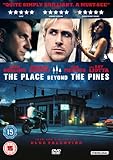
This is my review of The Place Beyond The Pines [DVD] [2013].

Luke, a young man whose only assets are good looks and skilful motorcycle stunt riding, finds that he has made a girlfriend pregnant. He is filled with an unexpected urge to care for his son, even if it means breaking the law to obtain enough money to persuade Romina to leave her current man.

Although you may think you are in for a cops and robbers tale which is bound to end in tragedy, the plot switches abruptly to a new theme about police corruption, centred on a fresh main character, Avery, the ambitious young officer who wants to combine police work with his legal qualifications to achieve high political office. Luke and Avery are opposites, one poor and disadvantaged, the other wealthy with influential connections. Yet both have a son of the same age, and ironically, in his pursuit of personal success, Avery may be the less caring, with what could be disastrous consequences. These are developed in the third part of the film, which moves on to include the next generation.

With a rambling and at times under-edited structure, the whole piece feels like watching three separate films played sequentially. Although I agree with those who have found it overlong, there are some moments of high tension. Some of the scenes seem very realistic and natural as well as moving, although the final section involving the teenage sons is less convincing. Overall, it is about the effects of class and fate, and a modern interpretation of the timeworn theme of how "the sins of the father are visited upon the son".

⭐⭐⭐⭐ 4 Stars

Dans la Maison / In the House – Life-destroying creative art?

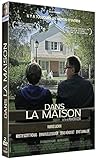
This is my review of In the House (Dans la maison).

A jaded teacher of literature is stirred out of boredom by the one piece of written homework that stands out from the rest. He and his wife are intrigued by the boy’s account of making friends with a fellow student in order to get inside his comfortable middle-class world, to see what it is like “in the house”, “dans la maison”. Each episode ends with the tantalising “à suivre”, “to be continued….”

Although, like her husband, hooked on the stories, the wife is uneasy about the ethics of all this. Is the boy’s objectivity somewhat chilling, his behaviour sinister, or are the accounts even true? An unsuccessful writer himself, the teacher suppresses any doubts in what becomes an obsession to develop the boy’s talents as a writer. Does the teacher have other subconscious motives? In the relationship between the teacher and the student, who is being manipulated? A parallel thread is the wife’s entertaining attempts to make a success of the avant garde art gallery which she manages.

Well-acted with some original visual techniques and a witty dialogue, this combines comedy, suspense, pathos with a dash of surrealism to create one of the best films I have seen for a while, all the more so for being unexpected.

⭐⭐⭐⭐⭐ 5 Stars