Does Series 3 need so many loose ends?

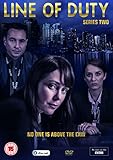
This is my review of Line of Duty Series 2 [DVD].

After the opening hook of a violent ambush of police escorting a protected witness, suspicion falls on the only officer to survive unscathed, DI Lindsay Denton. Three aspects set apart the ensuing complex drama: the powerful, well-scripted interrogation scenes, the high quality of acting in which body language reveals so much about personalities and relationships and, above all, the skilful portrayal of Denton by Keeley Hawes, who tantalisingly convinces us by turns of her guilt or innocence.

Perhaps you cannot award less than four stars to a series with such power to grip millions of viewers, and to trigger such large-scale speculation as to who is guilty of what and why. I understand why the author wanted to leave what I think he described as loosely tied bows to pave the way for a third series. However, it seems unsatisfactory to me if people are still asking fundamental questions at the end because they are confused about exactly what happened, and, insofar as they think they understand, there appear to be flaws and contradictions. Apparently, Mercurio himself spotted a vital omission at the last minute, just in time to insert another scene, but there seem to me to be quite a few that he missed from the viewer's angle. It may of course help if, unlike me, one has seen Series 1. At least one would have the advantage of knowing more about some of the characters, such as dodgy detective Dot Cottan or disabled DC Morton who makes a sudden unexplained appearance.

I agree with the many comments and critics who feel that the last episode is a serious let-down – rushed and disjointed, with scenes included too obviously "to sew things up", yet often failing to do so. I agree that it is a cop out to reveal the "truth" in a lengthy flashback, rather than let the facts emerge through ongoing scenes. This is in stark contrast to the development of characters in earlier episodes. There are at least two major flaws concerning Denton in the final weak "denouement".

Perhaps the series could have done with another episode or two to give time both to clarify the intricate plot and to expand on the dysfunctional private lives of the key characters, such as the adulterous Fleming whose family life is on the rocks.

This is, of course, first and foremost a commercial series. This was clear in the dramatic and shocking opening ambush, which after rewinding to watch at least three times, I still found inconsistent in a way that slightly insults the audience by suggesting watchers can be fobbed off with anything as long as it is exciting. Ironically, the fact that the first five episodes are mostly so good raises expectations too high, making the conclusion more of a disappointment.

⭐⭐⭐⭐ 4 Stars

Playing with fire

This is my review of Salamander: The Complete Season One [DVD] [2012].

After Scandi-noir, the Belgian "Salamander" series seems like a return to old-fashioned crime thriller form, with hero police detective Paul Gerardi: cussed, scruffy, middle-aged yet still somehow irresistible to women, his marriage almost on the rocks under the strain of work pressures. The attempted cover-up of the theft of compromising material from the safes of sixty-six establishment figures at the Jonkhere bank is more than Gerardi's sense of justice can overlook, and when he begins to pay a personal price for his persistence, it is only increased by the desire for revenge.

I was soon hooked on this fast-paced thriller by the spiral of suspense as to how Gerardi can possibly keep evading his pursuers. The tale is tightly plotted, but the sheer intensity of the early episodes means it is hard to retain enough gunpowder for a satisfying grand finale. Loose ends are tied up, but all in a bit of a rush in the last episode, with a few convenient plot twists that stretch credibility beyond its limits.

It is true that this series lacks some of the depth of recent Danish series, such as the exploration of the grief of parents after the murder of a teenage daughter in "The Killing". As a result, I was left less moved by some tragic events than I should have been. The villains in particular, the sinister leader of the bank heist, megalomaniac inheritor of the Jonkhere Bank, and over-ambitious young upstart Vincent, are pyschopathic stereotypes incapable of arousing any complex twinges of sympathy. How on earth can Gerardi win out against them all?

The deep corruption running through police and politics to the very palace left me wondering how the series is viewed by those wielding power and influence in Belgium, although perhaps the recent period of 589 days without an elected government has bred a certain amount of cynicism.

Will Series 2 manage to maintain the gripping excitement?

⭐⭐⭐⭐ 4 Stars

There but for fortune

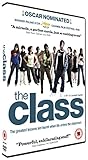
This is my review of The Class [DVD] [2008].

Based on the autobiography of an idealistic and individualistic young French teacher who plays himself in the film and drawing on many hours of improvisation with pupils in a "tough" multi-ethnic Parisian school, so skilfully directed that it makes a drama seem like a fly-on-the-wall documentary, "Entre les Murs" or "The Class" will strike a chord if not raise goose bumps in anyone who has taught in this environment. The film captures to perfection the claustrophobic, unrelenting, intense, absorbing, frustrating, exhausting, addictive world of teaching in an inner city secondary school. Most of the teachers are young and casually dressed by Govian standards. Yet perhaps unrealistic rules of iron lie beneath the velvet glove. By turns hilarious and disturbing, this could trigger many debates on teaching methods, what to teach adolescents, how far to accommodate different cultures, the pros and cons of integrating "bright kids" into diverse social groups at the price of failing to stretch them.

We see Monsieur Marin's patient persistence in encouraging his pupils to think and express themselves effectively, continually trying to find ways round their hostility to traditional French culture and realising that his ignorance of theirs is a frequent cause of misunderstanding. The camaraderie of the staffroom is often fractured by fundamental differences in opinion: the teacher who wants Marin's class to read a French novel to tie in with history lessons on the Enlightenment, which Marin tactfully suggests the students will find "tough"; the same teacher's absolute views of rules to be followed, whereas the liberal Marin prefers a more flexible approach. A staff meeting, demonstrates the familiar situation in which teachers seem more exercised over the cost of the coffee machine than agreement of a penalty system for naughty pupils.

There are examples of "political correctness" delivered with a mask of courteous objectivity which may unintentionally lead to injustice. In one scene, teachers discussing student grades are distracted by but do nothing to reprove two giggling student representatives elected to listen to the process, apparently without a clear code of conduct as to how they should behave in the meeting and afterwards. This seemed to me the one serious false note in the film. Or does it reflect French school practice?

A storyline gradually emerges, focusing on a moody Arab boy who cannot manage his anger. Despite Marin's empathy for him, and even a small heart-warming breakthrough on a piece of work, an unfortunate chain of events leads to a climax which Marin, in a rare lapse which I found a little hard to believe, has inadvertently helped to trigger.

A near perfect film, highly recommended.

⭐⭐⭐⭐⭐ 5 Stars

The Art of Concealment

This is my review of The Invisible Woman [DVD] [2014].

Worth watching, this film is fairly true to Claire Tomalin’s respected biography of Nellie Tiernan, the eighteen-year-old from a talented but hard up acting family, who caught the eye of Dickens at the height of his fame in his mid-forties. Perhaps inevitably, the film loses an element of subtlety in making explicit what Tomalin only surmises, such as the fact that Nellie miscarried a child by Dickens.

Ralph Fiennes conveys a strong sense of Dickens’ charisma, his hyperactivity, and callous treatment of his wife once he became obsessed with Nellie. Felicity Jones portrays well the qualities that captivated Dickens: not just her beauty and youthful enjoyment of life, but a sensitive and reflective intellect that made her a real companion, able to discuss his work with him. One of the most poignant parts of the film is where we see how she is knowingly trapped like a fly in amber, a kept woman in an overlarge house from which a view of Windsor Castle ‘seems to float’ as in a dream. She has to become invisible to safeguard the great man’s reputation.

It does not add to the tale of the relationship to sandwich it in lengthy flashbacks between scenes of Nellie in later life as the wife of a schoolmaster in 1880s Margate, haunted by memories of Dickens. Part of the problem is that she looks too young (she was in her forties by then). However, I was interested to discover that in 1876, six years after the death of Dickens, she married at the age of thirty-seven a man twelve years her junior, passing herself off as twenty-three i.e. she must have looked youthful for her age.

I was surprised that the film does not make clear the thirteen year duration of her relationship with Dickens, until his death. More could have been made of her role as a possible inspiration for some of his later heroines, not just Estella in Great Expectations. The greatest missed opportunity seemed to me the omission of Dickens’ death: according to Tomalin, he became ill at Tiernan’s house and, to avoid a scandal, had to be put in a cab to be taken to his home, where he died in the presence of his family, as convention demanded.

⭐⭐⭐⭐ 4 Stars

Another man of constant sorrow

This is my review of Inside Llewyn Davis [DVD] [2014].

As you would expect from a Coen brothers film, this is a poignant, yet often funny, quirky take on the life of a young man trying to establish himself as a solo folk singer in early 1960s New York. The haunting opening song, "Hang me, Oh hang me" displays his talent and individuality, but also the problem that it is not the type of music that makes money. His often negative, cynical and grouchy personality does not help.

Penniless and homeless, Davis is obliged to cadge each night's sleep on the couch – or floor – of yet another friend whose goodwill he has not yet abused beyond recall. The recent death of his singing partner may give him reason to be depressed and moody, but one senses he has always been uncompromising and prickly. Yet, his concern not to abandon an appealing ginger cat that gets locked out of a friend's apartment shows he is not totally self-absorbed. Despite his many shortcomings, we are somehow made to want him to succeed. Will he remain a loser or will the Dylan sound-alike who appears at the end mark the beginning of a more receptive climate for his music?

There is just one section of this film that does not work for me. I understand the need to portray the tedium of a long drive across dead flat land to Chicago in the company of a shrewd but boorish old jazz man played by John Boorman and his handsome but dull chauffeur-cum-factotum and perhaps something more, but this went on far too long. Then a potentially interesting situation in which Davis agrees to drive a stranger back to New York so he can sleep but takes a detour on the way to see an old flame ends so abruptly it as if a section of the plot has been crudely cut.

The film will appeal for its soundtrack alone to lovers of 1960s folk music.

⭐⭐⭐⭐ 4 Stars

Not quite a bridge too far

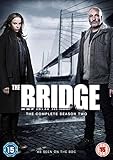
This is my review of The Bridge: Series 2 [DVD].

In this darkest of Scandinavian noir detective thrillers, the Swedish autistic workaholic Saga joins forces once again with Danish Martin, the once easy-going philanderer now estranged from his partner Mette and traumatised by a ghastly personal tragedy. The complex crime of eco-terrorism which they are required to unravel turns out to be less gripping than the relationships between the main characters. Despite Saga's frequent resemblance to a robot, lack of empathy and wooden quoting from textbooks on how to behave, her acting towards the end is excellent in showing the dawning of emotion in her face as Martin forces her to confront the past events that have so damaged her psyche, and also as she has to deal with a final dilemma. In portraying a busy office where a disparate group of officers are thrown together, working under stress, there are also frequent touches of humour in what might otherwise be a very bleak and macabre film, with frequent scenes of speeded up grey clouds streaming frenetically over ugly grey concrete blocks.

The plot twists and the continual introduction of new, seemingly unconnected storylines for the watcher to work out while contending with subtitles made me wish I had noted key events at the end of each episode. The body count was so high, and the events at times so ludicrous, that I almost gave up watching. However, I was both rehooked and quite impressed by the final two episodes, with their pace and some real depth. The writer Hans Rosenfeldt has ensured the plot "adds up", which is often not the case in this kind of drama, plus he has left at least three loose ends to justify a third series.

Even if you have reservations, the dramatic sweep of the Øresund Bridge, never fails to impress in the opening shots. This has developed to be stronger and more "multi-layered" than Series 1.

⭐⭐⭐⭐ 4 Stars

Off the rails

This is my review of The Railway Man [DVD] [2013].

Based on the 1995 memoir of Eric Lomax, the Royal Signals Officer who was tortured by the Japanese when deployed on the construction of the infamous Burma railway, this film uses flashbacks to show the reasons for his emotional repression with violent outbursts of post traumatic stress decades after the event. Colin Firth, a master in this kind of role, plays the older Lomax, with Jeremy Irvine putting in a strong performance as his younger self, earnest, floppy-haired and prepared with quiet bravery to take the rap for the assembly of an illicit radio receiver. Nicole Kidman assumes a convincing English accent to play the sympathetic new wife who is determined to extract Lomax from his mental agony. When Lomax discovers in the 1980s that Takashi Nagase, the young interpreter who played a key part in his torture, is still alive, working, of all things, as a guide at the Kanchanaburi War Museum (close to the famous bridge on the river Kwai) he is initially bent on revenge as a means of exorcising his demons.

I was disappointed by the first half: dialogues often seem stilted as in the "Brief Encounter" style meeting on a train between Lomax and his future wife Patti. Lomax looks much younger than the fellow officers with whom he has kept in contact, and he could have done with a few more scars and grey hairs. The sets "back home" have more of a 1950s feel than the 1980s as I remember them. Worst of all, the earlier scenes in the jungle are often confusing or hammy, apart from the final harrowing torture in the dreaded hut. Overall, the script and direction often appear wooden until the final resolution.

The film was saved for me by the second part of the film which is unpredictable, moving and well-developed. Throughout, the scenery is beautiful, both in the Kwai valley, despite the horror of the slave labour and brutality, and in the scenery around Lomax's stark grey house overlooking a golden beach and the sea at, I think, Berwick-upon-Tweed.

I have read that, in fact, Lomax had a first wife for the best part of forty years, whom he left for Patti, and two daughters, all largely omitted from his memoir. I understand why the director let this stand, in order perhaps to create a tighter and more focused drama, but this has been at the price of concealing and neglecting other lives directly blighted by what Lomax suffered.

The film may not do justice to the highly acclaimed autobiography.

⭐⭐⭐ 3 Stars

In the land of the free

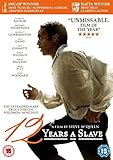
This is my review of 12 Years A Slave [DVD] [2013].

Solomon Northup, the son of a former slave, was a free man living in upstate New York when he was tricked, kidnapped and sold into slavery in 1841. He spent twelve years working for a series of masters in the sugar and cotton plantations of the swampy Louisiana bayou country until regaining his freedom against the odds. This film is based on the account of his experiences, written in conjunction with a white lawyer called David Wilson, and authenticated, including in part by the drunken and sadistic Mr Epps, his final master.

With his artist's eye , McQueen brings out the beauty of the natural landscape, red sunrise over the river, hanging branches draped in Spanish moss, or the rhythmic power of the paddle-steamer, carving furrows through the sparkling water as it transports the captives to their harsh destiny. This film renounces any sentimentality, ramming home the fact that slaves were regarded as property so could be treated without any consideration or mercy. The only reason for keeping them alive was because an owner had paid good money for them, and they could earn more for him through their labour. We see how Mr Epps could terrorise a female slave with whom he had become sexually obsessed, whilst his wife tormented the poor woman at the same time out of jealousy.

Everyone will learn something different from this drama. In my case, it was the extent to which slaves were punished for being literate, since this was seen as giving access to knowledge and revolt. Ironically, slaves were then despised for the ignorance in which they were held. Also, when their stories were written with the help of a white people, it was claimed that hardships had been exaggerated by abolitionists to strengthen their case.

The violent beatings are hard to witness. It's debatable whether these scenes are too long, the rationale being that this brings home the intolerable brutality endured. One striking moment is when the hero has to burn, out of fear of discovery, a letter which he has taken great pains to produce, in perhaps his last chance to get help. Another is when, having resolutely refused to sing the haunting spirituals, the only emotional outlet for slaves, Northup at last gives in, belting the song out lustily in his anger.

Chitwetel Ejiofor deserves all the praise that has been heaped on him, with his expressive face conveying in turn disbelief, fear, anger, despair, hope and even loss at the point of his release when he has to leave behind to suffer alone someone for whom he has come to care.

⭐⭐⭐⭐⭐ 5 Stars

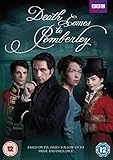
What Lizzie and Darcy did next

This is my review of Death Comes to Pemberley [DVD].

Not having read P.D. James's novel, which I suspect is an advantage, I found the film version entertaining. This is not a simpering costume drama, but reminded me of the vitality of the Poldark series in its earlier episodes.

P.D. James cleverly pinpoints an ideal plot thread: the existence of the embittered rogue Wickham who keeps turning up like a bad penny to threaten the reputation of Darcy's family. Wickham's apparent crime drives a wedge between Elizabeth and Darcy in quite subtly developed and moving scenes. The parallel dilemma as to whether Darcy's sister Georgiana should make a safe marriage for reasons of property and status, or a riskier one for love is also well handled.

Flashbacks to important dialogues in the original "Pride and Prejudice" are skilfully woven into the plot. Moments of humour are provided by revisiting well-loved situations such as Mrs. Bennett's vulgarity and lack of tact, and her husband's continual attempts to escape her, as in his pleasure at being able to hide in Darcy's library. There is some excellent acting of some "minor" parts, such as the stoical housekeeper with the capacity to rise to every occasion, keeping the staff under her thumb yet kindhearted with it. Trevor Eve does a good job as the cynical neighbouring landowner and magistrate. The scenes of Chatsworth, and, I believe, Yorkshire woodlands and hills are beautiful, the dialogue often sharp, and the plot neither too predictable nor ludicrous, with a suitably nail-biting climax and denouement – apart from a few small queries such as why Wickham, his wife and Denny were travelling on their fateful coach journey on the evening before the ball they intended to gatecrash. Also, Elizabeth and Darcy seem to dress rather plainly for such grand people, and to travel round with remarkably little pomp and protection. Perhaps there is also a tad too much hamminess with people almost drowning themselves out of grief or nearly ending it all with a cutthroat razor.

Although I am not a fan of this kind of sequel, it works quite well here, and I suspect the book may be even better.

⭐⭐⭐⭐ 4 Stars

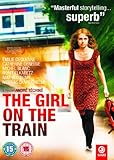
The Girl on the Train – Fateful Freewheeling

This is my review of The Girl on the Train [DVD] [2009].

Triggered by the real-life incident of a girl who claimed to be the victim of an anti-semitic attack in Paris, this is a tale of cause and effect, the consequences of a random conjunction of events.

Beautiful but scatty, Jeanne’s half-hearted attempts to obtain work as a secretary lead by chance to an interview at the office of successful Jewish lawyer Samuel Bleistein, sometime admirer of her widowed mother played by Catherine Deneuve. Jeanne’s habit of rollerblading everywhere, red hair blowing in the wind, brings her to the notice of an enigmatic, uncomfortably direct and determined young man, Frank. Through a sequence of events, we see how Jeanne is driven to take a dramatic course of action but her motivation for this remained unclear to me.

Beautifully shot with many passing insights into human behaviour and relations, some moments of humour, shock over unexpected violence, or pathos (such as sympathy for Bleistein’s grandson Nathan with his self-absorbed, capricious parents), the film has a fragmented quality, and one observes it without feeling very moved. Although the sense of building up to some kind of dramatic climax held my attention, the rather flat, admittedly realistic ending left me feeling a little dissatisfied.

⭐⭐⭐⭐ 4 Stars