“Jimmy’s Hall” [DVD] – Fear of free thinking

This is my review of Jimmy’s Hall [DVD].

Ken Loach’s heart is in the right place and the injustice suffered by the rural poor in Ireland is a theme which draws him back once again, although the theme seems smaller scale, the violence lower key than in “The Wind that Shakes the Barley”.

In 1932, Jimmy Gralton returns from recession-ridden New York to care for his widowed mother after his brother’s death but it soon becomes clear that he has in fact ended an exile resulting from his construction of a community hall seen as a threat by the Catholic church, since it provided education and encouraged working class people to think for themselves. A legendary local hero, he is mobbed on his return by the youngsters who wish him to revive the hall, and the lure proves too great to resist.

Apart from old political enemies, a major source of tension is the fierce opposition still presented by the local priest who seems obsessed with Jimmy, perhaps in part by the nagging sense that, although an atheist, communist and freethinker, he is in fact a man of integrity. Self-educated on the books from his mother’s former mobile library, Jimmy is also a persuasive speaker well able to counter the priest’s pulpit oratory. Soon, the hall is restored to its former glory, with the added novelty of a wind-up gramophone and the jazz records brought back by Jimmy. The free and joyous dancing to this music is of course the last straw for the priest.

Apart from Jimmy’s battle with the conservative priest,the strongest threads are his relationships with his deceptively meek and simple mother who in fact shares many of his ideals, and with his old flame Oonagh, now married, for whom his love is all the more poignant since they are so well-matched and in sympathy with each other. Despite all this, the plot is a little too thin for the length of the film (109 minutes) and the intended naturalness and apparent use of improvisation sometimes seem to fall a little flat. I agree with reviewers who have said that at times the film smacks of “political theatre” and becomes somewhat wooden or didactic. Yet, there are many engaging scenes and subtle interplay between the characters. Jimmy is convincing and charismatic, and the acting, which I sense may include a number of local extras with speaking parts, is in general very effective.

It was a problem for me that I did not possess a clear enough grasp of the internal politics of early 1930s Ireland to understand some of the political discussions which ensued. However, Loach does not miss the opportunity to draw a clear parallel between the bankers’ greed of 1920s America, which triggered the Great Depression, and the recent financial crisis.

⭐⭐⭐ 3 Stars

Outstanding mainstream drama in Bleak Valley

This is my review of Happy Valley [DVD] [2014].

Catherine Cawood, a tough but honest and decent sergeant striving to do her job in a rundown Yorkshire valley community, is consumed with anxiety over the release from jail of Tommy Lee Royce, the disturbed and violent young thug indirectly responsible for the death of her teenage daughter, by whom he fathered the grandson Catherine feels morally obliged to bring up, even at the cost of her own marriage. "What else could she do?" When Tommy becomes involved once again in serious local crime, her obsession with getting him back behind bars and out of her small grandson's life goes beyond the call of duty.

With its tongue-in-cheek title, since this must surely be one of the saddest former industrial valleys in Britain apart from the lovely scenery, the police thriller succeeds on all counts. It is compulsive viewing, filled with tense edge-of-the-seat moments, yet unlike many similar dramas is highly plausible, with no nagging holes in the plot twists. The quality of the acting is superb across the board, with a sharp script, many touches of humour to ease the frequent grimness of the theme and little need for subtitles.

It succeeds on several levels, not only as admittedly often bleak and bloody entertainment, but also in developing in depth all the characters as believable people, with their strengths and failings, and their complex relationships. The author even manages to evoke a little sympathy for most of the villains, including Royce, with some appreciation of the dysfunctional families and injustices which have moulded them. As the wealthy industrialist whose daughter is kidnapped observes at one point with unintentional irony, "all actions have consequences".

Mid-way, I began to question if some of the violence was gratuitous, but have to admit that the various murders are all "necessary for the plot" plus the skilful direction means that in fact much of the horror is in one's imagination. By the end, I was convinced that this is mainstream television drama that will be hard to better, and wish there was more produced of this standard.

⭐⭐⭐⭐⭐ 5 Stars

Compulsive viewing

This is my review of A Thousand Times Good Night [Blu-ray].

Driven by anger over injustice and the desire to make ordinary people aware of it, courageous yet impetuous, Rebecca is an internationally acclaimed war photographer. Is this fair on her longsuffering husband left to shoulder the responsibility of two daughters, or on the children themselves, the elder of whom is beginning to grasp the full extent of the risks her mother is taking? Does Rebecca get too much of a buzz out of the danger? What exactly does her work achieve, particularly when she is seriously injured in the process? These are not the kind of questions, of course, over which male war photographs are forced to agonise to the same degree.

Starting with a tense scene in which Rebecca films a young woman preparing for a suicide bomber attack, some may find the film too harrowing. Yet, it is for the most part a moving and thoughtful examination of an important current issue. The grimness is relieved by moments of humour and the beauty of the Irish coast where Rebecca's husband works – and you can't help wondering, as he does, how she can bear to swap this for the dusty mayhem of Kabul or a Kenyan refugee camp. The film presents both sides of the argument, avoids tipping over into sentimentality, and reaches an unpredictable and well-judged ending.

Juliet Binoche's acting in the main role is outstanding, and she is well-supported by those playing her often bewildered husband and children.

⭐⭐⭐⭐ 4 Stars

Janus-faced friendship

This is my review of The Two Faces Of January [DVD].

Charming and assiduous young American tourist guide Rydal, claiming to be fluent in many languages including Greek, is not above fleecing his trusting clients, mostly female, as he shows them round Athens in the early 1960s. In turn, he is intrigued by an American couple, the eye-catching Colette and her much older husband, Chester. Since this tale is based on a book by Patricia Highsmith, a gripping noirish psychological thriller soon develops. Despite his suave appearance and love of old books, Chester’s shady past catches up with him abruptly. The attempts of the three main characters to manage the situation entangle them in a downward spiral of events, compounded by provocation, jealousy and mistrust.

An interesting aspect is the portrayal of travel fifty years ago through a wilder Greece and Crete where it was easier to conceal oneself, and the parts are well-acted. The story may have lost some of the depth of the book which I have not read, but believe contains the idea that Colette reminds Rydal of a former girlfriend. Tense and exciting, the plot shows the characters’ shifting relationships and raises questions as to their motives and feelings.

As is often the way with such dramas, I felt it lost momentum towards a somewhat disappointing ending. It was as if, after a particular climactic event, either the author or the director did not quite know where to go. Overall, it is worth watching.

⭐⭐⭐ 3 Stars

As the wind blows, you must strive to live

This is my review of Wind Rises – Double Play [Blu-ray + DVD] [Cardboard Slipcase ].

This “final” animated cartoon from the revered Japanese master Hayao Miyazaki is by turns visually striking, shocking, humorous and moving, providing an insider’s insight into Japanese culture and history in the period leading up to World War Two. It is loosely based on the life of the designer of Zero fighter planes, Jiro Horikoshi, who was determined to match Western technical expertise, but appalled by the devastation of war: he was fascinated by the birdlike speed and beauty of flight, and in the process turned a blind eye to the destructive power of bombs until it was too late. Like other geniuses whose skills have been harnessed for evil ends, it was perhaps too much to expect him not to pursue his research.

In a touch of magic realism, the young Horikoshi meets in his dreams the earlier pioneering Italian aeronautical designer Gianni Caproni, who acts as his mentor and inspiration. There are breathtaking images of a major earthquake with the ensuing fire that destroyed much of Tokyo in the early 1920s, fanciful ideas of planes, developed through painstaking research into real prototypes, and the beauty of the green countryside with sudden bursts of rain and wind.

Although long, this film is completely absorbing, as the director’s fertile imagination keeps one feasting on each scene before it vanishes. Above all, it provides a more sympathetic appreciation of the chain of events which dragged Japan into the war which destroyed it for a while, and enables one to perceive the Japanese of that time as people with real emotions and aspirations. As one watches the progress in developing planes, there lurks in the background the knowledge of the Hiroshima and Nagasaki disasters to come. Yet, the film contrives to end on a constructive note: “Le vent se lève et il faut tenter de vivre”.

⭐⭐⭐⭐ 4 Stars

Soon to be neither national nor healthy?

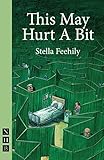
This is my review of This May Hurt A Bit (NHB Modern Plays) by Stella Feehily.

This very topical play is a savage indictment of the UK Coalition’s reorganisation of the NHS. To regular followers of the media, the main attacks will come as no surprise: costly, top-down, cynical sell-off of services without a mandate from voters, handing over to profiteering private, often foreign companies, failing to ensure that provision is adequate and worst of all, sacrificing the post-war vision of a free service based on need, unique and revolutionary in its day.

The drama pricks our consciences with an opening polemic from Nye Bevan, then moves on to a kind of “Yes Minister” scene, in which a Sir Humphry clone gives David Cameron the form of words to fob of criticism of the proposed Act.

It is soon clear that this play is a series of sketches, with surreal touches as when Nye Bevan and Churchill gatecrash a family reunion to argue over how best to manage a health service collapsing beneath the unforeseen demands of a rapidy ageing population, or when a budgie called “Maggie” begins to talk like Margaret Thatcher.

Requiring a high level of performance, this play is by turns funny and poignant, but the polemical stance is often heavy-handed. The criticism of PFIs is devastating, but in the main the assault is too earnest and didactic, rather than subtly dramatic. Despite the inclusion of a pro-reform consultant, and stereotyped Republican American medic and his English wife who only see the faults in the NHS, there is insufficient coverage of alternative points of view with arguments to counter them effectively.

The work seems likely to date quite fast.

⭐⭐⭐ 3 Stars

Spice of life

This is my review of The Lunchbox [DVD].

I had not heard of Mumbai’s labour intensive dabbawallah system for delivering to men at work the lunch boxes often prepared by their loving wives, but a recent trip to India had made me aware of the noisy, polluted, gridlocked chaos of its urban streets. In this tale, lonely housewife Ila finds that her delicious lunches, intended to rekindle the ardour of her neglectful, workaholic husband, are somehow reaching the desk of an equally lonely insurance claims clerk on the brink of retirement. Their ensuing correspondence, made more frank and poignant by the fact that they have never met, explores both the pathos and the potential simple joys of daily life. In the process, we see and learn a good deal about life in modern India, which, beneath the film’s many comical moments seems rather sad: men grow old strap-hanging to work on overcrowded public transport, and those in work seem to have to work too hard for relatively little. Are such pleasures as mouth-watering food and colourful wedding celebrations enough to compensate for this?

Some of the plotting is a little unconvincing, but the impression of Indian life is authentic. Ritesh Batra, the director, was wise to steer clear of Bollywood romance in favour of a slower paced, lower key but moving and thoughtful film, which despite moments of sadness leaves the audience feeling positive.

⭐⭐⭐⭐ 4 Stars

Let this cup pass

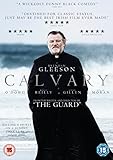
This is my review of Calvary [DVD] [2014].

On the bleakly beautiful coast of Sligo, Father Lavelle ministers to his eccentric flock of sinners with compassion leavened by dry wit, and tolerates his blinkered sidekick. A widower and former alcoholic, Lavelle is no unworldly paragon of virtue. In the opening scene, a disembodied voice in the confessional box calmly announces the intention of killing him on the beach the following Sunday, not in spite of but because of the fact that Lavelle is essentially a good man. This will be some kind of confused way of obtaining closure for childhood abuse at the hands of another priest. How should Lavelle respond to this threat?

The film follows the course of Lavelle's life for the following week with an element of "whodunnit" in advance. Can we guess the identity of the would-be assassin? This is not really the point, which is whether, in modern fractured and increasingly secular Ireland, the sacrifice or "Calvary" of a Catholic priest can have any meaning. By turns satirical and serious, and overall quite original, the film is patchily successful – some characters are too caricatured and the dialogue is at times somewhat contrived, as in the case of the local police chief's grotesquely camp and sinister lover – or that's what I took him to be.

The one small detail which grated on me was a local corrupt banker's apparent ownership of Holbein's painting "The Ambassadors", which everyone knows to be in the National Gallery, London – I accept this may have been intended as a touch of humour. Overall, the film is worth watching, although it takes a period of reflection to form a judgement on the ending. The musical soundtrack is also good.

⭐⭐⭐⭐ 4 Stars

The Past – Ties that bind

This is my review of The Past [DVD].

Expectations raised by Iranian director Asghar Farhadi’s earlier film, “The Separation” are not disappointed. “The Past” is an absorbing, subtle and complex drama of relationships set in the everyday world of a Parisian suburb where ordinary people have to juggle the needs of work and childcare with sorting out their emotional lives. Shifting between the characters’ different perspectives, it manages to arouse empathy for them all in the process. Even with subtitles, the dialogue is excellent, reminding me of a very accessible Pinter play.

For reasons which are never fully explained, four years previously Iranian Ahmed left his French pharmacist wife Marie and her two daughters with whom he gets on well, although he is not their father. The film opens with his return to Paris at Marie’s request to sign their divorce papers. Yet it is clear from the outset that, although they both regard their marriage as over, a natural intimacy between them still remains, they know each other so well. Marie can instruct Ahmed to help her drive by changing gear, since her arm is too painful for this. She even asks him to find out what is bugging her teenage daughter Lucie. It is not surprising that Marie’s new lover Samir feels resentful and excluded. He is also trapped in the tragic effects of an ill-considered action taken by his wife, and the wonderfully acted scenes of his small son witnessing the drama of dysfunctional adult relationships and trying to make sense of them are poignant in the extreme. The little boy continually tries to apply the rules he has just learned only to find that some new factor contradicts them. Having learned the need to apologise for his bad behaviour, he then has to grasp that some adult breaches are simply too grave to be pardoned.

Despite the need to move on, the past creates a web of relationships, obligations and consequences of earlier actions which cannot be escaped. To what extent are we culpable if others misconstrue what we do or cannot accept our acts of selfishness? Is it necessary to confess to behaviour which has caused suffering, or are white lies sometimes the least damaging policy? Ahmed at times seems like living proof that “the way to hell is paid with good intentions” since his insistence on honesty risks making matters worse.

Rather like real life, the pain and anguish in this film are made bearable by touches of humour, curiosity as to how the plot will reveal its twists, the consistent high quality of the acting – the children’s performances are very realistic – the minutely observed details of the domestic scenes, and moments capturing the joy of living, as when Ahmed serves up his mouth-watering traditional Iranian dishes.

⭐⭐⭐⭐⭐ 5 Stars

Le Goût Des Autres – The power of humour to enable us to understand life better

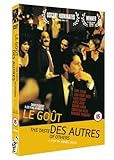
This is my review of Le Goût Des Autres [DVD].

In this film which deserves both its awards and to be better known in Britain, the talented Agnès Jaoui and Jean-Pierre Bacri co-wrote and acted two of the main parts. Bacri plays Jean-Jacques Castella, the wealthy factory-owner who comfort eats to replace an undefined hole in his life. A dabbler in interior design, his wife swathes their home in frills and competing flowery patterns, and obliges him to share her affections with a lap dog. On a reluctant visit to the theatre, he is smitten by the performance of an actress who happens to be earning extra cash as his English teacher to prepare him for an important business deal, and who could not be more different from his wife. In what looks like a doomed attempt to form a relationship, he latches on to her group of bohemian arty friends who have as much contempt for his taste as he is bemused by theirs.

The often funny yet moving main theme is underpinned by the triangular relationship between his naïve chauffeur who struggles to play the flute despite a lack of aptitude, his hard-bitten temporary bodyguard and the hash-dealing barmaid and borderline tart with a heart, played by Jaoui.

It’s a pity there are not more films like this near flawless work, with an ending that subtly avoids overstatement, pointing the audience in a certain direction, with a “feel good” factor which steers clear of any mawkish sentimentality.

⭐⭐⭐⭐⭐ 5 Stars