Brilliant after a meandering start

This is my review of The Lacuna by Barbara Kingsolver.

“You have to get right into the action, readers are impatient.” Perhaps Barbara Kingsolver should have heeded the advice of her “hero”, the author Harrison Shepherd. The first couple of hundred pages were heavy going, being mainly in the form of the diary written largely in Mexico by the teenage Harrison, rambling entries in an often pretentious style with stilted conversations and unengaging characters, not least the waspish woman who turned out to be the painter Frida Kahlo- it was hard to believe she was only about five years older than Harrison. I realised later that the style had a point as he was meant to be developing his voice as a writer. Also, the relevance of the initially tedious interruptions of the “Archivist’s Notes” made sense in due course. The odd witty comment or well-observed scene made the effort of reading worthwhile, such as the vivid account (back in America) of bystanders caught up in an over-zealous attack , as government troops used tear gas and brute force to quell demonstrating soldiers with a legitimate grievance over pay. However, too much hung on the reputation of “The Poisonwood Bible” to keep me reading.

The plot picked up pace when Trotsky appeared on the scene, but the book really began to absorb me on Harrison’s return to the States, as a guilt-ridden young man who hadn’t managed to save Trotsky from the icepick, inspired to write novels by Frida. Kingsolver’s descriptions of small-town life in the Mid-West rang truer for me than those of the painter Rivera’s household in Mexico. However, perhaps the writing had found its rhythm because the subsequent return visits to Mexico with Harrison’s assistant Violet Brown (and her splendid dry wit – “Even a feather duster will lay an egg in April”) also seemed more alive.

I was very impressed by the build up of tension as Harrison inadvertently but inexorably attracted the malign attention of the Committee of Un-American Activities, culminating in a excellent trial scene, written like a play – out-crucibling “The Crucible”. The final section tied up the ends neatly, and returned full circle to show the relevance of some of the earlier passages, such as Harrison’s discovery of his first “lacuna”- the hole in the cliff exposed only at low tide. I liked the final note of optimism to relieve the initial apparent darkness of the ending. The author succeeded in making us grow to care about Harrison.

Unlike, “Poisonwood”, which tails off and loses focus after a brilliant first part, this book has an excellent second half, but a beginning which could have done with more hints of the promise to come. A shorter first part with a sharper focus would have made a more effective novel overall. I could have done with a glossary of Mexican terms, a brief history and biography of the historical characters, for quick reference.

It was an interesting approach to make “an ordinary man” the vehicle for an exploration of the abuse of power, and the similarities in this respect between apparently very different regimes, be they ancient Mexico, the Soviet Union under Stalin, or the States when prey to McCarthyism. In the process, the “celebrities”, Frida and her husband, were perhaps unduly blurred, although Trotsky was portrayed as a more rounded and sympathetic character. I am not sure that Kingsolver has revealed any great truths or insights, but she has the power to remind and outrage us once again over the way men can misuse ideologies to persecute each other.

⭐⭐⭐⭐ 4 Stars

Sex and Dugs in a Nightmare Soap

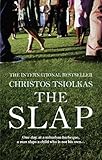
This is my review of The Slap (Atlantic Cult Classics) by Christos Tsiolkas.

The slap is an incident at a barbecue, where a man commits the cardinal social sin of hitting an obnoxious child who is not his own. This is clearly a rich vein to mine for a modern moral maze. The author is ambitious in his approach, by selecting eight very diverse people affected by the slap to varying degrees, not merely to develop the ramificatons of this event, but as a cue to explore their attitudes and values in general, in order to place under the microscope urban life in C21 Australia. This broad scope leads to a lengthy novel, full of digressions which diffuse the potential drama of the slap and its immediate outcomes.

I have no idea how realistic the portrayal of Melbourne is and the extent to which the author meant to portray so many of the characters as crude, selfish and insensitive, corrupted by the society around them, but the amoral, drug and booze-fuelled lifestyle which is apparently the norm is depressing. Some of the characters are clearly intended to be flawed e.g. Rosie and Gary, and the reasons for this are spelt out without much subtlety. The frequency of gratuitously foul language, pill-popping, messy bonking and casual infidelity alongside excessively violent and shifting emotions, makes many of the characters seem too similar, and reduces what could have been a powerful and thought-provoking drama to a farce, in which one cares too little about the fate of those concerned. The graphic descriptions of bodily functions are probably very honest, but add nothing to the tale. I agree with those who found the book overlong, with too many characters introduced at the barbecue in the first section. It was only necessary to include those who would reappear or are crucial to the story. The chapters after the resolution of the court case on "the slap" seem an anti-climax. I may have missed something, but the end of the last chapter struck me as very weak, with too overt a desire to "dot the 'i's' and cross the ts'". I may be wrong, but feel that the author has an interest in exploring issues of bisexuality (Connie's father) and "coming out" as gay (Richie), which create a complexity too far to muddy the central theme of the book.

To be fair, some scenes are very well-observed, so I am left with the feeling that this book began with great potential but became flabby with the overlong string of descriptions of individual excess and offers only a rather muddled message which needed more careful expression.

⭐⭐⭐ 3 Stars

Half of a Whole in Gilead

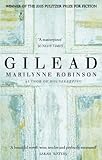
This is my review of Gilead by Marilynne Robinson.

Set in small-town Kansas in the 1950s, this is a beautifully written mixture of reminiscences and musings on the meaning of life and faith by a pious old preacher, John Ames, intended to be read after his death by the son born very late in his life. You may be put off by some of the preachy passages and theological philosophizing, but this aspect is very much what you would expect of a man who has devoted his life to this way of thinking. Also, the dominance of religion and the plethora of sects is true to life in rural America. What could have become cloying hokum is made endurable for me by the frequent anecdotes of life in the often harsh world of rural Kansas, and the insights into relationships fractured by the Civil War, and differences of opinion over slavery and religion – pacificm versus muscular war-making, or even over the truth of religion itself. Ames' discovery of love as an old man, and his delight in his young son, are also portrayed well.

A key point is that "Gilead" (the name of the town where the story is set) is in fact "half a story" which benefits from being read in conjunction with "Home" which covers the same events from different perspectives. At the heart of both books lies Jack Boughton, son of Ames' old friend since childhood. Jack is a charismatic misfit, perhaps driven to become a the tortured drifter and drinker by his inability to accept his family's beliefs and life style. Returning to Gilead, like the Prodigal Son, he is the subject of both joy and sorrow for the two old men, both challenging and enriching their belief. The two books are so tightly bound together that some key scenes e.g. a lengthy discussion between Jack and the two old men as to whether people can be predestined to be bad, are reproducd verbatim in both books. On the other hand, key details, say of Jack's life, which are leaked out gradually in both books, are not duplicated, so that you have to read both to get the whole picture. I thought for a while that it would have been better to weld the two stories, "Gilead" and "Home", into one. However, that could have made the book quite long. I concluded that the two separate books "work" as an idea, and particularly like the interplay between the characters, and their different perceptions of the same events. If forced to choose, "Home" is easier to read, less theological, with more interaction between characters and dialogue, but perhaps less "profound" in its thinking.

At times I was bored by the rambling, repetitive passages which seem to me to indicate a lack of effort over devising a stucture, although they also of course convey the way people actually think. Similarly, some sentences are too long i.e. need to be read twice for the sense. In such a skilful wordsmith as Robinson this must be an intentional "stream of consciousness." It is a mark of this book that often some passing thought is represented as more significant than a major aspect of the plot. There is however some progression in the book, as the reason for Ames' hostility to Jack is revealed, and his feelings for the younger man gradually evolve to become more positive.

Gilead provides insights into both the joys and the utter sadness of life. Although I remain of the view that "Gilead" suffers from a lack of structure and that some relationships e.g between Jack and his wife. are too thin, this is a memorable book which will repay rereading.

⭐⭐⭐⭐ 4 Stars

Stream of consciousness at Lake Fingerbone

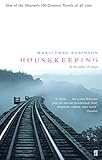
This is my review of Housekeeping by Marilynne Robinson.

This slim novel is deceptively easy to read – the poetic style and unusual trains of thought require concentration and rereading to get the full meaning. Robinson has a gift for making the ordinary seem extraordinary – for me, this started on page three with the description of the sky reflected in puddles, soon afterwards the experience of something as simple as hanging out sheets. At first, I thought the book would be a kind of eulogy of the apparently mundane pattern of women's lives in rural America (or the whole world), creating satisfaction and dignity in the routine of making jam or rearing children, such as you also find in some of the writing of Jane Smiley and Barbara Kingsolver. Then, as the story became ever more often a stream of consciousness, isolating the narrator Ruth from the "real" world, linking her to the itinerant and recognisably manic aunt Sylvie and to memories or images of the grandfather and mother who have so tragically died in the ever-present Lake Fingerbone, I realised that this is a much more profound study of how parents may unintentionally damage their children, through failure to communicate, or through leaving them, and also about the meaning of life.

Although much of the writing is "exquisite" with striking and original similes, it sometimes seems over-laboured and self-consciously "creative writing". The biblical passages may grate on those who are not believers, but are acceptable as part of the culture of the rural north-west States. I agree with the reviewer who found the narrator Ruth altogether too knowing and perceptive as a young child. At times she enters the head of, say, her deceased grandmother in a way that is implausible, but perhaps realism is not always the author's intention. Despite the minute detail and acuity of many descriptions of sensations, the vivid evocation of the bleak yet beautiful Lake Fingerbone area through the cyclical seasons of snow, ice and flood, and the wit and realism of overheard conversations, most of the main characters remain shadowy in their personalities and motivations. Perhaps one point of the story is the ultimate unknowability of other people. It certainly helps one to empathise with life's drifters, who are too often objects of fear because they remind one that much of the security of life is an illusion.

⭐⭐⭐⭐ 4 Stars

Love and Summer by William Trevor: “Subtle, skilful and moving”

This is my review of Love and Summer by William Trevor.

Like some other reviewers, I read this in a single sitting and it is the first William Trevor novel I have read. Far from being “old-fashioned”, it was true to life in rural Ireland in the mid C20, as far as I can judge. I liked the realism of it: the focus on the small routines of daily living and the constraints of small-town life. Yet, those of us who live in a very different world may still be able to relate to the nostalgia, the regrets and compromises which in different ways form part of most people’s existence. I also admired the smooth development of the plot towards a sad but convincing finale. I disagree with those who found the book confusing. The juxtaposition of characters’ thoughts, and the way a person might think one thing while saying something else, formed an effective way of conveying the subtlety of human relationships. Through being understated, the emotions in the book were infinitely more powerful. Many possible tragic endings were implied, but the one chosen was right – possibly predictable, but the manner in which it unfolded was not. The characters were all developed as complex people, with shifting attitudes and different relationships between them.

Minor criticisms are that the last chapter was perhaps a little “fey” and some of the demented old Orpen Wren’s monologues did “go on a bit”, although this may be justifiable in the light of the denouement.

If the test of a book is whether it moves you to see the world a little differently, this passes. A moving and superbly controlled piece of writing, on a par with Toibin’s “Brooklyn”, I would have been happy to see this win a prize.

⭐⭐⭐⭐⭐ 5 Stars

Stone’s Fall

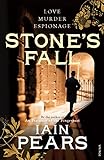
This is my review of Stone’s Fall by Iain Pears.

This evokes memories of Wilkie Collins (insanity and opium) and Daphne Du Maurier's "Don't Look Now" (hints of the supernatural in decaying Venice) although I have to say that both of these authors "did it better". The apparently well-researched and intricate plot contains many sinuous twists with some melodramatic scenes which sit rather oddly between rather dry explanations of the role of the banking system in the survival of late C19 societies – quite prescient since the book was first published in 2008! The structure is also unusual: three separate sections, successively set further back in time, with a different narrator and location, but serving to fill in further gaps to explain the life and death of the financier John Stone. This "back-to-front" approach inevitably saps some of the potential tension and suspense.

Although I understand why this book has been so highly praised, it does not work for me. This is not because many of the characters are not very likeable, and tend to be snobbish, class-conscious and anti-semitic – this is all part of the period covered. One reservation is that the large number of characters paraded before us tend to merge together – it is hard to relate to most of them, and to identify and recall the significant "clues" they may drop. Too much of the tale is reported via these characters, often in implausibly fluent speech. This brings me to the point that, despite their ( I think we are meant to find) very different personalities, the three narrators all use the same "voice": a very articulate, rather cynical, for the most part bloodlessly objective, tone – the author's? And although I think I was meant to be captivated by Stone's wife Elizabeth, I found both her and Louise Cort to be thoroughly unconvincing. Whenever the plot takes a romantic turn, the at other times erudite writing becomes squirmingly Mills and Boonish. Although the plot does hang together, the "denouement" at the end of Part 1 is a bit rushed and confusing (all that stuff about Bob, I mean Jan the Builder). In general, every section seems to have a long, slow, wordy build up to an unduly compressed finale.

I think it would have benefited from a ruthless pruning and editing. Perhaps the huge success of earlier work places the author above the requirement to do this.

⭐⭐⭐ 3 Stars

Mostly entertaining thud and blunder

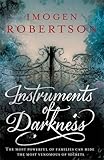
This is my review of Instruments of Darkness by Imogen Robertson.

The pace and confident development of the plot in short scenes alternating between the two main locations of London and the countryside suggest the author's familiarity with working on film and radio scripts. I was encouraged to obtain this book by a positive review in "The Guardian", but very soon became uneasy – this seemed a reworking of the murder mystery in an aristocratic household which I have met so many times in a long reading life. Was it really worth reading? The prose seemed to attempt a vaguely Austenish style in keeping with the late C18 setting at the time of the American War of Independence (although the story is set largely in England) but too often the attitudes and speech of the characters and the narrator jarred in sounding too modern. The prose was by turns leaden or purple when it attempted high drama and deeper emotion, and generally clunky, in need of a good edit. The characters were somewhat two dimensional – either cringe-makingly good and noble on one hand, or too obviously branded with a villainous "v" for viper. The key points of the plot were, contrary to the cover blurb, all too predictable, and the climax of the book, again unsurprisingly, over-melodramatic. Romantic relationships and those involving children were saccharine and sentimental. All this was quite frustrating because the story had the potential to succeed as more than a Mills and Boon pot boiler.

I quite liked the rare touches of realism- as when the "good guys" casually sacrificed a dog to test a drink for suspected arsenic, an action which has clearly shocked the sensitivities of some modern readers. Similarly, in the C18 world people could kill others in self defence and then dispose of the bodies in the interests of anatomical studies without involving the police! Some of the best writing was of the horror of the battle scenes. I also thought the epilogue was effective in striking a poignant note, reminding us of how a character who has hovered on the cusp between good and evil thinks he has achieved salvation through the love of a good woman, only to be sucked down by the inevitable reappearance of a blackmailer.

⭐⭐⭐ 3 Stars

The Trespass

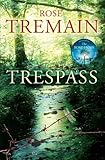
This is my review of Trespass by Rose Tremain.

Tightly plotted and well-written as you would expect of the work of a prize-winning author, this is part thriller, part pyschological study of a disparate group of characters in late middle age. The short chapters, which switch between the viewpoints of the main characters seem to lend themselves to the film script which will no doubt follow in due course. The "trespass" can be taken on two levels, the most obvious being the encroachment of middle-class expats on the remote rural area of the Cevennes, drawn by its wild beauty and peace but oblivious to the feeligs of the displaced local people. On a subtler note, the "trespass" is also the unintentional harm caused by parents who ride roughshod over their children's needs, leaving their adult lives blighted – in this unremittingly sad book, this damage applies to all the characters.

At first I was irritated by the contrived opening chapter which seemed to be an exercise in creative writing (a child's eye view of the world – not very relevant to what follows) culminating in a horrific but unexplained incident, clearly intended to retain the reader through the following somewhat unexciting scene-setting chapters. The main characters seemed stereotyped: arrogant gay art dealer obsessed with his mother, horsy lesbian sister, dreamy sensitive French peasant given to epileptic fits and boorish,drunken brother, etc. Gradually, my interest was caught by the interplay between the characters, their different takes on the same situation, etc. All of them, even those who seemed wholly bad or unsympathetic at the outset, revealed redeeming features and some clear development in their outlook by the end of the book.

Although the language occasionally disappoints by touching on the cheesy, I was impressed by some imaginative phrases such as for two drinkers who "sat face to face across a choppy sea of glassware" and by insightful comments about, for instance, memory, growing old, being lonely, and all the characters' changing perception of events.

Although I guessed the climax of the story long before it came, there was a sadly ironic twist at the end. The most poignant aspect was the lack of communication between the ill-used Audrun and her brother Aramon, driven to drown his guilt in alcohol

I have enjoyed other books by Rose Tremain more – The Road Home, The Colour, Restoration etc – I think because they are all more original and probably more ambitious in their scope. They also, as I recall, have a single main character with whom one can more clearly identify. The quality of the writing saves "The Trespass" from being as depressing as it might sound and overall it is a successful example of what you might call accessible literary fiction.

⭐⭐⭐⭐ 4 Stars

A Tall Story?

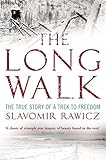
This is my review of The Long Walk: The True Story of a Trek to Freedom by Slavomir Rawicz.

Initially taking this tale at face value, I felt that I should take a positive view of it out of respect for the courage of the escaped political prisoners who showed such resourcefulness and persistence in their determination to survive. However, although it was relatively short and easy to read, I found the book all too easy to put down. This was partly because the incidents which would have been full of tensions and mishaps in a self-confessed adventure story were so straightforward: the escapees scaled prison walls without attracting notice, no dogs pursued them, everyone they met was friendly and gave them food, when hunger drove them to steal and slaughter an animal it all went without a hitch, and so on. Admittedly half the group died on the way, but I am not introducing a spoiler here: the author removes all suspense by telling us in the completely unnecessary chapter headings listed in the contents page how many people died and where. "Five By-Pass Lhasa" reminded me of a kind of "Enid Blyton meets Biggles" approach to it all. The characters were all somewhat two dimensional, and the rapid deaths without much warning or build up left me less moved than I should have been.

It could be argued that the lack of real action and personal drama reflected the fact we are dealing with a true story. However, consulting Amazon half-way through my reading, I found comments on the strong evidence that this tale is a pastiche of the story of another man's escape. I have no idea whether this is true or not, but it supported the doubts which had already arisen quite independently. My two first major queries arose over the fact that the narrator was able to repair the camp commandant's radio purely on the happily coincidental basis of having had the same model at home. This gave him convenient access to the commandant's wife, who not only spoke to him with the most surprising informality, but virtually incited him to escape, advised him on how to do so, and contributed to equipping him and his colleages to boot! As other reviewers have commented, the subsequent amazing capacity to cross the Gobi Desert without water, and the sight of the Abominable Snowmen were the final nails in the coffin of my belief. Out of all the characters, Kristina seemed to me to be the least convincing. I wondered if she was created to add a little more drama and was not surprised that she was the first to be eliminated from the tale.

I am sorry if I am misjudging this book.

⭐⭐⭐ 3 Stars

Home

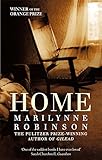
This is my review of Home by Marilynne Robinson.

"Home" is a subtle and moving exploration of relationships between parents and siblings, and the deeply embedded nostalgic memories of one's childhood which return in adult life, perhaps particularly for those who are "less successful", with too much time on their hands. It is written from the viewpoint of Glory, the oversensitive and unworldly youngest daughter of the retired Reverend Boughton, for whom she has returned to care in his old age after the collapse of her long, clearly doomed engagement. Unexpectedly, after an absence of twenty years, her brother Jack also returns home, an outsider, an alcoholic drifter from his youth, yet still retaining the power to attract people with his charm and flashes of perceptiveness. The human flaws and contradictions in the main characters held my interest – not least the pious yet manipulative old father, who in some distorted way loved his most wayward son the most, because he provided a "real cross to bear". There was also the inference that Jack's questioning agnostic spirit had somehow been crushed by the stifling religion of his upbringing. I enjoyed the implication that Jack, concerned about the race riots in the south, was less prejudiced than his godly father who had not thought to question the bigotry in which he had been raised.

Although this book could have been unbearably sad, this was countered by the wry humour of Glory's private thoughts, and by some drily witty dialogue.

I sympathise with some of the reservations of other readers. Having made its point, the book did "go on a bit" although you could argue that it reflected the slow rhythm of life in rural Iowa. In the same vein, the focus on the minute details of living – cooking, cleaning and maintaining clothes when one is very poor, gave the book realism. I also liked the way in which some key facts are touched upon so delicately that you could miss them if you tried to read too fast, or did not trouble to "tune in" to the wording, which is quite convoluted at times, almost "nineteenth century" in style yet very lucid at other points.

It is true that the self-absorption of the three main characters was wearing at times. There were a few practical queries. Wouldn't Jack's sudden appearance after twenty years have created more of an impact? Surely the siblings would have come flooding back to see him? If their respected old father was fading into senility wouldn't that have brought them back as well?

The book dragged somewhat in the middle for me. As relations between Glory and Jack improved I feared I was reading a kind of Polyanna-cum-Little Women for adults. Jack's reputation for being an alcoholic and a thief seemed a little exaggerated. But the tension from Glory's ongoing dread over her brother's imminent downfall was proved justified. The pace improved towards the end with an effective final twist, although I felt that Glory's final observations were a little schmalzy.

This is a well-written and thought-provoking book which encourages me to read "Gilead" although on a superficial view the latter appeals to me less. Although "Home" can be enjoyed by an agnostic/atheist I am not sure the same can be said for Gilead…..

⭐⭐⭐⭐ 4 Stars