This site will share with you hundreds of book and film reviews written since 2009. Also a chance to discuss these reviews together with some of my creative writing to be added.
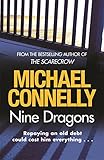
Why do I persist in reading Harry Bosch novels? The first part of "Nine Dragons" reminded me of the reasons, with the piecing together of evidence from tiny clues, the details of police practice, the convincing relationships between the male characters including hints of tension based on personality and race, together with the flavour of Los Angeles – the dusty wind from the mountains, the houses sprawling over the dry valleys, and great rivers of traffic crawling along the freeways, not to mention Bosch's shameless consumption of artery-clogging fast food.
Although it may be quite unrealistic, I was intrigued by the idea of capturing a still image from a video in order to use the landmarks visible through an open window, including the reflections in a pane, combined with analysis of noises on the video, in order to locate the position of a kidnap victim thousands of miles away in Hong Kong.
However, once Bosch arrives in Hong Kong, everything deteriorates. Connelly's women usually seem over-romanticised to me, and the presence of Bosch's ex-wife Eleanor Wish – the CIA agent turned super-croupier does not help. Perhaps understandably, since he is trying to find his kidnapped daughter, Bosch throws caution to the winds, but in the ensuing thud and blunder, further dragged down by crude plotting and style, I completely lost interest. It seemed a waste of time to bother reading to the end, so I feel obliged to award 3 stars for the first half…..
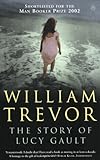
This book has a compelling opening with vivid descriptions of the landscape and rural life on the coast in 1920s Cork – we see the sharp contrasts between the Catholic poor and the local Protestant gentry, who are beginning to suffer attacks from disaffected youths. Much of this is seen through the eyes of the eight-year-old Lucy, and we can appreciate her anguish over her parents' decision to leave the house for the safety of England.
As seems to be a recurring theme for William Trevor, the story is all about the way chance events, and understandable but misguided actions, can wreak longterm damage – often of a subtle variety – in the lives of not only individuals but also those who have contact with them.
Ultimately, the novel succeeds in bringing the main characters, and the reader, into acceptance of fate, even the ability to see some positive outcomes of misfortune, including integrity in the face of adversity.
However, like some other readers, I found the pace of much of the book too slow, although I know this is intentional, since the details of daily life, exploration of minute thoughts and evocation of a former simple way of life are what really interest the author. I thought he had "made his point" by the middle, although some further "loose ends" are tied up in the final chapters.
I also agree that some key aspects of the plot are implausible – but perhaps this does not matter too much.
Although I admire Trevor's writing, the sense of some sentences escaped me, which was frustrating, since his greatness lies in the articulate flow and subtle insight of his prose.
It may help to be 19 or/and Japanese to appreciate this book fully.
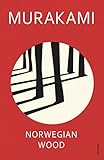
At first, I was struck by the power of the uncluttered prose, well-preserved in the excellent translation by Jay Rubin. I enjoyed the vivid descriptions of the Japanese landscape, which I have never seen, and of life at Tokyo University in the late '60s, which tallied in many respects with my memories of studying in the UK at the same time – the half-baked demonstrations, extreme left-wing student leavers who became bourgeois overnight on graduating, and the young people drifting in and out of relationships on the edge of a life which they were unsure how to live. I was surprised how westernised Japan seemed as regards culture, yet this was clearly a superficial layer over deeper traditions and attitudes.
By the middle of "Norwegian Wood" I became bored, as the narrator Watanabe provided a sounding board for a succession of mixed up women, with their self-absorbed and often cringe-making sexual revelations. Although I liked Watanbe, as a thoughtful and essentially level-headed person with a wry sense of humour, the book seemed a little misogynistic to me in that the women were all portrayed as in some ways weaker, and in need of his affection and support.
Once Watanbe had met Midori, I thought I knew how the book would end, but there seemed insufficient development, and a lack of structure and plot, to get there. The focus on suicide was oppressive, although it may be realistic for Japan where I believe young people are very pressurised to study at school, plus there have been recent examples of a "suicide cult" in Britain. The tragedy of a young person's life being blighted by the death of a close friend or lover is tragic, but I am not sure that Murakimi explored this as fully and subtly as he might have done. It all got diluted with appearing "hip and sexy" to paraphrase reviews on the back cover.
Despite my reservations, I shall probably try another of Marukami's books, since I admire his style of writing.
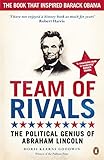
I was sorry to finish this engrossing study of the self-educated "prairie lawyer" who, despite a poverty-stricken childhood and youth spent in manual labour, which saddled him with the nickname "the rail-splitter" in later life, managed not only to win the 1860 presidency against much more experienced and illustrious rivals, but to persuade them to work in his cabinet.
The author may view Lincoln through somewhat rose-tinted spectacles – his homely anecdotes for every occasion must have been irritating at times, his tardiness in sacking the preposterous waste of space, General McClellan must have cost many lives and considerable resources, and his inducement of northern Democrats to "swing the vote" in favour of the emancipation of slaves amounted to bribery -even if for a noble cause.
Yet, this seems like nitpicking against the tide of evidence for Lincoln's greatness. He combined unusual integrity, courage, resilience, patience, and a lack of personal vanity and pettiness which made him "above" displays of malice, or the bearing of grudges. In addition to a gift for clear and simple communication, aided by a sharp wit, he applied logic and pragmatism to every situation before making a decision, and all these factors combined to give a distinctive management style which must have been unusual for his day – quite laid-back, egalitarian, consultative and delegating, avoiding a blame culture – although he saw it as his duty ultimately to make the crucial decisions himself.
His rivals are also developed as complex characters – such as the urbane, sociable Seward who was so complacent about winning the presidency that he went off on a long holiday in Europe instead of campaigning, or the pompous Salmon Chase – who disliked his fishy name, but at least wasn't called "Philander" like his sadistic uncle – who obsessively machinated to get elected in '64, unable to appreciate his lack of popularity, yet had a genuine concern to abolish slavery, and was one of the first to welcome the former slave Douglass into his home.
The book really "took off" for me in the chapters on the origin and progress of the Civil War. Although triggered by the issue of slavery – which the southern states wished to retain, and extend to the developing western regions, the ostensible reason was to maintain the unity of the young Republic, which had to prove to the world the value and viability of "true" democracy.
Although the repetition of some details helps the reader to keep track, this would be unnecessary if Goodwin had undertaken a final editing to make the text more concise and streamlined. A list of key characters, time-line of main events, and clearer maps placed at the front for easy reference would have helped. However, these defects apply to most serious history books and biographies, and overall I recommend this as very informative and more gripping than many historical novels.
This is a page-turner, on the cusp between literary and popular fiction: on the one hand, it is well-written with varied, complex characters and a detailed, reasonably watertight plot with plenty of twists; on the other, it is very easy to read with moments of high drama and romance. The heroine Evelyn's wry self-knowledge and "feet on the ground" attitude to life prevent the story from slipping into "Mills and Boon" territory.
Most likely to appeal to women – it would be interesting to know how men rate this novel – it finds fresh aspects to cover in the heavily harvested theme of World War 1. The focus is on its aftermath (1924) where women outnumber men, must often support themselves, yet have to battle to enter the professions such as law. The author uses the knowledge gained as a magistrate to create some convincing court scenes, as Evelyn struggles to develop a legal career, having persuaded a maverick solicitor to take her on. Her cases reflect the times: a man who may have shot his young wife out of jealousy, having been destabilised and brutalised by the effects of war; the feckless but loving mother in danger of having her three children shipped off to Canada under a "hidden" because clearly controversial method dealing with the problem of children in care. All this takes Evelyn's mind off her claustrophobic domestic life in an all female, convention-bound household, stultified in grief for the loss of her brother James at the Front.
The book commences with the arrival of Meredith, a charismatic young woman claiming to be the mother of James's son – the appealing six-year-old Edmund,who bears a striking resemblance to his father. Is Meredith genuine? What does she hope to manipulate out of the family? Meredith's unsettling effect, and the opportunity to release her bottled up affections on Edmund, make Evelyn ripe for a love affair in her emotionally suppressed state.
The structure of the story lends itself to a TV serialisation. The beginning is perhaps rather hackneyed: Evelyn imagining her brother's death through what turns out to be a dream, serving as a dramatic preparation for the sudden appearance of Meredith and Edmund in the middle of the night.
Where the pace may seem slow at times, it could be realistic in showing the frustration of trying to obtain evidence and continually drawing blanks in a legal investigation. It also gives scope to show the development of Evelyn's thinking, and her relationship with the other characters.
I did not mind the somewhat open ending, which the author seems to favour, since it seems "more like real life" and leaves the reader free to imagine a preferred future for Evelyn. The mixture of "success" and "failure" at the end also adds authenticity.
As regards reservations:
* although many scenes are genuinely moving, those in which key aspects of the plot are revealed strike me as overly melodramatic. In these, characters such as Meredith or Evelyn herself appear too articulate, effectively telling the reader in lengthy paragraphs what has happened rather than communicating convincingly with another character in a moment of high stress.
* the idea of Meredith having wanted to be a nun is implausible, and she needs to be older than 29 in the story to have been a confident and proficient nurse aged 22 at the time of her brief meeting with James.
* the book would have gained from developing more fully Nicholas's personality and motivations, and his relationships with the Hardynge family.
* people's reactions, such as those of Nicholas (over what Evelyn has to tell him) and Breen (over his client Wheeler's wishes) in the final scenes (can't be more explicit) appear to me somewhat unlikely.
* the details of the ending are needlessly rushed, after the "slow burn" of the main part of the novel.
Overall, to the extent that this is a gripping and thought-provoking read, I recommend it.
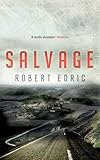
A drama set several decades into the future, with Britain suffering the effects of climate change, tempted me to try once again to read a Robert Edric novel. I was very impressed by the discovery of the quality and striking originality of his writing through "In Zodiac Light" a couple of years ago, but have struggled since then to find another of his books that repeats the experience, apart from "Gathering the Water", which was a bit of a let-down plot-wise, but beautifully written, creating powerful visual images.
In "Salvage", Edric continually promises some dramatic incident or moving relationship, but it never quite comes to pass. Also, in this case, the descriptions of the landscape and the narrator's activities and encounters with the locals are quite dull, plus I had trouble understanding why anyone should build a new town in the depths of Scotland. There was too little to compensate for the lack of a narrative drive, and eventually, with great regret, I gave up…..
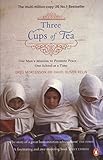
I was more interested than I expected to be in this account of the American Greg Mortensen's obsession with building schools in the remote, mountainous northern areas of Pakistan and Afghanistan. This was despite the often toe-curlingly cringe-making journalese and frequent fulsome adulation of Mortensen – for some reason never just called "Greg" by David Oliver Relin who actually wrote the book.
The book succeeds on three counts: it conveys the wild beauty of the landscape, it makes us appreciate the dignity, intelligence and humour of the tribal people who live in communities, close to nature, in a manner which seems morally superior to that of the commercialised western world, and it also provides quite an effective potted history of an area which affects us all, in the light of the activities of Osama Bin Laden, the endless war in Afghanistan and instability of the nuclear state of Pakistan. Reading between the lines, "Three Cups of Tea" also provides an intriguing study of how Mortensen's background and personality have equipped him to achieve his goal.
The journalist Relin was apparently hired to create a marketing tool – along with the children's and Kindle versions of the book – to raise money for the cause. This is fair enough in view of the compelling argument that building schools to reduce ignorance is one of the most effective ways of countering the rise of terrorism amongst the disaffected youth whose lives have been ripped apart by war, for which they largely blame the US.
I suspect that some anecdotes may have gained in the telling, not least because Relin takes the liberty of describing Mortensen's past thoughts, even his dreams, in as great detail as if they are his own, and recreates verbatim conversations from years ago. I was irritated on almost every page by the style – an overloaded lorry "fishtailing" up rutted tracks between mighty "daggered" peaks that "garlanded" the town, and so on; Mortensen pacing round "powerless" rooms, meaning that they had no electricity, or sleeping until "motionlessness awoke him" ….. Yet, if this book gives some gung-ho Islamophobic Americans pause for thought it will have served a useful purpose.
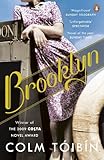
This deceptively slight novel has remained in my memory for several months. The clarity of Toibin’s writing captures the life of an inexperienced young girl in 1950s Ireland, where life is constrained by lack of opportunity, convention and the stranglehold of the Catholic church. The author shows great empathy in imagining a female perspective.
I was completely convinced by Eilis: her obvious intelligence, frustration at her inability to realise it, yet her ultimate acceptance of constraints – even to the extent of her agreement to emigrate alone to New York to obtain work, a move organised “in her own interests” by her sister Rose, who seems so independent but it equally bound by duty, and the string-pulling local priest.
I agree that the minute detail is at times tedious, say on the voyage out, although I am sure it is very realistic. The scenes in New York did not ring so true for me as those for Ireland – I have no firsthand experience of either, and I was not very convinced or moved by her love affair with Italian Tony and his in some ways too worthily good to be true family. This section of the story showed very clearly how, through force of circumstance, people can be uprooted from their familiar way of life and drift into a very different culture and existence.
What made the book for me was the well-structured ending. After lulling the reader into a false sense of complacency with its measured pace, the story changes gear. In the fast-moving final part, Eilis returns to Ireland as a relatively sophisticated young woman, and catches the eye of a man who did not give her a second glance in the past. We see a spark of real passion for once – however shallow-rooted it may be – and Eilis has to make a hard choice between two ways of life – but then, the tentacles of the old oppressive, controlling culture catch up with her in a final excellent twist – and she has no choice at all!
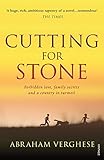
I normally enjoy books which transport the reader into another culture – in this case Ethiopia – with the authentic ring of local knowledge. However, from the outset "Cutting for Stone" – a pun on the name of a surgeon – failed to hook me.
I agree with those who found the focus on medical details and operations quite tedious. As is too often the case with family sagas, the style was plodding with a lack of real drama or tension to carry me through. I could not engage with the characters such as the twins, children of a nun – an unlikely event stated too casually on the opening page.
The novel compares unfavourably with, say "The Kite Runner", again written by a man who has moved to the west and trained in medicine, but with a real flair for creating moving characters and intriguing plots, thereby giving real insights into Afghanistan and issues of adaption to life in the US.
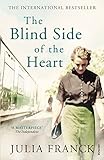
I thought it would be interesting to read a novel about the impact of the two World Wars on the lives of German women. I assume that the "blind side of the heart" refers to people's inability to express normal love and emotion when they have been traumatised by the effects of war, both in grinding their lives down to a question of mere survival, and in taking away or maiming those they love. In this case, the main character Helene is reduced to a kind of automaton, caring for the sick in her role as a nurse, but unable to relate properly to her son. A complication is that the main factors destroying Helene have little to do with war as such – the loss of a lover and the callous and brutal behaviour of her husband, not to mention her own mother's irrational cruelty.
The focus on the minute details of daily life and on passing thoughts is often well-observed e.g. the description of Helene as a young girl studying every mole and blemish on her sister's back. However, I was disappointed by the lack of focus on the "bigger picture" to show how Germany evolved from a period of humiliation and punitive reparations after World War 1, through hyperinflation and political instability to World War 2 under Hitler.
I was repelled by the graphic descriptions of bodily functions, maladies and wounds. Helene's and at the end her son Peter's observation of the world with such a stark lack of emotion – for the "good characters" to be so hard – is shocking. I am unsure too what extent this excessive objectivity is deliberate but it reduced my capacity to empathise with the characters. I also found some of them quite unconvincing such as Helene's eccentric, often cruel mother, and her oddly passive father, and the strange relationship between these two. Helene's husband Wilhelm was painted too crudely in negative terms.
The book may have suffered seriously in translation. I had to reread several sentences which persisted in not making sense or appearing to be "non sequiturs". Generally, there is a stilted note to the phrasing which interferes with my involvement in the tale. Some of the earnest conversations on literature and philosophy are too stiff and unnatural. With a sense of frustration, I wanted to rewrite large sections of potentially moving or interesting scenes.
The pace is a little too slow, with a lack of "narrative drive" and episodes or encounters which "drift away to nothing" – rather like real life, I suppose e.g. the scenes with the beautiful Martha's admirers and her own eventual "disappearance" from the story.
The story would have made a greater impact with pruning away of some lengthy passages which added little. The lesbianism, with hints of incest, seemed to me pointless distractions from the main story – except perhaps the love between Martha and Leontine serves to show a freedom of expression allowed in "fashionable circles" in the 20s but suppressed as decadent by the Nazis.
This story is too harrowing to be enjoyable, and it is certainly not a page turner, although I think memories of certain scenes will remain with me such as Helene's mushroom-hunting expedition in the forest, made horrific by her encounter with the cattle trucks carrying Jewish prisoners, which she cannot fully comprehend at the time, although the reader can, with the benefit of hindsight. The scene also foreshadows her appalling yet understandable abandonment of the son whom she loves, yet also finds a burden.

 Antenna Reviews