A Cut above the Norm

This is my review of The Redbreast: Harry Hole 3 by Jo Nesbo.

There seems to be some confusion over the sequence of the Harry Hole novels, perhaps because they have not been made available in English in the same order that they were first published in Norwegian.

The Redbreast", the "first" novel in the Harry Hole crime series to be translated into English has a more interesting, plausible and moving plot than the "third" story, The Devil's Star which I read before this – unwisely as it almost put me off reading any more!

"The Redbreast" is an effective pacy mass market crime fiction, with a more serious thread running beneath it. Like Henning Mankel and Stieg Larsson, the author Jo Nesbo draws on the theme of pro-Nazi supporters in the Scandinavia that we always like to think of as so progressive and liberal. Nesbo's Norway has the added interest of a country that still feels some shame over being overrun by the Nazis, while the idealistic young men who went off to fight with the Germans against the Russians in the belief they were defending themselves against Communism have grown into pensioners who harbour resentment over being punished for this after World War 11.

I know I could have used Google, but would have appreciated a brief note at the end to summarise the key historical facts and political parties mentioned in the story.

Also, like some other readers, I found the flashbacks to the 1940s trenches in Eastern Europe a bit difficult to follow. I think this is because they are so short, which also means makes it harder to establish a rapport with (in some cases even remember!) the characters. Plus the details are no doubt deliberately confusing because Nesbo wants to sow clues, including red herrings, without giving away the final plot twists.

It took me a while to get into the plot – I think this happened when the flashbacks become less fragmented or cease for a while.

I liked the fact that Harry, although clearly a maverick, has not yet turned into the dreary drunk of The Devil's Star – although he has good reason to be depressed over the murder of a colleague, which I thought was described very vividly, with a strong build up of tension, but perhaps deserved to be revisited more at the end, to flag up the loose ends and suspicions that Harry carries into The Devil's Star.

For lovers of crime fiction in an interesting setting, I recommend this series, although I suspect the quality of the writing is much better in the original Norwegian. Also, I strongly advise you to read them in the right order, as I now intend to do – I think "Nemesis" comes straight after "The Redbreast" in time. If not, I'm sure someone will put me right!

⭐⭐⭐⭐ 4 Stars

Starry starry night of crazed genius

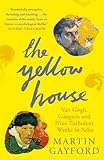
This is my review of The Yellow House: Van Gogh, Gauguin, and Nine Turbulent Weeks in Arles by Martin Gayford.

I thoroughly enjoyed this biography, which conveyed very clearly Van Gogh's tortured personality, with all the classic symptoms of manic-depression, which nevertheless seemed crucial to his genius – the striking use of colour and brushstrokes, and the disregard for the conventions of art. If modern mood-stabilising drugs had been available, he would probably have been a mediocre artist, if he had painted at all. I had not realised how prolific he was, creating a relatively large number of paintings in barely a decade. Sadly, these only began to sell after his death, so much of his life was spent worrying about money, and feeling frustrated by his inadequacy, since if others did not recognise his talent perhaps it did not exist.

His distinctive painting style is analysed in detail, again with great clarity, as is the very different style of his sometime friend Gauguin. The intriguing relationship between the two is also brought out – including the brief period in which Van Gogh mutilated himself after a rift between them, and Gauguin was initially accused of attempted murder on his return to their shared house in Provence.

As other readers have complained, my only criticism is the poor quality of the illustrations, particularly where they are black and white versions of paintings by two artists for whom colour was an essential factor.

⭐⭐⭐⭐ 4 Stars

Imaginative, Sensitive but Hard Going

This is my review of Ghost Light by Joseph O’Connor.

I enjoyed "Star of the Sea" and admire O'Connor's desire to experiment, in this case moving from the pace of a vigorous, oldfashioned yarn (Star of the Sea) to a very different kind of novel – much shorter, slower moving, introspective and filled with memories and flashbacks. It begins with a povertystricken, alcoholic old woman recalling the time spent years ago with the much older, long dead Irish playwright Synge.

The structure of the book is quite "original", making demands on the reader to suspend all usual expectations and "go with the flow" as O'Connor pursues Irish streams of consciousness and recreates past scenes, sometimes writing the story of Molly Allgood's relationship with Synge in the form of a scene from a play.

The quality of the prose is undeniable – beautiful, carefully constructed descriptions, and O'Connor conveys well a sense of loss and nostalgia, but for me the work lacks pace, and I cannnot engage with the characters as I should. I felt ashamed to find it so hard to read and may return to it – but I fear that the lure of another book will always draw me away.

⭐⭐⭐ 3 Stars

An Exhausting Muddle

This is my review of Why The West Rules – For Now: The Patterns of History and what they reveal about the Future by Ian Morris.

It seems that modern historians often feel the need to Brian Coxify themselves by producing very fat books which set out to make complex topics accessible to the general reader, using lots of chatty language and references to popular culture.

The rise of the east would seem a more relevant theme at present than the past dominance of the west, but perhaps because the former has been quite well-covered recently , Ian Morris has chosen to focus on "why the west rules – for now". This is potentially a very interesting subject and I wanted to read a coherent analysis of the difficulties of defining precisely "east" and "west", and of the shifting relationships between the two, but this work frustrated me so much that I had to abandon it.

It all seems very wordy, sometimes stating the obvious, often switching from one field of study to another, say from astrophysics to paleoanthropology on the same page. Yet, although Morris gives more than three pages to the (to us) little known Zhou Dynasty in China, some time in the distant past, he makes only a passing reference to say, Singapore, surely a very interesting example of recent development to rival many western states?

Judging by the large number of catchily titled subheadings – "The Elephant in the Room", "Hotlines to the Gods", "The Gods made Flesh" or "The Wild West" to take the first four in the chapter on "The East Catches Up" (referring to a past period), perhaps we are only meant to dip into the book. But that surely means losing sight of the "unifying theory" – whatever that is. I felt I was being patronised by an attempt to popularise challenging concepts e.g. Neanderthal man grunting "Me Tarzan you Jane", past figures likened to Mafia bosses, even Indiana Jones, those subheadings again such as "Mice in a Barn", or entitling a graph on the health of US army veterans, "Be all that you can be". Yes, the range of topics covered is mind-boggling.

Then there are the meaningless maps, say Figure 5.4, "The chill winds of winter: climate change in the early first millenium BCE" which includes arrows which do not show any climatic change at all. Or Figure 1.2 defining the Movius Line, an early division between west and east according to types of stone axe used – only why does the line run so precisely through the middle of what is now France, and why say that the eastern dwellers didn't need elaborate hand-axes because they had access to bamboo when this may have been the case in east Asia, but hardly seems likely in, say modern Denmark? I could go on for ever, like this book. Take Figure 5.1, "The dullest diagram in history, social development" which shows an upward trend for the west, consistently above the east for 1000-100 BCE. My question is, how can you have such a precisely calibrated vertical axis to show social development – why not just say it doubled, and the west as a whole consistently had the edge?

This book seems to be an over-ambitious, rambling mess. Select a page at random and find the author galloping through, often back and forth between, several centuries. There are some interesting facts and anecdotes on the way, but some of the simplistic theorising got my hackles up. "There are basically two ways to run a state…high end and low end strategies". This is expanded at some length (compared with the usual grasshopper approach), but left me unconvinced

Buried within its 645 pages, there may be a valid theory. However, it is lost through a lack of editing and self-restraint – all too frenetic and chaotic.

Reading a thorough well-written history of say, the United States or the Soviet Union or China or Byzantium seems to me to contribute much more to one's overall understanding of changing fortunes between the elusive concepts of east and west. And what about the Aztecs and the Incas?

⭐⭐ 2 Stars

“The Hare With Amber Eyes: A Hidden Inheritance” by Edmund de Waal – The Stories that Objects Tell

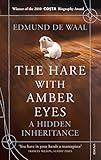
This is my review of The Hare With Amber Eyes: A Hidden Inheritance by Edmund de Waal.

I read this out of curiosity as to why it is so popular, plus I was intrigued to know more about the fabulously wealthy Ephrussi banking dynasty, after seeing pictures of their beautiful former palace in the south of France.

At first, I enjoyed de Waal’s disjointed approach to piecing together of the details of his forbears’ lives, although his aim is never quite clear, even to him on his own admission towards the end of the book. He is specific about not wanting “to get into the sepia saga business..some elegiac Mitteleuropa narrative of loss” but I am not sure he totally succeeds in this. The characters often seem quite shadowy and thin, perhaps because, as a minimalist artist, De Waal is really more interested in objects.

His love for the netsuke, skilful Japanese carvings of everyday objects, plants and creatures, comes through strongly and I came to appreciate the way they form a constant factor, holding the shifting events together.

However, I nearly gave up on the book in the descriptions of great-great-uncle Charles’s collections of paintings and artifacts. It was not just a revulsion over all this acquisitiveness, although I admit that many beautiful objects would never be made without the rich benefactors to commission them. I also felt an idiot reading about paintings and the feel of tactile objects which I could not even see. Then I came across the anecdote about the tortoise whose shell was encrusted with jewels so that it could alter the appearance of a Persian carpet as it crawled across it. This inspired me to press on – I hit on the idea of downloading from “Google Images” copies of all the paintings referred to, to read in conjunction with the descriptions. This made all the difference so it is a pity the publishers did not see fit to include such pictures in the book – but they’ve achieved a bestseller without this, of course!

I thought that the escape of the author’s grandparents, with the patriarch Viktor, to the cosy world of Tunbridge Wells would haunt me less than the tales of the grimmer fate of many humbler Jewish families. However, it is moving to imagine Viktor investing loyally in Austria, only to have his house vandalised and to be deprived brusquely of all his possessions – then to be left in a state of limbo, in which his broken wife probably committed suicide.

Although the book rambles off in a rather protracted conclusion – it seems as if it could go on for ever, overall it is an unusual and thought-provoking take on the stories that objects tell.

⭐⭐⭐⭐ 4 Stars

“Bismarck: A Life” by Jonathan Steinberg – Blood and Irony

This is my review of Bismarck: A Life by Jonathan Steinberg.

This is an intriguing study of a leader – part “charismatic” charmer, part ruthless monster. Bismarck is brought to life through hundreds of quotations from a wide variety of politicians and socialites who knew him. Their names alone make fascinating reading: Johann Bernard Graf von Reckburg und Rothenlöwen, for instance. Bismarck’s own memoirs are quite revealing. In his youth he wrote in a witty and self-deprecating style – his account of a train journey with young children and a wife too embarrassed to breastfeed her howling baby could have been written yesterday.

Bismarck achieved the unification of the German States, and broke free from the dominance of the old Austrian Empire. He introduced a state-funded social security system a quarter of a century before Lloyd George managed it in Britain. Personally brave, yet aggressive and a bully, he was prepared to destroy those who challenged him, even old friends. An arch-manipulator who conducted domestic and foreign policy – realpolitik- like a chess or poker game which he had to win, he seemed to have a low boredom threshold and could not help experimenting with ideas – often quite visionary- to pass the time.

A man of contradictions, he persecuted the catholics when it suited him politically, and was often crudely anti-semitic – but he employed a Jewish banker to manage his investments, and remembered with nostalgia his late-night political discussions with the Jewish socialist Lasselle.

Despite his apparently despotic power and undeniable influence, he remained totally dependent on the support of the Prussian King whom he made into an Emperor, with whom he maintained a complex emotional relationship spanning several decades. When William 1 thwarted him, Bismarck often threatened to resign, relying on the knowledge that the Emperor needed him: the strain triggered frequent bouts of debilitating – probably largely psychosomatic – illness, aggravated by monumental gluttony. Eventually, the young “Kaiser Bill” sacked him. Would Bismarck have become a Stalin if not constrained by the role of servant to a succession of royal masters?

Branded from youth “the mad Junker”, he lost his sense of proportion under the weight of work he assumed, a classic example of the costs of an inability to delegate, and with age he became ever more vindictive and in need of anger management training.

Although I would give this five stars for – slightly repetitive- analysis of a complex personality, a few points frustrated me. The index is largely based on the names of the key characters, so it is impossible to look up quickly a specific event or topic of which you may need to remind yourself. Even the list of names seems incomplete. I could not find Lasselle in the index, although he has a short but important section in the text. Another anomaly is that William 1, who ruled for decades, gets a much shorter list of entries than his son, Frederick III who only actually ruled for a few months in 1888. Some minor characters are described in such detail that they distract you from the overall chain of events being covered. I found the details of some of the diplomatic activities and important pieces of domestic legislation similarly hard to grasp, and wondered how thoroughly some of this has been edited.

However, for the overall portrayal of Bismarck’s character and an explanation of the “unintended consequences” which led to the First World War and the rise of Hitler, I recommend this book, perhaps supported by a more basic history of the period, such as Modern Europe, 1789-1989 (Koenigsberger and Briggs History of Europe) by Asa Briggs and Patricia Clavin, 1996.

⭐⭐⭐⭐ 4 Stars

“The Radetsky March” by Joseph Roth – A Neglected Masterpiece

This is my review of Radetzky March by Joseph Roth.

I was pleased to discover via a book group this subtle, gently ironic and nostalgic evocation of the last decades of the decaying Austro-Hungarian Empire.

The Slovenian peasant Trotta, who has achieved the rank of lieutenant, becomes the hero of the Battle of Solferino and is ennobled after pushing the young Emperor Franz Josef out of the enemy’s line of fire. His son is given an easy path into the role of District Commissioner, which he performs with an unquestioning adherence to routine. He is too uptight to express his love for his son, the hapless Carl Joseph. The realisation of this comes almost too late, triggered by the knowledge that the “this world is ending”: his protector the Emperor is near death, and his Empire is destined to fail under its failure to adapt to the pressures for change.

“How simple the world has always appeared…For every situation there was a prescribed attitude. When the boy came home for the holidays, you gave him a test. When he became a lieutenant, you congratulated him. When he wrote his dutiful letters which said so little, you wrote him a couple of measured sentences back. But what did you do when your son was drunk? When he cried `Father’? Or something in him cried ‘Father’?”

Trained from early childhood for the military career to which he is ill-suited, the grandson of “The Hero of Solferino” feels the weight of his destiny but proves to be a sensitive, indecisive man who inadvertently brings misfortune to others, although the remote figure of the Emperor can be relied to bale him out of the worst consequences of his actions – until the old man dies and the First World War breaks out.

Although I have never been to Vienna, Roth created for me vivid images of the old city, together with the atmosphere of the military barracks – you can understand only too well why young men were driven to drink, gambling and reckless duels by the endless prospect of waiting for a battle to fight. I particularly liked Roth’s description of the landscapes of the eastern borders with Russia, the back of beyond to which Carl Joseph is consigned – the frogs croaking in the swamps, in which willows mark the only safe path, and the closely observed changing colours of the sky. Here at last, Carl Joseph finally regains his peasant roots and feel at ease with himself.

At first I thought I had found an East European Trollope with earnest traces of Middlemarch. Then I saw that Roth was born only 20 years before the First World War, and lived on to see its carnage, the Depression of the 20s and the rise of Hitler. So there is C20 frankness and bleakness to Roth’s writing, beautifully translated by Michael Hofman. Roth himself had a tragic life, as a Jew who was forced to leave Germany, married a wife who became a schizophrenic, and who died an impoverished alcoholic in Paris.

⭐⭐⭐⭐⭐ 5 Stars

Lest we forget

This is my review of Bloodlands: Europe between Hitler and Stalin by Timothy Snyder.

"The Bloodlands" are the areas of western Russia, the Ukraine, Poland, Belarus and the Baltic States (like Lithuania) where 14 million people were starved, shot or gassed as part of Stalin's and Hitler's inhuman policies in the period 1933-1945.

You may avoid some confusion by reading first the final short sections "Numbers and Terms" and "Abstract". When reading the main text, I often felt uneasy when trying to grasp to which area or time period a specific gruesome statistic applied. I appreciate that Snyder needs to be accurate for academic reasons, but his obsession with numbers, which are not always expressed very clearly, soon becomes oppressive.

Surely, the main point is that the death toll was appalling whatever the precise figures involved, and one's sole justifiable motivation for reading the book is to gain a better understanding of how and why these terrible things happened, partly so that one will judge more clearly and not slip blindly into being part of the same kind of mad folly.

Again with academic reputation in mind, Snyder labours to provide theories to compare and contrast the various types of horror perpetrated by Hitler and Stalin. However, I often found these arguments quite opaque, in a text that is generally rather long-winded and repetitive.

I hoped for more insights in the final conclusion but was frustrated with such sentences as "Grossman (a novelist of the period) extracted the victims from the cacophony of the century and made their voices audible within the unending polemic" – sounds great, but what does it really mean? I could cite many further examples of windy rhetoric.

The events speak for themselves – the Ukrainian peasants forced to meet impossible quotas, even when it meant parting up with their seed corn, those who survived only because they were prepared to resort to cannibalism when weaker relatives died, Jewish "collaborators" forced to collect up and burn the bodies in the Warsaw ghetto, only to be shot and thrown on the fires themselves. These events do not need to be wrapped up in waffling verbiage, although I would have found it useful to know more about theories on the psychology of crazy leaders and the misguided people who follow them and about the economic and social conditions which led to some of the policies pursued.

Despite this, "Bloodlands" is informative e.g on Stalin's attempts to collectivise the peasants of the Ukraine, the difference between the German concentration camps and grimmer "extermination facilities" often "hidden" from western eyes behind what became "the Iron Curtain", and the shifting occupation of Poland, for a time even split between the Germans and the Russians. "Bloodlands" makes sobering reading (for which I have given it four stars) but could have been better written with more lucid analysis.

⭐⭐⭐⭐ 4 Stars

The severed finger points

This is my review of The Devil’s Star: A Harry Hole thriller (Oslo Sequence 3) by Jo Nesbo.

I have a weakness for crime fiction and wanted to find out why Jo Nesbo has attracted so much attention. Devil's Star happened to be available, so I hope that it does not matter unduly not to have started at the beginning of the Detective Harry Hole saga with "The Redbreast".

This story has two interwoven threads. The main one is the tracking down of a serial killer with a sinister line in carved pentagrams, star-shaped blood diamonds and severed fingers. The second thread is Harry's obsession with the unmasking of a corrupt colleague.

The Norwegian setting interested me – I had not realised that Oslo can get so hot and humid in summer. The pace is quite fast and I did not mind what some have called the disjointed approach, although switching "points of view" means that one becomes less "emotionally engaged" with any one character.

The plot is ingenious, sown with clues which become apparent in due course, and the occasional red herring. It is reasonably watertight (no joke intended since a waterbed plays a part) although the details of the serial killings and some of the more dramatic scenes are often somewhat implausible. The story is genuinely exciting in places – will a major initiative to foil a murder and catch the killer succeed or how on earth will Harry Hole survive to feature in the next adventure.

The quality of some of the writing is good e.g. of the drunken Harry Hole smashing a church door, or the psychiatrist explaining the mind of a serial killer. Other passages struck me as slipshod – this may be due to the translator not having an ear for fiction.

I sometimes felt that we are not meant to take the story too seriously anyway, plus some of the details are frankly disgusting and probably included for sensational effect. These will be minus factors for some people.

What bothered me most was that the interesting second thread of Harry's relationship with his corrupt rival Waaler is not developed as fully and well as it could have been.

Overall, this is a good example of effective pot-boiler fiction to read on a train with an eye open for the next stop, but falls short of "great crime writing".

⭐⭐⭐⭐ 4 Stars

Impressive translation of memorable and insightful river of prose

This is my review of Austerlitz (Penguin Essentials) by W. G. Sebald.

I would not have thought of reading a book with no paragraphs and few full stops if I had not been intrigued to understand what made "Austerlitz" so talked about when it was first published.

From the outset, I was carried along by the hypnotic power of the great wave of prose which describes the anonymous narrator's occasional, usually chance visits in railway stations or cafes with the eccentric loner, Jacques Austerlitz. I was also very taken with the strange, dark little photographs embedded into the text to illustrate certain points – these are meant to be part of Austerlitz's collection, but must have been acquired somehow from many sources by the author and the story adjusted to include them.

A lecturer in art history, Austerlitz launches into lengthy monologues without any sense that he might be boring his audience to death, which means that you need to have an interest in architecture to get through the opening pages. Realising that the narrator is the best listener he will ever find, Austerlitz proceeds to recount his odd, and rather sad childhood in Wales, as what turns out to be the fostered son of a fanatical clergyman and his wan wife. In the very striking descriptions of the Welsh countryside -like a Turner landscape in words, I began to see the author's power.

It is gradually revealed that Austerlitz was brought to Britain on the "Kindertransport" to escape the Nazis. After years of repressing his early memories, he realises that he has also avoided close emotional relationships with anyone, and feels a compelling need to trace his family, find out what befell his parents and see the places where he lived before his life was ripped apart by the Nazis. Some of the most moving passages cover his "detective work", meeting with his former "nanny" and recognition of places he must have seen before.

This novel is certainly original. It cannot be judged by normal standards in that plot is of no interest to Sebald. Although the stream of consciousness always makes perfect sense, passing impressions – such as the resemblance to strange landscapes of the shadows on a wall – are deliberately given more weight than significant events. Significant friendships are only implied in Austerlitz's emotionally stunted, autistic world – yet he can unburden himself to a near-stranger. The author is keen to convey his theory that time is not linear in our minds – in some atmospheric places – say, an old courtyard – one may experience now the time of a past age, and so on.

At times, I felt overwhelmed by the self-indulgent excess of some of the author's "verbal digressions". I found that I could only cope with a few pages at a time. There being no chapters to provide natural breaks, it was frustrating to have to put the book down mid-sentence because one could not bear to plough on to the next full stop, several pages further on.

I also wondered if the device of the narrator was necessary or even desirable, leading as it often did to the clunky "and so, as X told him, Austerlitz said….".

The sudden and arbitrary ending – making the point that the rambling account could have gone on for ever, also left me feeling flat and a little disappointed.

Overall, this is probably a flawed masterpiece. I did not need it to inform me of the horror of the Holocaust, but it makes an effective contribution to the body of work which reminds people of what no one should ever forget.

⭐⭐⭐⭐ 4 Stars