An Insightful and Thought-provoking Page Turner

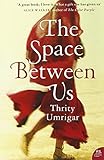
This is my review of The Space Between Us by Thrity Umrigar.

I was hooked from the outset by this well-plotted, moving tale of the relationship between a middle-class Bombay widow Sera and her faithful servant Bhima. The common factor in these two women's lives is their unhappy marriages leading to disappointed hopes. Despite her education, Sera has endured the tyranny of a spiteful mother-in-law and abuse at the hands of a controlling, often violent husband, but now finds happiness in the company of her pregnant daughter and charming son-in-law. Bhima's life was destroyed when her once adoring husband left her, yet she too finds a reason for living in her grand-daughter Maya whose college education Sera has generously supported. The problem is that Maya's bright future is now in ruins since she has somehow fallen pregnant.

This story is certainly very bleak at times, but made endurable by the author's close observation of Bombay society – embracing both the wealthy and slum dwellers – her keen sense of humour and what sounded to me like authentic dialogue: the quirky turns of phrase, often flowery speech and peppering of Indian terms add colour to the writing.

The story is developed through lengthy flashbacks, so that dramatic incidents are implied to arouse your curiosity, with the details gradually revealed. The climax is predictable but the ending is not. At first, I was disappointed by it, but decided on reflection that the author chooses a subtle, clever note on which to close, leaving it to the reader to consider what happens next.

I was interested by the parallels between the way middle-class Indians treat their servants, and the behaviour of white Americans towards their black servants in the South until recently, as portrayed in the bestselller, "The Help" – for instance, requiring maids to drink out of their own separate cups, and not letting them sit at the same table, whilst expecting them to bring up one's children as their own, and also helping them out in a paternalistic way in moments of deep personal trouble.

All the main characters are well-developed as complex people with strengths and flaws. The character of Bhima is particularly interesting. Her illiteracy exposes her to exploitation – apart from limiting her employment prospects – and saps her confidence. Yet her natural intelligence gives her a perceptiveness and ability to analyse others, in a very pragmatic way, which eludes some of her so-called superiors. Despite endless hardship, she maintains a dignity and pride which at times cost her dear, but you have to admire her unbreakable spirit. In contrast, Sera lets her own spirit be broken in order to hang on to material things and respectability, so ultimately perhaps loses more of what really matters than her outwardly povertystricken and downtrodden maid.

I agree that this book is most likely to appeal to women, and may in fact repel some men initially prepared to give it a chance, since the male sex is portrayed in a pretty negative light, as either weak or selfish and vindictive.

This novel covers the same territory as Arvind's "The White Tiger" but in a less wisecracking and cynical, more subtle and introspective fashion, both worth reading in their different ways.

⭐⭐⭐⭐⭐ 5 Stars

Still Compulsive Reading

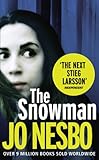
This is my review of The Snowman: A Harry Hole thriller (Oslo Sequence 5) by Jo Nesbo.

Reading the fifth of the Harry Hole series to be translated into English, I was as usual torn between an irresistible compulsion to get to the end, and irritation with myself, since I knew the grand finale would be preposterous, and I should be spending my time on something more challenging, not to mention less at times gratuitously nasty. Perhaps the ludicrous nature of some episodes, or the touches of humour or pathos serve to offset the scenes that leave a dirty taste in the mouth.

However, if you are going to read this genre, Nesbo is one of the best as regards pacy, twisting, nail-biting plots. Also, “The Snowman” is an improvement on the earlier books in the series, in that the characters are more developed, with more space devoted to their inner thoughts – we have Rakel trying to convince herself that she has “moved on” from her relationship with Harry, or the bumptious young policeman Skarre making clumsy chauvinistic passes at an attractive new work colleague, then pretending she wasn’t worth it when he has been rejected.

The quality of the writing and the structure seem to be better. Some odd similes, like the snowflakes which “invaded like an armada from outer space” are acceptable for their exuberant style, although the question remains as to what extent jarring – even incomprehensible – phrases are due to the translator lacking a writer’s flair. There is also less of the confusing flitting back and forth in time.

I still like the distinctive Nordic touch – the inescapable, persistent snow, the pragmatic sexual frankness, the melancholy introversion of many of the characters.

The plot based on a deranged serial killer is perhaps less interesting and original than those based on social or political issues, like “The Redbreast”, although the storyline is handled better.

Whatever you think of the plot, the details as ever stack up neatly at the end. Even though I am getting better at seeing how Nesbo’s mind works, there are still moments of real tension when it seems impossible for a character to survive. Although the drama seem almost strip cartoonish at times, you know that, although Harry will live to appear in another book, he may only pull through at a price, and those close to him may not.

As ever, this is a good read for a long journey or airport-stranded, stuck in hospital situation in which you want to lose yourself without too much effort.

⭐⭐⭐⭐ 4 Stars

Ingenious Page-turner

This is my review of The Redeemer: Harry Hole 6 by Jo Nesbo.

This fourth novel in the Harry Hole series to be translated into English continues the pattern one has learned to expect from Nesbo – imaginative, slightly zany, an enthusiastic outpouring of words which on balance wins you over, so that you are prepared to overlook the shortcomings of the writing style.

The formula includes a carefully constructed, convoluted plot in which, despite the numerous twists, all the details tie up, although some remain highly implausible. Add to this moments of high tension and suspense, increased by the ruthless willingness to sacrifice any character, bar the teflon Harry himself. Then there is the continual shifting back and forth in time, and between characters, which can be confusing and call for sustained concentration – in one early chapter there are no less than three separate "he's" travelling across cities to make visits for reasons that are as yet unclear.

Vivid evocations of the intense cold of the Norwegian winter combine with appealing little descriptions of say, the senior Salvation Army official fishing through a hole in ice so thin that he wears skis to spread his weight. An insight into a world of drug addiction and corruption may come as a surprise from beneath the smooth surface of what I have long assumed to be one of the most orderly and civilised nations in the world.

Focus on topical themes is in this case on the Salvation Army dedicated to helping down-and-outs in Oslo, and Croatian immigrants trying to make a life in the aftermath of the vicious war with the Serbs.

Last but not least is a sense of ambivalence over the quality of the writing: quite literary in a dark Scandinavian way at times; original, as in the description of the cliffs with a "comb-over" of grass, yet too often the flow is impeded by clunky or cheesy passages which make you wince.

Overall, "The Redeemer" may be better than its three predecessors, in that the plot is more ingenious and convincing, turning as it does on the murder of a young salvation army officer at the hands of a Croatian hitman. Also, there seems to be more character development and shading between simplistic "black and white wrong and right." For instance, the hitman is portrayed as a complex and in some ways even sympathetic personality as one discovers the events which have shaped him, and can feel for him as he suffers increasing hardship in his efforts to escape capture in Oslo in order to complete his mission, as his plans suffer a series of setbacks.

However, the sheer size of the cast leaves little space for more than sketchily drawn stereotypes or cardboard characters in many cases – it is at times like a crime soap in which certain characters take a back-seat for a while. I did not find the behaviour of the real villain (whose identity I cannot reveal) very convincing.

Like many page-turners, the ending may disappoint you a little, but I liked the touch of ambiguity and scope for "moral debate" in the final pages which raise this thriller slightly above the "get the villain against the odds" norm.

⭐⭐⭐⭐⭐ 5 Stars

A Norwegian Chandler?

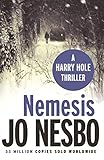
This is my review of Nemesis: Harry Hole 4 by Jo Nesbo.

In this fast-moving interweaving of two intriguing plots ( Harry Hole's task of tracking down a serial bank robber who has killed a cashier, and finding the killer of his former lover) nothing may be quite what it seems. I like the Norwegian setting – how could I not have known that "Oslo" means "the plain below the ridge"? The often very short scenes, flitting between characters and back and forth in time, with occasional blurring of dreams and reality, make the book very film-like, and in the process slick rather than moving.

So why did I find my attention wandering, so that I missed clues and had to search back for passages in order to understand what is going on? I think it is because of the tendency for fragmented, even staccato, scenes in which important points are often made very briefly, even implied. Presumably, to aid the suspense, you know that Harry has discovered something important and is taking action, but you don't yet know what and why. I also feel that many of the characters are stored in watertight boxes and brought out for brief mention e.g Harry's current lover Rachel with son Oleg, or his previous work partner, the murdered Ellen. Concerns about these could be more of a continual preoccupation in Harry's mind, so that you, the reader, also begin to relate to them and care about them more.

My main reservations are as follows. I often found many of the more important characters somewhat unconvincing e.g. the gypsy crime boss Raskol and his "niece" Anna. The dialogues of a very diverse range of people often seem too similar, probably the way Nesbo would speak himself. Some of the plot twists are just too implausible for me, not least the ingenious denouement which I clearly cannot give away.

Of course, Nesbo has sold so many millions that he does not need to bother to edit more carefully to improve the depth and flow of the novel. Also, some stilted or even unclear sentences made me wonder how much the book has suffered in translation.

I agree that it would be helpful to make the sequence of stories clearer. The first three available in English are: The Redbreast, Nemesis, The Devil's Star. I believe the next three which I have yet to read are: The Redeemer, The Snowman and The Leopard.

⭐⭐⭐ 3 Stars

Crime Bergman Style

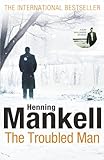
This is my review of The Troubled Man: A Kurt Wallander Mystery by Henning Mankell.

I could not avoid comparing Mankell's "A Troubled Man" with the bestsellers of the Nordic writers Larsson and Nesbo. Like Larsson, Mankell is deeply concerned about the state of Swedish society, corruption in politics and the security services, and the country's awkward position, supposedly neutral between the "bad guys" in Russia and "good guys" in America, although this crude division oversimplifies the truth. Although Mankell "writes better" than the other two as regards developing characters – I particularly like the complex relationship and dialogues between Wallander and his daughter Linda – this last in the Wallander series is definitely not a page turner. It lacks the tight plotting and moments of tension and high drama you find in Nesbo's Harry Hole novels.

The investigation begins with the disappearance of Håkan von Enke, the retired submarine commander who just happens to be the father of Linda's partner Hans – whose involvement in banking just when Iceland is going bust seems a missed opportunity for development as a subplot. The simple storyline proceeds so slowly, with much of the past drama being revealed to Wallander in long rambling conversations, that I found it hard to continue. The frequent digressions into gloomy even bleak introspection and more bitter than sweet nostalgia began to wear me down. I grew impatient with Wallander's preoccupation with ageing and death – he's only 59, for Heaven's sake! I admit that losing one's mind, which Wallander clearly fears, can strike people far younger than this.

I wondered whether Mankell was investing Wallander with his own sense of mortality, but he's only in his sixties, and seems very active. Perhaps Mankell has grown attached to Wallander and wanted a last novel that would "take stock" of his life, and pursue a realistic approach in denying a happy old age to a man who has sacrificed too much of himself (as regards personal relationships and hobbies) to catching criminals, and has inevitably been damaged by the horrific sights he has been forced to witness.

Fortunately, the plot picks up at the end with quite a rapid denouement, but I was unconvinced by the way that Wallander's constantly reiterated sense that he is "missing something" suddenly resolves into a neat set of accurate deductions.

Filled with admiration for Mankell's support of just causes (including his stance on Palestine), his practical financial aid to those in need and evident wisdom in judging the state of the world, I would like to give him 5 stars. Although I might just give 4 for the quality of the writing, the plot seems a little too thin and lame and would have gained from a little more of the author's time. So, if I give this 4 stars it is as a psychological study rather than a successful detective thriller. Of course, this makes it "out of kilter" with the rest of the series…..

⭐⭐⭐⭐ 4 Stars

Algerian Teenage Angst

This is my review of Beni ou le paradis prive by Azouz Begag.

This is good for improving your "streetwise French" and provides an insight into the pressures on the children of Algerian immigrants growing up in French cities such as Lyons. There must be more than a touch of autobiography in Azouz Begag's portrayal of Beni, by turns cocky or insecure and self-deprecating. We see him facing prejudice at school, from the police, his would-be friend's mother and in his attempts to forge a western-style social life.

There are some moving moments: Beni persecutes his downtrodden sister, but feels sorry when he upsets her, yet cannot hug her since that kind of physical contact simply does not occur in his culture. He half-despises his father, a manual worker on construction sites, desperate for his son to succeed, trying to exert his authority by force if need be, but dependent on Beni to write letters for him. Yet despite his urges to be a normal teenager, Beni cannot break free from his father's values. When he is denied entry to a porn film (on grounds of age) he consoles himself with the knowledge that at least he can go home and look his father in the eye without lying.

Beni tries to survive by playing the comic, and fantasising about becoming a comedian or, in the meantime, realising a romance with a blonde class mate.

The story is really a set of anecdotes which you may find entertaining, along with Beni's tendency to misunderstand French words, despite his tactless habit of correcting people's grammar. It may appeal mostly as a novel for teenagers, but to be honest I found it quite tedious after a while.

⭐⭐⭐ 3 Stars

Too Little Happiness

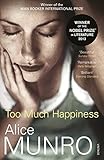
This is my review of Too Much Happiness by Alice Munro.

I have heard Alice Munro described so often as one of the greatest contemporary short story writers that I had high expectations for this book. The length of the stories surprised me, together with her frequent tendency to ramble from what seems to be the main thread of each tale. Then there is the tendency to skim in a few pages through decades of a character's life, often telling us what to make of people and situations, rather than implying or revealing these aspects. Yet from the outset I thought I could see the reasons for Munro's fame in her easy, confident and very readable style, the rapid building up of situations and characters, the occasional very insightful comments which chime with one's own experience of life, clarifying some point which has lain dormant in one's own mind, and one suddenly recognises to be true.

I was held by the continuous sense that a story is heading somewhere meaningful and thought provoking, and by the knowledge that, at any point, she may insert some dark and shocking event: a man murders his children in a jealous rage, a widow realises that the gas man she has admitted to her house is in fact a crazed killer. I suspect that most people will find that some stories leave them cold, but they are moved by a few to which they can particularly relate, such as a mother's sense of loss before steeling herself to accept that her son has "dropped out" to become an anarchist.

I agree with the reviewer who found the title story "Too Much Happiness" hard to engage with – it reads like a draft of a story, based on research notes – but I do not mind that it is "out of character" with the rest in being the tale of a female Russian mathematician in the late nineteenth century, rather than a series of tales of small town Canadian life – a kind of Lake Woebegone with a sting in the tale. Also, the title seems inappropriate for the collection as a whole, since most of the themes are somewhat bleak.

Although these stories are admirable and original, characters appear implausible at times and plots often seem very slight with underwhelming downbeat endings(as in Wenlock Edge) and left me ambivalent – not sure what to make of some stories and wondering whether I had missed something! I suppose that the scope for debating what each one means adds interest – good for reading groups and so on! I was made very aware of Monro's age with many of these stories harking back to a distant youth, and reflecting on a whole lifetime (as in Face). I plan to read some of her earlier work to see if the stories have a tighter structure and make more of an impact.

⭐⭐⭐ 3 Stars

Not saying what one means or meaning what one says

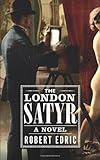
This is my review of The London Satyr by Robert Edric.

I found this the most successful of the six Edric novels I have attempted – two of which I abandoned, but I keep returning to his work for the clear, striking prose – excellent in creating atmosphere and describing scenes – and his concern with people's motivations and relationships.

The theme is an intriguing one – moral corruption beneath a layer of respectability in 1890s London. The topic has not yet been done to death, although covered by the recently televised "The Crimson Petal and the White", an overblown rose next to this much shorter, more narrowly focussed work.

Webster is a photographer employed by the Lyceum Theatre under its flamboyant actor-manager Irving and his control-freak sidekick, Stoker. Webster has drifted into a financial arrangement with Marlow, "the London satyr", the suave pornographer who needs him to "lend" theatrical costumes for use in sleazy photo sessions. Webster is an enigmatic man. Perhaps he likes the secrecy, the risk of detection, the fact of not being quite what he seems. Perhaps he feels his own guilt is minimal, since he is merely a supplier, an observer of a seedy but intriguing world, without knowing exactly what is going on. The murder of a child prostitute by a man in Marlow's circle sets up a criminal investigation which forces Webster to think about whether and how to protect himself.

The fact that Webster often seems weak and passive make him a less attractive character. Why doesn't he stand up to his greedy, manipulative daughter or over-familiar, cunning maidservant? Yet some of the most moving passages in the book provide the explanation for his apathy and for his loss of connection with his wife Alice, for both have been devastated by the premature death of their younger daughter.

Edric also harnesses the late Victorian obsession with the spirit world. Grief has led Alice to set herself up as a medium. Webster's scepticism is a further barrier between them, but he plays along, even supplying information that will help her act out convincing contacts with the spirit world. He makes no attempt to step in, even when it becomes clear that her main motivation is the morbid delusion that dead souls are speaking to her through her deceased child.

At first, I found the lengthy dialogues entertaining, but soon began to feel that they are too much of a substitute for real action. The continual game-playing, with characters not meaning what they say, or saying what they mean, begin to seem contrived. Some scenes appear wooden and clunky, perhaps because the author has laboured over the words at the expense of the narrative drive. Also, too many of the characters – be they a Jewish immigrant, a female procurer or a servant – speak in the same subtly ironic "voice" and very articulate phrases as the educated middle-class characters.

I felt for a while that the plot is too slight to sustain the book. In fact, it manages to work up to a kind of climax. The inconclusive ending – the story simply stops – disappointed me at first, but then seemed to be quite reasonable. Edric has made his point, and leaves you to draw your own conclusions about how Webster goes on to live out his life.

⭐⭐⭐⭐ 4 Stars

Stolen Samovars and Bitter Gooseberries

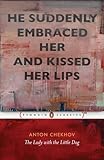
This is my review of The Lady with the Little Dog and Other Stories (RED) (Penguin Red) by Anton Chekhov.

Chekhov's two hundred or more short stories can now be downloaded free of charge, so this selection of thirteen of them needs some rationale for the choices made. Although the notes at the end are interesting, say as regards the extent to which Chekhov's writing was constrained by the censors who cut out large tracts, I would have liked more background explanation of how the details of his life and his personality affected his writing.

Assisted by Ronald Wilks' excellent translations, the stories flow along and are very easy to read. I was struck by Chekhov's evident love for the countryside, his frequent flashes of humour, his rich cast of characters including many vivid little pen portraits, and his complex attitudes towards the peasants: he is repelled by their ignorance and boorishness, but realises that some of this is the fault of the wealthy people, like himself, who have deprived them of opportunities. A recurrent theme is for people to be dissatisfied with their lot, stultified by the boredom of provincial life and very indecisive about making changes, in particular embarking on a long-term relationship. I wanted to know to what extent these attitudes were Chekhov's own.

The rambling structure of many of these stories surprised me, together with their length, and inclusion of chapters! I can see why "The Lady with the Little Dog" is so famous since it analyses the narrator Gurov's inner thoughts so well. "And only now, when his hair had turned grey, had he genuinely, truly fallen in love – for the first time in his life."

My favourite story was "My Life", almost a novella at ninety pages, which seems to me to encapsulate everything to be found in all the other stories as regards human relationships and the flaws in Russian society. In what is subtitled "A Provincial's Story", the narrator actually makes some decisions – to give up his middle class heritage, and work with his hands, and to marry the young woman to whom he feels attracted. Inevitably, his actions bring some sorrow, and the story ends on a philosophical rather than positive, and poignant note.

I like the farcical wit of "Man in a Case" – the "solitary type…like hermit crabs or snails….always seeking safety in their shells… because the real world irritated and frightened him and kept him in a constant state of nerves." At times, as in "Peasants", Chekhov's sense of the ludicrous seems to go overboard. Other stories like "In the Ravine" seemed to me to be too "baggy" and lacking focus, in need of a good edit.

Perhaps I can only take these stories in small doses, but I am pleased to have discovered Chekhov as a short story writer and will definitely seek out more on the net from time to time.

⭐⭐⭐⭐ 4 Stars

A Model Thriller

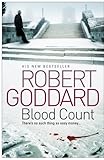
This is my review of Blood Count by Robert Goddard.

The latest of Goddard's annual novels starts with a topical and intriguing dilemma. Edward Hammond, a successful surgeon, is waylaid by the daughter of a Serbian warlord, Dragan Gazi, now standing trail at The Hague for his crimes. Years ago, Hammond performed a life-saving liver transplant on Gazi for a very generous fee. Unless he now performs a further service, Gazi will claim that he was responsible for the murder of Hammond's estranged wife, acting at Hammond's request. Can Hammond risk refusing to be blackmailed, even for something he claims not to have done?

Goddard leads us through one of his famous twisting plots, but this is one of his best, after a few lean years of formulaic pot-boilers. Not only does he demonstrate once again the page-turning ability to create tense situations from which you cannot see how Hammond can possibly escape, but he also raises some interesting issues. Should Hammond have refused to operate in the first place? Was ignorance of the full extent of Gazi's criminality a sufficient excuse? How culpable is Hammond for the death of the thousands whom Gazi went on to kill, after receiving his life-saving liver? In exploring this, there are some lively dialogues, say with Hammond's puzzled and accusing former brother-in-law.

There is real suspense, since we know Goddard is prepared to bump off even sympathetic characters for the sake of a plot twist.

Some of the male characters are quite well-developed, always with the proviso that you never know whom Hammond can trust. As is often the case, the women seem a bit more two dimensional or shadowy to me, although the adoptive mother of Gazi's son is a convincing character in a moving sub-story.

One criticism is that Hammond seems very trusting and naive at times. Of course, this is necessary for the plot twists to work! The quality of the writing jars at times – a Cambridge graduate, Goddard must be able to do better than this – I'm sure his earlier novels were more literary, but he clearly doesn't need to worry about style to hook his readers.

Overall, this is a thoroughly entertaining read that will not leave you feeling cheated or that you have wasted your time.

⭐⭐⭐⭐⭐ 5 Stars