“Some events take a lifetime to reveal their damage and influence”

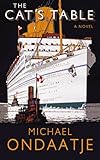
This is my review of The Cat’s Table by Michael Ondaatje.

The cat's table is "the least privileged place" in the dining room aboard an ocean liner bound for Tilbury from Ceylon in 1954. The narrator, Michael , recalls how, as an eleven-year-old, this is where he meets not just two other unaccompanied boys, but a group of eccentric adults. In the accurate belief that they are invisible, at least until their mischief brings them to the captain's notice, these three racket around, experiencing the complex life of a ship, straying below deck and into first class, eavesdropping as they lie hidden in the lifeboats where they gorge the emergency chocolate rations, getting involved in bizarre events, hearing quirky, often unsuitable anecdotes, all of this related in short chapters which add to the fragmented, dreamlike quality of the voyage.

The "main plot" of the story, which revolves round a mysterious shackled prisoner who is brought out for exercise at night, proves rather thin and implausible with an unsatisfying ending, yet does not appear to be the author's main concern.

The novel seems to be mostly about the nature of memory and the way people relate to one another, so that fleeting impressions, brief incidents and passing friendships from early life may prove unexpectedly enduring and significant in adulthood.

I found the description of the voyage and numerous rambling into vignettes very evocative and absorbing. Less satisfactory are the frequent "flash forwards" to Michael's later life. His adult relationships with his cousin Emily and with his friend's sister Massi do not prove as convincing and moving as I think they are intended to be.

It is interesting to speculate to what extent the events of the voyage make Michael permanently mistrustful , someone who breaks too "easily away from intimacy", although having rather distant parents and uncaring relatives who think it in order to send him unaccompanied on a long voyage is probably the main reason.

Overall, this is an unusual novel which lingers in one's mind. It is brilliant in ways that will differ according to the reader's own cast of thought. An example of this for me is the description of the night-time sailing through the Suez canal, which years later Michael's friend Cassius captures in paintings which only Michael can appreciate have been drawn "from the exact angle of vision Cassius and I had that night". I like the humour in Michael's list of the irascible captain's "crimes committed (so far)" most of which are actually the children's fault. However, the tale is also flawed when some allusion or plot development misses the mark or falls flat.

⭐⭐⭐⭐ 4 Stars

Do you live in a democracy and does it matter?

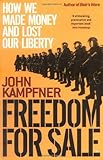
This is my review of Freedom for Sale: How We Made Money and Lost Our Liberty by John Kampfner.

The journalist John Kampfner examines in turn a wide range of modern states which have to varying degrees traded personal freedom for the promise of increased security, prosperity or both.

He opens with a fascinating chapter on Singapore, the self-styled "most successful state in the history of humanity" where Lee Kuan Yew has micro-managed his state to create a well-behaved, conformist population, in which extreme poverty has been eradicated, people are kept happy with shopping and recreational facilities, and alarm bells only begin to ring when you realise that free speech is trammelled, dissenters are harshly punished, and the rate of capital punishment is "regarded as secret" but said to be among the highest in the world. As a local sociologist observes, "Understanding the limits of freedom is what makes freedom possible". As Kampfner adds, "perhaps it depends on which freedoms and which limits."

Subsequent chapters cover China and Russia, where the West made the cardinal error of assuming that the encouragement of the free market after the collapse of communism would automatically lead to greater democracy. Then we move on to the "consumer excess" of the United Arab Emirates, supported by near-slave immigrant labour, the "functioning anarchy" of India, and Italy under Berlusconi.

The next section on Britain with a focus on the development of the "surveillance state" under Blair, seems the least successful, perhaps because the details are already familiar but too condensed and partial.

The "tainted dream" of the United States provides the final case study, with the Bush regime's sharp clampdown to minimise the terrorist threat after the shock of 9/11: in one case, a dragnet based on tip-offs which rounded up 80,000 people, mostly illegal immigrants, did not lead to a single conviction for terrorism.

All this shows that the "difference.. between countries roughly in.. the `authoritarian camp', and those who pride themselves on their `democratic' values may be one of degree".

The author notes in his interesting postscript how he has been attacked as "anti-capitalist" on one hand and an "apologist for dictators" on the other – a misreading of his argument on both counts. He simply presents the facts in a lively style, and leaves us to reflect on the nature of our freedom, and whether we have as much as we think, or need.

Offering ideas, but no easy solutions, he ends with the sad irony that many nations' freedom has been "bought off with a temporary blanket of security and what turned out to be illusory prosperity" after the economic crash which has affected Singapore, China and Dubai as well as the US and Europe.

For a readable book of this length, Kampfner has done a good job. My reservations are twofold. Firstly, he glosses over what freedom and democracy really are, tending to assume that readers will already know – unlikely if few of us really have them! Secondly, this book (which needs to be updated regularly) would benefit from a fuller and more realistic analysis of how countries facing economic collapse could take the opportunity to re-align the balance between wealth-creation, security and liberty.

⭐⭐⭐⭐⭐ 5 Stars

The Present echoes the Past

This is my review of The Search for Modern China by Jonathan D Spence.

This is an excellent history of modern China, very readable despite the small print and thin pages. Admittedly, it requires a good deal of time and dedication, but repays the effort. Clearly very knowledgeable but modest with it, Spence knows what points to select from a mass of detail to convey a clear understanding of how and why China evolved from a vast empire, which had turned its face inward against western-style development, to the world's largest communist state, now rapidly embracing economic growth.

He starts with the decline of the late Ming dynasty in the late C17, enough to capture the flavour of a highly centralised, bureaucratic, top-down society which has been the nature of China since the first unified Qin dynasty of 221BC, but he doesn't make the mistake of getting bogged down in detail that far back.

In the subsequent Qing dynasty, we see the first painful enforced contacts with the west, including the shameful role of the British, in flogging opium to save having to spend silver on purchasing Chinese goods. In addition to the usual problems of natural disasters and the difficulty of collecting taxes in such a vast area, the Qing had to contend with major rebellions but managed to survive for a surprisingly long time up to 1912, partly owing to the effectiveness of some impressive campaigns under remarkable Confucian-trained leaders, motivated by their loyalty to traditional Chinese values. Despite this, and a belated willingness to reform, the Qing eventually fell, leading to a prolonged period of chaotic civil war between a succession of warlords.

It is clear that the impetus for radical change came from men who, from the C19, had the opportunity to travel abroad where they could gain access to western political ideas of both liberal representative democracy – an alien concept in China – and Marxist-Leninism. Spence provides a clear analytical account of the rise to power of the Guomindang movement, inspired by Sun Yat-sen and led by Chiang Kai-shek until his exile to Taiwan. He traces the development of the communist People's Republic of China, by no means a foregone conclusion. The machinations of leaders like Mao Zedong as they tighten their grip on power, the Orwellian twists in accepted views make fascinating reading, even to those familiar with the basic facts. To quote Spence on the abrupt fall from favour of Lin Biao under Mao Zedong's regime: "The credulity of the Chinese people had been stretched beyond all possible boundaries as leader after leader had been first praised to the skies and then vilified."

Deng Xiaoping is an intriguing character, as he steers his vast nation towards economic development with periodic crackdowns on free speech, the most shocking and tragic being the killing or wounding of thousands in Tiananmen Square – worse violence perhaps than any single incident in the recent "Arab Spring".

Every section starts with a useful summary, and there is a full glossary at the end in the likely event of your finding it hard to retain the confusingly similar names of many people and places. Although there are many maps to describe the numerous military campaigns, I would have liked a brief section at the outset to highlight key aspects of the geography.

I am most interested in present-day China, but this book provides an essential foundation to understanding this country's complex mix of sophistication and barbarity – developing beautiful artefacts hundreds of years before say the UK, only to smash them wantonly in the misnamed Cultural Revolution of the 1970s. The historical approach enables us to appreciate how the protests of the Chinese who spoke out against repression in the 1970s and 1980s echo those of the past, not just the anti-Guomindang and the anti-Qing of the late C19, but even the Ming loyalists of the C17.

Last updated in 1999, this seminal work is now due for a brief update to cover recent developments as China invests in Africa and copes with the effects of global recession.

⭐⭐⭐⭐⭐ 5 Stars

Dated Wit

This is my review of Saki, The Complete Short Stories (Penguin Modern Classics) by Saki.

It is easy to understand why H.H.Munro, pen name Saki, is still regarded as one of the greatest writers of short stories. His elegant, ironic prose reminds me of P.G. Wodehouse with a sharp sting in the tale.

Although Saki mocked the snobbery and hypocrisy of upper class Edwardian England, he himself seems to have been limited by unexamined prejudice against the lower classes, women in general, and new social movements of his day like female suffrage and socialism.

Organised by date of collection, the tales show a clear progression. The early "Reginald" stories are remarkably short, often barely a page, very dated and a bit too precious in style for my taste. As the years pass, the stories gain in length and depth, culminating in works like "The Square Egg". This captures the muddiness of trench life in World War 1 – the streaming mud walls, the inches of soup-like mud at the entrance to the dug-out, the muddy biscuits eaten with mud-caked fingers. This story also shows Saki's talent for going off at an imaginative tangent, in this case based on a wily Frenchman's novel idea for using the idea of "square eggs" from specially bred hens to try to get some money out of the narrator.

I particularly enjoyed the stories which focus on real emotions and psychology which could be relevant to any age and society: "Peace Toys" in which an uncle tries to give his nephews toys which will discourage them from violent play; "Tobermory" which speculates on the practical disadvantages of having a cat which has learned to speak about all the compromising goings-on it has witnessed as it creeps around unnoticed; "The Lumber Room" in which a small boy takes advantage of a rare chance to have his revenge on a pious, bullying aunt – the many stories about children getting their own back on control-freak adults may stem from painful experiences in Saki's own motherless childhood. Then there is "The Story-teller" where a bachelor distracted by noisy children on a train ride subverts the normal rules about telling children only improving stories.

I have mixed feelings about Clovis, a favourite recurring character of Saki's, who acts as a mocking observer of the class to which he has been born, while sponging off it, and snobbishly maintaining many of its prejudices. Yet "Clovis on Parental Responsibilities" is amusing where, in a Pinterish talking at cross purposes with a Mrs Eggelby, bored by her endless prattle about her children's accomplishments, Clovis undermines all the accepted views on bringing up children.

I would have liked a brief introduction on Saki's life. It seems important to know that, enrolling as an ordinary private soldier when in his forties, he was killed by a sniper's bullet after vainly asking a colleague to put out the cigarette which was emitting a tell-tale trail of smoke.

⭐⭐⭐⭐ 4 Stars

Dark Wit for Dipping Into

This is my review of The Complete Short Stories of Saki (H. H. Munro) by Saki,H. H. Munro.

It is easy to understand why H.H.Munro, pen name Saki, is still regarded as one of the greatest writers of short stories. His elegant, ironic prose reminds me of P.G. Wodehouse with a sharp sting in the tale.

Although Saki mocked the snobbery and hypocrisy of upper class Edwardian England, he himself seems to have been limited by unexamined prejudice against the lower classes, women in general, and new social movements of his day like female suffrage and socialism.

Organised by date of collection, the tales show a clear progression. The early "Reginald" stories are remarkably short, often barely a page, very dated and a bit too precious in style for my taste. As the years pass, the stories gain in length and depth, culminating in works like "The Square Egg". This captures the muddiness of trench life in World War 1 – the streaming mud walls, the inches of soup-like mud at the entrance to the dug-out, the muddy biscuits eaten with mud-caked fingers. This story also shows Saki's talent for going off at an imaginative tangent, in this case based on a wily Frenchman's novel idea for using the idea of "square eggs" from specially bred hens to try to get some money out of the narrator.

I particularly enjoyed the stories which focus on real emotions and psychology which could be relevant to any age and society: "Peace Toys" in which an uncle tries to give his nephews toys which will discourage them from violent play; "Tobermory" which speculates on the practical disadvantages of having a cat which has learned to speak about all the compromising goings-on it has witnessed as it creeps around unnoticed; "The Lumber Room" in which a small boy takes advantage of a rare chance to have his revenge on a pious, bullying aunt – the many stories about children getting their own back on control-freak adults may stem from painful experiences in Saki's own motherless childhood. Then there is "The Story-teller" where a bachelor distracted by noisy children on a train ride subverts the normal rules about telling children only improving stories.

I have mixed feelings about Clovis, a favourite recurring character of Saki's, who acts as a mocking observer of the class to which he has been born, while sponging off it, and snobbishly maintaining many of its prejudices. Yet "Clovis on Parental Responsibilities" is amusing where, in a Pinterish talking at cross purposes with a Mrs Eggelby, bored by her endless prattle about her children's accomplishments, Clovis undermines all the accepted views on bringing up children.

I would have liked a brief introduction on Saki's life. It seems important to know that, enrolling as an ordinary private soldier when in his forties, he was killed by a sniper's bullet after vainly asking a colleague to put out the cigarette which was emitting a tell-tale trail of smoke.

⭐⭐⭐⭐ 4 Stars

Serendipitous Overload

This is my review of Romantic Moderns: English Writers, Artists and the Imagination from Virginia Woolf to John Piper by Alexandra Harris.

I was troubled by the dilettantish nature of this book which seems to lack a clear aim. For the most part, the text flits about like a butterfly, drawn randomly from one alluring flower to the next.

The best aspect is the full colour photographs of 1930s paintings, in particular John Piper’s striking collages of British landscapes. I enjoyed Chapter 1 on artists like John Piper’s flirtation with abstract art, until his fascination with landscape won out . As his French contemporary Hélion observed, abstract art was proving to be a system “cracking at the seams….life budding mysteriously though it”. This would have made an informative chapter in, say, an analysis of abstract art in British painting, but the next chapter changes tack to the early use of concrete in apartment blocks. It soon sets the book’s pattern of being too superficial and lacking in context, for instance, there is no reference to important influences like Le Corbusier, nor to the future wave of brutalist concrete architecture of the 1960s-80s. Instead, Chapter 2 degenerates into scrappy sections on completely different topics, like Victorian pubs, so they are hard to read since they lack a coherent theme.

Thereafter, each chapter stands alone, covering some aspect of English life , mainly from the viewpoint of artists and writers in the 1930s. The wide-ranging topics include views on Victoriana, food, the state of English art in the broadest sense, the weather, village life, landscapes, or the influence of houses on artists, but all covered in a very rambling and disjointed fashion. If you are largely unfamiliar with the references, you are likely to feel overloaded and rather bored. If you have some prior knowledge you may well feel you would like to concentrate more on fewer topics. There is little regard to the social and economic context of this period of dramatic change. The focus is very much on the middle and upper classes living in the countryside or prosperous urban areas.

The chapters cannot even be called essays because they are often broken into shorter sections, further obviating the need for the author to develop a theme properly . For instance, Chapter 10 could have been an intriguing study of the landscape of 1930s Britain as captured by artists for the Shell-Mex advertisements intended to encourage new car-owners to use more petrol. In fact, this aspect is lost in a mass of verbiage with some kind of oblique connection to writing about, sculpting with regard to or drawing landscapes.

I found this book was only readable if I dipped into the odd section of interest. I was left enjoying the illustrations, but very irritated by the unfocused text. I agree with other reviewers who have regretted the lack of an objective and clear-sighted editor.

⭐⭐⭐ 3 Stars

Modern Orwellian Nightmare

This is my review of Nothing to Envy: Real Lives in North Korea by Barbara Demick.

The title is an ironic take on the brainwashing of North Koreans to think that there is "nothing to envy" in other countries. Based on lengthy conversations with a handful of those who managed to escape to South Korea via China before the border was tightened up, this book provides a very convincing picture of life in the world's "last undiluted bastion of communism". It has defied expectation in surviving into the C21 even though the inefficient systems leave many people malnourished, forced to forage for weeds as food, and reduced to squatting blankly, staring straight ahead "as if they are waiting..for something to change". Behind the artificial showcase of the parts of Pyongyang that foreigners are allowed to see, life seems bleak indeed.

The book begins with the striking observation that viewed from a satellite by night, North Korea is "curiously lacking in light" owing to the inability to pay for electricity.

Making a mockery of communism, we learn how people have been classified as members of the "hostile class" and denied education and work opportunities if they have "tainted blood", which could simply be the result of having a father unlucky enough to have been brought from south of the border as a POW after the Korean War. Again contrary to pure Marxism, the head of state is regarded as an infallible god-like figure: people weep extravagantly at his death out of fear of failure to conform to the expected tide of grief, and perhaps some still believe the idea that he might return to life if they cry hard enough.

We sense the continual risk of being denounced and sent to a prison for some minor offence, which could include failing to keep sufficiently clean the obligatory pictures of Kim Il-Sung or Kim Jong-il, or daring to listen to South Korean television – inspectors come to check you have not removed the paper tape over the tuning buttons, but a long thin sewing needle may serve to twiddle them, such is human ingenuity when persecuted. Then there is the lunacy of a state being unable to provide its people with basic food, but still trying to prevent them from setting up their own private enterprise which will save them from starving. Hopefully things are beginning to change, marked by a recent protest, "Give us food or let us trade!"

The author is good on people's dawning realisation of the extent to which they have been misled, and also on exactly how some people managed to escape to South Korea and the problems of adjustment they have faced there – not least the guilt over punishment of relatives left behind.

The only aspect of the book which troubled me was the embroidery of memories to create dialogues and inner thoughts which must be in part fictionalised. The basic details are too fascinating for this to be necessary. The American journalese also grates at times, and an index would have been useful but overall this is a very readable book on an important theme.

It left me ashamed of my comfortable life, and much more sympathetic towards economic migrants, with respect for their resilience.

⭐⭐⭐⭐ 4 Stars

“The Quality of Mercy” by Barry Unsworth – Quality not strained

This is my review of The Quality of Mercy by Barry Unsworth.

Although it can stand alone, this excellent historical novel is a sequel to the Booker Prize Winner, “Sacred Hunger” which it is advisable to read first.

Set mainly in the London of 1767 and a Durham coastal mining village, there are four main plot strands which gradually interweave. The intense and somewhat humourless banker Erasmus Kemp is bent on bringing to trial in London the mutineers who made off with his father’s ship, thus reducing him to financial ruin and suicide. Frederick Ashton, a wealthy man who finds the cause of anti-slavery gives meaning to his life, is equally determined to get the sailors acquitted on the grounds that they were driven to violence by revulsion over the practice of throwing sick slaves overboard to maximise insurance claims. Sullivan, an Irish fiddler press-ganged onto the ill-fated ship has managed to escape from gaol before the trial, and resolves to travel north to Durham to fulfil a pledge to explain to the family of a dead friend how he came to die after the mutiny. This family are the Bordens, headed by James who can barely repress his frustration over being forced to work underground, scarcely seeing the sunlight, and who dreams of buying a sheltered plot in the dene, a beautiful wooded ravine near the village. These main characters together with Frederick’s spirited sister Jane, and James’s son Michael are all developed very fully: Unsworth’s striking observations on human nature are what make the book exceptional.

This well-paced and skilfully plotted novel with close attention to period detail provides a vivid insight into life during the early stages of the Industrial Revolution, when coalmines tended to have long galleries rather than deep shafts. Men swung down the shaft on ropes, with children on the their knees. Boys as young as seven worked for hours opening trapdoors to ventilate the mines, progressing to pulling heavy wooden containers loaded with coal. Partly through some lively discussions and absorbing court scenes, the importance of another form of exploitation, black slavery linked to the sugar trade, in the growth of prosperity of England at the time is also made very clear. Then there is the acceptance of the class structure in which rich and poor were breeds apart, although there were signs of change as the merchant class began to narrow the gap with the aristocrats, who took their wealth too much for granted, and a few workers could advance through ability and good fortune. It is hard to avoid uncomfortable parallels between the casual acceptance of injustice then and now, when we assume that we are more democratic and enlightened.

The story is also realistic in being a blend of good and harsh fortune. This is demonstrated most clearly in the alternating luck of Sullivan, who comes by money one minute (perhaps dishonestly) only to be robbed the next, or is locked up in the workhouse but then transported free to the next county which is his final destination. Overall, often through chance or fate, some characters come to a sad end while others flourish. Unsworth does not deal in sentimental happy endings for all those for whom he has aroused your sympathy, but neither is he ever bleak or depressing, just moving and thought-provoking.

As a writer in his eighties, Unsworth’s wisdom shines through – the results of a lifetime of reflection. The no doubt deliberately slightly oldfashioned, flowing and literary style, fits well with the period covered, although the dialect of the Durham miners also rings true, perhaps because Unsworth was born there.

To leave the last word to the illiterate Sullivan,

“It is the power of imaginin’ that makes a man stand out, an’ it is rarer than you might think, it is similar to the power of music.”

⭐⭐⭐⭐⭐ 5 Stars

And then they came for me and there was no one left to speak out

This is my review of Pereira Maintains by Antonio Tabucchi.

This novel demonstrates why my previous policy of avoiding novels translated into English is a mistake. In the same way, to assume that such a short, very readable novel must be lightweight is another error.

Impeccably translated from Italian, this subtly humorous story with a growing underlying sense of menace captures Lisbon in the summer heat of 1938, as Portugal slides into fascist dictatorship on the coattails of its aggressive neighbour, Spain, under the influence of Franco.

Punctuated with the refrain, "Pereira maintains", this is the testimony of a journalist employed in a sinecure to produce the new weekly cultural page for a small newspaper, "The Lisboa". Sunk into a dull routine, overweight and unhealthy, Pereira's life revolves around eating "omelettes aux fines herbes", drinking sugary lemonade at the Cafe Orchidea, and communing with a photograph of his dead wife.

Since he is a humane man with principles, he is gradually forced out of his ostrichlike state by the examples of repression which become increasingly hard to ignore. A carter is murdered by the police for being a socialist, but staff on "The Lisboa" are too scared to report the story in the boss's absence: information on the real state of affairs has to be gleaned from listening to the BBC or obtaining a foreign newspaper. An attractive woman whom Pereira meets on a train confides that she is planning emigration to the US, because she is Jewish. The office telephone system is altered without warning so that all calls come through the nosy female caretaker, clearly a police spy. Yet the main trigger for what a sympathetic doctor calls the "rise of a new ruling ego" in Pereira is the youthful political idealism of a young couple he meets by chance and drifts into helping, with fateful consequences.

Tightly plotted, despite its misleadingly gentle rhythm, the book builds up to a dramatic and effective climax. Perhaps the "last straw" that drives Pereira to take a stand is the extension of censorship and bigotry even to his little page, where he finds himself no longer free to publish his translations of foreign authors, after a piece by Alphonse Daudet is seen by the philistines in power as anti the Germans who are propping up the corrupt Portuguese regime.

This is one of the few novels I would like to retain and reread again, to enjoy all the allusions and observations which you may miss on a first reading in the pressing need to know what happens.

⭐⭐⭐⭐⭐ 5 Stars

Raw Deal

This is my review of Down the Rabbit Hole by Juan Pablo Villalobos.

This is a good translation from the original Spanish of a well-written novella from the viewpoint of a young Mexican boy. Tochtli, whose father is a drug baron. For obvious reasons, Tochtli lives in a bizarre heavily-guarded world of obscene luxury, and brutal amorality, where his father allows him to see men being tortured, as part of ensuring he grows up to be suitably macho, and Tochtli casually announces that the corpses of those who have fallen foul of his father end up being fed to the lions and tiger kept in cages in the garden. The boy is obsessed with death, body parts and the number of bullets needed to kill people, according to the organ damaged. His corrupted child's perception of the world is darkly tragicomical, his misreading of situations, such as the visits of a prostitute for his father, sometimes amusing, his casual acceptance of violence and lack of "normal" feeling are often shocking although understandable.

This is an imaginative but bleak parody of the predicament of a child, subject to a distorted socialisation, deprived of the company of other children so unable to relate to them, indulged by having his every material whim satisfied, even to the extent of being taken to Liberia to capture a pair of the pygmy hippopotami with which he has become obsessed, bored by the narrow repetition of his daily life. His only real moment of closeness with his father is when the latter says that one day Tochtli will have to kill him to save his honour i.e from gaol, like a samurai in one of the violent films they love to watch.

Something of a "one trick pony" in the essential point made, the book can be read too quickly for you to worry that you may have wasted your time.

⭐⭐⭐⭐ 4 Stars