Serendipitous Overload

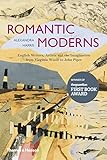
This is my review of Romantic Moderns: English Writers, Artists and the Imagination from Virginia Woolf to John Piper by Alexandra Harris.

I was troubled by the dilettantish nature of this book which seems to lack a clear aim. For the most part, the text flits about like a butterfly, drawn randomly from one alluring flower to the next.

The best aspect is the full colour photographs of 1930s paintings, in particular John Piper’s striking collages of British landscapes. I enjoyed Chapter 1 on artists like John Piper’s flirtation with abstract art, until his fascination with landscape won out . As his French contemporary Hélion observed, abstract art was proving to be a system “cracking at the seams….life budding mysteriously though it”. This would have made an informative chapter in, say, an analysis of abstract art in British painting, but the next chapter changes tack to the early use of concrete in apartment blocks. It soon sets the book’s pattern of being too superficial and lacking in context, for instance, there is no reference to important influences like Le Corbusier, nor to the future wave of brutalist concrete architecture of the 1960s-80s. Instead, Chapter 2 degenerates into scrappy sections on completely different topics, like Victorian pubs, so they are hard to read since they lack a coherent theme.

Thereafter, each chapter stands alone, covering some aspect of English life , mainly from the viewpoint of artists and writers in the 1930s. The wide-ranging topics include views on Victoriana, food, the state of English art in the broadest sense, the weather, village life, landscapes, or the influence of houses on artists, but all covered in a very rambling and disjointed fashion. If you are largely unfamiliar with the references, you are likely to feel overloaded and rather bored. If you have some prior knowledge you may well feel you would like to concentrate more on fewer topics. There is little regard to the social and economic context of this period of dramatic change. The focus is very much on the middle and upper classes living in the countryside or prosperous urban areas.

The chapters cannot even be called essays because they are often broken into shorter sections, further obviating the need for the author to develop a theme properly . For instance, Chapter 10 could have been an intriguing study of the landscape of 1930s Britain as captured by artists for the Shell-Mex advertisements intended to encourage new car-owners to use more petrol. In fact, this aspect is lost in a mass of verbiage with some kind of oblique connection to writing about, sculpting with regard to or drawing landscapes.

I found this book was only readable if I dipped into the odd section of interest. I was left enjoying the illustrations, but very irritated by the unfocused text. I agree with other reviewers who have regretted the lack of an objective and clear-sighted editor.

⭐⭐⭐ 3 Stars

Modern Orwellian Nightmare

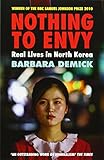
This is my review of Nothing to Envy: Real Lives in North Korea by Barbara Demick.

The title is an ironic take on the brainwashing of North Koreans to think that there is "nothing to envy" in other countries. Based on lengthy conversations with a handful of those who managed to escape to South Korea via China before the border was tightened up, this book provides a very convincing picture of life in the world's "last undiluted bastion of communism". It has defied expectation in surviving into the C21 even though the inefficient systems leave many people malnourished, forced to forage for weeds as food, and reduced to squatting blankly, staring straight ahead "as if they are waiting..for something to change". Behind the artificial showcase of the parts of Pyongyang that foreigners are allowed to see, life seems bleak indeed.

The book begins with the striking observation that viewed from a satellite by night, North Korea is "curiously lacking in light" owing to the inability to pay for electricity.

Making a mockery of communism, we learn how people have been classified as members of the "hostile class" and denied education and work opportunities if they have "tainted blood", which could simply be the result of having a father unlucky enough to have been brought from south of the border as a POW after the Korean War. Again contrary to pure Marxism, the head of state is regarded as an infallible god-like figure: people weep extravagantly at his death out of fear of failure to conform to the expected tide of grief, and perhaps some still believe the idea that he might return to life if they cry hard enough.

We sense the continual risk of being denounced and sent to a prison for some minor offence, which could include failing to keep sufficiently clean the obligatory pictures of Kim Il-Sung or Kim Jong-il, or daring to listen to South Korean television – inspectors come to check you have not removed the paper tape over the tuning buttons, but a long thin sewing needle may serve to twiddle them, such is human ingenuity when persecuted. Then there is the lunacy of a state being unable to provide its people with basic food, but still trying to prevent them from setting up their own private enterprise which will save them from starving. Hopefully things are beginning to change, marked by a recent protest, "Give us food or let us trade!"

The author is good on people's dawning realisation of the extent to which they have been misled, and also on exactly how some people managed to escape to South Korea and the problems of adjustment they have faced there – not least the guilt over punishment of relatives left behind.

The only aspect of the book which troubled me was the embroidery of memories to create dialogues and inner thoughts which must be in part fictionalised. The basic details are too fascinating for this to be necessary. The American journalese also grates at times, and an index would have been useful but overall this is a very readable book on an important theme.

It left me ashamed of my comfortable life, and much more sympathetic towards economic migrants, with respect for their resilience.

⭐⭐⭐⭐ 4 Stars

“The Quality of Mercy” by Barry Unsworth – Quality not strained

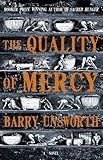
This is my review of The Quality of Mercy by Barry Unsworth.

Although it can stand alone, this excellent historical novel is a sequel to the Booker Prize Winner, “Sacred Hunger” which it is advisable to read first.

Set mainly in the London of 1767 and a Durham coastal mining village, there are four main plot strands which gradually interweave. The intense and somewhat humourless banker Erasmus Kemp is bent on bringing to trial in London the mutineers who made off with his father’s ship, thus reducing him to financial ruin and suicide. Frederick Ashton, a wealthy man who finds the cause of anti-slavery gives meaning to his life, is equally determined to get the sailors acquitted on the grounds that they were driven to violence by revulsion over the practice of throwing sick slaves overboard to maximise insurance claims. Sullivan, an Irish fiddler press-ganged onto the ill-fated ship has managed to escape from gaol before the trial, and resolves to travel north to Durham to fulfil a pledge to explain to the family of a dead friend how he came to die after the mutiny. This family are the Bordens, headed by James who can barely repress his frustration over being forced to work underground, scarcely seeing the sunlight, and who dreams of buying a sheltered plot in the dene, a beautiful wooded ravine near the village. These main characters together with Frederick’s spirited sister Jane, and James’s son Michael are all developed very fully: Unsworth’s striking observations on human nature are what make the book exceptional.

This well-paced and skilfully plotted novel with close attention to period detail provides a vivid insight into life during the early stages of the Industrial Revolution, when coalmines tended to have long galleries rather than deep shafts. Men swung down the shaft on ropes, with children on the their knees. Boys as young as seven worked for hours opening trapdoors to ventilate the mines, progressing to pulling heavy wooden containers loaded with coal. Partly through some lively discussions and absorbing court scenes, the importance of another form of exploitation, black slavery linked to the sugar trade, in the growth of prosperity of England at the time is also made very clear. Then there is the acceptance of the class structure in which rich and poor were breeds apart, although there were signs of change as the merchant class began to narrow the gap with the aristocrats, who took their wealth too much for granted, and a few workers could advance through ability and good fortune. It is hard to avoid uncomfortable parallels between the casual acceptance of injustice then and now, when we assume that we are more democratic and enlightened.

The story is also realistic in being a blend of good and harsh fortune. This is demonstrated most clearly in the alternating luck of Sullivan, who comes by money one minute (perhaps dishonestly) only to be robbed the next, or is locked up in the workhouse but then transported free to the next county which is his final destination. Overall, often through chance or fate, some characters come to a sad end while others flourish. Unsworth does not deal in sentimental happy endings for all those for whom he has aroused your sympathy, but neither is he ever bleak or depressing, just moving and thought-provoking.

As a writer in his eighties, Unsworth’s wisdom shines through – the results of a lifetime of reflection. The no doubt deliberately slightly oldfashioned, flowing and literary style, fits well with the period covered, although the dialect of the Durham miners also rings true, perhaps because Unsworth was born there.

To leave the last word to the illiterate Sullivan,

“It is the power of imaginin’ that makes a man stand out, an’ it is rarer than you might think, it is similar to the power of music.”

⭐⭐⭐⭐⭐ 5 Stars

And then they came for me and there was no one left to speak out

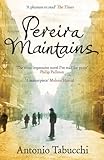
This is my review of Pereira Maintains by Antonio Tabucchi.

This novel demonstrates why my previous policy of avoiding novels translated into English is a mistake. In the same way, to assume that such a short, very readable novel must be lightweight is another error.

Impeccably translated from Italian, this subtly humorous story with a growing underlying sense of menace captures Lisbon in the summer heat of 1938, as Portugal slides into fascist dictatorship on the coattails of its aggressive neighbour, Spain, under the influence of Franco.

Punctuated with the refrain, "Pereira maintains", this is the testimony of a journalist employed in a sinecure to produce the new weekly cultural page for a small newspaper, "The Lisboa". Sunk into a dull routine, overweight and unhealthy, Pereira's life revolves around eating "omelettes aux fines herbes", drinking sugary lemonade at the Cafe Orchidea, and communing with a photograph of his dead wife.

Since he is a humane man with principles, he is gradually forced out of his ostrichlike state by the examples of repression which become increasingly hard to ignore. A carter is murdered by the police for being a socialist, but staff on "The Lisboa" are too scared to report the story in the boss's absence: information on the real state of affairs has to be gleaned from listening to the BBC or obtaining a foreign newspaper. An attractive woman whom Pereira meets on a train confides that she is planning emigration to the US, because she is Jewish. The office telephone system is altered without warning so that all calls come through the nosy female caretaker, clearly a police spy. Yet the main trigger for what a sympathetic doctor calls the "rise of a new ruling ego" in Pereira is the youthful political idealism of a young couple he meets by chance and drifts into helping, with fateful consequences.

Tightly plotted, despite its misleadingly gentle rhythm, the book builds up to a dramatic and effective climax. Perhaps the "last straw" that drives Pereira to take a stand is the extension of censorship and bigotry even to his little page, where he finds himself no longer free to publish his translations of foreign authors, after a piece by Alphonse Daudet is seen by the philistines in power as anti the Germans who are propping up the corrupt Portuguese regime.

This is one of the few novels I would like to retain and reread again, to enjoy all the allusions and observations which you may miss on a first reading in the pressing need to know what happens.

⭐⭐⭐⭐⭐ 5 Stars

Raw Deal

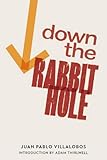
This is my review of Down the Rabbit Hole by Juan Pablo Villalobos.

This is a good translation from the original Spanish of a well-written novella from the viewpoint of a young Mexican boy. Tochtli, whose father is a drug baron. For obvious reasons, Tochtli lives in a bizarre heavily-guarded world of obscene luxury, and brutal amorality, where his father allows him to see men being tortured, as part of ensuring he grows up to be suitably macho, and Tochtli casually announces that the corpses of those who have fallen foul of his father end up being fed to the lions and tiger kept in cages in the garden. The boy is obsessed with death, body parts and the number of bullets needed to kill people, according to the organ damaged. His corrupted child's perception of the world is darkly tragicomical, his misreading of situations, such as the visits of a prostitute for his father, sometimes amusing, his casual acceptance of violence and lack of "normal" feeling are often shocking although understandable.

This is an imaginative but bleak parody of the predicament of a child, subject to a distorted socialisation, deprived of the company of other children so unable to relate to them, indulged by having his every material whim satisfied, even to the extent of being taken to Liberia to capture a pair of the pygmy hippopotami with which he has become obsessed, bored by the narrow repetition of his daily life. His only real moment of closeness with his father is when the latter says that one day Tochtli will have to kill him to save his honour i.e from gaol, like a samurai in one of the violent films they love to watch.

Something of a "one trick pony" in the essential point made, the book can be read too quickly for you to worry that you may have wasted your time.

⭐⭐⭐⭐ 4 Stars

A Soft-centred Heart of Darkness

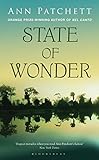
This is my review of State of Wonder by Ann Patchett.

The reputation of the award-winning "Bel Canto" inspired me to read this novel.

The theme is promising. Marina, a doctor turned researcher for Vogel, a US pharmaceuticals manufacturer, is sent to Brazil to persuade the eccentric Dr. Svenson to submit details of her progress on what could be an important new fertility drug, based on studies with the remote Lakashi tribe where women seem capable of childbirth well into old age. Marina has also promised to find out more about the death of Anders, the colleague who was sent on the same mission but died of a fever in the jungle.

It is soon clear that this is by design a slow-paced book focused on detailed descriptions of people's feeling and interactions, such as the painful business of telling Karen Anders that her husband has died and been buried somewhere in the depths of the Brazilian rainforest, leaving her with three young children. There is also a strong evocation of place, such as the unbearable heat of Manaus, and the vast, anonymous scale of the rainforest, teeming with unfamiliar and often hostile life, so that Marina realises she has crossed the line away from civilisation not on leaving Manaus, but when penetrating the solid line of undifferentiated trees close-packed along the banks of a remote tributary.

There are a few good scenes, as when Marina, mistaken for a native because of her half-Indian parentage, consents to dance with the locals because it is "somehow less humiliating, less disrespectful" to do this than simply to stand with the other tourists watching them.

However, by Chapter 6 I began to consider giving up, and only motivated myself to read on by analysing the deficiencies in the style: the plywood cast of minor characters, the often stilted dialogue, the wordy descriptions which at times seem either banal or do not quite ring true.

Two-thirds in, the plot picks up with a startling revelation which I failed to anticipate, and then builds up to a satisfying climax which redeems the book, despite a few flaws. In the process, it raises, although does not explore in any depth, some interesting social and ethical issues. Are the researchers exploiting the natives, or rediscovering from them a better way of living, close to nature, accepting fate in the form of the attendant risks from poisonous snakes or lack of access to medicines?

Overall verdict: interesting plot, limited, soft-centred style, inadequate to the task.

⭐⭐⭐ 3 Stars

And Sometimes They Were Very Sad

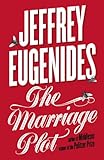
This is my review of The Marriage Plot by Jeffrey Eugenides.

Not having reading anything by Eugenides before, I was curious to discover what has made him a Pullitzer prize-winner.

This is the story of the triangular relationship between three young Americans who meet at university in the early 1980s: Madeleine, a diligent student of English literature, but lacking in a sense of direction, falls for the brilliant, charismatic but manic depressive biologist, Leonard. Meanwhile, after a brief friendship which comes to nothing, Mitchell loves her from afar, and seeks escapism in religious theory, and a circuitous journey to India to work as a volunteer for Mother Theresa.

The novel is a modern take on the "marriage plot", seen by one of Madeleine's English professors as the dominant theme of novels up to 1900, based on the idea that women could only achieve success through marrying men, ideally with money, after which they "lived happily ever after" or endured their fate, since there was no easy escape route via divorce.

The author's technical talent is displayed through some vivid and imaginative descriptions, and his sharp ear for dialogue. The recreation of the events and attitudes of the 1980s rings true, and brings back memories for those who lived through them. Many scenes are funny or poignant. In particular, the analysis of Leonard's manic depression in its various phases strikes close to the bone and often makes for unbearably painful reading.

Ironically, it is the at times almost manic nature of the writing which weakens the structure of the novel, so that the whole may seem less than the sum of the parts. Eugenides spirals off at a tangent where his imagination leads him. For instance, in the early chapters he launches into structuralism and specific works like Barthes' "A Lover's Discourse" without considering or caring how many readers will be able or willing to follow him. In fact, I only needed to "google" for a few minutes to fill the essential gaps in my knowledge, or to check later that the custom-printed wallpaper on Madeleine's bedroom wall was based on a real set of stories about "Madeline" by Ludwig Bemelman. When it came to the genetics of yeast I just let Leonard's explanations wash over me. However, although I have learned more about literature from this book, and extended my vocabulary ("chancre", "pentiment", etc), I feel that the lengthy digressions have been at the expense of the narrative drive.

There is also the author's tendency to meander back and forth in time, which means that many important events are reported, rather than enacted, which would have made them more dramatic.

I was left feeling that I had read a series of on occasion brilliant short stories or thumbnail sketches, held together by a loose plot which at times seems to be about the pain, loss and waste caused by manic depression, although I am sure that is not meant to be the main point. If Eugenides had focused more tightly on the three main characters and developed their interactions more fully, I think I would have cared more about their dilemmas, particularly Madeleine's and Mitchell's.

⭐⭐⭐⭐ 4 Stars

A Muggle of Fopdoodles

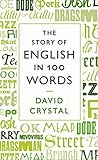
This is my review of The Story of English in 100 Words by David Crystal.

Inspired by a recent radio series on "The History of the World in One Hundred Objects , David Crystal has selected one hundred words, ranging widely over time and place to reflect the diversity of English. He readily concedes the arbitrary nature of his choice, and that everyone would choose a different hundred.

Entertaining as ever, Crystal's choice of words begins with "roe", one of the first words to be written down in Old English on the bone of a deer, and ends with "twittersphere", topical when the book went to print, but already superseded by more recent creations. You actually get more than 100 words, since he uses one to spark off a host of related ones. "Sudoku" is a cue for the Japanese words which have entered our language, such as "bonsai"; "Americanism" is a chance to compare different terms for the same thing on opposite sides of the Atlantic; "gaggle" is a collective noun prompting others, such as the intriguing "wisp of snipe"- Crystal suggests such words are the result of a group of medieval monks' parlour game on a cold evening.

He devotes separate chapters to basic words like "and" or "what", to those which have changed meaning like "wicked", to words coined by Shakespeare like "undeaf", lost words like "fopdoodle", those which are right or wrong according to the age like "ain't", "portmanteau" words like "brunch", taboo words and so on.

Crystal is no cultural snob, accepting "Jamaican English" on a par with the original, noting that the inhabitants of the British Isles form only a fraction of English speakers round the world. Similarly, he welcomes the dynamic nature of the language, accepting the inevitable demise of regional dialects along with the rise of "Essex speak" or "Hindi Cockney".

This book could make a good Christmas present, or enlighten younger readers whom Crystal suggests tend to have a smaller vocabulary simply through having lived a shorter time. However, I found the approach a bit too flibbertigibbetish – Crystal might approve this new adjective culled from a Middle English world, and the book will prove far too popular for him to mind my criticism that it is somewhat lightweight. I would have preferred it if he had concentrated on a more solid theme, such as the influence of foreign words on the English language.

⭐⭐⭐⭐ 4 Stars

Changing Perspective

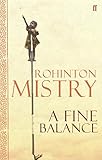
This is my review of A Fine Balance by Rohinton Mistry.

From the opening scene of passengers on an overcrowded train, Rohinton Mistry reveals his mastery of storytelling. The book reminded me at first of another modern classic, “A Suitable Boy” but proves to be much darker. The main characters suffer terribly and the powerful and corrupt for the most part seem to prosper unpunished, although the bleakness is made endurable by a mixture of irony and humour, unexpected moments of beauty and joy, combined with curiosity as to where the plot will twist next.

Like a modern Dickens or Zola, Mistry’s flowing style carries us through a complex and densely-woven plot, set mainly during the “State of Emergency” in mid-1970s India. He focuses on four main characters who form an unlikely bond: the low caste tailor Ishvar and his belligerent nephew Om, who have come to the unnamed “city by the sea” to make a living; Dina, the beautiful, spirited widow who prefers to maintain a poverty-stricken independence rather than accept a suitor arranged by her bullying brother; her lodger Maneck, forced to study refrigeration technology since the economic changes which have reached even the foothills of the Himalayas are threatening the survival of his family’s general stores.

With incidents of caste hatred, slum clearance, forced labour and sterilisation, Mistry reveals the strengthen and resilience of the human spirit: how those who are already poor manage to endure further hardship, corruption, and the cruelty of both the powerful and of those who do their bidding and impose crass laws through their own need to survive.

What makes this book great is Mistry’s ability to change the reader’s perspective on life – his power to cause a materialistic westerner to view life differently, to question accepted values and to feel more empathy and even respect for those who become beggars and slum-dwellers.

⭐⭐⭐⭐⭐ 5 Stars

You reap just what you sow

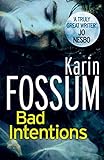
This is my review of Bad Intentions (Inspector Sejer) by Karin Fossum.

In this short gripping novel, you suspect the identity of the "culprits" from the outset, so that the intrigue lies in the "how" and "why". Like many Scandinavian crime writers, Karin Fossum is preoccupied with psychology, questions of motivation, guilt, reactions to grief, cause and effect, rather than straightforward crime and its detection.

The story begins, perhaps a little cornily on Friday 13th, with three somewhat unlikely friends staying in a log cabin beside the lake ominously named Dead Water. Their relationship is implied in the first couple of pages: Axel Frimann, materially successful, dominant and manipulative; Philip Reilly, shambling and unambitious, prone to losing himself in books and drug-taking and evading responsibility; Jon Moreno, fragile and sickly, tortured with anxiety which has led to his hospitalisation, possibly delusional in his vague mistrust of old friends whom he does not want to let down.

Only two of them return from rowing on the lake, and the drama develops from there. Fossum's "villains" tend to have complex characters, so that she often succeeds in making you like them against your will, even wanting them to escape justice. In this case, my sympathy was limited, and I had none for the rather crudely drawn character of Axel.

Although I don't think this is Fossum's best work, and both some characters and plot threads could have been developed more, the story has moments of real tension, is often moving, and provides insights into Norwegian society – young people lacking much entertainment apart from drink and drugs, the vulnerability of immigrants living alone or in small isolated family units and underlying it all the implications of living in a freezing winter climate.

Fossum's aim seems to be simply to create a stark moral fable on the destructive nature of guilt, and the need for atonement, and in this she succeeds.

⭐⭐⭐⭐ 4 Stars