Riding the V Train to Zengeance

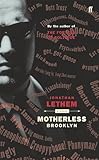
This is my review of Motherless Brooklyn by Jonathan Lethem.

In this Chandler-inspired tale, small-time crook Frank Minna selects a group of teenage orphans, "Motherless Brooklyn" to be his "men". When he is murdered some years later, one of these, Lionel Essrog, takes it upon himself to find the killer of the man who has become a father figure, and who empathised with his little understood Tourette's Syndrome which he nicknamed "Terminal Tugboating" – not knowing when some "verbal gambit was right at its limit" – even giving Lionel a book on Tourette's to help him to manage his condition.

What sets this book apart is the author's ability to enter into the mind of a person with Tourette's, and sustain this through more than three hundred pages of narration. I have no idea how accurate this is, but we come to accept Lionel's need to shout and play aloud with words continually to relieve his inner tension, his obsessive need to count things, to have everything in fives if that is his number of the moment, to touch people even if strangers, all of which makes him appear crazy, odd, an object of disgust, often insulted and underestimated even by those who should know him well, although we can see the tragedy of the intelligence and sensitivity trapped beneath all this.

This book is likely to divide opinion sharply. After I had adapted to Lionel's conversations peppered with gibberish wordplay – often with a rational thread to it – I found the writing original and often very funny with its wry New York humour, at times moving, insightful and poetical, creating a vivid picture of the character of Brooklyn and its residents – Italian makers of mouth-watering sandwiches; sinister old mobsters called Matricardi and Rockaforte, which Lionel transforms into wordplay as "Bricco and Stuckface"; beat cops who "dislodge clumps of teenagers" with a terse "Tell your story walking!" Yet at times, the prose seems too contrived, and Lionel unbearably irritating with his endless references to "ticcing" (having a nervous tic), although it is no doubt part of the author's intention to create understanding and sympathy for an apparently unappealing character.

About two-thirds in, I began to have concerns about the plot. Tension gives way to farce in scenes such as when Lionel is bundled into a car, only to note that his kidnappers all wear dark glasses with the price tags still attached, giving, him, of course, a desperate desire to touch them. I do not find Frank's brother Gerard a believable character. The arrival at the final denouement seems to me rather clunky and underwhelming, as if all the author's efforts have gone into writing brilliant and unusual prose, rather than plotting a satisfying detective thriller. After having worked so hard to keep up with Lionel's flights of verbal fancy, it is disappointing to have the plot explained with such pedestrian clarity at the end.

⭐⭐⭐⭐ 4 Stars

Because it’s there

This is my review of Into The Silence: The Great War, Mallory and the Conquest of Everest by Wade Davis.

There is no need to be a mountaineer to appreciate this account of the early attempts to scale Mount Everest. Wearing a Tweed jacket, making reluctant use of heavy oxygen canisters because he had seen their benefit in action, but lacking the nylon ropes, hi-tech crampons and other paraphernalia now available to reach the summit, George Mallory and his companion Andrew Irvine disappeared in 1924, leaving the tantalising question as to whether they had managed to reach the top.

This is less a biography of Mallory, more a study of the exploration in the context of the 1920s, in particular the grim legacy of the First World War, its horror and folly described here with particular harsh clarity: the British Establishment saw the conquest of Everest as an antidote to what Churchill called "a dissolution..weakening of bonds…decay of faith" plus climbers like Mallory diced with death quite casually having seen it close at hand so often but somehow survived the trenches.

The British Empire seemed to dominate the world, although the cracks were starting to show, so it was still possible for Curzon, Viceroy of India, to assert an Englishman's natural right to be first to the top of Everest! A skilful climber was forced out of one team because he had been a conscientious objector.

Since what is now known to be the easier route through Nepal was barred, the expeditions of 1921-24 approach through Tibet, encountering all the wild beauty and mystery of this unfamiliar culture, from the fields of wild clematis to the barren valley trails marked with stone shrines and inhabited by hermits whose self-denial seemed a waste of time to the mountaineers, although they appreciated in turn that the local people thought the same of their activities. Respectful of mountain deities and demons, the Tibetans even lacked a word for "summit".

With blow-by-blow day-to-day accounts, Wade Davis supplies often fascinating detail of the planning of the expeditions, problems over porters and pack animals, difficulties of surveying the mountains accurately to find a suitable route to the top, the relationships between the climbers – great camaraderie versus frequent friction-, the hardship and often foolhardy bravery of the ascents, the unappetising sound of the meagre rations of fried sardines and cocoa, agonies of frostbite, thirst, and having to turn back close to the summit rather than risk getting benighted on an exposed precipice and above all, the astonishing first sight of the high peaks when the unpredictable clouds and mists disappeared.

The author conveys a strong sense of what it must have felt like to climb: the grind, the exhilaration, the sudden unexpected accidents, the shock after surviving a fall, the exhaustion, the awareness of self-imposed folly, the total physical and mental collapse of some, for others the compulsion to press on.

I found it quite hard to follow the precise details of the routes with the various camps set up on the way, which is a pity as it destroys one's enjoyment of some key sections. I overcame this difficulty by looking up maps and cross-sections on Google Images, but it is a pity Wade Davis and his publisher did not agree to include these in the text, with appropriate photographs, or they could have developed a website to provide this useful information.

This book really brings home how much the early ascents were based on trial and error, and how commercial and political pressures added to a tendency to be over-ambitious, as climbers persisted in aiming for the summit with inadequate resources and preparation.

⭐⭐⭐⭐ 4 Stars

Telling not Showing Satire

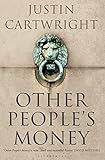
This is my review of Other People’s Money by Justin Cartwright.

This is a recent addition to the current crop of novels on life after the banking crisis. When Sir Harry Trevelyan-Tubal is felled by a stroke, chairmanship of the traditional, upmarket, family-run private bank, Tubal & Co, passes to a new broom, his son Julian. Seduced by hedge fund managers and the lure of gambling on derivatives, Julian finds himself saddled with "chunks of mortgages on an alligator farm in a swamp, two thousand worthless homes in Mississippi … a shopping mall in a town flattened by a hurricane…" to give you a flavour of Cartwright's barbed wit. The only solution is to poach money from his family trust fund, to tide the bank over whilst a sensitive sale goes through to a stinking rich, status-conscious Coney-Islander-made-good American banker. Clearly, this is the basis for a sufficient disaster to whet your interest, although things may not turn out quite as expected. Certainly, it was enough to hook me after an initially slow start with a good deal of "telling" rather than "showing" the reader what to think.

Having read several of Cartwright's books, I would say that he is on form as regards some sharp, lively dialogues (with the drawback that sometimes you cannot work out who is speaking – see page 200 of the first hardback edition – where was the editor?), striking descriptions and thought-provoking observations. Although stereotypes without exception, his characters are well-developed. I liked little touches like the visionary producer Artair Macleod being reduced to putting on "The Wind in the Willows".

My main reservation about the book is its focus on the super-rich who will be comfortably off even in the worst case scenario. There is no hint of the real hardship that millions of innocent people have suffered as a result of the banks' irresponsibility.

So, the book cannot be more than the enjoyable, fairly lightweight satire, into which it settles after the climax of a potential crisis has been defused. Yes, Cartwright is making the sardonic point that "the rich are always with us" and the establishment will always look after its own, but liitle more than that – apart from the observation on our general lack of idealism: "Now, nobody thinks about reaping the benefits of freedom; instead they hope to win the lottery or become celebrities".

Cartwright likes to weave in references to another writer, in this case Flann O'Brien's "At Swim-Two-Birds" which plays on the idea of a story having many beginnings and ends, and many ways of telling it, or that "events take place one way, and we recount them the opposite way". Apart from the fact that these insights are fairly self-evident, I do not think "Other People's Money" illustrates these points in a particularly striking way.

⭐⭐⭐⭐ 4 Stars

Thicker than Water

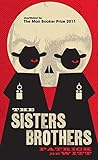
This is my review of The Sisters Brothers by Patrick deWitt.

For months I avoided reading this tale of two contract-killer brothers since I imagined it would be gratuitously violent and suspected its Man Booker shortlisting was a gimmicky attempt to popularise the award. I was wrong to the extent that this is a well-written novel, an entertaining page-turner with an original and intriguing approach, a black comedy in its mix of wry humour and grim brutality.

Charlie and Eli, inappropriately surnamed "Sisters", a name which strikes fear in all those familiar with their reputation, are hired by the vicious "Commodore" to murder a gold prospector called Hermann Warm. Their journey from Oregon to San Francisco proves to be an 1850s Wild West Odyssey, in that they encounter a succession of strange characters and situations. In the course of this, the brothers' personalities and some explanations for their violent behaviour are gradually revealed.

Whereas Charlie is a psychopath, although his habit of losing himself in brandy suggests an uneasy conscience, the narrator Eli comes across as a more sympathetic character, often thoughtful and kind to others, except when a black mist of anger descends upon him, a condition often cynically manipulated by his more dominant brother. Despite their continual bickering, a strong bond binds these two.

The moral ambiguity in the novel made me uneasy, in that you may find yourself wanting the brothers to escape justice, despite the terrible crimes they have committed for money, and even liking Eli, although he is arguably guiltier than his brother because he has a clearer sense of right and wrong.

I was never quite clear how the brothers came to be so educated. Charlie comments on "the fortuitous energy" of California, to which Eli adds, "It was the thought that something as scenic as running water might offer you not only aesthetic solace but also golden riches". And this, from an otherwise boorish thug?

After the striking early chapters my interest waned in the second half, I think because the "climax" of the meeting with Warm proved a damp squib. I found some of the final scenes in California too implausible, and Warm's life history unengaging. I wondered at the end if the author had been uncertain how to finish the tale.

Overall, I understand why this book has been so successful, and it has more than a touch of the Coen brothers' work. It is not a "stunning" novel, say in the Cormac McCarthy league, but probably was never intended be so.

⭐⭐⭐⭐ 4 Stars

Pure Marble

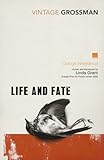
This is my review of Life And Fate (Orange Inheritance) by Vasily Grossman.

This is one of the few "mind shifting" books I have read in that it may alter your perception of the meaning and value of life, and the nature of freedom – the right to live with one's own individual quirks. Inspired by Tolstoy's "War and Peace" and informed by Grossman's firsthand experiences on the Soviet front attempting to drive the Nazis back from Stalingrad, this modern masterpiece by the Jewish Ukrainian journalist deserves to be more widely known.

Initially banned despite the political "thaw" under Khrushchev, I believe because Grossman's parallels between the totalitarian nature of Nazism and Stalinism were too hard to take, we must be thankful that copies were smuggled out to be published in the west.

My praise stands despite my difficulty in "getting into" the work. This is partly due to the cast of more than 150 characters with either difficult to grasp or overly similar names (Krymov v. Krylov, etc.), which require frequent reference to the glossary at the back. Then, there is the continual shift from a German labour camp, to Stalingrad, to a family evacuated from Moscow to Kazan and so on, to encounter yet another group of people, but never being quite sure whether this is a "one-off experience" or whether they are minor or major players who will reappear a couple of hundred pages later. All that connects the various scenes is that the characters are in some way related or acquainted.

There is no single strong plot, just many descriptions in the "social realist" style. This is sometimes wooden, and the structure ramshackle, but all this is offset by some brilliant writing.

I suspect that each reader will be hooked eventually by a different event. In my case it was the account of the Russian officer casually risking German sniper fire to visit his men holed up in various bunkers. For others, it may be the Russian mother's grief to learn that her soldier son has died from his wounds, and her inability, despite remaining sane in every other respect, to accept that he is really dead.

The gifted but prickly physicist Viktor Shtrum, modelled on Grossman himself, comes nearest to being the central character. His agonised thoughts are subtly captured as he oscillates between criticism of the Stalinist regime, fear over being condemned for this, an irresistible desire for praise and recognition of his work, a sense of release when he dares to stand up to the political stooges or minders who run the show at his institute in exchange for material benefits, despite their own mediocrity as scientists, or his need to justify to himself his occasional human weakness under the pressure to conform.

There are powerful scenes of battle, although mostly it is a question of waiting to advance or surveying the aftermath. Grossman does not shrink from the most shocking and moving scenes, such as a woman and boy entering a death camp even to the point of perishing in the gas chamber. Yet this is written with such sensitivity that it reads like a memorial to those who suffered.

Despite all the grimness, there is a good deal of wry humour, with some witty dialogues and moments or high tension. Landscapes are often vividly described, such as the wild tulips on the steppes of the Kalmyck, near the Caspian Sea, which I found on "Google" with some other scenes which exactly illustrate Grossman's descriptions.

I plan to keep a copy of this book to read again later and cannot recommend "Life and Fate" too highly.

⭐⭐⭐⭐⭐ 5 Stars

A Perverted Goldfish Bowl

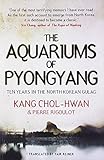
This is my review of The Aquariums of Pyongyang: Ten Years in the North Korean Gulag by Kang Chol-Hwan,Pierre Rigoulot.

This is the gripping memoir, despite a somewhat clunky translation at times, of one the first North Koreans to claim asylum in the South, after escaping via China in 1992. He is untypical in belonging to a wealthy family: his grandfather made money after emigrating to Japan, but allowed himself to be persuaded to return to North Korea by his fanatically pro-Communist wife. They soon learned their error, with the grandfather being forced to hand over his millions to the Government, and ultimately losing his life in prison for the crime of criticising the inefficiency of the North Korean distribution system. His close family were also punished with a decade spent in Yodok, a harsh concentration camp designed to re-educate the relatives of traitors.

I was already familiar with the grim facts about life in North Korea through Barbara Demitz's "Nothing to Envy", which is based on the American journalist's interviews with a number of refugees who also made it to the South, again via China. I thought "The Aquariums of Pyongyang" might be more authentic in that it would be less "fictionalised" with the device of imagined dialogues and recreation of people's thoughts. Although this is the case, Kang Chol-Hwan focuses mainly on the exhausting and soul-destroying routine of life in the camp: the use of "team targets" and "snitches" to keep people in line, the sadistic teachers, the shocking public executions which adults were forced to watch and even participate in at times, by stoning the "criminals", the farcical "self-criticism" sessions, enforced adulation of the "Dear Leader" Kim Il-sung and over all else the obsession with obtaining food, even resorting to eating rats.

There is less exploration of how ordinary people in general survive in the warped dictatorship of North Korea. Kang Chol-Hwan mentions the famines of later years, but does not discuss exactly how they arose. Also, once released, he managed to have access to a relatively good material standard of living, partly through the use of family money and goods imported from Japan to provide the endless bribes needed, also through his own black market business activities.

Kang Chol-Hwan does not portray himself as a particular likeable person, but perhaps this is understandable in view of the brutalising experience of the camp. His final adult years in North Korea and ultimate escape are covered rather hastily, maybe to protect others; he acknowledges with some guilt that relatives and acquaintances must have been sent to the camps because of his defection. It is also interesting to learn of his initial shock over the sexual freedom of life in the west (although he claims to have lived off a Korean brothel-keeper resident in China, and benefited from her contacts to board a ship to South Korea) and over the wasteful consumption of his newfound home country. As an observer from an alien culture, he provides a useful yardstick by which to judge capitalist society and its values.

Overall, this is informative and thought-provoking, but gives a rather limited picture, perhaps because the author spent so much of his time in one camp.

⭐⭐⭐⭐ 4 Stars

Clandestin

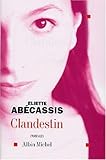
This is my review of Clandestin (Romans, Nouvelles, Recits (Domaine Francais)) by Eliette Abecassis.

This novella, written in crystal-clear, at times poetic prose, describes in minute detail the meeting between a man and a woman on a station platform and the development of their mutual awareness and attraction on the subsequent train journey. Who are they, and have they met before? Gradually, our questions are answered, as the story moves towards a dramatic climax, dispelling my fear that, having aroused my curiosity, it would have one of those unsatisfying, inconclusive endings.

Despite the minute exploration of people's appearances and feelings, the characters remain shadowy in some respects – we never learn their names, and the two men with whom the woman is involved are both referred to as "he" but can be distinguished by their very obvious differences. The objective, remote quality of the story at times may arise from its serving as an allegory for the nature of existence in general – the essential transience and unimportance of much of life, and the suggestion that we are often just "wandering" through our existence, or filling it up with mundane activities to avoid facing up to the fact that we are all "waiting" for it to end. This sounds rather gloomy, but the tone is quite positive in a philosophical way.

At times, it reads like a woman's magazine story about a pair of lovers, but it is deeper than that and somehow the more "sentimental" passages come across better in French! It also provides some good practice for students – lots of useful examples of applied grammar – past conditional and subjunctive tenses etc.

⭐⭐⭐⭐ 4 Stars

Does not bear close scrutiny

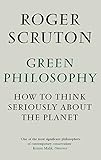
This is my review of Green Philosophy: How to Think Seriously About the Planet by Roger Scruton.

Green philosophy is clearly a neglected topic, but, articulate and learned though he is, Roger Scruton adds little to the debate. His central thesis is that the current focus on transnational organisations and multinational e.g. EU legislation to solve the problems of the environment is doomed to fail , since it ignores the fact that ordinary people will not be engaged by this, and will evade regulations in which in which they have no stake. This premise seems open to debate.

He rejects the international movements like "Green Peace" which tend to make environmentalism seem like a left-wing cause, and which often take steps that make people feel uncomfortable. Instead, recalling how Odysseus sacrificed much to return to his beloved home or "oikos", Scruton calls for a move to encourage people to take care of their homes, in the broadest sense, and work to maintain them through local associations. He cites the example of his father, who despite being left-wing, was so appalled by the top-down socialist-inspired destruction of the communities of the Manchester "slums" to make way for concrete tower blocks, that he formed a local society to preserve the environment of his new "oikos" of High Wycombe. However, all this seems a very parochial view and a very partial consideration of a complex issue. Even in this narrow field, Scruton does not address issues like "nimbyism" or the problems of maintaining communities which are subject to great change through, say immigration.

Scruton's points could be contained in one essay, leaving space for others on a philosophical "green approach" to, for instance, the development of scarce resources to meeting growing demand worldwide without triggering excessive pollution. He seems to feel that some of these problems are too vast for us to grasp, so the solution is to "start small" on a local scale that we can handle. This appears to be a cosy, complacent approach to major problems which may have implications for concepts like "individuality" so fundamental to western thought.

The main value of this book is to inspire debate, but it only scratches the surface. A series of essays by a range of philosophers, economists and related disciplines might have made for a more useful contribution to this important theme.

⭐⭐⭐ 3 Stars

Creating a song by singing it

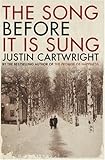
This is my review of The Song Before it is Sung by Justin Cartwright.

This unusual novel was inspired by the friendship, strained by the outbreak of World War 2, between the Oxford-based Jewish philosopher Isaiah Berlin and the German aristocrat Adam Von Trott who took part in Von Stauffenberg's abortive assassination attempt against Hitler in 1944.

Cartwright has changed the names of the main characters, which gives him more freedom to fictionalise events, omitting some and altering others.

In the prologue, we learn that Mendel, based on Berlin, is haunted by guilt over the hanging of Von Gottberg (Von Trott), suspecting that, if he hadn't portrayed the German as a Nazi with delusions of restoring Germany's dignity and greatness, admittedly without Hitler, the Allies might have given more support to the July plotters. There is also a question of Mendel's motivation in undermining Von Gottberg – possible sexual jealousy over his ability to charm women. Mendel bequeaths his papers concerning Von Gottberg to a former student, Conrad Senior, described as "not my most brilliant student… but the most human". Conrad comes across as highly sensitive, possibly mentally unstable, his marriage on the rocks.

The story does not follow a conventional linear narrative, but flips back and forth in time, providing fragments of incidents from the various characters' lives, extracts from old letters and conversations to piece together "what really happened". The result is quite disjointed, with some aspects foreshadowed and repeated too often, but others left a little confusing and underdeveloped. For instance, Conrad seems deeply affected over some act of betrayal by his father against Mandela and the ANC in South Africa. Perhaps understanding the Mendel-Von Gottberg drama will help Conrad to come to terms with this, but this plot strand is never made clear. Similarly, Von Gottberg's love affairs (in particular with Rosamund) are not as strongly drawn and moving as perhaps intended. Most lacking is a sufficiently deep exploration of Von Gottberg's and Mendel's motivations.

This novel often seems primarily an opportunity for Cartwright to use philosophical insights or descriptions he has noted down for use, as writers often do – the Oxford college chairs "so battered over the years that they can be sat in from any direction" – Von Gottberg's lake, "shimmering like the wings of a dragonfly" – "Why did evolution find that it was more effective to have an individual mind?" – "life is created by those who live it step by step" and so on. These show why Cartwright is so highly regarded, but are not always enough to compensate for the inchoate plot which left me feeling that some promising ingredients have been stirred up into a rather disappointing recipe.

In the Afterword, Cartwright expresses the aim of shedding light on the riddle of how Nazism could have taken hold so quickly and deeply in such a civilised country as Germany, but the novel does achieve this.

Overall, the book seems to me to lack the power and humour of some of his other works, like "To Heaven by Water".

⭐⭐⭐ 3 Stars

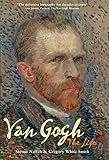
“Van Gogh” by Steven Naifeh: “What things I might have done”

This is my review of Van Gogh by Steven Naifeh,Gregory White Smith.

This vast biography is a gripping and often heartbreaking account of a tortured genius, probably suffering from what would now be diagnosed as a bi-polar disorder, which both fed his strikingly original work but also hindered his recognition as a great artist in his lifetime.

The joint authors paint a generally unflattering portrait of Van Gogh, although he was clearly well-intentioned, and showed occasional flashes of self-knowledge and touching, excessive humility or regret over past errors. Argumentative and excitable, he upset virtually everyone he met and drove away potential friends and lovers by being too intense, smothering and controlling. The only woman he ever managed to possess was the worn down prostitute Sien Hoornik, with whom he set up house, together with her baby, to his clergyman father’s distress, only to abandon her for some new obsession with little evidence of any sense of guilt.

After a number of “false starts” as an art dealer who felt honesty-bound to tell customers the shortcomings of artworks for sale, a teacher, a theological student and a missionary in the grim coalmining area of the Borinage, he spent the last decade of his life as a self-taught and astonishingly prolific artist.

The book is strong on Van Gogh’s development as an artist, and the various influences on his work, such as Delacroix’s startling use of colour. We see his progression from detailed ink drawings, produced with the use of a grid, through a period of dark paintings, exemplified by his sludge-coloured representation of a group of peasants eating potatoes, to the great explosion of works in colour which began in Paris, expanded under the brilliant blue skies and arid landscapes of Provence, and ended in a final burst of activity in the picturesque riverside town of Auvers near Paris, where he died mysteriously from a gunshot wound.

His complex relationship with his brother Theo is covered in depth, as he cajoled, wheedled and bullied the young art dealer (who had taken over his job) into sending up to half his income each month to pay for the extravagant follies Vincent thought necessary for his work – studios, models for the portraits, and vast quantities of canvas and paint.

The chaotic days in the “yellow house” at Arles leading to the famous incident in which Vincent cut off his own ear are also brought to life, with a detailed comparison of the “chalk and cheese” differences between Vincent and Paul Gauguin who had been persuaded to visit him, as part of Van Gogh’s self-deluding dream of setting up a community of artists. The painful contrast is made clear between the nervous Vincent, painting real scenes in the open air with spontaneity and lashings of paint, yet to find a single real buyer for his work, and the confident, manipulative Gauguin, who had just begun to enjoy a market for the pictures carefully planned and produced from memory in the studio, with the focus on symbolism and minimal use of paint.

The book lapses too often into a wordy, overblown, repetitious style from which suitable editing would have shaved off, say, at least 200 pages. This would have left more space to ensure that each reference to a key painting or description of a Van Gogh work is accompanied by a colour plate at a suitable point in the text. Failing this, you can in fact track down on Google imagesmost of the paintings mentioned.

If pressed for time, you may prefer to read Martin Gayford’s much shorter, “The Yellow House: Van Gogh, Gauguin, and Nine Turbulent Weeks in Arles”. Van Gogh’s letters are also revealing, and may give a more balanced view through greater focus on his detailed reflections on life and art.

⭐⭐⭐⭐ 4 Stars