What is Truth?

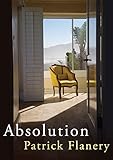
This is my review of Absolution by Patrick Flanery.

Set in post-apartheid South Africa, "Absolution" focuses on the celebrated but prickly novelist Clare Wald, who has permitted the little-known young Sam Leroux to interview her for a biography on the thin basis that "I've read your articles and don't think you're an imbecile".

Flanery succeeds in building up a sense of suspense and secrets to be revealed. Born to a liberal family, how did Clare manage to stay in South Africa and continue to write without falling foul of the authorities? For what sins does she crave absolution? She is clearly haunted both by the death of her sister Nora and the disappearance of her daughter Laura, for whose terrorist leanings she feels in some ways responsible. Does she recognise Sam, and what is his role in her past? What is Sam's ulterior motive in seeking her out? Why do these two find it hard to ask each other the questions which they need answered?

The story unfolds against a background of disappointing yet perhaps inevitable ongoing corruption and violence, with a vivid portrayal of the insecurity felt by whites in modern South Africa combined with a residual excessive privilege, the continual fear of robbery and elaborate security precautions which make them virtual prisoners in their luxurious homes.

The core of the book is an examination of the difficulty of knowing the truth about events, on both a personal and a political level, despite the work of the "Truth and Reconciliation Committee". This is due to people's differing perceptions of the same event, the gaps in memory caused by trauma, the desire to cover one's tracks, or to spare the feelings of others.

What other reviewers have seen as deep and impressive complexity appears to me to be unnecessary convolution. The use of four main parallel plot strands, combined with the device of describing the same event in different ways, makes for confusion at times. There is too much repetition of certain thoughts and memories, whilst details of some key events are left vague – perhaps this is intentional. Ironically, after leaving so much open to interpretation for so many pages, the end seems to spell out too prescriptively what the reader is supposed to think.

The important political and moral discussions between Clare and Sam often seem too wordy, earnest and stilted. I grew tired of Clare's endless tortured dreams and visitations from ghosts. Overall, there seems to be too much reporting or recalling of events, not enough acted out as scenes.

I agree with the reviewer who felt that this first novel has been written with literary awards in mind. The result is a little uneven with some striking, if studied, descriptions alternating with passages which seem slipshod and in need of further editing. I also agree that some of the philosophising about the nature of truth at the end is a little lame.

To conclude on a positive note, for an American to absorb and convey a sense of South Africa, the scenery, vegetation, lifestyle and atmosphere, seems quite an achievement.

⭐⭐⭐⭐ 4 Stars

Good as far as it goes

This is my review of En Bonne Forme 8E by Simone Renaud,Dominique van Hooff.

I was attracted to this book by comments that it has proved useful for university students studying French, and that it contains extracts from French literature which illustrate various grammar points or topical vocabulary. At first I was disappointed by the large amount of space given to very basic and elementary grammar which I would have thought a reader could be assumed to have already as a platform on which to build further. However, I did find some of the vocabulary and idioms useful, and the passages provide quite good practice. The whole book is set out very clearly and is suitable for adult learners. I admit that it is helpful for clarifying the odd point which may have been confusing you, but I was expecting more depth and content. I would say this was a book for a dedicated adult beginner or intermediate level i.e. pre-university student. I wonder if it is mainly geared to French teaching in the States?

⭐⭐⭐⭐ 4 Stars

Cause and Effect amongst the Gannets

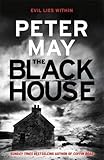
This is my review of The Blackhouse: Book One of the Lewis Trilogy by Peter May.

Only weeks after the death of his young son, Detective Inspector Fin Macleod is sent to Lewis, the Hebridean island of his birth to use his local knowledge to check out the similarity between the murder of an unsavoury old acquaintance, Angel Macritchie, and a death he has investigated recently in Edinburgh.

At first I found the plot a little formulaic, commencing with discovery of a murder, switching to a sinister scene which turns out to be a dream, featuring a detective with personal problems, and using the tourist locations of the Hebrides and Edinburgh. Then, I found myself impressed by the vivid descriptions of Lewis: the changing colours of the landscape, the ever-present wind, the dominance of the skies, changing dramatically from dark storm to light. I also liked the rounded character development, in which each player is a complex mix of good and bad, strength and weakness, as in real life.

The detective thriller aspect of the novel frequently takes second place to a psychological drama in which Fin retraces through flashbacks the events of his youth including the triangular relationship between his best friend Artair, and Marsaili, the girl he met on his first day at school.

We learn a good deal in the process about the history of Lewis, developed with a personal fortune gained from the Chinese opium trade, and the grim annual custom of slaughtering two thousand gannet chicks on the barren island of An Sgeir, based as it is on the islanders' former practical need for protein.

Although I found the twisting plot a page turner, as is often the case the final denouement proves far-fetched in some respects, in particular the plausibility of Fin's highly selective amnesia. There are a few other false notes, such as way the five-year-old Fin and his friends speak and think more like kids entering secondary, rather than primary school. Also, I was unconvinced by the extreme lack of sympathy of Fin's boss, bordering on harassment, to the effect that Fin should pull himself together a month after losing his eight-year-old son!

Despite these reservations, I plan to read "The Lewis Man", the second novel in the trilogy featuring the complex and flawed Fin Macleod.

⭐⭐⭐⭐ 4 Stars

Chacun de nous sait pour quoi il saigne

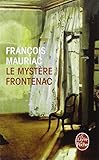
This is my review of Le Mystere Frontenac (Le Livre de Poche) by Francois Mauriac.

A wealthy bourgeois family with property in "les Landes", region of pines and marshes, the Frontenac s are burdened with the need for conformity and respectability. Widowed early, the pious and neurotic Blanche Frontenac dedicates herself to her five children. Her brother-in-law Xavier, makes a similar commitment: he is miserly with himself, keen that as much wealth as possible should be safeguarded for the children. We see flashes of his softer side as he makes camphor-powered toy boats for them. Yet he is flawed: he cannot resist taking a mistress, the longsuffering Josefa, too socially inferior for him to marry, and goes to excessive lengths to conceal her existence from the family, needless to say all in vain.

The brilliant, academically inclined Jean-Louis accepts his duty to run the family business. The frail and hypersensitive younger brother Yves, who shows early promise as an avant-garde poet is allowed to follow his whims: the close bond between these two is compared to that between Xavier and his deceased brother, who resembled Yves.

Described as one of Mauriac's more positive works (I must admit to preferring the bitter venom of his other novels), you probably need to share his sense of Catholic mysticism to appreciate this fully. Not much happens, the "mystère Frontenac" is so subtle you could miss it, I found it all too mawkish at times, and agree with the reviewer who found it "dated".

Despite this, it is a powerful exercise in nostalgia, evoking a lost way of life on the brink of World War. The magic of childhood with the freedom to play, without adult cares, is captured well. Descriptions of the landscape are very vivid. Dialogues are sharp and realistic, with what may have been a new trend in the 1930s to intercut them with people's private thoughts, often very different from what they say. Some observations on the mindless and futile nature of the modern commercial world of mass production about to destroy the Frontenac way of life, are also prescient – I could have done with more of that angle.

The structure seems quite weak and I would have liked a fuller development of the interplay between the four main characters: Blanche, Xavier, Jean-Louis and Yves. However, it is worth reading as an early modern classic

⭐⭐⭐⭐ 4 Stars

Truth and Freedom Lost in Translation

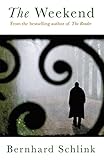
This is my review of The Weekend by Prof Bernhard Schlink.

Christiane collects her brother Jorg from gaol where he has served more than twenty years for Baader-Meinhof-style terrorism in Germany. She takes him straight to a week-end in a rundown country mansion with an assortment of old friends. This seems such a bad idea as to be highly implausible, but it is of course a device to enable the author, a lawyer by profession, to explore all the moral arguments associated with terrorism designed to overthrow a corrupt capitalist system and related questions of guilt, how our views and the situations themselves change over time.

In what I found the most interesting chapters (35 and 36), group members discuss to what extent "the truth makes you free" or rather that "freedom makes things true" which means "there are as many truths as people freely living their lives" – but also the "life lies" which people need to be able to keep on living. I wondered if the theme would have worked better as a play, but this would have made it harder to show the characters' thoughts.

Schlink introduces quite a large cast of characters, so that I understand why another reviewer felt the need to note them down: Ulrich, who abandoned his youthful radical leanings to become a respectable and law-abiding dentist, Henner who came from a similar privileged background and flirted with revolutionary ideas before taking up journalism, Karin the female bishop who conceals from her husband the fact that she had an abortion in her "wild" youth and rather enjoys playing the part of a respected member of the community, and so on.

Although I found the ideas and plot potentially very interesting, I nearly gave up on the book at several points because of the clumsy style of writing which may have been due to the translation. Many conversations seem very artificial, a crude vehicle for presenting ideas. Likewise many of the recollections are a heavy-handed way of filling the reader in on past events. Some potentially dramatic scenes go off kilter, such as Ulrich's unbelievably crass interrogation of Jorg at dinner on the lines of, "What about your first murder?" A young girl's attempt to seduce Jorg (Chapter 8) is another example of a confusing and poorly written scene. Some of the descriptions are very clunky e.g. "The residents of the village who have work don't have it here".

Schlink seems to be producing novels fairly frequently, but I wonder if he should take a little more time to hone his work in order to do justice to his deep concern with issues of guilt and morality in modern Germany, now extended to broader post 9/11 global conflicts.

⭐⭐⭐ 3 Stars

Unreconstructed Emma

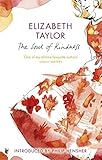
This is my review of The Soul Of Kindness (Virago Modern Classics) by Elizabeth Taylor.

Beautiful, indulged, emotionally immature with a childlike reluctance to face up to the grimmer realities of life, Flora does not prove for me to be the manipulative monster implied in the publisher's blurb, but her good intentions certainly cause other people grief, if not exactly leading to hell.

Each chapter in this well-crafted novel reads like a short story in its own right, providing sharply observed descriptions of the characters, their thoughts and relationships and the socially conventional, class-conscious, uptight world of Britain around 1960. Everyone except Flora knows a man is gay, but cannot discuss it. If a man has a drink with a lonely female neighbour it should be concealed as evidence of an affair.

The book is perhaps more interesting now than when it was written because it captures a lost world of dense London fogs, middle class women who do not work once married, and have live-in housekeepers in the basement, a safe, dull society on the brink of being shaken by the Swinging Sixties, fast food, pop culture, media manipulation and rampant commercialisation. Yet, some things have not changed, like the tatty sights and smells round an underground station, or a typical English seafront.

Perhaps Elizabeth Taylor is no longer widely read and known since her largely middle class characters seem rather snobbish and dated, there is no overt sex and violence and the drama is subtle and understated with a focus on the ordinary events of daily life. However, the power of her deceptively simple prose is very striking – a satirical Barbara Pym meets Dorothy Parker, by turns funny and moving.

She is also brilliant at creating in a few words a sense of place and nature and how they affect people's moods: starlings tearing up crocuses, gardens in the rain, the sadness of caged animals at the zoo.

It is intriguing to know that the intensely private Taylor may have been a person of hidden passions – respectably married to a businessman, her life said to be too uneventful to induce a friend to write her biography, she had communist sympathies, was a labour supporter and possibly intimate letters to a male friend were destroyed after her death.

I hope to read more of her work, but savour each novel as a model of how to write.

⭐⭐⭐⭐⭐ 5 Stars

Her gemstone eyes

This is my review of New Selected Stories by Alice Munro.

Why is Alice Munro regarded widely described as one of the greatest female short story writers, yet also perhaps read less than this accolade would suggest?

This selection from five collections covering the decade 1998-2009 displays the key aspects of her writing. On one hand, stories which are often as long as 30-40 pages, loosely plotted to allow digressions into the lives of various characters, generally lacking in suspense or dramatic endings, or pithy punchlines. On the other, very acute observation of human behaviour and empathy with their thoughts and emotions, a strong sense and apparent love of the Canadian landscape and seasons, and a deceptive rambling in stories which maintain a clear underlying purpose and momentum.

I particularly enjoyed "The Bear came over the Mountain", about a sensitive and creative woman whose Alzheimer's has become sufficiently serious for her husband to place her in a home. When she forms an attachment to another resident, is this a kind of revenge for her husband's serial infidelity? What makes this story interesting is that it is written from the husband's perspective. Although sad in places, this is too insightful and at times sharply witty to be depressing.

On a lighter note, I appreciated "Chance" about an academically inclined but uncertain young woman on the brink of her adult life and possible career, who responds to a letter from a married man she has met by chance on a train. To what extent is she choosing her fate?

The three stories selected from "Too much Happiness" were the ones I enjoyed most in that collection: the woman who has suffered terribly from a controlling man, the woman estranged from a son whom she loves who drifts into a lifestyle she finds alien, and, most gripping of all, the widow who has to deal with a sinister guest.

I found it hard to get into the first story "The Love of a Good Woman" which seemed quite disjointed with too diffuse an opening section for me. "My Mother's Dream" written apparently from the viewpoint of a baby is also highly original and imaginative, but not to everyone's taste.

Perhaps one is most drawn to the stories which reflect one's own experience, so that the range of Munro's topics make it likely that there will be something for everyone. Also, each story gives a great deal to discuss, as we are likely to come away with some different perceptions of each tale.

⭐⭐⭐⭐ 4 Stars

A Tennessee Hardy

This is my review of The Cove by Ron Rash.

This short novel, which has more real content and lasting power to move the reader than many much longer works, has introduced me to Ron Rash whose writing I shall make a point of seeking out in the future.

The prologue – a device which I normally find superfluous – holds many of the keys to his power as a writer: the clear, economical, unassuming prose; the ability to create a sense of place and people; a suggestion of mystery or menace to hook your interest. There is the rural wilderness of some Tennessee backwater, the isolation and superstition of the local people, who have hung protective charms at the entrance to the dark cove into which the sun never shines, where bad luck strikes the inhabitants, the one spot where locals are happy to see a Government official survey prior to flooding it for a future TVA reservoir.

Ron Rash has already begun to hook me with the yarn of this outsider unravelling some tragedy from the past, when he shifts back in the main body of the story to the life of Laurie Stanton, doomed to grow up in the cove after her father's unwise purchase of cheap land where the chestnut woods prove diseased. Shunned by the nearby townsfolk because of an unsightly birth mark, even regarded by some as a witch, this sensitive, bookish girl gives up any thought of education and escape to run the domestic side of the small farm. Her brother Hank, returned wounded with a lost hand from the First World War in distance Europe, is bent on doing up the farm prior to his marriage. He is only too glad to use the services of Walter, the young camper whom Laurie finds lying sick in the woods, after being drawn by his skilful flute-playing. Walter's inability either to speak or to read and write do not prevent his becoming a companion to this lonely young woman.

And so the framework is set up for a tightly plotted, often moving yarn with some moments of high tension. All the threads are brought together for the dramatic climax, which leaves you guessing over some major points to the last page, and even after that with a good deal to reflect on about say, the nature of loss and of life, in which intense personal relationships may be of great value, whilst they are also in the scale of things – the dark, massive cliff of the cove – of no significance at all.

The story is an interesting take on how the lives of ordinary people can be affected by a war on the other side of the world. Rash is good on what sounds like the authentic period detail, including life on a fairly primitive farm. He is very convincing in getting inside the head of a young woman, and his main characters are mostly well-developed with strong, realistic and varying emotions. Perhaps Walter's thoughts remain unclear and some of the minor players tend towards stereotypes, but overall this is a gripping story which succeeds both as popular and literary fiction.

⭐⭐⭐⭐⭐ 5 Stars

A Broad Approach to Independent Learning

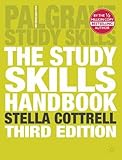
This is my review of The Study Skills Handbook (Palgrave Study Skills) by Stella Cottrell.

This very accessible and attractively presented book must be based on a good deal of experience and thought as to how to make a subject which many find dry, or tend to underestimate, as clear and interesting as possible for a wide range of students or adults interested in studying for themselves.

It goes beyond the usual topics of structuring a report or presenting statistics to the broader issues of time management, understanding one's own learning style, working with others, analysing and planning ahead, online learning and generally working with effective independence. The specific focus is on preparing for university, but it is clear that all the skills covered will be equally useful in work, preparing presentations, reports and for meetings etcetera, and also to marshall the skills to move on to management.

You may find some of the little cartoons a little silly and arguably a waste of space but they may help cement a few points, and there is still plenty of useful information

This is the kind of book you are likely to retain after graduation as a future prompt to good practice.

⭐⭐⭐⭐⭐ 5 Stars

On with the Motley

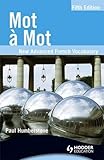
This is my review of Mot a Mot Fifth Edition: New Advanced French Vocabulary by Paul Humberstone.

Although I believe this is designed for AS level students, with more advanced vocabulary for A2 shown in bold, it is also useful for adult students with a grasp of the basics, who want to have at their fingertips the turns of phrase needed in conversation or written exercises.

I like the way the material is themed: phrases to enrich conversation, e.g. "A mon avis" or "Je ne suis pas d'accord"; some common synonyms and easily confused "false friends" like "versatile" in French which means "volatile" in English; aspects of everyday life, even into such details as emotional life, sun worshipping, eating disorders and tobacco addiction;topics of conversation such as many aspects of the workplace, politics, the tabloid press, celebrity, the environment – it's hard to think of a neglected aspect.

Since this is not a dictionary, it may be hard to locate a particular word, or check if it is even listed, so I see this as a book to browse, say when waiting for a bus, or to consult before embarking on a conversation or essay on a specific topic.

If you had mastery of all the entries, your French would be quite impressive. It is true that it can be hard to learn from lists of phrases. To get more than the general benefit of reading the entries several times, you probably need a learning strategy: for instance, to stimulate one's brain, suggest the French for an English phrase before looking at the version given. Another approach is to practise using each phrase in a specific example.

On a "little and often" basis, I hope this handy reference book will make a noticeable difference to my French over the next few months.

⭐⭐⭐⭐⭐ 5 Stars