Powerful dreamlike sense of place and time

This is my review of Pascali’s Island by Barry Unsworth.

I found this a remarkably well-written and compelling page turner, although I felt let down by the ending.

It is 1908, with the Ottoman Empire in decline and Europe on the brink of the First World War. After twenty years as a poorly paid informer on a Greek island beginning to revolt against Turkish control, Basil Pascali is perhaps losing touch with reality, partly through a life of isolation and deception, partly because his reports have never been acknowledged. So, he imagines that at every turn the Greek islanders wish him ill, and his reports are full of details of daily life which can be of little interest, of irrelevant although beautiful descriptions of the island he knows so well plus some very subversive observations on Turkish rule – corrupt and ossified.

The arrival of Mr. Bowles, the Englishman who claims to be an archaeologist and writer on antiquities, immediately arouses Pascali's suspicions, although he sees conspiracy and deviousness everywhere, even in the behaviour of the artist Lydia whom he loves without any hope of a return of feeling, or the activities of the American Smith, out fishing for sponges in his caïque (lots of wonderfully evocative words in this book). Then, Bowles asks Pascali to act as interpreter for his negotiations to lease some land……..

With a continual sense of suspense, this tightly plotted tale builds up to a predictably tragic climax which left me less moved or satisfied with the denouement than I should have been. I think this is partly because Pascali is so self-controlled and analytical, rarely displaying normal emotion but often admitting to his faults in a rather clinical way. Also, Unsworth's habit of telling the reader what is going to happen tends to diffuse some of the potential drama. Certainly, I found his plotting in his last novel, "Quality of Mercy" much more satisfactory, and his dialogues sharper and more realistic.

I believe Unsworth spent years living on Greek islands, so that this book is a distillation of his own observation of nature and the local people. He is at his best in his remarkably articulate and well-observed descriptions of the quality of light around the island, its changes during the day, and interplay with the air and the sea. The writing is a little mannered, but that fits the period and Pascali's temperament. The repetitious references to, say, the fishermen casting their nets are not only strong metaphors but help to create a hypnotic effect, serving to explain how Pascali is held on the island by a kind of spell.

Some of the philosophical arguments are a bit heavy-going, but Unsworth is good on historical detail. The artist Lydia's realistic style of painting, and rejection of the "colourists" and "Expressionists" who were gaining popularity at the time is probably very authentic. The nationalistic prejudices of the various characters and the stereotyping, say of Bowles as an idealistic and naively honest Englishman (although Pascali sees through him) also reflect attitudes of the time.

⭐⭐⭐⭐ 4 Stars

Paying Attention to the Living

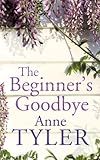
This is my review of The Beginner’s Goodbye by Anne Tyler.

Only my deep admiration for Anne Tyler could have got me past the opening pages in which Aaron describes people's reactions to his wife Dorothy's return from the dead: some give the couple a wide berth, others try to pretend she isn't there, but a few act normally since they have forgotten that she has died. If you like rational explanations, you could argue this is a satirical twist on how people behave when they meet someone who has just been bereaved.

Unlike some reviewers, I was very glad that this is not mainly a ghost story. I leave it to you to discover whether Dorothy is a phantom, a "Truly Madly Deeply" type figment of Aaron's grief-stricken imagination, or a mixture of the two.

This story soon becomes a very Tylerish examination of dealing with the untimely death of a spouse, Aaron's feelings over time and the reactions of others. It is made all the more effective by her use of wry humour, sharp observation, and understated poignant moments. The characters seem down-to-earth if a bit oddball, but there are frequent hints of deeper, unspoken or suppressed emotions.

Reading it straight after "The Sense of an Ending", this is further evidence of how short books often provide more food for thought than much longer ones. I would have disagreed with those who dismiss this as "not one of her better books", if it had not been for the ending which is a little too pat.

Perhaps it was written mainly as a small piece of catharsis for Tyler's loss of her own husband. Capturing a source of intense pain in a short, easily read, essentially feel good book may be the only way of making it tolerable enough to examine and accept to some extent.

Highly recommended.

⭐⭐⭐⭐ 4 Stars

Riding the Tiger

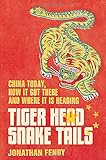
This is my review of Tiger Head, Snake Tails: China Today, How it Got There and Where it is Heading by Jonathan Fenby.

Having made his name with the popular "A Penguin History of China: the Rise and Fall of a Great Power", Fenby's study of China today focuses on recent social, economic and political events.

Much of the information provided will no doubt be familiar from newspapers and television documentaries: the astonishing speed of urbanisation, with all the attendant problems of pollution and scope for corruption and substandard construction; the, to a westerner, odd blend of nominal communism and capitalism, as displayed in the coastal Special Economic Zones like Shenzhen; the harsh crackdown on any kind of rival belief system, as in the case of the Falun Gong; the current rejection of democracy or free speech as likely to destabilise society, thus hindering economic progress. Fenby uses extensive firsthand obsevation to combine all this into a single book with many often chilling examples e.g. the artist Weiwei probably fell foul of the authorities by daring to suggest in his blog that the death toll of 80,000 in a Sichuan earthquake was due to corruption in building contracts.

Fenby reminds us how the Confucian tradition of keeping "a tight grip", the control freakery of past emperors are perpetuated into the current "top down rule" which is seen as the necessary framework for economic development.

Fenby has also added to my awareness of issues. For instance, I had not considered how the one child policy has created a "time bomb" familiar to the West, in which the labour force will become inadequate to care for all those too old to work. I had not realised how Deng Xiaoping used foreign technology and capital in the 1990's to enable China to avoid a Soviet-style collapse of communism. Yet by 2001, Premier Zhu Rongji had adopted the slogan "reduce the workforce, increase efficiency" with the kind of cuts and unemployment we might associate with a post financial collapse right wing western government.

The book will date quickly, since it makes a point of discussing the candidates just prior to the 2012 election to replace State President Hu Jintao and Prime Minister Wen Jiabao in the ten yearly leadership transition. Ironically, Fenby refers frequently to Bo Xilai, the "princeling in his fiefdom of Chongqing", whom we now know to have been disgraced in 2012, perhaps as a way of halting the progress of an influential figure who hankered after a return to some aspects of Maoism.

Although the facts provided are all relevant, I sometimes found them hard to digest, making the book a little dry. It seems to me to lack a clear structure, and as a result at times rambling, even confusing and often repetitive. When I felt bogged down it proved possible to read the chapters in the "wrong" order in an attempt to rekindle my interest. I suspect it may have been "thrown together" in a hurry, which is a pity.

A map of the key cities and states continually mentioned would have been useful. I resorted to printing a map off the internet to help be locate places and areas.

Although this has increased my understanding of a country likely to affect all our future lives, I wish it had been better constructed, and perhaps more reflective.

⭐⭐⭐⭐ 4 Stars

Self-Delusions of the Defeated

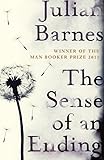
This is my review of The Sense of an Ending by Julian Barnes.

You may ask how 150 pages can justify the Man Booker Prize. This may be on the basis of "less is more", and the author's ability to condense so much insight and provoking thought into a novella. The award may have been for the concise skill of his prose compared to the other less experienced writers on the long-list.

Retired and in his sixties, Tony Webster has played safe, telling himself he was being mature when in fact he was just careful, and missing out on life in the process. The first part of the book recalls his friendship with the precociously brilliant schoolmate Adrian, and his attraction to the enigmatic Veronica. I like the portrayal of the more innocent and sexually uptight world of the 1960s which were in some ways less "Swinging" than people may now imagine. The "too-clever-by-half banter of Tony's public school sixth form is a little pretentious, but may be realistic.

The second part becomes more of a psychological thriller in which Tony tries to explore and come to terms with the repercussions of his triangular relationship with Adrian and Veronica. Barnes arouses a strong sense of tension and expectation but, although I did not manage to guess the denouement, the double twist at the end was something of a letdown. I was too unmoved by the characters to care about them enough.

For me, this book is about how time may distort memories, how in both history and private life, people may delude themselves to make life more bearable. It is also about how, as we approach the end of life, we tend to assess how we have lived – to this extent perhaps it will mean most to older people who have known irrevocable disappointment.

You need to read this book twice to grasp the care with which it is constructed and the full significance of many sentences, but I found the denouement did not satisfy me enough to want to do this. There is a rich field of debate as to what really happened to Adrian and Veronica and why, together with an assessment of the degree of Tony's guilt. I agree with those who argue that Tony's actions are never bad enough for him to bear a heavy blame, but perhaps it is one of the main points that quite trivial events may have disproportionately serious effects.

It could make a good A Level text, both as regards how the facts are revealed, and what they mean.

I would say this deserves praise for quality of prose and ideas, but loses its edge through a needlessly rather weak plotline.

Comment Comment | Permalink

⭐⭐⭐⭐ 4 Stars

You will return to Vienna

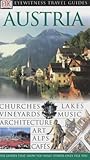
This is my review of Austria (DK Eyewitness Travel Guide) by Teresa Czerniewicz-Umer,Joanna Egert-Romanowskiej,Janiny Kumanieckiej,Helen Peters.

This follows the usual attractively presented and well-illustrated DK Eyewitness format. It is useful to provide an overview of a country assuming very limited prior knowledge, to help work out itineraries and to identify key features of a town or region of interest.

Although quite good in its coverage of Vienna – but it was quite hard work piecing together the information on the various parts of the city – this guide displays some of the shortcomings I began to notice in the DK guide to Corsica. Some maps are too skimpy, as for the important and popular location of Salzburg, and the "street by street" plan for that city does not clearly flag up some of the key features you should visit, like the arcades of shops connecting streets, the main churches you should visit – including such facts as the contrast between the plain, dark interior of St. Francis, and the "delicate side of Baroque" of the grey patterns on a white ground of the ceiling of St. Peter's. Likewise, clear instructions as to how to reach the entrance to the cable car in Festungsgasse up to the Hohersalzburg Fortress would have been useful.

To take another example, the section on the beautiful Salzkammergut region of lakes and mountains was not as clear on details as it could have been, without adding to the overall length. For instance, in a tourist board in the town of Bad Goisern (a good base to stay if Bad Ischl is oversubscribed), I discovered that close to the intriguing lakeside town of Halstatt is the Krippensteinbahn cable car station at Obertraun which transports you up to the plateau from which you can not only view the Hoher Dachstein peak and the Hallstatt Glacier, but also look down into the valley from some viewing platforms, undertake some circular walks or explore caves of stalactites and traces of mammoths. I would probably have missed this if relying totally on the book. Similarly, the appeal of towns like St. Wolfgang – beautiful church with amazing double-folding doors altar screen, boat trips and mountain railway to a high point, is not flagged up as strongly as should be the case.

I have the impression that the producers of these guides are in danger of slipping into a complacent rut with their visually attractive formula. I am unsure how well-informed their "eyewitnesses" really are. They do not give enough thought to the practical needs of tourists with scant knowledge of an area, who want itineraries that will guide them without wasting time to beautiful or interesting places. A little more practical information e.g. on taking the cheap OBB S7 train from Vienna airport to the central city, using the useful "free map" provided for tourists would also be handy. This book identifies the main features, but then you need to use the internet to fill in the gaps. I know that the answer might to be to purchase more DK guides focusing on smaller areas e.g. a single city like Vienna, but that adds too much to the weight of luggage.

⭐⭐⭐⭐ 4 Stars

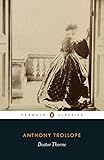
Thorne in the Flesh – “Dr Thorne” by Anthony Trollope

This is my review of Doctor Thorne (Classics) by Anthony Trollope.

Telling that more than 150 years after its publication, no Amazon reviewer to date has given this less than 4 stars.

In this entertaining soap opera of life amongst the Victorian upper classes, Trollope creates what is still for the most part a page turner through his detailed exploration of the thoughts and motives of characters who come alive on the page, his realistic, lively dialogues and creation of ludicrously comical situations offset by occasional scenes of real pathos.

It is interesting to learn from Ruth Rendell’s introduction to the Penguin Classic version, that Trollope cared only for creating “personages impregnated with traits of character which are known…..in a picture of common life”. For him, the plot was of lesser importance, merely providing a vehicle for the cast of players.

The plot is straightforward, apparently suggested by his brother: the Greshams are proud of their “ancient lineage” but the current Squire has managed his finances badly, aggravated by the extravagance of Lady Arabella, the mixed blessing of a wife from the aristocratic De Courcy family. The heir, Frank Gresham, is expected to save the situation by “marrying money” and duly sent off to court the heiress of an ointment manufacturer, but Frank has fallen in love with his childhood playmate Mary Thorne, the penniless niece of Dr. Thorne, with the added guilty secret of being the bastard daughter of his renegade deceased brother.

This is the framework for a social drama which exposes the snobbery and hypocrisy of the Victorian middle and upper classes. It was vital to have “good blood” to be accepted, but a bootmaker’s daughter could marry into an aristocratic family if she brought enough money with her. Ironically, their extravagance and parasitic lifestyle made many “great” families dependent on the very lower class people whom they despised for making their money from industry or trade.

Although the characters often seem very modern in their expression of emotion, we see how the now largely neglected concepts such as honour governed their lives. Dr. Thorne knows that his niece will inherit great wealth if a certain young man dies before he is 25, but is bound both to conceal the fact, so that Mary may be loved purely for herself and to do everything in his power to keep that young man alive, thus possibly denying Mary of her route to happiness.

You may criticise Trollope for ultimately accepting the values of his society, yet it is clear that he questions them.

This third novel in the “Barchester Chronicles” is distinctive in having few clergymen as characters, and forms a bridge between “The Warden” with its parochial focus on the lives of a small circle of people, and the later “Palliser novels” which present a more glittering world of aristocrats and public life. I find Trollope most compelling when he is describing the trials and dilemmas of ordinary people, like Septimus Harding and his little band of almsmen in “The Warden” or in this case Dr. Thorne, full of integrity, down-to-earth, but proud to a fault, scandalising foolish snobs by mixing his own medicines like a “common apothecary” and pragmatically charging a fixed fee for a visit, struggling to manage the alcoholism of his old friend Roger Scatcherd and his pathetic son Louis, or engaging in affectionate and surprisingly frank and equal exchanges with his niece Mary – although, being at heart a man of his time, he does not take her into his confidence over the truth of her social position, in its good or bad aspects.

The opening “scene-setting” chapters of this book are needlessly heavy going: Trollope apologises for them without seeing the need for a simple rewrite. The happy ending is never really in doubt, although we know Trollope is capable of occasional harsh fates for essentially good people. However, it is the development of the story outlined above that carries you through a book which you may feel a little sad to finish. I for one prefer Trollope to Jane Austen – perhaps because he had more experience of life, his characters seem more real flesh-and-blood.

⭐⭐⭐⭐ 4 Stars

Winterrreise through a Lost Europe

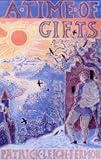
This is my review of A Time of Gifts: On Foot to Constantinople: from the Hook of Holland to the Middle Danube by Patrick Leigh Fermor.

Armed with natural charm and the confidence and precocious classical education of a public school boy, the eighteen-year-old Patrick Leigh Fermor set out in 1933 to walk from The Hook of Holland, along the Rhine and Danube to what was then Constantinople, although by the end of this first book he has barely reached Budapest.

Prepared to rough it, sleeping in barns, even the vacant cells of local police stations according to a local custom, whenever possible he drew shamelessly on a network of well-heeled connections to cadge more comfortable accommodation in the castles and luxury flats of a succession of middle-European aristocrats.

Despite making copious notes and sketches, some of which were lost, Leigh Fermor did not publish his account until many years later in the 1970s. This has the benefit that he would surely tend to record memories which remained most strongly in his mind, but it also calls into question how much he has embroidered his original impressions. I suspect that his detailed descriptions of, for instance, the paintings of old masters, or the history or geography of an area are based on research or knowledge gained long after his visit. Some recollections are too detailed NOT to have been embellished, but perhaps this does not matter.

At first, I was bowled over by his articulate spate of words, and some will remain impressed by say, his flights of fancy over the murals at Melk – a lusciously Baroque-style former Austrian monastery which is certainly worth a visit. For sure, his writing is often poetical and striking in its original imagery. Yet, it also tends to appear contrived and overblown – at times too convoluted to make much sense and often downright irritating. The notes from his original writing included at the end of the book show the simpler, more direct style of a young man barely out of school, so that the flowery outpourings in which Fermor often indulges seem the creation of an older man. His desire to rely the power of words is laudable, but I longed for some confusing passages to be replaced with a few good clear maps, family trees and timelines to provide a bit of clarity.

Although there is some reference to the rise of Hitler, Nazis tend to be portrayed as buffoons rather than perpetrators of a deadly holocaust and political issues are discussed from the complacent viewpoint of a privileged elite. One of his profounder comments is that the intelligentsia of middle Europe were less likely to be seduced by communism than their liberal English cousins, because they lived closer to the grim realities of communism. I often wanted Leigh Fermor to quit downing vast quantities of beer and wine in different coloured glasses, leave off mooning over obscure legends of unicorns in the Black Forest, and pay attention to what was really going on. What about the Depression, the poverty and inflation inflicting Europe at the time?

Leigh Fermor is at his best in his descriptions of nature: wildlife struggling to survive the cold and boys skating with the aid of a sail in the frozen winter landscape or the Hungarian marches in spring, exploding with croaking, plopping frogs, giant yellow kingcups in the streams, and flocks of migrating storks.

A fairly slow read since it is so densely written, the author arouses nostalgia for a lost world – a privileged, highly educated elite, strong peasant communities, perhaps somewhat romanticised, a refreshing lack of commercialisation, in particular of the cult of the teenager, allowing young men to move directly from the world of the schoolroom to adult freedom. He certainly makes me want to find out more about the Hapsburg Empire which dominated the area for so long, and to unravel the confusing history of the former Czechoslovakia and Hungary.

The third instalment of his planned trilogy is apparently due out in 2013, although compiled from his notes and drafts by others.

⭐⭐⭐⭐ 4 Stars

A Perfectly Good Yarn

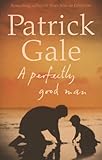
This is my review of A Perfectly Good Man by Patrick Gale.

Earnest, well-intentioned, bookish and almost comically impractical, unconscious of the good looks which attract women to his aid, Barnaby Johnson has probably become a vicar for the wrong reasons.

This is the kind of tale that relies heavily on the way in which the facts are revealed, often through small hints and clues. Moving back and forth in time, each chapter focuses on one of the seven main characters at a given age, so that we gradually learn about their interrelationships, insights on life, and different perceptions of certain events and of each other. There is pleasure to be gained from "knowing more than the characters" at many points in the story, being aware, for instance, that two people are fated to have an affair, or to drift apart.

Frequently very funny, the narrative may turn like quicksilver to move or even shock the reader. When you analyse it, not that much happens, yet this is unarguably a page turner, which gives pause for thought, as to the way in which events have often profound and unforeseen effects and as regards human resilience and the capacity to survive and feel quite positive despite adversity.

Unfolding against the background of a vividly evoked Cornwall, the author apparently describes real villages, churches and old tin mining areas in the vicinity of Penzance. By contrast, real events are only hinted at. For instance, we know that when 11 year old Carrie goes up to London with her father Barnaby on a tin miners' demo against Margaret Thatcher, the news is full of the American space shuttle disaster, so it must be 1986….So, you find yourself working out the dates of other chapters. Just occasionally, there is a small glitch. For instance, when Barnaby is 29, Carrie surely cannot be more than four and so seems unlikely to be capable of making the wooden birthday gift as described.

Although generally very entertaining, the characters tend to be caricatures or stereotypes, and some of the minor players, such as Carrie's friend Morwenna, are too thinly sketched. I was struck by the feminine tone of the male writer, his insight, for instance, into the thoughts of Barnaby's stolidly practical yet privately sensitive wife Dorothy, and realised that Patrick Gale must be gay – I felt that the book strikes an overly sentimental note only when he touches on topics which must be dear to his heart, like the church blessing of a civil union between two young women.

Overall, any reservations are quite minor. Although I agree with reviewers who have thought that the story could have probed deeper and the ending may seem a little too "feel good", it is very readable with a no doubt deceptively easy flow of words over which Gale has probably laboured with great care.

⭐⭐⭐⭐ 4 Stars

The Price of Innocence

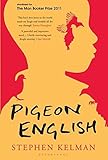
This is my review of Pigeon English by Stephen Kelman.

I avoided this novel for a while, fearing it might be exploitative of the recent Damilola Taylor tragedy, another example of truth being more searing than fiction. I have now read it for a book group, with an eye to deciding where I stand on the controversy over its shortlisting for the Man Booker.

As far as I can tell, Stephen Kelman makes a good job of getting into the mind of Harrison Opoku an inquisitive, impressionable, well-intentioned but vulnerable eleven-year-old boy uprooted from Ghana and thrown into the life of a tough inner London suburb, complete with grafittied tower blocks, menacing teenage street gangs and comprehensives ineffectual in the face of dysfunctional youth culture.

Harrison is both shocked and fascinated by the police crime scene marking the fatal stabbing of a boy at his school. As clues about the identity of the killer begin to emerge, Harrison naively sets about playing the part of a juvenile detective, unaware of the fact that many people already know or suspect who the attacker is, but are too scared to say anything.

Harrison's take on the world is by turns both very funny and poignant. I enjoyed his sparky exchanges with his sister. His frequent forgivable misreadings of situations alternate with some astute observations of the grim urban world which is "the norm" for too many children. An innocent "clean slate", he is singing hymns in church one minute, hanging out with an alcoholic thief and longing to own his dangerous dog "Asbo" the next, never seeing the incongruity of this. As teenage gang members bully and goad him to prove himself prepared to break the law, we fear he will be sucked into their sick world of knives, guns and gratuitous violence, but a basic decency always seems to return him to a better path – we even see him maturing a little from his experiences as the book builds to a possibly unexpected but on reflection inevitable conclusion.

Like some other readers, I was quite irritated by the occasional but increasingly frequent appearance of the philosophising italics-using pigeon who seems invested with some kind of all-knowing spirit. The little pictures of signs, and double page spread of T-shirt slogans are a little too gimmicky.

A more serious reservation is that I am unsure how authentically Ghanaian Harrison's language is, and I agree that many of the other characters are caricatures, and there could have been more backstory about Harri's family, which could have been skilfully implied in his account of various scenes.

I do not mind that the story proceeds in a series of disjointed episodes, since overall they carry the story forward to a finale which leaves a few loose ends on which readers are left to speculate.

This often feels like a book for teenagers rather than adults. It would make a powerful tool for raising awareness through class discussion, although the frequent swearing would probably get it banned for this purpose. However, I am not convinced it has the quality of prose, or originality to deserve a Booker-type award.

⭐⭐⭐⭐ 4 Stars

Storm-lashed islands where all happened once

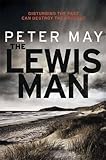
This is my review of The Lewis Man (The Lewis Trilogy) by Peter May.

Understandably troubled by his son's death in a hit-and-run accident, Fin divorces his wife, retires from the police and returns to his childhood home of the Hebridean isle of Lewis to restore his ruined family croft. His arrival coincides with the discovery in a peat bog of the well-preserved body of a young man who just happens to have the same DNA as Tormod Macdonald, father of Fin's former lover Marsaili, and so the plot thickens.

Apart from a few corny dialogues and the fact that I guessed fairly easily some of the main points in the denouement, this is a tightly plotted and often exciting tale, with some genuinely moving aspects, such as the plight of a vigorous old man who is sinking into dementia.

As in "The Blackhouse", first novel in the trilogy, Peter May creates a vivid sense of the Hebridean Islands, from Lewis in the North down to Eriskay in the south, now linked by causeways and ferries. He conveys an idea of the ever present wind and the sheer scale of the largely treeless landscape, sometimes hidden in mist or driving range, occasionally a peaceful idyll beneath a clear blue sky, more often with the sun breaking through the clouds to cast shifting patterns over the moors, or to brighten a far strip of beach or the sea.

I was interested to learn of the practice of sending Catholic orphans from the mainland to provide cheap labour for childless crofters. The device of revealing the past through Tormod's memories, so much clearer than his confused perception of the present is also skilfully handled.

I noticed the strong similarities between the plot of this novel and "The Blackhouse". Without giving too much away, we see themes of orphaned children, subject to bullying and prone to agree to stupid dares, people falling to their death from high places, paeodophiles abusing positions of trust, and characters twisted by grief who seek revenge by trying to wreak on others the pain they have suffered. Yet there is also enough that is "different" in the "The Lewis Man", which seems to me to have a slightly more plausible and satisfying plot.

I believe that, a former journalist, May has incorporated real characters like Bill Lawson of the Seallam Visitor Centre, together with descriptions of actual places. I spent some time googling to check these out. I just hope that the books do not attract such a wave of tourists to these islands that the single tracks road become congested, and the wild beauty of the isolated beaches lost.

Comment Comment | Permalink

⭐⭐⭐⭐⭐ 5 Stars