This site will share with you hundreds of book and film reviews written since 2009. Also a chance to discuss these reviews together with some of my creative writing to be added.
It is easy to see why this recently reissued thriller set in 1940 was a bestseller and suspenseful film. Ambler captures the fear mixed with defiance and the frequent sense of unreality experienced by an arms engineer who finds himself the prey of a hired assassin. There is also the anticipation of the unexpected twists the author casually throws in at the end of an uneventful chapter, and the suspicion that no one may be quite what they seem. Some characters are mere caricatures, but others are more interesting, such as the henpecked Frenchman who expressed communist sympathies to annoy his wife, only to find himself converted to them "for real".
Described as "Graham Greene without the Catholic angst" this is a quick and absorbing read, neatly plotted, which offers more than you may expect in terms of moments of drama and "tight corners" from which escape seems possible.
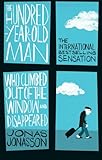
If you can suspend your disbelief that a hundred-year-old man could climb out of a window, drag a heavy suitcase and knock a young healthy person unconscious with a blow from a plank, you may enjoy this tale of his adventures on the run, evading arrest as he accumulates a motley group of new friends. The plot is quite slight, with so little description and character development that it has to be padded out to full novel length by alternating chapters on major incidents in Allan's past life, mainly encounters with the great and the bad – not only a string of American presidents, but Franco, Mao Tse-tung and Stalin, mostly seduced by Allan's apparent knowledge of how to make an atomic bomb.
Allan's affable amorality left me uneasy. Although his stoicism in times of adversity is impressive, and you have to admire his ability to "think on his feet", his periods of wealth and good fortune are based on the proceeds of other people's corruption and criminal activity, including murder or manslaughter, about which he is very casual. I believe this is meant to be a "feel-good novel", but it has an underlying darkness, such as the fact that Allan was one of the mental patients castrated under the infamous former policy of the Swedish government which is generally regarded as so liberal and progressive.
There are some humorous moments, but the plotting is cartoonish. What really grated on me was the quality of the writing. It may have suffered in translation from the Swedish into English but the pedestrian style and wording reminded me of a tired dad at the end of the day making up a bedtime story in the knowledge that it doesn't matter what rubbish he comes up with – all his child really wants is a bit of his attention. The work struck me as slapdash, with a few "continuity errors" and a trite ending as if the author just ran out of steam.
I had to read this for a book group and am relieved that it only cost me 20 pence to download on Kindle.
Despite the gimmicky marketing-ploy title, this makes a promising start. Fifty-something Richard has used his wealth gained in the finance industry to create a self-contained modern bubble in a Beverley Hills-style Los Angeles suburb, with original Rothko and de Kooning paintings adorning the walls, a personal trainer to design his health programme, a nutritionist to prescribe unappetising organic concoctions, and a patient housekeeper to wait on him hand and foot.
An excruciating pain which provides a reminder of his mortality and lands him in A&E provides the trigger for a renewed urge to connect with the teenage son and workaholic wife he left years ago, for reasons which never become entirely clear, since he clearly loves them both. This is accompanied by a desire to engage with people – everyone he happens to meet – starting with Anhil, seller of donuts which would give his nutritionist a horror-induced heart attack. It seems a little unlikely that someone who has been so reclusive would be able to make the change with such ease. Also, Richard's ability to buy his way out of any problem – even if his house is falling down he can afford to rent another super dwelling – reduces one's sympathy for him.
There are some moving moments and the dialogue is often sharply funny, as when a woman who has run Richard over while he is walking on foot to a store demands, "Why didn't you just drive like a normal person?" This is all part of the author's desire to show the materialism and folly of American society. Yet there is a puzzle here because when, for instance, Richard is able to buy a couple of brand new cars as presents, there is no hint that the author sees this as questionable "conspicuous consumption" even though she implies at the end that the American way of life is unsustainable and will bring environmental chaos.
Having made her point as regards Richard early on, I began to feel from the "horse in the hole" incident that she had lost her way, stringing together a chain of often unconnected and sometimes implausible events or pointlessly "tacky" sexual encounters. I wonder whether the author's real strength may lie in short stories.
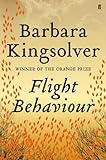
Although "it all comes together" finally in a neat ending, like the donuts on the cover, the novel is overall somewhat directionless, with a hole at its heart.
"Flight behaviour" is wordplay to cover both the orange monarch butterflies deflected from their usual migration patterns by the effects of climate change, and a Tennessee farmer's wife, symbolically also flame-haired, seeking to escape from the trap of her marriage to a kind but dull husband still ruled by his domineering parents.
Although her small daughter Cordelia has been nicknamed "Cordie", Dellarobia does not shorten her own distinctive name. An ill-judged attempt at adultery is averted when she is amazed by the sight of a lake of fire which proves to be great clusters of butterflies clinging to tree trunks on the wooded slopes above her home. My interest was hooked when I realised that the incredible details of these insects and their life cycles are based on fact, the author being a trained biologist with a mission to inform us through fiction.
The arc of the overall story is strong, and Barbara Kingsolver explores some interesting themes, such as the varying attitudes to the butterflies when a team of scientists come to study them. The locals, for instance, tend to reject climate change because the popular media play it down, but the strongly religious community feels that the butterflies may have some special significance, even to the extent of questioning the right of Dellarobia's father-in-law's to earn much-needed cash from felling the trees in which the butterflies have chosen to winter.
"The Poisonwood Bible" is a hard act for the author to follow, but I found "Flight Behaviour" hard-going, partly because it often gets bogged down in detail and long-windedness, crying out for a good edit. Although she is capable of sharp, funny dialogue and powerful descriptions, too often the prose grated on me – clunky and folksy in a way I had not expected, although I wondered whether it was intentional to convey a sense of a traditional "hillbilly" community, resistant to change. So, my four stars are for an original and thought-provoking storyline rather than the quality of the writing which often disappointed me.
The first part in a trilogy by the prize-winning author from Martinique, Patrick Chamoiseau, captures the spirit of life in the capital of Fort-de-France fifty years ago: the stultifying heat, fear of fire in the communal wooden houses contrasting with the need to deal with leaks in the rainy season, ravages of a cyclone, colour and chaos of the markets and uproar of occasional riots. He recreates the preoccupations of a sensitive small child in a constrained world, dissecting insects and playing with forbidden matches under the stairs, terrified in the dark by demons and the three-legged phantom horse, fascinated by tales of the shop-keeper who married a sorceror but made the mistake of burning his abandoned skin so that he could not return to her in his "normal" life.
Although these anecdotes may sound entertaining in retrospect, I found the book hard-going and tedious. This was owing to the many Creole terms which I had to keep stopping to look up, sometimes without success, and the pretentious language which grated when applied to childhood memories. I was irritated by the author's decision to call himself "le négrillon" all the way through, and I often felt that he was investing his pre-school self with adult observations, say on the sales techniques of the Syrian shopkeepers, and embellishing some points to the extent of making things up. There was little sense of any characters apart from the powerful and dominating mother figure who despite working every hour of the day was often short of cash, so she had to resort to sending her son out shopping in the hope that his appeal would soften the hearts of shop-keepers reluctant to add yet more expenditure to her credit tab. There is occasional pathos, say in the mother's frustrated childhood desire to be a singer, and we wonder what sorrows the father may have been trying to drown in rum at every opportunity.
Drawing on his own experience of transcendental meditation, Tim Parks transports us into the mind of Beth, impulsive, provocative, sensuous twenty-something former singer in a pop band who has spent the past nine months in the incongruous role of server cooking, cleaning and setting a good example for a group of meditators on a ten day Buddhist retreat.
It is a strict regime: segregation of the sexes, no talking or touching, hours of exerting the "strong determination" to sit motionless in painful poses, focusing on breathing with the daily brainwashing from recordings made by the guru Dasgupta, "who preaches against self-regard in a self-regarding way". There is a consistent tone of scepticism, a flippancy, which may upset strong advocates of meditation. Despite this, Parks conveys a clear and strong sense of the process of meditation.
Although she used to have no trouble losing herself in music, and wishes ardently to change herself through meditation, Beth's thoughts keep slipping back to speculating about the other inmates, whom she cannot resist winding up and leading astray on occasion, or brooding on her clearly troubled past life. Some recent trauma has driven her to the retreat, and Parks skilfully drips out the facts to hold our attention.
Sometimes I found this book too contrived, too much of a master class in creative writing by an expert published author, rather than a sincere examination of human dilemmas. The detailed descriptions of the routines at the retreat are sometimes tedious, although this may have been the author's intention. Since he builds up a strong sense of tension, moving towards an anticipated dramatic, perhaps shocking and unpredictable ending, I was a little disappointed by the final chapters which have a kind of banality, making the experience in the retreat seem lightweight.
However, it is an original, well-constructed story and in the midst of the wry, jokey humour, there are some convincing characters and many telling observations on life and relationships.
This third part of "La Bicyclette bleue" saga covering 1944-45 is darker than the earlier novels in its focus on the hardship and uncertainty of war. Lea Delmas is forced to grow up quickly, putting her fun-loving self-indulgence on hold as she becomes so involved in the Resistance that she can no longer live openly at her family estate without fear of being denounced.
This novel seems to be a homage to the Resistance, and the author succeeds in portraying the particular horror and sadness of a country invaded with little prospect of regaining freedom, and the sometimes fatalistic courage of those who continued to risk their lives for this cause. We continue to see Lea's family and employees at Montillac divided in their loyalties. Regine Déforges does not shrink from ramming home the tedium of a lengthy occupation or from killing off a number of key characters close to Lea.
There are some scenes of real tension, including the disruption of the joyful celebration of De Gaulle's march into Paris, as snipers on the roof of Notre Dame send people running for cover. I learned some interesting history from the novel such as how some French collaborators, perhaps fearing their fate if they tried to remain at home, volunteered to fight on in Germany with the SS even after the liberation of Paris, in a desperate last ditch attempt to defeat the Russian communists in a war that was clearly lost.
Although the plot flags a little at times, Déforges manages to keep pulling a new twist out of the bag to hold one's interest, even if it is only another unannounced appearance of hunky lover Francois Tavernier, macho to the point of creating unease (but it's all right because Lea likes it), who somehow manages to accomplish unspecified missions of great importance without risking his life much, and has no qualms about obtaining the best luxuries the black market can supply. There are as ever too many unlikely coincidences: A meets B on the point of perishing in battle, then dies in turn just after meeting C who is able to pass on news about A to D.
Although I might be more critical of this drama if written in English, it is an excellent means of developing one's French, and is quite moving and informative in places.
The self-made Thomas Sutpen achieves his ambition of carving out a plantation for himself in the Mississippi wilderness and acquiring a wife and heir, only to lose it all, partly owing to the calamity of the American Civil War of the 1860s, but also through past events coming back to haunt him. His life is a metaphor for the inward-looking, class divided, prejudiced, proud, stubborn, slave-owning South driven to its knees by defeat in the Civil War, the aftermath still evident when a young neighbour Quentin Compson tries to piece the story together, abetted by his friend Shreve, a Canadian "outsider" who is both fascinated by the South and able to assess it with an objective eye.
Faulkner's stream of consciousness style which must have been groundbreaking in the 1930s carries the reader into the characters' minds, using vivid visual impressions and memories to trigger a chain of fleeting thoughts. I like the way he tells the same story from different at times contradictory viewpoints, often repeating details with a hypnotic persistence, only to advance the tale without warning as another important fact is almost casually thrown in. It is also intriguing to grasp that key characters like Rosa Coldfield may only ever hold some of the pieces of the jigsaw – Faulkner is fascinated with the way people's perceptions vary, memory is distorted and complex motives may remain ambiguous, with actors themselves remaining unsure what they are going to do and why.
Despite some poetic passages of extraordinary brilliance and beauty, some sharp dialogue in the compelling southern idiom and a potentially powerful plot, I feel the work is flawed by a tendency to let experiment tip over into self-indulgent ranting and a descent into melodrama. The unrelenting focus on human degradation, the doom and gloom of the work prove unbearable at times, "the turgid background of a horrible and bloody mischancing of human affairs". Also, the reliance on characters recounting past events tends to defuse the drama of what should be striking events, although I admit that some moments of high tension remain, even when I "knew" what was going to happen.
I can accept the perhaps at times unintentional racism of the piece as being a feature of the period. Faulkner's misogynic tone is hard to excuse.
This book needs to read twice, even several times to be fully appreciated. I wanted to read it the first time without benefit of notes, to get the raw impact, although it probably helps to consult a "study guide" for a second opinion on some of the obscurer passages. I like best the descriptions of the South stripped bare of overblown emotion, "he looked up the slope…where the wet yellow sedge died upward into the rain like melting gold and saw the grove, the clump of cedars on the crest of the hill dissolving into the rain as if the trees had been drawn in ink on a wet blotter." Yet even here is evidence of his verbosity.
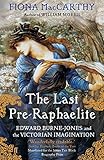
Burne-Jones sought lifelong escapism into the world of mythical romance as a reaction to the ugliness of a childhood in industrial Birmingham. When his deep friendship with William Morris was finally fractured by the latter's involvement with active socialism, Burne Jones wrote of his desire to take refuge in the artistic work which he could control.
He had some strokes of luck: Rossetti found commissions for him to design stained glass – often for the very wealthy industrialists responsible for the world he hated; Ruskin paid for a couple of trips to Italy where he discovered at that time little-known painters such as Botticelli or Piero della Francesca who were to influence his work, and despite his uncertain income Burne-Jones seems to have been welcomed by her parents as a fiancé for Georgie Macdonald. His repayment for her loyalty was a steamy affair with the flamboyant Greek artist Maria Zambaco, the muse for some of his most famous paintings, as were also some of the pale and interesting younger women with whom he liked to flirt. Highly successful and made a baronet in his lifetime, Burne Jones was a prolific artist, despite his disorganised approach.
It is understandable that Fiona MacCarthy's encyclopaedic knowledge, the result of six year's spent researching Byrne-Jones, led her to produce a work of 536 pages, excluding notes, so heavy that it splits at the seams as you read it (although a Kindle version is available) but I found it on balance a laborious slog not only because of the length but also the structure. The decision to base each chapter on a different location linked to the artist's life in chronological order leads to a fragmentation of themes and repetition of some points. I wanted less description and more analysis and insight that was more than vague suggestions of what might have been the case. What exactly was the goal or philosophy of the Pre-Raphaelites and what was their impact, how did Burne-Jones fit into the group, what was his method of painting and so on? I would have liked more focus on a few major works, illustrated in the text, with a full discussion of each one. I gleaned little more about the painter's personality than may be found in the preface.
If some of the peripheral detail e.g. on the painter's cronies had been omitted, there would have been the space to develop some neglected aspects.
A reign which may seem less glamorous and colourful than that of his descendants Henry VIII and Elizabeth proves on closer inspection to be highly intriguing. Penn shows how Henry Senior sowed the seeds for a successful dynasty, and captures the spirit of an age still trapped in medieval superstition, but with the stirrings of humanism, democracy and "enlightenment".
Henry Vll's mistrustful and calculating nature must have been influenced by a youth spent on the run from the Yorkists, often at risk of being traded for funds and military aid from whoever was on the English throne during the final years of the Wars of the Roses. Once king, marriage to a Yorkist princess was not enough to consolidate Henry's tenuous claim nor to deter disgruntled nobles from passing off a string of impostors as say, one of the Princes in the Tower with a better claim.
It is perhaps to Henry's credit that he preferred negotiating to war – setting out early in his reign to fight the French, he allowed himself to be bought off with a pension. He grasped that he needed money, both to impress everyone with great pageantry and ritual but also to purchase influence on the continent, not least with the impecunious Hapsburg emperor.
The problem was the methods used to obtain money. In an increasingly harsh network of tyranny, Henry hired a mixture of shrewd lawyers and thugs to devise means of depriving subjects of their wealth – the lands of widows and orphans, the simple-minded, or those whose loyalty was suspected were taken over and the profits siphoned off; to hold office under Henry, it might be necessary to pay a large sum as security for good behaviour; in an increasingly Kafkesque world , ordinary people could be fined on trumped up charges. All this was done through new committees and courts set up outside the common law, undermining Magna Carta, "concerning the liberties of England".
Ironically, when Henry Vlll succeeded, although two of his father's main enforcers, Dudley and Empson were scapegoated, they were condemned by men who were also guilty and "much of the private system of finance and surveillance" which under Henry Vll's "obsessive gaze" had "assumed primacy over the legally constituted exchequer" was simply made official.
Unlike some reviewers, I did not mind that Penn has tried to leaven his scholarly work with somewhat jarring colloquialisms. I was fascinated by "trivial" anecdotes such as Margaret Beaufort's sudden death after her son's coronation feast, "it was the cygnet that did it", or how when a blue carpet was laid out for a royal procession, the London crowd descended on it afterwards to hack off bits as souvenirs.
Extracting the gold from this book was hard going because of a wordy style, combined with Penn's habit of introducing more minor characters than I for one could absorb: X the step-son of Y who had married the widow of Z's brother, and so on. The background to say, the frustrations of the Calais garrison or the ambitions of the famous scholar Erasmus, bog the reader down in excessive detail.







 Antenna Reviews