More things to admire in men than to despise

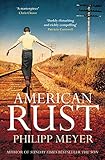
This is my review of American Rust by Philipp Meyer.

This impressive American "debut" novel must have flowered from the diverse influences of growing up with book-loving bohemian parents in a tough working-class suburb, dropping out of school to gain raw experiences but somehow getting to college, avidly reading Joyce, Faulkner and Woolf, and carrying first-hand research to the extent of riding freight trains and interviewing men on trial for murder.

Set against the backdrop of the crumbling American dream, as foreign competition knocks the heart out of once thriving steel-making towns, Meyer explores the drama of an unlikely friendship: on one hand, puny and eccentric but brilliant Isaac English, haunted by his mother's suicide and burdened by the task of caring for his cranky invalid father, on the other athletic but indolent Poe who has thrown away the chance to train as a football champion. Both share a confused desire to escape the depressed backwater of Buell, mixed with inertia and a love of the area's natural beauty. When one commits a serious crime, acting on impulse to save the life of the other, who will be blamed and with what outcomes?

After a dramatic opening, the story slips into a slow-paced cycle round the inner thoughts of six linked characters: Isaac, his favoured sister Lee who has managed to escape to Yale and a wealthy marriage, his crippled father Henry, Poe, his long-suffering mother Grace and Harris, the local police chief who fancies her, himself a survivor of the Vietnam war. Sometimes, Isaac's streams of consciousness become too obscure and tedious, the boozy sex between Grace and Harris a little repetitive, the minor scenes, as when Lee or Harris is socialising, too corny or banal. The strongest charge is that the denouement seems a little rushed and underdeveloped compared with the rest, although I liked the upbeat but open ending. Yet overall, this is gripping, with sufficient tension and unresolved drama to keep you reading in the belief that Meyer is ruthless enough to opt for tragedy, although it will never be unrelieved.

Less ambitious and "epic" than its successor "The Son", for me, "American Rust" is a technically better novel since the structure is tighter and the characters are more fully developed and therefore you care about their fate, with the possible exception of Lee who is the only one who might be regarded as successful, which perhaps is perhaps intentional on Meyer's part.

A good choice for a reading group as there is so much to discuss, it bridges the blurred gap between literary and popular fiction.

⭐⭐⭐⭐⭐ 5 Stars

Tapping crude rhythms on a cracked kettle or melting the stars?

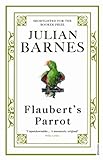
This is my review of Flaubert’s Parrot by Julian Barnes.

This quirky biography of Flaubert wrapped up in an eccentric almost plot-free novel from the viewpoint of Geoffrey Braithwaite, an uptight retired English doctor obsessed with the French author is unusual, often amusing and, as some reviewers have commented, at times too clever by half.

If I had not read in French "Madame Bovary" and "Un Coeur Simple", I would have found it much harder to appreciate this book, which further restricts an appeal already limited by its status as a "literary novel".

I have learned a good deal about Flaubert, which I wish I had known when studying him for A Level decades ago, only no doubt his penchant for whores, young foreign boys and smutty jokes would have been considered unsuitable by my teacher. I can see that he was an original and truly independent thinker, probably still don't quite grasp the contribution he made to the modern novel, but do not find him very likeable as a person. He comes across as immature and opinionated at times, perhaps because his epilepsy isolated him, although he seemed to think he needed to be set apart, an observer looking on, to be able to write.

With his quicksilver intellect, Julian Barnes lets slip in passing a host of fascinating details and anecdotes. Flaubert wished he could afford to burn every copy of the very successful but deemed scandalous Madame Bovary. Did he mean it? Flaubert was bothered by his tendency to use metaphors. Was the famous parrot one of these and, if so, was it meant to be a symbol of the writer's voice, his obsession with "the Word"? Sartre, in what I find a surprisingly intense desire to attack Flaubert, rebuked him for, as Barnes cleverly puts it, being the "parrot/writer" who "feebly accepts language as something received, imitative and inert".

Barnes's mouthpiece Braithwaite lambasts the critic who claimed that Flaubert was so careless about the outward appearance of his characters that he gave Emmma Bovary three different eye colours: deep black, brown and blue. Instead, he shows how Flaubert subtly described her eyes in different lights and situations. Barnes uses some entertaining devices, such as three different versions of the chronology of Flaubert's life, the first very positive, the second negative, the third a series of striking quotations from different years of his life – or I think it is, but it's hard to know when Barnes is quoting and when he is making things up, which the novel format permits him to do.

I particularly liked the chapter written from the viewpoint of Flaubert's longsuffering mistress Louise Colet, who seemed to want to be his wife rather than his Muse and confidante, although she must have had "better offers". In the excellent chapter, "Pure Story", the narrator Geoffrey Braithwaite explores with great poignancy his relationship with his wife, managing in the process to draw comparisons with Madame Bovary.

Although I found some of the middle chapters tedious and rambling to little purpose, the book contains so many sharp insights it deserves to be kept and read more than once.

⭐⭐⭐⭐⭐ 5 Stars

Hardy with a Hint of Draughtsman’s Contract

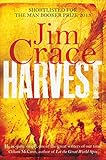
This is my review of Harvest by Jim Crace.

In a remote unnamed English hamlet at an unspecified location and time, somewhere around the 1600s, perhaps, the "accidental" burning of the master's dovecotes is blamed on a family of squatters. The ensuing chain of disastrous events plays out against the long-term tragedy of the inexorable forces of change, by which common land, felled woodland and cornfields are to be enclosed for sheep-farming, destroying in the process a stable community in which everyone has a place.

The sustained sense of tension makes this a page turner, even though I suspected the ending would be a will-o-the-wisp. Suspense combined with Crace's striking, original, often poetical language carries you along almost too quickly. You need to read more slowly, or more than once, to grasp the full force of his prose.

Narrator Walter Thirsk's insight and articulate flow of words is explained by a connection since childhood with kindly but weak Master Kent. In what proves a type of fable or morality tale, Thirsk symbolises the human flaw of good intentions rarely put into practice. He may also be an unreliable narrator, lying even to himself at times over the degree of his devious self-interest.

Crace captures the spirit of a lost way of life without glamorising it. Some wry snatches of humour and sharp character studies add spice to the tale. "Harvest" highlights the danger and skin-deep nature of civilisation in rural England, where "might was right", and a landowner could punish and mistreat tenants with impunity. Crace conveys a poignant sense of loss over the destruction of the harmony of people working together, as in the remarkable description of the harvest in the opening pages, and of their deep knowledge and appreciation of nature. At the same time, we are not spared the harsh reality of "Turd and Turf", the filth and hardship of daily life.

Although I would have liked a stronger dramatic conclusion to this tightly plotted tale, Crace is not concerned to impress us with a final twist. The terms "hallucinatory" and "hypnotic" used by professional reviewers are very apt. Claimed to be the last book in a highly regarded body of work, this deserves its place on the Man Booker shortlist.

⭐⭐⭐⭐⭐ 5 Stars

Coming to terms with the past

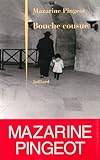
This is my review of Bouche cousue by Mazarine Pingeot.

Aged nineteen, Mazarine Pingeot was "outed" by Paris Match as the illegitimate daughter of French president François Mitterrand and his long-term mistress. Now a journalist and writer, Pingeot has milked this drama in "Bouche Cousue" or "Lips Sealed", a memoir of her childhood inspired by her first pregnancy, and, more recently, in "Bon Petit Soldat".

There are moving descriptions of the strain of living a lie, being unable to tell school-friends who her father really was, thereby crushing her own identity. Although loved by her parents, she describes her childhood repeatedly as living in a bubble, protected yet also cut off from the "real" world. When she saw her father making speeches on the television, he seemed like a double of the person she knew. She recalls the loneliness of the dark state apartment when her parents were out at work. There was companionship with the ever present body guards but, once a teenager, escaping them became one of the few acts of rebellion open to her without giving herself away thereby damaging her father's reputation.

Some of the most poignant passages cover his death which came soon after the exposure of the truth. She began to read biographies, finding it difficult to come to terms with the existence of a man very different in early life from how she knew him, by then old enough to be her grandfather. With great frankness she explores complex emotions: was she hidden from the world out of shame or a desire to conceal something precious; should she hate him for this concealment and the fact that she was thrown into the world of media attention, often critical, just when she was still too immature and unsure of herself to cope?

The omission of such important factors as how her parents formed their relationship when Mitterrand was still married to the formidable Danielle, the lack of speculation about his "other family", may be a deliberate attempt to present details from a child's perspective. In addition to the dating of chapters with days of the month but not years for context, what really annoys me is the style. Disjointed and artificial, it often feels like a series of exercises in writing, such as the continual addressing of her thoughts to her unborn child.

She seems blind to certain factors. For instance, she refers several times to her unmaterialistic and principled upbringing, but never comments on how Mitterrand housed and protected mistress and daughter at the public's expense and was judged after his death of being guilty of misusing anti-terrorist laws to tap the telephones of those who might expose his daughter's identity.

Mazarine seems perhaps understandably damaged by the secrecy of her upbringing. She comes across as obsessed with it, bitter, self-absorbed, neurotic. She claims to be unable to remember certain things, but one senses that she is, perhaps unconsciously, glossing over inconvenient details which destroy the image of an idyllic if constrained "bulle" in which she enjoyed a special bond with her father, her mother often portrayed as playing second fiddle.

⭐⭐⭐ 3 Stars

What a shame

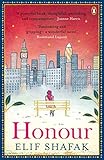
This is my review of Honour by Elif Shafak.

Elif Shafak is a born storyteller, who knows how to hook the reader in a first chapter which ends, "He is my brother. He, a murderer". Although appearing to give so much away early on must detract from some of the dramatic power of later events – you could also argue this gives you the thrill of anticipation – a few red herrings and twists are left to the end.

I do not mind that the story of Turkish Adem Toprak, damaged sins-of-the-father style, and his beautiful Kurdish wife, Pemba Kader, or "Pink Destiny", flits between multiple viewpoints over five decades, but accept that this may confuse some readers. The author often seems to digress, caught up in her own fertile imagination, but most characters and incidents have some bearing on the complex plot which proves to have been carefully thought through. For instance, the forbidden lover Elias, a man of great tolerance, moderation and adaptability, symbolises the ability to survive in any culture since he does not belong to a particular one.

The scenes in Kurdish villages near the Euphrates are too unfamiliar for me to assess their authenticity, but I was convinced by the portrayal of a community held together by superstition and tradition which also have the power to destroy those who do not conform. The folktale aspect which Shafak likes to employ, a world of ghosts, spells, binding customs, unbending beliefs and unlikely coincidences is easier to accept in rural Turkey.

The culture shock of the Toprak family's move to London is well drawn, although too many of the sub-plots struck me as unrealistic with weakly developed or stereotyped characters: Roxana in the Chinese gambling den, Iskender's English girlfriend Katie, Yunus's escapades with the squatters – it seems implausible he is only seven, but I suppose at a more realistic ten plus he might be too old to share a room with his sister Esma.

With fewer characters and incidents to distract the reader, there might have been the space to develop the core of the book: the nature of honour in different societies and its implications, particularly for women in intensely male-dominated communities.

The author does not shrink from scenes of great cruelty, nor from the tragedy of misunderstandings and lack of communication, yet the story is saved from harrowing bleakness by her humour and warmth – which occasionally becomes a little too cloying for my taste. The soft centre irked me, as this potentially powerful book winds to a somewhat subdued anticlimax. Some passages are so insightful – for instance, the casual way British people say, "It's a shame" – that I wished the author had spent a little time editing weaker patches – continuity errors, cringe-making dialogue, etcetera – to make this a great piece of literature (like "Life and Fate" or "A Fine Balance") as well as a "good read".

⭐⭐⭐⭐ 4 Stars

Mad, sad and dangerous to know

This is my review of L’Eté Meurtrier by Sébastien Japrisot.

In this complex, slow-burn psychological thriller, when gorgeous, provocative and probably mentally unstable Eliane sets her cap at decent young car mechanic and part-time fireman "Ping-Pong", you know it will not end well. As the viewpoint switches, mainly between these two characters, Eliane's motives are revealed, the desire for vengeance over a past wrong, but this is a tale of misunderstandings, twists and fateful coincidences which do not fall into place until the final pages.

I agree with reviewers who have found this excellent, although it may take a while for you to appreciate its cleverness – many of the apparently irrelevant fine details prove significant in the end. Apart from building up the tension to a point when you cannot put the book down, Japrisot contrives to create sympathy for all the characters, and to present a vivid picture of life in a small French town where people know each other's business, filling doorsteps and windows along the way to watch Eliane and Ping-Pong as they set off for their first date. The main characters are strongly drawn, with realistic, changing emotions and reactions, in, for instance, Eliane's relationships with Ping-Pong and his two very different brothers. The one weak link for me is Eliane's former school mistress whom I found unconvincing. There is also humour, as in Eliane's continual exaggerated references to time to show her youthful impatience – "I waited a thousand years for him to answer" etc.

It's true there may be a pattern in Japrisot's characters: working class men prone to violence, neurotic young women who play on their sexuality and so on, but he was a past master of the twisty thriller that lends itself to film-making.

If you are not French, this may prove hard going because of the idioms, but it is worth the effort for the sense of suspense, the plot twists and the atmosphere of small town life near Grasse and Digne, where forest fires rage in the distance during intolerably dry summers, and the main source of interest is the Tour de France.

⭐⭐⭐⭐⭐ 5 Stars

What matters only love

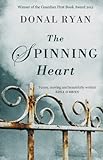
This is my review of The Spinning Heart by Donal Ryan.

This is oddly reminiscent of "Under Milkwood", perhaps because it uses the poetical yet often also earthy voices of a variety of characters to capture the spirit of a rural community. A short intense and condensed novel, with all the flesh of scene-setting and background information stripped away, it comprises twenty-one internal monologues which combine to show how the collapse of the building boom in Ireland wreaked havoc on the already sad and dysfunctional lives of many ordinary people.

Pain is piled on by the shovel-load, and it would all be unbearably bleak but for the author's ear for the poetry and droll wit of the Irish way with words. There is continuous entertainment in not only the language but the links between the various characters, their different readings of situations, and the poignant plot which gradually emerges around the ever-present figure of the charismatic but troubled Bobby Mahon. Donal Ryan is prepared to take risks: one "voice" is a ghost in limbo, and I was unsure for a while if another was not a "split personality".

If there are flaws in this original book, one is that some of the "losers" portrayed are a little too similar and so seem superfluous, another that many characters share the same streak of repressed violence plus a fundamentally introspective, articulate, self-aware voice that is probably too much that of the author. At times, I felt I was being told too explicitly what to think about a particular person, as in the case of Bobby's embittered father Frank, rather than left to deduce it for myself. The style is less convincing when Ryan abandons his Irish patter, as for patriarch Josie Burke's educated liberal lesbian daughter Mags.

Although my interest flagged a little in the middle of a book which seemed to have "made its point" about the state of Ireland quite quickly, what proves to be a carefully constructed tale twists to an effective ending.

Overall, it is an impressive first novel, which repays a second reading.

⭐⭐⭐⭐⭐ 5 Stars

Antiquated tales leave me cold

This is my review of La Légende de Saint Julien l’Hospitalier-The Legend of Saint Julian the Hospitaller (French/English) [Annotated] (Rafael Estrella’s Dual Language Library) (French Edition) by Gustave Flaubert.

This omits "Un Coeur Simple", for me the first and best of Flaubert's "Trois Contes". Although very different from the former and each other, these two tales share a kind of overblown Gothic violence and romanticism which I believe was popular in the C19, but which now seems mawkish and dated. La Légende de Saint Julien l'Hospitalier is the tale of a spoilt young man who develops a craving for violence, and then suffers the effects of a curse; Hérodias is based on the story of the beheading of St.John the Baptist, approached in a rather oblique way. I understand that Flaubert wanted to create "reveries" on imagined religious characters,and was keen to write stories with very little subject matter, so that all the emphasis is on the words used. He succeeds in this for me with "Un Coeur Simple", the tale of a simple servant who becomes obsessed with a parrot, but the two fables included here left me cold. The sentences are so pared down in places for the style to seem disjointed, as if passages are missing. The language also seems far from plain and direct but rather convoluted, with a good deal of archaic language to do with say, different types of falcon, or items of Roman clothing.

As for the translation, if you can discipline your eye to read the French in bold text and only consult the English when necessary, this is quite a useful aid, particularly since some of the antiquated specialist vocabulary on, for instance, hunting dogs or medieval arms, may not be in your dictionary. However, it seems to me that translations of some phrases and sentences have been omitted, whereas on other occasions bits are added "by way of explanation". Also, the quality of translation is very uneven: some passages are crude literal translations, but others seem very loose and inaccurate, perhaps in an attempt to capture the meaning of Flaubert's often oddly condensed style.

⭐⭐⭐ 3 Stars

Errant Knight of the Crime Squad

This is my review of Laidlaw (Laidlaw Trilogy Book 1) by William McIlvanney.

Curiosity over the recent revival of interest in a crime writer said to have inspired Ian Rankin, led me to read the first in his trilogy on DI Laidlaw. Prickly, sardonic, subversive, a maverick with a rocky marriage and a boss who only tolerates him because he gets results – all this sounds like a stereotype of fictional detectives we have come to know, but Laidlaw was one of the first, appearing in print back in 1977.

This investigation of the brutal murder of a young woman is less of a whodunnit- we are catapulted into the murderer's confused psyche in Chapter 1, and more of a whydunnit, exploring the personalities of the main characters against the background of gritty gangland Glasgow. The images are often striking and original: "A Glasgow sun was out, dully luminous, an eye with a cataract", Laidlaw is described as "looking terrible with a right eye like a roadmap", or a man watches "a blackbird balance its beak like a nugget of gold". The language is often quite poetical and repays reading slowly, but the pressure is on to find out what happens next.

Some scenes read almost like a play, as when Laidlaw's young sidekick Harkness asks how they can begin to relate to the murderer. Laidlaw's unusual view is that, "This murder is a very human message. But it's in code. We have to try and crack the code. But what you are looking for is a part of us. You don't know that, you can't begin."

When we first meet Laidlaw, he is "feeling a bleakness that wasn't unfamiliar to him….doing a penance for being him." Since this negativity, combined with great intensity, often oppress both Harkness (driven to ask "who wants to be batman to a mobile disaster area") and Laidlaw's long-suffering wife Ena ( she's looking after the three kids he claims to love whilst he is out philandering), you may wonder how the author expects his readers to put up with his creation. Yet, the gloom is offset by wry humour and tight plotting. Although I sometimes found the style of writing contrived (and could not get some sentences even after several readings), this novel stays in one's mind longer than the usual monosodium glutamate thriller, and leaves you with the sense that it is both gripping and worth reading.

⭐⭐⭐⭐⭐ 5 Stars

Four stars for imagination and humour but –

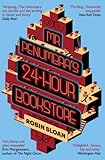
This is my review of Mr Penumbra’s 24-hour Bookstore by Robin Sloan.

When unemployed computer geek Clay Jannon takes on the night shift at Mr. Penumbra's 24-hour bookstore, he soon suspects it is a cover for some other activity, and so the mystery begins. This is a quirky blend of imaginative tecky inventions, such as a Google project to develop a form of renewable energy that runs on hubris (it is not always so easy for a non-tecky reader to know where to draw the line as to what is feasible), and nostalgic harking back to a Lord of the Rings fantasy world. The bookshop is archaic, with shelves ascending into what reminds Clay of the shade cast by dense trees in some magical forest.

Apart from a highly creative imagination, Robin Sloan writes with continual quick-fire touches of humour. Still unsure as to whether I could cope with what I suspected was intended for a 20-something male computer geek readership, I was won over early on by the image of the aged Penumbra tottering to the solid shop-front desk, "you could probably defend it for days in the event of a siege from the shelves".

Despite my admiration for all this, I fear that it could not sustain my interest. The main characters are two-dimensional, the explanations often tedious, the writing-style too often banal, the basic mystery ludicrous, the denouement which I cannot reveal a bit of a corny cop-out. I only read to the end for the sake of a book group meeting which included a skype chat with the author- a charming and humorous man with a very positive attitude to life.

I could have done with more of the occasional original insights such as that, "we imagine things based on what we already know and we run out of analogies in the thirty-first century."

So, I am torn over my assessment of a work that is original and funny in parts, yet also has a juvenile quality, an implausible non-mystery at its heart (try explaining it to someone!) and some dull passages to wade through.

⭐⭐⭐ 3 Stars