Found without translation

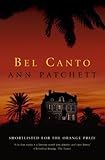
This is my review of Bel Canto (Italian Edition) by Ann Patchett.

In a botched attempt to capture the president of an unnamed South American dictatorship, terrorists resort to taking hostage a disparate group of foreigners who happen to be attending the birthday party of Japanese CEO Mr Hosokawa, where the star turn has been the performance of Roxane Coss, the renowned international soprano with whom he has become infatuated.

The potential for a tense drama is rapidly dissipated by the author's soft-centred, overblown style. To be fair, an exciting and pacy plot is clearly not her major concern. The siege of the Vice-President's house serves as a means of creating a bubble, isolated from the rest of the world, in which, relieved from normal pressures, routines and expectations, the characters have time to take stock of their lives, observe their surroundings from a fresh viewpoint, form unexpected relationships and identify talents they never knew they possessed.

At first, the uneven quality of the prose, the wordiness and focus on mundane details made tedious reading and I was tempted several times to give up. There is a child's fairy tale quality in the lengthy attempts to provide some logical support for unlikely situations. It was hard to engage with the large number of characters, most of them male but with a rather similar and female "voice" – the author's? Perhaps the slightly contrived, stagey nature of some scenes is part of a deliberate attempt to make the hostage-taking into a kind of opera.

Looking for reasons to continue, I noted the unusual, imaginative nature of the story. Ann Patchett creates a wide range of characters who prove to be quite interesting. There is the odd striking description, or telling insight, such as the fact that for many hostages and terrorists, the new way of life created under siege may be preferable to and more real than that outside, to which perhaps there can be no tolerable return. There are many moments of comedy, and others of real poignancy. An ongoing and fascinating theme is how people manage to communicate when they do not share a language.

So, I began to find "Bel Canto" more absorbing yet remain unconvinced that Gen, the Japanese interpreter, could be quite so skilful in so many languages, or that a young hostage could be quite so word and note perfect in imitating Roxanne's singing, to give two examples of implausible aspects. Unlike some reviewers, I thought the ending quite effective, although perhaps the epilogue went a bit too far in tying up loose ends.

Even if you have serious reservations over the quality of the writing, or the development of the plot, this is likely to stimulate lively and wide-ranging discussion in a book group.

⭐⭐⭐⭐ 4 Stars

Learning the largonji

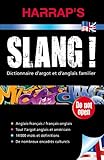
This is my review of Slang ! : Dictionnaire d’argot et d’anglais familier by Harrap.

Many modern French novels contain a good deal of slang, and although there are some very comprehensive online sources of information, it is always useful to find a hard copy dictionary with a good coverage.

Fairly compact with words and idioms highlighted in bold and mainly concise definitions, this has the additional feature of "Spotlight on" boxes on e.g. "L'alcool et l'ivresse", "L'argent","La colère", "Le corps", "Les insultes" and so on. There are also "Slang Sleuth" boxes e.g. on "L'Argot des banlieues/des cités". On most pages there are one or two entries to expand information e.g. on the suffixes "aille" or "ard". I like the way the origin of words is often supplied.

As an English speaker, it is interesting to read the first half in French explaining English slang. My concern here is that I do not recognise quite a lot of the supposedly English slang used. Under "rhyming slang", I was bemused to find "Britneys=Britney Spears=beers" – perhaps this is an example of American slang, but not the more authentic "apples and pears=stairs" or "trouble-and-strife=wife".

It is enjoyable simply to "dip into" this, in the hopes of building up a bank of knowledge to reduce the need to break off reading to check on a term. I would say that it complements Barron's "Dictionary of French Slang" which I acquired some time ago, which is "one-way French to English, has a slightly different coverage of terms (hard to tell if less or more) and tends to provide more examples of words in different contexts.

⭐⭐⭐⭐⭐ 5 Stars

Riding the devil you know

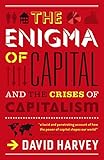
This is my review of The Enigma of Capital: And the Crises of Capitalism by David Harvey.

Reading this feels like galloping over rough terrain on a spirited thoroughbred out of control. The recent financial debacle of 2007-8 inspired Harvey`s analysis of the periodic crises in capitalism which seem to be inherent, together with the attempted solutions, and suggested future actions. Harvey, a "Distinguished Professor in Anthropology" and originally a geographer, quotes selectively and cogently from Marx, and clearly favours radical alternatives to "conventional" casually accepted capitalism.

His basic premise is the current consensus amongst economists and the financial press that a healthy capitalist economy in which most capitalists make a reasonable profit needs to expand at about 3 per cent per annum. "Credit-fuelled capital accumulation at a compound rate is a condition of capitalism's survival. Capitalism must generate and internalise its own effective demand" backed by money to pay for goods in the market.

Succeeding chapters explore the potential barriers to the accumulation of capital- lack of money, labour, resources, technology, resistance or inefficiency in the labour process and lack of "effective" demand. Although most of the ideas are likely to have been encountered already, it is useful to have them combined in one place.

I welcomed the lack of abstruse economic theory with equations and graphs, which may reflect the author's expertise as a geographer. He asserts that an obsession with mathematical models blinded economists to the danger of the early C21 debacle that few foresaw. However, I would have liked a more precise explanation of the new financial products, credit default swaps and derivatives which caused so much trouble. I also found many of the explanations e.g. of the relationship between the availability of labour and wage costs, too condensed and hard to follow for someone with no prior knowledge of economic theory.

Although the topics and relationships covered are wide-ranging and fascinating, the book has a breathless quality, fed by long complex lists of diverse examples which undermine the line of argument. Harvey seems unable to resist the temptation to qualify points with brief asides, often in brackets, thus adding to the disjointed effect. Many passages seem written in a semi-digested hurry. For instance, I wanted a deeper exploration of the implications of the "Walmart phenomenon" by which cheap retail goods produced by relatively cheap labour are imported from an ironically still communist China for American consumers, some of whom will lost their jobs in the process.

The radical ideas put forward in the final chapter seem too vague and undeveloped to be called solutions. Asserting that "an ethical, non-exploitative… socially just capitalism that redounds to the benefit of all is impossible" and "contradicts the very nature of what capital is all about" he concludes: "The accumulation of capital will never cease. It will have to be stopped. The capitalist class will never willingly surrender its power. It will have to be dispossessed."

Is he calling for bloody revolution, likely to lead to world wars and prolonged greater suffering and chaos than exist even now? He says lightly that it is good in itself to be utopian, but as a distinguished academic, does he not have an obligation to present rather more cogent and well-conceived proposals than this? Necessity being the mother of invention, many educated young people in developing countries are beginning to devise alternative life styles. Rising anger over social inequality and growing evidence of the dangers of under-regulated capitalism, exhaustion of natural resources, pollution and overpopulation, may give governments the impetus to modify capitalism with the support of the people. This is the only future I can see, rather than what sounds at time like an unrealistic rant from an ivory tower.

⭐⭐⭐ 3 Stars

Handy slim guide

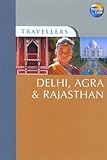
This is my review of Delhi, Agra and Rajasthan (Travellers) by Melissa Shales.

If you are looking for a compact guide to take on holiday, this is useful if your focus is on Rajasthan or "The Golden Triangle". Since I was only visiting Delhi and Agra, I found the relevant sections a little too brief, in particular on the "main sites" such as the Taj Mahal or Red Fort at Agra which you are mostly likely to visit. Quite good on background practical and potted cultural information, the guide includes such telling insights as: "You will return home enriched and bemused and whether you loved or loathed the country will never be quite the same again!" Some of the main sites e.g. in Delhi are marked on maps, which could have been larger, but at least this helps orientation.

It's frustrating at times in covering off-the-beaten-tourist track itineraries and pictures of fascinating places you do not get to see on a standard package tour, but I suppose these support further reading you may feel inspired to undertake after the tour.

⭐⭐⭐⭐ 4 Stars

Flawed rendition

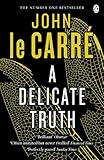
This is my review of A Delicate Truth by John Le Carré.

Fergus Quinn, an ambitious New Labour Foreign Office minister, picks a biddable Whitehall bureaucrat to oversee "Wildlife", a sensitive counter-terrorism operation – an odd choice, since "birdwatcher Paul Anderson", does not have a clue what is going on, before, during or after an exercise that goes badly awry. So, after accepting a clearly undeserved promotion into a sinecure followed by lord-of-the-manor retirement in a decaying Cornish mansion, what could induce "Anderson" to become a whistleblower? The same could be asked of the hardbitten commando employed in the secret operation, and of young Private Secretary, Tony Bell, whom Quinn tries to keep out of the loop altogether.

This is the basis for a gripping modern thriller with a mission to arouse our consciences over such issues as the erosion of democracy, the corrupt involvement of corporate power in government e.g. for defence contracts, the frightening power of intelligence organisations to spy on ordinary people in the name of national security.

My problem was an inability to believe in much of the dialogue – artificial, with too many characters speaking in the same upper crusty old Etonian voice, or in some Monty Pythonesque portrayal of "a working man". Le Carré gives the impression of being slightly out of touch, as with the school teacher who talks of teaching "arithmetic up to A Level". Most characters are thinly developed, and heavily stereotyped. Frequent placing of important conversations in flashbacks reduces the potential dramatic tension. There is too much "telling", often repeating what the reader already knows. Plot content is slim, and as other reviewers have said, even the wrong at the heart of the novel, although shocking, seems insufficient to awaken consciences to the extent of creating whistleblowers prepared to stake all. Is Le Carré resting too much on his laurels in this latest work?

Chapter 2 provides a lengthy telling of Tony Bell's rapid rise, mentored and advanced by the caricatured éminence grise mandarin, Giles Oakley. At one point, Tony acts out of character, also giving a hint of things to come, with an inward diatribe against the immorality of the Iraq War, including special condemnation of Tony Blair, whose "public postures are truthless". This sounds like Le Carré indulging in a personal rant of his own. Truth being stranger than fiction, it might have been more effective to produce a non-fiction analysis.

I could only cope with the first part of the book by treating it as a parody of upper class, or would-be establishment figures fudging truth and sacrificing principles for the sake of a cushy life.

In the final chapters, where the key players belatedly try to take responsibility and expose the truth, Le Carré creates a real sense of menace and tension. Is struggle futile or will they be able to have the last word? If so, at what personal cost? With the end in sight, the quality of Le Carré's prose improves to what one has hoped for. "What the gods and all reasonable humans fought in vain wasn't stupidity at all. It was sheer, wanton, blood indifference to anybody's interests but their own".

Although style and structure often make for an irritating read, it seems a good choice for a book group, both as regards discussion of issues, and exchange of what are likely to be conflicting opinions on the quality of the writing.

⭐⭐⭐ 3 Stars

Culture clash

This is my review of Sept histoires qui reviennent de loin (Folio) (French Edition) by Jean-Christophe Rufin.

Rufin’s impressive career as a doctor, with involvement in Médecins sans frontières, and as a diplomat have provided ample material for these short stories, often set in former colonies such as Sri Lanka or Mozambique, or involving migrants from France Outre Mer trying to adjust to life in l’Hexagone.

Varied in subject matter, the stories share a clear style, vivid descriptions of places, touches of humour with an underlying serious concern over moral dilemmas and man’s inhumanity to man, and a gift for building up a sense of anticipation. The denouement is generally predictable but that does not detract significantly from the enjoyment of the skill of the telling.

One of the best stories for me was “Les Naufragés” narrated by a woman consumed with nostalgia who cannot come to terms with changes to the island of Mauritius where she grew up in a world of white colonial privilege which is now giving way to the claiming of rights by the local people – to the extent of erecting a statue of Shiva on the secluded beach where she likes to swim. She persuades her husband to help remove the offending statue, but we know this is a vain attempt to deny the fact that, like the symbolic Paul and Virginie in the famous tale, the white residents of the island are all “les enfants d’un naufrage”, the wreck of their former lives.

Another is “Garde-robe”, topical in view of David Cameron’s recent highlighting of the plight of the Tamils in Sri Lanka where the story is set. In a lively dialogue seasoned with ironic humour, a man explains his distress over the discovery that an amiable servant on whom he has come to depend heavily should hold such rigid and bigoted views, and has probably been actively involved in violent acts in support of the rebels. He describes his fruitless attempts to convince the man that in adopting the criminal methods of a corrupt state, the rebels are in danger of becoming worse than those they wish to replace.

There are lighter tales, such as “Le refuge de Del Pietro” about an obsessive mountaineer. Also one very different and apparently autobiographical “Nuit de garde” about a young doctor who bears the heavy responsibility for declaring formally that a patient is dead, even though it is obvious to much more experienced underlings that this is the case. In the hierarchical world of medicine, his role is like that of a priest.

I understand the view that, given a style that is consistently objective and stripped of passion, some readers may feel a sense of disengagement which prevents them from relating strongly with the characters, but I feel that many, although clearly flawed, also evoke sympathy.

⭐⭐⭐⭐⭐ 5 Stars

Snow that’s fallen astray

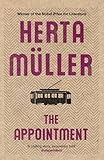
This is my review of The Appointment by Herta Müller.

Herta Muller never tells us specifically that the setting is Communist Romania under Ceausescu's brutal dictatorship, so this could be the model for any repressive regime. From the opening words, "I've been summoned" to the concluding "The trick is not to go mad", this novella traces a woman's tram ride, largely given over to her stream of internal thoughts. Her mind flits from the sinister Major Albu who always start his interrogations by giving her hand a wet kiss, to her partner Paul who drinks too much, memories of her childhood, her first marriage, her beautiful friend Lilli who has died and observations of the other passengers. Gradually, we learn the reasons behind recent events.

The rambling quality of her thoughts detracts from their dramatic impact. Some points are a little repetitive, such as the fact that there is a touch of teenage incest in the lives of both Lilli and the narrator. The narrator sometimes seems amoral and calculating, but can you blame her in view of the experiences which have shaped her? The novella is generally bleak and unrelenting, yet it is salutary to be reminded how the lives of an individual and those close to her may be blighted by a single abortive attempt to escape to a freer life abroad.

Although some passages are very powerful, such as the suppression of Paul's attempts to produce aerials, an illegal activity since it assists the forbidden process of free communication with the outside world, I suspect the quality of the writing has suffered a good deal in translation. Also, Muller builds up a sense of anticipation which is not borne out by the ending as is the case with, say, "The Reluctant Fundamentalist".

⭐⭐⭐⭐ 4 Stars

La Liseuse by Paul Fournel: Making madeleines into petit beurre LU

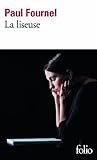
This is my review of La Liseuse by Paul Fournel.

What happens when Robert Dubois, the middle-aged, stuck in his ways editor of a Paris publishing firm, is given an e-reader by a young intern at the behest of the whizz kid accountant who has taken over the business? This is mainly a device to enable Fournel’s lively imagination to range over the effects of technology on literature. At the press of a button, a page disappears. Does it exist any more? It is no longer possible to mark comments in the margin with a pencil. If he wants his wife to read a particular book, he will have to lend her his “liseuse”, leaving himself nothing to read, together with the sneaking fear she may read something else altogether from what he has intended. Then there is the scope to alter the text: turning Proust’s madeleines into petit beurre LU biscuits.

This satirical novella introduces us to a number of neurotic authors and provides a sounding board for the author’s opinions, often expressed in flowing and poetic prose: the publisher’s resentment over being prevented from reading great works by the continual need to identify new books for a future one may not live to see, where one may be blamed for one’s choices; the fact that, when an author has a success, people want him to recreate the same book over and over again; the lack of demand for French literature in England, perhaps because it is not offered to readers there; the joy of finding bookshops which do not offer discounts and three for two deals, “ne jouent pas le jeu du commerce, juste celui de livres.”

Plot and character development are of little interest to Fournel. The sudden leaps between scenes are often confusing and the price to be paid for all this is that the reader does not engage strongly with the characters.

The frequent cultural references make this book challenging for a non-French reader. The device of writing in the form of a sestina – which means that the 36 chapters each end with one of six chosen words, “lue”, “crème”, “editeur”, “faute”, “moi”, “soir” in a complex cycle seemed pointless and a bit pretentious. This is all part of Fournel’s involvement with “L’Oulipo”, a movement of writers who subject themselves to various “mathematical” constraints.

Apart from the flashes of humour and quirky thinking – getting the local butcher to weigh the e-reader and find that the world’s great literature amounts to 730 gm – what won me over was the quality of Fournel’s writing over say, the experience of eating an artichoke, travelling in the London underground or, as a “townie” enduring the countryside: “la campagne ressemble terriblement à la campagne…une épaisse tartine d’ennui vert posée à même le sol”.

⭐⭐⭐⭐ 4 Stars

Glimpses of past glory

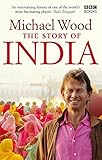
This is my review of The Story of India by Michael Wood.

With many colourful illustrations, this serves as an attractive souvenir of the BBC series, although the DVD is obviously better. The chapters themed by chronological time periods provide much intriguing information if you have the time and patience to tease it out of the somewhat rambling text: the followers of the Jain religion who gather annually to pour "great vats of milk, paste, saffron and vermilion over the giant statue" of their guru Babuballi; the ruler Ashoka, advised that he had to be "cruel to be great", who converted to Buddhism in later life, leaving his kingdom scattered with carved pillars instructing his subjects on how to live as he removed the death penalty, calling for the conservation of forests and respect for the beliefs and practices of others and so on.

I was looking for a book that would combine history with culture and politics, but to be fair this does not claim to be more than a history. With friends and contacts to ease his path, Wood presents a somewhat rose-tinted view of India: the squalor, dirt and pollution are cunningly omitted from all his pictures, and the ancient monuments and paintings gleam with colour, with little sign of the ravages of time. If you are reading this for a standard sightseeing tour, you may be a little disappointed by the often harsh and worn reality.

⭐⭐⭐⭐ 4 Stars

“Australia” by Wally Caruana,Franchesca Cubillo – Shedding light

This is my review of Australia by Wally Caruana,Franchesca Cubillo.

After spending more than two hours trying to absorb the twelve rooms of the Royal Academy’s impressive Autumn 2013 exhibition on Australia, I realised that there is a strong case for obtaining the official guide which covers the totality of exhibits, giving you time to digest at leisure the portrayal of Australian landscape and culture through paintings and photographs.

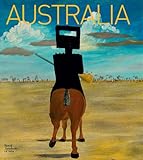
The official symbol of this striking exhibition is Sidney Nolan’s dramatic portrayal of the outlaw Ned Kelly, dehumanised by his helmet, rectangular and silhouetted in black, with only the sky visible through the visor. Yet, for me, the major discovery was the power and skill of Aboriginal art, initially applying to eucalyptus bark natural pigments of black, red, ochre and white in surprisingly sophisticated cross-hatchings to imitate sandhills, rivers, wildlife, dreams of rain and ancient legends. More recently, native artists have progressed to acrylic on canvas, whilst retaining their traditional themes, which have also been taken up and reinterpreted by the European artists who have settled in Australia.

I was also interested to see how movements such as impressionism and romanticism were developed in the late C19 to early C20 in a distinctive Australian style, influenced by the quality of the unrelenting and brilliant sunlight and the nature of the vegetation, the fronds giving rise to “fernomania” and the varieties of gum tree, relatively sparse-leaved but with branches forming strong patterns. European painters fell in love with the country, like Glover who painted a carefully tended and irrigated flower garden against the background of the natural bush.

Fascinating social history is revealed through the work of early convicts with an artistic bent, or McCubbin’s giant, moving tryptych of “The Pioneer”, arriving in a wagon, working with his wife to establish a holding, until she dies, leaving him to tend her grave. We see the colourful crowd on Manly Beach in 1913 after public bathing had been permitted, the confident “squatter’s daughter” in the 1920s. surveying in the brilliant sunshine the open woodland probably created by generations of aborigines following the practice of using fire to reduce the vegetation, and to bring it up to date, Howard Arkley’s luminously bright rendition of a prosperous suburban house, “Superb and Solid”.

Although there may be some justice in the charge that it would have been better to show more work by fewer artists, this begs the question of which one would choose. As it is, we are given a useful overview of the whole gamut of Australian art, leaving us to pick out and pursue what appeals to us as individuals.

⭐⭐⭐⭐⭐ 5 Stars