“The Fall” by Albert Camus: A false prophet in the desert

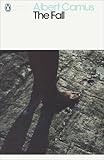
This is my review of The Fall (Penguin Modern Classics) by Albert Camus.

Although I read this in French, thus making it harder for me to understand Camus’s message yet also getting the benefit of the original language, I hope these comments may be of interest to those reading the book in the English translation.

Jean-Baptiste Clamence, his name a wordplay on “John the Baptist crying in the wilderness” buttonholes strangers in a seedy Amsterdam bar to tell them of his fall from grace as a successful Parisian lawyer to a man obsessed with his two-faced duplicity and his moral guilt worse in some ways than that of a common criminal. His psychological crisis has been triggered by another fall, that of a young woman into the Seine, whom he did nothing to save when he heard her cries. The question is, would he do any better if this incident were to be repeated?

The tale is full of digressions and twisted logic, witty, at times contradictory quotations. It is not surprising that there are differing, often opposed or confusing, interpretations of this philosophical fable, based on the ideas of absurdism, defined as the conflict between the human desire to find value and meaning in life and the inability to find it. A fascinating issue raised by Camus is how to lead a moral life if one is unable to believe in a god, but all attempts to make rules about right and wrong are arbitrary.

Having read some passages two or three times, I am still working to understand this book. For me it is a satire in which Clamence goes off the rails at the end as a kind of crazy, manic devil in a magnificently written final section. My take is that Clamence is on the wrong track with his desire to judge and control. The ability to accept one’s own inevitable shortcomings is clearly key, but what if one is given to the level of excess of the highly self-indulgent and unlikeable Clamence?

One’s understanding of this book is clearly increased by some knowledge of Christianity and the alternatives of communism, humanism and existentialism all of which Camus seems to lambast at some point, along with bourgeois complacency. This begs the question as to how much a truly great book should have some self-evident meaning without the aid of this knowledge. It seems to me that Camus was still working ideas out for himself in this book, and that at the end some were still incomplete.

⭐⭐⭐⭐ 4 Stars

“Rogue Male” by Geoffrey Household: Knowing one’s place in the white male playground

This is my review of Rogue Male by Geoffrey Household.

⭐⭐⭐ 3 Stars

In this celebrated classic yarn, considered groundbreaking by some, an unnamed big game hunter gets arrested on the point of taking a pot shot at a character who is probably Hitler, it being 1939, miraculously escapes death after horrible torture and spends the rest of the novel evading recapture.

So much anonymity combining with the stiff upper lip of the “anarchical aristocrat” narrator, the story often has a clinical and detached quality. Although there are some nail-biting moments, the potential drama of the tensest scenes is often reduced by the use of reported speech. The minute details in which the narrator’s somewhat implausible projects are described also become tedious. I realise that this view may enrage those identifying with Robert Macfarlane who wrote the introduction for this edition, and clearly retains a nostalgic love for a tale which he lapped up when an imaginative schoolboy hungry for adventurous fantasy.

For pages, all that kept my interest was spotting how the world has changed socially since 1939. Our forerunner of James Bond felt that man was not intended to travel at above 40 miles per hour, and was troubled by the litter from paper bags. What would he have made of plastic rubbish? His casual snobbery is jarring, as revealed in his complacent membership of “Class X” which he cannot quite define, because presumably it’s beneath a gentleman to do that. The helpful young man who belongs to “this new generation of craftsmen… definitely belongs in Class X ….but must learn to speak the part before being recognised by so conservative a nation”.

I had just decided to give up and skip the next book group meeting when, on page 126, our hero hits rock bottom with a striking description of the state to which he has been reduced: “Living as a beast, I had become as a beast”. The subsequent verbal sparring between the narrator and his pursuer not only proves that Household could do dialogue (so perhaps it’s a pity there isn’t more of it) but also clarifies the characters’ motivations.

Yes, it’s well-written with an eye for scenery, an evocation of a lost, unspoilt English countryside, conveys vividly the sense of being hunted, but is too dated and ludicrous for my taste.

Comment Comment | Permalink

The next liberal superpower?

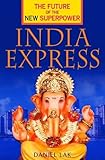
This is my review of India Express: The Future of the New Superpower by Daniel Lak.

Before a recent trip, the few books available apart from tour guides were disappointing. Published in 2008 so still reasonably up-to date, Daniel Lak's "India Express" came closest to fitting the bill (although I have just found a couple of promising alternatives to be reviewed).

Although not a native of India which he first visited in 1989, Lak has the journalist's ability to observe with an open mind, to present information in an interesting and accessible way, taking time to analyse what lies beneath the surface. As each chapter is self-contained and clearly themed, you can pick and mix them.

Not primarily interested in India's unexpected expertise for sorting out the "millennium bug" which I remembered to have been an illusion, and thinking I knew enough about Indian call centres, the country's demographic problems, the fight for independence and tragedy of partition, I made first for some of the later chapters.

"Hinduism and its discontents" clarified a subject too often made obscure and dull. "According to its constitution, India is a secular country, but religion is omnipresent." The description of the holy city of Varanasi (Benares) proved very accurate: teeming bazaars, near-naked holy men in trances, sacred cows munching at vegetables stalls but not too revered to be shooed away with a shove or obscenity. Lak found a priest who bathes daily in the sacred water of the Ganges, knowing it to be poisoned by pollution, to explain the twenty-five branches of Hinduism ranging from belief in billions of gods, through monotheism to atheism. Hindus see the "essence of divinity in humans themselves" with deities serving largely as metaphors for people to grasp. "What passes for modern Hinduism can be traced to British and European scholars" who "applied their own familiar models……in the process of interpreting ancient writing….intended..for a different purpose". That says it all.

Lak covers the contradictions of India: intense cheating in the education system alongside the incorruptible Indian Institutes of Technology producing graduates to hold key positions in major companies worldwide. Then, despite its flaws, there is the survival of a vibrant democracy against the odds, prompting Lak to describe India as "Asia's America", although possibly too large and complex for this.

The gulf between rich and poor is illustrated by the fleets of hired taxis and vans used to transport programmers to and from work at HP India, to avoid a repetition of the rape and murder of a female staff member by a bogus driver. Another example is the attitude of higher castes that "if we throw our garbage over the wall of our compound, it no longer exists" because the low caste sweeper can be relied upon to take it away.

Regarding the international shock of nuclear tests in 1998, Lak suggests the prime motivation may have been to earn the respect on the world stage that India craves, by insisting on the right to self-defence. "Were India and Pakistan to reach some sort of settlement on Kashmir….other points of contention would easily be dealt with" through negotiation.

If revised, the book might include a chapter on the media – TV adverts for developing lighter skins and purchasing cleaning products, a far cry from the bustling life of the filthy streets. Another topic could be the space race in which a minister recently announced India's intention to lead the world and reject foreign aid. So what about investment in the public services so lacking in the grid-locked Delhi which I witnessed?

Lak is hard to fault, apart from a possible overoptimism over India's future in such an overpopulated world of booming demands and limited resources.

⭐⭐⭐⭐⭐ 5 Stars

At one with nature and at odds with man

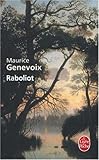
This is my review of Raboliot (Ldp Litterature) by Genevoix.

For Pierre Fouques, nicknamed "Raboliot", born and bred in rural Sologne, poaching is a way of life. Unable to accept that this is under threat, he becomes addicted to the challenge and risk of outwitting the malicious police officer Bourrel even at the price of neglecting his weak, gentle wife and three young children. The inexorable fate of this flawed yet sympathetic antihero reminds me of the novels of Thomas Hardy, together with the vivid descriptions of the landscape and rural life. Genevoix was a great admirer of Maupassant, which is reflected in his strong narrative drive and the clarity of his prose, despite a peppering of local dialect words not to be found in the dictionary.

Since I have no interest in poaching, still less hunting, I was surprised how absorbing I found the long, climactic description of a daring if not rash poaching expedition. The time Genevoix spent living in Sologne, mixing with the locals, has borne fruit in the authentic voice used to describe, for instance, the process of salvaging valuable young fish from dried up ponds, leaving the marauding "perches d'Amérique to perish; the branches silhouetted against changing patches of sky; the breeze rippling the gold-tipped rye; the sun setting over the undulating fields and lakes; the shapes of pheasants roosting in an oak tree at night, and so on.

As with Maupassant, the story is strong on the subtle changing relationships between people, and the shifting attitudes of various characters, as in real life. With wonderful descriptions of the father-in-law's house packed with expertly stuffed birds, we see how the eccentric taxidermist is at first prepared to shelter Raboliot from the law, urging him to act "honourably" and accept a short prison sentence, whilst at the same time recalling his own glory days as a youthful poacher.

Although I understand the views that this book is overlong and the endless mists, undergrowth and slaughter of small rabbits can get a bit tedious, there is a strong case for reading an old classic – this won the Prix Goncourt in 1925 – which has the power to transport you to an unfamiliar way of life with its ambience, sights, scents and sounds. Since Genevoix survived the brutality of World War 1 as a very young man, his immersion in the beauty of nature is understandable, and its redness in tooth and claw perhaps relatively minor.

In some academic studies, Raboliot the poacher has been elevated to provide a symbol in the debate over national versus regional identity in France, a symbol that rejects heroically the strong centralizing dogma of the Third Republic. However, I prefer to view "Raboliot" as a simple battle of wills between an obsessive, authoritarian townie policeman and a simple man with a deep love and knowledge of a countryside and way of life he fights to retain.

⭐⭐⭐⭐⭐ 5 Stars

Long endtime walk of Slaughterhouse Scandi-noir Roth

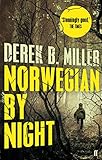
This is my review of Norwegian by Night by Derek B. Miller.

Aged eighty-two, a recent widower considered to be showing signs of dementia, former US Marine and Jewish watch repairer Sheldon Horowitz quits New York to live in Oslo with Rhea, the granddaughter he brought up, and her patient Norwegian husband Lars. Sheldon is caught up in the brutal murder of a neighbour, and goes on the run to save her son from being seized and possibly harmed by his violent father, a Kosovan refugee.

Original and more than yet another Scandinavian crime thriller, this is also a reflection on life, of the kind that perhaps one can only make when approaching the end of it. For Sheldon, it is only rational for the elderly to become more preoccupied with the past when their earthly future is limited. Throughout life, "sanity is the thick soup of distraction we immerse ourselves in to keep from remembering that we're gonna bite it". It can be "overwhelming and painful" to harbour "memories accompanied by too much nostalgia". And much more in this vein.

Sheldon appears not so much senile as from his youth eccentric, over-intense, too imaginative for his own good. His sharp, wisecracking wit pastes over the cracks of deep anguish and regret. Haunted by the holocaust, too young to enlist for World War Two, his spell of combat in Korea – if it really happened – only creates further demons, guilt over strangers killed in cold blood, and the pressure he places on his own son Saul to fight in Vietnam brings further grief. Although this sounds gloomy, the writing is peppered with quirky humour, a vivid sense of place and perceptive portrayal of relationships.

Admittedly, the tone adopted is often that of a thoughtful man with a PhD in international relations i.e. the author, rather than a non-intellectual watch repairer. I spotted some small glitches in the plot and implausible police practice, which I cannot reveal. Some of the minor characters, such as the "baddies" or Kosovan immigrants are very negative stereotypes, even if largely seen through the jaundiced eyes of a police officer. I would like to think that, in writing about America as "our champion and our future", Europeans as weak and the Norwegians as naïve in their liberalism, Miller simply portrays the viewpoints of his characters rather than some personal, often Jewish-centred hobby horses. I agree that his meshing of a crime thriller with psychological literary fiction, comedy with unremitting violence, is sometimes a little uneven.

The end is disappointing – too rushed after the detailed development of most scenes. I do not mind ambiguous endings, but felt that the last paragraph might have been added for the wrong reasons – a point which I hope will be clear when you reach the conclusion.

I could not help making comparisons with the Swedish bestseller, "The hundred- year- old man who climbed out of a window and disappeared", to the detriment of the latter. "Norwegian by Night" is much better written, more profound and genuinely funny. The sometimes unexpected switches between reality and fantasy, such as Sheldon's conversations with pawnbroker Bill, or his accompanying of Saul in Vietnam, made me think of "Slaughterhouse Five" so I was interested to see the inclusion of Vonnegut in the author's acknowledgements.

Five stars for the development of Sheldon's character and the use of imagined scenes to convey some powerful images or telling insights.

⭐⭐⭐⭐⭐ 5 Stars

“If Dreyfus is innocent, the generals are scoundrels”

This is my review of The Dreyfus Affair: The Story of the Most Infamous Miscarriage of Justice in French History by Piers Paul Read.

When the passage of time might be expected to have washed away memories, this is only one of several recent books keeping alive "The Dreyfus Affair" in which a Jewish captain was found guilty of espionage in 1894 at an inept and corrupt court martial. Not only is truth stranger than fiction here, but it exposes the deep rift between on one hand the Catholics, bitter over past persecution by the French revolutionaries, yet still considered too influential in education and the army, and on the other hand the secular republicans, often seen as in league with a "syndicate" of wealthy Jews following their "liberation" by the French National Assembly in 1791.

So keen is the author to set the scene that we do not hear much about Dreyfus until Chapter 5. Although leavened with many fascinating details, such as the twisted sense of honour of the military men who arrested Dreyfus, leaving a gun loaded with a single bullet in reach as a hint for him to "do the right thing", this deeply researched study makes exhausting reading at times. This is due partly to the large number of characters with long complicated names, often in inverse length to their importance, also to the author's inability to resist distracting us with facts about them, even if marginal to the main theme.

1890s Paris is presented as a kind of Ruritania with leading figures swapping mistresses, indulging in duels, and accepting bribes to conceal embarrassing facts like the bankruptcy of the Panama Canal Company. Just as expenses scandals at Westminster are made to seem small beer, the excesses of our media pale into significance compared to the bilious anti-semitic outpourings from the pens of "respected" Catholic journalists. There are fascinating parallels with today: Dreyfus was convicted at one stage by a "dodgy dossier"; the need to protect national security was made a reason for not producing vital evidence which was shown, if at all, to the prosecution but not the defence; those who knew or came to believe that Dreyfus was innocent felt that establishing this was less important than maintaining the reputation of the army, whose senior staff had mistreated him. The recent controversy over the French striker Anelka's use of the "quenelle" or reverse nazi salute favoured by his friend the comedian Dieudonné show that the issues surrounding Dreyfus retain their substance, in a different form.

The books succeeds on both a broad historical and personal level. For the sake of his health and his family, did Dreyfus have any option but to accept a pardon even if it implied admission of guilt? Sadly, this capitulation divided his supporters, some to the extent of becoming estranged from him and each other. The final sad irony is the fate that met his loyal wife after his death: to spend her final years hiding from the Nazis in, of all things, a convent.

⭐⭐⭐⭐ 4 Stars

Nosing out the truth

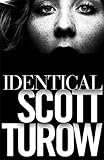
This is my review of Identical by Scott Turow.

Cass Gianis is about to be released from his twenty-five year jail sentence for the murder of Dita, spoilt daughter of a wealthy Greek American tycoon, Zeus Kronon. This is bad timing for his identical twin brother Paul's campaign to be elected as Democrat mayor, not least because Dita's grief-stricken brother Hal, infuriated by his failure to stop the release, hits out with the damaging claim that Paul too "had a hand in Dita's murder".

As ever, Turow makes skilful use of legal knowledge to give an authentic ring to a story based on issues of court procedure, modern forensics and DNA. The complex plot twists will surprise even readers with a knack for working out the truth.

Despite finding this a page-turner, I was disappointed by the failure to develop the potential of an interesting drama based on a Greek myth it is best not to check out until the end. In view of his lifelong fascination with twins, Turow provides remarkably little exploration of the relationship between the identical Paul and Cass. Such focus is largely on investigators, former FBI special agent, now Hal's security manager, lesbian Evon Miller and the ageing private investigator Tim Brodie, haunted by the fear of what he might have missed in the murder case first time round. To place more of the "point of view" on the twins and Paul's wife Sofia would have made writing a greater challenge, since it would have been harder to maintain the mystery, but distancing us from these characters makes us care about them less. Why create such a subtle portrayal of minor player Judge Du Bois Lands who is anxious to prove his incorruptibility to the man who shopped his bribe-taking father, but omit do so for Paul and Cass?

Although I quite like the slick, hardboiled tone of American crime fiction, peppered with terms I don't quite understand, the jerky clunkiness of some of Turow's prose grated on me. The switching between first name and surname for minor characters is distracting – it took me a while to figure out that Mel and Tooney are the same person. Too much information is provided in rushed or condensed explanations. In a tale perhaps overloaded with characters, various members of the Kronon and Gianis families who are significant to the plot are reduced to caricatures or cyphers.

This may be one of those books that work better as a film. Did Turow have this in mind, when he created an order of scenes and often sharp dialogue readily adapatable to a filmscript?

⭐⭐⭐ 3 Stars

A fascinating read apart from the baseball

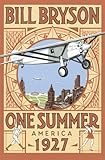
This is my review of One Summer: America 1927 (Bryson) by Bill Bryson.

At a talk to promote "One Summer", Bill Bryson identified the "twin pillars" of this book as Lindbergh's transatlantic flight in the "Spirit of St Louis", a cue to describe the initial development of US air travel, and "Babe Ruth's" impressive score of home runs in baseball – a perhaps somewhat incomprehensible theme of limited interest for non-Americans readers!

However, his research revealed many other intriguing activities in progress at the time: the controversial executions of Sacco and Vanzetti, who may or may not have been murderous anarchists; botched attempts to enforce prohibition, including the state's instructions for wine meant for industrial use to be "denatured" with poisons like strychnine, leading to the manslaughter of respectable citizens; the carving of presidents' heads in Mount Rushmore, too far from any road to be readily visible; the filming of Al Jolson in "The Jazz Age", the first major "talking picture" that marked the death knell of the silent movie age; the bankers' decision to reduce interest rates, claimed to trigger the 1929 Crash, and so on.

Still on form with his gently mocking humour, Bill Bryson demonstrates again his gift for unearthing quirky details. For instance, he cites an architect's impracticable idea for elevated aircraft landing platforms supported at each corner by a skyscraper. It is salutary to be reminded how dangerous air travel was, with many aviators dying in explosions in failed take-offs or disappearing without trace into sea fogs.

Some disturbing insights into American morality lie beneath the jolly surface, such as the Detroit-based Father Christmas dressed as a Ku Klux Klan member complete with fiery cross, which did not seem to spark violent protests at the time. This foreshadows the bigotry which paved the way for the development of McCarthyism post World War 2. Then there is the ready acceptance of "negative eugenics", queasily apparent in the racial superiority implied by the portrayal of Tarzan in the popular stories of the day.

The text seems padded out to extend rather thin material for one summer to fill 500 pages, as for the rather tedious details of a murder case remarkable only for the extent to which a new mass media managed to create such interest in it. To explain an event in 1927, Bryson often goes back even to the previous century to provide further details. I was irritated by the continual breaking off from say, coverage of Lindbergh, to ramble into a different topic for a while. I would have preferred a more thematic approach to give an appreciation of 1920s America in general.

Also, you would think that Bill Bryson of all people would realise that non-Americans aren't that interested in baseball……

⭐⭐⭐⭐ 4 Stars

Love and grudges growing underground

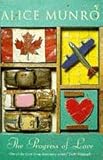
This is my review of The Progress Of Love by Alice Munro.

Alice Munro, whose short stories remind me of the work of the "groundbreaking" Katherine Mansfield, seems to break every "rule" of creative writing courses. On a rough estimate frequently up to around 13,000 words in length, stories digress and ramble from a central theme that has to be deduced, although it may remain unclear until the end. Plot is unimportant, although certain "key" events emerge in what sometimes proves to be a carefully planned order.

Tension may arise over shocking events – like a person drowning – with anticipation fed by the knowledge that the crisis may come in the middle of the tale, then may be allowed drift away to a bland, even incomplete-seeming ending, or the drama may itself be defused abruptly, or ebb away. Munro's attention flits between people's insights, often derived from the minor events of life, a strong sense of place, or scraps of conversation which have an authentic ring, as if based on comments overheard (say, young children talking) but embellished to fit the situation.

Munro explores the thoughts and relationships of ordinary people carrying out their daily tasks in smalltown Canada against the backdrop of lakes, forests, changing weather and shape-changing winter snow. She draws heavily on her own situation: father a farmer, mother a perhaps stern teacher, who fell ill when Monro was still young, possibly creating the dilemma of whether the latter should sacrifice herself to stay at home as a carer, like many of the women in her tales, or strike out to claim her freedom as Munro did. She writes of early marriages, motherhood, divorce and second partners, all part of her own life. The question of losing one's memory with age clearly interests her, together with the way we sometimes distort the truth, almost deliberately twisting memories to how we would have them be, or accepting the convenient assumptions of others and making them the truth.

I agree with the view that her stories, though clearly too short to be novellas, are packed with as much content in terms of events, relationships and insights as many novels. I was also relieved to read that Joyce Carol Oates's review did not baulk at finding some stories wanting. It is true that what seem like important aspects, like the course of a developing relationship, are glossed over, leaving the reader feeling unengaged with "central" characters. Also, some stories seem overcomplicated, appearing to cover too much as what seems to be the central theme emerges.

For me, the most successful stories are `The progress of love' about a woman's relationship with her mother whose life she has clearly made huge efforts not to imitate, `Fits' which explores people's prurient reaction to violent death and almost angry disappointment with a witness who declines to feed their ghoulish curiosity, and `White dump' about the collapse of a marriage in which a mother-in-law may have played an unwitting part, and its lifelong effects on the daughter of the union.

Readers will draw different meanings from each story, and vary in those they prefer, or believe they understand. This anthology will repay rereading in the future, when one's perceptions may have changed.

⭐⭐⭐⭐ 4 Stars

Qui sommes-nous au juste?

This is my review of Ce Que Le Jour Doit a La Nuit by Yasmina Khadra.

When Younes is transported from dire poverty in the slums of 1930s colonial Algeria to live under the new name of Jonas with his prosperous uncle, good looks ease his path but do not save him from the snobbery of new acquaintances who will never forget he is an Arab. The story is strong on descriptions of native poverty, and also on Jonas's conflicted emotions and loyalties when civil war breaks out over the demand for Algerian independence. Jonas is continually drawn back to his old home, haunted by memories of relatives and neighbours. Under pressure, he feels impelled to speak out on behalf of the oppressed Arabs, he even begins to learn about the history of the struggle, but although you may be carried along by the expectation that he is about to take up arms against his former friends, this may not be in his passive and introspective nature.

Against the background of the deteriorating political and social situation, Khadra confronts Jonas with a moral dilemma which changes the course of his whole life. I sympathise with readers who are unconvinced by his behaviour – which is of course necessary to sustain the plot – and admit to finding him almost masochistic, wallowing in adverse situations.

The story seems long, often repetitive and over-reliant on coincidences. The passages describing carefree teenage years with friends are rather dull and stereotyped, although perhaps necessary as rose-tinted memories on which he can dwell in later life. The style of emotional passages is somewhat overblown. This suggests the likelihood of a rather sentimental film version, which I plan to avoid.

The text is cliché-ridden, a mixed blessing for a non-French reader: I noted many idioms, but it was time-consuming looking them up. Does Khadra use so many stock platitudes because he was taught English as a second language? Khadra is of course a man, who adopted the female pseudonym of `Yasmina' to avoid adverse repercussions whilst he was still employed by the Algerian army.

The novel fosters a greater appreciation of the term `Nostalgerie', coined to describe the tendency of 'pieds-noirs', exiled in France, to exaggerate the pleasures of life in pre-independence Algeria, refusing to face up to recent changes, rather like some of the characters at the end of this novel, although not Khadra himself.

Jonas reaches some telling conclusions about life, but these might have come better at the end. For me, the dramatic climax and appropriate ending is Chapter 17, which could have been revamped to come after Chapter 19, thus removing the Final Section 4, set in the early C21, which ties up loose ends, but drags the story on too long into the realms of sentimentality and leaving nothing to the imagination.

Much shorter, more tightly written and plotted, `Les Hirondelles de Kaboul' seems a considerably more profound and moving work, perhaps ironically in view of Khadra's Algerian origins.

⭐⭐⭐⭐ 4 Stars