Melodramama

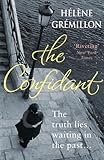
This is my review of The Confidant by Hélène Grémillon,Alison Anderson (Translator).

A thirty-something book editor, Camille assumes that an unsigned manuscript has been sent to her through the post in error. When more arrive, she speculates that the author, "Louis" may be seeking a backdoor method of getting his work published. Ultimately, she is convinced that his story has some intimate connection with her own life.

Louis writes of his childhood sweetheart Annie, who offers naively to be the surrogate mother for "Madame M" the wealthy woman whose generosity to Annie is underlain by an obsessive desire to have a baby. This domestic drama coincides with the outbreak of World War 2 and the occupation of Paris.

Clearly, there are sufficient issues here for a novel that is both gripping and moving and many readers seem to have found this to be the case. So, since this is also a prizewinning French bestseller, translated into many languages, why did I dislike it? I think it is because, lacking much in the way of description, dialogue or subtle character development, this is reduced to a tedious telling of too often melodramatic, contrived and therefore unconvincing events.

I did not mind the use of four different "points of view", saved to some extent from confusion (at least in the French edition I read)by the use of alternating fonts for Louis and Camille, or a fancy line top and bottom of the page to denote "Madame M's" lengthy confession, but having Annie's account of her dealings with Madame M "revealed" to Camille through the third party Louis proves a clunky device.

The final pages resort to yet more ploys – a sudden lapse into free verse in order to tell yet again rather than reveal a last twist. This forced me to search back through earlier chapters to confirm clues that I had missed, perhaps because I was concentrating on reading in my second language of French, although I still think some of these should have been developed more strongly. Overall, I am left with the impression of a tale which, like an amateurishly knitted jumper, needed to be unravelled and remade prior to publication.

⭐⭐ 2 Stars

Where is the enemy?

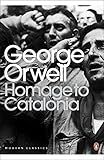
This is my review of Homage to Catalonia (Penguin Modern Classics) by George Orwell.

This vivid account of a few months spent fighting the Fascists in the Spanish Civil War reminded me that Orwell was a talented journalist as well as a writer of satirical fiction. He pulls no punches in describing the chaos and lack of resources in periods of mainly uncomfortable inaction punctuated with occasional hairy sorties.

My respect for his judgement was shaken a little by some of his observations – for instance, that he should find it “rather fun….in a boy-scoutish” kind of way to crawl about trying to take pot shots at the enemy without being hit himself, or the unconscious elitism of “Any public school OTC in England is far more like a modern army than we were.” He admits to longing for a powerful gun with which to pulverise the other side, but redeems himself with an admission of real fear when he has to expose himself to enemy fire. Similarly, his account of the experience of being wounded is interesting, together with such insights as the camaraderie between soldiers who know they would be shooting at each other in a different situation. His description of Barcelona as a briefly classless society in which there was no rank or status, and people treated each other as equals, is thought-provoking as regards “what might have been”, but clearly seemed too utopian to last, particularly since the bourgeoisie was simply lying low.

It is revealing that the chronic shortage of weapons may have been part of a deliberate government plan to prevent groups of anarchists or pro-revolutionary Marxists from gaining influence in the struggle. However, Orwell’s self-confessed lack of interest in the political side of the war is both surprising and disappointing, since it is clearly crucial to an understanding of what was going on in this complex struggle, and the outcome of events. Thus, the dramatic chapters on the counterproductive riots between anti-fascist groups in Barcelona – perhaps akin to fights between different revolutionary sects in modern-day Syria – are quite hard to understand. Orwell goes some way to redress this in the two Appendices, which were chapters integrated into the original text, but the result is needlessly disjointed and still somewhat unclear.

Although he produced this book in 1938, too early to judge the tragic outcome, at least Orwell had the prescience to predict that Franco would win, thus setting Spain back for decades.

⭐⭐⭐⭐ 4 Stars

Left the right to argument

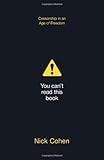
This is my review of You Can’t Read This Book: Censorship in an Age of Freedom by Nick Cohen.

At the time of writing this, the Turkish leader Erdogan is clamping down on access to Twitter, Facebook and YouTube, modern "apples of knowledge" which he presumably fears are undermining his authority. Yet, if you regard the UK as a bastion of free expression, Nick Cohen will undermine your complacency.

Organising his material under the main heading of "God", "Money" and "State", Cohen moves from the ayatollah-supported death threats against Salman Rushdie, who dared to use fiction as a tool to satirise certain aspects of Islam, through the suppression of whistle-blowers who would have forewarned us of the recent Icelandic banking collapse foreshadowing those in the US and Britain, to the illusion that the web will sound the death knell of censorship in repressive regimes – the latter may become yet more successful by using technology to track down and crush opposition.

The author's subjective and polemical style often seems more suited to disillusioned-with-the-left-and-liberals popular journalism than a book in which one hopes to find balanced analysis. For instance, he describes British judges as being drawn from "the pseudo-liberal upper-middle class who have no instinctive respect for freedom of speech or gut understanding of its importance". Then there is his repeated attack on Western radicals who "either dismiss crimes committed by anti-Western forces as the inventions of Western propagandists or excuse them as the inevitable if regrettably blood-spattered consequences of Western provocation. The narcissism behind their reasoning is too glaring to waste time on". But Nick Cohen has found time to expand on the crimes of Charles Manson and Roman Polanski, salacious digressions from his main point, in this case to expose the excessive protection offered by British courts to those, often foreigners, rich enough to buy protection from criticism by exploiting libel laws and hiding behind super-injunctions.

Cohen seems particularly exercised by the Western liberals who appear to him to have put more emphasis on respecting Islam than on protecting the rights of individuals like Rushdie to freedom of expression. Although I tend to agree with Cohen's views, I was disappointed that he did not show more understanding over people's very understandable fear of losing their lives, or those of their loved ones, if they dare to take a stand. I was also troubled by his apparently somewhat partisan attitude to the rights of Israel, and lack of an at least even-handed examination of the role of Wikileaks overall.

This book covers important themes, it provides telling examples for those too young to have read about them in the press, but I had hoped for a more objective style together with a more systematic and synthesized approach to defining and discussing censorship, made all the more necessary by the inevitable "dating" of this kind of book, which, for instance, misses out on the potential debate over the role of Edward Snowden.

Quotations from some of the pioneers of tolerant thought make some of the best points, like Jefferson who wrote in 1776 with timeless clarity: "no man shall be compelled to support any religious worship.. nor suffer on account of his beliefs….but …all men shall be free by argument to maintain their opinions in matters of Religion."

Yet, of course, apart from the lack of specific reference to women, at the time, Jefferson still owned slaves……..

⭐⭐⭐⭐ 4 Stars

“Paris-Brest” by Tanguy Viel – A novel kind of crime story

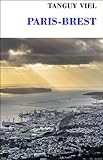
This is my review of Paris-Brest by Tanguy Viel.

Brought up in provincial Brest, which he condemns as the most frightful in France (by reason of its postwar reconstruction in brutal concrete), Louis suffers the family shame of his once highly respected father being accused of some part in the embezzlement of fourteen million francs. These are offset by the eighteen million fortuitously inherited by his grandmother. Underlying this are Louis’s relationships with his cruel, snobbish and hypochondriac mother and with “le fils Kermeur”, son of the cleaner his grandmother inherits with her fortune. Kermeur is both a kind of Nemesis leading Louis astray, and a tool for him to wreak revenge on his mother.

This is an odd story, original and quirky, which, after a slow start, reveals the plot in layers of detail. It hooked me at last in Section 3, “Le fils Kermeur” in which the previous flippant humour is compounded with some moments of real tension. The style is distinctive, varying between passages of repetition and step-by-step logic, which chime with the book’s wry humour, and introspective streams of consciousness which are often striking and the source of the more moving passages.

This short novel manages to seem both lightweight and deep, which I found it hard to rate at first, although I have been encouraged to obtain more of Tanguy Viel’s short novels, “Insoupçonnable” and L’absolue . On a second reading, I was more impressed by the subtlety and coherence of the plot.

⭐⭐⭐⭐ 4 Stars

No point if we’re not nice to each other

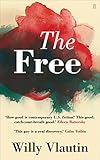
This is my review of The Free by Willy Vlautin.

Leroy, a damaged survivor of the Iraq war, uses a rare moment of lucidity to make a failed suicide attempt. As he lies in hospital, his surreal dreams of a dystopian world are intercut with the stories of those involved in caring for him: the moonlighting night warden Freddie, or nurse Pauline who always has time to talk to her patients with empathy.

Willy Vlautin writes about the daily lives of ordinary people with more than their fair share of bad luck, to which they may have added a few mistakes. Despite this, they manage to retain the will to persevere combined with decency and kindness. Some reviewers have commented that the frequent repetition of drinking Rainier beers or buying certain kinds of junk food in the supermarket serves as a kind of mantra, but for me, the banality often becomes oppressive and the book is just saved from tedium by a few dramatic or moving events, and the author’s ability to arouse sympathy, liking and even respect for people one might overlook or undervalue in real life. For a while, I feared the story might end in mawkish sentimentality, but it is in fact darker than Northline, the only other novel by Vlautin that I have read.

Vlautin’s style is simple and direct, focused on often minute description. For instance, not the first description of nurse Pauline’s feet: “She bent over and took off her shoes. She set her feet on top of them and leaned back in her chair”. Or, the description of Freddie packing up his beloved train set to sell for much needed cash, rather than of his grief over having to do this: “Freddie McCall found an empty cardboard box and began wrapping toy trains in newspaper. There were eight in total and he set those on the bottom of the box, and put all twenty boxcars on top of them. In another box he put his remaining track and switches, transformers and various wagons and buildings”…..and so on.

In some ways it is refreshing to encounter an author who clearly writes from the heart with a great natural enjoyment of the process, but does not appear to have set foot in a creative writing class, or to have paid any attention to it if he did. On the other hand, the narrative suitable for a reading age of eight, in vocabulary if not subject matter, often left me gasping for a metaphor or an introspective thought. Yet, the next novel I read will probably seem pretentious, and Vlautin’s portrayal of what lies beneath the surface of the fool's gold glitter of the world’s leading economy (for the time being) will stay in my mind for some time.

⭐⭐⭐⭐ 4 Stars

The perils of good intentions

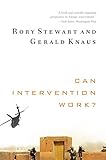
This is my review of Can Intervention Work? (Amnesty International Global Ethics) (Norton Global Ethics Series) by Rory Stewart,Gerald Knaus.

Focusing on Afghanistan since 2001, Rory Stewart identifies reasons for the failure of intervention to achieve a "sustainable solution". Goals have been unclear, obscured by buzzwords and western-style "management speak". Leaders sent in to sort out the problems have stayed for only short periods, with foreign specialists remaining ignorant of the local culture since they rarely set foot outside protected compounds for security reasons. So, each successive surge of ever larger numbers of troops, with additional resources and revised policies, has failed to stabilise the situation.

Little heed was taken of McNamara's "lessons" from Vietnam, notably that "there may be no immediate solutions. We failed to recognise the limitations of modern high-technology military equipment, forces and doctrine…We viewed people and leaders of South Vietnam in terms of our own experiences. We do not have a God-given right to shape every nation in our own image or as we choose. We exaggerated the dangers to the United States".

In contrast to Stewart's somewhat rambling, anecdotal contribution which often seems overly concerned to display his literary style, Gerald Knaus produces a systematic, coherent and very informative analysis of the relatively successful restoration of peace in Bosnia from the late 1990s, although recent events may have undermined this. Triggered, some say too late, by shame over inaction in the face of genocide in Rwanda and Srebinica, intervention in Bosnia largely took the form of targeted bombing and training to support Croatian and Bosnian soldiers against the Serbs.

Knaus examines four interpretations of intervention in the Balkans. He is critical of the "planning school of nation-building" as developed by the American Rand Corporation think tank which argues that the number of troops and resources needed to subdue a population of a certain size can be calculated "scientifically" using formulae. It is a simple questions of inputs versus outputs. The fact that Vietnam at one point had more than 600,000 troops covering a population of 19 million suggests the inadequacy of this approach, which is also likely to be prohibitively expensive anyway for a large country.

At the other extreme is the "sceptical futility" school which Knaus finds too negative: "if you understand the culture, if you avoid counterproductive violence……… if you train the local forces well, if you pick your allies wisely, if you protect enough civilians and win their loyalty and more you might succeed," but that there are too many "ifs" to make this likely.

Knaus concedes that a period of tough, authoritarian "liberal imperialism" may be necessary as practised by Paddy Ashdown when High Representative in Bosnia, but he clearly favours what he calls "principled incrementalism", a kind of "muddling through with a sense of purpose" in, for instance, the process of enabling displaced groups to return with a degree of grassroots organisation.

Although very interesting and chastening reading, this book might have been more effective if ideas could have been integrated into a continuous whole, rather than presented in two separate sections by different authors with some repetition. Coverage of a wider range of war zones would also have been useful to demonstrate key points.

⭐⭐⭐⭐ 4 Stars

The price of progress

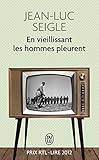
This is my review of En Vieillissant Les Hommes Pleurent (Prix Rtl-lire 2012) by Jean-Luc Seigle.

This is a poignant study of a family living in rural France near Clermont Ferrand in 1961 when France was undergoing a period of rapid change. Fifty-something Albert Chassaing has many reasons for his mid-life crisis. Descended from generations of peasant farmers, he has to work at the Michelin tyre factory to make ends meet. His smallholding is to be swallowed up in “remembrement”, sold off for amalgamation into a larger unit of operation. He is drifting apart from his glamorous much younger wife Suzanne, who seems to be over-friendly with the postman Paul. Whereas Albert clings to the past, Suzanne, an orphan with no roots, embraces modern consumer goods, the latest being the television on which she can watch an interview with beloved son Henri who has gone to fight in Algeria. This only serves to remind Albert of the humiliation of the German occupation of France, and his experiences defending the fortress of Schoenenbourg on the Maginot Line, about which he has remained unnaturally silent, being a man given to bottling up his emotions.

So it is that on the very first page, we learn of Albert’s desire “to finish it all”. How seriously should we take this, as he begins to plan for his end by, for instance, ensuring that the bookish son Gilles whom he loves but cannot really understand, will be well-supported? Will he find the motivation to overcome his “want of courage” to take his own life? Will the frequent moments of humour in the book eventually win out over the bleak undertow?

I am not sure that Seigle has developed the interesting plot as fully as he might have done. It seems a bit of a handicap to be unfamiliar with Balzac’s Eugenie Grandet, which bookworm Gilles uses to interpret his family life. There is a fair amount of “telling” in the narration and the final chapter is a didactic piece on the Maginot line which seems awkwardly tacked onto the novel, rather than integrated as a potentially fascinating and relevant part of the story. Despite this, there are some striking passages and thought-provoking observations, such as the scene where Albert revisits the field in which his father, as a robust child, was hitched to the plough in place of the horse which the family could not afford, and made to complete his task under cover of night so that none should see the shame of this. Yet, Albert values the image of his father’s work whereas his own sons have no idea how he spends his time on a production line, locked away indoors.

⭐⭐⭐⭐ 4 Stars

Born free, captivity borne

This is my review of Twelve Years a Slave – [ Stolen into Slavery: The True Story of Solomon Northup ] [Annotated & illustrated] [Free Audio Links] by Solomon Northup.

Although it is unclear to what extent this story was "ghosted" at the time, it is a vivid first-hand account of the experiences of Solomon Northup, born to a freed man in the New York area but tricked and kidnapped into slavery in the Louisiana of the early 1840s.

Having seen the film already, I knew what to expect plot-wise, and assumed that, since McQueen's drama is so powerful, I would gain little from reading the book, the reverse of what is normally the case i.e. books usually out-class the films on which they are based. In fact, I was impressed by the immediacy with which Northup's thoughts come through the language which, apart from occasional wording that seem quaint to us now, is for the most part a very articulate and engaging flow. I was also surprised and pleased how closely the director had kept to the book. There is a particularly powerful scene in the film where Northup is forced to beat Patsy, a young slave woman who is guilty only of going to obtain from a kindly neighbour soap denied her by a jealous mistress. I thought that McQueen must have exaggerated this incident for dramatic effect but found that it tallies with Northup's description. The latter's account of how Patsy is caught between a sexually abusive master and vengeful mistress makes almost unbearably moving reading even when one has seen the film.

I respected Northup's honesty, for instance, in regarding himself as superior to those born to slavery and reduced to a bestial state by their treatment, although at the same time he clearly respected and felt sympathy for those left in bondage after his release. He also conveys well the “catch-22” situation in which to reveal his past experience of freedom, and his ability to read and write, put him at greater risk of violence, since the slave-owners felt threatened by workers who did not conform to the stereotypes which seemed to justify their inhuman treatment.

The academic Sarah Churchwell wrote recently of the theory that Northup may have been a bit of a rogue in real life, colluding in his kidnapping in a money-making scam which backfired on him, but there is no evidence of this in the autobiography. Some of the interesting notes at the end of the book suggest that Northup may have fallen into drunkenness after his release, and been recaptured, but this cannot be proven. It could be that Northup became embittered, in view of the irony that, as a black man, he was not entitled, once free, to give evidence in court against those who had wrongfully sold him into slavery.

⭐⭐⭐⭐ 4 Stars

A Divided Nation

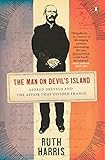
This is my review of The Man on Devil’s Island: Alfred Dreyfus and the Affair that Divided France by Ruth Harris.

It is hard to identify a modern event which has had as much impact on society as the trials and imprisonment of Alfred Dreyfus on what we now believe to be a trumped up espionage charge of relative insignificance. Having read recently Piers Paul Read's very detailed yet clear and moving account of this, from the arrest of Dreyfus in 1894 to his pardon and reinstatement in the army in 1906, I turned to Ruth Harris for a wider analysis of Dreyfusards versus anti-Dreyfusards.

In the promising introduction, Harris emphasises how families were divided by the Dreyfus affair, with people on both sides often holding contradictory and conflicting views about everything except the innocence or guilt of the man at the heart of it all, or at least his right to a retrial or declaration of innocence. The author presents "two Frances" fighting "for the nation's soul": on one hand, the Dreyfusards, mainly republicans, Protestants, or socialists, upholding Truth and Justice in their demands for a retrial versus the anti-Dreyfusards, often Catholic, anti-semitic, with monarchist sympathies, champions of Tradition and Honour, either convinced of the guilt of Dreyfus or prepared to sacrifice him rather than overthrow the ruling of a military court when they were concerned to support and build up the army after the humiliation of defeat in the Franco-Prussian War.

I do not mind that only brief sections of this book are devoted to Dreyfus himself. I admire the author's depth of research and evident deep knowledge, and perhaps, with 137 pages of notes and bibliography, this is not intended for a general reader. Much as I wanted to get absorbed, I found the reading of this excessively hard going. There is a surfeit of detail in an indigestible form, made worse by a fragmentation of information e.g. on the anti-Dreyfusard Maurice Barrès, and the inclusion of specialist terms with inadequate explanation for a non-expert e.g. page 137 (paperback version) references to revolutionary Blanquists and revanchists from the Ligue de la patrie française. In short, there is a failure to distinguish clear, major points from a morass of over-condensed detail on too many characters and attitudes.

I would like to find another book on this of period of French history, but was forced to the disappointed conclusion that it was not worth the expenditure of time to plough through this, referring to other sources for clarification on the way.

⭐⭐⭐ 3 Stars

A good way to start

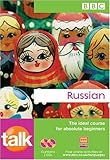
This is my review of TALK RUSSIAN (BOOK & CDS) NEW EDITION by Georgina Martin,Svetlana Furlong.

This course follows a standard format which I have already used for Italian. It is an attractive and accessible format, and I have not found a better way of starting a language quite cheaply, although I have a few complaints. If you have the discipline to work hard at the exercises, moving on to avoid getting bogged down but repeating them until the knowledge is embedded, you can learn a good deal from this book.

Bearing in mind the difficulty for an English speaker of learning the Russian alphabet, the approach used here is probably as good as any: showing the alphabet in full, but highlighting a few letters to learn at a time, starting with the easiest. It was probably a sensible decision to focus on the printed form of Russian and invite students to jot down the meanings of word in English, but I would have liked a lesson devoted to writing in Russian.

Again, the complexities of grammar are probably skirted round quite well at this basic stage e.g. saying that some words like "open" and "closed" must agree with the words they describe, and showing whether words are masculine, feminine or neuter.

I was a bit irritated by the need to keep flipping to the back to check the answers to exercises. I suppose this forces the student to make a real effort to answer without cheating, and it would probably add to the production cost to integrate answers clearly into the questions and tasks.

My main criticism is that I would like every Russian word or phrase in the booklet to be recorded for practice on the CD e.g. on page 52, a list of facilities in a town centre like supermarket or chemist is left for you to work out, possibly using the index, which is fine, but the words are not spoken for you to hear. Cutting out the repetitive jingle would give more space on the CD for this!

Also, some of the conversations are quite fast, which is good practice, but I would like a greater number of them to provide more opportunities to develop competence e.g. more examples of different types of drink you might order, more chance to practise numbers which I find quite hard, more opportunities to listen and talk about the things you may really need like directions, use of public transport, situations in hotels and restaurants.

⭐⭐⭐⭐ 4 Stars