Setting the path straight

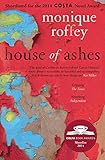
This is my review of House of Ashes by Monique Roffey.

Inspired by the abortive 1990 political coup in Trinidad, about which I am now embarrassed to have registered so little, the author creates a similar drama in the fictional Caribbean island of Sans Amen. We are introduced first to the simple yet bookish and spiritual Ashes, haunted by the violent death of his freedom fighter brother in an earlier uprising. Under the influence of “The Leader”, charismatic head of a religious cult, Ashes is sucked into a plan to force concessions from the apparently corrupt and neglectful government, by occupying the main parliament building and taking hostages, including the Prime Minister.

The point of view switches between Ashes and Mrs Aspasia Garland, Minister for the Environment, and one of the more sympathetic of the hostages. In a situation which rapidly deteriorates and clearly cannot end well, the author uses her characters to explore their contrasting attitudes, the different experiences which have shaped them including colonisation, their developing perception of events and the way they handle the psychological trauma of a siege.

This reminds me strongly of another highly praised novel about a hostage-taking in a developing country, “Bel Canto”, yet I think “The House of Ashes” is technically superior in being more realistic and focussed on the complex issues of power, inequality and motivation without getting side-tracked into somewhat sentimental romances. On the other hand, what has the makings of an outstanding novel is undermined for me by the author’s tendency to repeat and over-labour points. It would have been much more powerful to have finished at the end of Part V with at most a brief epilogue, that is, omitting the final section, entitled “V1 L’Anse Verte 23 Years Later”. It is as if Monique Roffey is so absorbed in her characters that she cannot resist continuing to supply and analyse details long after the reader should have been left to reflect and reach his or her own conclusions. A minor irritant for me is the overuse of the West Indian term “steupsing”, the tendency to make a noise by sucking in air to express annoyance and derision. Yet perhaps this, and the patois which I enjoyed, give the story greater authenticity, demonstrating Roffey's genuine deep firsthand knowledge of life in Trinidad. Certainly, she creates vivid images of the dusty rundown city, the lush vegetation and Leatherback turtles dragging themselves up onto remote beaches to lay their myriads of eggs – from which most of the hatchlings are doomed to die in the struggle to survive.

⭐⭐⭐⭐ 4 Stars

The more we strive the murkier it becomes

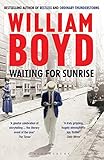
This is my review of Waiting for Sunrise by William Boyd.

Actor son of a famous, long-dead thespian, Lysander Rief travels to Freud's Vienna to seek the advice of an English psychoanalyst on a sensitive personal problem. Since it is 1913, we know that the course of his life is about to be transformed for the worse, but before that, fate strikes a very different unexpected blow. With his fertile imagination and gift for spinning words into vivid and original descriptions or moments of farce with no apparent effort, William Boyd creates an entertaining read for the first half. He employs interesting little devices, as in the opening chapter where Lysander is introduced as he might appear to a stranger, although the next scene shows how many of the assumptions based on appearances are false. At other points, the author presents the dialogue in the form of a play, reflecting not only Lysander's employment, but also the way he and those around him are often playing a part in "real" life. The downside of this somewhat flippant, facetious approach is that at times we may not care about the characters' troubles as much as we should.

It is not until halfway through that the novel becomes the spy thriller vaunted on the front cover, and for me it is not improved in the process. At this point, the plot is too close to a Buchanish derring-do of over-complicated implausible events. I began to lose interest, but read on in the hopes of a satisfying dénouement which is in fact less surprising and "clever" than some of the twists on the way. Perhaps the strongest aspect is that Lysander is left a sad and wiser man accepting life's ambiguity, "we try to see clearly but what we see is never clear and is never going to be", one "happier with the dubious comfort of the shadows".

⭐⭐⭐ 3 Stars

By chance or design

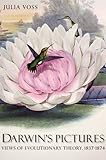
This is my review of Darwin’s Pictures: Views of Evolutionary Theory, 1837-1874 by Julia Voss,Lori Lantz.

The eye-catching cover showing a pair of stylised hummingbirds on a water lily masks a well-translated from German if at times long-winded academic exploration of the evolutionary theory revealed in the pictures produced by Darwin and his contemporaries.

A prolific collector of specimens on his five year voyage on the Beagle, Darwin often lacked the knowledge to identify them correctly. So, it was the ornithologist Gould back in London who accurately classified the famous Galapagos finches with their distinctive beaks which provided early evidence for evolution, of which Gould himself ironically became an opponent, in the belief that such beautiful creatures as hummingbirds must have been designed by God.

Endearing in his shortcomings, Darwin failed to appreciate the importance of the locals' observation that the tortoises on each Galapagos island had a distinctive patterned shell. So, the creatures were taken aboard The Beagle for their meat and the shells discarded over the side. On his own admission a poor draughtsman, Darwin spent years back home constructing messy but ground-breaking diagrams to show evolution, such as the foldout chart from the 1859 Origin of Species, with neither origin nor end, but a focus on chance variation with the adaption and flourishing of some species at the expense of others. Unable to accept such vagueness, followers like Haeckel developed this idea into a clearly drawn tree culminating at the top with man, with gorilla, orangutan and gibbon on branches just below – a clear hierarchy which Darwin did not emphasise himself. It is fascinating to realise that gorillas were only being discovered by explorers at around the 1850s, so that the idea of humans somehow evolving from such a fearsome beast was hard to take in a society brought up to believe that man had been created by God only a few thousands of years before.

Although not very assertive in speaking out against religious beliefs, Darwin was troubled by the influential Duke of Argyll's clam that the perfection of the peacock's tail could only be explained by the existence of a Creator. Through painstaking drawings of patterns on the "argus pheasants" tail feathers, Darwin convinced himself that not only could these patterns evolve, but this perfection itself was a myth.

This book could have been made more accessible for the general reader, but it was probably the author's prime and understandable aim to further her academic reputation. As it is, the book provides some fascinating information on not only evolution but also Victorians' attitudes towards their origins and also how emotions might be expressed by both them and the domestic animals they had increasingly begun to keep – another research topic pursued by the ever-inquisitive Darwin.

⭐⭐⭐⭐ 4 Stars

An unlived life

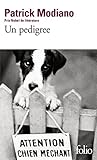
This is my review of Pedigree (Folio) by Patrick Modiano.

The publication of a debut novel in his early twenties set Modiano on course for his unexpected winning of the Nobel Prize for Literature almost half a century later. “A Pedigree” differs from his other novels, often attacked as the same tale retold, in being an autobiography of his first twenty-one years. Yet it could be said it is in the same vein as the others, being in essence part of an ongoing search for identity.

In a postscript, he describes how his first two decades formed a life which did not feel like his own – “tout défilait en transparence and je ne pouvais pas encore vivre ma vie”. He portrays this sense of disengagement with “a simple film of facts and gestures” in which there is nothing to confess or clarify, he has no interest in introspection or examining his conscience. The more things are obscure or inexplicable, the more interest they hold for him, whereas he tends to look for mysteries where there are none. The only event which Modiano admits to having affected him deeply is the death of his brother, aged ten, for which he provides no explanation.

As a result, the prose is often reduced to reeling off lists of his mother’s friends, his father’s business associates, the books he has read, and so on, a tendency also very noticeable in “Dora Bruder”, the only other book of his I have read. The problem with this approach is that it makes for an intolerably boring read.

Modiano’s early life was clearly dysfunctional and in many respects sad. Yet this must also have been very significant in forming him as a person and a writer, and could surely have been presented in a much more moving and gripping way. Estranged from early on, his parents occupied two apartments, one above the other, with a connecting internal staircase which was initially walled in and then destroyed when the animosity grew more intense. Modiano’s mother was a Flemish actress with a maternal love bypass, often so strapped for cash that she begged from friends or encouraged her son to steal goods for sale. She is portrayed as almost cruel in her neglectfulness, yet her friendship with the avant garde writer Queneau may have given Modiano the vital break in his writing career.

By contrast, his Jewish father was insensitive in his control-freakery, dismissing his son’s literary ambitions and bent on giving him a good academic education, yet always in grim boarding schools. Modiano wonders what drove this obsession to get his son out of his life on his own terms, and imagines “une autre vie” in which as adults they could have walked openly arm in arm, the father delighting in his son’s success, the son discovering details of his father’s mysterious path. Yet, the father’s Jewish origins must also have shaped Modiano’s writing. Escaping deportation from Paris in an undercover life selling items on the black market, the father went on to become a financial backer of shady deals, which cannot have been very successful since the bailiffs sometimes came to call.

The book contains some striking passages which break the mould of tedium when least expected, but for me these are pearls in a barren, disjointed series of lists and descriptions which make a short novel seem interminable. The ideas behind Modiano’s work, the attempt to write a different type of novel are interesting, but reaching the end left me with a sense of relief, akin to no longer being poked in the eye.

⭐⭐ 2 Stars

Convainquant tout l’auditoire avec des preuves convaincantes

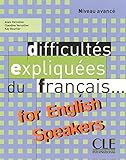
This is my review of Difficultes expliquees du francais…for English speakers: Livre by Francois Rabelais.

This is not for beginners as it is a rather intense and dry way of learning French from scratch, but a useful revision and gap-plugger guide for someone like me who studied A Level years ago.

I like the systematic approach of devoting each of the forty-six short chapters to a specific aspect of grammar, each broken down into main learning points. However, it would be helpful to have the answers supplied in the same book, with perhaps a bit of discussion where "the correct response" is open to debate, or depends on the circumstance.

Also, it might have been useful to indicate "more advanced" points and "trickier questions" to avoid more experienced students wasting time on questions testing basic knowledge

⭐⭐⭐ 3 Stars

Watching paint dry on the house that Jack built

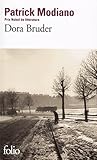
This is my review of Dora Bruder (Folio (Gallimard)) by Patrick Modiano.

In an example of "autofiction", "fictionalizing a real event in a writer's life", Modiano is obsessed for years by his chance discovery in a Paris newspaper dating from December 1941 of a "missing person's notice" for the fifteen-year-old Dora Bruder. She is the only daughter of Jewish immigrants who have sent her to a local Catholic boarding school perhaps partly in an attempt to protect her. Half-Jewish himself, the author readily identifies with the poignancy of her position in seizing a brief freedom before the largescale "round-up" of Jews, including women and children, the following year.

Modiano embarks on a forensic study of records to find out more about her, made hard by the widespread destruction of documents once it was clear that the Nazis had lost. He fills the gaps with speculation which I often found irritating since it is based on such thin data: did she travel between home and school by metro, with or without her parents, and by which stations? As he traces the streets she must have frequented, repeatedly wandering them himself in a mood of reflective nostalgia, I began to wish he had included a few maps and photographs. With his interest extending to her Jewish neighbours, he notes how large areas of the locality have been demolished as if in an attempt to erase some of the guilt of French involvement in the holocaust. At the same time, he manages to weave in experiences from his own troubled teenage, even drawing parallels with his brief arrest for causing a "breach of the peace" with his father and his running away from home. He is annoyingly vague about these events, for which ironically he has the details.

There is great potential in his approach of trying to piece together the past, exploring half-memories and lingering influences of previous lives conducted in streets which are partly remarkably unchanged, partly derelict, partly superimposed by a new wave of construction and a heedless modern existence. It could be argued that the factual description and heavy reliance on speculation highlight the pathos of the theme: that people could be deported to Auchwitz for omitting to wear a yellow star often enough for mean-spirited neighbours to notice. Yet for me, the banality and most of all the excessive repetition of details were at times intolerable. Modiano's insistence on providing several times over, for instance, precise addresses and information on whether street numbers are odd or even made me wonder if he had OCD. Detractors have criticised the fact that many of Modiano's novels have the same basic approach of gathering information to trace the past of a missing person, and this deters me from reading more of his work, apart from his autobiographical "Un Pedigree" (for another book group) although his straightforward prose is good practice for improving one's French.

Some reviewers have compared Modiano's work to Sebald's "Austerlitz", which for me was a much more striking, impressively original and moving work, more worthy, I would have said, of a Nobel Prize.

⭐⭐⭐ 3 Stars

Seeing the wood for the trees

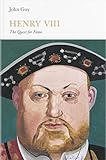
This is my review of Henry VIII (Penguin Monarchs): The Quest for Fame by John Guy.

The "Penguin Monarchs" series sets out to provide a separate concise and readable introduction to each of the British rulers from Athelstan to Elizabeth ll, written by a different specialist in each case. Well-known for his accessible coverage of the Tudor period, John Guy has chosen to focus on Henry's quest for fame. This was not achieved in quite the fashion intended, since he is mainly infamous for his often mistreated six wives, whereas his desire to be crowned in Paris as the rightful King of France or to become the "the arbiter of international disputes" came to nothing.

Perhaps because the details are quite condensed, the author succeeds in highlighting some key aspects of Henry's personality and the motivation for his actions. Charismatic in his youth, handsome, shrewd, interested in the arts yet also athletic, prepared to promote competent men of lowly origin like Wolsey or Cromwell, he could have left a positive legacy. Yet, childhood experiences of Yorkist rebellions triggered the fear which bred his almost paranoid mistrust of others, perhaps also fed by his calculating father's cynical example. With the additional effects of the physical excesses which ruined his health, and the impatience and arrogance which made some see him as "the most dangerous and cruel man in the world", inevitably many of his policies became corrupted.

To free England from papal authority and end the greed of the great monasteries may have been beneficial in the long-term, but these ideas were the unintended by-product of Henry's obsession to find a way to divorce an infertile wife for one who could provide the male heir needed to secure not only his dynasty but the security of the realm. Also, to use the monks' plundered wealth to finance unnecessary and abortive wars or to execute those who would not renounce the old faith were indefensible acts. Henry's concern to judge people via the legal system and to legalise change using Parliament was laudable but the resultant manipulation of justice by his henchmen and crushing of true democracy were tyrannical. His belief that the King of England really was Christ's deputy ironically led him to seek to re-impose what was in effect a form of Catholicism without the Pope.

The author's concluding points are telling: Henry's vast and costly wardrobe designed to impress, Holbein's portraits which revealed "the sitter's soul" in an unflattering way which Henry perhaps fortunately failed to observe, and, in true "Ozymandias" style, the grandiose planned mausoleum left unassembled in a workshop until the bronze was sold off a century later – to fund a future war. There's also a useful bibliography at the end for those who wish to know more.

⭐⭐⭐⭐ 4 Stars

Only the truth

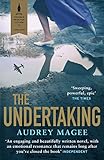
This is my review of The Undertaking by Audrey Magee.

The undertaking is Peter Faber's marriage "in absentia" to Katharina Spinell, a Berlin bank clerk whom he has yet to meet. The motives are mercenary on both sides: he wants ten days' leave from the Russian front which makes more sense in the following chapters recounting his ordeals in Kharkov and Stalingrad, whereas she is attracted by the prospect of his war pension if he dies. As loyal followers of the Reich, accepting Nazi propaganda without question, they are happy to fall in with Hitler's half-baked scheme for keeping up population growth at the height of battle. To their surprise, although perhaps partly because of the unreal situation, they develop the mutual love which motivates them to survive many vicissitudes.

Apart from this spark of hope, "The Undertaking" pulls no punches when it comes to the portrayal of war, as the pair begin to realise, in their very different situations, that German soldiers are not invincible against an inferior foe, the Russians are not the useless, cowardly peasants they have been led to expect, and the war will not be a rapidly won victory. It takes a while for the penny to drop with two main characters who are portrayed in a realistic rather than flattering and heroic light. Without any compunction, Katharina joins her callous parents in occupying a luxurious flat from which a Jewish family has been driven; on his "honeymoon", Faber takes part without question in the nocturnal eviction of Jews organised by the sinister fixer Doctor Reinart and he persists in believing a fellow soldier is a communist of doubtful loyalty because he is Russian – unable to grasp the tragedy that, as a Russian born in German territory, the poor man belongs nowhere. Yet the reader knows that Faber and Katharina will be punished more than they deserve, since Faber is on a march to Kharkov and Stalingrad, while Berlin is destined to be looted by drunken Russians who will perpetrate mass rape out of revenge.

The author is quite clever in glossing over historical details which does not matter, as she seems true to the spirit of the times: the moral confusion, the reduction of human beings to a basic animal state under duress, and the inescapable hand of chance. Gripping but bleak, well-constructed with some excellent dramatic moments and insights into the main characters' thinking, the story reaches a well-judged conclusion, which leaves the reader with a good deal to mull over.

"The Undertaking" is in my opinion superior to a number of recent novels which have received much more attention and hype.

⭐⭐⭐⭐⭐ 5 Stars

Out of mazy emotion

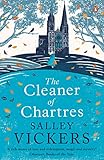
This is my review of The Cleaner of Chartres by Salley Vickers.

Although it shares with the bestselling “Miss Garnett’s Angel” the topics of church restoration and the ghostly background presence of a “Gabriel”, this novel has a sufficiently distinct storyline. A little exotic in her colourful skirts, Agnes works as a cleaner at Chartres Cathedral, whether as a means of forgetting the past or in atonement for some past deed is unclear until the end.

Switching between past and present, the novel reveals the sadness of her previous life after being found abandoned in his orchard on St. Agnes Eve by a kindly farmer who thinks she will be better off with the nuns than in a children’s home. Labelled “retarded” owing to her inability to read, she is struck by a chain of misfortunes as a teenager, with inadequate support from both the blinkered nuns and a bungling medical service. The ambiguity as to her guilt or innocence in all this and the tension as to how matters will be resolved in the present make this a page-turner, together with the wrily humorous yet also often poignant portrayal of a variety of characters, the beautiful descriptions of Chartres Cathedral which make you either want to visit it or wish you had paid more attention when you did, and the intriguing details on the history and mythology surrounding it – even if these are too often embedded in a rather clunky fashion into the monologues of the handsome hunk Alain waiting in his conservationist’s scaffolding to carry off the appealing Agnes.

There are a few too many coincidences in the plot, which occasionally teeters on the brink of Mills and Boonland. The greatest flaw for me is the tendency to digress into too much detail at every opportunity: when a character remembers finding her husband kissing the maid, you have to be told exactly which wines she had in mind on her unexpected visit to the kitchen, but some will find this adds charm to the novel. Knowing that the author has worked as a psychotherapist, I sometimes felt that she has been unable to resist the temptation to weave in too much of the welter of experience and analysis stemming from her work. Despite this, the story is in the main saved from mawkishness by her wit and insight. I think I found it more moving than the better known “Miss Garnett’s Angel” and recommend it, although I suspect it will appeal mainly to female readers.

⭐⭐⭐⭐ 4 Stars

“The Foundling Boy” by Michel Déon – Calm before the storm

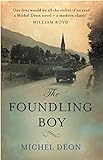
This is my review of The Foundling Boy by Michel Déon.

A C20 take on “Tom Jones”, this novel’s original French title of “Le jeune homme vert”, denoting the hero Jean’s initial natural naivety, has been lost in translation to become, “The Foundling Boy”.

Jean is discovered in a Moses basket on the doorstep of a simple, kindly childless couple. The wife Jeanne claims him as her own to bring up, taking a stand against the attempted interference of Mme de Courseau, the imperious lady of the local manor. Jean turns out to be handsome, robust, charming and irresistible to women, yet somehow manages to remain fundamentally decent and unassuming. Despite doing quite well in his school leaving exam, Jean begins to drift through life with no clear aim. He takes the opportunity to travel, mainly to England where he accepts the hospitality of some wealthy or dubious (sometimes both) characters. When he needs money to live, or wishes to stay near his parents in rural Normandy, Jean works at a variety of dead-end jobs of the kitchen porter or nightclub bouncer variety. In the process, he learns a good deal about life, human nature and love. The urge also grows to discover his real parentage: he is not too bothered about the identity of the father which may never be known, but is keen to know who is mother is. The insights jotted in his private journal reveal a certain cynicism. For instance, he notes that keeping friends separate from one another is often a good idea.

The story rambles along with so many digressions that I began to suspect the author of padding out a thin plot. Some of the early chapters are hardly about Jean at all, but rather the local landowner Antoine Courseau. Bored with his cold wife and the duties of his inheritance, Antoine keeps taking off, often at high speed, in his latest Bugatti, drawn inexorably to the warmth and light of the Mediterranean coast and to his waitress lover Marie-Dévote. Perhaps a little shell-shocked by World War 1, Antoine seeks out old comrades-in-arms with whom he has more in common than his family.

The appeal of this book lies its powerful evocation of time and place, in particular France on the brink of World War 2, sleepwalking into disaster with the complacent assumption that, if it comes to it, the Germans will be beaten back in a few weeks. The coverage of events in England is less convincing, as are some of the more exotic characters leading an often extravagant lifestyle such as the mysterious Prince with his black chauffeur Salah, or the conman Palfy.

The author’s tendency to reveal the future fate of a particular character, or to note whether or not he/she will reappear in the story later is an irritating distraction – like having an over-enthusiastic person leaning over your shoulder to tell you what’s going to happen next – and this unnecessary device tends to break any sense of immersion in the story.

Yet, despite this and the occasional “longueurs”, I enjoyed many of the vivid descriptions, quirky characters, wry humour and amusing incidents enough to want to read the sequel, “The Foundling’s War” – “Les Vingt Ans du jeune homme vert” in French. Written very much from a man’s viewpoint e.g. of women, I suspect this is likely to appeal more to male readers.

⭐⭐⭐⭐ 4 Stars