Paved with good intentions

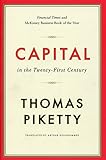
This is my review of Capital in the Twenty-First Century by Thomas Piketty,Arthur Goldhammer.

The Industrial Revolution saw an increase in inequality resulting from increased capital accumulation by the wealthy. The economist Kuznets misread the evidence in arguing that an "advanced phase" of industry would lead to a more equal spread of wealth, for "the sharp reduction in income equality in rich countries between 1914-1945 was due to the violent economic and political shocks resulting from two world wars…. The resurgence of inequality after the1980s was due to political shifts as regards taxation and regulation of finance". Piketty aims to enhance his academic credentials by analysing and presenting a vast amount of data between 1700-2010 to explain the above more fully and to support his central thesis that there is no natural, spontaneous process to prevent destabilising, inegalitarian forces from prevailing permanently.

At first, the style seems very clear, well-translated, with minimal use of obscure formulae beloved by economists and graphs which relate to actual numbers on the axes rather than indicate trends, although Piketty admits that such complex data over long periods of time comes with many caveats. He tends to reiterate points, which apart from reinforcing learning helps readers who wish to dip into chapter sections. However, such repetition adds significantly to the length of the book.

Length seems a major problem. If I were an economics student, I would not wish to trawl through so much verbiage to glean the useful nuggets of knowledge. As a general reader, although the history of wealth distribution is quite interesting, I am most concerned about the final section on regulating capital, that is, the reduction of destabilising inequalities of wealth in this century. Here, I find the author skirting round the problem in a woolly and diffuse fashion, as in the single 25 page chapter (out of 577 pages, excluding notes) in which he considers aspects of "A Global Tax on Capital" which he introduces, not for the first time, as a utopian idea "which it is hard to imagine the nations of the world agreeing to any time soon". Other chapters in this section each go off at a tangent without being clearly related to the book's central theme of "capital", such as Chapter 14, "Rethinking the Progressive Income Tax" which is confined to examples from the US, France, Germany and Britain .

The author's heart is in the right place but since the arguments for redistribution are controversial, they need to be thought through and presented more strongly. A shorter book would have been more effective: the first part his research, the second his reasoned case. How many of the purchasers who made this a best-seller have actually read it?

⭐⭐⭐ 3 Stars

Not much left to learn except for algebra

This is my review of To Kill A Mockingbird by Harper Lee.

The better to appreciate Harper Lee's recently discovered prequel to this celebrated classic about life in segregated 1930s Alabama, I decided to reread it. I was surprised to find that the dramatic trial in which principled oddball lawyer Atticus Finch provides the convincing defence of a black man accused of rape, which only a prejudiced white jury could reject, forms a relatively small section of the novel.

I now see the book as a C20 female American writer's response to Mark Twain's Tom Sawyer and Huckleberry Finn, for at its core lie the attempts of feisty tomboy Jean Louise, nicknamed Scout, to understand the contrary adult world in which people speak one way and act another and the confusing social divisions in the inward-looking, gossip-ridden, tightknit factions of the backwater community of Maybury. Some of the escapades of Scout and her brother Jem are entertaining, I was fascinated by the Southern turn of speech and vivid portrayal of small-town life in another age.

And yet, like some other recent reviewers, I was not impressed to the degree I had expected and hoped. The whole business of the childrens' obsession with catching sight of their reclusive neighbour Boo Radley becomes wearisome, although I admit that it proves relevant to the denouement – a tale which often seems clunkily plotted and rambling manages to pull the threads together for a satisfactory conclusion.

Although dealing with an adult subject, everything is seen from the perspective of a child between the ages of six and eight. Thus Scout frequently misconstrues the situation, which may be amusing for a more mature reader who is "in the know" although this can get tedious after a while. The problem for me is that, despite her fear of hot steam ghosts and penchant for sugar sandwiches, Scout often seems to have too precocious a grasp of vocabulary and thoughts too sophisticated for her age, which is a common problem with a first person narrative, although admittedly in this case there is the excuse that she is writing years after the event, able to put an adult construction on matters and to employ dramatic licence to recreate detailed conversations word for word.

So it is that I found the story funny and moving, yet at the same long-winded, corny and sentimental at some points and think that for the greatest impact it needs to be read for the first time by teenagers untroubled by the pros and cons of good creative writing.

⭐⭐⭐⭐ 4 Stars

“What a true work of art looks like”

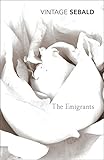
This is my review of The Emigrants by W. G. Sebald.

Like the recent French Nobel Prize winner Patrick Modiano, author W.G. Sebald was preoccupied with memory, nostalgia for the past and a haunting sense of loss. In a superb, sensitive translation from the German, "The Emigrants" comprise four freestanding sections, each recording the life of a man forced to leave Germany at some point in the last century, either to find employment in the States or to evade Nazi persecution.

Sebald has a very distinctive style, often described as dreamlike – and in the course of his meandering he sometimes resorts to recalling in detail real or imagined dreams, and tends to merge plain fact with probable invention. Slotted into the text to illustrate points, the frequent small, grainy photos of people, houses, scenery and objects are in some cases evocative and compelling, in others just quirky, such as a couple of keys for opening a cemetery gate, which in fact do not work. The first person narrator often finds out about his emigrants through the memories of others – perhaps emigrants themselves – but slots their commentary into his text without any inverted commas, creating in the process a stream of consciousness.

Opinions will differ, but I was most impressed by the final section on "Max Ferber". for which I would give five stars. In this, Sebald reveals himself to be an immigrant: a young German postgraduate student who came to Manchester in the `60s and found that he preferred not to return permanently to his homeland with its amnesia over the recent guilty past. Sebald "never ceased to be amazed by the completeness with which anthracite-coloured Manchester, the city from which industrialisation had spread across the entire world, displayed the clearly chronic process of its impoverishment and degradation". But the most moving part is his friendship with the reclusive Jewish painter Ferber, who was sent on a flight to England by his once wealthy parents before they were themselves deported. Ferber inspires some of the author's most magical prose. The artist's method was to apply paint in a thick layer, only to spend hours scratching it off, leaving "a hardened and encrusted deposit of droppings mixed with coaldust..in places resembling the flow of lava". Ferber "never felt more at home than in places where matter dissolved, little by little into nothingness." He reflects: "I gradually understood that, beyond a certain point, pain blots out the one thing that is essential to its being experienced – consciousness – and so perhaps extinguishes itself". Ferber gives to Sebald the journal kept by his mother, which the author incorporates into his account – how much of this he actually writes himself is unclear. In any event it is a fascinating description of an ordered, carefee life in the one-third German village of Steinach at the start of the C20, all the more poignant since, "It goes without saying there are no Jews in Steinach now".

This strange account of people damaged by loss has the power to alter one's perception of life and is worth rereading for the quality of the writing and the insights expressed.

⭐⭐⭐⭐ 4 Stars

Il faut cultiver notre jardin

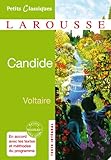
This is my review of Candide Voltaire Larousse by Voltaire.

Having discovered "Candide" through a recent lecture on Voltaire's role in the Enlightenment, I would say that it is definitely worth reading, ideally in French. On one level this satirical account of the surreal experiences of a naive and optimistic young man seem very dated and rather silly. On the other hand, put in the context of C18 Europe, it is Voltaire's scathing exposure of the corruption and intolerance of his age, and a justification of reason and open-mindedness. He was genuinely moved by the catastrophic Lisbon earthquake in 1755, clear grounds for refuting the philosopher Liebnitz's simplistic belief in "théodicée", a perfect God, who had created everything for the best in "le meilleur des mondes possibles" as parrotted by the buffoonish Professeur Pangloss. It is fascinating to realise that Voltaire's work was seized by the authorities for its dangerous principles as regards religion and tendency to deprave public morals – yet it still managed to be a bestseller. In these troubled times, Voltaire's concerns remain surprisingly relevant.

I particularly enjoyed the bored Venetian killjoy Pococuranté, sated with privilege and pleasure, disgusted by all his possessions and finding pleasure only in criticising everything – again, a character for any age.

This well-presented book is value for money, with useful footnotes to explain more archaic terms, clear explanation of the context, and in the final section "Pour approfondir" a detailed dissection of the text to assist those unfortunate enough to need to study it for the Bac, which I am glad not to have to do as it could just turn one off this work for ever.

⭐⭐⭐⭐⭐ 5 Stars

Dividing the world

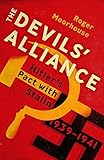
This is my review of The Devils’ Alliance: Hitler’s Pact with Stalin, 1939-1941 by Roger Moorhouse.

This readable and informative analysis of the infamous 1939 Nazi-Soviet Non-Aggression Pact covers an aspect often confined to a few paragraphs in a history of the Second World War. In upsetting "the ideological clarity of the bipolar world of communist versus fascist", this Pact dismayed many in both camps, justified to communists by the specious argument that: "Soviet leaders had a responsibility to the working class of the world to defend the USSR and could, if necessary, for this reason make an alliance with the devil himself".

On one hand, mistrustful of imperial Britain and the US, Stalin felt more comfortable with an agreement that would leave Europe to exhaust itself through conflict at little cost to the USSR. He also saw a chance to regain and occupy eastern Europe – parts of Poland, the Baltic States, Finland and Bessarabia (from Romania), sanctioned by the secret protocol which his henchman Molotov signed with the Germans, but always denied.

On the other hand, the Pact gave Hitler the confidence to fight on a single front in 1940, sweeping through the Low Countries, France and Norway, humiliating Britain in the process. The map showing Europe largely under Axis control or neutral in June 1941 reminds us of how scaring it must have been to be living in the UK at this time.

By then, the stage was set for Operation Barbarossa, since the unnatural alliance had fractured under Hitler's fears over the long-term Soviet designs on Europe, and his hubristic underestimate of the risks involved in overextending his forces in the throes of a Russian winter. Moorhouse points out the irony of the German troops' advance into Russia, fed by Soviet grain, tanks fuelled by Soviet oil, boots made of rubber transported on Soviet trains, weapons made from Soviet manganese-hardened-steel as a result of the mutually beneficial trade under the Pact. In turn, the surprisingly effective Russian tanks had been manufactured with machine tools imported from Germany.

Moorhouse shows how there was little to choose between the two powers as regards their callous and brutal resettlement policies for those judged to have unacceptable views or the wrong ethnic origin. He cites the two trainloads of Polish refugees travelling opposite ways on the Nazi-Soviet frontier, "each group astonished that the other was fleeing into the zone they were trying to escape". He also reminds us how, until Gorbachev's regime, discussion of the Nazi-Soviet Pact was taboo, the new histories of the 1960s covering it only briefly with "the expected omissions, evasions and justifications".

Moorhouse has chosen to omit concluding references to the Germans' defeat in Russia after the carnage of their initial blitzkrieg, and to the new alliance formed by Stalin with the UK and USA. Neither is there an attempt to speculate on the course which events might have taken if this alliance had been formed earlier, instead of a pact with the Germans.

⭐⭐⭐⭐⭐ 5 Stars

From the dim ruins of the Enlightenment project

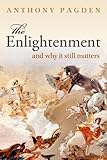
This is my review of The Enlightenment: And Why it Still Matters by Anthony Pagden.

In the eighteenth century, conditions combined to create a demand for the right to think for oneself. Avoiding simple clear-cut definitions, Anthony Pagden deploys his encylopaedic knowledge to explore the factors which gave rise to the enlightenment, its complexity, strengths and weaknesses and why it is still relevant. A scholarly page-turner, which somehow manages to be engrossing yet flawed, this is a book to keep on one's shelf and revisit from time to time, as it includes too many ideas to grasp in a single reading.

Each chapter is like an encounter with a passionate expert thinking aloud as his mind flips back and forth, linking the ideas of respective "lumières" with extensive quotations and frequent little digressions and asides "(more of him later)". No philosopher or thinker is introduced without a few nuggets of potted history, which tends to be distracting. Despite the author's penchant for convoluted sentences, his approach is gripping and thought-provoking, but can create a kind of overstimulated mental fog. A reader with some prior knowledge of the main enlightenment thinkers is likely to cope best. I decided that the best course is to read this through once to get an overview and then study chapter by chapter to fix some key insights. I could have done with a chart to show the dates of the various philosophers to clarify exactly who was influencing whom, and to note their respective works, often with long and similar titles.

Some assertions seem open to question, but it is perhaps no bad thing to face the challenge of explaining why one questions a certain argument. The typos noted by other reviewers did make me wonder whether the proofreader(s) hadn't become too numbed by the spate of information and ideas to check the sense properly, but this is a minor point. The major criticism is that the book is somewhat chaotic in structure, repetitious and longer than it needs to be – but Pagden certainly conveys a sense of the enduring fascination of the subject matter.

I was looking forward to the "Conclusion: Enlightenment and its enemies", but Pagden seems to have run out of steam at the end, not dissecting "communitarianism" and the Catholic philosopher MacIntyre as forensically as he does the earlier anti-enlightenment thinkers and ending with a final confirmation of continued relevance which seems rather woolly, I suppose due to the sad fact that our enlightenment has not built on that of our visionary eighteenth century ancestors to the degree that they might reasonably have hoped.

⭐⭐⭐⭐ 4 Stars

Loving to hate

This is my review of The Man Whose Teeth Were All Exactly Alike by Philip K. Dick.

Energetic, pushy and prickly, realtor Leo Runcible has great ideas for property development in rural California, but he will probably never gain acceptance in 1960s Marin County, being not only an outsider but Jewish. An exaggerated grievance against his neighbour Walt Dombrosio sets off the quirky chain of events which form the theme of this novel.

As he continually switches his viewpoint between four of the main characters, so that Walt and his classy wife Sherry are as central to the tale as Leo and blurrily drunken Janet, I became engrossed in his capture of how they perceive each other and of the continuous small shifts in emotions – the observation of psychology and social life. This is a match for Philip Roth, I found myself thinking. Then, the narrative slips more into black farce and although I accept that the early 60s was a period of male chauvinism, of the sense that a man was emasculated if his wife worked, of unabashed racism and callous dismissal of the disabled, I began to have a nagging concern as to exactly how misogynist and non-PC Philip Dick may have been himself – or perhaps this is a mark of his skill as a writer.

It seems that this was one of the mainstream novels which remained unpublished in his lifetime, since his cult status was achieved only through his sci-fi, which does not interest me personally. Although I agree with a reviewer who found the end of this book somewhat rushed – he sets up an interesting final twist but fails to develop it adequately – he has clearly been underestimated as a writer with a keen eye, sharp insights into how mismatched people may tear themselves apart in relationships, “hell is other people” leavened with wry humour and a laconic style. I shall read another, but perhaps that will then be enough.

⭐⭐⭐⭐ 4 Stars

Asking of Fortune more than she can grant

This is my review of Napoleon the Great by Andrew Roberts.

I embarked on this great slab of a historical biography – 820 pages excluding sources and notes – in an attempt to understand to what extent Napoleon was truly "great", particularly after reading a popular biography of Josephine which seemed to sell him short.

In the course of wading through the mud and slaughter of his interminable military campaigns, I concluded that he was a remarkable man whose greatness stemmed from enormous energy and vision, insatiable curiosity, the capacity to absorb a huge volume of facts, the confidence to take risks in putting ideas into practice, great tactical skill, flexibility and speed in conducting campaigns – when he had a single enemy to contend with and a small enough army to control personally – undeniable courage, a keen sense of self-publicity and understanding of how to motivate men at all levels – this sometimes deserted him – through a mixture of praise, rewards and decisive orders when needed. He was also capable of moments of refreshing candour and regret as to his shortcomings, and possessed a sense of humour and charm which captivated even some of his enemies.

On the downside, his desire to emulate Caesar and Alexander the Great may have led to megalomania, his attention to detail made him a control freak, as Emperor he made himself an unbridled political dictator, although he listened to the opinions of others and adopted a more democratic approach towards the end when he was fatally weakened. His continual exaggeration of enemy losses and playing down of his own may have been judicious PR, but suggests a failure to face up to his frequent squandering of the lives of the men he had inspired to follow him. He was a male chauvinist – although perhaps most men were at the time – and he made some major errors.

The most costly of these was the attempt to fight on two fronts simultaneously – Russia and Spain, and to allow himself to be lured as far as Moscow, over-extending his supply lines and then underestimating the time needed to limp back to France before the onset of winter. The shocking death toll of more than half a million soldiers, and the destruction of his horses made it hard to put up an effective defence with fast-moving cavalry when the extent of his conquests set most of the rest of Europe against him. He picked the wrong issues for stubborn obsessions, such as an unworkable scheme to block trade with Britain with which he annoyed the Tsar by trying to impose it on Russia, or the rejection of fairly reasonable peace terms when his luck had run out.

In an academic yet mainly very readable text, the author fired me with some of his own enthusiasm for Napoleon. I found myself rooting for him and wishing he had desisted from some campaigns to build his reputation as a social reformer – even as a prisoner on Elba, he arranged the provision of fresh water, improvement of roads, irrigation schemes, etcetera. He may of course have been in a cleft stick, in that he had to wage war to avoid being overrun by belligerent neighbours outraged by his assumption of a crown.

I realise that many chapters on military campaigns are unavoidable, and was impressed to learn that the author had clearly tramped many of the sixty main battle sites in person, but I found the information perhaps inevitably too condensed with indigestible lists of names of commanders, companies, details of troop movements, villages and rivers. It is frustrating that maps are not always supplied, and when included, often omit place names mentioned in the text, an indication of location, topography and scale to help one understand the course of events. I did not want to interrupt my reading to go and search for these details elsewhere. It would have been helpful to include more of the factual information in clear tables, charts and timelines – together with better maps- for easier reference.

Overall, this is an impressive work which has increased my understanding and appreciation of a fascinating historical figure.

⭐⭐⭐⭐⭐ 5 Stars

“All Quiet on the Western Front” by Erich Maria Remarque: Old at Twenty

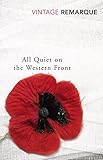
This is my review of All Quiet on the Western Front by Erich Maria Remarque.

Having read and seen so many books and films about war, I made the mistake of expecting this to have little to add apart from the different perspective of a First World War soldier on the German front. Written in the 1920s by a young journalist who fictionalises his own experiences of the futile lunacy of war, it soon proved to me its status as a classic.

What marks it out is the combination of a whole gamut of reactions, from the MASH-like scenes of cynical survival to moving scenes portraying the psychology of survival at the front. In the opening chapter, the eighty men out of a company of a hundred and fifty who have returned alive and uninjured from the front are delighted to find that the quartermaster has not been informed in time to reduce their supplies so they have double rations for a day. A young man is dying from his wounds in a field hospital, and a friend is mainly preoccupied with laying claim to his rather fine pair of boots.

Using the present tense to give events more immediacy, the narrator Paul describes the sinister nature of the front in apparently calm periods which may be shattered with no warning by shells and gas – how to survive he must throw himself instinctively to the earth, which may protect, bury alive or claim him for ever. He must kill or be killed without emotion to stay alive, feeling his most conscious hatred for the teachers who abused their authority by urging him to enlist, or the sadistic ex-postman, now Corporal who provided his training, none of them with any realistic first-hand experience of the front. The prospect of leave seems like heaven, until Paul realises that he can no longer relate to family and acquaintances, or any aspect of his past life. He can no longer read the books he used to treasure, and his academic education now seems useless.

The narrative makes very early on the telling point which recurs at the end: the fact that young men plucked from school to the battlefield have no clear framework of work, wife or children to which to return, should they survive. They are a generation cast in limbo: “if we go back…. we shall be weary, broken-down, burnt-out, rootless and devoid of hope. No one will understand us – we are superfluous even to ourselves.”

This well-translated novel is saved from unendurable sadness by the range and frequent black humour of incidents. It is one of the most powerful pieces of anti-war writing I have ever read. The saddest aspect is that, when he wrote it, Lemarque might still hope there would be no future struggles of this sort on such a scale.

⭐⭐⭐⭐⭐ 5 Stars

Why things happen

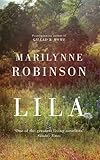
This is my review of Lila by Marilynne Robinson.

Marilynne Robinson's writing fascinates me. For a celebrated professional creative writer she has produced relatively few novels, of which three produced over a decade examine and rework the lives of two families in the quiet Iowan town of Gilead, each book focussing on the inner thoughts of a different character. Lila, a newcomer who has married the Reverend John Ames in his old age and borne him a son, is a minor figure in "Home" and "Gilead", but comes to the fore in this latest novel. Best read in turn with Lila last, to understand all the references, they can be treated as standalone novels.

Carried on a stream of consciousness which catches Lila's distinctive voice, we learn how she was abducted as a young child from a neglectful and possibly violent household by Doll, an itinerant casual worker. On the run for years from some real or imagined pursuer, they attach themselves to a small group who find jobs where they can in what sounds like the dustbowl America of the `30s, although the author is vague as to time and place. Despite having been barely tolerated by everyone apart from the protective Doll, Lila retains a nostalgic longing for her childhood, lived mostly out in the open, with a keen sense of nature and the seasons, and what little they all had shared in common.

By comparison, in the reverend's comfortable old house, with his kind and patient attention, she often feels lonely and reluctant to confess details of her past for fear this may turn him against her. It appears he has married her out of his own loneliness and a sense of her reflective nature, drawn to the same spiritual questions which perplex him. Perhaps he feels a desire to give practical support to a woman in need who has endured hardship through no fault of her own, outside the safe shell of his own life troubled only by self-concocted theological dilemmas. We can never be any surer about his motives than Lila, for everything is seen through her eyes. The book is full of irony: the old man never grasps that she likes to read Exekiel because its fire and brimstone images capture a sense of her own past life. He is amused by her announcement that she never wants to have a credenza in the house, not realising that this was the piece of furniture in which a whorehouse madam kept locked up the few possessions of the young women she exploited.

Since every phrase appears crafted with care, the book needs to be read slowly, rereading some sentences aloud to capture the full meaning by stressing the right word. Although it has been described as one of the saddest books imaginable, the beauty, expressiveness and wry humour of the style make the bleak aspects tolerable. Lila's pregnancy also strikes a continual optimistic beat. The mistrust of John Ames' old friend the Reverend Boughton, and likely bewildered disapproval of parishioners, held in check by respect for the old clergyman, are only hinted at in this subtlest of novels.

If I have any criticism it is over the repetition of some points, although this could be intended to convey how the mind keeps revisiting old ground. In the same way, the very muted ending could reflect the reality of most people's experience. The author's Calvinist background exerts a strong influence, which could deter readers with no biblical knowledge or belief. As an atheist who accepts that Christianity is deeply embedded in mid-west American society, I would say that this book is worth reading if you appreciate skilful writing and have an interest in psychology, how people think and interrelate, often failing to communicate, and how they come to terms with intimations of mortality and the transiency of both pleasure and pain.

⭐⭐⭐⭐⭐ 5 Stars