Faire le vide

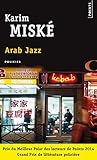
This is my review of Arab Jazz by Karim Miske.

After the Charlie Hebdo massacre, Karim Miské was praised for his prescience in portraying the dysfunctional immigrant youth of the 19th arrondissement in Paris who are prey to the kind of fundamentalist extremism of those responsible for the attack. In a January 2015 interview in The Independent, Miské comes across as a thoughtful and insightful man, “Arab Jazz” has won prizes as a “literary” detective thriller, and perhaps it is meant to be a parody of a corrupt, greedy society with distorted values, but I was very disappointed by this novel.

Ahmed, an immigrant from North Africa, is addicted to violent thrillers as what seems like a counterproductive way of escaping from his traumatic past. As he sits reading on his balcony, drops of blood falling from above alert him to the brutal murder of his neighbour Laura who has shown him friendship. An air hostess who has severed links with her extremist Jehovah’s witness parents, Laura has been the subject of what looks like a ritual killing involving pork for which Ahmed fears he will be framed. The ensuing revelation of the facts is due not to the investigative powers of the two young detectives who although described as intellectuals display absolutely no evidence of this, but rather to the author’s tendency to indulge in lengthy, indigestible information dumps instead of making the effort to “show” us any development of plot, character or motive.

With its clunky, often implausible plot, two-dimensional characters, its crude stereotypes, relying far too much on psychotics, psychopathic policemen, and power-hungry, manipulative, hypocritical religious maniacs, its hammy violence alternating with corny sentimentality, and its amoral tastelessness and simplistic thinking without a trace of subtlety, “Arab Jazz” is like a garish strip cartoon. This impression is heightened by Miské’s habit of lapsing into capital letters at dramatic moments:

“LE CRIME

LEUR CRIME”

Or “DERNIER VOYAGE” for someone about to be bumped off.

I read to the end to improve my French – if this can be said of extending my vocabulary for sex, drugs and mild pornography – and to take part in a book group discussion, which could at least consider the book in the context of the current state of French urban society.

⭐⭐ 2 Stars

The Top of the Egg

This is my review of Of Human Bondage by W. Somerset Maugham.

I believe there are quite a few parallels with Somerset Maugham’s own early life in this forensic study of a boy growing to become a man at the dawn of the last century: his hero Philip was orphaned young, brought up by a self-centred clergyman and his downtrodden sister, neither with much idea about children, bullied at school for his club foot, and grew up to be acutely observant, often using sarcasm to mask his hypersensitivity.

We see Philip moving from earnest piety to the conscious rejection of religion, with the startling sense of freedom this brings, trying out a variety of occupations, experimenting with romantic escapades but, to the reader’s frustration, continually falling under the influence of a woman who seems likely to destroy his future. Apart from providing a profound study of Philip’s thoughts and changing emotions, this is interesting for the details of daily life in late Victorian/Edwardian England: what things cost, how people trained for various qualifications, what they wore or ate and so on.

This reminds me of Michel Leon’s more recent “The Foundling Boy” (Le Jeune Homme Vert) published recently, but strikes a more serious and realistic note. Maugham should not be condemned for his narrator’s snobbish tone towards, say Cockney clerks or young women unaware of their lack of class as they fret over their respectability, since he must himself have been an inevitable product of the stuffy conventions in which he was raised. Yet, despite its often slow pace and dated attitudes, this classic stands the test of time and still deserves to be read for the wry humour, fluency and insight of the author’s warped genius.

⭐⭐⭐⭐⭐ 5 Stars

Twisty plot in danger of choking on its own tail

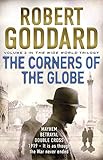
This is my review of The Corners of the Globe: (The Wide World – James Maxted 2) (The Wide World Trilogy) by Robert Goddard.

With the reckless courage which made him such an effective pilot in World War One, Max would be at a loose end if he had not become obsessed with the need to discover the reason for the murder of his father, Sir Henry Maxted, which he spent the first part of this trilogy proving was no suicide in Paris. Volume 2 finds Max passing himself off as a secret agent of the ruthless German spymaster Lemmer, as a means of somehow extracting the answer to the mystery which he believes only Lemmer holds. Max’s mission involves a trip to the defeated German fleet at Scapa Flow and then a chase back from Scotland to London, all with deliberate irony reminiscent of “The Thirty-nine Steps”, since the arch-villainess Nadia is found at one point reading this novel, which she describes as less exciting than Max’s adventures.

Such is the frenetic pace of the novel, and the number of trademark Goddard twists, that the Scapa Flow mission is a distant memory by the end, although the author contrives to neatly hook it back into relevance again. This is a page-turner with the downside that the next twist often comes before you have absorbed the previous one, reducing the overall memory of events to a blur. This is a pity since there are interesting psychological aspects which could have been explored more, which I am sure they were in the earlier novels, without destroying the drama. For instance, Max seems to be developing into a steely machine as he kills or maims his enemies with no compunction or shock.

Since the plot follows directly on from the first novel, it would have reduced confusion to provide a list of characters at the front with a note of their roles in “The Ways of the World”. This would seem preferable to the insertion in the story of an indigestible synopsis of Part 1, presented as a secret memo explaining why Max has been hired by the British Secret Service to infiltrate Lemmer’s organisation.

I think I prefer Goddard’s skills applied to a specific theme in a single self-contained book. Carried over a trilogy, the twists pile up to such a degree that the plot is in danger of choking on its own tail, although, if Goddard can carry it off in Part 3, he may in fact have achieved something clever, using a device he has never resorted to before (as far as I recall) and will be unable to use effectively again.

⭐⭐⭐ 3 Stars

Too close a resemblance

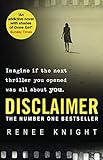
This is my review of Disclaimer by Renée Knight.

How would you react if a book appeared in your possession, clearly based on a personal secret unknown to any living person which, if exposed, could ruin your professional career as an award-winning investigative television journalist and destroy your marriage? In this twisty page turner, the author skilfully reveals the facts, with a few red herrings, alternating chapters between the horrified Catherine, written in the third person, and the embittered author of the book who may himself be an unreliable narrator.

One of the most compelling aspects is the author’s ability to arouse sympathy at some point for all the main characters, even if one neither likes any of them, nor entirely trusts them. I also like the wry touches of humour, and the way she weaves in observations on a range of relationships: within marriage, between parents and only children, with an ageing mother slipping into dementia and in a variety of work situations, with a manipulative rival or a procedure-obsessed HR department.

My only reservation is that, although well-written and cleverly constructed, the book is occasionally just a little too much the product of a high-powered creative writing course – too contrived, pressing all the right buttons as regards say, just the right level of eroticism and drama, with a few twists too many at the end when the reader is already perfectly saturated with them.

⭐⭐⭐⭐ 4 Stars

The Price of Torture

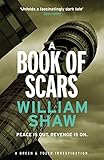
This is my review of A Book of Scars: Breen & Tozer 3 (Breen and Tozer) by William Shaw.

It is advisable to have read the previous novels “A Song from Dead Lips” and “House of Knives” before embarking on “A Book of Scars”. Described as the third part of a trilogy, this will probably not be our last encounter with Detective Sergeant Cathal Breen, since the author continues his ploy of including a loose end or two in the final chapter.

The two main hooks in this novel are the unresolved murder case of Alexandra, younger sister of Breen’s sometime work colleague Helen Tozer, plus the question of whether Breen and Tozer will ever achieve a proper relationship. Since Helen is, perhaps understandably, capricious, foul-mouthed and given to drinking too much, the decent, conscientious Breen who has led a rather sad life seems to deserve someone a little more appealing.

What first drew me to this series is the portrayal of life in late 1960s London, which evokes a sense of shocked disbelief to recall a world that seems a little unreal in its casual sexism, racism and lack of any sense of “political correctness”. I am not sure William Shaw is old enough to have experienced this first-hand, but he does quite an effective reconstruction. There is a serious thread underlying his work, since he likes to use as a background major overseas events of the day, such as the Biafran War in the first novel and the aftermath of the Mau Mau rebellion in this one.

Perhaps the novelty has worn off, but I did not enjoy this book as much as the first one. I was continually madecaware that it is not very well written, with some staccato, disjointed passages as if it has been thrown together in a hurry to meet a publisher’s deadline. Many of the characters are stereotyped and two-dimensional. I know that people aged sooner in the ‘60s, but Helen’s parents seem too old for their years – unlikely to be more than in their fifties – and I grew tired of reading about “old man Tozer”. I would have liked more psychological development, such as Helen’s resentment when her father is ironically shaken out of his grief-induced lethargy because the girl Helen has brought to help out on the farm reminds him of Alexandra. Some of the most convincing scenes are at the police station, with the counterproductive rivalry between different teams, and laughable attempts to dress up as hippies for undercover work.

“A Book of Scars” strikes me as formulaic in the steady accumulation of evidence, largely through interviews, culminating in a scene of gruesome and arguably gratuitous violence. Not for the first time, Breen takes an implausibly rash action from which he seems unlikely to emerge unscathed, which at least creates some gritty tension to offset any final cosy conclusion.

⭐⭐⭐ 3 Stars

What price progress?

This is my review of Heart Of Darkness by Mr Joseph Conrad.

First published in 1899, Conrad’s celebrated novella “Heart of Darkness” uses the device of one tale book-ended within another. In this case, as sunset precedes the descent of darkness over the London Thames, Marlow begins to narrate to his colleagues on deck reminiscences of a visit to the snake-like river of central Africa, which has fascinated him since childhood. His task is to captain a steamboat on what is clearly the Congo. After repairing his damaged boat, he is sent to collect the mysterious ivory-trader Kurtz who is rumoured to be sick. The model for Coppola’s famous film “Apocalypse Now”, Kurtz proves an ambiguous figure. Is he criticised for having “lost his values” out of widespread envy for his commercial success? The natives seem to revere him as a kind of god, but there is evidence that he hates them.

At first, I took the book to be an indictment of the colonialism which exploited and degraded the Africans for imperial influence and commercial gain. Then I became uneasy at the evidence of stereotyping and a certain contempt for the natives. The story has a surreal, dreamlike quality, at one point the steamer is actually stranded in a heavy fog. Some descriptions are very striking, say of the bends in the river cut off from the rest of the world as the forests close in ahead and behind. Others passages seem disjointed and oddly phrased, reflecting the fact that English was Conrad’s third language so that, although remarkably expressive, words are not always used accurately.

I wondered at the time if the book is troubling for African readers, so was interested to find that it has been criticized in postcolonial studies, particularly by the highly regarded Nigerian novelist Chinua Achebe, who in his 1975 public lecture “An Image of Africa: Racism in Conrad’s Heart of Darkness”, described Conrad’s novella as “an offensive and deplorable book” that dehumanised Africans. Achebe argued that Conrad, “blinkered…with xenophobia”, wrongly portrayed Africa as the opposite of Western civilisation, ignoring the artistic accomplishments of the Fang tribe who lived in the Congo River basin at the time of the book’s publication. Was Achebe being oversensitive, failing to appreciate Conrad’s own sense of horror at the brutality of westerners in Africa when he was employed on a Congo steamer, himself providing the model for Marlowe? I prefer to think there is irony in what may be misconstrued as racism on Conrad’s part.

Apart from the fact that I felt myself to have failed fully to understand the book on a first reading, the ending seems rather limp and disappointing. In short, the novella is remarkable for the quality of some of the writing, and for the debate it triggers, but may have been overrated.

⭐⭐⭐⭐ 4 Stars

… map is reasonably robust for unfolding en route and useful for itinerary planning or checking the general direction of …

This is my review of Liguria Michelin Local Map 352 (Michelin Regional Maps) by Michelin.

This map is reasonably robust for unfolding en route and useful for itinerary planning or checking the general direction of travel, but I agree with the previous reviewer who found it too small-scale to use for minor roads after leaving the autostrada. Since all the exit roads from a motorway seem to loop to the same pay station, it is quite hard to navigate off the autostrada, even with a satnav.

It would be helpful if the map indicated main cities lying just off the edge of the map, which covers only the elongated area of Liguria e.g. omitting Pisa with its airport and Lucca just to the east.

⭐⭐⭐ 3 Stars

Sturdy Endurance in Obscurity

This is my review of South Riding (Virago Modern Classics) by Winifred Holtby.

Feckless blacksmith's daughter made good, Sarah Burton returns as a headmistress to the coastal Yorkshire of her youth, resolved to inspire her girls to "Take what you want" and to "Question everything". It is a time of change, with the old social order of rural life breaking down and a growing division between town and country. The depression of the 1930s is combining with the aftermath of the First World War and hints of the rise of Hitler and Mussolini to destabilise the world in the next major conflict.

Sarah's progressive ideas and desire for modern, well-equipped school buildings are at odds with the values of the traditional, stubborn yet honourable and charismatic local landowner Robert Calne. Yet this proves to be much more than a sentimental romance or soap opera, rather the moving and in-depth portrayal of a community which Winifred Holtby understood partly through growing up as a Yorkshire farmer's daughter but also through her mother's accounts of working as the first woman councillor for the East Riding, embellished by her unwise habit of leaving council meeting minutes screwed up in her waste-paper bin. The resultant storyline of corruption and speculation over land deals, the achievement of the desirable "ends" of building decent council housing by questionable means, so alarmed Winifred's mother that she obstructed publication of "South Riding" until after her daughter's untimely death.

The author's knowledge of her own imminent death gives "South Riding" an edge. She does not flinch from "killing off" characters and revealing the hardship in a world that predates the NHS, social work safety net and compulsory secondary education for girls under sixteen. Yet the book is saved from mawkish sorrow by the lively dialogues, striking descriptions, wry humour and realism of the narrative, with wonderful anecdotes from some of the characters.

At over five hundred pages, it may seem rather long, but the plus side is that the reader can become immersed in the characters' lives. This deserves to be called a "classic" with its hints of Thomas Hardy's Wessex, "Under Milkwood", George Eliot's "Middlemarch" and Arnold Bennett's "Five Towns", with the drama switched to the East Yorkshire wolds, crumbling cliffs, dramatic sunsets and constant presence of the sea. The story is all the more powerful and authentic for having been written during the period to which it relates. Winifred Holtby shows great prescience in sensing "the way things were going" and some issues, such as recession, the venality and self-interest of politicians, the uncertainty of life and the "sturdy endurance in obscurity" of ordinary people still resonate today.

⭐⭐⭐⭐⭐ 5 Stars

Survival in the unreality of Orwellian reality

This is my review of Red Love: The Story of an East German Family (B-Format Paperback) by Maxim Leo.

When Maxim Leo and his girlfriend were arrested by the East Berlin police in a final fatuous show of strength before the Wall was opened, she happened to have in her pocket an illegal church newspaper which had been given to Maxim by one of his parents' friends, who had written a piece in it about her reasons for leaving the Communist Party. Maxim was ashamed how quickly he caved in to pressure and "confessed" to all this, although the ultimate irony was that the friend herself turned out to be an informer for the Stasi. It seems that it was hard to avoid being roped into this role – even Maxim's parents almost drifted into performing odd tasks for the Stasi. In another example of the sinister idiocy of the Communist regime, Maxim was denied a place to study for a professional qualification, since his liberal-minded artist father Wolf shouted at his headmistress for allowing machine gun training using live bullets on a school trip to "military camp".

The ludicrous twists of life under a communist regime are legion: on returning from fighting in the German army, Wolf's father Werner makes an arbitrary decision at a tram stop over which line of work to pursue – teaching in a vocational school or stage-set painting: the first tram to arrive takes him east to the teacher training college in the Soviet zone, later blocked off behind the infamous Wall, so he becomes a Communist by chance, this being the best way of "getting on" in the GDR. Maxim's maternal grandfather Gerhard fought for the French resistance in his youth, but opts for life in East Germany because, in his rejection of fascism he convinces himself that communism will create a fairer society. Thus, Gerhard and Werner, who come by very different routes to support the same surreally oppressive and sclerotic system, subject their families to lives of petty restriction and doublethink. It takes Maxim's sensitive, academic mother Anne years to be able to break free psychologically and think for herself. This causes many arguments with her independent-minded husband Wolf. Yet, ironically he finds it much harder to come to terms with freedom when the two Germanies are combined – he seems to feel the need for authority to fight against.

This is a fascinating, wry and often moving account of three generations of an East Berlin family, researched by the author after the fall of the Wall and when it was almost too late to gain first-hand information from his grandparents, who had at least left some written records. Maxim seems to have survived remarkably unscathed mentally by the stress of belonging to an intellectual bourgeois family in a communist regime, perhaps partly because his grandfather Gerhard's status gave him an advantage at times e.g. to get permission to travel abroad, Gerhard's family was in fact relatively quite well off, and, despite all the infighting, Maxim clearly received a good deal of love and attention, particularly from his parents.

My only minor reservation is over what I find to be the irritating tendency to use the "historic present" most of the time. The translator has presumably done this in order to maintain a sense of immediacy as in the original German. Some sentences do not seem to "fit in" to the text, and odd translations such as "fat blanket" for "thick blanket" have already been noted in reviews.

⭐⭐⭐⭐⭐ 5 Stars

Thérèse Desqueyroux – Trapped

This is my review of Thérèse Desqueyroux (Penguin Modern Classics) [ Language:English ] by Francois Mauriac.

Inspired from his youth by the real-life case of Blanche Canaby, accused of the attempted murder of her husband, Mauriac developed the classic tale of Thérèse Desqueyroux, a character who fascinated him so much that she figures in two subsequent novels.

In the opening chapter, the charge of poisoning her husband Bernard is dropped against Thérèse Desqueyroux, after he has lied to “get her off the hook” for the sake of appearances. The rest of this short novel is an exploration of why she committed the crime, and the aftermath of her acquittal. Set in the pine forests of Les Landes near Bordeaux, this is a study of the stifling convention and hypocrisy of bourgeois landowning families in 1920s France. Intelligent and “charming”, if not exactly “jolie”. Thérèse has passively accepted her lot, which is to marry Bernard, son of the neighbouring family and step-brother of the bosom friend Anne for whom she may harbour more than a schoolgirl crush. Prior to marriage, she is quite attracted to Bernard, with the added appeal of his property to be combined with her inheritance. Too late, she realises the extent of his dullness, growing tendency to over-eating and hypochondria, but perhaps worst of all is the sexual contact for which she has not been prepared – in time, his mere physical presence repels her.

Having recently seen the film version of this novel, starring Audrey Tautou, I was reluctant to read this for a book group: although sympathetic to Thérèse’s sense of being trapped, I was alienated by the irrational and excessive nature of her attempt to murder Bernard. Having read the novel, and gained an insight into her thoughts, I continue to regard Thérèse as psychopathic in her coldness, showing a lack of maternal feeling for her daughter Marie, and jealousy towards Anne, stabbing in the heart the photograph of her unsuitable lover and, with an ulterior motive which does not bear close analysis, joining readily in the family plot to separate the pair. When she is driven to contemplate poisoning herself, she is unable to do so, but at least recognises the “monstrous” aspect of this, since she was quite prepared to poison Bernard without compunction.

On the other hand, although I do not think Mauriac adds much to the theme of female repression which has been covered so often – perhaps in part because he finds it hard to get inside a woman’s mind – it is the quality of Mauriac’s writing in the original French, less so translated into English, which impresses me. I like the way he plays with time, mixing together present situations and fleeting thoughts about the past or future in a kind of stream of consciousness which must have seemed quite radical at the time. His portrayal of the pine forests in changing weather, to which Thérèse can clearly relate better than to people, is striking. He tends to write in emotionally violent terms about overwrought dysfunctional characters tied together by social bonds – the title of his famous “Knot of Vipers” being a good example of this. His bitter, vituperative flow, full of images of walking over the still warm ashes of a landscape one has burnt, being frozen in the immense and uniform ice of an oppressive environment or drowning oneself in the crowds of Paris, holds one’s attention, even when having little liking for the characters or even perhaps the author himself.

⭐⭐⭐⭐ 4 Stars