Quirky rompol

This is my review of Pars vite et reviens tard by Fred Vargas.

Like “L’Homme au Cercles Bleus”, the first in the series about the eccentric Inspector Adamsberg, suspicions are first aroused by the drawing around Paris of symbols with possibly criminal connotations, in this case a mirror image of a number “4” on apartment doors. Fred Vargas draws on her knowledge as a medieval archaeologist to develop what was for me one of the most intriguing aspects of the plot – that a criminal mind could exploit an enduring fear of the plague to cause havoc in a city. In fact, this proves not to be the main purpose of the exercise. I was also interested to learn how the plague has recurred over the years in France, although this was concealed by the French government as recently as the early C20, when the outbreak was referred to in internal correspondence as“No.9”.

Adamsberg’s quirkiness is often amusing, as when he is too busy to replace his lost shoes, so goes round in sandals to the dismay of an underling, who is reduced to blurting out, “But you’re the boss!” when questioned by Adamsberg as to why it matters.

Otherwise, the plot seems rather feeble to me, relying too much on Adamsberg’s implausible “light-bulb” intuitions, or the murderer obligingly writing a long letter at the end to explain the crime. In fact, the plot seems less important than the characters, although ironically those who prove to be responsible for the crimes are not as fully developed as they might have been.

Although the characters are often interesting I do not find them particularly convincing. Adamsberg would surely not have lasted long as a detective in real life. His girlfriend Camille may merely be passing through the novel to make more impact on another occasion, but is too thinly drawn , as an incongruous mixture of “free spirit” and supplier of Adamsberg’s sexual needs who runs away when she catches the selfish man “in flagrante” rather than give him a well-earned earful. I did not entirely believe in trawlerman turned “crier” of messages Le Guern either, but liked the storm of nautical references surrounding him: even the box for receiving messages was decorated to resemble a boat.

This was useful to read for the quality of the French – hence the choice of the text in French schools and helpful footnotes to define trickier words. The “argot” in the dialogue was also a challenge at times. But if I had read this in English, I think it would have left me underwhelmed.

⭐⭐⭐ 3 Stars

Facing the music

This is my review of Rough Music by Patrick Gale.

Why is forty-year-old, openly gay, successful bookshop owner Will considered by his “best friend” Harriet to need therapy sessions? We sense from the hook of the opening chapter that his glib talk of loving his parents and his “very, very happy” childhood masks some family trauma. This is gradually revealed to us in chapters which alternate between two time frames, the present and more than thirty years earlier, with most scenes set in blue house overlooking a Cornish beach which Will’s parents rented for a fateful holiday long ago when he was eight, and which his sister Poppy has hired again, inadvertently or perhaps not, as a fortieth birthday present, to which he agrees to take his now ageing parents for a break.

I enjoyed the wry humour of the innocent young Will, confusingly called Julian, being led astray, even to the extent of becoming an unwitting accomplice to serious crimes, by the misnamed “trusties”, old lags allowed to tend his prison governor father John’s gardens. Yet, despite some powerful dramatic moments – often coming with unexpected brutality out of the blue, the plot proves much less important than the characters.

In minutely-observed scenes Patrick Gale shows great insight as he takes us inside the heads of his three main characters: Julian/Will growing up as a sensitive little boy, trying to make sense of the adult world and his budding sense of being gay, seeking company in books; his musical, free-spirit of a mother Frances who has drifted into a restrictive marriage with a decent but uptight and hidebound man, and father John himself, who displays a more sympathetic personality beneath the surface, although unable to express the love he feels for his wife. His desire to “accumulate enough small, loving gestures to make something big enough for her to notice” is poignantly undermined by her development of early-onset Alzheimers – not a spoiler since this is clear from the beginning. Like mother, like son, Frances and Will share good intentions combined with a capacity to cause pain without meaning to.

The author has not extended his great skill in developing characters to the secondary roles played by, for instance, Harriet and Will’s gay lovers whom I did not find convincing. Also, the aftermath of the book’s dramatic climax seemed disjointed and underdeveloped, plus I found it hard to believe that such an observant and in some ways perceptive child as Will could apparently forget certain striking events from his childhood.

Overall, this is an absorbing, often moving tale with some astute comments on life and moments of comedy to ease the tragedy.

⭐⭐⭐⭐ 4 Stars

Hand of fate

This is my review of Signals of Distress by Jim Crace.

Original, imaginative and quirky, well-written with sharp irony and some striking descriptions – the storm of silvery pilchards making “the sea drenched in fish….as if the water had lost its liquidness and was turning to solder” – Jim Crace transports us to a remote Cornish fishing town in the winter of 1836.

The routine of life in Wherrytown is upset when “The Belle of Wilmington” with its American crew and unfortunate slave Otto shackled to the orlop deck runs aground on a sand bar, with much of its cargo washed ashore, including a herd of cattle which offer the locals the prospect of some illicit beef. This dramatic event coincides with the arrival of Aymer Smith: full of good intentions but pedantic, unworldly, socially inept with a gift only for causing trouble without meaning to and irritating everyone he meets. Aymer’s mission is to apologise in person to those dependent for their livelihoods on the collection of kelp from the beaches, who will suffer from his brother’s decision to switch from the use of kelp ash to sodium carbonate in the soap-making progress. Aymer is determined to compensate them – with bars of soap, coins, perhaps even a rash proposal of marriage.

This is a confined, prejudiced, harsh, every-man-for-himself world, typified by the ruthless local agent, wheeler-dealer Walter Howells. Yet in a varied cast of characters, some show flashes of kindness against the odds, and even Aymer eventually becomes an object of sympathy – a foolish yet essentially decent man.

The story may seem to meander along, at times too absorbed in minor detail, yet the author is forging a chain of cause and effect, working towards an end which, even if you guess it, is quite powerful and haunting. There is a vein of unremitting honesty, even visceral cruelty, a sense of fate, in Jim Crace’s writing which also gives it authenticity, and embeds an unusual tale in one’s memory.

⭐⭐⭐⭐⭐ 5 Stars

Mean Ends

This is my review of Borderlines by Michela Wrong.

In the effort to erase her shock and regret over an intense love affair which has ended in tragedy, Paula is persuaded by the charismatic Winston Peabody III to assist him in preparing the case to be heard at the Hague for the recently war-torn state of North Darrar in its boundary dispute with its larger, more influential neighbour Darrar. Is this work as ethical as it sounds, is North Darrar a cause worth defending, and how will Paula be affected by this assignment?

Michela Wrong’s experience as an award-winning journalist explains why this deeply serious and intelligent novel often reads more like scripts for Radio 4’s “From our own correspondent” than creative writing. She combines her understanding of damaging colonial legacies, the corrupting effect of power on new regimes, however idealistic they may have been at the outset, and the cynical manipulation by self-interested Western states, to create a “North Darrar” with a very convincing sense of place, brought to life with vivid descriptions of landscapes in the Eritrea on which this novel is based. There are many insights and powerful moments, such as her sense of being trapped when prevented by a soldier from taking her customary evening run out into the plains, or the rendezvous at the “Tank Graveyard”, “a chilling indictment of superpower policy” where a local man explains the “geology” of the place, “like a quarry…our warmongering history caught in the sedimentary layers” of different weaponry from the days of the old Darrar Empire, the Italian conquest and British occupation to the latest civil war, with even some downed Soviet MiGs buried in there.

I agree that this often reads like a tense legal thriller, and even when it slackens off into scenes of office and expatriate social life it rings true. A slight problem for me is that all the characters – mostly Africans – have the same very articulate but somewhat stilted “voice” which seems to be that of the author contriving opportunities to give us information. I realise that Paula is intended to be a driven, prickly individual but her motives, for the action which got her arrested, for instance, seem insufficiently developed. The weakest part for me is her relationship with the impossibly wealthy and well-connected American Jake Wentworth. Recalled in disjointed flashbacks, the descriptions of their physical love often appear quite corny and clichéd, even hollow since it is unclear whether there really was anything more than sexual attraction. Is one meant to feel that Jake was a selfish man, a symbol of casual Western dominance, who “couldn’t” leave his wife, was attracted to clever, high-achieving women but unable to cope with their success, wanting a mistress in a cosy hideaway where he could rely on seeking comfort on his terms? The last chapter may focus too much on “tying up loose ends” in Paula’s life, although its sense of anticlimax may again be part of the book’s realism.

Overall, this is worth reading, and very timely in this period of widespread civil war outside the “developed world” and massive refugee problems. It is well-structured, but one is constantly reminded that it is a novel by an analytical, facts-driven non-fiction writer, lacking that elusive spark of creative imagination.

⭐⭐⭐⭐ 4 Stars

“Three Men in a Boat: To Say Nothing of the Dog” (Penguin Classics) by Jerome K. Jerome – Messing about on the river

This is my review of Three Men in a Boat: To Say Nothing of the Dog (Penguin Classics) by Jerome K. Jerome.

When I read this as quite a young child, it seemed hilarious. I’m referring, for instance, to George and Harris rushing round in search of the butter, until realising that one of them had sat in it. Struggling dutifully through it more recently for a book group, it seemed rather silly and very dated, although I could still laugh at the succession of locals claiming to have caught the ever weightier trout encased on a pub wall, only for it to turn out to be made of plaster, when one of the clumsy three accidentally knocked it down.

I found a bit of research on the story much more interesting. Publication in 1889 was earlier than I had imagined i.e. not Edwardian. After the passing of the 1870 Education Act, and the extension of cheap rail fares giving people ready access the Thames, there was a sharp increase in the demand for amusing, easily read books and in the appreciation of boating as a pastime. This was perhaps a comic novel ahead of its time, much Victorian reading matter still being a bit sententious and worthy. So, there was a sharp contrast between the popularity of the book (which has never been out of print), and the snooty response of critics, even in Punch.

The author himself came from a once prosperous middle-class family which had fallen on hard times. So, despite his grammar school education, he had to start work as a young teenager, which obviously gave him a wide experience of life and the ability to relate to ordinary people. His unusual name was partly due to his father Jerome Clapp adding another Jerome to make it sound more distinguished. The “Klapka” came from a Hungarian who lodged with the family for a while.

I can see that what is really a series of amusing anecdotes, observations on daily life and snippets of local history on the areas bordering the Thames is appealing to us now in its innocence and nostalgic portrayal of a lost age. This probably remains a classic which you should read, the younger the better, although I doubt if a tale of three gormless middle-aged men rowing up the Thames more than a century ago would appeal much to this audience.

⭐⭐⭐ 3 Stars

An acquired taste

This is my review of Lords of the Horizons : A History of the Ottoman Empire by Jason Goodwin.

Apart from the obvious fact of being Islamic, the former Ottoman Empire is fascinating in its method of operating on very different lines from the rest of Europe. Instead of a power structure based on feudalism and inheritance, it developed the “boy tribute” system which took “the finest Christian youths” into the Sultan’s service, up to the level of the Grand Vizier. The problem of jockeying for the one position which did involve succession was solved by legal fratricide: the Sultan’s heir, the only person allowed to inherit, was permitted to order the murder of any scheming brothers who might seek to supplant him. The Ottomans did not seek to impose their culture on conquered groups, but simply to gain loyalty and tax revenues: the Chians were only forced to convert their churches to mosques after they had consistently failed to pay their dues. The detailed and pragmatic organisation which enabled the Turks’ remarkable success eventually made for a sclerotic Empire, “the Sick Man of Europe”, which collapsed after the First World War, leaving little lasting trace of the “centuries of peace and discretion” it had created.

Jason Goodwin is clearly very knowledgeable and passionate about the Ottomans, and his quirky style may help to convey a sense of their exoticism to Western eyes. “Western camps were babels of disorder, drunkenness and debauchery. The Ottoman camp was a tea party disturbed by nothing louder than the sound of mallet on tent peg, the camels’ cough, the bubbling of cauldrons filled with rice”. Some readers will love this style, but I was continually irked by the endless passages of hyperbole, the questionable assertions – “if Tartars made the best slavers, then Circassians unquestionably made the best slaves” – the rambling Old Testament-style lists of places and tribes, the continual, often abrupt switching around in time and topic, with a lack of clarity as to dates and the location of places. Instead of likening Constantinople to the head of a dog when explaining its land and sea defences in the siege of 1453, why not just supply a map – unpoetic, perhaps, but effective? Sometimes the book reads like notes on different subjects rapidly slotted together without much editing.

“Across the higher ranges of the Balkans lay a tangle of Vlachs (shepherds) – the limping Vlachs, Black Vlachs, Albano-Vlachs, Arumanians, the Sarakatsans who roamed deep into Anatolia; some who protested they were not Vlachs at all, and others who pretended to be Vlachs, and some who gave wickedness a country, Klephtouria, and some …….who were thought dirtier than anyone in the world, and one (according to Eliot in the late nineteenth century) who built himself a summer residence in the hills and proved so houseproud that he repaired a broken window with a new piece of glass instead of a sheet of brown paper, “a proceeding, I believe, unique in the Levant”. And this is just an extract from yet another lengthy piece of verbiage which left me wondering why on earth I was bothering to read it.

The author seems to have made a conscious attempt to break away from a conventional academic history and create a kind of verbal collage to provide a sense of the character of the Ottoman Empire, but for me it is too fragmented and incoherent.

⭐⭐⭐ 3 Stars

Planning ahead

This is my review of New Zealand – South Island r/v (r) hema by Hema Maps Pty LTD.

This robust map designed to cope with continual use shows roads and key landmarks clearly as a vital aid to planning realistic itineraries which is hard with a guidebook or online suggested routes alone. There are also useful street plans for some of the major settlements and maps of popular national parks.

To be more precise, the scale for the overall South Island is 1:1,000,000 or 1 cm represents 10 km. This is adequate to show all the viable roads for route planning. There is a comprehensive index to towns and cities with the grid square reference to locate each one, together with a chart to show the distance by the most direct route between selected main settlements.

On the reverse, there are street plans for Christchurch CBD (Central Business District) and suburbs, Dunedin (ditto) and CBDs for picturesque Picton, Nelson, Blenheim and Invercargill.

Selected national parks are also shown separately at various larger scales than the main map, notably: Fjordland NP (abutting Mount Aspiring NP), Arthur's Pass NP, Kahurangi NP and Aoraki/Mount Cook &Westland Tai/Poutini NP, with some idyllic views to whet your appetite.

Overall, this is an informative and well-designed map, which seems good value for money

⭐⭐⭐⭐⭐ 5 Stars

The unremarkable Whitshanks

This is my review of A Spool of Blue Thread by Anne Tyler.

Retired social worker Abby with her eccentric streak and strong sense of justice and her husband Red, owner of a small construction company in Baltimore, have raised four children and now welcome their grandchildren to the fine family house built by Red’s father Junior Whitshank, poor boy made good from the Appalachians, or thereabouts, who coveted it so much that he persuaded his wealthy clients to sell it to him, perhaps using some dubious means to achieve this end.

The opening seems promising, as Abby and Red conduct a Pinterish conversation over how to deal with wayward son Denny’s latest unsettling action: a nocturnal phone call to announce that he is gay. My enthusiasm cooled when nothing comes of this, and each chapter seems like a separate short story, or sequence of anecdotes, laden down with often tedious domestic detail, about what appear, apart from the prickly, often absent drifter Denny, to be an unremarkable middle—class American family with, frankly, no real problems. The twee, folksy style also grated on me, with the overuse of brackets and “house that Jack built” repetition. This may of course be intentional, to chime with the Whitshanks ordinary Americanness. Despite the humour which sets Anne Tyler apart from other celebrated modern writers like Marilynne Robinson and Alice Munro, there was just not enough to hold my interest.

But then, mid-way through Chapter 3 in which the children feel obliged to rally round as Abby develops worrying memory lapses and Red, recovering from a heart attack, is deemed unable to cope with her, Anne Tyler hooks my interest by beginning to let slip a chain of unexpected twists to indicate that all is not as it seems. I even stopped being annoyed by the style, although I swear it sharpens up as the story belatedly takes off. We begin to see how, for all her good intentions, inviting needy and sadly often ghastly people to share family meals without consulting her long-suffering family, she has unwittingly damaged both the child that she loves the most, and the one she has insisted with apparent great generosity on helping. At last, I was able to appreciate the subtle observation of the characters who begin to become more distinct, the irony and moments of sadness beneath the comedy and the telling dialogues.

Anne Tyler takes a risk, which pays off, in giving us the essential story in Part 1, ending Chapter 8, as is often the case, on a note of pathos, only to go back in time to show how Abby met Red, when she was going out with his friend Dane, and how Junior came to marry Linnie Mae, who proves to be much more than the homely, downtrodden figure portrayed at the outset. The author even manages to make us feel a flash or two of sympathy for Junior. In beginning and ending with Denny, the story has a satisfying arc.

⭐⭐⭐⭐ 4 Stars

What comes of reason?

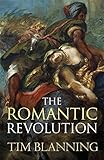
This is my review of The Romantic Revolution by Prof. Tim Blanning.

Although “by its nature, romanticism does not lend itself to precise definition”, this is a coherent and very readable introduction. Blanning even manages to interest a reader like me who finds romantic poetry and art too full of mawkish sentimentality and overblown emotion. My initial aim was simply to understand how romanticism arose as a backlash against the “cold and sterile” rationality of the C18 Enlightenment, which Blanning admits is an over-simplification.

Rousseau with his originality and “insistence on doing everything from the inside”, the “Sturm und Drang” movement in Germany and English poets like Blake and Coleridge all in their various ways attacked the Enlightenment developments of philosophy, science and mathematics as being too concerned with what could be measured and proved. Coleridge criticised rationally educated people who “were marked by a microscopic acuteness, but when they looked at great things, all became blank and they saw nothing”. He suggested that the souls of five hundred Newtons would go to the making up of one Shakespeare or Milton.

John Locke in particular was condemned for maintaining that at birth, the human mind was “white paper, void of all characters, without any ideas”. This seemed to put too much importance on development through the senses, involving social engineering, as opposed to Baudelaire’s view that romanticism lies “in a way of feeling”. It was also a focus on individual creativity from the inside out, which would give free rein to geniuses like “the romantic hero” Beethoven, or more arguably Wagner, who maintained, “Only religion and art can educate a nation – what use is science which analyses everything and explains nothing?”

The Enlightenment was also seen as hostile to history, a clear example of this being the French Revolution with its violence and imposition of a new order, treating society like a system for which the past could be erased.

With the downgrading of organised religion in the C18, art in its various forms could fill the gap, and the exploration of this forms the bulk of the book. Blanning writes of the composers who became the “high priests” of art; the poetic imagination which knows “how like a dream imagination is, how it loves nights, and solitude”, the same being applicable to writers and painters. The fascination with insanity, linked to the idea of “the mad genius” and the interest in folk art, folk dancing and folk songs are also covered. Even landscapes could become romantic, such as the Rhine and the Alps. It is easy to see how all this could feed the nationalism of German or Italian unification, fed by myths of past heroes.

In a final chapter linking to the present, Blanning shows how the force of technological change eventually forced romanticism to cede to modernism, giving the Enlightenment “the last laugh” – yet suggests in a somewhat rushed conclusion that there is now a renewed reaction to the culture of reason.

My only minor criticism is that the author makes too great a demand on the reader by flitting between examples without making the chronology clear. I like his heavy use of well-chosen quotations which create a vivid sense of romanticism in its varied aspects.

⭐⭐⭐⭐⭐ 5 Stars

“Insoupçonnable” by Tanguy Viel – The webs we weave

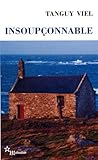
This is my review of Insoupçonnable by Tanguy Viel.

In the opening chapter of this Hitchcockian tale, Sam describes his sister Lise’s wedding to ostentatiously wealthy older man Henri, a successful auctioneer in business with his brother Edouard, unaccountably absent from the proceedings. As soon becomes clear, Sam’s resentment and uneasiness have been stirred up because he and Lise are in fact lovers, with a plan to extort money from Henri to finance a new life together in America. It is clear from the outset that this scheme will not work out as intended, but Tanguy Viel transforms what could have been a hackneyed plot by means of some novel twists.

Having also read “L’Absolue perfection du crime” and “Paris-Brest” by the same author, I soon began to note some common factors despite clearly different plots: they are all short psychological dramas with a male narrator, all involve a crime, and evoke the kind of sea and coastline found in Brittany from where Tanguy Viel originates. All have a strongly visual, cinematic quality. In the last chapter, Sam describes his feeling of being at the cinema with back projection behind a stationary car, even symbolically of his sense of driving a false car round false bends in a false world. In fact, “Insoupçonnable” has been made into a film in France.

The most distinctive factor in Tanguy Viel’s novels is the style, which is a kind of stream of consciousness with thoughts, descriptions, memories, ideas, running into each other in a way that requires total, page-turning concentration, and which only makes sense if you literally “go with the flow”. I understand the reviewer who finds the tendency to repeat phrases a little contrived or pretentious, but I like the rhythmic, at time hypnotic, frequently poetic nature of the style. These comments apply to the original French since I fear it might suffer in translation.

Two aspects prevent me from finding this a “perfect” novel. One is the fact that since the characters are somewhat two-dimensional, we do not really care about them or feel moved on their account: although the author manages to arouse in me a sympathy for Sam despite his actions, we are never told anything about his or Lise’s background, nor what brought them together. It may of course be Tanguy Viel’s intention to make everyone pawns or inscrutable manipulators in a theatrical game which the reader enjoys without any emotional involvement. Also, to the extent that Sam appears to be a semi-educated layabout on the fringe of the criminal world, it seems odd that he can compare Henri with the literary character Charles Bovary, and that he generally speaks in such a lyrical voice, which is of course the author’s, the product of much labour made to look deceptively effortless.

⭐⭐⭐⭐ 4 Stars