“Soumission” by Michel Houellebecq -Brilliant idea dissipated by a maverick skilled wordsmith into a satirical sexual fantasy

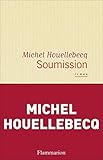
This is my review of Soumission by Michel Houellebecq.

My initial prejudice against Houellebecq, fed by critical reviews accusing him of vulgarity, obscenity, misogyny, even racism and islamophobia, was rapidly dispelled by his expressive, fluid prose and the wry sense of humour he applies not only to French society but also to himself in a self-deprecating way.

There is huge potential in his idea of a Muslim president gaining power in the France of 2022 as the unintended consequence of a misalliance between the left and right intended to keep out the National Front. I was disappointed to find that this theme was not developed in any depth or breadth. Although the book’s coincidental publication on the day of the Charlie Hebdo massacre and the author’s suggestion of the suppression of civil unrest in an upmarket Parisian square chime with recent real events, the course of events seems much gentler, milder and more “soft-centred” than that which France is suffering in November 2015 (the time of writing this).

The imagined Saudi-backed “Islamisation” of France serves only as a backdrop to the mid-life crisis of a forty-something Parisian academic who appears to be a parody of Houellebecq himself.

François is self-absorbed, verging on alcoholism in his isolation without close friends, unable to sustain a sexual relationship so forced to resort to pornography and kinky exploits with female escorts – all somewhat repellent and tedious for many readers, including me, and of interest only to extend if not exactly improve one’s French. François shows an appalling lack of concern over news of his estranged mother’s death and burial in a “pauper’s grave”, and it turns out that Houellebecq has very fraught dealings with his own mother who abandoned him to the care of others when he was very young, apparently causing him long-lasting emotional damage.

The narrator François lives off the reputation of his student thesis on the late C19 writer Huysmans with whose satirical wit and erudition both he and it would seem Houellebecq identify strongly. At one point, François suspects that his atheist hero Huysmans joined a Trappist order in later life for the material comforts this would bring, and in similar vein he “collaborates” with the authoritarian and corrupt new Islamic university system because it will provide him with the chance to choose three nubile young submissive student brides.

Switching continually between intellectualism and porn, the book is filled with digressions into the lives of long-dead writers like Bloy and Guénon about whom I learned for the first time, which combine with the ivory-tower nature of François’ existence to weaken the dramatic pace of the novel. There are fascinating little snippets of information, like the description of the Gallo-Roman “Arène de Lutèce” hidden away in the Latin Quarter. In the sometimes disconcerting blend of fiction and fact, Houellebecq tends to set scenes in identifiable buildings, and refers in often bordering on libellous turns to modern-day politicians alongside his imaginary creations.

The “submission” of the title applies to that of women, which is in turn compared to that required of Muslims to Allah. I suspect the novel will offend many Muslims as a cynical distortion of their faith, in fact it is likely to prove an unsettling read for most people. I trust it is intended to be tongue-in cheek and not largely a chauvinistic male sexual fantasy.

⭐⭐⭐ 3 Stars

A brilliant idea for a novel dissipated by a maverick of a skilled wordsmith into satirical sexual fantasy

This is my review of Submission by Michel Houellebecq.

My initial prejudice against Houellebecq, fed by critical reviews accusing him of vulgarity, obscenity, misogyny, even racism and islamophobia, was rapidly dispelled by his expressive, fluid prose and the wry sense of humour he applies not only to French society but also to himself in a self-deprecating way.

There is huge potential in his idea of a Muslim president gaining power in the France of 2022 as the unintended consequence of a misalliance between the left and right intended to keep out the National Front. I was disappointed to find that this theme was not developed in any depth or breadth. Although the book’s coincidental publication on the day of the Charlie Hebdo massacre and the author’s suggestion of the suppression of civil unrest in an upmarket Parisian square chime with recent real events, the course of events seems much gentler, milder and more “soft-centred” than that which France is suffering in November 2015 (the time of writing this).

The imagined Saudi-backed “Islamisation” of France serves only as a backdrop to the mid-life crisis of a forty-something Parisian academic who appears to be a parody of Houellebecq himself.

François is self-absorbed, verging on alcoholism in his isolation without close friends, unable to sustain a sexual relationship so forced to resort to pornography and kinky exploits with female escorts – all somewhat repellent and tedious for many readers, including me, and of interest only to extend if not exactly improve one’s French. François shows an appalling lack of concern over news of his estranged mother’s death and burial in a “pauper’s grave”, and it turns out that Houellebecq has very fraught dealings with his own mother who abandoned him to the care of others when he was very young, apparently causing him long-lasting emotional damage.

The narrator François lives off the reputation of his student thesis on the late C19 writer Huysmans with whose satirical wit and erudition both he and it would seem Houellebecq identify strongly. At one point, François suspects that his atheist hero Huysmans joined a Trappist order in later life for the material comforts this would bring, and in similar vein he “collaborates” with the authoritarian and corrupt new Islamic university system because it will provide him with the chance to choose three nubile young submissive student brides.

Switching continually between intellectualism and porn, the book is filled with digressions into the lives of long-dead writers like Bloy and Guénon about whom I learned for the first time, which combine with the ivory-tower nature of François’ existence to weaken the dramatic pace of the novel. There are fascinating little snippets of information, like the description of the Gallo-Roman “Arène de Lutèce” hidden away in the Latin Quarter. In the sometimes disconcerting blend of fiction and fact, Houellebecq tends to set scenes in identifiable buildings, and refers in often bordering on libellous turns to modern-day politicians alongside his imaginary creations.

The “submission” of the title applies to that of women, which is in turn compared to that required of Muslims to Allah. I suspect the novel will offend many Muslims as a cynical distortion of their faith, in fact it is likely to prove an unsettling read for most people. I trust it is intended to be tongue-in cheek and not largely a chauvinistic male sexual fantasy.

⭐⭐⭐ 3 Stars

Sidelined or overrun?

This is my review of The Edge: Is the Military Dominance of the West Coming to an End? by Mark Urban.

Mark Urban expresses in clear, concise terms his concern over the West’s recent sharp contraction in its capacity to defend its own populations, and others, from attack by the expansionist, intolerant and undemocratic enemies currently on the increase. He suggests that the West has been too complacent and premature in scaling down its military capacity after the collapse of communism and apparent end of the Cold War in the ‘90s. For instance, despite its heavy dependence on sea trade, the UK has for the first time in centuries cut back on its commitment to sea power, resting on the shaky, even false assumptions of the “protective power of the US, the technological superiority of the West, and the absent of direct threats to the security of the British Isles”. Although some of his statistics are unavoidably already out-of-date, and the book was written before the rapid upsurge of migrants into Europe, and the appalling attack by ISIS on Paris in November 2015, his theme is very timely.

Even western politicians who foresaw the “loss of edge”, made poor use of their residual advantage in, for instance, their clumsy dealings with Russia in the 1990s when there was a chance to develop capitalism on a sound basis and a strong positive alliance after the fall of communism. Also, the negative fall-out from the botched US/European interventions in Afghanistan and Iraq is all too well-known, with its inevitable effect of turning public opinion against further military attempts to maintain western style democracy and values in countries which may not really want them.

Perhaps in the desire not to weaken his essential message, Mark Urban does not explore the inevitability of the US “monopolar” power giving way to a “multipolar” world in which China and India become major players which European countries vie with each other to court, despite their abuses of human rights. Nor does he spend much time on the dilemma that the West’s “edge” has never been morally justifiable and has often been misused, as in sowing the seeds of the intractable conflicts in the Middle East .

Urban’s central argument is that, apart from a continued lead in innovation and technology, the West’s loss of “edge” is already undermining the ability to agree on “everything from climate change to how a pariah state is handled. In such a future international dystopia, problems will escalate faster and potentially to more devastating effect. More actors – state and otherwise – will be in possession of … nuclear, chemical and biological arms….. Politically disunited, prosperous and practically undefended, Europe starts to look distinctly vulnerable.” He warns against the tendency for Western leaders to “speechify” rather than form coherent plans, to undermine their promised defence spending by implementing cuts. So, “they will more often find themselves watching from the sidelines as ungoverned space expands and the values prized in liberal democracies are violated”.

⭐⭐⭐⭐ 4 Stars

“The Lady in the Van” by Alan Bennett – Having the last laugh

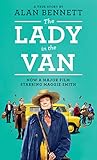
This is my review of The Lady in the Van by Alan Bennett.

Already produced as a memoir and well-received play, the tale of the eccentric “Miss Shepherd” who squatted in a dilapidated van on the forecourt of Alan Bennett’s London home for fifteen years, has now become a film. It is marked out by Maggie Smith’s superb and flawless performance which captures a sense of the maddening, manipulative woman who is tolerated, and even helped in an ineffectual way, by a possibly somewhat caricatured group of comfortably off, self-styled liberal-minded middle class neighbours too polite to behave otherwise.

Commencing in the 1970s, the drama has the nostalgic air of past, somehow more innocent and less fraught times, predating the tight parking restrictions, health and safety concerns and care plans for the elderly (however inadequately implemented) of today. When the council comes round with a yellow-line painting machine, Alan Bennett caves in and allows the new van donated by a local titled Catholic do-gooder to be driven onto his driveway. It is not long before Miss Shepherd conducts her ritual of plastering the vehicle with yellow paint thickened with lumps of Madeira cake.

Alan Bennett’s kindness  overlies the writer’s irrespressible urge to milk Miss Shepherd’s potential  for future publication. Such is the old lady’s reticence that he does not discover the full facts of her life until after her death, which lead him to reflect that, despite her years of confined existence, she has  in some ways had more firsthand experience than he has, relying on observing others from the safety of his comfortable and essentially conventional life.

The story is full of humour as when Alan’s assumption that Miss Shepherd’s claim to having been “followed home by a boa constrictor” is a sign of her madness is undermined by the discovery of a snake in a neighbour’s garden following a mass escape from a local pet shop. Yet beneath the laughter is the deep sadness of the wasted life of a talented pianist who was forced to give up playing following her insistence on becoming a nun, a calling to which she was clearly completed unsuited. There is also the tragedy of as society which cannot cope with an individual who is highly talented yet difficult to the point of being labelled mad – also the irony of the social services coming too little too late to the scene, and failing to understand Alan’s pragmatic, literally “hands off” support. Bennett pulls no punches over the squalor involved in van-life, and  captures all too accurately the indignities of old age, the incontinence, increasing unsteadiness, aggravated by poverty. So, one ends up laughing but also sad for a tale of lost promise and over intimations of one’s own fate in old age, and guilt over not helping elderly people more.

⭐⭐⭐⭐⭐ 5 Stars

“Three Men in a Boat & Three Men on a Bummel” by Jerome K. Jerome – Messing about on the river

This is my review of Three Men in a Boat & Three Men on a Bummel (Wordsworth Classics) by Jerome K. Jerome.

When I read this as quite a young child, it seemed hilarious. I’m referring, for instance, to George and Harris rushing round in search of the butter, until realising that one of them had sat in it. Struggling dutifully through it more recently for a book group, it seemed rather silly and very dated, although I could still laugh at the succession of locals claiming to have caught the ever weightier trout encased on a pub wall, only for it to turn out to be made of plaster, when one of the clumsy three accidentally knocked it down.

I found a bit of research on the story much more interesting. Publication in 1889 was earlier than I had imagined i.e. not Edwardian. After the passing of the 1870 Education Act, and the extension of cheap rail fares giving people ready access the Thames, there was a sharp increase in the demand for amusing, easily read books and in the appreciation of boating as a pastime. This was perhaps a comic novel ahead of its time, much Victorian reading matter still being a bit sententious and worthy. So, there was a sharp contrast between the popularity of the book (which has never been out of print), and the snooty response of critics, even in Punch.

The author himself came from a once prosperous middle-class family which had fallen on hard times. So, despite his grammar school education, he had to start work as a young teenager, which obviously gave him a wide experience of life and the ability to relate to ordinary people. His unusual name was partly due to his father Jerome Clapp adding another Jerome to make it sound more distinguished. The “Klapka” came from a Hungarian who lodged with the family for a while.

I can see that what is really a series of amusing anecdotes, observations on daily life and snippets of local history on the areas bordering the Thames is appealing to us now in its innocence and nostalgic portrayal of a lost age. This probably remains a classic which you should read, the younger the better, although I doubt if a tale of three gormless middle-aged men rowing up the Thames more than a century ago would appeal much to this audience.

⭐⭐⭐ 3 Stars

Does the overblown style enhance or detract from a thought-provoking modern fable?

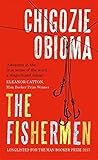
This is my review of The Fishermen by Chigozie Obioma.

When, despite their mother’s pleas, their stern father accepts the transfer to a bank “a camel’s distance of more than a thousand kilometres away” in northern Nigeria, four brothers slide into mischief, playing as fishermen at a dangerous out-of-bounds river. The cursing of the eldest, Ikenna, by a local madman, triggers a chain reaction of family tragedy extending far beyond the expected fateful climax.

The novel is saved from total bleakness by touches of ironic humour and vivid insights into Nigerian small-town life – the superstition, tradition, squalor, corruption and lurking violence bizarrely mixed with possession of western consumer goods and evangelical Christianity – from an author who has experienced it first-hand in the very community of Akure where the tale is set.

My reaction to the original, quirky prose is ambivalent, since its raw power is (for me) continually sabotaged by the distracting effect of mangled metaphors and misused terms. Is this style intentional? Is it brilliantly creative? Does it too often become just plain irritating? I can’t decide.

To provide a few examples out of thousands:

“crumbs of information began to fall from Mother’s soliloquy like tots of feathers from a richly plumed bird”; “in the distance, a wild motoring road undulated on the swathe of dirt road”; “the din of an aircraft flying overhead mopped his voice into a desperate whimper” In a sprawling bazaar, “the procession had zipped through the thin path between boulders of humans, stalls and shops, their trucks plodding ponderously to attract the market people”; “a clear sky had bared its teeth”; at a grave, “with a bewildering air of apathy, the diggers dug on, quicker”; the udder of courage from which we’d drunk our fill had been drained, and was now shrunken like a crone’s breast. He spat and wiped it into the earth with his canvas shoe”.

The oddness of the style may chime with the viewpoint of the former nine-year old self of Benjamin, the narrator who is recalling events two decades later. It may also capture the idiom of a strong Nigerian oral tradition of storytelling, but it often reads like a children’s story with an inappropriately dark and gruesome content. The spate of extreme and over-the-top emotional outbursts tends to batter the reader into insensitivity, seeking relief by disengagement from what is in essence an unbearably moving tale of the hand of fate.

Since the book reached the Man-Booker shortlist, the bar of critical review is inevitably set fairly high. As I tend to regret the current strait-jacketed contrivances of creative writing, perhaps I should be more enthusiastic about Chigozie Obigoma’s untrammelled out-pouring from the heart. Perhaps I should compare his style to Van Gogh’s brilliantly coloured, distorted landscapes as opposed to the uptight purity of classical art. My reservations may be best understood by reference to the subtle, fluid eloquence of another Nigerian writer, the late Chine Achebe.

⭐⭐⭐⭐ 4 Stars

Flourishing like a flower of the field

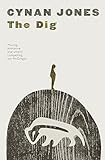
This is my review of The Dig by Cynan Jones.

Daniel, a decent, gentle young man with a deep love of the Welsh countryside where he grew up, is exhausted not only by the effort of running an isolated sheep farm, but also by his unsuccessful struggle to come to terms with a personal tragedy. “The big man” strikes fear in everyone he meets, prison being the only thing he dreads. His love is reserved for his dog Messie a vital assistant for his obsession with flushing out badgers for a sinister purpose which gradually becomes clear. The contrast between the two men is shown by their reactions to the digging up of the mysterious metal shard, which Daniel invests with mythical properties, “a piece of lightning solidified there”, whereas the big man values it only as a source of scrap. This short, intense novel seems to be working towards an unpredictable confrontation between these two men, the anticipation of which makes the book a page-turner, despite its slow pace, detailed descriptions and few events.

Yet I knew that it was vital to read slowly, to absorb every phrase, for what makes this book remarkable is the style which is like a sustained prose poem. There are striking images of fleeting thoughts, the weather, wildlife as well as darker scenes – perhaps sometimes unduly brutal or bleak – involving problems over the delivery of lambs, or the baiting of badgers.

Cynan Jones makes us think about the minute aspects of daily life: the shoes with the backs worn down because Daniel has never bothered to put them on properly which “ at first… looked comfortable and loved, but actually they had the unfulfilled imbalance of things which had not been used to their fullness”. Or the importance and complexity of sounds for Daniel in a quiet landscape: “how in this prehensile night there could come the illusion of the sea nearby….the wind coming over the trees then dropping through the hedges …… with the distant noise of waves breaking and running….such… that he could not be sure this wasn’t the sound of the shifting tides carried from the coast that was dropped away out of sight a few miles off.” Or simply: “It was brewing to rain again, the sky bruising up and coming in from the sea”.

Although less sensitive, the big man also knows the country well: at night, when he was up to no good, “it was a time of mixed certainty for him, with… people awake at night, but they were also busier and distracted and with that general busyness disregarded noises more readily, accepting them as the product of another’s work.”

Some sentences seem too contrived like “I’ll give it four hours, he thought, attritionally” but you could argue this is both original and an example of poetical experimentation which cannot “work” every time for all readers.

I would give this book five stars without reservation if were not for the ending, which is disappointing in seeming sketchy, underdeveloped and, as another reviewer has commented, too “rushed”. Yet, plot is clearly not the author’s main concern.

⭐⭐⭐⭐ 4 Stars

An engrossing and informative masterpiece

This is my review of The Age of Wonder: How the Romantic Generation Discovered the Beauty and Terror of Science by Richard Holmes.

Although C18 Romanticism grew as a reaction to the cold rationality of the Enlightenment, which reached the depths of brutality in the excesses of the French Revolution, Richard Holmes challenges the view that the subjectivity of Romanticism was consistently opposed to the objectivity of scientific advances. He explores what he defines as the “Age of Wonder”, the fertile and inspiring period involving discovery of the natural world through exploration, overseas and vertically into the heavens, and inventions in the use of energy, such as gas or electricity. This period is bounded by two famous voyages: Captain Cook’s expedition to Tahiti aboard the Endeavour starting in 1768, and Charles Darwin’s to the Galapagos Islands on the Beagle in 1831.

This fascinating and very readable book, which sets science in an intriguing social context and makes it accessible to a reader with little prior knowledge, is like a series of mini-biographies. It begins with Joseph Banks, who as an energetic and charismatic young self-taught botanist not only collected an impressive range of plants, but demonstrated broad-minded skill in living with the native Tahitians on equal terms, negotiating the crew’s way out of awkward situations with his flexibility – the lack of this no doubt led to Cook’s brutal murder on a subsequent voyage without Banks.

The next subject is William Herschel, again self-taught, who developed astronomy with his mapping of the heavens, and discoveries of the planet Uranus and numerous nebulae, assisted by his long-suffering and underestimated sister Caroline, “the tough little German” who painstakingly recorded his observations as he “kept his eye clear” by gazing without interruption into the telescopes he had constructed himself. Holmes shows us how Herschel’s work inspired Romantic poets like Shelley, Byron and Coleridge to include references to the moon and boundless universe in their work.

The development of balloons, starting with the Montgolfier, improbably made from paper and named after the wealthy manufacturer of that product, led to a mania for this type of transport which often ended in tragedy, and justified Joseph Banks’ reservations about its usefulness, in his important role in as President of the Royal Society, a talent-spotter and promoter of worthwhile scientific projects.

Humphrey Davy is also a major player, risking his life experimenting with nitrous oxide, the laughing gas which, seeming like the C18 equivalent of smoking pot, made Davy for a while the butt of mockery in the scurrilous press, although his discovery of the miner’s safety lamp was much admired.

Holmes ranges widely: the frequent rivalry between what were at first vaguely called “natural philosophers”, only recognised after heated debate as “scientists” from 1833; the attempts to interpret and popularise science for the public by writers including the mathematician Mary Somerville, at a time when women were only allowed to selected meetings of the “Literary and Philosophical” societies springing up round the country; the tendency to skirt round the issue that ongoing discoveries of astronomical “deep space” and geological “deep time” tended to threaten “safe religious belief” with “dangerous secular materialism” – for the “Age of Wonder” preceded the bombshell of Darwin’s “On the Origin of Species”, not published until 1859.

⭐⭐⭐⭐⭐ 5 Stars

Something lost in the telling

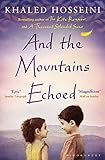
This is my review of And the Mountains Echoed by Khaled Hosseini.

On the eve of a fateful journey, impoverished villager Baba Ayub tells his children the story of the “div”, the demonic giant of Afghan folklore who requires a father to hand over one of his children: the man is understandably traumatised until he grasps that as a consequence his boy has gained a much better existence. In succeeding chapters, the “life” of the novel imitates the “art” of the folktale.

This novel is like a series of short stories spanning six decades from 1952, located in Afghanistan, France, the United States and Greece, switching between the viewpoints of a succession of sometimes tenuously related characters: Afghans driven from their land, those who have prospered from the war, expatriates who fallen in love with the country. Although it is often interesting to see different perspectives on the same events, the digressive approach, large number of characters and extraneous detail tend to weaken the power of the narrative drive. There are many poignant moments, but I often felt that the author is telling me what to think rather than letting me analyse people’s behaviour and feelings for myself. The “voices” used are often too much those of an educated, middle-aged man – the author – rather than the characters in question: the chauffeur-factotum Nabi and Gholam the dispossessed teenager brought up in a refugee camp, are cases in point. As a qualified doctor, Hosseini may be less disturbed by maladies than the average reader, but the high incidence of illness and premature death amongst the characters, not least those in more privileged positions, is unduly depressing, miseries laden upon the misfortunes of Afghanistan. The unrelenting blows which strike even the most fortunate are offset by passages of extreme sentimentality which grated on me.

After the huge success of his first novel “The Kite Runner” and the searing account of the plight of Afghan women in “A Thousand Splendid Suns”, Khaled Hosseini’s third novel “And the Mountains Echoed” cannot fail to be a bestseller, but I found it somewhat disappointing. With his role to promote humanitarian assistance for Afghanistan, the author is well-placed to record interviews with a wide range of real people with various types of involvement in this war-torn land, and I would have found an account of these more rewarding than this rambling and sometimes mawkish novel, although it is clearly to many readers taste in various cultures.

⭐⭐⭐ 3 Stars

There but for fortune…

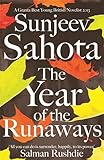
This is my review of The Year of the Runaways by Sunjeev Sahota.

Randeep, Avtar and Tochi are all economic migrants from India, crammed with others into a small terraced house in Sheffield where they work illegally on a building site, paid far below the minimum wage by an unscrupulous gang-master. It took a while for the author to establish their backstories, but eventually I became engrossed in their individual lives, and the different chains of misfortune which led them to obtain falsely or infringe the terms of their visas.

This is a fascinating insight into Indian culture: the continued level of violent prejudice against untouchables like Tochi, even amongst British Indians; the lack of a social security system in India to support Randeep’s upper caste family when his father falls ill, aggravated by his mother’s view that it is socially beneath her to work; the complex network amongst British Indians in which illegal migrants are both exploited and assisted, not least the gurdwara or places of Sikh worship where desperate followers of the faith can often get temporary bed and food. Randeep’s British “visa bride” Narinder also makes us think about the role of women in segregated communities who are repressed by fathers and brothers, denied the chance to gain any qualifications or the right to work, for whom breaking free means bringing shame on parents they may love too much to hurt.

Despite being a powerful and gripping story, strengthened by what seems to be authentic knowledge, it is weakened by a clunky structure and often incongruous style. There are almost too many characters to grasp, although you could say this gives a Dickensian touch, too much mundane or minute detail which saps the narrative drive, although this may also help one to visualise the scene, except, of course, where there are too many distracting Hindi (?)/Sikh terms making the confused and irritated reader long for a glossary.

My main problem is with the frequent odd turns of phrase: “earplugs emerged from her neckline to noodle about her chest”, “the writing desk too narrow for the three large oval doilies it was dressed in”, the urban stretch of rivers with “just the odd fishermen thickly hidden”, “she repaired to the outside toilets” (archaic in context). I cannot decide whether the approach is a daring attempt at poetical language which sometimes works as in “the sunlight squandered itself across the world”, or the errors of someone for whom English is a second language. I agree with other reviewers who have called for sharper editing, excising the indulgent wordiness and digressions, but since I have often complained about the formulaic effect of creative writing classes, perhaps this apparently spontaneous torrent of page-turning, thought-provoking flawed talent comes as a breath of fresh air.

The final Chapter 14 ends abruptly, leaving questions unanswered as to exactly how the main characters arrive at the “almost happy ending " of the i-dotting epilogue, a bland anticlimax after the unrelenting blows of the main text, although bitter ironies still lie just below the surface.

⭐⭐⭐⭐ 4 Stars