This site will share with you hundreds of book and film reviews written since 2009. Also a chance to discuss these reviews together with some of my creative writing to be added.
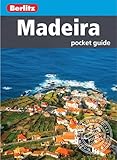
This attractively produced little guide provides a useful summary of the main points of interest when planning a short visit, but I found it quite hard to use during my holiday because it proved short on precise details of public transport and the geography of places bearing in mind that Madeira is lacking in clear signposts and information boards for tourists. It does not consider sufficiently how places appear from the viewpoint of a total stranger.
For instance, it would be useful to know which buses useful for excursions start near the "Teleféricos" cable car to Monte, or that on leaving the bus from Funchal at Ribeiro Frio you need to walk on up the hill round to the left to find the start of the levada walk to the viewing platforms, and so on.
The guide would have benefited from more maps and walking routes (say from the Funchal Lido to Formosa Praia and on to the fishing village of Camara de Lobos, rather than chatty descriptions of say "leviathan" sperm whales (which actually resemble black logs in the water except when they dive). The index is also unclear since it does not highlight the main reference to each place e.g. for the highlight of Monte it's page 41.
I found the Lonely Planet Pocket Guide less "pretty" but of much more practical use.
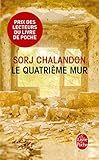
The “fourth wall” of the title is the invisible barrier between the imagined world of the cast on stage and the reality of the audience and the outside world. It is 1982, and French historian Georges whose true love is the theatre promises his dying friend the enigmatic pacifist, Greek Jew Samuel Akounis that he will stage Anouilh’s “Antigone” during a negotiated cease-fire in a bombed Beirut cinema using actors drawn from opposing Lebanese groups: Antigone will be played by a Palestinian refugee, her lover by a Muslim Druze, her autocratic father by a Christian phalangist, his guards by Shiites and so on. Georges’ wife Aurora, understandably dismisses this as a dangerous folly, and the explosive flash-forward of the opening chapter indicates from the outset that the project will not end well.
Its achievement or otherwise does not really seem to be the point: just as Anouilh used the Greek tragedy to honour the French resistance to Nazi domination, Chalandon seeks to reinterpret it through the drama of the futile, self-perpetuating Lebanese conflict. It is not merely a simple case of individuals who have been conditioned to hate each other laying aside their grievances. Ironically, each player is persuaded or permitted to take part by a different cultural interpretation of the Greek tragedy. Yet when a resurgence of violence breaks through the fourth wall, roles are reversed and distorted as real life becomes the drama.
This novel is often theatrical and soaked in symbolism, as when Samuel gives Georges sand from Jaffa for the Palestinian actors who have been forced to leave their land – this has an obvious parallel with the earth Antigone insists on scattering over her brother’s corpse in defiance of her father Creon.
Some of the most powerful passages are descriptions of the Palestinian camps and the tension created by snipers, reflecting Chalandon’s background as a journalist. There are some strong play-like dialogues, although I agree with the reviewer who found a lack of development in the characters who tend to be stereotypes of the groups they represent. After somewhat rambling and disjointed opening chapters, this novel turns out to be both original and to have a carefully constructed plot which falls into place at the end like pieces of a puzzle. Yet it is undermined for me by the “stagey” approach permeating many scenes, rendering them artificial and contrived with a reduced potential to move the reader. I often found the sentimentality mixed with extreme violence quite distasteful, as when a sniper insists that Georges grasps his leg to feel the vibrations when he fires his weapon, only to start quoting Victor Hugo. Is this intended to redeem him by suggesting that he is a man with a soul despite his brutality?
I am not usually put off a book by my dislike of the main character, but in this case was often repelled by the self-absorbed, naïve, misguided, unstable narrator, clearly “turned on” by violence, who casually abandons the wife and child he professes to adore, who falls for his leading lady and lets everyone know it, who lies to people because he is too cowardly to admit the truth, not to mention his casual exposure to great risk of the driver Marwan who loyally assists a project about which he is profoundly sceptical.
The novel irritated me as I read it, but left me with a sense of ambiguity both as to what the author intended and what I actually drew from it.
This is a detailed study of the colonisation of the Atlantic shores of North America by some 350,000 English migrants during the seventeenth century. With the Mayflower in mind, we may tend to think of them mainly as Puritan dissidents seeking religious freedom in Utopian communities, but many were adventurers and entrepreneurs lured by the prospect of developing fertile lands or the labouring poor hit by population pressure in England, who together with “reprieved felons, prisoners of war, kidnapped children and adolescents” often found themselves “pressed into indentured service” as a replacement of the old feudal system. Malcolm Gaskill presents the contrasts between the New England settlements creating a jumbled geography of English place names, the tobacco plantations of Virginia, and sugar plantations of the West Indies with their growing reliance on African slave labour.
I had not appreciated the extent to which settlers fought each other: those arriving to claim a grant of land might find it already being farmed by earlier arrivals. The subsequent brutal genocide of the native Indians may be understood, although clearly not condoned, as a response to the bloody raids in which bands of Indian, sometimes in league with the French, would creep out of the woods to wipe out a New England settlement. Clearly, the colonies suffered from the lack of realism of successive monarchs and establishment figures who supported ventures without supplying sufficient resources to give a reasonable chance of success. “Colonial news was old news” so that by the time a pioneer reached home with favourable reports, life back in say, Jamestown could have become very grim. Another aspect I had failed to consider was the extent to which different nonconformist groups carried their differences into the New World. Legislation against Catholics in England drove them to emigrate too, with the result that Maryland became feared as “too Catholic” by some Virginians, compounding the problem that it was regarded as encroaching on their rightful territory.
Malcolm Gaskill is clearly hugely knowledgeable on his subject, which he has chosen to explore through a tidal flow of specific examples, ordinary individuals and incidents, often quoting verbatim from original texts. He creates vivid snapshot impressions of pioneer life: images of euphoria turning to despair as the harsh, winters set in, or the unexpected short-lived paradise of gorging on Maine lobsters and swapping the heads for beaver skins with the initially well-disposed because yet to be abused Indians who rowed out to meet settlers.
My problem was the author's bombarding of the reader with a disjointed, indigestible switching between different characters, topics, regions, even in the same paragraph, with analysis which often seems either self-evident or somewhat woolly. I found myself trying to get round this by using the index to follow threads which intrigued me, such as the fate of one Mary Rowlandson who fired on Indian attackers to defend her home, only to be taken prisoner, yet survived to write a best-seller on her ordeal, mentored by the wonderfully named Increase Mather. Too much effort is needed to sift out a coherent grasp of, for instance, relations with the Indians or an analysis of the “witch trials” which seem so much more extreme than equivalent prejudice in C17 England.
I am also puzzled that the author did not extend his coverage up to the American War of Independence, nor include a little more background on the opponents of English colonisation, notably the French and specific Indian tribes.
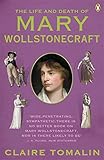
After somehow failing to appreciate Mary Wollstonecraft’s importance, perhaps because of the anti-feminist backlash which arose after her death and dominated British society until the C20, I have at last been won over by Claire Tomalin’s excellent biography, rightly praised by the historian Plumb: “There is no better book on Mary Wollstonecraft, nor is there likely to be”.
Mary is portrayed very honestly, warts and all, as often controlling and opinionated, in her youth prone to dominating less intelligent and assertive girls, yet demanding their affection. Once she had discovered the sexual attraction of men, she could repel them with her intensity, even naively suggesting on at least two occasions some kind of “ménage à trois”, and in turn was bitterly disappointed by their preference for relationships with pretty but less clever women, although they seem to have enjoyed the stimulus of her conversation. On finding herself pregnant for a second time, her insistence on marriage to the philosopher-writer Godwin seems in contradiction to her feminist principles, but she cannot be blamed for seeking some security after being driven to attempted suicides (she was prone to depression) over the humiliation of abandonment by her fickle lover Imlay, leaving her with a small daughter.
On a more positive side, Mary was courageous if foolhardy, setting off alone to experience first-hand the French Revolution in Paris despite the danger of the psychopathic Robespierre and the guillotine, or to Scandinavia with a baby and nursemaid in tow, to help solve Imlay’s financial problems. An original thinker on the basis of experience of unfair treatment as a girl and of her reading rather than formal education, she displayed a surprising confidence, being one of the first to launch into print against Edmund Burke’s attack on the Dissenters as a dangerous force likely to bring dangerous revolution in England: her “A Vindication of the Rights of Man” brought her instant fame, on a par with Thomas Paine. Determined to support herself, she was not afraid to approach her influential publisher Johnson with a request for work.
Ironically, her widowed husband Godwin not only tarnished her reputation by his frankness over her practice of “free love” but belittled her in stating, “The strength of her mind lay in intuition….yet in the strict sense of the term, she reasoned little”. In fact, what shines out across the span of more than two centuries is the coherence of her thoughts, her wry wit and eloquence. For instance, while acknowledging the violence of the French Revolution, she justified the need to achieve greater quality: “to preclude from the chance of improvement the greater part of the citizens of the state…can be considered in no other light than as monstrous tyranny…. for all the advantages of civilisation cannot be felt unless it pervades the whole mass.”
The death in childbirth of a vigorous, healthy woman who had recently found happiness was very poignant, but Mary would have been furious had she lived to read such observations from female writers as “ “in the education of girls we must teach them more caution than is necessary for boys…they must trust to the experience of others… must adapt themselves to what is”, “girls should be more inured to restraint than boys”, “must soon perceive the impossibility of their rambling about the world in quest of adventures”.
François Bégaudeau’s portrayal of a young teacher’s struggle to teach French to a multi-ethnic class of fourteen-year-olds in a tough Parisian suburb was made into a Palme d’Or-winning film. I found the film more effective, in that the teenage pupils who improvised their role for weeks to get into their parts are very convincing, while the inspired director Laurent Cantet manages to select characters and scenes from the book to create a much stronger narrative than the original.
In a succession of short scenes over the course of a school year, Bégaudeau’s book uses continual repetition to create a surreal, groundhog day sense of the claustrophobic world of teaching: in the staffroom, Bastien forever eats dry cake, and the rest spend their time cadging change for the defective coffee machine, asking how to produce double-sided sheets on the erratic photocopier, and despairing over their classes in Pinteresque conversations. As for the class, Souleymane persists in coming to each lesson with his hood over his hat, the disaffected Dico keeps pestering for a transfer to another class, and Bégaudeau’s attempt to teach his pupils arcane points of grammar, as prescribed by the state, or the rather more useful ability to reason, are scuppered by their ignorance of basic vocabulary. Yet, they can be remarkably perceptive at times, and their constant complaint to Bégaudeau, “Vous charriez trop” seems justified in some ways. Although he clearly wants to teach them to think, and has a soft spot for the more cooperative students and the bright, extrovert dynamo Sandra, the system is against him. “I slept badly” is a cue for an outburst of sarcasm or worse on his part, as when he calls students “imbeciles” or accuses girls of “having the attitude of a slut”. At times, he loses all dignity in a slanging match verging on violence with the insolent Dico who get under his skin, for whom he regularly abandons his class to drag the youth before the Principal – a well-intentioned but ineffectual man who reminds me of President Hollande.
In this tragi-comedy, the teachers resemble the pupils too closely: with the three rings in one ear and tee-shirts with motifs of fire-breathing dragons and unicorns, is Leopold clearly distinguishable from a student? Also, the staff express themselves in such a slangy, colloquial way that one wonders how the students can ever learn good practice.
The book is hard for a non-French reader because of all the “argot” and unfamiliar practices but made me curious as to the contrasts with British secondary education. The French system seems much more complicated, yet alarmingly democratic in, for instance, having student representatives at certain review meetings such as “le conseil de classe”. Since many of the scenes are very funny, one can read this purely as a tragi-comic farce, but underlying it all is the dilemma of how to teach a diverse group effectively, as implied by the twenty-two probing questions on best practice which form one chapter.
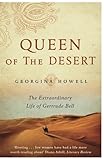
The great wealth of the steel-making Bell family gave Gertrude the means, confidence and connections to pursue a succession of interests. After becoming the first woman to be awarded a First in Modern History at Oxford, Gertrude found the conventions of upper class life in late Victorian England far too constraining. She became a linguist, translator of Persian poetry, mountaineer who achieved a number of “first” ascents of challenging peaks, archaeologist, desert traveller, writer, intelligence officer, confidante of King Faisal in the newly formed Iraq of the 1920s and Director of Antiquities who established a museum in Baghdad.
She was clearly enthralled by the romance of Arab desert culture, not least the handsome sheikhs in their striking robes, who may have accepted her because she was so unlike any other woman they had ever met: when she came to their tents bearing gifts and wearing evening dress, they called her “the Khatun” or “Desert Queen” but when she appeared in breeches riding astride she probably seemed to them more like a man.
Georgina Howell’s heavy use of lengthy extracts from letters and reports is as effective as she intended in conveying a sense of Gertrude’s ability to communicate, great energy, enthusiasm and wry wit. We gain a strong sense of a determined, opinionated woman who was often unconsciously snobbish – anticipating the need to correct the governess likely to call napkins "serviettes" – and contemptuous of “quite pleasant little wives” who meekly conformed.
At times, I was aware of repetition, or longwinded description that is hard to digest, but in the main the author’s marshalling of a mass of information is quite impressive. I find her a little too uncritical of Gertrude’s active campaigning as founding secretary of the Women’s National Anti-Suffrage League in 1908: the idea that do-gooding visits with her mother to the homes of the working poor had convinced her that women “at the end of their tether” managing families on a tight budget simply did not have time to gain the education to vote seems patronising, even hypocritical in someone so resolved on fulfilment in her own life.
Yet, Gertrude was in some ways quite conventional: in her early twenties, she accepted her parents’ rejection of a fiancé considered to lack the means to support her, although his death in ambiguous circumstances shortly afterwards must have haunted her. Love was the one area in which success eluded her – a prolonged affair was doomed since it was with a married man who clearly had no intention of leaving his wife, while despite her physical bravery it seems Gertrude could not find the courage to consummate their relationship.
Perhaps owing to lack of evidence, Georgina Howell glosses over Gertrude’s probable suicide on finding herself in her late fifties having run out of fresh challenges with only the bleak prospect of a painful death from decades of chain-smoking. I often had a sense of a life frenetically packed with activity which masked an inner unsatisfied longing.
I suspect that Gertrude’s role in the formation of an independent, “democratic” Iraq is slightly exaggerated, but it is a fascinating tale which inspires me to read more about Arab history. The parallels with today are very striking: the unstable union of tribes over which Faisal attempted to hold sway, the reluctance to accept British support in keeping control, the difficulty of defining a border with Turkey and accommodating the Kurds, the divisive Shia-Sunni conflicts prompting Gertrude’s “blackest hatred” for Ibn Saud’s Akhwan (now Wahabis) “with their horrible fanatical appeal to a medieval faith…. the worst example of an omnipotent religious sanction”.
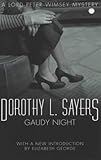
Her celebrity as a writer of detective fiction gives Harriet Vane the confidence to visit 1930s Oxford for a “Gaudy Night” celebration for the first time since graduating from Shrewsbury College where she was so happy before the trauma of being falsely accused of poisoning her lover and saved from the gallows by the intervention of amateur sleuth Lord Peter Wimsey. When the activities of a poison pen poltergeist begin to threaten the peace and the reputation of the College, Harriet is called back to investigate.
I found this novel entertaining although it proved as dated as I had feared, including in ways I had not expected. In terms of style, it often feels like a novel written a century earlier than it was.The frequent Latin quotations and Greek tags with no translations provided are particularly irritating, but perhaps an educated reader of the time would have had no trouble knowing what they meant. Alternatively, having been taught Latin since the age of six by her father, perhaps Dorothy Sayers overestimated the capacity of her readers, or with the dismissive arrogance often shown by Harriet maybe considered that if they could not understand it they could lump it. There is a similar kind of academic elitism in the often abstruse quotations from sixteenth century writers included at the start of most chapters. Yet the irony is that the female dons of Shrewsbury College frequently behave with the emotional immaturity of the pupils of Enid Blyton’s “Mallory Towers”.
As a detective mystery, the plot is rather thin. This is much more a psychological study of a group of women pursuing careers in a privileged cocoon, yet continually troubled by the sense that they are regarded as inferior to their male counterparts (in separate cocoons) and by doubts as to whether they have made the right choice. Should they have satisfied the desire for a man instead, even at the cost of having to further his career rather than their own, or of sacrificing self-fulfilment to putting their children first? Harriet naturally arouses resentment since she appears to “have it all”: a career in the big wide world, the option to become an academic, and a very wealthy suitor offering her future security for the taking.
For the most part Harriet and Lord Peter (Why does he have to be an aristocrat except to feed some fantasy of the author’s?) communicate for the most part through the exchange of literary quotations and witty ripostes. One of Harriet’s reasons for refusing his regular proposals of marriage seems to be that he makes her feel inferior. With justice, it would seem, in that she has to call him in to solve the crime, and even rewrites her novel to take account of his criticisms of her leading character Wilfred. There is also a double standard in the indulgent attitude to the idleness of Lord Peter’s student nephew, whereas Harriet rages against the “waste” of the place offered to an “ordinary” girl who has only come to Oxford to please her parents.
Many scenes make me uneasy in their elitism: Lord Peter calling a waiter continually to pick up the napkin which has slipped off Harriet’s silk skirt, or Harriet betting in a College sweepstake, not on a horse, but on the student most likely to win a prize.
Despite Dorothy Sayers apparently unconscious snobbery – a product of her times – she sometimes mocks the conventions: the male dons’ ludicrous popping formal shirt-fronts; the pleasure of “snuffing the faint, musty odour of slowly perishing leather” in the Bodleian Library; the possible futility of the complex mechanistic analysis of poetry.
An extraordinary and gruesome sight awaits the unsuspecting team of Swiss hydro-electric power workers as they exit from their cable car onto an exposed mountainside platform. As further murders occur, suspicion falls on the nearby Wargnier Psychiatric Institute which incarcerates some of the most notorious criminally insane prisoners in Europe, not least the cunning psychopath Julian Hirtmann. Yet, when Commandant Servaz visits the grim Institute with his colleagues the security seems too tight for anyone to escape, let alone return between crimes. Meanwhile, the emotionally vulnerable young psychologist Diane Berg, who seems quite unsuited to her temporary post at the Institute, begins to collect disturbing evidence which places her in danger but which she has a tantalising reluctance to share with the police.
In this debut thriller which made his name in France, Bernard Minier is good at conveying a sense of the oppressive, sinister beauty of remote Swiss valleys under the pressure of unrelenting snow blizzards with at least one unknown killer on the loose. In a page-turning plot, well-controlled despite its many twists, he is good at creating a sense of suspense and tension, although too often a dramatic scene comes to nothing. One could argue this is realistic, except that many aspects of the intrigue are very far-fetched.
Some of the characters are quite well-developed, but they are in the main clichéd, with Servaz a likeable but somewhat formulaic sleuth. He has the usual dysfunctional family life, a wife driven away by his over-dedication to work, apparent appeal to beautiful women without having to make any effort, and an incongruous erudite streak in his penchant for voicing Latin quotations with the Classics as light reading. His apparent past success in solving crimes is belied by an apparent lack of the necessary attributes to make an effective cop: he is frightened of heights and fast speeds, hopeless at target practice, and makes elementary errors under pressure like forgetting his firearm when vital, at least for self-protection. For one in some ways so lacking in physical courage, it is odd that he is so often prepared to embark on dangerous situations without back-up.
Perhaps because of his own past career as a customs official, Minier displays a love of detail which can prove quite tedious, even boring, making the novel perhaps a couple of hundred pages too long. I enjoyed reading this in French as a good source of vocabulary-building, but would have found it hard to sustain my interest in the English version. I agree with reviewers who found it in need of pruning.
Although Minier has left at least two strands to follow up in a sequel, these are unlikely to draw me to read more by an author who seems to favour the clichéd macabre, and quantity over quality. I have removed a star for the English version, since, stripped of the original French, the book's shortcomings are likely to be more apparent.
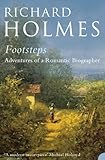
“Age of Wonder”, the brilliant biography of the lives of enlightenment scientists who inspired Romantic poets like Coleridge and Shelley prompted me to read “Footsteps” published by Richard Holmes thirty years earlier. This short book is a series of four essays describing his forensic retracing of the journeys and temporary resting places at key stages in the lives four famous writers.
In 1964, a precocious eighteen-year-old Holmes, at times somewhat pretentious in his desire to develop a written style, wanders through the beautiful wilderness of the French Cevennes in the wake of Robert Louis Stephenson and his long-suffering and frankly abused donkey Modestine. Four years later, as a Cambridge graduate rejecting the security and status of a well-paid conventional career, Holmes sets off for Paris to draw some parallels between the idealistic youthful hippy revolution of 1968 and the cataclysm of the French Revolution, with a focus on Mary Wollstonecraft, the feminist icon who in fact was unable to prevent her life being controlled to some degree by dominant men, but who experienced some of the most terrifying aspects of the “Reign of Terror” under Robespierre, unlike Wordsworth who had scuttled back to the safety of the Lake District. In 1972, Holmes loses himself in Italy in order to explore the self-imposed exile of Shelley. Finally in 1976, a fascination for what C19 photography can reveal to a biographer leads Holmes to immerse himself at the risk of his own sanity, in the life of the gifted but troubled Gérard de Nerval: “one is tempted to say that, had Nerval been born earlier he would have been saved by religions; had he been born later he would have been saved by psychoanalysis”.
What makes Holmes’ biographies so remarkable is his capacity to “get under the skin” and seem to inhabit the minds of his subjects. In “Footsteps” he includes interesting reflections on the at times all-absorbing to the point of obsession process of biography, as he begin to understand it. He perceives himself as “a sort of tramp permanently knocking at the kitchen window and secretly hoping he will be invited in for supper” or even as a ghost of past writers.
More than simply the collection of factual material, there is the “creation of a fictional or imaginary relationship between the biographer and his subject… a degree of more or less conscious identification with the subject”. He identifies the “moment of personal disillusion” when the biographer is “excluded from or thown out of the fictional rapport he has established” by a lack of reliable evidence. So, in the absence of “proof”, I was surprised by his theory that Shelley had an affair with his wife’s friend Claire Clairemont which led to a miscarriage, after which the poet adopted a foundling child born on the same day only to have it fostered elsewhere and die soon afterwards.
Perhaps inevitably, the essay format makes for a somewhat fragmented work, and the autobiographical passages can appear contrived and an almost irritating distraction from his subjects. “Footsteps” is a seedbed for the later flowering of a masterpiece like “Age of Wonder”, and it has made me want to read more of Mary Wollstonecraft’s clear, perceptive and remarkably “modern” work, and brought me to appreciate more the tragedy of Shelley’s circle and the genius of his poetry, realising that I have been too quick to reject Romantic poetry for its flowery sentimentality.
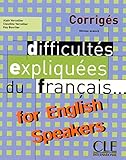
It is very useful to have these model answers, but they should have been included in the main text giving explanations of French grammar points likely to give English students difficulties with questions to test one's learning.
The only point in favour is that it is easier to refer to the answers in a separate booklet alongside the questions. I suppose that teachers may prefer this separation since it is harder for students to cheat, but perhaps the need for two books could be reflected in the price – which seems rather high for 64 pages of answers to questions in another book.



 Antenna Reviews