Fighting monsters without becoming one

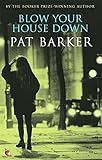
This is my review of Blow Your House Down (Virago Modern Classics) by Pat Barker.

Set in a rundown northern town, this short but dense, bleak yet gripping novel exposes the lives of a disparate group of working class prostitutes trying to contain their rising fear over the mounting evidence of a serial killer, unprotected by the police who seem to using them as bait to trap him. Understandably haunted by the murder of her female lover, one of the women decides to take control and avenge her death, but can she be sure she has found the right man? Each of Pat Barker’s novels seems to be triggered by specific real events, in this case the activities of the “Yorkshire Ripper”.

Her second novel, published in 1984 long before she hit the Booker jackpot, this is very different from her recent work, revealing the style of her early writing from which a more fragmented, stream of consciousness, perhaps more self-conscious and studied, sophisticated style has developed. Parts 1 and 2 in particular seem more straightforward than later work, with strong dialogue and clear narrative drive making the novel a page-turner. Without undue sentimentality, Pat Barker arouses our sympathy for the women who have often had a raw deal and support each other with earthy and stoical humour. You may of course feel that, along with the stereotyping, she tends to let them off too lightly as unfortunate victims in comparison with the men, all of whom appear to some degree weak, pathetic or abusive. Along with some disturbing graphic descriptions of violence, there is the unsettling image of the headless chickens on a conveyor belt, their feathers stained with blood as an analogy for the victimised prostitutes.

Although Pat Barker’s talent as a wordsmith is evident, her plot potentially powerful, I found the arguably original and daring change in point of view in Part 4 too abrupt and confusing, destroying the flow and tension built up previously. Feeling that I had been catapulted into another novel, I had to search back to see if any of what seemed like a new set of characters had appeared before. I think the author is trying to show that how “respectable” women who suffer attack are treated better than prostitutes but think that this thread needed to be woven in more skilfully from the outset rather than bolted on as an awkward coda.

This novel confirms my impression that Pat Barker is a distinctive and thoughtful writer, who does not flinch from the challenge of describing horrific events which neither she nor most of her readers have experienced, who switches perhaps too swiftly from well-observed social chat to the macabre, and whose talents lie in striking description and dialogue rather than constructing a plot.

⭐⭐⭐ 3 Stars

“Noonday” by Pat Barker – Living outside time

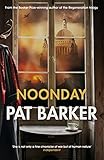
This is my review of Noonday by Pat Barker.

Noonday is the third part of a trilogy based on the triangular relationship between three artists, whose lives are defined by World War 1 in their youth, and World War 2 in late middle age. This is Pat Barker’s second trilogy about war, which obviously fascinates her in both its arbitrary physical violence and more complex psychological effects on both soldiers and civilians. The prickly Elinor Brooke, perhaps not as independent as she seems, the talented, rambunctious but inwardly insecure Kit Neville, and introverted, somewhat enigmatic and troubled Paul seem to have become real and familiar people for her, providing endless scope to explore their thoughts and motivations.

This is not a stand-alone book, in that I think it is essential to have read the second novel “Toby’s Room” (and ideally Life Class as well) to know the circumstances of the death of Elinor’s brother Toby at the front, and Kit’s part in it. I realised when reading “Toby’s Room” that plot has become unimportant to Pat Barker over the years. I sympathise with readers who found the early chapters of “Noonday” a struggle, since they often seemed like padding or fillers to reach the next incident or situation of interest to her. A few points caught my attention: the sense of menace combined with unreality created by the German bomber planes “circling like gnats” over a Home Counties garden; the long shadow cast by the death of the mythically heroic Toby, to the extent that his grief-stricken mother finds a reluctant substitute for him in her grandson Alex, who has the misfortune of looking very like him.

Otherwise, I felt quite unengaged in disjointed events which may be realistic but do not feed any narrative drive – the slow death of the mother with whom Elinor never shared any mutual love or understanding, Paul’s obsessive flashback’s to his own mother’s sickness and death, the daily grind of Paul and Elinor’s lives in London as respectively an air-raid warden and an ambulance driver. It’s all fairly bleak but preferable to the implausible appearance of a medium who is clearly a fraud, yet it would seem haunted by a ghost from the trenches. As Paul paced the dark London streets rather than take refuge in a shelter “he found it easy to believe they were leading him to a secret chamber, right at the heart of the blacked-out city, where a white, bloated figure sat enthroned, a grotesque Persephone, claiming to speak for millions of the mouthless dead.”

I fear that the ludicrous Bertha Mason (shades of Jane Eyre) caused me to skip in despair, until I found Chapter 23, which is where Pat Barker reaches the culminating stage of the trilogy, the unresolved tension of Kit Neville’s unrequited love for Elinor, his subconscious hatred of Paul as a rival – in love and art, a powder key which can be sparked by the device of Paul’s betrayal of Elinor in the odd, disrupted limbo of London in the blitz, where “living outside time”, the old rules do not apply. At last, in the final hundred or so pages, I found the chain of dramatic events, ironic twists, expression of real emotion at last and strong dialogue I had been missing.

⭐⭐⭐ 3 Stars

Glasgow dancing among its own debris

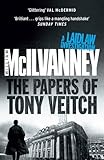
This is my review of The Papers of Tony Veitch (Laidlaw 2) (Laidlaw Trilogy) by William McIlvanney.

The second in a series of novels involving Detective Jack Laidlaw, this can be read as a freestanding novel.

From one angle, it has a hackneyed plot involving the familiar maverick detective with a dysfunctional family life, who cannot rest if he feels that the suspicious death of an alcoholic tramp is being discounted as unimportant, or until he has pursued his hunch that an ambitious colleague’s desire for a quick win is leading to the pinning of a couple of murders on the wrong man, who being conveniently dead cannot prove that he did not commit suicide. Laidlaw’s incongruous literary streak is at odds with the tough background which enables him to understand ordinary Glaswegians. Laidlaw is no saint: he falls off his lime-juice and soda bandwagon to go on binges; he indulges himself in an affair with a heart-of-gold barmaid, his much-heralded “honesty to a fault” at work not extending to his dealings with his wife; he is irresponsibly rash in achieving his ends.

What sets this novel apart is McIlvanney’s spiky style as a latter-day Glaswegian Chandler, bombarding us to saturation point with quirky, quick-fire observations. Linked to this is the powerful sense of place, bringing Glasgow alive even for those who have never visited it.

Examples of the striking prose:

“…the fiercest man is the one who has had his incomprehensibly private values encroached upon. Attack a mouse in its hole and it will try to nibble you to death”.

“Middle age was a foreign country here. This was a shrine to youth, where compromise was like a profanation”.

“He mainlined anecdotes about working-class life. I used to tell him daft things. Like eating porridge out of a drawer.”

“She was dressed to go out, if not to emigrate… She gave the immediate impression of wearing her boutique”.

“…Anderston .. an area of the city that memorialises a part of Glasgow’s confused quarrel with itself, a warm and vivid slum expensively transformed into a cold and featureless one.”

“That past moment was like a booster rocket, falling into irrelevance. IT only served to kick him further into the manic orbit he was following, fuelled on his compulsion to find what everyone else said wasn’t there.”

“There must be those who, if a dying man told them the secret of all life and swore at them at the same time, would only remember that he swore.”

“What are your drinking, love?… Gin and catatonic?”

“The ceremony (funeral) had its origins in something for which people were prepared to walk into the mouths of lions but which had since often been processed into spiritual Valium that reduced God to the role of a celestial chemist”.

I agree with reviewers who have suggested that the book would have benefitted from being longer. After painstakingly setting the scene and establishing the plot with many digressions to reveal the characters' opinions and personalities, the final chapters seem to me quite rushed, to such an extent that I did not fully understand the reasons for the final murder, but did not feel sufficiently interested to go back and trace them.

I often found the use of different viewpoints clunky, the dialogues artificial, an overuse of caricatures, the plot somewhat plodding. Yet I appreciate why McIlvanney’s style, the spate of unique and unexpected turns of phrase, is so admired, although it tends to be too contrived for one to care much about what befalls the characters.

⭐⭐⭐ 3 Stars

Fighting to live again

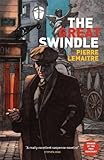
This is my review of The Great Swindle: Au revoir la-haut (English edition) by Pierre Lemaitre.

Unlikely comrades, wealthy, handsome, artistic Edouard and humble, nervous accounts clerk Albert are thrown together in the horror of the French trenches at the end of the First World War, where they have the misfortune of being under the command of the ruthless Henri Aulnay-Pradelle, who will stop at nothing to exploit the situation to enhance his reputation and enrich himself. When the two men find themselves in a desperate situation after the war, Albert is eventually persuaded to assist Edouard in a bold but crazy “great swindle”, the title of this French novel in translation. Their motivations are mixed: the need for money, temptation of great wealth, desire for revenge against a society which has given them a raw deal, or in Edouard’s case the “buzz” and sheer fun of the risk as an escape from the bleakness of everyday existence.

This well-plotted, ingenious, imaginative and darkly humorous yarn is not only a page turner which keeps one guessing to the last page, but also provides a vivid portrayal of the aftermath of a war in which many people were on the make, and more effort was put into memorials for the dead than providing for the wounded and shell-shocked survivors. Most of the main characters are very fully developed, with complex personalities and shifting emotions. In the midst of his wry cynicism, the author manages to arouse our sympathy and a sense of poignancy for the flawed characters and sufferings of Albert, Edouard and the stern father who has rejected him, M. Péricourt.

Lemaître is well-known for his noir crime thrillers, and there are elements of the macabre in this novel together with the knowledge that he is quite capable of dispensing with any of the characters, and that Albert and Edouard, corrupted through force of circumstance, will not necessarily win out at the end of the day.

A minor criticism is that the early chapters tend to be rather slow and spell out incidents in repetitious detail. However, the narrative gradually gathers pace as “the plot thickens” and I became engrossed as it twisted to the final denouement.

Although the English translation seems to have well done, preserving the sardonic tone of the original, it is worth reading this in the original French if possible, partly to get a stronger flavour of the times, but also because it’s a rich source of idioms and clichés. Ironically, I read this by chance in parallel with Pat Barker’s World War 1 novel “Toby’s Room”, which is partly about young men being suffering from terrible facial injuries: I doubt if two novels on a similar theme could be more different in structure and style, but although less “literary” I found Lemaître’s novel more engaging and moving.

⭐⭐⭐⭐⭐ 5 Stars

“Toby’s Room” by Pat Barker – Making sense of madness

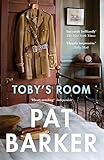
This is my review of Toby’s Room by Pat Barker.

Although Toby’s Room may be read as a “stand-alone” novel, it is part of a trilogy best read in order, starting with “Life Class” which is based on real-life young artists studying at the Slade under the fearsome Professor Tonks just before the outbreak of World War One.

Pat Barker’s books seem to be triggered by specific real people and actual events, in this case the death of Virginia Woolf’s brother Thoby, prompting her novel “Jacob’s Room” and also by the death of Edward Brittain, brother of Vera, who is believed to have committed suicide by way of putting himself in danger at the Front, rather than face the disgrace of court-martial and prison.

A central character is the prickly and unconventional art student Elinor Brooke, who is faced with the disturbing realisation that her deep bond with her brother Toby is too close. Before there is time to resolve this issue, she learns that he is missing, presumed dead in the war. Knowing that brilliant but boorish artist Kit Neville was serving in Toby’s company so is most likely to know the truth about what occurred, she enlists the aid of Paul Tarrant, another artist and former lover, to extract the information from the reluctant Kit, even though he is undergoing painful surgery to restore his damaged nose.

This is a cue for the author to explore another aspect of wartime social history, the involvement of Tonks in recording the hideous wounds caused by shells and the development of plastic surgery. I had no idea that injured soldiers undergoing nose surgery had to endure temporary tubes called “pedicles”, sometimes as many as three, making them resemble squids (a sick joke on Kit’s part?) nor that anaesthesia was so rudimentary that the tube carrying the gas often got in the surgeon’s way, with the danger of making the operating staff themselves woozy if it was removed without due care.

Barker’s vivid prose, punctuated with original metaphors often veers into poetry as she describes Zeppelins over Hampstead Heath and coastal cottages at the mercy of tides and shingle in a storm. There are some strong scenes with lively dialogues, mostly involving Kit who is one of the most flesh-and-blood, fully developed characters: Kit wearing a Rupert Brooke mask on an outing to the Café Royal with Paul; Kit remembering his fraught relationship with medical officer Toby forcing him to take ludicrous risks to retrieve not only wounded men but corpses from no man’s land; Kit finally describing Toby’s last days to Paul, but these powerful passages which prove Pat Barker’s talent are too few.

I wanted to admire this novel, but it was often too disjointed and lacking in focus to engage me. I could not understand why the author tells us in detail about Elinor’s dissection of a corpse (to learn more about anatomy for artistic reasons), but avoids describing Kit’s wound and how their first sight of it affected Paul and Elinor. Why does Pat Barker include extracts of Elinor’s very contrived diaries, casually name-dropping visits to Virginia Woolf and Lady Ottoline Morrell without ever explaining her connection with them? Why is Toby so underdeveloped as a character? If he and Elinor are so close, why do they have such limited communication? Why are the most dramatic moments so often reported third hand after the event?

It could be that the author is deliberately disjointed and unfocused, because that is how real life often is, and she wants us to interpret the story for ourselves, but I think the book is weakened by the lack of a well-constructed plot and three-dimensional characters.

⭐⭐⭐ 3 Stars

“The Girl on the Train” by Paula Hawkins – Formulaic, manipulative but good portrayal of alcoholic narrator and undeniable page turner

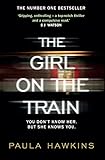
This is my review of The Girl on the Train by Paula Hawkins.

Rachel’s morning commuter train often stops at a red signal near Euston, enabling her to fantasise over an attractive couple who live in a house backing onto the railway line. Its layout is familiar to Rachel, since she recently lived a few doors away from it in the house still occupied by ex-husband Tom, now with his new wife Anna and baby daughter. Her grief over this is driving Rachel into the downward spiral of an erratic, embarrassing alcoholic but when exactly did she begin to drink too much and why?

This is the starting point of a twisty psychological thriller which relies heavily on the way vital details are revealed. The viewpoint switches between Rachel and the object of her fantasy, Megan, at times also including Anna, to make a somewhat clunky dramatic triangle, as each recalls recent events in a kind of mental diary. It is often interesting to see how these different characters see the same events. Rachel’s personality is the most fully developed: probably an unreliable narrator, perhaps guilty of some dreadful act committed in a drunken haze, arousing contempt or frustrated pity mixed with despair in those who have to deal with her, she also evokes sympathy in the reader with her flashes of wry humour and self-knowledge. In contrast, Megan and Anna seem to speak with the same voice, shallow and unstable cyphers, in fact all the characters apart from Rachel tend to be portrayed as two-dimensional stereotypes. None of them is very likeable, although that does not bother me.

This book is not particularly well-written, it has clearly been over-hyped, a conscious attempt to recreate the success of “Gone Girl”. It is easy to guess the key to the mystery, and final chapters leading up to the climax seem more rushed and formulaic than the intriguing slow build of the first half. Although the highly visual descriptions pave the way for a film of the book, I shall not feel driven to watch it.

Despite this, the novel is definitely a page turner with a plot which is imaginative in detail if somewhat hackneyed in its main thrust. The ending was better than the let down I had expected. It fascinates me how brilliant, insightful wordsmiths are often hopeless at plots, or underestimate their importance, whereas those with a gift for constructing an intrigue cannot prevent themselves from slipping into banal, clichéd prose. The recent novels “I saw a man” and “Disclaimer” seem to me to achieve a stronger combination of good writing and intriguing plot.

⭐⭐⭐ 3 Stars

More than first meets the eye

This is my review of MADEIRA A SHORT ILLUSTRATED HISTORY by joana de Freitas.

A readable, wide-ranging and very informative social, economic and political history of Madeira with some fascinating old photographs, from the navvies risking their lives on precipices to construct the famous irrigation channels to an early titled tourist leaping in a flamboyant high dive at Reid's Hotel.

⭐⭐⭐⭐⭐ 5 Stars

Useful and fascinating

This is my review of Madeira Tour & Trail Super-Durable Map by David Brawn.

This very clear and durable map is excellent for planning and keeping to a route, or simply understanding in retrospect some of the extraordinary terrain encountered e.g. on the drive from Funchal to Santana. I gather that some of the leisure routes shown are out-of-date, but with the continual risk of landslides this is perhaps inevitable. I would be reluctant to drive a hire car on the narrow switchback roads, so regard this largely as an aid to planning itineraries and walking.

⭐⭐⭐⭐⭐ 5 Stars

Well-described walks for longer stays and stout boots.

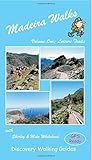
This is my review of Madeira Walks: Leisure Trails Volume 1 by Shirley Whitehead,Mike Whitehead.

These 41 walks all begin with a useful chart to show length, approximate time needed (possibly somewhat underestimated for those who want to take their time), variation in height, whether circular or one way, vertigo risk and refreshments en route. They are clearly described with details of method of access and return, key features on the way, illustrated with photographs of the scenery and a small map, which often looks hard to follow so the Discovery Walking Guides Ltd Madeira Tour & Trail 1:40,000 super-durable waterproof map is also recommended. All routes require sturdy footwear with a good grip, since paths are often uneven and slippery from springs and moss. I noticed many walkers using poles for stability or confidence. Walks with a low vertigo risk unsurprisingly tend to offer less dramatic views.

Since, although reliable, Madeira buses tend to be infrequent, a taxi is likely to be necessary at least one way for many of the walks making it tempting to opt for an organised levada walk tour instead. For those with limited time on the island or not very hardy walkers, I would recommend the walks which link in with bus services to major points of interest e.g. Walk 1 from Praia Formosa in West Funchal to the fishing village of Camara de Lobos – this walk can be commenced earlier, say at the Funchal Lido or even the Fortaleza do Santiago near the Funchal teleréfico to Monte. Walk 7 from the viewpoint of Eira Serrado, accessible on the No. 81 morning bus, gives striking views on the hairpin track down to Curral das Freiras (the Nun's Valley), although it can be slippery on the mossy rounded steps. The No. 8 walk in the Ecological Park is interesting, although despite the evidence of recovery from a largescale fire, I was depressed by the sight of blackened, leafless trunks. Walk No. 19 from Ribeiro Frio (Bus 56 or 103) is a short, easy walk to viewing balconies giving dramatic views of the peaks.

⭐⭐⭐⭐ 4 Stars

Concise, informative and easy to use

This is my review of Lonely Planet Pocket Madeira (Travel Guide) by Lonely Planet,Marc Di Duca.

Madeira feels safe and friendly, with many people in Funchal speaking English, but the very reliable bus services can be quite infrequent and I imagine driving a hire car on the switchback roads is a nightmare, whilst signboards are often lacking, so as an independent traveller one really needs a reliable and accessible guide book as a framework for the various bus timetables and tour leaflets you will acquire en route.

On a week's visit to Madeira for the first time, I found this pocket guide very useful not merely for advance planning but to carry round each day to check details. Marc Di Luca, the named author (unlike many guides which I suspect are produced by a band of researchers who may not have actually visited the places they describe) clearly has genuine local knowledge and a grasp of what a complete stranger needs to be told.

I like the frequent use of maps at various scales, from the pull-out one to provide an overview of the island and the key centre of Funchal to those showing a number of driving and walking routes e.g. the very interesting walk along the western Funchal sea front from the Lido to Praia Formosa (it could in fact be extended from the ochre fortress Fortaleza de Santiago near the picturesque old district, the Zona Velha, on the eatern edge of Funchal sea front all the way along to the fishing village of Camara de Lobos to the west. I like the way Di Luca even provides bus numbers and terminus names for, say trips to the Funchal Botanical Gardens or gives specific advice to take a morning bus to the Eira do Serrado viewpoint to make it possible to admire the amazing view of Curral da Freiras (the Valley of the Nuns) before taking the hairpin-bend path down to the village.

Key attractions are highlighted in the index, information is clearly organised under headings, and important points repeated at different points to make them hard to miss. Since the book is quite concise and informative, its worth reading every word before you travel. Then you won't miss such useful advice as the benefit of bargaining with taxi drivers – as we waited for the airport bus, we bargained a persistent taxi driver down to the same price as the bus – 5 euros for a single trip, which proved useful since it was probably full, and we met disgruntled tourists who had to pay 45 euros to reach the airport in time.

The guide glosses over Santana on the north coast, reflecting the fact that not only is there not much to see there, but the climate is much colder – the day we visited, the seashore was obscured in a cotton-wool blanket, although the bus drive across the island is fascinating to see how houses perch on sloping terraces above breathtaking precipices.

A minor criticism is that the levada walks featured (along Madeira's famous irrigation channels) tend to be rather long for many tourists e.g. 11-16 km. Perhaps a few shorter, easier stretches could also have been specified.

With this guide highly recommended overall, make sure to visit Monte Palace Tropical Gardens on the cable car, the Eira do Serrado viewpoint above the Valley of the Nuns on a clear day and take a boat trip out to view Funchal from the sea.

A more expr

⭐⭐⭐⭐⭐ 5 Stars