The not famous two go sleuthing

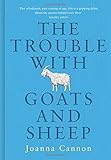
This is my review of The Trouble with Goats and Sheep by Joanna Cannon.

When a middle-aged woman disappears from a suburban road, gossips fear the worst, but her neighbours are embroiled in a rising tide of panic and recrimination as they fear that a guilty secret from the past is about to be exposed. Prompted by the vicar’s sententious platitude that “if God exists in a community, no one will be lost”, bossy ten-year-old Grace and her compliant but underestimated friend Tilly pose as helpful brownies to gain access to neighbours’ homes in order to check whether or not God is there. Quite how this is going to help the situation is never made quite clear.

The story is set in the long, hot summer of 1976 which a number of writers have used as a backdrop to weird goings-on. Despite some novel if overwritten images –– “the sky was ironed into an acid blue, and even the clouds had fallen from the edges, leaving a faultless page of summer above our heads”, “the avenue…bewildered by the heat” – I grew weary of descriptions of the unrelenting drought, but this may have been the author’s intention. The focus on “contemporary accuracy” with references to Harold Wilson and his pipe, “Are you being served?”, “The Good Life”, Patsy Cline singing “Crazy”, “The Drifters” and “Angel Delight” often seems contrived.

At first, the chapters written from Alice’s viewpoint seem the strongest, until the contrast begins to jar between her childishness and some implausibly insightful comments: observing a Mrs Morton she reflects “Early widowhood had forced her to weave a life from other people’s remnants, and she had baked and minded and knitted herself into a glow of indispensability.” In order to drip-feed the reader with the details of what is really afoot in “The Avenue”, Joanna Cannon has to resort to a number of different viewpoints, all in the third person and often involving flashbacks. This often makes the storyline seem fragmented, with the highly stereotyped adults soon becoming tedious caricatures. Trite comments apart, there is a good deal of humour in the book, but the hypocrisy and prejudice of the adults is laid on with many trowels.

As the story labours its way to a surprisingly abrupt and anticlimatic ending, I was probably wrong to be irritated by a number of small errors: the “six week” school summer holiday runs from early July through to September, starting on July 5th, at least a fortnight earlier than I remember to be the case. Dahlias bloom in July alongside freesias – perhaps a quirkish effect of the heat. The persecuted Walter Bishop has several cedar trees in his front garden, something I have never seen outside a stately home. My main problem was being unable to form a clear sense of place – a mental picture of the estate, somewhere a bus ride from Nottingham. At various points, we are told about terraces and a corner shop, but houses in the Avenue have garages and sound detached. Lace-curtained windows of kitchens and “living rooms” both seem to overlook the road plus the houses seem to have “sitting rooms” as well. Here, an alcoholic single mother lives close to a property manager. The neighbours mostly seem to have known each other from childhood but are they working or middle class? You need to know this about a community in the UK. And, although some appear to have jobs, how is it that they all seem able to converge on a dramatic scene at the drop of a hat?

It’s the fantasy land of a children’s story in what purports to be an adult novel. The “genres” are all mixed up but in the end it proves to be a lightweight, by turns sad, funny, sentimental, unsubtle psychological novel. A poignant situation and any sense of real suspense are both blunted by a storyline which descends into tongue-in-cheek parody – to give it the benefit of the doubt – particularly when the neighbours gather in their deckchairs to watch over the creosote image of Jesus which has appeared on a drainpipe.

⭐⭐⭐ 3 Stars

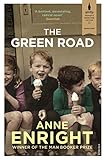
“The Green Road” – Shortlisted for the Baileys Women’s Prize for Fiction 2016 by Anne Enright. A kind of no holds barred Irish Virginia Woolf?

This is my review of The Green Road: Shortlisted for the Baileys Women’s Prize for Fiction 2016 by Anne Enright.

With her by turns staccato and poetic prose, wry wit and Pinteresque dialogues of unfinished sentences which reflect how people both fail to communicate but also do not always need to use words when they have lived together for years and shared common experiences, Ann Enright has an original angle on the well-worn theme of Irish family life.

In this case, the four Madigan children have grown up in a small west coast town close to the beautiful green road “famed in song and story” which runs across the Burren above the beach at Fanore and the Flaggy Shore – all of which can be found on Google images if the lilting names catch one’s interest enough.

The first part, “Leaving” is like a series of short stories, each from the perspective of a different sibling over a span of twenty-five years, with a final focus on Rosaleen, complex, difficult and probably too inconsistent and self-absorbed to be a “good mother”, and arousing a mixture of frustrated love and irritable resentment in her children. Ann Enright seems most authentic when writing about Ireland, which is where Rosaleen and her two daughters have allowed themselves to be “trapped”, all feeling a sense of unfulfilment to which they respond in different ways. “Impossible to please”, “Rosaleen was tired of waiting. She had been waiting, all her life, for something that never happened.”

Ann Enright’s experimental, risk-taking approach does not always work for me, but many observations and passages strike home: as Rosaleen walks along the Green Road in the dark, “a delicacy of stars above her”……….“The sea was huge for her. The light gentle and great. The fields indifferent , as she walked up the last of the hill. Bust she got a slightly sarcastic feel off the ditches, there was no other word for it – sprinkles of derision – like the countryside was laughing at her.”

Rosaleen’s two sons are more pro-active in their quest for an elusive goal, with Dan going “everywhere”, and Emmet “everywhere else” abroad. I was gripped by the strong sense of place and build-up of tension in the drama of aid-worker Emmet’s over-sensitive girlfriend Alice breaking a taboo in Mali by taking a stray dog into their home. Dan’s spell as a lapsed priest flirting with the gay art scene in New York struck me as too contrived, perhaps partly because of the arch tone of the unnamed first person narrator, a device not used elsewhere in the book, partly because it seemed overloaded with caricatures of over-sexed, drugged up young men caught up in an early ‘90s panic over Aids, all based on a woman’s second-hand research of the explicit details of being a male gay.

“Part Two”, “Coming Home” is more of a novella focused on a fraught Christmas reunion. Although, plotwise, not much happens, in terms of sudden sharp insights, comical or poignant situations and brilliant sentences one would love to have written, it is absorbing and demands to be read again.

⭐⭐⭐⭐ 4 Stars

Puncturing our blissful ignorance

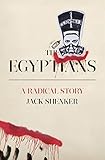
This is my review of The Egyptians: A Radical Story by Jack Shenker.

Journalist Jack Shenker embedded himself in the society of ordinary Egyptians before the Arab Spring burst into life, the better to understand the pressures for change. Quoting George Orwell’s exhortation, “Beware my partisanship” in “Homage to Catalonia”, Jack Shenker readily admits that his own book “takes sides”.

The essence of his argument is that global capitalist free market policies, have led to a “neoliberal restructuring” of Egypt which has resulted in a “mass transfer of wealth from the poor and middle classes to the rich and impoverished vast swathes of its citizenry". This has involved western governments, aid organisations, development banks and businessmen in dubious alliances, playing “a key role in both financing and legitimizing Middle Eastern despots including Egypt”. The replacement of Mubarak by Morsi was a cosmetic change which did not alter the fundamental system in that there is clear evidence of repression increasing under the latter. This helps to explain what was inadequately reported in the western press as the somewhat perverse rejection of a “democratically elected” new leader without waiting for him to be voted out. Although it may appear to supporters of greater justice and equality for Egypt that the situation is deteriorating once again under Sisi, Shenker argues that in an admittedly unstable “one step forward, two steps back” situation, Tony Blair’s argument that the revolution has “come full circle”, is “dead”, “failed”, and “officially over”, is too simplistic: local “revolutions” in villages and factories began decades before the famous occupation of Tahrir Square, and are still continuing in a drive for change which will take years. The revolution consists of much more than Tahrir Square which, although clearly a “media-friendly window on Egypt’s turmoil”, was most significant as an example of the creative community action which drives long-term change.

Some will be at odds with Jack Shenker’s rejection of free market capitalism, and find his belief in “Occupy”-style social change a little naïve. They may join with the western leaders who pragmatically prefer the authoritarian control of men like Mubarak or Sisi to the revolutionary chaos of say, Libya which has allowed ISIS to flourish. However, it is evident that the Egyptian developments triggered by western investment including the World Bank, IMF, USAID and European Investment Bank, and often involving the privatisation of state assets, have not “trickled down” to the poor. As described in the Epilogue, the 2015 “Egypt the Future” Conference at the International Congress Centre in Sharm el-Sheikh is cringe-making: Martin Sorrell’s “country branding” seems a world away from the daily reality of bare subsistence, lack of basic amenities, forcible evictions and arbitrary imprisonment for wearing a T-shirt with a subversive motif.

Despite the fascinating subject matter, the prose is often indigestible and repetitive, crying out for a sharp edit. To take at random a couple of interesting points that are explained much better in other sentences: “The Egyptians are a people who abrogate their voice to the stagecraft of procedural democracy”….. “Security forces have exploited tropes of passive femininity to target both men and women attempting to emasculate the former through sexual assaults and reimpose state-centric masculinities in the process.”

Although at times hard-going, this book has made me think. I find myself reflecting on how “neo-liberal” policies have led to zero hours contracts in the UK, and the desecration of the London skyline with tower blocks for absentee foreign investors, yet this of course pales into significance in comparison with the suffering and repression of millions of Egyptians. Examples include the brutal reversal of Nasser's land reforms, the eviction of peasants from their plots and urban dwellers from the unofficial "shanty towns" they have been obliged to construct for themselves, the cynical mass sale of undervalued state assets to the benefit of wealthy Egyptians and foreign investors, projects to divert Nile water to foreign exporting agribusinesses at the expense of farmers seeking to feed themselves and the local community, arbitrary arrest and brutal beatings to discourage dissent, even payment of thugs to rape female protestors, and so on.

⭐⭐⭐⭐ 4 Stars

Facing up to the future

This is my review of Oscar et la Dame rose by Eric-Emmanuel Schmitt.

After an unsuccessful bone marrow transplant, ten-year-old Oscar puts the adults in his world to shame by the courage with which he faces the prospect of death. He is scornful of his distraught parents and sharp enough to perceive that his surgeon sees him primarily as an embarrassing and frustrating reminder of his own professional failure. The only “grown up” to offer Oscar some comfort is the eccentric hospital visitor “Mamie Rose”. Her suspect reminiscences of life as a successful wrestler, and the advice that Oscar should try writing letters to God, suggest that she may not be any more honest than the other adults, but combined with her idea of a game by which Oscar could imagine that each day represents a decade of the life (which he will not in reality experience), these ploys both entertain Oscar, and help him to grasp some vital points about living which it can take most of us years to understand, if at all.

Apart from Mamie Rose’s frankly tedious anecdotes, I found it implausible that Oscar would be so insightful about, for instance the “mid-life crisis”, and his romance with another patient, “Betty Blue”, is a bit mawkish at times. The most poignant moment for me occurs when, as a “very old man”, Oscar is struck by the beauty of nature, and realises that each day is to be appreciated as unique.

A philosopher by training, Schmitt uses quirky humour and an original approach to make just about tolerable a parable of how we could make more sense of life, and deal better with death. The focus on a young person’s death makes the situation all the more moving, but has relevance for us all.

Although I disliked this story at first, I was won over by the final pages, and was left with the sense that Schmitt has succeeded in provoking thoughts which stay in one’s mind. I believe this is studied in French schools and judging by reviews, it appeals to young people and is likely to spark discussion.

⭐⭐⭐⭐ 4 Stars

Still retains a surprising power to grip – in the original French! Beware of poor translations

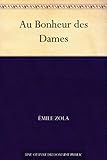
This is my review of The Ladies’ Paradise (The Ladies’ Delight) – Unabridged by Émile Zola.

I gave this 5 stars in the original French, but found this English version useful only to check a few points, like the names of fabrics!

Since I associate Zola with grim, unrelenting tales of exploited coal miners, the theme of a Paris department store dedicated to delighting women seemed at first uncharacteristically tame and frothy. In fact, behind its plate glass and eye-catching displays, “Au Bonheur des Dames” proves to be as dominating and exploitative as any industrial factory, its shop assistants, clerks, packers and delivery men mere cogs in the machinery, as controlled as any industrial worker, on the mass production line of retailing.

Beneath his charm and apparent empathy with women and their love of fashion, inspired entrepreneur Octave Mouret is in fact a cynical manipulator: he is not only a casual seducer, but views his female customers as an inexhaustible captive market to be dazzled by his marketing ploys and all too readily induced to fritter away their husbands’ money on the material goods he displays with such alluring skill. His sponsor Baron Hartmann warns him that one day women will “get their revenge” but Mouret is knocked off course where he least expects it by the sweet, unsophisticated but stoical country girl Denise Baudu, who is quick to grasp that the department store is a part of inexorable progress, but steadfastly sticks to her personal principles.

In vivid if wordy descriptions, Zola describes how the magnificent store looms over the surrounding gloomy alleys, further cutting them out from the sun. These are the haunts of the resentful traditional shopkeepers who persist in their stubborn and ultimately fruitless struggle to survive, when they cannot realistically hope to compete with Mouret’s drastic discounts and huge variety of goods. The scale and brightness of his store, with the light pouring in through glazed roofs, and the Lowry-style bustle on the metal staircases and galleries, as far as the eye can see, creates the idea of a self-contained community, which Zola sometimes calls a “phalanstery” after the C19 ideas of Charles Fourier for a utopian community.

Yet, although the workers are housed and fed in a paternalistic way, the shop is far from utopian: staff are not allowed to have visitors in their rooms, women have to leave when they become pregnant, and in the summer months of slack demand, assistants are dismissed for the slightest imagined misdemeanour. Not surprisingly, they often resort to scams to swindle the store, and the smallest rumour or incident is exaggerated and spread on the gossip grapevine. Although the customers look down on the assistants who must be ladylike without being accepted as ladies, they often behave badly, not merely overspending on luxuries and abusing the “returns” policy, but even resorting to shop-lifting.

Just as the store seems very topical in these times of zero hours contracts, class divides and the ravages of competition, Zola’s characters are real in their flaws and complexity. There are also some moments of comedy amongst the exhausting materialism of the store contrasting with the suffering of the impoverished small shopkeepers.

The novel is best read in French, although the exhaustive lists of specialised fabrics and some of the dated procedures forced me to resort to English translations. These vary a good deal in quality, so it is advisable to check them out before purchase. Some come with interesting introductions, to be read afterwards to avoid spoilers. This kindle translation is far too literal – hence very stilted and wooden in places. Also, not easy to read in conjunction with French kindle version!!

⭐⭐⭐ 3 Stars

Still retains a surprising power to grip

This is my review of Au Bonheur des Dames (French Edition) by Émile Zola.

Since I associate Zola with grim, unrelenting tales of exploited coal miners, the theme of a Paris department store dedicated to delighting women seemed at first uncharacteristically tame and frothy. In fact, behind its plate glass and eye-catching displays, “Au Bonheur des Dames” proves to be as dominating and exploitative as any industrial factory, its shop assistants, clerks, packers and delivery men mere cogs in the machinery, as controlled as any industrial worker, on the mass production line of retailing.

Beneath his charm and apparent empathy with women and their love of fashion, inspired entrepreneur Octave Mouret is in fact a cynical manipulator: he is not only a casual seducer, but views his female customers as an inexhaustible captive market to be dazzled by his marketing ploys and all too readily induced to fritter away their husbands’ money on the material goods he displays with such alluring skill. His sponsor Baron Hartmann warns him that one day women will “get their revenge” but Mouret is knocked off course where he least expects it by the sweet, unsophisticated but stoical country girl Denise Baudu, who is quick to grasp that the department store is a part of inexorable progress, but steadfastly sticks to her personal principles.

In vivid if wordy descriptions, Zola describes how the magnificent store looms over the surrounding gloomy alleys, further cutting them out from the sun. These are the haunts of the resentful traditional shopkeepers who persist in their stubborn and ultimately fruitless struggle to survive, when they cannot realistically hope to compete with Mouret’s drastic discounts and huge variety of goods. The scale and brightness of his store, with the light pouring in through glazed roofs, and the Lowry-style bustle on the metal staircases and galleries, as far as the eye can see, creates the idea of a self-contained community, which Zola sometimes calls a “phalanstery” after the C19 ideas of Charles Fourier for a utopian community.

Yet, although the workers are housed and fed in a paternalistic way, the shop is far from utopian: staff are not allowed to have visitors in their rooms, women have to leave when they become pregnant, and in the summer months of slack demand, assistants are dismissed for the slightest imagined misdemeanour. Not surprisingly, they often resort to scams to swindle the store, and the smallest rumour or incident is exaggerated and spread on the gossip grapevine. Although the customers look down on the assistants who must be ladylike without being accepted as ladies, they often behave badly, not merely overspending on luxuries and abusing the “returns” policy, but even resorting to shop-lifting.

Just as the store seems very topical in these times of zero hours contracts, class divides and the ravages of competition, Zola’s characters are real in their flaws and complexity. There are also some moments of comedy amongst the exhausting materialism of the store contrasting with the suffering of the impoverished small shopkeepers.

The novel is best read in French, although the exhaustive lists of specialised fabrics and some of the dated procedures forced me to resort to English translations. These vary a good deal in quality, so it is advisable to check them out before purchase. Some come with interesting introductions, to be read afterwards to avoid spoilers.

⭐⭐⭐⭐⭐ 5 Stars

Still retains a surprising power to grip, at least in the original French!

This is my review of Au Bonheur des Dames (The Ladies’ Delight) (Penguin Classics) by Émile Zola.

I gave this five stars in the original French. This English version is quite good and includes an interesting introduction to be read afterwards in the interest of avoiding spoiliers.

Since I associate Zola with grim, unrelenting tales of exploited coal miners, the theme of a Paris department store dedicated to delighting women seemed at first uncharacteristically tame and frothy. In fact, behind its plate glass and eye-catching displays, “Au Bonheur des Dames” proves to be as dominating and exploitative as any industrial factory, its shop assistants, clerks, packers and delivery men mere cogs in the machinery, as controlled as any industrial worker, on the mass production line of retailing.

Beneath his charm and apparent empathy with women and their love of fashion, inspired entrepreneur Octave Mouret is in fact a cynical manipulator: he is not only a casual seducer, but views his female customers as an inexhaustible captive market to be dazzled by his marketing ploys and all too readily induced to fritter away their husbands’ money on the material goods he displays with such alluring skill. His sponsor Baron Hartmann warns him that one day women will “get their revenge” but Mouret is knocked off course where he least expects it by the sweet, unsophisticated but stoical country girl Denise Baudu, who is quick to grasp that the department store is a part of inexorable progress, but steadfastly sticks to her personal principles.

In vivid if wordy descriptions, Zola describes how the magnificent store looms over the surrounding gloomy alleys, further cutting them out from the sun. These are the haunts of the resentful traditional shopkeepers who persist in their stubborn and ultimately fruitless struggle to survive, when they cannot realistically hope to compete with Mouret’s drastic discounts and huge variety of goods. The scale and brightness of his store, with the light pouring in through glazed roofs, and the Lowry-style bustle on the metal staircases and galleries, as far as the eye can see, creates the idea of a self-contained community, which Zola sometimes calls a “phalanstery” after the C19 ideas of Charles Fourier for a utopian community.

Yet, although the workers are housed and fed in a paternalistic way, the shop is far from utopian: staff are not allowed to have visitors in their rooms, women have to leave when they become pregnant, and in the summer months of slack demand, assistants are dismissed for the slightest imagined misdemeanour. Not surprisingly, they often resort to scams to swindle the store, and the smallest rumour or incident is exaggerated and spread on the gossip grapevine. Although the customers look down on the assistants who must be ladylike without being accepted as ladies, they often behave badly, not merely overspending on luxuries and abusing the “returns” policy, but even resorting to shop-lifting.

Just as the store seems very topical in these times of zero hours contracts, class divides and the ravages of competition, Zola’s characters are real in their flaws and complexity. There are also some moments of comedy amongst the exhausting materialism of the store contrasting with the suffering of the impoverished small shopkeepers.

The novel is best read in French, although the exhaustive lists of specialised fabrics and some of the dated procedures forced me to resort to English translations. These vary a good deal in quality, so it is advisable to check them out before purchase.

⭐⭐⭐⭐ 4 Stars

No one above suspicion

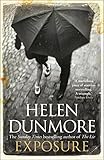
This is my review of Exposure by Helen Dunmore.

When ageing Guy Burgess-type lower pecking order spy Guy Holloway is hospitalised after a drunken fall, he burdens his former lover Paul Callington with the task of smuggling a Top Secret file back into his boss’s Admiralty office. Paul has created a new life for himself as devoted husband to Lily and father of three appealing young children. Yet, with his gay past and wife Lily who, when little, came to Britain as a German Jewish refugee, he is vulnerable and exposed to being framed in the sinister, suspicious Cold War world seeping up through fissures in the cosy, law-abiding England of hot Bovril and sliced spam.

As an admirer of Helen Dunmore’s writing, I came to this book with high expectations and so was disappointed by the opening chapters which switch between the three main characters with heavy use of flashbacks, providing a good deal of condensed information about them without really engaging the reader. Later, I realised that the early chapters are merely intended to set the scene for the specific crisis that is the focus of the author’s interest. When she finally “gets into her stride” with this, I was hooked.

Helen Dunmore is excellent at writing about children, and conveying a sense of life in Conservative, pre-Beeching, divided over CND, Soviet spy fearing Britain, with pupils sitting an eleven plus most were expected to fail and able-bodied widowers employing part-time housekeepers to pamper them with apple crumble and Bird’s custard. She also captures Lily’s wary sense from childhood of being an outsider, and her innate fear of being harmed which causes her to take impulsive evasive action, yet also gives her considerable resilience and resolve. Paul’s former relationship with Guy is gradually presented as one of real emotional depth and importance to them both, rather than a temporary fling, or convenient plot device.

Overall, this is an absorbing, well-written and constructed read which reaches a satisfying conclusion – neat, yet with the idea that life will never be the same again for the Callingtons.

⭐⭐⭐⭐ 4 Stars

“Quivering arches…. like awakening longings…. restless as the very soul of man” (Nansen)

This is my review of Aurora: In Search of the Northern Lights by Dr Melanie Windridge.

Fascinated by the mysterious shape-shifting of the Northern Lights which intrigued both local communities and explorers long before they had an inkling of the scientific causes, plasma physicist Melanie Windridge set out to write a popular science-cum-travelogue to explain the phenomenon, visiting Sweden, Norway, Iceland, Canada and Scotland in the process.

The author makes comparisons to twanging elastic bands, strings of pearls or games of cricket to make theories easier to grasp. There is also a good deal of repetition, which can be useful, although I was left confused and frustrated by the fragmented explanation (with often unclear diagrams) of the all important “Dungey Cycle” by which the plasma stream of negatively charged particles from the solar wind interact with the earth’s magnetic field to give some of the most spectacular aurora effects on the night side of the earth. Perhaps I am puzzled over the above because the process is still not fully understood by the experts.

No doubt to achieve a reasonable length and to make the physics more digestible, the text sometimes seems “padded out” with mundane details of encounters, or over-long digressions into, say, the history of photography, but one cannot afford to skip anything. I found my interest unexpectedly caught by, for instance, the history of the Canadian town of Yellowknife, named after the copper blades of the knives carried by the local Dene people. In the series of prospecting rushes for minerals, the town had a belated gold mine open right up to 2003. For decades, the economy has functioned with “ice roads”, literally cleared of snow in order to freeze hard enough to support convoys of lorries, Now that the Canadian government is committed to the construction of the Mackenzie Valley Highway, there is local ambivalence over the inevitable damage to the ecosystem and traditional culture, the price to be paid for access to commercial progress. The focus on Yellowknife is of course due to its proximity to the Arctic Circle where the Northern Lights are most visible at night in the winter months.

Even if I am left unclear over the “aurora oval” and “reconnection”, I have certainly learned a good deal. Seen with the naked eye, the aurora may be much less impressive than the effect to be captured for the same event with a camera. Varying between arcs and “patchy pulsations”, the familiar green of the aurora derives from oxygen electrons which, with lower energy, may appear red: nitrogen molecules emit blue, violet and pink colours. Those who lived through the hundred year period from 1620 which became known as the Maunder Minimum would have seen few auroral displays, which seemed to coincide with a lack of sunspots visible on the surface of the sun. A “coronal mass ejection” or “vast blob of plasma” may be launched from the sun into space at great speed. Organisations like “Swipsie”, the Space Weather Prediction Center are co-operating to invest increasing resources in predicting whether it is likely to “interact with the solar wind ahead of it because this can twist up the magnetic fields and lead to a more severe event on earth”: apart from interference with the operation of satellites, this could involve damaging an electricity grid, or an unusually large and dramatic auroral display.

⭐⭐⭐⭐ 4 Stars

The Master by Colm Tóibín: “Playing with vital elements….masking and unmasking himself”

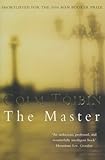
This is my review of The Master (Picador Classic) by Colm Toibin.

In his fictionalised biography of Henry James, Colm Tóibín slides us into the author’s thoughts with no background explanation. The five year period covered is 1895-99, when he was a celebrated author in his fifties, but with many lapses into past memories going back to childhood.

At first, I thought that a full appreciation of the novel would require a detailed knowledge of James’s style, plots and characters and that it would bewilder and bore those who know little or nothing about James. In fact, what turns out to be a subtle and perceptive book, may be enjoyed and admired simply as a portrayal of a sensitive loner who cannot help employing his acute sensitivity to observe others, conjuring stories out of small incidents, yet who goes to great pains to conceal his feelings, and who, despite a sense of loneliness, even loss, ruthlessly steers clear of commitment, even at the cost of destroying the lives of those he has used as source material. Somehow, he generally manages to avoid acknowledging this realisation, just as he represses the expression of his sexuality.

So it is that he uses his beautiful cousin Minnie Temple as a model for several stories, but is chided by his friends for failing to invite her to stay with him in Italy when she is sick and close to death. Did he simply fail to notice her appeal for such an invitation, or refuse to make it because it interfered with his work? Similarly, he enjoys a secret friendship with a female writer, breaking through the defences of her self-contained loneliness, without apparently realising until too late the depth of her need for his presence and love.

James is continually an indecisive mixture of self-delusion and self-knowledge. The book opens with his excitement over the possibility of becoming a playwright: “He foresaw an end to long, solitary days; the grim satisfaction that fiction gave him would be replaced by… voices and movement and immediacy that …up to now he had believed he would never experience”. Yet this alternates with the certainty of failure (as proves to be the case) which would force him to return “willingly and unwillingly, to this true medium”. In such complex and nuanced chains of thought, Tóibín captures a sense of James’s convoluted yet insightful, hypnotic prose, but without making the mistake of concocting wordy, interminable sentences in what would inevitably prove a parody of “the master”.

There are some lighter moments, as Henry James steers his way through a world of gossip. On a visit to Ireland, it is clear that the domineering socialite Lady Wolseley, believing him to be gay, assigns the handsome army corporal Hammond to act as his servant, “smiling strangely” over his apparent satisfaction with the arrangement. The whole issue of the author’s sexuality is treated ambiguously, as it no doubt was at the time.

One of the funniest moments is towards the end when, briefly reunited with his elder brother William, with whom there has always been a degree of sibling tension. William takes him to task for wasting his sharp eye and wide-ranging sympathy on the superficial, class-ridden English whom he can never understand. In an outrageous, misconceived yet telling outburst, he asserts, “I believe that the English can never be your true subject. And I believe that your style has suffered from the strain of constantly dramatizing social insipidity. I also think that something cold and thin-blooded and oddly priggish has come to the fore in your content…I find I have to read innumerable sentences you now write twice over to see what they could possibly mean. In this crowded and hurried reading age you will remain unread and neglected as long as you continue to indulge in this style and these subjects”.

Not always an easy read, this has many brilliant moments.

⭐⭐⭐⭐⭐ 5 Stars