This site will share with you hundreds of book and film reviews written since 2009. Also a chance to discuss these reviews together with some of my creative writing to be added.
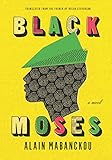
What at first seems like memories of a childhood spent in a Congolese orphanage gradually becomes more surreal, proving by the end to be a kind of fable. A savage indictment of the brutal, corrupt, superstition-ridden and hypocritical regime of Congo-Brazzaville, it employs irony, farce and imaginative, no-holds-barred verve to make its point. The narrator Moses, nicknamed “Little Pepper” for his unorthodox method of dealing with a couple of bullies, befriends a fellow pupil called Bonaventure in the orphanage that mirrors the failings of the wider society of which they are both victims. Whereas Moses becomes more aggressive over time, pursuing a life of crime in order to survive, Bonaventure remains naïve and detached, yet both are eventually judged mad in a crazy world.
The novel has an authentic ring, perhaps because the author grew up in Pointe-Noire, the coastal town he describes so vividly. I like the flights of fancy as when Mabanckou reels off a list of particular food preferences by region, each deplored by all the rest: the Lari eat caterpillars, the Vili adore shark, the Tékés go for dog, and the northern tribes consume crocodile, despite regarding the reptile as sacred. Later on, the author’s imagination runs riot with various remedies supplied by a local healer to cure Petit Piment’s mental problems: cricket’s urine, green mamba’s blood, toad’s saliva, elephant hair mixed with kaolin and sparrow droppings.
I found the style hard-going at times: initially slow-paced, with too much repetition and explanation of events in somewhat unrealistic dialogues as when, sent to the school infirmary to give Moses his medication, assistant Sabine Niangui launches into a lengthy, intimate description of her early life. Events often seem disjointed, and new characters tend to be introduced too abruptly only to disappear as suddenly. Together with the casual violence and frank approach to bodily functions, this may reflect the reality of an orphan’s life, or the general state of affairs in the Congo, but the very prolific Mabanckou does not seem to have the time or inclination to fine-tune his work. Towards the end it is as if he has lost interest in the story, bringing it to a rapid, neatly contrived yet also open-ended conclusion.
Some may enjoy the picaresque inventiveness, but having made its point about the Kafka-meets-1984 state of the Congo, it did not hold my interest, as anything more than an opportunity to practise reading in the original French.
This is an unusual take on the shocking theme of America’s last public lynching in 1930, immortalised in Billie Holliday’s rendition of “Strange Fruit”. The author explores in turn the experiences of three women whose paths cross fleetingly on the evening of the atrocity. Forming a menacing background theme, the lynching is never explicitly portrayed, often seeming oddly secondary to the preoccupation with the personal lives of the two main characters Ottie and Calla. Both are feisty, damaged by dysfunctional childhoods yet on opposite sides of the racial divide.
Ottie is a sassy young secretary who indulges her lecherous boss to boost her pay cheque and has a troubled relationship with her husband, connected with events from her childhood which gradually become apparent. The trio’s whisky-sodden attempt to join the herd travelling to the misnamed town of “Marvel” for the lynching as a kind of casual spectator sport takes on the quality of a bizarre Odyssey. which seems at times like a nightmarish version of the Coen brothers’ “Oh brother where art thou”. Ottie suppresses her sense of unease over the lynching to the point of encouraging the hijack of a cornflowers’ cart to get there. This is the peculiar, incongruously sweet choice of a name for black Americans as opposed to “cornsilks” for whites, or “cornroots” for American Indians.
Orphaned as a child, taken in by a couple on sufferance, torn between her affection for two men, Calla channels some of her personal violent anger into defiant rage over the lynching to the point of taking action, however futile, to prevent people from attending it. One of the most convincing scenes is her perverse desire to “stamp into the ground”, even shoot, the one white person who shows her kindness. She is enraged by the inadequacy of his statement that the lynching is “just plain wrong”. For her, it is “a thousand miles from what needed saying….what a cornsilk needed to do was just keep his kindly mouth stapled shut”: the honest prejudice of his mother seems preferable. This section reaches the strongest conclusion in the novel.
By contrast, the viewpoint of Sallie, a brain-damaged local white woman with mystical powers provides a short, inconclusive postscript.
“The Evening Road” evokes the sense of 1930s inward-looking small town America where the superficial cosiness of catfish suppers at the church is warped by ordinary people’s unthinking acceptance of slavery’s racist legacy, of sexism and the drowning of guilty sorrows in whisky, a reaction against the unrealistically oppressive prohibition of hard liquor.
Despite its striking metaphors (hell-poker hot) and visual images , this novel comes across as an over-contrived exercise in creative writing. Deliberately surreal and evading the norms of structure, it appears too fragmented and rambling, with details only half-revealed at random, threads allowed to drift away, characters half-developed and unengaging, overall a kind of verbal “modern art”. I read on in the hopes of some resolution or revelation which never came and did not feel any insight gained in the process.
Set in Bristol against the backdrop of unsettling news about the French Revolution in which idealism turns so quickly to extreme violence, the central character Lizzie Tredevant steers a course between two different worlds. On one hand she has learned to be unconventional, unmaterialistic and free-thinking from Julia Hawkes, her radical blue-stocking mother and a talented pamphleteer on human rights. On the other, she is drawn largely by sexual attraction to John Diner Tredevant, a clever and competent self-made man who has battled his way out of poverty to become a successful property developer. The widower of a French woman, he is much quicker than Julia and her idealistic companions to see the ethical flaws in a revolution which brutally guillotines anyone who happens to be an aristocrat, priest, or sympathiser of the old system. He also appreciates how political and economic uncertainty jeopardise the Bristol housing boom and his debt-laden dream of constructing a grand terrace on the edge of the Clifton gorge, which forms a dramatic backdrop to the story.
Julia, step-father Augustus and family friend Hannah have all advised against her marrying Diner, who in turn does not hide his contempt for what he sees as their naïve theories and practical incompetence: “They tear down the Bastille, but can they build it again? Augustus would not be able to put a roof on a doll’s house…. Can he turn a lathe?…. Can he lay a flagstone floor? No, he depends upon those who can. He is as much a guest in the world as a three-year-old child”. Gradually, her loyalty to Diner is strained by his controlling behaviour, and her curiosity about the French wife she is afraid to ask him about develops into fear over a secret which he may be concealing.
Helen Dunmore knows how to structure a story with a double hook at the beginning: the mystery of a long-dead woman writer who really existed but left no trace of her work, and the reasons why a man is burying a woman’s body in a woodland clearing on the opposite side of the Avon Gorge from Clifton. She develops complex characters and relationships, although the poet Will Forrest is a little too good to be true, with a strong sense of time and place particularly evocative for those who know Bristol – it is intriguing to imagine Clifton as a raw building site surrounded by countryside. The narrative drive drags a little at times, but builds up to a gripping if slightly contrived, borderline melodramatic conclusion. This is a very readable work of popular literary historical fiction.
After his immediate family’s death in the Potato Famine, John McNulty joins the wave of Irish immigrants into the US where soldiering seems the only option for him and his lifelong companion and secret lover, John Dole. In the 1850s, this means, of course, “routing out” the Indians to leave the land clear for European settlers. After a brief return to civilian life, inspired by “the true and proper love of country and the call of Mr. Lincoln”, the two men see no irony in joining up again to fight for an end to slavery in the Civil War of the 1860s. Yet McNulty realises that Indian Chief Caught-His-Horse-First and his people have received a raw deal from the Americans whose actions show they are mistaken in thinking themselves morally superior. “Indians ain’t vermin to be burned out of the seams of the coats of the world”.
At first, this novel seems to have a plot so slight it could be summarised in a paragraph, so that what sets it apart is partly the power of Sebastian Barry’s poetical prose – “winter was tightening her noose on the world…then the rains came walking over the land… making the grass seeds drunk with ambition…just before a thunderstorm, when the land draws in its chest and holds a limitless breath…” – layer upon layer of images. There is also his skill in sustaining a distinctive “voice” for his narrator John McNulty in the form of an ungrammatical but expressive stream of consciousness. In fact, when the story gears up to a final dramatic climax, it becomes clear that most of the previous characters and incidents are jigsaw pieces in a carefully constructed plot.
The first of many striking, visceral descriptions is the unexpected encounter with a herd of two or three thousand buffalo, the thrill and danger of catching a few for meat, and the exhilaration of preparing and eating it. “The knives opened the flesh like they were painting paintings of a new country, sheer plains of dark land, with the red rivers bursting their banks everywhere.. The Shawnees ate the lights raw. Their mouths were sinkholes of dark blood”. When this unflinching style is applied to the massacre of Indians, it becomes very hard to read. I can understand Sebastian Barry’s urge to test his creative writing skills to the limit in capturing the reality of brutal events, perhaps he is honouring the victims in the process, yet reading it feels almost obscene. I certainly felt oppressed by unrelenting sequence of violent bloodshed clearly in store.
This sensation is at least partly offset by John McNulty’s wry humour, his sensitive eye for the landscape and weather, his acute observations of the rapid changes in the way of life, all more vivid and evocative than a social history of the period: the experience of a stream train, “Something in perpetual explosion. Huge long muscle body on her and four big men punching coal into her boiler…..Here is new-fangled luxury I guess. We tear on through country would of took long wretched hours by horse, the train traversing it like a spooked buffalo”. Or the freed slaves working confidently by “Vast wharf-houses tall as hills…The boss man is black and the shouting roars out of black lungs. No whips like heretofore. I don’t know but this looks like to be better. Still…(we) don’t see one Indian face”.
In another of McNulty’s flashes of insight: “When that old Cromwell came to Ireland he said he would leave nothing alive. Said the Irish were vermin and devils. Clean out the country for the good people to step into. Make a paradise. Now we make this American paradise, I guess. Guess it be strange so many Irish boys doing this work”.
Although the author manages to convey a good deal about his characters through what often seem like chance comments, and they are in general a realistic mixture of good and evil, apart from the impossibly perfect Indian girl Winona, the fragmented style at times makes them seem distant, two-dimensional, not arousing as much sympathy as they should. It may have been Barry’s intention, to portray people this way in an unstable world. Thus McNulty himself remarks towards the end. “I never think bad of John (Cole), just can’t. I don’t even truly know his nature. He’s a perpetual stranger and I delight in that”.
Having written a fictionalised memoir of her bipolar mother’s life which ended in suicide, the award-winning author Delphine Le Vigan is well–placed to muse on the borders between reality, perceived truth and creative invention. In “D’Après une histoire vraie”, this theme is interwoven with the psychological drama of a vulnerable author finding her life being insidiously taken over by a charismatic but probably unstable individual who wants to go beyond being a ghost writer to control the life of a successful author. The inspiration for this comes at least in part from Stephen King’s novels, quotations from which, including “Misery”, at the beginning of each section give broad hints as to where matters are heading.
In giving the novel’s narrator her own name of Delphine, the author suggests a degree of autobiography, but although she herself may well have experienced a period of “writer’s block”, it is to be hoped that the bulk of the story is “made up”. Overwhelmed by the success of her novel revealing intimate family details, which has upset some relatives, bombarded at book signing sessions by fans whom she has given the confidence to unburden their own troubles, it is not surprising that the fictional Delphine is finding it impossible to write. With hindsight, she attributes her decline to the malign influence of her enigmatic friend “L” who at first seemed such a kindred spirit, so eager to help manage her life.
The tense, claustrophobic relationship rapidly established between Delphine and “L” is heightened by the absence of other characters. As regards Delphine’ family, this is conveniently explained by her childrens’ studies at distant colleges while her lover spends long periods on work projects in the States. While Delphine initially wants to write creative fiction, the ever more dominating “L” is determined that she should focus on real experiences, however painful, arguing that this is what people wish to read about and now expect from her. This seems a somewhat sterile argument over a false dichotomy, since apart from the facts that most fiction, however fanciful, is triggered by something “real”, and that people see reality very differently, it is inevitably altered through a writer’s descriptions and interpretations into a “form of fiction”. A book may claim to be “a true story”, but even when “inspired by real facts” may in practice be largely invented. The author makes this point several times, and to some extent shows it to be the case in the twists of the plot but this is not enough to carry the novel.
Although this book has been highly praised, neither the ideas about the nature of fiction, nor the psychological drama are handled with the the mind-bending subtlety for which I hoped. The decision to present a retrospective acount of events with indications of what was about to happen may feed a sense of “reality” but combined with excessive repetition makes for an often tedious read. Whenever the suspense does begin to ramp up, it tends to become rapidly over-melodramatic, collapsing all too predictably into disappointingly banal or even ludicrous explanations. Although the novel benefits from a twist towards the end, the author does not seem to know when to stop – the last two chapters in particular seem counterproductive.
This is a relatively easy read in French, with a clear style and many useful idioms and clichés for a student of French – also a good source of discussion for a book group.
I am tempted to see Polanski’s film on this, since I suspect that the director of “Rosemary’s Baby” will know how to create a real sense of menacing suspense, perhaps at the expense of the literary arguments.
Having written a fictionalised memoir of her bipolar mother’s life which ended in suicide, the award-winning author Delphine Le Vigan is well–placed to muse on the borders between reality, perceived truth and creative invention. In “Based on a True Story”, this theme is interwoven with the psychological drama of a vulnerable author finding her life being insidiously taken over by a charismatic but probably unstable individual who wants to go beyond being a ghost writer to control the life of a successful author. The inspiration for this comes at least in part from Stephen King’s novels, quotations from which, including “Misery”, at the beginning of each section give broad hints as to where matters are heading.
In giving the novel’s narrator her own name of Delphine, the author suggests a degree of autobiography, but although she herself may well have experienced a period of “writer’s block”, it is to be hoped that the bulk of the story is “made up”. Overwhelmed by the success of her novel revealing intimate family details, which has upset some relatives, bombarded at book signing sessions by fans whom she has given the confidence to unburden their own troubles, it is not surprising that the fictional Delphine is finding it impossible to write. With hindsight, she attributes her decline to the malign influence of her enigmatic friend “L” who at first seemed such a kindred spirit, so eager to help manage her life.
The tense, claustrophobic relationship rapidly established between Delphine and “L” is heightened by the absence of other characters. As regards Delphine’ family, this is conveniently explained by her childrens’ absence at college while her lover spends long periods on work projects in the States. While Delphine initially wants to write creative fiction, the ever more dominating “L” is determined that she should focus on real experiences, however painful, arguing that this is what people wish to read about and now expect from her. This seems a somewhat sterile argument over a false dichotomy, since apart from the fact that people see reality very differently, it is inevitably altered through a writer’s descriptions and interpretations into a “form of fiction”. A book may claim to be “a true story”, but even when “inspired by real facts” may in practice be largely invented.
Although this book has been highly praised, for me it falls short of the subtle and mind-bending work it could have been. The decision to present a retrospective explanation of events with indications of what was about to happen may feed a sense of “reality” but combined with the repetition of points “ad nauseum” makes for an often rather dull and tedious read. When the suspense does begin to ramp up, it tends to become rapidly too melodramatic, collapsing all too predictably into disappointingly mundane or even ludicrous anticlimax. Although the novel benefits from a twist towards the end, the author does not seem to know when to stop – the last two chapters in particular seem counterproductive.
I am tempted to see Polanski’s film on this, since I suspect that the director of “Rosemary’s Baby” will know how to create a real sense of menacing suspense, perhaps at the expense of the literary arguments.
Encouraged by his wife Kumiko’s willingness to support him, Toru Okada gives up his mundane job as a legal assistant to work out what he really wants to do. The quiet life of a “house husband” is punctuated with bizarre phone calls from strange women and encounters which lead to the spinning of some odd tales against the surreal background call of the wind-up bird. Toru’s most obvious trait is a remarkable passivity – possibly the author’s indictment of Japanese men in general. When Kumiko expresses her detestation of beef stir-fried with green peppers, Toru dumps the offending mixture in the garbage, not out of pique but pragmatically because it is not required. Yet the incident leads him to wonder if it is possible “for one human being to achieve perfect understanding of another”. If he will die without ever really knowing her, what is the point of a life confined to living together? His job-free existence gives him the freedom to philosophise in this way for the first time – a comment on the pressurised Japanese society of the 1990s.
Kumiko seems withdrawn, and may be unhappy or concealing something from Toru, as he admits he is doing in turn. Is he depressed, going a little mad, or utterly sane in stepping off the Japanese treadmill of hard work, conformity, keeping face, and pursuing a veneer of westernised culture underlain by oriental traditions. Before Kumiko was allowed to marry, for instance, she and Kumiko had to pay regular visits to a medium, to gain a favourable assessment from him. Similarly, Kumiko’s obnoxious brother consulted a clairvoyant on the whereabouts of her missing cat, named Noboru Wataya after him.
At first I was carried me along effortlessly, sucked in by Murakami’s plain, very readable style with a touch of wry humour which has been retained in Jay Rubin’s skilful translation. Then I began to sense that the interweaving of mundane daily life, unlikely events and implausible tales might simply trail away or prove to have no meaning, rather as one might define life in which one cannot be sure of reality, or of achieving outcomes which, if not satisfactory, are at least certain.
The repetition of domestic tasks, and recurrence of erotic dreams, began to bore me. I believe the translator has omitted some chapters and reordered others, which suggests a lack of editing, even self-indulgence on the part of the writer. Without knowing about the translator’s changes at the time, I had an increasing desire to skip pages, even reading the end to see if the book justified the effort of slogging through the 607 pages of the paperback version – both a bad sign.
I am ambivalent about this book. It has clearly become a “cult classic”, prompting widespread praise for its originality, surreal brilliance and philosophical insights. Yet, I cannot help suspecting it is simply an over-ambitious shambles which Murakami wrote for his own pleasure, with, of course, the added bonus of profit guaranteed by his fame.
Set mainly in Senegal where the author’s father, absent from her infancy, was born, the novel’s three untitled sections of varied length are very tenuously linked – for instance Khady, who makes a brief appearance in the first part is cast as the main character of the final section, making the perilous attempted migration to a better life in Europe. Apart from Senegal and women who have been deserted or wronged by men, all the sections seem to have in common are originality in plot and style, with a frequent surreal, dreamlike quality.
In the first part Norah, qualified as a lawyer despite her upbringing in an impoverished single parent family, has responded to a mysterious summons to visit her father, who abandoned his family years before to make a fortune from running a Senegalese holiday village. He demands her help in representing Sony, the son he took with him when he left. Despite his intelligence and new-found wealth, Sony seems as damaged by past events as the mother and sisters from whom he was abruptly separated as a five-year-old.
At first, I was irritated by the long, complex, often repetitive sentences forming a stream of consciousness which requires intense concentration, plus the image of the father perched like a bird in the branches of the flamboyant tree growing by the porch is a little hard to take. My interest was caught when Norah begins to agonise over her relationship with the charming but irresponsible Jakob, berating herself for having allowed him to infiltrate her life. However, as with the drama involving Sony, none of this is ever fully developed. The denouement seems abrupt and ambiguous – perhaps it is the author’s intention to leave matters open to several interpretations.
In the middle section, it gradually emerges that the main protagonist, an incompetent kitchen salesman called Rudy, has been forced by a scandal to quit a teaching post in Dakar to return to France. His selfishness is apparent not only in his self-absorption, but also in misleading his Senegalese wife Fanta into thinking she will be able to teach in France. Her anger with him is symbolised by a menacing buzzard which continually haunts him: the author seems very keen on metaphorical birds.
Another obsession is with physical ailments: Norah is incontinent when embarrassed, Rudy suffers from piles and Khady is lamed by an injury too grave to heal without medical care.
The final part is the shortest, most conventional and best constructed of the three, but perhaps the bleakest in its theme of the exploitation of migrants, with the casually brutal treatment of women in particular.
Although there are some striking images in this book, the disconnected nature of the writing meant that I did not feel fully engaged with the characters. Nor was it clear to me in what ways Norah who seems to fall under her father’s spell, Fanta who makes so small an appearance, and Khady, buoyed up by the mantra-like sense of “being herself”, yet passively enduring the most appalling hardship, can be described first and foremost as “strong”.
The task of translating this unusual book seems particularly challenging, so it seems best read in the original French if possible.
Originality is the common theme in this collection of seven stories, varied in length, which range widely over different countries, cultures and themes, boldly shifting viewpoints by gender and age as if to “try them all out”.
The the last and most powerful story is “Le Bateau” which gives its name to the entire book Although the author Nam Le was only a baby when he made the perilous journey to Australia as one of the Vietnamese “boat people”, tales of this harrowing experience must have fed his vivid account of a young woman’s attempt to survive life on board as the ship is lashed by a storm and the stores of food and fresh water run out. She is befriended by a capricious woman, whose son, although disturbed by the effects of war, and possibly autistic, fascinates her and arouses in her a maternal love which the mother seems at times to lack.
This and the first story struck me as the most authentic and well-structured, perhaps because they are connected to the family culture and history with which Nam Le identifies, despite his absorption into life in Australia and the US. With its indigestibly long title “Love, honour, pity, pride, compassion, sacrifice, the opening story has aspects of autobiography in describing a young writer struggling to meet deadlines, ambivalent as to whether he should focus on “ethnic literature” to earn money. His dilemma is increased by the ethical question of whether he should use as a theme his father’s experience of a massacre at the hands of brutalised American GIs. Even if the older man is prepared to recall it in detail to iron out the “errors” in his son’s story, does that mean he is prepared to see it sold and read by westerners who will soon forget it? Although the ambiguous ending feels like a let-down at first, on reflection it is interesting to debate the various interpretations one can make.
Nam Le’s upbringing in Australia may have given a particular genuine and moving quality to the almost novella-length “Halfhead Bay”, in which teenage Jamie steels himself to face up to the school bully Dory after daring to make a play for his girlfriend. Should he be protected from Dory’s fists so that he can once again strike a winning goal for the school team, or for the sake of his dying mother? The subtle and complex “coming of age” drama takes place in the context of a family’s inability to face up to the reality of a crisis.
Despite the varied themes, the essential style remains the same. Each story develops gradually, so that the reader has to work out what it going on, and it is impossible to predict the outcome. Heavy use is made of flashbacks, which sometimes disrupt the narrative flow, although they could also be said to reflect the way the mind works, drifting back to past events triggered by experiences of the present, or perhaps as an escape from it. Nam Le creates some fascinating dilemmas, as when a young gangster is ordered to kill a friend to save his own life. He knows how to create page-turning tension, but the endings are often disappointing, an abrupt anti-climax. “Tehran calling” was so nebulous as to leave me completely unengaged.
Overall, Nam Le is a gifted writer, with a plain, clear style which draws one in. It is an effective vehicle for conveying subtle nuances in people’s relationships with each other, and descriptions filled with vividly striking images.
I agree with reviewers who feel that he is better at writing prose than structuring a short story. Each one is mined from a rich enough seam to fuel a full-length novel. He reminds me somewhat of Alice Munro’s short stories with their deceptively simple prose and sometimes meandering, unpredictable storyline.
I read these short stories in the French translation, which I would not recommend since the original English seems more suited to Nam Le’s style.
It is hard to think of a more impressive book than this – gripping, entertaining and informative as the author marshalls with great skill a mass of facts and ideas.
Although largely forgotten now, with his unflagging energy and curiosity, Humboldt achieved widespread fame during his long life (1769-1859) as a traveller, explorer and writer. Fortunate to have been born before it was necessary to be a specialist, Humboldt was influenced by Goethe to view the world as a unified whole, consisting of multiple interactions. Although, as a scientist, he continued to believe in the importance of close observation and precise measurement in understanding the world, he also grasped the need for imagination. “Nature must be experienced through feeling” and those who limit themselves to the simple classification of plants, animals and rocks “will never get close to it”.
Humboldt was a visionary thinker, ahead of his time. He suggested that creatures had evolved years before Darwin, in turn inspired by Humboldt’s writing, began to think about natural selection. He conceived the idea of an ecosystem, or groups of organisms coexisting in the same environment, decades before another disciple, Haeckel, coined the term “ecology”. Always looking for patterns, Humboldt was quick to notice how plants seemed to differ according to climate, in turn linked to latitude. In the same way, mountains, like the dramatic snow-topped Chimborazo which he climbed in Ecuador, demonstrated predictable zones of vegetation according to altitude, ranging from the tropical palms of the lowland, through the oaks and ferns of temperate climates up to the barren surfaces above the treeline. Through observation, he developed ideas of human-induced climatic change, as in the case of excessive clearing of forests in both Europe and South America. He even invented isotherms.
He realised that the nocturnal outbreaks of cacophony in the South American forests were not, as the natives claimed, the animals’ way of worshipping the moon, but “a long-extended and ever-amplifying battle” as the jaguars chased the tapirs, whose flight scared the monkeys, who disturbed the birds” and so on.
Unable to travel outside Europe before gaining his inheritance at the age of about thirty, Humboldt found the added difficulty of obtaining passage on a suitable vessel when most ships were needed for the Napoleonic wars. Then there was the further risk of being attacked by British warships when he eventually sailed to the South American colonies on a Spanish frigate.
His jouneys were full of bizarre incidents: the natives of the South American Llanos drove a herd of wild horses into a pond to drive up to the surface the electric eels that he was keen to study. Not only did some of the horses perish, but Humboldt and his colleagues made themselves ill from the shocks which could still be generated by the weakened eels. Years later on a trip to Russia, in defiance of the authoritarian government which sought to control his movements, Humboldt took his party on a 2000-mile detour at lightning speed to see the Altai Mountains where Russia, China and Mongolia meet. When their route was blocked by a major outbreak of anthrax, the ruthless Humboldt simply stocked up with uncontaminated food, and dashed through the affected area with all the carriage windows closed.
In the quarter-century gap between a five year odyssey in South America, often totally cut off from events in Europe and his visit to Russia, it is initially surprising to realise that he spent much of the time in Paris, which he loved for its cultural opportunities, or serving through gritted teeth at the court of the King of Prussia, where he disparaged Berlin as “little, illiterate and over-spiteful”. Yet he was far from idle, being prolific in writing detailed, often richly illustrated books about his journeys and ideas on nature in relation to man, lecturing and corresponding with other scientists and thinkers. Having impoverished himself through his travels, publications and supporting young scientists, he was forced to endure a tedious court post humouring the king, when his preference was for democracy, along with his condemnation of slavery.
He longed to travel to India, but was blocked by the all-powerful East India Company’s refusal to grant permission for this, despite his fame.
This is not merely the biography of a hyper-active, charismatic, workaholic genius, liberal-minded, often generous, yet sharp-tongued and dominating conversations in his unconscious assumption of superior knowledge, even talking over a piano specially played for his benefit, only to astound students by quietly taking notes alongside them when he knew there was something new to learn in chemistry or geology.
The final chapters also cover some of the gifted environmentalists who were inspired by him, such as George Perkins Marsh who in “Man and Nature” assembled comprehensive evidence of the destruction of the earth by human activity. “The Old World had to be the New World’s cautionary tale”. But, with the 1862 Homesteads Act which gave every loyal American over 21 the right to 160 acres, how could the march of change be prevented? Another example is John Muir, who set up the Sierra Club, now the largest grassroots environmental organisation in the US, and who was responsible for the establishment of the Yosemite National Park.
This is a fascinating book to encourage others to read, and return to again.
⭐⭐⭐⭐⭐ 5 Stars
The Invention of Nature: The Adventures of Alexander von Humboldt, the Lost Hero of Science: Costa & Royal Society Prize Winner