Freedom is always for the one who thinks differently

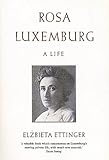
This is my review of Rosa Luxemburg: A Life (Life and times) by Elzbieta Ettinger.

For years I knew of Rosa Luxemburg only as a communist agitator who was assassinated.

This excellent biography which deserves to be much more widely praised and available, portrays her as a remarkably intelligent woman who from the 1890s made herself famous in Europe as a talented journalist and charismatic orator, spreading the cause of socialism. Although she had several lovers, the main influence in her life was Leo Jogiches, who financed her and acted as her mentor at the beginning of her career. An intense man, happiest when organising conspiracies, he was unable to commit to her in the settled home, with marriage and children, which she craved.

Ettinger analyses what influenced Rosa to identify so strongly with the cause of workers, and to reject nationalism: her status as a Jew, a Pole -i.e. brought up in a divided and occupied country-, her lameness, and her observation as a child of poor families living nearby.

Active in the social democratic parties of Poland and Germany, she dared to challenge Lenin, condemning the centralised nature of Soviet communism, whereas she believed that true revolution could only come from the workers themselves. Eventually, her ideas cost her several grim years in prison. It was her role in founding a German Communist Party in the anarchy following the end of the First World War which led to her murder in 1919. Perhaps naively, she did not seem to realise that many workers are motivated most strongly by the desire for material goods.

Rosa was not very interested in "women's movements" since she had the confidence to follow her natural interests, and basked in the admiration she received from the largely male circles in which she moved.

Ettinger does not hide her flaws. In her professional life, Rosa descended into bitter and undignified arguments with some colleagues. On a personal level, her emotionally open letters show her to be at times neurotic or domineering, and she was often too busy to find time for her family, not bothering to visit her dying mother and leaving her ageing father's letters unanswered. The ludicrous lengths she went to hide her affairs – pretending to her family that she was married to Jogiches- have to be accepted in part as a sign of the times.

A minor criticism is that, perhaps to avoid getting bogged down in political theory, Ettinger does not explain the evolution of Rosa's political thinking clearly enough, but the main points shine through, together with her independence and energy.

⭐⭐⭐⭐⭐ 5 Stars

Riding the Tiger

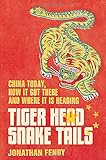
This is my review of Tiger Head, Snake Tails: China Today, How it Got There and Where it is Heading by Jonathan Fenby.

Having made his name with the popular "A Penguin History of China: the Rise and Fall of a Great Power", Fenby's study of China today focuses on recent social, economic and political events.

Much of the information provided will no doubt be familiar from newspapers and television documentaries: the astonishing speed of urbanisation, with all the attendant problems of pollution and scope for corruption and substandard construction; the, to a westerner, odd blend of nominal communism and capitalism, as displayed in the coastal Special Economic Zones like Shenzhen; the harsh crackdown on any kind of rival belief system, as in the case of the Falun Gong; the current rejection of democracy or free speech as likely to destabilise society, thus hindering economic progress. Fenby uses extensive firsthand obsevation to combine all this into a single book with many often chilling examples e.g. the artist Weiwei probably fell foul of the authorities by daring to suggest in his blog that the death toll of 80,000 in a Sichuan earthquake was due to corruption in building contracts.

Fenby reminds us how the Confucian tradition of keeping "a tight grip", the control freakery of past emperors are perpetuated into the current "top down rule" which is seen as the necessary framework for economic development.

Fenby has also added to my awareness of issues. For instance, I had not considered how the one child policy has created a "time bomb" familiar to the West, in which the labour force will become inadequate to care for all those too old to work. I had not realised how Deng Xiaoping used foreign technology and capital in the 1990's to enable China to avoid a Soviet-style collapse of communism. Yet by 2001, Premier Zhu Rongji had adopted the slogan "reduce the workforce, increase efficiency" with the kind of cuts and unemployment we might associate with a post financial collapse right wing western government.

The book will date quickly, since it makes a point of discussing the candidates just prior to the 2012 election to replace State President Hu Jintao and Prime Minister Wen Jiabao in the ten yearly leadership transition. Ironically, Fenby refers frequently to Bo Xilai, the "princeling in his fiefdom of Chongqing", whom we now know to have been disgraced in 2012, perhaps as a way of halting the progress of an influential figure who hankered after a return to some aspects of Maoism.

Although the facts provided are all relevant, I sometimes found them hard to digest, making the book a little dry. It seems to me to lack a clear structure, and as a result at times rambling, even confusing and often repetitive. When I felt bogged down it proved possible to read the chapters in the "wrong" order in an attempt to rekindle my interest. I suspect it may have been "thrown together" in a hurry, which is a pity.

A map of the key cities and states continually mentioned would have been useful. I resorted to printing a map off the internet to help be locate places and areas.

Although this has increased my understanding of a country likely to affect all our future lives, I wish it had been better constructed, and perhaps more reflective.

⭐⭐⭐⭐ 4 Stars

Winterrreise through a Lost Europe

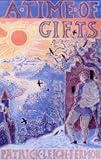
This is my review of A Time of Gifts: On Foot to Constantinople: from the Hook of Holland to the Middle Danube by Patrick Leigh Fermor.

Armed with natural charm and the confidence and precocious classical education of a public school boy, the eighteen-year-old Patrick Leigh Fermor set out in 1933 to walk from The Hook of Holland, along the Rhine and Danube to what was then Constantinople, although by the end of this first book he has barely reached Budapest.

Prepared to rough it, sleeping in barns, even the vacant cells of local police stations according to a local custom, whenever possible he drew shamelessly on a network of well-heeled connections to cadge more comfortable accommodation in the castles and luxury flats of a succession of middle-European aristocrats.

Despite making copious notes and sketches, some of which were lost, Leigh Fermor did not publish his account until many years later in the 1970s. This has the benefit that he would surely tend to record memories which remained most strongly in his mind, but it also calls into question how much he has embroidered his original impressions. I suspect that his detailed descriptions of, for instance, the paintings of old masters, or the history or geography of an area are based on research or knowledge gained long after his visit. Some recollections are too detailed NOT to have been embellished, but perhaps this does not matter.

At first, I was bowled over by his articulate spate of words, and some will remain impressed by say, his flights of fancy over the murals at Melk – a lusciously Baroque-style former Austrian monastery which is certainly worth a visit. For sure, his writing is often poetical and striking in its original imagery. Yet, it also tends to appear contrived and overblown – at times too convoluted to make much sense and often downright irritating. The notes from his original writing included at the end of the book show the simpler, more direct style of a young man barely out of school, so that the flowery outpourings in which Fermor often indulges seem the creation of an older man. His desire to rely the power of words is laudable, but I longed for some confusing passages to be replaced with a few good clear maps, family trees and timelines to provide a bit of clarity.

Although there is some reference to the rise of Hitler, Nazis tend to be portrayed as buffoons rather than perpetrators of a deadly holocaust and political issues are discussed from the complacent viewpoint of a privileged elite. One of his profounder comments is that the intelligentsia of middle Europe were less likely to be seduced by communism than their liberal English cousins, because they lived closer to the grim realities of communism. I often wanted Leigh Fermor to quit downing vast quantities of beer and wine in different coloured glasses, leave off mooning over obscure legends of unicorns in the Black Forest, and pay attention to what was really going on. What about the Depression, the poverty and inflation inflicting Europe at the time?

Leigh Fermor is at his best in his descriptions of nature: wildlife struggling to survive the cold and boys skating with the aid of a sail in the frozen winter landscape or the Hungarian marches in spring, exploding with croaking, plopping frogs, giant yellow kingcups in the streams, and flocks of migrating storks.

A fairly slow read since it is so densely written, the author arouses nostalgia for a lost world – a privileged, highly educated elite, strong peasant communities, perhaps somewhat romanticised, a refreshing lack of commercialisation, in particular of the cult of the teenager, allowing young men to move directly from the world of the schoolroom to adult freedom. He certainly makes me want to find out more about the Hapsburg Empire which dominated the area for so long, and to unravel the confusing history of the former Czechoslovakia and Hungary.

The third instalment of his planned trilogy is apparently due out in 2013, although compiled from his notes and drafts by others.

⭐⭐⭐⭐ 4 Stars

Beyond Adlestrop

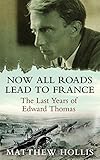
This is my review of Now All Roads Lead to France: The Last Years of Edward Thomas by Matthew Hollis.

I read this as much to find out about a period, in this case the development of the “New Poetry” of the early C20, as about the poet in question, in this case Edward Thomas. However, this biography requires a strong interest in Thomas and familiarity with his work.

A poet himself, the author is good on showing you Thomas composed, striking out lines and on occasion suffering from “poet’s block”.

I was interested to see how the now famous poets of the day formed a kind of community of fellowship, rather than work in isolation.

The friendship with Robert Frost which helped move Thomas from a prose writer to a poet caught my attention. Even more so, I was intrigued by the depressive personality which Thomas himself felt might be a necessary condition for his work, raising the question of whether he could have been so creative in a modern age where drugs are so widely prescribed as a solution.

The author is very honest in showing how the generally gentle and sensitive Thomas was often driven to thoughts of suicide, cruel words and neglectful treatment of his patient wife Helen: one can understand his pent up frustration over having been trapped in marriage after getting her pregnant while still an undergraduate, missing out in the process on the expected First in History which would have given him an academic career and the financial security to look after his three children with the freedom to write creatively without worrying about having enough money.

Although I wanted to admire this book, it did not engage me as it should have done. I think this was because of the rather disjointed structure, and the tendency to cram too many disparate famous names and unassociated facts into a passage.

However, I think that lovers of Thomas will enjoy it and it has certainly left me with the intention of reading more of his poetry.

⭐⭐⭐⭐ 4 Stars

The price of truth

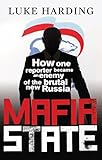
This is my review of Mafia State: How One Reporter Became an Enemy of the Brutal New Russia by Luke Harding.

After mastering Russian with impressive speed, Luke Harding spent about four years based in Moscow as a foreign correspondent for "The Guardian". Making the most of opportunities to travel which he clearly found fascinating, Harding was more energetic and courageous than many of his colleagues, in reporting on the growth of corruption and undemocratic "vertical power" under Putin, crushing the opportunities opened up by Gorbachev's "perestroika". He describes unflinchingly how former KGB agents (siloviki) have gained key positions in the Kremlin, with the recently formed FSB (Federal Security Service) as insidious as the KGB and if anything even more of a law unto itself.

Regular readers of the "quality press" will already know how journalists like Anna Politkovskaya have been shot in broad daylight for investigating and writing about the truth, how Litvinenko was poisoned in London by Russians who brought polonium into the UK to put in his tea, and how the "oligarchs" who made vast fortunes out of Russian privatisation are now salting away their wealth in places like London. Harding builds on all this to explain how Russia is hardening back into an authoritarian state in which senior politicians enrich themselves, links with international organised crime grow, freedom of speech is crushed and the gaps between rich and poor widen.

Harding's outspoken stance attracted adverse attention from the FSB from the outset. He repeatedly found evidence of his flat being entered – not to steal anything, but leaving a window open next to his son's bed in a high rise flat, tampering with a computer screen, even following the old trick of placing a sex manual beside his own bed – weird signals to unnerve him and his family. Eventually, he was told he would have to leave because of some irregularity in his paperwork, a convenient and overused charge, and he was refused entry, his visa stamped "annulled" on a return flight to Moscow. Perhaps Harding's cardinal sin in the eyes of Putin and his henchmen was the journalist's inevitable association with the US embassy cables critical of Russia published as "Wikileaks" in "The Guardian".

"Mafia state" is written with the air of breathless haste of an article written to meet a deadline, but, as a book, requires more careful editing. Passages often seem disjointed, and although the chapters are themed, they tend to dodge back and forth in time rather confusingly, with continual use of the present tense for past events an added distraction. Harding's courage may include a touch of foolhardiness, and his apparent surprise at being thrown out of the country appears a little naive.

In the interests of balance, he could have shown a greater understanding of the fear, ignorance, insecurity or conditioning which may explain the lack of democracy and suppression of freedom in the Former Soviet Union. Also, perhaps we are not quite as politically and even morally superior as we like to assume.

I would have liked a bit less on Harding's family members (details no doubt included to bring home the reality of the harassment they suffered in Russia) and more on the background to some of the issues covered, in particular the political upheavals in the various outlying republics. A few more maps would have been invaluable. In fact, I found some good ones on Google images which increased my grasp of the geopolitics a good deal.

Overall, this is an important record of some alarming trends of which we need to be aware, even as our leaders are in the invidious position of turning a blind eye because of the perceived need to work with Russia on the world stage, and Harding has done us a service in putting himself on the line to expose the truth. I also have him to thank for introducing me to the wonderful "Peredvizhniki" painters who captured the beauty of C19 rural Russia.

⭐⭐⭐⭐ 4 Stars

Because it’s there

This is my review of Into The Silence: The Great War, Mallory and the Conquest of Everest by Wade Davis.

There is no need to be a mountaineer to appreciate this account of the early attempts to scale Mount Everest. Wearing a Tweed jacket, making reluctant use of heavy oxygen canisters because he had seen their benefit in action, but lacking the nylon ropes, hi-tech crampons and other paraphernalia now available to reach the summit, George Mallory and his companion Andrew Irvine disappeared in 1924, leaving the tantalising question as to whether they had managed to reach the top.

This is less a biography of Mallory, more a study of the exploration in the context of the 1920s, in particular the grim legacy of the First World War, its horror and folly described here with particular harsh clarity: the British Establishment saw the conquest of Everest as an antidote to what Churchill called "a dissolution..weakening of bonds…decay of faith" plus climbers like Mallory diced with death quite casually having seen it close at hand so often but somehow survived the trenches.

The British Empire seemed to dominate the world, although the cracks were starting to show, so it was still possible for Curzon, Viceroy of India, to assert an Englishman's natural right to be first to the top of Everest! A skilful climber was forced out of one team because he had been a conscientious objector.

Since what is now known to be the easier route through Nepal was barred, the expeditions of 1921-24 approach through Tibet, encountering all the wild beauty and mystery of this unfamiliar culture, from the fields of wild clematis to the barren valley trails marked with stone shrines and inhabited by hermits whose self-denial seemed a waste of time to the mountaineers, although they appreciated in turn that the local people thought the same of their activities. Respectful of mountain deities and demons, the Tibetans even lacked a word for "summit".

With blow-by-blow day-to-day accounts, Wade Davis supplies often fascinating detail of the planning of the expeditions, problems over porters and pack animals, difficulties of surveying the mountains accurately to find a suitable route to the top, the relationships between the climbers – great camaraderie versus frequent friction-, the hardship and often foolhardy bravery of the ascents, the unappetising sound of the meagre rations of fried sardines and cocoa, agonies of frostbite, thirst, and having to turn back close to the summit rather than risk getting benighted on an exposed precipice and above all, the astonishing first sight of the high peaks when the unpredictable clouds and mists disappeared.

The author conveys a strong sense of what it must have felt like to climb: the grind, the exhilaration, the sudden unexpected accidents, the shock after surviving a fall, the exhaustion, the awareness of self-imposed folly, the total physical and mental collapse of some, for others the compulsion to press on.

I found it quite hard to follow the precise details of the routes with the various camps set up on the way, which is a pity as it destroys one's enjoyment of some key sections. I overcame this difficulty by looking up maps and cross-sections on Google Images, but it is a pity Wade Davis and his publisher did not agree to include these in the text, with appropriate photographs, or they could have developed a website to provide this useful information.

This book really brings home how much the early ascents were based on trial and error, and how commercial and political pressures added to a tendency to be over-ambitious, as climbers persisted in aiming for the summit with inadequate resources and preparation.

⭐⭐⭐⭐ 4 Stars

A Perverted Goldfish Bowl

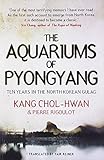
This is my review of The Aquariums of Pyongyang: Ten Years in the North Korean Gulag by Kang Chol-Hwan,Pierre Rigoulot.

This is the gripping memoir, despite a somewhat clunky translation at times, of one the first North Koreans to claim asylum in the South, after escaping via China in 1992. He is untypical in belonging to a wealthy family: his grandfather made money after emigrating to Japan, but allowed himself to be persuaded to return to North Korea by his fanatically pro-Communist wife. They soon learned their error, with the grandfather being forced to hand over his millions to the Government, and ultimately losing his life in prison for the crime of criticising the inefficiency of the North Korean distribution system. His close family were also punished with a decade spent in Yodok, a harsh concentration camp designed to re-educate the relatives of traitors.

I was already familiar with the grim facts about life in North Korea through Barbara Demitz's "Nothing to Envy", which is based on the American journalist's interviews with a number of refugees who also made it to the South, again via China. I thought "The Aquariums of Pyongyang" might be more authentic in that it would be less "fictionalised" with the device of imagined dialogues and recreation of people's thoughts. Although this is the case, Kang Chol-Hwan focuses mainly on the exhausting and soul-destroying routine of life in the camp: the use of "team targets" and "snitches" to keep people in line, the sadistic teachers, the shocking public executions which adults were forced to watch and even participate in at times, by stoning the "criminals", the farcical "self-criticism" sessions, enforced adulation of the "Dear Leader" Kim Il-sung and over all else the obsession with obtaining food, even resorting to eating rats.

There is less exploration of how ordinary people in general survive in the warped dictatorship of North Korea. Kang Chol-Hwan mentions the famines of later years, but does not discuss exactly how they arose. Also, once released, he managed to have access to a relatively good material standard of living, partly through the use of family money and goods imported from Japan to provide the endless bribes needed, also through his own black market business activities.

Kang Chol-Hwan does not portray himself as a particular likeable person, but perhaps this is understandable in view of the brutalising experience of the camp. His final adult years in North Korea and ultimate escape are covered rather hastily, maybe to protect others; he acknowledges with some guilt that relatives and acquaintances must have been sent to the camps because of his defection. It is also interesting to learn of his initial shock over the sexual freedom of life in the west (although he claims to have lived off a Korean brothel-keeper resident in China, and benefited from her contacts to board a ship to South Korea) and over the wasteful consumption of his newfound home country. As an observer from an alien culture, he provides a useful yardstick by which to judge capitalist society and its values.

Overall, this is informative and thought-provoking, but gives a rather limited picture, perhaps because the author spent so much of his time in one camp.

⭐⭐⭐⭐ 4 Stars

“Van Gogh” by Steven Naifeh: “What things I might have done”

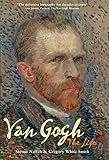
This is my review of Van Gogh by Steven Naifeh,Gregory White Smith.

This vast biography is a gripping and often heartbreaking account of a tortured genius, probably suffering from what would now be diagnosed as a bi-polar disorder, which both fed his strikingly original work but also hindered his recognition as a great artist in his lifetime.

The joint authors paint a generally unflattering portrait of Van Gogh, although he was clearly well-intentioned, and showed occasional flashes of self-knowledge and touching, excessive humility or regret over past errors. Argumentative and excitable, he upset virtually everyone he met and drove away potential friends and lovers by being too intense, smothering and controlling. The only woman he ever managed to possess was the worn down prostitute Sien Hoornik, with whom he set up house, together with her baby, to his clergyman father’s distress, only to abandon her for some new obsession with little evidence of any sense of guilt.

After a number of “false starts” as an art dealer who felt honesty-bound to tell customers the shortcomings of artworks for sale, a teacher, a theological student and a missionary in the grim coalmining area of the Borinage, he spent the last decade of his life as a self-taught and astonishingly prolific artist.

The book is strong on Van Gogh’s development as an artist, and the various influences on his work, such as Delacroix’s startling use of colour. We see his progression from detailed ink drawings, produced with the use of a grid, through a period of dark paintings, exemplified by his sludge-coloured representation of a group of peasants eating potatoes, to the great explosion of works in colour which began in Paris, expanded under the brilliant blue skies and arid landscapes of Provence, and ended in a final burst of activity in the picturesque riverside town of Auvers near Paris, where he died mysteriously from a gunshot wound.

His complex relationship with his brother Theo is covered in depth, as he cajoled, wheedled and bullied the young art dealer (who had taken over his job) into sending up to half his income each month to pay for the extravagant follies Vincent thought necessary for his work – studios, models for the portraits, and vast quantities of canvas and paint.

The chaotic days in the “yellow house” at Arles leading to the famous incident in which Vincent cut off his own ear are also brought to life, with a detailed comparison of the “chalk and cheese” differences between Vincent and Paul Gauguin who had been persuaded to visit him, as part of Van Gogh’s self-deluding dream of setting up a community of artists. The painful contrast is made clear between the nervous Vincent, painting real scenes in the open air with spontaneity and lashings of paint, yet to find a single real buyer for his work, and the confident, manipulative Gauguin, who had just begun to enjoy a market for the pictures carefully planned and produced from memory in the studio, with the focus on symbolism and minimal use of paint.

The book lapses too often into a wordy, overblown, repetitious style from which suitable editing would have shaved off, say, at least 200 pages. This would have left more space to ensure that each reference to a key painting or description of a Van Gogh work is accompanied by a colour plate at a suitable point in the text. Failing this, you can in fact track down on Google imagesmost of the paintings mentioned.

If pressed for time, you may prefer to read Martin Gayford’s much shorter, “The Yellow House: Van Gogh, Gauguin, and Nine Turbulent Weeks in Arles”. Van Gogh’s letters are also revealing, and may give a more balanced view through greater focus on his detailed reflections on life and art.

⭐⭐⭐⭐ 4 Stars

Modern Orwellian Nightmare

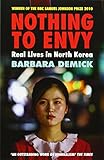
This is my review of Nothing to Envy: Real Lives in North Korea by Barbara Demick.

The title is an ironic take on the brainwashing of North Koreans to think that there is "nothing to envy" in other countries. Based on lengthy conversations with a handful of those who managed to escape to South Korea via China before the border was tightened up, this book provides a very convincing picture of life in the world's "last undiluted bastion of communism". It has defied expectation in surviving into the C21 even though the inefficient systems leave many people malnourished, forced to forage for weeds as food, and reduced to squatting blankly, staring straight ahead "as if they are waiting..for something to change". Behind the artificial showcase of the parts of Pyongyang that foreigners are allowed to see, life seems bleak indeed.

The book begins with the striking observation that viewed from a satellite by night, North Korea is "curiously lacking in light" owing to the inability to pay for electricity.

Making a mockery of communism, we learn how people have been classified as members of the "hostile class" and denied education and work opportunities if they have "tainted blood", which could simply be the result of having a father unlucky enough to have been brought from south of the border as a POW after the Korean War. Again contrary to pure Marxism, the head of state is regarded as an infallible god-like figure: people weep extravagantly at his death out of fear of failure to conform to the expected tide of grief, and perhaps some still believe the idea that he might return to life if they cry hard enough.

We sense the continual risk of being denounced and sent to a prison for some minor offence, which could include failing to keep sufficiently clean the obligatory pictures of Kim Il-Sung or Kim Jong-il, or daring to listen to South Korean television – inspectors come to check you have not removed the paper tape over the tuning buttons, but a long thin sewing needle may serve to twiddle them, such is human ingenuity when persecuted. Then there is the lunacy of a state being unable to provide its people with basic food, but still trying to prevent them from setting up their own private enterprise which will save them from starving. Hopefully things are beginning to change, marked by a recent protest, "Give us food or let us trade!"

The author is good on people's dawning realisation of the extent to which they have been misled, and also on exactly how some people managed to escape to South Korea and the problems of adjustment they have faced there – not least the guilt over punishment of relatives left behind.

The only aspect of the book which troubled me was the embroidery of memories to create dialogues and inner thoughts which must be in part fictionalised. The basic details are too fascinating for this to be necessary. The American journalese also grates at times, and an index would have been useful but overall this is a very readable book on an important theme.

It left me ashamed of my comfortable life, and much more sympathetic towards economic migrants, with respect for their resilience.

⭐⭐⭐⭐ 4 Stars

Compelling Theme, Mediocre Delivery

This is my review of Stasiland: Stories from Behind the Berlin Wall by Anna Funder.

I came to this much-hyped book with high expectations. The stories of East Germans who lived the wrong side of the Berlin Wall provide a chilling reminder of how the Stasi stalked, persecuted, imprisoned and tortured those suspected of subversion or guilty of infringing the petty and oppressive restrictions of a state dominated by bigoted control freaks.

We read of the talented student who was failed in her examinations and denied employment because she had an Italian boyfriend; the woman who was denied the right to visit her sick child in hospital, separated from him by the arbitrary construction of the wall, unless she agreed to lure into a trap a young west German who had been helping people to escape: she refused and was haunted by the decision for the rest of her life; the man who resigned in disgust from the Stasi, only to find himself falsely represented to his wife as a pornographer, on which false grounds she was forced to divorce him, or risk losing access to her son.

The author is good on the bizarre operations of the large number of Stasi agents. "Touch nose with hand or handkerchief" meant, "Watch out, subject is coming!" East Berliners could be fined simply for having a television aerial angled towards the west. It will take an estimated 375 years at the current rate of work to piece together all the files torn in pieces by the Stasi as they tried to cover their tracks when the wall came down. Far too many of former Stasi members still hold positions of influence in society. The final irony is that some people voice a highly selective nostalgia for a time when prices were lower, and life more secure for those who managed to toe the line.

Sadly,the writer often distracts us from the full horror, pain and lunacy of the stories with her clunky, jarring prose. In the final acknowledgements, she names the "great friends who provided a much needed sense of normal life" in Berlin. So, why do they not feature in the book? Why does she portray herself as a loner apart from beery pub crawls, who rents a soulless under-furnished flat in Berlin? Too many of the characters, in particular the small number of ex-Stasi men, seem caricatures and many of the stories do not ring true at times. My charitable conclusion is that this is because they are in some cases a pastiche of reality, but the truth here must be more telling than any contrived story.

In short, this is an important and compelling theme, marred by mediocre delivery.

⭐⭐⭐ 3 Stars