“Capturing the truth of life …in brushstrokes on the verge of dissolution”

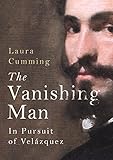
This is my review of The Vanishing Man: In Pursuit of Velazquez by Laura Cumming.

Art critic Laura Cumming has a gift for helping us to appreciate paintings more fully,

She has a particular feeling for “Las Meninas”, the enigmatic masterpiece by Velasquez which mingles “the watchers and the watched”, bringing us, the onlookers into the picture: the Spanish Infanta in a group of maidservants and court dwarves make direct eye contact with us, except that they may in fact be observing the king and queen, glimpsed Arnolfini portrait-style in a background mirror, who may once have stood where we now stand, being painted by Velasquez himself, portrayed with his palette at a huge canvas to one side. His brushlike tapering fingers merging into the brush itself, “no more than a darting streak of white” – “the whole painting has been set in motion by its delicate tip, which effectively vanishes”.

Laura Cummings continually marvels at how often sketchy and thin brushwork when viewed close up, could create such fine detail of clothing with sheen of silk and transparent white collars. Faces are so expressive that they seem alive, startling us with their modernity: the portrait of the misnamed Pope Innocent X disconcerted viewers, as if they were meeting him in the flesh. Philip IV of Spain preferred not to submit to the unflinching truthfulness of Velazquez’s portraits as he grew old, but retained the court painter he had employed as a very young man, although for the last decade of his life Velasquez was promoted to High Chamberlain and seems to have produced relatively few works yet of high quality, including Las Meninas .

Although held in high regard, Velasquez was not free to travel, gaining permission for only two admittedly lengthy visits to Italy, but retained his artistic independence in the convention-ridden Spanish court. His most striking portraits are of ordinary people: the dignified water-seller, realistic drops of liquid trickling down the curved side of a ceramic pot; the old woman frying eggs in which the translucent fluid can be seen in the process of solidifying into white; the dwarves portrayed with dignity; self-assured Moorish assistant who chose to remain with Velasquez despite gaining his freedom; actor Pablo de Valladolid casting his shadow on a void which serves to focus us on his theatrical presence. Ever experimental, the painter even produced an inspiration for impressionism in the outdoor scene of the Medici Gardens, tall cypresses rising above a white cloth draped over a balconied terrace with a crudely boarded-up archway.

Since comparatively little is known about Velasquez, the book often seems padded out with overblown speculation and a detailed sub-plot regarding the obsessive efforts of Reading printer John Snare to gain recognition for the portrait he had acquired of the youthful prince destined to become Charles 1. Whether or not this is a genuine Velasquez, the tale demonstrates how the casual, inconsistent description and classification of paintings together with a lack of x-rays and other dating techniques made it so hard to attribute them accurately until well into the C20, if then. It would of course have helped if Velasquez had signed his work. It is also disturbing to read about the dealer who, having “cleaned up” a “Velasquez” to make it more attractive to a buyer, had it darkened and aged to fetch a better price to suit the tastes of a wealthy alternative bidder.

Although the colour plates are of good quality, the main weakness of a generally fascinating book is the need for more of them, and better cross-referencing with the text, even if this added a little to the price. The small black and white photographs integrated in the text do scant justice to the painter’s work. I had to make a note of some titles of paintings described at length so that I could search for their images on line.

⭐⭐⭐⭐ 4 Stars

Red Angst

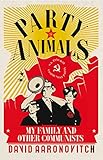
This is my review of Party Animals: My Family and Other Communists by David Aaronovitch.

Born in the 1950s, journalist David Aaronovitch grew up in a bubble of North London Communist Party activists. This book may be of particular interest to someone of about the same age who can recall the impacts of Yuri Gargarin’s space orbits or the Prague Spring, but with events seen oddly through the different end of a telescope. The young David was not allowed to read comics like Beano published by D.C. Thomson, a non-unionised exploiter of labour; he couldn’t be a Cub like his best friend since that would have meant monthly prayers for the Queen and Baden Powell. On the plus side there seems to have been a good deal of jolly socialising and when David’s father Sam fell victim to internal politicking and failed to get promoted as expected in the Party because he was judged “too ambitious”, his contacts with one of the few Communist academics in England enabled him to study for a degree at Balliol College Oxford with Ewan McColl and Peggy Seeger singing at his leaving party.

In an interesting parallel with the radicalism of present day second generation migrants, Sam’s Jewish parents arrived in London just before the passing of the 1906 Aliens Act which restricted right of entry, and the grinding poverty and inequality suffered as a child in the Cable Street area triggered his lifelong passion for the Communist cause.

The book falls into three parts. The first is an account of David’s family life from a political viewpoint up to his own resignation from the Communist Party because membership was deemed incompatible with his BBC journalist role.

The second part deals with the interesting ethical dilemmas on which he came to reflect in later life. This is when he discovered that, although the bugging of comrades’ families by MI5 was often ludicrous and pointless, some had, for instance, helped the atomic spy Fuchs to pass information to the Russians. He was also forced to accept that his own father, so often praised for his brilliance and charm, had in fact attempted to restrict freedom of expression by writers in the name of “political correctness” and advocated Stalinist “socialist realism” to counter the threat of American capitalist culture. This brings the author to speculate how repressive a British Communist Party would have been if it had ever gained power, particularly with so many members’ unquestioning reverence for Stalin as “ the great leader”. David Aaronovitch describes vividly how Communist families and friendships were torn apart when disillusionment drove some to quit the Party over Krushchev’s destruction of Stalin’s reputation in 1956, closely followed by Soviet suppression of the Hungarian Uprising.

The third part reworks the family history to expose on a personal level the hidden truth, which the author only laid bare after his parents’ death. Family psychotherapy sessions recorded under pseudonyms by the famous therapist Skynner, and probably instigated by David’s mother Lavender to remedy his difficult behaviour, in fact revealed the dysfunctional nature of his parents’ marriage. Much of his mother Lavender’s harshness towards him appears to have been displacement activity, not just for her stressful life but also deep unhappiness over Sam’s infidelity. The extracts from her diary and intimate details of marital deception, even violence, may stem from the author’s journalistic necessity to provide supporting evidence but I can understand why the manner and intimate detail of his revelations angered some readers, since they made me feel forced into reluctant voyeurism. What began as a wry take on an unusual family ends up as an exercise in public therapy for the author. This book reminds me of Maxim Leo’s “Red Love” analysing an East Germany family, also thought provoking.

⭐⭐⭐⭐ 4 Stars

Rambling about the world in quest of adventures

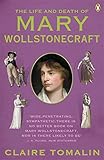
This is my review of The Life and Death of Mary Wollstonecraft by Claire Tomalin.

After somehow failing to appreciate Mary Wollstonecraft’s importance, perhaps because of the anti-feminist backlash which arose after her death and dominated British society until the C20, I have at last been won over by Claire Tomalin’s excellent biography, rightly praised by the historian Plumb: “There is no better book on Mary Wollstonecraft, nor is there likely to be”.

Mary is portrayed very honestly, warts and all, as often controlling and opinionated, in her youth prone to dominating less intelligent and assertive girls, yet demanding their affection. Once she had discovered the sexual attraction of men, she could repel them with her intensity, even naively suggesting on at least two occasions some kind of “ménage à trois”, and in turn was bitterly disappointed by their preference for relationships with pretty but less clever women, although they seem to have enjoyed the stimulus of her conversation. On finding herself pregnant for a second time, her insistence on marriage to the philosopher-writer Godwin seems in contradiction to her feminist principles, but she cannot be blamed for seeking some security after being driven to attempted suicides (she was prone to depression) over the humiliation of abandonment by her fickle lover Imlay, leaving her with a small daughter.

On a more positive side, Mary was courageous if foolhardy, setting off alone to experience first-hand the French Revolution in Paris despite the danger of the psychopathic Robespierre and the guillotine, or to Scandinavia with a baby and nursemaid in tow, to help solve Imlay’s financial problems. An original thinker on the basis of experience of unfair treatment as a girl and of her reading rather than formal education, she displayed a surprising confidence, being one of the first to launch into print against Edmund Burke’s attack on the Dissenters as a dangerous force likely to bring dangerous revolution in England: her “A Vindication of the Rights of Man” brought her instant fame, on a par with Thomas Paine. Determined to support herself, she was not afraid to approach her influential publisher Johnson with a request for work.

Ironically, her widowed husband Godwin not only tarnished her reputation by his frankness over her practice of “free love” but belittled her in stating, “The strength of her mind lay in intuition….yet in the strict sense of the term, she reasoned little”. In fact, what shines out across the span of more than two centuries is the coherence of her thoughts, her wry wit and eloquence. For instance, while acknowledging the violence of the French Revolution, she justified the need to achieve greater quality: “to preclude from the chance of improvement the greater part of the citizens of the state…can be considered in no other light than as monstrous tyranny…. for all the advantages of civilisation cannot be felt unless it pervades the whole mass.”

The death in childbirth of a vigorous, healthy woman who had recently found happiness was very poignant, but Mary would have been furious had she lived to read such observations from female writers as “ “in the education of girls we must teach them more caution than is necessary for boys…they must trust to the experience of others… must adapt themselves to what is”, “girls should be more inured to restraint than boys”, “must soon perceive the impossibility of their rambling about the world in quest of adventures”.

⭐⭐⭐⭐⭐ 5 Stars

Rising to many challenges

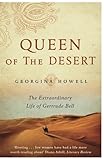
This is my review of Queen of the Desert: The Extraordinary Life of Gertrude Bell by Georgina Howell.

The great wealth of the steel-making Bell family gave Gertrude the means, confidence and connections to pursue a succession of interests. After becoming the first woman to be awarded a First in Modern History at Oxford, Gertrude found the conventions of upper class life in late Victorian England far too constraining. She became a linguist, translator of Persian poetry, mountaineer who achieved a number of “first” ascents of challenging peaks, archaeologist, desert traveller, writer, intelligence officer, confidante of King Faisal in the newly formed Iraq of the 1920s and Director of Antiquities who established a museum in Baghdad.

She was clearly enthralled by the romance of Arab desert culture, not least the handsome sheikhs in their striking robes, who may have accepted her because she was so unlike any other woman they had ever met: when she came to their tents bearing gifts and wearing evening dress, they called her “the Khatun” or “Desert Queen” but when she appeared in breeches riding astride she probably seemed to them more like a man.

Georgina Howell’s heavy use of lengthy extracts from letters and reports is as effective as she intended in conveying a sense of Gertrude’s ability to communicate, great energy, enthusiasm and wry wit. We gain a strong sense of a determined, opinionated woman who was often unconsciously snobbish – anticipating the need to correct the governess likely to call napkins "serviettes" – and contemptuous of “quite pleasant little wives” who meekly conformed.

At times, I was aware of repetition, or longwinded description that is hard to digest, but in the main the author’s marshalling of a mass of information is quite impressive. I find her a little too uncritical of Gertrude’s active campaigning as founding secretary of the Women’s National Anti-Suffrage League in 1908: the idea that do-gooding visits with her mother to the homes of the working poor had convinced her that women “at the end of their tether” managing families on a tight budget simply did not have time to gain the education to vote seems patronising, even hypocritical in someone so resolved on fulfilment in her own life.

Yet, Gertrude was in some ways quite conventional: in her early twenties, she accepted her parents’ rejection of a fiancé considered to lack the means to support her, although his death in ambiguous circumstances shortly afterwards must have haunted her. Love was the one area in which success eluded her – a prolonged affair was doomed since it was with a married man who clearly had no intention of leaving his wife, while despite her physical bravery it seems Gertrude could not find the courage to consummate their relationship.

Perhaps owing to lack of evidence, Georgina Howell glosses over Gertrude’s probable suicide on finding herself in her late fifties having run out of fresh challenges with only the bleak prospect of a painful death from decades of chain-smoking. I often had a sense of a life frenetically packed with activity which masked an inner unsatisfied longing.

I suspect that Gertrude’s role in the formation of an independent, “democratic” Iraq is slightly exaggerated, but it is a fascinating tale which inspires me to read more about Arab history. The parallels with today are very striking: the unstable union of tribes over which Faisal attempted to hold sway, the reluctance to accept British support in keeping control, the difficulty of defining a border with Turkey and accommodating the Kurds, the divisive Shia-Sunni conflicts prompting Gertrude’s “blackest hatred” for Ibn Saud’s Akhwan (now Wahabis) “with their horrible fanatical appeal to a medieval faith…. the worst example of an omnipotent religious sanction”.

⭐⭐⭐⭐ 4 Stars

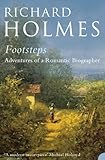
“Footsteps” by Richard Holmes: Leading a lobster on a blue silk ribbon

This is my review of Footsteps by Richard Holmes.

“Age of Wonder”, the brilliant biography of the lives of enlightenment scientists who inspired Romantic poets like Coleridge and Shelley prompted me to read “Footsteps” published by Richard Holmes thirty years earlier. This short book is a series of four essays describing his forensic retracing of the journeys and temporary resting places at key stages in the lives four famous writers.

In 1964, a precocious eighteen-year-old Holmes, at times somewhat pretentious in his desire to develop a written style, wanders through the beautiful wilderness of the French Cevennes in the wake of Robert Louis Stephenson and his long-suffering and frankly abused donkey Modestine. Four years later, as a Cambridge graduate rejecting the security and status of a well-paid conventional career, Holmes sets off for Paris to draw some parallels between the idealistic youthful hippy revolution of 1968 and the cataclysm of the French Revolution, with a focus on Mary Wollstonecraft, the feminist icon who in fact was unable to prevent her life being controlled to some degree by dominant men, but who experienced some of the most terrifying aspects of the “Reign of Terror” under Robespierre, unlike Wordsworth who had scuttled back to the safety of the Lake District. In 1972, Holmes loses himself in Italy in order to explore the self-imposed exile of Shelley. Finally in 1976, a fascination for what C19 photography can reveal to a biographer leads Holmes to immerse himself at the risk of his own sanity, in the life of the gifted but troubled Gérard de Nerval: “one is tempted to say that, had Nerval been born earlier he would have been saved by religions; had he been born later he would have been saved by psychoanalysis”.

What makes Holmes’ biographies so remarkable is his capacity to “get under the skin” and seem to inhabit the minds of his subjects. In “Footsteps” he includes interesting reflections on the at times all-absorbing to the point of obsession process of biography, as he begin to understand it. He perceives himself as “a sort of tramp permanently knocking at the kitchen window and secretly hoping he will be invited in for supper” or even as a ghost of past writers.

More than simply the collection of factual material, there is the “creation of a fictional or imaginary relationship between the biographer and his subject… a degree of more or less conscious identification with the subject”. He identifies the “moment of personal disillusion” when the biographer is “excluded from or thown out of the fictional rapport he has established” by a lack of reliable evidence. So, in the absence of “proof”, I was surprised by his theory that Shelley had an affair with his wife’s friend Claire Clairemont which led to a miscarriage, after which the poet adopted a foundling child born on the same day only to have it fostered elsewhere and die soon afterwards.

Perhaps inevitably, the essay format makes for a somewhat fragmented work, and the autobiographical passages can appear contrived and an almost irritating distraction from his subjects. “Footsteps” is a seedbed for the later flowering of a masterpiece like “Age of Wonder”, and it has made me want to read more of Mary Wollstonecraft’s clear, perceptive and remarkably “modern” work, and brought me to appreciate more the tragedy of Shelley’s circle and the genius of his poetry, realising that I have been too quick to reject Romantic poetry for its flowery sentimentality.

⭐⭐⭐⭐ 4 Stars

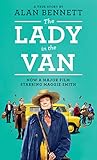
“The Lady in the Van” by Alan Bennett – Having the last laugh

This is my review of The Lady in the Van by Alan Bennett.

Already produced as a memoir and well-received play, the tale of the eccentric “Miss Shepherd” who squatted in a dilapidated van on the forecourt of Alan Bennett’s London home for fifteen years, has now become a film. It is marked out by Maggie Smith’s superb and flawless performance which captures a sense of the maddening, manipulative woman who is tolerated, and even helped in an ineffectual way, by a possibly somewhat caricatured group of comfortably off, self-styled liberal-minded middle class neighbours too polite to behave otherwise.

Commencing in the 1970s, the drama has the nostalgic air of past, somehow more innocent and less fraught times, predating the tight parking restrictions, health and safety concerns and care plans for the elderly (however inadequately implemented) of today. When the council comes round with a yellow-line painting machine, Alan Bennett caves in and allows the new van donated by a local titled Catholic do-gooder to be driven onto his driveway. It is not long before Miss Shepherd conducts her ritual of plastering the vehicle with yellow paint thickened with lumps of Madeira cake.

Alan Bennett’s kindness  overlies the writer’s irrespressible urge to milk Miss Shepherd’s potential  for future publication. Such is the old lady’s reticence that he does not discover the full facts of her life until after her death, which lead him to reflect that, despite her years of confined existence, she has  in some ways had more firsthand experience than he has, relying on observing others from the safety of his comfortable and essentially conventional life.

The story is full of humour as when Alan’s assumption that Miss Shepherd’s claim to having been “followed home by a boa constrictor” is a sign of her madness is undermined by the discovery of a snake in a neighbour’s garden following a mass escape from a local pet shop. Yet beneath the laughter is the deep sadness of the wasted life of a talented pianist who was forced to give up playing following her insistence on becoming a nun, a calling to which she was clearly completed unsuited. There is also the tragedy of as society which cannot cope with an individual who is highly talented yet difficult to the point of being labelled mad – also the irony of the social services coming too little too late to the scene, and failing to understand Alan’s pragmatic, literally “hands off” support. Bennett pulls no punches over the squalor involved in van-life, and  captures all too accurately the indignities of old age, the incontinence, increasing unsteadiness, aggravated by poverty. So, one ends up laughing but also sad for a tale of lost promise and over intimations of one’s own fate in old age, and guilt over not helping elderly people more.

⭐⭐⭐⭐⭐ 5 Stars

An engrossing and informative masterpiece

This is my review of The Age of Wonder: How the Romantic Generation Discovered the Beauty and Terror of Science by Richard Holmes.

Although C18 Romanticism grew as a reaction to the cold rationality of the Enlightenment, which reached the depths of brutality in the excesses of the French Revolution, Richard Holmes challenges the view that the subjectivity of Romanticism was consistently opposed to the objectivity of scientific advances. He explores what he defines as the “Age of Wonder”, the fertile and inspiring period involving discovery of the natural world through exploration, overseas and vertically into the heavens, and inventions in the use of energy, such as gas or electricity. This period is bounded by two famous voyages: Captain Cook’s expedition to Tahiti aboard the Endeavour starting in 1768, and Charles Darwin’s to the Galapagos Islands on the Beagle in 1831.

This fascinating and very readable book, which sets science in an intriguing social context and makes it accessible to a reader with little prior knowledge, is like a series of mini-biographies. It begins with Joseph Banks, who as an energetic and charismatic young self-taught botanist not only collected an impressive range of plants, but demonstrated broad-minded skill in living with the native Tahitians on equal terms, negotiating the crew’s way out of awkward situations with his flexibility – the lack of this no doubt led to Cook’s brutal murder on a subsequent voyage without Banks.

The next subject is William Herschel, again self-taught, who developed astronomy with his mapping of the heavens, and discoveries of the planet Uranus and numerous nebulae, assisted by his long-suffering and underestimated sister Caroline, “the tough little German” who painstakingly recorded his observations as he “kept his eye clear” by gazing without interruption into the telescopes he had constructed himself. Holmes shows us how Herschel’s work inspired Romantic poets like Shelley, Byron and Coleridge to include references to the moon and boundless universe in their work.

The development of balloons, starting with the Montgolfier, improbably made from paper and named after the wealthy manufacturer of that product, led to a mania for this type of transport which often ended in tragedy, and justified Joseph Banks’ reservations about its usefulness, in his important role in as President of the Royal Society, a talent-spotter and promoter of worthwhile scientific projects.

Humphrey Davy is also a major player, risking his life experimenting with nitrous oxide, the laughing gas which, seeming like the C18 equivalent of smoking pot, made Davy for a while the butt of mockery in the scurrilous press, although his discovery of the miner’s safety lamp was much admired.

Holmes ranges widely: the frequent rivalry between what were at first vaguely called “natural philosophers”, only recognised after heated debate as “scientists” from 1833; the attempts to interpret and popularise science for the public by writers including the mathematician Mary Somerville, at a time when women were only allowed to selected meetings of the “Literary and Philosophical” societies springing up round the country; the tendency to skirt round the issue that ongoing discoveries of astronomical “deep space” and geological “deep time” tended to threaten “safe religious belief” with “dangerous secular materialism” – for the “Age of Wonder” preceded the bombshell of Darwin’s “On the Origin of Species”, not published until 1859.

⭐⭐⭐⭐⭐ 5 Stars

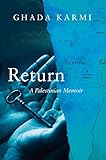
“Return: A Palestinian Memoir” by Ghada Karmi – Telling right from wrong

This is my review of Return: A Palestinian Memoir by Ghada Karmi.

Forced to leave Jerusalem as a child under the 1948 Nakba or Palestinian Exodus, Ghada Karmi felt the need to experience life in one of the semi-independent areas set up on Palestinian soil under the Oslo Accords of the 1990s. In 2005 she moved to Ramallah in the West Bank to worked as a consultant in media and communications for the Palestinian Authority.

As she might have foreseen, this proved to be a privileged sinecure in a closed bubble of complacent bureaucrats and politicians bent on furthering their status and material interests without rocking the boat, of expatriates caught up in romanticised demonstrations against an Israeli occupation which did not affect them personally, and poorly paid junior staff who kept their heads down for fear of losing their hard-to-obtain jobs.

Despite this, she managed to witness examples of ongoing injustice: camps like those in Gaza, “islands of memory in an erased landscape”, increasingly the sole places where isolation and hardship keep the fight for an independent state alive; Qalqilya, a town on the Green Line between pre-1967 Israel and the West Bank, surrounded by a twenty-five foot wall with razor wire and watchtowers ironically reminiscent of a concentration camp, but justified by the need to keep suicide bombers out of Israel and to protect settlers from their Arab neighbours; one of the few farms in Hebron still Palestinian-owned, where the defiant owner agonised over his withered vines, deprived of water by the Israeli authorities which disconnected his piped water supply and blocked his well, as part of the process of connecting the surrounding Israeli settlers.

Ghada Karmi made me realise for the first time how many Palestinians live outside camps, assimilated over time into countries like Jordan and Israel, inevitably resigned to the situation even if it makes them second-class citizens. She portrays the West Bank as a land of self-delusion: there is no sense of solidarity with Gaza, and many bright young people are employed by NGOs, precariously dependent on grants of foreign aid, to produce detailed research reports which remain unused. Likewise, frequent references to the conferences and political initiatives are depressing since we know now they failed to achieve any progress. It all seems like a displacement activity to allow the Israelis to consolidate their displacement of Palestinians. I was also intrigued to learn that middle class West Bank families wish to get their children educated at American universities, undeterred by the irony that it was US support which protected and empowered Israel.

I was interested in the views of Ghada Karmi’s ageing father: when she expresses concern over the apparent increase in traditional Islam as a “retreat into the past” which will “play into the hands of the West”, he counters that it is the West which has armed Israel and left the Arabs “dependent and enslaved” – “Islam is all they have left”. Sadly, this is the closest we get to her sole major omission: an epilogue updating events on the rise of a democratically Hamas and the increase in fundamentalist terrorism in the Middle East.

Although the author comes across at times as a self-absorbed and possibly difficult person, her intellect rises above understandable emotion to provide a revealing and thought-provoking analysis of an ongoing injustice which left me, like her, with a sense of “gut-wrenching despair” which needs to be more widely understood.

⭐⭐⭐⭐⭐ 5 Stars

More than a handful of dust

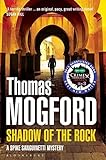
This is my review of Shadow of the Rock (A Spike Sanguinetti Mystery) by Thomas Mogford.

When former school friend Solomon Hassan knocks on his door in Gibraltar, tax lawyer Spike Sanguinetti decides to give him the benefit of the doubt over the charge of murdering his employer’s step-daughter in Tangiers. Spike’s attempt to persuade the Moroccan authorities to drop an extradition charge involves travelling to Tangiers and collecting some of the evidence the police should have found.

The spare style conveys more than many tales of twice the length. Details are gradually revealed without any clunky information dumps, although the novel occasionally reminded me of a travel guide or geography book. The author creates a strong sense of place, which reads as if it is based on first-hand knowledge, drawing interesting comparisons between Gibraltar and Morocco, both on the edge of Europe, separated from it by more than distance. Gibraltar is a historical anomaly, an anachronism is many ways, belittled by the Spanish who call its inhabitants “chingongos” – “ a remote tribe of people who are interbred”. In Morocco, the traditional culture is fractured by some of the less savoury aspects of western influence, with capitalist development involving more than a tinge of exploitation, as typified by Solomon’s employer “Dunetech”, “Powering a Greener Future” amongst the desert Bedouin.

So this pacy thriller with serious undertones might seem calculated to please a wide audience. I would have liked it better with fewer formulaic elements: the hook of a prologue describing a context-free murder made more sinister by the assassin’s calmness and the victim’s lack of fear; the frequent scenes of loveless sex and gratuitous violence which are not essential to the plot, but presumably intended to excite or titillate; last but not least, the use of very short chapters, often only a page or two in length, assuming a sound-bite level of concentration. Some scenes fall flat, or are frankly confusing, suggesting a need to edit more for clarity. It is a pity that all chapters do not sustain the excellence of say, Chapter 11 when in less than four pages we are treated to the sharp contrast of Tangiers, Spike’s wry humour, the incongruous presence of Dunetech “gleaming in the sun as if God had just finished buffing it with his own chamois leather” and the firm’s unappealing Head of Corporate Security Toby Riddell. Perhaps this reflects the author’s previous success as a short fiction writer.

Despite my reservations, this is a page-turner, with reasonably developed main characters and some interesting background issues, the denouement is quite sound and does not disappoint, although it would have been more powerful without the final chapter to spell out what the reader has already deduced..

I may read the next in the series, but not for a while.

⭐⭐⭐⭐ 4 Stars

Survival in the unreality of Orwellian reality

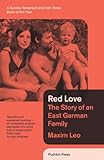
This is my review of Red Love: The Story of an East German Family (B-Format Paperback) by Maxim Leo.

When Maxim Leo and his girlfriend were arrested by the East Berlin police in a final fatuous show of strength before the Wall was opened, she happened to have in her pocket an illegal church newspaper which had been given to Maxim by one of his parents' friends, who had written a piece in it about her reasons for leaving the Communist Party. Maxim was ashamed how quickly he caved in to pressure and "confessed" to all this, although the ultimate irony was that the friend herself turned out to be an informer for the Stasi. It seems that it was hard to avoid being roped into this role – even Maxim's parents almost drifted into performing odd tasks for the Stasi. In another example of the sinister idiocy of the Communist regime, Maxim was denied a place to study for a professional qualification, since his liberal-minded artist father Wolf shouted at his headmistress for allowing machine gun training using live bullets on a school trip to "military camp".

The ludicrous twists of life under a communist regime are legion: on returning from fighting in the German army, Wolf's father Werner makes an arbitrary decision at a tram stop over which line of work to pursue – teaching in a vocational school or stage-set painting: the first tram to arrive takes him east to the teacher training college in the Soviet zone, later blocked off behind the infamous Wall, so he becomes a Communist by chance, this being the best way of "getting on" in the GDR. Maxim's maternal grandfather Gerhard fought for the French resistance in his youth, but opts for life in East Germany because, in his rejection of fascism he convinces himself that communism will create a fairer society. Thus, Gerhard and Werner, who come by very different routes to support the same surreally oppressive and sclerotic system, subject their families to lives of petty restriction and doublethink. It takes Maxim's sensitive, academic mother Anne years to be able to break free psychologically and think for herself. This causes many arguments with her independent-minded husband Wolf. Yet, ironically he finds it much harder to come to terms with freedom when the two Germanies are combined – he seems to feel the need for authority to fight against.

This is a fascinating, wry and often moving account of three generations of an East Berlin family, researched by the author after the fall of the Wall and when it was almost too late to gain first-hand information from his grandparents, who had at least left some written records. Maxim seems to have survived remarkably unscathed mentally by the stress of belonging to an intellectual bourgeois family in a communist regime, perhaps partly because his grandfather Gerhard's status gave him an advantage at times e.g. to get permission to travel abroad, Gerhard's family was in fact relatively quite well off, and, despite all the infighting, Maxim clearly received a good deal of love and attention, particularly from his parents.

My only minor reservation is over what I find to be the irritating tendency to use the "historic present" most of the time. The translator has presumably done this in order to maintain a sense of immediacy as in the original German. Some sentences do not seem to "fit in" to the text, and odd translations such as "fat blanket" for "thick blanket" have already been noted in reviews.

⭐⭐⭐⭐⭐ 5 Stars