The Romantic Poets and Their Circle (National Portrait Gallery Insights) by Richard Holmes – Captured creativity

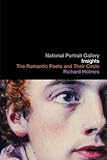
This is my review of The Romantic Poets and Their Circle (National Portrait Gallery Insights) by Richard Holmes.

The National Portrait Gallery’s Insights series uses paintings and sketches from its collections to illustrate themes, in this case the “Romantic Poets” and members of their circle: the artist Haydon; razor-witted critic Hazlitt; courageous all-rounder Leigh Hunt, prepared to face imprisonment for his “seditious libel” of “this fat Adonis”, the Prince Regent, and to publicise the talents of rising stars like Shelley; the astronomer of “supernatural intelligence” Herschel who inspired Coleridge, Byron, Keats and Shelley; the great scientist Davy who linked seamlessly the “two cultures” of art and science, to name a few. It is interesting how, after achieving so much, many of them came to a somewhat sad end.

Most of the images, a full page for each character, are striking in their realism, surprisingly “modern” faces of people we can readily imagine meeting today or passing in the street : Haydon’s vigorous and lifelike head and shoulders’ sketch of Wordsworth; a bluff Sir Walter Scott, churning out pot boilers at this desk to pay off the debts of a bankrupt publishing house; Blake glancing up, pencil in hand, to capture some fresh vision or Amelie Opie staring with direct candour at her husband as he painted her, and therefore of course at us as well,

With his profound knowledge of the period, the biographer Richard Holmes is an excellent choice to provide supporting commentaries. “The dazzling Lord Byron” gets pride of place, “young…brooding, beautiful and damned”. We can be in no doubt about his charisma, combined with understandable, at times absurd vanity, in part perhaps a compensation for his club foot.

Allotted only a page or two for the rest, Richard Holmes manages to make every individual a distinct character, striking the right balance between a brief explanation of each person’s role, and finding a few revealing details or anecdotes. So we grasp Mary Shelley’s intellectual brilliance, precocious writing talent, and concern to create a “normal”, conventional life for her son after the traumatic loss of her other children, and Shelley’s drowning. The country boy John Clare’s sense of insecurity, of being an outsider in London society despite the ready recognition of his talent, is very apparent.

The author takes care not to omit women from the collection, although all too often they have been forgotten, like Felicia Hemans, “the most successful parlour poet of her age” famous for such lines as “The boy stood on the burning deck when all but he had fled”. How many, like the working-class poetess Isabella Lickworth “like the wild flowers on the mountain, unknown, unheeded lie”.

These details can only whet one’s appetite to discover more, and enhance the fascinating pictures for which they provide a context.

⭐⭐⭐⭐⭐ 5 Stars

“Eleanor of Aquitaine: A Biography” by Marion Meade – Making the most of a woman’s lot

This is my review of Eleanor of Aquitaine: A Biography (WOMEN IN HISTORY) by Marion Meade.

Eight centuries on, records still remain to prove that Eleanor of Aquitaine was a remarkable woman: beautiful, robust, energetic, courageous, resilient, intelligent, cultured and a shrewd negotiator when given the chance. In a world where the status and security of feudal lords depended on the possession of lands, her inheritance of the extensive and prosperous French Duchy of Aquitaine made her an attractive marriage partner for two rival kings: firstly, the indecisive and monkish Capetin Louis VII of France, whom she grew to despise, and later by complete contrast the Angevin Henry II, Plantagenet ruler of England, a vigorous, driven man with an uncontrollable temper and insatiable sexual appetite.

Eleanor accompanied Louis on an ill-fated Crusade, slowing the procession down with her vast quantities of baggage. She often risked dangerous voyages, even when heavily pregnant, and almost up to her death, aged eighty-two, embarked on tours round her lands to maintain the loyalty of vassals and foil rebellions.

In the unlikely event of her being as promiscuous as painted by detractors, this would have fallen far short of Henry’s predatory treatment of women. Scandalous gossip, embellished long after her death, buzzed round her close friendship with handsome men like Uncle Raymond of Antioch, her probably mythical, failed attempt to elope with Saladin, and demand for divorce from Louis and immediate marriage to Henry, fourteen years her junior. Yet ultimately she was always to be constrained by the superior power of men: the Pope blocked her divorce until Louis decided to end the marriage because of her apparent inability to bear sons. Ironically, she produced four boys in rapid succession for Henry, the ill-fated John born some years later being the last of her ten children. When, in the 1170s, Henry’s heavy-handed mismanagement of his sons provoked their revolt, Eleanor’s support for them was punished with sixteen years of imprisonment, but this did not break her spirit.

When it suited Henry to let her administer affairs in his frequent absences from England, she performed with great competence. Similarly, in her self-imposed exile to Aquitaine, unable to tolerate close at hand the humiliation of Henry’s overt affair with the legendary Rosamund Clifford, she again stabilised with her shrewd and fair management a region which Henry had only disturbed. Yet again, when her favourite son Richard Coeur-de-Lion succeeded Henry, she ran Aquitaine in his absence and drummed up a heavy ransom for his release when he was kidnapped by, of all people, the Duke of Austria.

Marian Meade’s journalistic style, which sometimes slips into quaint phrases involving “hie” and “goodly”, and often seems padded out with purple prose, succeeds in breathing life into what could be a tedious, indigestible wade through long-forgotten events. I have to believe her assertion that “none of the dialogue is invented”, but the continual references to, say, Eleanor’s thoughts, together with a lack of clear sourcing of anecdotes (at least in the edition I read) make this seem like “faction” rather than academic biography. Whatever the truth, this very readable account brings home the insecurity of Medieval life. Apart from the risk of sudden death, feudal property-owners were forced into a continual soap opera of shifting allegiances, trying to take advantage of each other, or avenge some past wrong. It is fascinating to appreciate the lack of a sense of “nation state”, the ease with which castles, lands and marriageable offspring were traded: even the Lionheart did not speak English! The ephemeral fragility of the Angevin Empire which Eleanor worked so hard to build with Henry gives sobering food for thought.

⭐⭐⭐⭐ 4 Stars

To be a parrot or a wren

This is my review of The Poets’ Daughters: Dora Wordsworth and Sara Coleridge by Katie Waldegrave.

The remarkable two volume biography of Coleridge (STC) by Richard Holmes inspired me to read Katie Waldegrave’s very readable and apparently effortless achievement of the difficult task of interweaving the parallel lives of Dora Wordsworth and Sara Coleridge, brought up a few miles apart, and friends from childhood.

Dora should have been the happier and more successful of the two: her parents’ marriage was stable, her father was a renowned poet with a supplementary income from his sinecure as “Distributor of Stamps for Westmorland” and they lived in a large house with dramatic views over the Lake District. Yet it seems that for much of her adult life, Dora suffered from acute anorexia, which eventually debilitated her so much that she died in her early forties. Although we cannot be sure of the cause, it must have been related to periods of intense emotional repression. The only times she is recorded as clearly happy are when flirting innocently with the married poet, Edward Quillinan who eventually became her husband, when teaching in a local boarding school against her parents’ wishes, and on various trips away from home, as far afield as Portugal. Otherwise, Dora’s role as a dutiful daughter, working tirelessly as her father’s assistant, coming to terms with the realisation that he would never complete his masterpiece “The Recluse” as he had promised Coleridge, was in conflict with the sadness over seeing other young women of her age finding husbands and forging lives separate from their parents. Her reluctance to marry without her father’s approval delayed her own wedding by several years, and must have caused her considerable stress.

Abandoned by her brilliant but erratic father, Sara Coleridge was dependent on the goodwill of her mother’s brother-in-law, Southey. Like Wordsworth a successful and reasonably affluent poet, Southey fortunately treated her (almost) like a daughter, although on becoming an adult she would have been obliged to work as a governess if her beauty and intelligence had not caught the eye of her first cousin Henry Coleridge. Sara was as it proved justifiably nervous that the duties of housekeeping and childcare would divert her from intellectual pursuits. Before marriage, she confessed to her brother Derwent, “I should have been much happier, with my tastes, temper and habits, had I been of your sex……The thing that would suit me best …would be the life of a country clergyman – I should delight in the studies necessary.. and am sure I …..should not…. shrink from the active duties of it”. The malaise which dogged her throughout her adult life, and led to her own opium addiction, ironical in view of her father’s history, seems to have been worst when her children were young.

What galvanised Sara from her sickbed were Thomas de Quincy’s critical essays accusing her father of plagiarism. Although she had never really known him, apart from his habit of blazing into her life for a few weeks at a time to bewitch her with frightening fairy-tales or to teach her Italian, Sara made it her life’s work to “set the record straight” by editing and interpreting her father’s writings, not shrinking from difficult metaphysical works like the Biographia Literaria. She clearly felt qualified to comment on Coleridge, because she had come to know and understand him through reading his work. They clearly had a similar cast of mind. Prematurely facing death in her forties, Sara wished briefly to have spent more of her all too limited time writing poetry, yet in fact managed to write some fine pieces, including that it is better to know “the stains of frailty” of a noble mind, like her father’s, “than fain would see it white as snow”. She appears quite modern in her insistence on honesty.

⭐⭐⭐⭐⭐ 5 Stars

Addictive genius

This is my review of Coleridge: Darker Reflections, 1804-1834 by Richard Holmes.

The second part of this remarkable two-volume biography covers the last half of Coleridge’s life, from his self-exile to Malta to escape his unhappy marriage, debts and impossible love for Wordsworth’s sister “Asra”. Although much of the poetry for which he is now most remembered had already been written, and he sometimes mourned the loss of his ability in this area, often in lyrical terms which ironically belied this view, he still produced some striking verses, also writing a good deal of philosophical work, which was not fully appreciated in his lifetime.

Richard Holmes shows how Coleridge continually ricocheted between the depths of despair and degradation to moments of high achievement. On the downside, he had a dramatic falling out with Wordsworth which became the subject of London gossip, which also began to feast on his failures as a husband and father, and the squandering of his early great talent through his opium addiction, no longer a secret. His metaphysical writing was mocked by the critic Hazlitt, in terms with which one can sympathise judging by some of the quotations provided. Less acceptable were his cruel personal attacks, which seem particularly ungrateful since Coleridge had once smuggled him out of the Lake District to escape justice for having molested a local girl. The negative feedback naturally made publishers wary, so that Coleridge was forced to use a firm which went bankrupt, denying him much-needed earnings from several years of work which he had managed to sustain against the odds. To some extent reunited with his two grown-up sons, it was a bitter blow when the older boy Hartley proved too like his father in his intensely imaginative but addictive personality, so that he was deprived of his Oxford fellowship because of his drunken habits.

On the plus side, when in Malta, Coleridge proved a competent civil servant, although he had mixed feelings about a role which distracted him from his “true calling” of creative writing. On another occasion, he wrote a highly successful play for the London stage. He always seemed to have enough admirers to bale him out in his hour of need, such as the surgeon Morgan with his wife and sister, who became a kind of replacement copy of his intense relationship with Wordsworth, his sister Dorothy and Sarah Hutchinson (Asra). For the last eighteen years of Coleridge’s life, he lived with the family of a successful London doctor, Gillman, who understood how to regulate his opium addiction, receiving in return the reflected “kudos” of managing a man who, although always controversial, ended his life as a “national treasure”, visited by a succession of admirers of romantic poetry, of the glittering conversation which never faded, and writing, considerable despite all the stillborn and uncompleted plans.

Coleridge is at time maddening in his apparent “lack of will” in resisting opium. On the one hand able to analyse his failings with remarkable candour and insight in his calmer moments, he also believed that the addiction which induced nightmares, inertia, embarrassing outbursts and despair bordering on suicide was beyond his control, due to something in his personality or perhaps early experience. It seems likely that he was manic-depressive at a time when laudanum was the sole, over-used painkiller for both physical and mental ailments. Despite all this, it is hard not to share Richard Holmes’ admiration for his resilience and the fact that he never “gave up” for long. Many aspects of his thinking all seem remarkably modern, so that one can imagine him joining in some current intellectual debate.

Part Two is in some ways sadder and more sombre as Coleridge, no longer the energetic young man running down Lake District fell-sides, becomes heavy, shambling, and prematurely aged, often haunted by the destructive effects of his addiction. Yet, as his astute long-standing friend Charles Lamb observed, it was wrong to dismiss as “Poor Coleridge” a man who had in fact experienced and created so much. He even suggested that the addiction was in part necessary to Coleridge’s originality, and enhanced it. Following his death, Lamb wrote: “I feel how great a part he was of me, his great and dear Spirit haunts me. I cannot think a thought, cannot make a criticism of men and books, without an ineffectual turning and reference to him. He was the proof and touchstone of all my cogitations….Never saw I his likeness, nor probably can the world see it again.” Richard Holmes’ lasting achievement is to enable us to understand and relate to these sentiments.

⭐⭐⭐⭐⭐ 5 Stars

Troubled genius

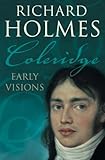
This is my review of Coleridge: Early Visions by Richard Holmes.

The first volume in a mesmerising two-part biography, Richard Holmes provides a fascinating psychological portrait of Coleridge (STC) and an exploration of the Romantic movement which enabled me to see beyond its often cloying sentimentality, all set in the context of the looming threat of the French Revolution, and the growing divisions in Britain over the need for political and social reform.

A young man of remarkable mental and physical energy, making a name for himself as a poet, political journalist, lecturer, preacher and budding philosopher, Coleridge’s charisma and eloquence gained him many admirers and staunch friends, only too often later alienated by his unreliable, extreme behaviour. Part of the problem was that his evident ability brought too many offers of work for him to handle. Combined with a tendency to be continually distracted by his own projects, STC was at times overwhelmed into inaction, increasingly fuelled by opium and alcohol, the list of unfinished work becoming a tragi-comedy even to him.

In his defence, STC still managed to produce an impressive quantity of poetry and prose. Opium was the main painkiller available to a man who seemed to suffer more than his fair share of ill health, plus it probably enhanced STC’s creative abilities except when overdoses proved catastrophic. Even without opium, he displayed classic symptoms of bi-polarity: mood swings, acute self-absorption, tendency to be easily distracted into a new project when he should have been doing something else, problems with sleep and organising his affairs, uninhibited displays of emotion, and a “grandiosity” over each new scheme, generally conceived on too ambitious a scale to be feasible in reasonable time.

The neglect of his wife Sara is often shocking, as when he left her pregnant with a small child to undertake what turned out to be almost a year spent in Germany, learning the language and studying the literature. Even news of his newly born son’s death did not bring him home. Having insisted on marrying Sara even after his need for a wife to help him sustain a utopian community in America had fallen through, he found living with her intolerable. Perhaps he was running away from the guilt of being unable to provide a steady income (having at one point turned down part-ownership of a newspaper which would have secured his wealth) plus he felt a compulsive need to wander at night through the moonlit Quantocks with the Wordsworths, travel to some exotic foreign land, or the stimulus of London gatherings. His attempted escape to live with the Wordsworths in the Lake District could not prove the idyll of self-sufficiency or “pantisocracy” of which he had dreamed as a young man, for his obsessive passion for Wordsworth’s sister-in-law “Asra” was a source of destructive tension. STC’s long periods spent apart from the children he professed to love is also disturbing evidence of the selfishness so evident alongside his intense sensitivity: again, he may have been evading the painful knowledge that they were being supported largely by his brother-in-law, the poet Southey.

Despite his obvious faults, his verbal magic and self-deprecating wit still leap from the page to win us over. Also, he could be generous, as when he set aside his own work to edit publications for Wordsworth. The latter is portrayed as a controlling egoist, who did not flinch from removing STC’s poem “Christabel” from a joint work, thus establishing dominance in their working relationship, which STC for humbly accepted for too long.

Part 1 ends with Coleridge still in his thirties, sailing off to Malta under the protection of a naval convoy, convinced he would die abroad, his honour saved by the life insurance taken out to benefit his wife. Had he perished at that point, he would have been remembered as a talented poet, author of “Kubla Khan” and “The Ancient Mariner”, his reputation less tarnished than was to prove the case, although a large body of his work would never have been written.

⭐⭐⭐⭐⭐ 5 Stars

“Love in Bloomsbury” by Frances Partridge.Dashing and flashing and splashing and clashing

This is my review of Love in Bloomsbury by Frances Partridge.

Frances Partridge is probably best known for loving and in undue course marrying Ralph Partridge, already part of an infamous ménage à trois: the homosexual Lytton Strachey loved and relied on the practical, handsome Ralph, whom the talented if neurotic painter Dora Carrington had agreed to marry as a means of hanging on to Lytton, with whom she lived and was infatuated. This set- up symbolises some of the key aspects of the Bloomsbury group – their lack of concern about conventions, emphasis on “rationality” which could be used to justify egotism and also, a point which I have been slow to appreciate, the deep bonds of friendship which endured despite shifting love affairs and gossip.

Born in 1900, the author opens a window on Edwardian childhood in a prosperous middle-class family with a wide circle of well-connected friends and “advanced ideas”, despite employing maids to toil “up and down the great flights of stairs… with coal-scuttles and hot-water jugs”. She also provides fascinating, first-hand observation of a group of individuals who were often creative, original thinkers and vulnerable in their failings, leaving us to infer the degree to which they were over-privileged, self-absorbed and sometimes disappointingly trivial.

From an early age Frances questioned accepted views. Eavesdropping on two visitors’ “ribald breakfast-time conversation” which involved discussing God as if he were a human being, she realised that this meant not only that they did not believe in him but neither did she. A similar “moment of truth”, closest to the “mystical experience” described by friends, came towards the end of her schooldays, with the “blinding conviction” that whatever she might be forced to do, her “ideas and beliefs” were her own, and nothing could make her think against her “own grain”.

Clearly intelligent and physically active, choosing to attend the free-thinking Bedales school, at Cambridge she revelled in both philosophy and dancing to a jazz band. A private income gave the freedom to treat work as an interesting pastime rather than a necessity. Economising on the many trips abroad meant travelling third class rather than first. She turned down a job researching why Lyons’ waitresses dropped so much china for employment at the book shop set up by her brother-in-law Bunny Garnett with his friend Francis Birrell. This belonged to some past idyllic cloud-cuckoo land: since buyers objected to the fingerprints and tobacco ash left on pages by the staff, the clientèle was mostly confined to friends who were also members of the Bloomsbury group. Even after moving in with Ralph, she seems to have spent many evenings dining out at restaurants with admiring male friends, and although her days seemed to her very full combining work with “household preoccupations” she writes: “Who bought the bacon, the butter, the fish? I suspect it was our faithful Mabel. Certainly I have no recollection of doing it myself.”

Perceptive comments are often laced with a caustic humour: Lady Ottoline Morrel “in tawdry satin finery” chasing “avidly with claw-like hands over the floor” a bun she had dropped. A French waiter described in meticulous detail is then dismissed with “a face that might be a criminal or a philosopher’s, but most likely a half-wit’s”.

She deemed a “hermaphrodite” fancy-dress party “a sad come-down, a sign of decadence” compared with the elaborate performances which earlier parties had featured. To set against the boozy socialisting, is the moving account of the battlefields of northern France revisited as an antidote to Ralph’s grief over his failure to prevent Carrington’s suicide through her inability to live without the deceased Strachey. Fourteen years after the event, “the few trees still standing were gaunt skeletons riddled with bullets, and one had only to take hold of a branch and there was a rattle of shrapnel falling to the ground”.

Part 2 of the Book relies heavily on diary entries, using print too small to read comfortably in the paperback version, and sometimes tedious because of the large amount of name-dropping. The author may have painted Ralph in an unduly glowing light, and played down her own self-gratification. Yet overall, this very readable book is full of insight on the experience of being alive and fills one with the urge to do so as fully as did Frances Partridge.

⭐⭐⭐⭐⭐ 5 Stars

Live not by lies

This is my review of The Invention of Russia: The Journey from Gorbachev’s Freedom to Putin’s War by Arkady Ostrovsky.

In his quest to understand how Russia got from the dissolution of the Soviet Union in 1991 to the aggressive, chauvinist state of Russian under Putin in 2015, the Russian-born author takes us back to Krushchev’s denunciation of Stalin’s repression in 1956, paving the way for Gorbachev’s formal launch of “Perestroika” or restructuring from 1985.

Ostrovsky focuses on the media’s key role in both assisting and obstructing change. In the 1960s, newspapers and television were dominated by intellectuals bent on “cleansing” Communism of the distortions Stalin had imposed. They had not yet progressed to demanding economic freedom. It took leading journalists like Alexander Yakovlev years to realise that “the Bolshevik religion was false” and that “socialism with a human face” might not be feasible under communism. Following the crushing of the 1968 “Prague Spring”, journalists like “Yegor” (also a Yakovlev, but “no relation”), felt alienated by the use of Soviet tanks, but continued to compromise, not speaking the truth in the belief that they could achieve more “from the inside”, not to mention their concerns for self-preservation.

Yet the irony was that eventually, “words rather than tanks” meant that the generation which had intended to vindicate the ideals of fathers purged by Stalin ended by unintentionally destroying socialism. “Glasnost” and the opening up of minds through the media proved more important in effecting change than “altering the means of production”. Unrest grew as the media helped people to perceive their relative lack of consumer goods, or the failure of the Afghan War. When Gorbachev dithered over economic liberalism, “Moscow News” had the confidence to urge him to act decisively or resign.

Under his successor Yeltsin, there was a generational shift from men like Yegor to his son Vladimir who founded the magazine Kommersant to promote capitalism of a primitive kind, operating in a moral vacuum. The “oligarchs” who benefitted from the “loans for shares” scheme saw the influence to be gained from owning TV channels: Gusinsky took over the TV channel NTV which established a reputation for honesty in, for instance, its reporting on the Chechnyan war. When his oligarch acquaintances urged him to sell the station that was putting their business at risk, or make it non-political, his journalist Malashenko resisted, pointing out that NTV had the strength to survive under a weak and dysfunctional state. The truth was of course that freedom of speech was fragile, dependent on Yeltsin’s goodwill.

This became clear after Putin’s appointment as a decisive and authoritative heir to the ailing Yeltsin. Gusinsky was ordered to sell NTV to Gazprom, after “the last straw” of parodying Putin on the Russian equivalent of the political satire “Spitting Image”. By 2004, the state-controlled “Channel One” was reduced to showing mainly soap operas during the Chechnyan crisis in Beslan, playing down the number of casualties, pretending hostages were safe when more than 300 were dead, and showing scenes from military dramas of terrorists being beaten.

Ostrovsky claims that by 2014, the Russian media had become not just a metaphorical but a real weapon causing genuine destruction, not just distorting reality but inventing it “using fake footage” to report on conflict in, for instance, Ukraine, even using actors: “sometimes the same actor would impersonate both the victim and the aggressor on different channels.” Nemtsov, the charismatic politician who warned against the use of TV to produce “patriotic hallucinations” was himself murdered outside the Kremlin shortly afterwards. For Russians, violent newsreels have become a form of entertainment: “the vast majority of Russians now contemplate the possibility of a nuclear war …..and 40 per cent of the younger ones believe that Russia can win, as though it were a video game”. The once brash Vladimir Yakovlev now warns that people live in a crazy illusion tha the country is surrounded by enemies… The information war is first and foremost destroying ourselves”.

The subject matter is fascinating and the bibliography impressive, but some clear and striking analysis is buried in the at times frenetic journalese which makes for hard reading, along with the large cast of characters with unpronounceable names, for a non-Russian reader. I was also surprised to find so little mention of the economic hardship I believe to have been endured by many ordinary Russians post 1991.

⭐⭐⭐⭐ 4 Stars

“The Bloomsbury Group” by Frances SpaldingHow they reverberated

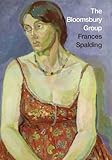
This is my review of The Bloomsbury Group by Frances Spalding.

Written by the “leading authority” Frances Spalding, this fascinating and very readable book which manages to cover in only a hundred pages an astonishing amount of information without seeming overloaded, begins with a brief explanation of the famous Bloomsbury Group before embarking on thumbnail biographies of many of its key members, each accompanying a full-page illustration of a painting from the National Portrait Gallery in London.

I have been forced to modify my view of the Bloomsbury Group (so-named after the district into which Vanessa Bell, as she was to become moved, together with her siblings including Virginia who was to marry the publisher Leonard Woolf. Having regarded them as a group of self-absorbed intellectuals, somewhat self-indulgent in the justification of their casual switching of partners, I now realise that their earnest discussion and experimentation was an important and inevitable response to the stultifying grip of Victorian moral conventions and unquestioning acceptance of religious teaching which linked ethics with behaviour. “Fresh questions had to be asked as to how and why they should be connected. What was the nature of good? How should you live? What philosophy could be found to support and justify the good life?” The Bloomsbury Group believed in honest personal relationships, and the value of enduring friendship, which could transcend a love affair which had lost its meaning. Virginia Woolf praised her Bloomsbury friends for “having worked out a view of life which still holds…after twenty years; and no amount of quarrelling or success, or failure has altered this”.

It is revealing how many of the photographs and paintings show the characters reading: the oddly charismatic, sedentary “man of letters” Lytton Strachey, was “often shown in a state of complete relaxation, a condition conducive to a life of intense mental activity”. This inspired the hopeless love of the probably somewhat neurotic artist Dora Carrington, whose portraits impressed me with their quality and realism: namely that of the handsome expert on Spain, Gerard Brenan, who in turn carried a torch in vain for her, and of E.M. Forster who shared Bloomsbury values while remaining on the margins of the group. The clarity and lifelike quality of Roger Fry’s self-portrait together with those of Bertrand Russell (whose mathematical mind and contempt for homosexuality may have distanced him from the Bloomsbury network, which he could not avoid because his wife Alys’s nieces married into it) and of Clive Bell, the longsuffering husband of Vanessa are at odds with Fry’s pioneering work “crusading passionately on behalf of Cézanne, Gauguin, Van Gogh and Matisse,” to raise awareness in Britain of the Impressionist movement.

The author’s many insights into the lives and time of the Bloomsbury Group, are lightened by many anecdotes, such as the magnetic “cornflower-blue”-eyed David Garnett watching the weighing of Angelica, newborn daughter of Vanessa Bell and Duncan Grant with whom he lived in a menage à trois, and “conceiving the idea of marrying her” which he duly did more than twenty years later.

⭐⭐⭐⭐⭐ 5 Stars

Re-entrance to a plauditry

This is my review of Soul of the Age: The Life, Mind and World of William Shakespeare by Jonathan Bate.

Sequenced to follow the seven phases of a man’s life in the famous “All the world’s a stage” soliliquy, chapters takes the form of themed essays.

Readers will be struck by different revelations and insights in the spate of ideas. I realised for the first time that it was the banning of the cycles of medieval mystery plays by the Protestant Reformation which created a vacuum into which Shakespeare could present his new plays, untrammelled by dogma, relatively free to range over a wide range of topics and ideas.

I liked the idea of Shakespeare continually drawing on his Warwickshire roots. So, when culling ideas for “As You Like It” from a prose romance called “Rosalynd”, he turned the forests of the Ardennes into Arden. When insulted for his lowly origins by an educated, now forgotten rival playwright, who called him “an upstart crow beautified with our feathers”, Shakespeare took humorous revenge in “The Comedy of Errors” with a punning dialogue on “breaking in with a crow without feather” that is to say, a crowbar. The exchange is much more entertaining when you know the context.

It was the father of a friend of Shakespeare’s who translated into English details of the universe according to Copernicus, with the sun at the centre. When the accepted belief was in the “necessary correspondence between the order of the cosmos and that of the state”, Shakespeare showed his independence of mind and flexibility of thought in giving humorous irony to to Edmund in “King Lear”:

“when we are sick in fortune – often the surfeits of our own behaviour – we make guilty of our disaster the sun, the moon and stars, as if we were villains of necessity…..My father compounded with my mother under the dragon’s tail and my nativity was under Ursa Major, so that it follows I am rough and lecherous”.

Just before the abortive coup which ended in his execution, the Earl of Essex may have been inspired to sedition by Shakespeare’s Richard II: if Shakespeare had been sent to the Tower for this, great works such as Othello, Lear, Macbeth and the Tempest might never have been written. As it was, eighteen of his major plays which did not appear in print in his lifetime would probably have been lost if two colleagues from the Company of King’s Men to which he belonged had not ensured their publication after his death.

We see Shakespeare daring to experiment with the ideas of Montaigne, exploring a range of philosophies including the Epicurean view, suspected because of its association with atheism: the need to give vent to one’s feelings rather than maintain Stoical patience, for “Sorrow concealed, like an oven stopped, Doth burn the heart to cinders where it is.”

There are gaps in our knowledge of Shakespeare. Was he obliged to steer clear of King James’s court for a while since he had syphilis? Yet we have many remarkable details, such as the amount a colleague left him in his will, the fact that his energy was exhausting, but there was widespread admiration for his “wit” in the widest sense of linguistic talent, humour, imagination and judgement. So, the author’s occasional attempts at surmise seem like unnecessary contrivance.

With his astonishing knowledge of Shakespeare’s life and works, perhaps Jonathan Bate may be forgiven a convoluted style and a weight of detail which is sometimes too much to absorb. This book has helped me to appreciate Shakespeare’s wit and insight, filling me with good intentions to revisit his sonnets, even study some of his plays again.

⭐⭐⭐⭐ 4 Stars

The Master by Colm Tóibín: “Playing with vital elements….masking and unmasking himself”

This is my review of The Master (Picador Classic) by Colm Toibin.

In his fictionalised biography of Henry James, Colm Tóibín slides us into the author’s thoughts with no background explanation. The five year period covered is 1895-99, when he was a celebrated author in his fifties, but with many lapses into past memories going back to childhood.

At first, I thought that a full appreciation of the novel would require a detailed knowledge of James’s style, plots and characters and that it would bewilder and bore those who know little or nothing about James. In fact, what turns out to be a subtle and perceptive book, may be enjoyed and admired simply as a portrayal of a sensitive loner who cannot help employing his acute sensitivity to observe others, conjuring stories out of small incidents, yet who goes to great pains to conceal his feelings, and who, despite a sense of loneliness, even loss, ruthlessly steers clear of commitment, even at the cost of destroying the lives of those he has used as source material. Somehow, he generally manages to avoid acknowledging this realisation, just as he represses the expression of his sexuality.

So it is that he uses his beautiful cousin Minnie Temple as a model for several stories, but is chided by his friends for failing to invite her to stay with him in Italy when she is sick and close to death. Did he simply fail to notice her appeal for such an invitation, or refuse to make it because it interfered with his work? Similarly, he enjoys a secret friendship with a female writer, breaking through the defences of her self-contained loneliness, without apparently realising until too late the depth of her need for his presence and love.

James is continually an indecisive mixture of self-delusion and self-knowledge. The book opens with his excitement over the possibility of becoming a playwright: “He foresaw an end to long, solitary days; the grim satisfaction that fiction gave him would be replaced by… voices and movement and immediacy that …up to now he had believed he would never experience”. Yet this alternates with the certainty of failure (as proves to be the case) which would force him to return “willingly and unwillingly, to this true medium”. In such complex and nuanced chains of thought, Tóibín captures a sense of James’s convoluted yet insightful, hypnotic prose, but without making the mistake of concocting wordy, interminable sentences in what would inevitably prove a parody of “the master”.

There are some lighter moments, as Henry James steers his way through a world of gossip. On a visit to Ireland, it is clear that the domineering socialite Lady Wolseley, believing him to be gay, assigns the handsome army corporal Hammond to act as his servant, “smiling strangely” over his apparent satisfaction with the arrangement. The whole issue of the author’s sexuality is treated ambiguously, as it no doubt was at the time.

One of the funniest moments is towards the end when, briefly reunited with his elder brother William, with whom there has always been a degree of sibling tension. William takes him to task for wasting his sharp eye and wide-ranging sympathy on the superficial, class-ridden English whom he can never understand. In an outrageous, misconceived yet telling outburst, he asserts, “I believe that the English can never be your true subject. And I believe that your style has suffered from the strain of constantly dramatizing social insipidity. I also think that something cold and thin-blooded and oddly priggish has come to the fore in your content…I find I have to read innumerable sentences you now write twice over to see what they could possibly mean. In this crowded and hurried reading age you will remain unread and neglected as long as you continue to indulge in this style and these subjects”.

Not always an easy read, this has many brilliant moments.

⭐⭐⭐⭐⭐ 5 Stars