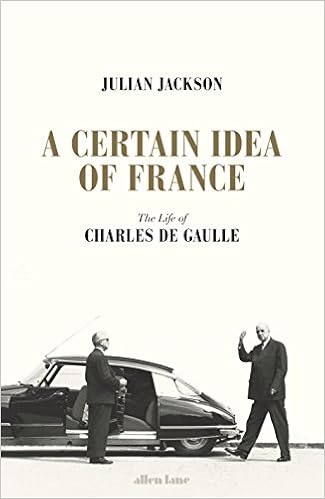
This engrossing biography should delay the inevitable forgetting of what made De Gaulle so famous, with a clear socio-political summary of the past century to set the France of today in context. I enjoyed the frequent use of vivid quotations to show the reactions of De Gaulle’s contemporaries to this eccentric, complex man whose flaws both undermined and contributed to his often controversial achievements.
Deeply influenced by his conservative, nationalistic, intellectual Catholic upbringing, it is unsurprising that De Gaulle found the rapid French surrender at the outset of World War Two and subsequent collaboration intolerably dishonourable. His broadcasts to France from exile in London via the BBC, notably the famous call to arms in June 1940, had the same kind of morale-boosting impact as Churchill’s speeches. By the time De Gaulle was able to walk down the Champs-Elysées of a liberated Paris, an estimated “two million souls” gathered to greet him, yet few had any idea what he looked like in that pre-television age.
To gain recognition as the leader of the Free French and ensure that France should have some role both in the liberation and the subsequent negotiations required vast self-belief amounting to arrogance, combined with unrelenting persistence. Speaking of himself as “De Gaulle”, even “France”, a kind of latter-day male Joan of Arc, he threw chairs during tantrums with world leaders, machinated to get rid of rivals, tried Churchill’s patience to the limit, and aroused the implacable hostility of the American President Roosevelt. Forever “biting the hand that fed him”, he showed scant gratitude to the Allies or the Resistance groups on whom he was at times utterly dependent.
Perhaps he was simply applying the reading which had convinced him of a leader’s need to “cultivate mystery and keep his distance” with “a large dose of egoism, of pride, or hardness and ruse …Leadership is solitary exercise of the will”. Although he was a showman in his oratory, delivering carefully honed speeches from memory in several languages and, with his undeniable courage, loved to disappear into large adulatory crowds, private meetings with De Gaulle were often disappointing. There is a pattern in descriptions of him pontificating at length, looking through people rather than at them, sometimes unexpectedly proving later to have noted and even been influenced by remarks they had managed to make.
“Granting” Algerian independence has been cited as one of De Gaulle’s main achievements, but Julian Jackson points out that it was in fact “wrested from him” after France had come close to mainland civil war, and he showed a callous disregard for the suffering of pieds noirs and Harkis who “lost out” in the process.
It was a shock to realise that De Gaulle’s return to power as President in 1958 was undemocratic, a coup “legalised” because “France’s elites had lost confidence in the existing regime to resolve the Algerian crisis”. This gave him “full powers to govern by decree for six months with the suspension of parliament during that period”. His subsequent manipulation of the constitution under the new Fifth Republic to get himself elected directly by the public, thus cementing his personal power, was also questionable – he was recreating the role of a monarch within the republican system which had aimed to destroy it. His delight in “upsetting the applecart” was evident to the end, as in his rash speech, climaxing in the infamous slogan “Vive le Québec libre!”on a visit to Canada.
De Gaulle often seems like a throwback to a previous age, with his frugal personal lifestyle, rejection of the telephone even when holding high office. and his musing on the damaging effect on society of mass production. Yet he encouraged others to pursue the technology, including nuclear warheads, which would “make France great” and was fortunate, probably owing some of his popularity to, the fact that his “reign” coincided with the “Trente Glorieuses” – the three decades of post-war relative economic prosperity and cultural achievement in France.
Although forced to resign ultimately as an old man who had become out of touch, as indicated by the riots of 1968, De Gaulle often proved quite insightful: he foresaw the collapse of Soviet communism, the folly of the American involvement in the Vietnam War which could not be won, ironically even prophesied for the Common Market that “if England enters into the Community, it will collapse because England will divide us”.
Clearly intended to be a major academic work, this requires a significant investment of time. At more than 800 pages, including notes and bibliography, it is too thick and cumbersome to read comfortably in paper format. I found the Kindle version more convenient, with the downside of it being much harder to flick back quickly to check on a point. The sheer number of names of politicians or acronyms of organisations and parties often becomes too much to absorb. Yet it definitely extended my knowledge and understanding considerably – probably one of the best books I have made the effort to read.

 This is my review of

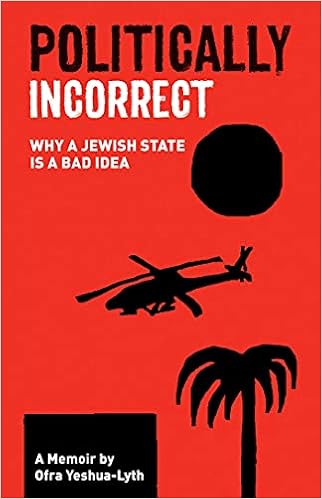 I came to read this book through being so intrigued by a third generation Jewish Israeli journalist who felt impelled to write such a provocatively titled memoir. Her assessment of the errors which she believes will cause the ongoing “inner crumbling” of Israel in its present form are refracted through article-like chapters on her life and that of her family members back to the economic need or desire for freedom from religious control which led them to emigrate to the land of Israel before it became an independent state.
 This is my review of
 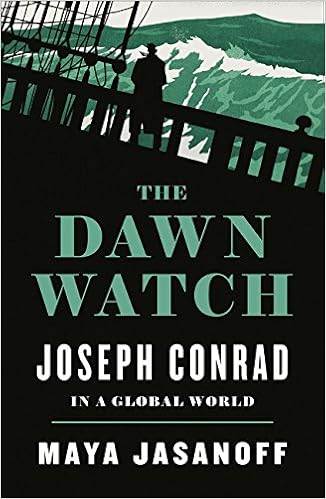 Beneath Maya Jasanoff’s breezy style, stuffing cash into her shoes for safety as she retraces Joseph Conrad’s route along the River Congo, lies a perceptive portrayal of “what made the writer tick”, although of course we can never really know. She succeeds in distilling from clearly thorough research a telling selection of incidents, quotations, and her own insightful conclusions in a biography of only 315 pages, rather than the ever more frequent 800 plus page doorstopper.

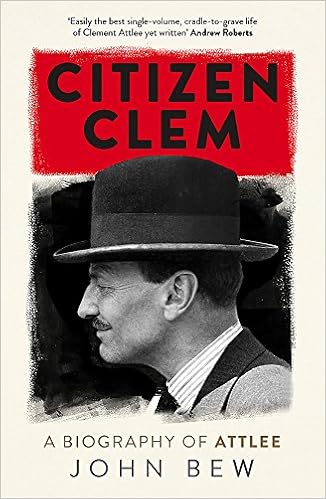 This prize-winning biography achieves the challenging task of marshalling a mountain of research into an absorbing analytical account of the man who presided over the first majority Labour government in the UK. Criticised, like the Blair period, for failing to seize the opportunity for radical change, Attlee’s pragmatic approach in fact changed a good deal: introduction of the NHS together with national insurance and welfare systems, the more controversial nationalisation of essential industries, and overseas, the dismantling of the British Empire to be replaced by a Commonwealth, with India one of the first to gain an independence, sadly marred by bloodshed.
 Antenna Reviews