“John Adams” by David McCullough – A Neglected Hero

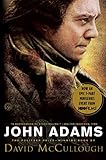
This is my review of “John Adams” by David McCullough.

It is not widely known in the UK that John Adams was the second President of the new republic – as his eldest son was the sixth- but this biography goes some way to compensate for our ignorance of the book-loving New England farmer turned lawyer. After a somewhat confused and dull start, it gets into its stride with the scene where Adams earnestly argues with pacifist Quaker grandee John Dickinson the case for American independence at the Continental Congress in Philadelphia. Then we see Adams leaving his long-suffering wife Abigail, and risking the life of his eldest son, to take the perilous voyage to France (including a broken mast and battle with an enemy vessel), where he is charged with the task of persuading the French to supply the support needed to succeed against the British. He goes on to play a part in supplying and organising the army and navy, framing the new American constitution, obtaining vital loans from the Dutch and negotiating the eventual peace treaty.

Although he may have been conceited, prickly, resentful of those with greater influence (such as Benjamin Franklin) and argumentative, his energetic ability and good intentions are not in doubt and he seems to have been savagely maligned by a scurrilous press, partly supported by his sometime friend Jefferson. The account of the complex and changing relationship between the two is fascinating. The more famous, and superficially more attractive, handsome and polished Jefferson, does not come too well out of this – a man who could condemn slavery in principle, while his own slaves worked outside the window. He could not afford to release people whose production helped to pay the debts arising from his extravagance. By contrast, Adams seems to have been a more prudent,straightforward and genuinely egalitarian “man of the people”, although his biographer may have painted too flattering a picture.

However, you cannot deny the evidence of Adams’ prodigious writing – although long-winded, he was a profound and sophisticated thinker, too often misunderstood. While the southerner Jefferson, a founder of Republicanism, accused Adams of having been corrupted by his time in Europe into becoming a monarchist sympathiser, Adams was convincing as a genuine democrat, who wanted the legislature and executive to be both elected and subject to checks and balances. Also, Adams was quick to see correctly the danger of the violence of the French Revolution, which Jefferson naively admired, overlooking the excesses of the guillotine.

This gripping biography provides many insights into the causes, progress and effects of the American Revolution together with a fascinating social history of the time, portrait of a marriage between two equals, and descriptions of the American landscape. It repays reading for an initial overview, and then rereading….

⭐⭐⭐⭐ 4 Stars

“David Lloyd George: The Great Outsider” by Roy Hattersley – Flawed genius and a dose of “Plus ça change!”

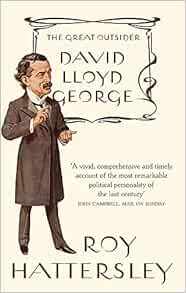
This is my review of David Lloyd George: The Great Outsider by Roy Hattersley.

“The more things change, the more they stay the same”. We see Lloyd George condemning the arms race and immoral wars, such as against the Boers – how would he have applied his razor-sharp scorn to the Iraq War? He campaigned for non-conformist teachers to be allowed to teach in Welsh schools , so presumably would have spoken against faith schools and for Welsh devolution, had he lived today. He foresaw how the embryonic labour party threatened the long-term survival of the liberal party and eventually advocated a “centrist” coalition with the Tories to effect constitutional change. The level of faction-fighting within the Liberal Party foreshadowed what may be about to happen again now. And then there were the issues of Irish independence and the power of the Lords to block legislation, eternal thorns in the flesh of Westminster.

Lloyd George got himself noticed by attacking people through breathtakingly rude yet witty insults, on a scale which would probably be quite unacceptable today. His “weathercock” attitude to many issues makes for confusing reading at times. He opposed votes for women on the practical grounds that this would give the Tories an unfair advantage until suffrage was extended to men without property. This illustrates the ultra-pragmatism which enabled him to negotiate with employers and unions to avert strikes, and bring peace to Ireland – yet always there was his tendency to give different parties different impressions – to the point of appearing to lie – so that “solutions” were too often short-lived.

We are told that LG “felt no loyalty to either institutions or individuals …yet he remained true … to a few ideas… for which he was prepared to sacrifice other political objectives”: he was unyielding on national insurance for sickness and invalidity, based on contributions from employers and workmen. For this and his leadership in WW1, he deserves praise – although he seems to have withheld vital troops from a military leader he wanted to remove, but lacked the power to do so.

On a personal level, he sailed close to the wind, risking scandal through indiscreet affairs, fathering illegitimate children. He sold honours for cash with astonishing blatancy, even joking about the “dirty money” which the Liberals held their noses and asked him to raise.

Ffion Hague’s recent biography of Lloyd George has already provided a detailed character study of the charismatic but selfish and manipulative “Welsh Wizard”, but it tends to focus on his relationships with women, notably his long-suffering (“blind” because it was the easiest option?) wife and emotionally abused mistress Frances Stephenson. I looked to Roy Hattersley for a clearer analysis of the political aspects of his life.

It is a challenge to produce a book which is accessible but suitably “scholarly”, without getting overly bogged down in detail. For the most part, the author manages this, with a good blend of analysis, telling quotations and fascinating anecdotes. Once Lloyd George achieves his ambition of cabinet office, first at the Board of Trade but then as Chancellor, the book gets into its stride and manages to be quite gripping, even over such a superficially dry but important topic as his battle to get the 1909 Finance Bill through the Lords – or did he want it to fail in order to force a crisis over the undemocratic power of the higher chamber?

I spotted a few errors – “wining” for “winning” etc, which gave me the confidence to think that has been a lack of editing. Also, some topics are introduced in a fragmented way, without sufficient initial explanation. So, I was often forced to break off reading and comb the index to piece together an understanding of, say, the aims and effects of various education acts (all tied up with the imposition of Anglican RE on nonconformist Wales) or the ins and outs of Irish dissidence, which then as now had the power to split and bring down Westminster parties. One of the worst omissions for me was the lack of explanation of the role of Joseph Chamberlain in breaking up the Liberal Party before LG attained office. I had to consult Wikipedia to find out about the formation of the Liberal Unionists (not mentioned in the index for this biography) who governed in coalition with the Tories. There are also some odd leaps in the text , such as the jump on p.367 from the need to produce shells in WW1 to the drive to reduce the consumption in alcohol.

Hattersley does not much like, but admires LG, a viewpoint which it is easy to share. I recommend this biography, although the 650 pages require a serious commitment of time and concentration – probably worth buying so you can reread to get the full benefit…..

⭐⭐⭐⭐ 4 Stars

Absolute power corrupts absolutely

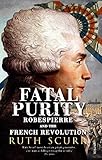
This is my review of Fatal Purity: Robespierre and the French Revolution by Ruth Scurr.

This very readable account of the momentous, chilling, chaotic events of the French Revolution distinguishes itself from the many previous versions through its focus on one of the arch-villains – the coldly fanatical and ruthless Robespierre. The author points out the many contradictions in this complex figure: although he believed that even those too poor to pay tax should have the right to vote, he became a dictator who suppressed free speech and people's right to defend themselves; despite his dislike of bloodshed, he pushed through new laws to speed up the process of guillotining "traitors"; although he lacked qualities of leadership, was reclusive, made sick by tension and was not a naturally good speaker, he was quick to identify and exploit opportunities to gain power; he prided himself on being morally "incorruptible", yet fell prey to jealousy of talented revolutionaires such as Danton, and saw them as rivals who must be destoyed.

Ruth Scurr provides somes explanations for his personality and behaviour – the death of his mother when he was still very young, the influence of the College where he was "indoctrinated" with ideas of the republic in classical Rome and Greece. Yet, it remains unclear to what extent his ideas became more extreme over time, or whether he suppressed his fanaticism until there was a chance to exercise power. I was particularly struck by the way he rejected the atheism which you might expect to arise from the revolution, and the great arrogance with which he concocted single-handed the "new religion" of worship of "The Supreme Being".

As the book progressed, I became more convinced that Robespierre was mentally unstable and psychopathic, often changing his mind, indulging in very exaggerated language, and turning rapidly against former colleagues for whom he appeared to feel no empathy.

Ruth Scurr has done a good job overall, and obviously has to demonstrate her academic credentials. In general, I could have done with less detail and more emphasis on key events, players and their relationships. At times, I realised too late that a faction or individual was important, and had to use the index to search back and refresh my memory, only to find that e.g. the "Hébertistes" weren't explained as clearly as I would have liked. The important coverage of Robespierre's final bloodthirsty summer and his own death seemed too rushed. I also found irritating the author's tendency to imagine Robespierre doing or thinking in a certain way e.g. her analysis of his final scream seemed a bit "over the top".

Despite a few reservations, this book left me wanting to read more about the French Revolution and some of the other characters who fell by the wayside before Robespierre – Danton in particular caught my interest.

So, I recommend this biography to anyone wanting to increase their understanding of a fascinating period in history. If you are pressed for time, the author's introduction gives you quite a useful summary of Robespierre as a person.

⭐⭐⭐⭐ 4 Stars

Benjamin Franklin – Larger than Life Enlightenment Man

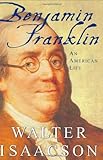
This is my review of Benjamin Franklin: An American Life by Walter Isaacson.

Vivid and gripping as a "good" novel, based on scholarly detail but always crystal clear, this is one of the best biographies I have read. My knowledge of Franklin was limited to his invention of the lightning conductor. Then, when his name cropped up in a book on Tom Paine, I realised that he was also a statesman, involved in the American Revolution and establishment of a new democratic republic. In fact, he was the epitome of "Eighteenth Century Enlightenment Man" – the kind of "all rounder" it was possible to be in the 1700s. Initially a printer from humble origins, he became a journalist, social reformer, promoter of self improvement through discussion groups, philosopher, and eventually Postmaster for the whole of America, in addition to the roles already mentioned. And all the time, right into his eighties, tirelessly inquisitive, he was observing the world and coming up with theories about how, say, to design efficient stoves and street lights, make boats go faster, avoid colds through exercise, reduce lead poisoning – he even created a musical instrument called the armonica, based on running a wet finger round a bowl, which Marie Antoinette took up playing!…. Then there were his social experiments, such as identifying thirteen virtues needed in life, and then trying to develop them week-by-week in a cycle!

Alongside all the veneration, he has been criticised fiercely for his pragmatism and over-readiness to compromise, said to stem from a lack of spiritual depth and absence of real passion and imagination – Keats condemned him as "full of mean and thrifty maxims". However, if you are a supporter of the Enlightenment, you could argue that in practice Franklin was capable of showing great vision and tolerance. He saw before others the need for the American colonies to work together, and used his great powers of negotiation and chess-playing skills – some would say manipulation – to obtain support from the French while managing to keep independent from their designs, then agree a peace with the British which gave America independence. When in his eighties, he was a prime move in agreeing a Constitution which has lasted to this day.

You can take this book on two levels. On one hand it is an entertaining yet thought-provoking analysis of a complex, interesting yet inevitably flawed man. For much of his life he made a point of being very industrious, relatively frugal, and was more than a bourgeois soul bent on making himself rich. His creed was to do what would make life better for people in general and oneself in the process, rather than a belief in the oppressive and divisive religious dogma which many Puritans had carried to the New World. It is hard not to be amazed and impressed by his vast energy, curiosity and inventiveness. The author conveys well what made Franklin so popular and effective: his obvious charm, ability to get on with a wide variety of people – the portrayal of his relations with other famous players such as the uptight John Adams is fascinating – frequent acts of generosity and such skills in communication that his self-deprecating wit and wisdom can speak to us now after more than two centuries. Yet, he was clearly capable of very devious behaviour to obtain his ends and often displayed a callous neglect towards close relatives, such as his wife, and was cruelly unforgiving towards his son in later life, despite having taken responsibility for him when an illegitimate infant.

On another level, this is an informative account of the development of America from a set of colonies to an independent republic. The American author may be a touch complacent about the current state of his country's democracy, but that is not down to Benjamin Franklin.

Anyway, seek this out since it deserves to be read more than many "hyped up" books.

⭐⭐⭐⭐⭐ 5 Stars

A Tall Story?

This is my review of The Long Walk: The True Story of a Trek to Freedom by Slavomir Rawicz.

Initially taking this tale at face value, I felt that I should take a positive view of it out of respect for the courage of the escaped political prisoners who showed such resourcefulness and persistence in their determination to survive. However, although it was relatively short and easy to read, I found the book all too easy to put down. This was partly because the incidents which would have been full of tensions and mishaps in a self-confessed adventure story were so straightforward: the escapees scaled prison walls without attracting notice, no dogs pursued them, everyone they met was friendly and gave them food, when hunger drove them to steal and slaughter an animal it all went without a hitch, and so on. Admittedly half the group died on the way, but I am not introducing a spoiler here: the author removes all suspense by telling us in the completely unnecessary chapter headings listed in the contents page how many people died and where. "Five By-Pass Lhasa" reminded me of a kind of "Enid Blyton meets Biggles" approach to it all. The characters were all somewhat two dimensional, and the rapid deaths without much warning or build up left me less moved than I should have been.

It could be argued that the lack of real action and personal drama reflected the fact we are dealing with a true story. However, consulting Amazon half-way through my reading, I found comments on the strong evidence that this tale is a pastiche of the story of another man's escape. I have no idea whether this is true or not, but it supported the doubts which had already arisen quite independently. My two first major queries arose over the fact that the narrator was able to repair the camp commandant's radio purely on the happily coincidental basis of having had the same model at home. This gave him convenient access to the commandant's wife, who not only spoke to him with the most surprising informality, but virtually incited him to escape, advised him on how to do so, and contributed to equipping him and his colleages to boot! As other reviewers have commented, the subsequent amazing capacity to cross the Gobi Desert without water, and the sight of the Abominable Snowmen were the final nails in the coffin of my belief. Out of all the characters, Kristina seemed to me to be the least convincing. I wondered if she was created to add a little more drama and was not surprised that she was the first to be eliminated from the tale.

I am sorry if I am misjudging this book.

⭐⭐⭐ 3 Stars

“The Pain and the Privilege: The Women in Lloyd George’s Life” by Ffion Hague – The Pain and the Privilege

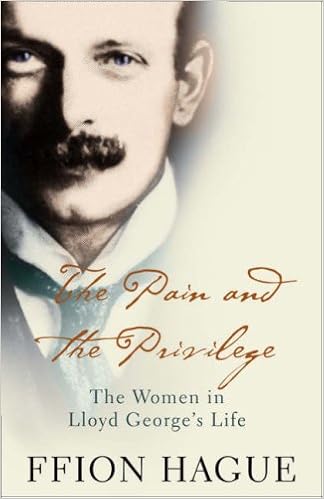
This is my review of The Pain and the Privilege: The Women in Lloyd George’s Life by Ffion Hague.

A serialisation of this book on Radio 4 caught my attention. A storyline intriguing enough to succeed as a novel was made all the more interesting through being based on real events – another case of truth being stranger than fiction. How could Lloyd George maintain the active political and moral support of his wife and his mistress when they were both fully aware of the situation even if choosing to delude themselves up to a point? Ffion Hague interprets in a compelling style the complex motivations and emotions involved. The way in which these two women played complementary roles to meet Lloyd George’s needs made me wonder how consciously he chose these two particular people for long-term relationships in an apparent sea of casual promiscuity.
The interplay of the key characters was set in the context of major developments such as the decline of the Liberal Party, the weakening of the power of the Anglican Establishment over Wales, the horror of the First World War and the profound social changes following from it. It was fascinating to realise or to speculate on just how much the wheel keeps turning – insider share dealing, “cash for honours”, the distorting power of the press – when it chose to reveal scandals- reminded me strongly of recent events. The nature of power, and the charismatic influence which some can exert over others was also explored -there were parallels between the excesses of Lloyd George and Clinton, who tarnished noble political ideals, hard work and real steps to make people’s lives better with sordid events in their private lives.

I never had any illusions about Lloyd George’s morality, so did not downgrade the book out of disgust over his self-centred lechery. Although Ffion Hague may have been a little too charitable about his motives e.g. glossing over what some would regard as egotistical conflicts with Asquith which served to destroy the Liberals faster (although the rise of the Labour Party would probably have done it anyway) and downplaying his evident nepotism and cronyism (again, everyone else was probably at it as well), she succeeds in painting all the characters in a sympathetic light. They seemed like real people, with strengths and flaws.

There was irony in spades e.g. in Lloyd George’s jealousy of his mistress Frances Stephenson’s own affair with Tweed, in the way she tried to deceive him as he deceived his own wife, in the fact that her child (who may have been Lloyd George’s or Tweed’s ) may not have given her the pleasure she craved, since the deception in which she ensnared herself made it impossible for her to be entirely straight with the girl, to the detriment of their relationship.

This was a fascinating and thought-provoking book leaving one to ponder at length on the nature of human relationships – not to mention a renewed interest in learning more about the rich history of the early C20. Countless snippets of information interested me such as Lloyd George’s denunciation of the Boer War, because as a put-upon Welshman he could empathise with the independent-minded Boers. As a young man, what would he have said about the wars in Iraq and Afghanistan?

My only minor criticism is a slight lack of editing. I spotted a mistake in a date, a few non-sequiturs, and sometimes became confused by the author’s tendency to dodge back and forth in time. The frequent references to the notes sent by his admiring womenfolk every time they heard Lloyd George speak in the Commons became too repetitious.

But these are small points, and I would rate this as a major achievement and one of the better biographies I have read.

⭐⭐⭐⭐ 4 Stars

Ludwig Wittgenstein unmasked

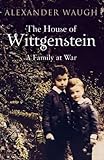
This is my review of The House of Wittgenstein: A Family at War by Alexander Waugh.

I read this book on an impulse, having recently become interested in philosophy. However, Ludwig Wittgenstein, although perhaps the most famous member of the family, was not allowed to dominate the tale.

This was more than just the biography of a family, but a window on Viennese life in the dying days of the Hapsburg Empire leading to the Nazi occupation and its aftermath. The story is full of entertaining anecdotes, and reads like a novel. In some ways, the main character, possibly the one with whom the musical author most empathises, is the pianist Paul. He typified the extraordinary determination and eccentricity which marked the dynasty, by succeeding in his driven ambition to become an internationally renowned concert pianist, despite the loss of his left hand in the First World War. Another interesting aspect was the way in which the family used its great wealth, with a strange mixture of philanthropy and greed, only to face the terrible levelling of being deemed Jewish under the Nazi regime. Yet again, the neurosis which bedevilled such an initially privileged group of people is well-explored.

The beautifully translated exchanges between the family members, as recorded in letters, make fascinating reading.

I fear I shall never be able to take Ludwig seriously as a philosopher again, since even he seemed to feel that much of his writing did not make sense, and it appears that his reputation is founded on the magnetic attraction he exerted on the male Cambridge academics of the day. He is portrayed as what we would call bi-polar with some individual and laudable ideas e.g. about the damaging effects of wealth, marred by at times bizarre behaviour e.g. resolving to become a teacher for altruistic reasons, only to beat unconscious a pupil who failed to meet his exacting standards.

⭐⭐⭐⭐ 4 Stars