The Intriguing “Mr Popular Sentiment”

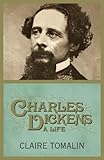
This is my review of Charles Dickens: A Life by Claire Tomalin.

This is very much in the mould of Claire Tomalin's biographies: very detailed and well-researched yet highly readable, revealing with honesty, empathy and wry humour the complexity of Dickens's personality, warts and all.

We gain a sense of the huge, perhaps manic, energy which made him so prolific a writer, known to work on two great novels at the same time. Walking for miles most days gave him time to observe people and to form ideas. Tomalin tells us that he needed to pace the streets – the limited scope of the Swiss countryside (despite its beauty!) only frustrated him. It is a shock to realise that he died in his late fifties – probably at least partly as a result of the smoking and heavy drinking which must also have contributed to his outbursts of explosive anger and emotion.

I was impressed by his precocious determination to overcome adversity. Forced when barely in his teens to leave the school where he excelled to work in a blacking factory because his father was in jail for debt, Dickens divided his meagre weekly earnings into seven piles, to make sure he did not overspend. Despite the lack of a university education and disrupted schooling, this clearly very intelligent young man rapidly became a self-made success, as first a journalist and then an exceptionally popular author. His charisma and dramatic skills (he wanted initially to be an actor) assisted him in promoting his work through his readings – the murder of Nancy by Bill Sykes was a possibly overdone favourite theme.

The author shows how Dickens made positive use of every aspect of his life in his writing. His childhood in Kent gave him a great love for that area, and became the setting for "Great Expectations" which Tomalin regards as in some ways his most "perfect book". His father's chronic debt helped shape the attitudes of Mr Micawber, but also scenes for Little Dorrit set in the Marshalsea Prison.

Tomalin describes how he produced his stories largely in monthly episodes, which required remarkably little rewriting, although his approach may account for some of the overwrought and "hammy" passages in his books, which she freely acknowledges, together with his rather bland female characters. It seems that he followed an overall plan, particularly in the later works.

Although sociable and gregarious, which might suggest easy-going, Dickens was a man of strong principles in certain respects. He was a staunch republican – one reason why he admired the French so much – and gave many readings of his works to highlight the parlous conditions of the poor.

Of course, one area in which his morality fell short was in his callous treatment of his long-suffering but probably rather dull wife. He may have married too young, settling for safe domesticity after the failure of a passionate love affair. However, in successful middle age he embarked on his long relationship with the actress Nelly Tiernan, covered so well in another of Tomalin's biographies. The enforced secrecy of this liaison may have added to some of its appeal. I was also intrigued to learn of the strong friendship between Dickens and his sister-in-law, which Tomalin believes to have been platonic on his side, one of blind loyalty and admiration on hers.

As further evidence of his capricious and unpredictable emotional responses, we learn how Dickens was often hard on his sons, but even after being let down many times by his feckless father, found him a job and praised him in extravagant terms on his death.

This blend of biography, literary comment and evocation of the Victorian world has certainly inspired me to take another look at Dickens's work. I have always admired his intentions as a social reformer, but found many of his characters too caricatured the general tone too sentimental.

⭐⭐⭐⭐⭐ 5 Stars

Paving the Way

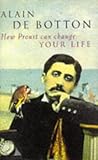
This is my review of How Proust Can Change Your Life by Alain de Botton.

I thought this quirky mixture of selective biographical details and literary analysis might pave the way to my good intentions to complete at least the first volume of Proust’s “Remembrance of Times Past”. Presenting his ideas in short sections under subheadings makes for an easy, if fragmented read.

Proust spent much of his adult life in bed, was plagued with illness and pain although probably also a hypochondriac, and sounds distinctly bi-polar in, for instance, his obsession with the distracting effects of noise, and occasional bursts of manic activity, as when he translated Ruskin’s work, despite having a very limited initial knowledge of English. Were these traits critical to his unusual ability to observe, describe and philosophise about minute aspects of human behaviour and motivation?

I would have liked more detail on this complex man whose excessive politeness led his friends to coin the verb “to proustify” but who also held that friendship expresses itself in futile conversations which only “indefinitely repeat the vacuity of a minute” and is in the end no more than a lie to make us believe that we are not irremediably alone”.

I was impressed that De Botton was only about 28 when this book was first published. There is something “young fogeyish”, facetious and a little too clever by half in his tone, but he succeeds in highlighting some thought-provoking aspects – perhaps the essence – of Proust’s writing, from which he quotes very effectively. For instance, Proust noted that there is nothing particularly special about the poplars Monet loved to paint, but through the painter’s interpretation, one can learn to appreciate the trees in one’s own experience more. Reading can open one’s eyes to the surrounding world, but writers should not be worshipped: even the greatest books have limitations – they do not provide blueprints for living or conclusions, but only “incitements” to understand more. So, it is ironical that the very ordinary village of Illiers has added the suffix “Combray” from Proust’s imaginary settlement and become a place of pilgrimage where visitors buy madeleines supposedly of the type Proust so famously described.

It is easy to understand why Virginia Woolf was so elated by the “vibration and saturation” of Proust’s writing, yet also depressed by the sense that she could not begin to write as well- although in her own original way, she achieved greatness.

Selecting the above points has made me realise the degree of skill De Bouton has exercised in expressing his ideas, but I think he has limited his impact by being a bit too jokey and trite, particularly at the end of chapters.

⭐⭐⭐⭐ 4 Stars

Starry starry night of crazed genius

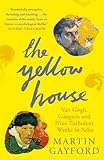
This is my review of The Yellow House: Van Gogh, Gauguin, and Nine Turbulent Weeks in Arles by Martin Gayford.

I thoroughly enjoyed this biography, which conveyed very clearly Van Gogh's tortured personality, with all the classic symptoms of manic-depression, which nevertheless seemed crucial to his genius – the striking use of colour and brushstrokes, and the disregard for the conventions of art. If modern mood-stabilising drugs had been available, he would probably have been a mediocre artist, if he had painted at all. I had not realised how prolific he was, creating a relatively large number of paintings in barely a decade. Sadly, these only began to sell after his death, so much of his life was spent worrying about money, and feeling frustrated by his inadequacy, since if others did not recognise his talent perhaps it did not exist.

His distinctive painting style is analysed in detail, again with great clarity, as is the very different style of his sometime friend Gauguin. The intriguing relationship between the two is also brought out – including the brief period in which Van Gogh mutilated himself after a rift between them, and Gauguin was initially accused of attempted murder on his return to their shared house in Provence.

As other readers have complained, my only criticism is the poor quality of the illustrations, particularly where they are black and white versions of paintings by two artists for whom colour was an essential factor.

⭐⭐⭐⭐ 4 Stars

“The Hare With Amber Eyes: A Hidden Inheritance” by Edmund de Waal – The Stories that Objects Tell

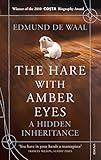
This is my review of The Hare With Amber Eyes: A Hidden Inheritance by Edmund de Waal.

I read this out of curiosity as to why it is so popular, plus I was intrigued to know more about the fabulously wealthy Ephrussi banking dynasty, after seeing pictures of their beautiful former palace in the south of France.

At first, I enjoyed de Waal’s disjointed approach to piecing together of the details of his forbears’ lives, although his aim is never quite clear, even to him on his own admission towards the end of the book. He is specific about not wanting “to get into the sepia saga business..some elegiac Mitteleuropa narrative of loss” but I am not sure he totally succeeds in this. The characters often seem quite shadowy and thin, perhaps because, as a minimalist artist, De Waal is really more interested in objects.

His love for the netsuke, skilful Japanese carvings of everyday objects, plants and creatures, comes through strongly and I came to appreciate the way they form a constant factor, holding the shifting events together.

However, I nearly gave up on the book in the descriptions of great-great-uncle Charles’s collections of paintings and artifacts. It was not just a revulsion over all this acquisitiveness, although I admit that many beautiful objects would never be made without the rich benefactors to commission them. I also felt an idiot reading about paintings and the feel of tactile objects which I could not even see. Then I came across the anecdote about the tortoise whose shell was encrusted with jewels so that it could alter the appearance of a Persian carpet as it crawled across it. This inspired me to press on – I hit on the idea of downloading from “Google Images” copies of all the paintings referred to, to read in conjunction with the descriptions. This made all the difference so it is a pity the publishers did not see fit to include such pictures in the book – but they’ve achieved a bestseller without this, of course!

I thought that the escape of the author’s grandparents, with the patriarch Viktor, to the cosy world of Tunbridge Wells would haunt me less than the tales of the grimmer fate of many humbler Jewish families. However, it is moving to imagine Viktor investing loyally in Austria, only to have his house vandalised and to be deprived brusquely of all his possessions – then to be left in a state of limbo, in which his broken wife probably committed suicide.

Although the book rambles off in a rather protracted conclusion – it seems as if it could go on for ever, overall it is an unusual and thought-provoking take on the stories that objects tell.

⭐⭐⭐⭐ 4 Stars

“Bismarck: A Life” by Jonathan Steinberg – Blood and Irony

This is my review of Bismarck: A Life by Jonathan Steinberg.

This is an intriguing study of a leader – part “charismatic” charmer, part ruthless monster. Bismarck is brought to life through hundreds of quotations from a wide variety of politicians and socialites who knew him. Their names alone make fascinating reading: Johann Bernard Graf von Reckburg und Rothenlöwen, for instance. Bismarck’s own memoirs are quite revealing. In his youth he wrote in a witty and self-deprecating style – his account of a train journey with young children and a wife too embarrassed to breastfeed her howling baby could have been written yesterday.

Bismarck achieved the unification of the German States, and broke free from the dominance of the old Austrian Empire. He introduced a state-funded social security system a quarter of a century before Lloyd George managed it in Britain. Personally brave, yet aggressive and a bully, he was prepared to destroy those who challenged him, even old friends. An arch-manipulator who conducted domestic and foreign policy – realpolitik- like a chess or poker game which he had to win, he seemed to have a low boredom threshold and could not help experimenting with ideas – often quite visionary- to pass the time.

A man of contradictions, he persecuted the catholics when it suited him politically, and was often crudely anti-semitic – but he employed a Jewish banker to manage his investments, and remembered with nostalgia his late-night political discussions with the Jewish socialist Lasselle.

Despite his apparently despotic power and undeniable influence, he remained totally dependent on the support of the Prussian King whom he made into an Emperor, with whom he maintained a complex emotional relationship spanning several decades. When William 1 thwarted him, Bismarck often threatened to resign, relying on the knowledge that the Emperor needed him: the strain triggered frequent bouts of debilitating – probably largely psychosomatic – illness, aggravated by monumental gluttony. Eventually, the young “Kaiser Bill” sacked him. Would Bismarck have become a Stalin if not constrained by the role of servant to a succession of royal masters?

Branded from youth “the mad Junker”, he lost his sense of proportion under the weight of work he assumed, a classic example of the costs of an inability to delegate, and with age he became ever more vindictive and in need of anger management training.

Although I would give this five stars for – slightly repetitive- analysis of a complex personality, a few points frustrated me. The index is largely based on the names of the key characters, so it is impossible to look up quickly a specific event or topic of which you may need to remind yourself. Even the list of names seems incomplete. I could not find Lasselle in the index, although he has a short but important section in the text. Another anomaly is that William 1, who ruled for decades, gets a much shorter list of entries than his son, Frederick III who only actually ruled for a few months in 1888. Some minor characters are described in such detail that they distract you from the overall chain of events being covered. I found the details of some of the diplomatic activities and important pieces of domestic legislation similarly hard to grasp, and wondered how thoroughly some of this has been edited.

However, for the overall portrayal of Bismarck’s character and an explanation of the “unintended consequences” which led to the First World War and the rise of Hitler, I recommend this book, perhaps supported by a more basic history of the period, such as Modern Europe, 1789-1989 (Koenigsberger and Briggs History of Europe) by Asa Briggs and Patricia Clavin, 1996.

⭐⭐⭐⭐ 4 Stars

Impressive translation of memorable and insightful river of prose

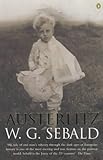
This is my review of Austerlitz (Penguin Essentials) by W. G. Sebald.

I would not have thought of reading a book with no paragraphs and few full stops if I had not been intrigued to understand what made "Austerlitz" so talked about when it was first published.

From the outset, I was carried along by the hypnotic power of the great wave of prose which describes the anonymous narrator's occasional, usually chance visits in railway stations or cafes with the eccentric loner, Jacques Austerlitz. I was also very taken with the strange, dark little photographs embedded into the text to illustrate certain points – these are meant to be part of Austerlitz's collection, but must have been acquired somehow from many sources by the author and the story adjusted to include them.

A lecturer in art history, Austerlitz launches into lengthy monologues without any sense that he might be boring his audience to death, which means that you need to have an interest in architecture to get through the opening pages. Realising that the narrator is the best listener he will ever find, Austerlitz proceeds to recount his odd, and rather sad childhood in Wales, as what turns out to be the fostered son of a fanatical clergyman and his wan wife. In the very striking descriptions of the Welsh countryside -like a Turner landscape in words, I began to see the author's power.

It is gradually revealed that Austerlitz was brought to Britain on the "Kindertransport" to escape the Nazis. After years of repressing his early memories, he realises that he has also avoided close emotional relationships with anyone, and feels a compelling need to trace his family, find out what befell his parents and see the places where he lived before his life was ripped apart by the Nazis. Some of the most moving passages cover his "detective work", meeting with his former "nanny" and recognition of places he must have seen before.

This novel is certainly original. It cannot be judged by normal standards in that plot is of no interest to Sebald. Although the stream of consciousness always makes perfect sense, passing impressions – such as the resemblance to strange landscapes of the shadows on a wall – are deliberately given more weight than significant events. Significant friendships are only implied in Austerlitz's emotionally stunted, autistic world – yet he can unburden himself to a near-stranger. The author is keen to convey his theory that time is not linear in our minds – in some atmospheric places – say, an old courtyard – one may experience now the time of a past age, and so on.

At times, I felt overwhelmed by the self-indulgent excess of some of the author's "verbal digressions". I found that I could only cope with a few pages at a time. There being no chapters to provide natural breaks, it was frustrating to have to put the book down mid-sentence because one could not bear to plough on to the next full stop, several pages further on.

I also wondered if the device of the narrator was necessary or even desirable, leading as it often did to the clunky "and so, as X told him, Austerlitz said….".

The sudden and arbitrary ending – making the point that the rambling account could have gone on for ever, also left me feeling flat and a little disappointed.

Overall, this is probably a flawed masterpiece. I did not need it to inform me of the horror of the Holocaust, but it makes an effective contribution to the body of work which reminds people of what no one should ever forget.

⭐⭐⭐⭐ 4 Stars

“Brilliant and maddening” – I’d like to give 6 stars

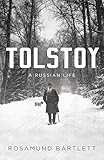
This is my review of Tolstoy: A Russian Life by Rosamund Bartlett.

I don't know why this biography is described on the back cover as "unorthodox" unless it is because of the author's frank, but very well supported criticisms of Tolstoy.

It is a relief to find a biography of a widely revered writer which reveals him warts and all. I was intrigued to read that the author finds Tolstoy an unappealing young man, sanctimoniously writing over-ambitious lists of worthy resolutions, only to spend a few days in prison for failure to attend lectures, or weeks in a clinic to be treated for venereal disease.

When a young man, he was forced to sell villages along with serfs to pay for his gambling debts, and then used some of proceeds together with bail-outs from long-suffering friends, to lose still more money.

He is portrayed as promiscuous – apparently quite common for wealthy young men of his day – controlling, for instance of the long-suffering wife who was a teenager, half his age, when he married her, and very opinionated, prone to falling out with friends – once, he even challenged his friend Turgenev to a duel.

It is interesting to learn that Tolstoy cared more for his "ABC" primer for children than his most famous novels. Although he spent many months researching them and trying out different plots, he was bored with "War and Peace" before it was finished, and struggled with "Anna Karenina" which became for him, a "banal.. bitter radish".

As his social conscience developed, Tolstoy tried to free his serfs, only to discover that they mistrusted his intentions and refused to cooperate. Then, he was one of the first to found a school for his serfs' children. It was remarkably child-centred for its day. Yet, he left it after only a few matter of months to research educational practice in Europe, then closed it down completely in order to move on to other interests. This kind of flitting from one obsession to another was typical. To be fair, from the age of 7 X 7 = 49 (he was very superstitious), he was consistent in his attempt to lead an ethical life, passing through the phases of "religious maniac" to "Holy Fool". Tolstoy's run-ins with the ludicrous censor make fascinating reading. Eventually, he was excommunicated for his inflammatory writing in an extraordinary procedure in which he was declared "anathema" but this only aroused yet more interest in him, by then far more popular than the Tsar.

We are told that the only reason the Tsar did not consign the outspoken Tolstoy to a remote monastery in later life was because he did not want to give him the oxygen of the publicity.

Even Tolstoy ceased to deny, in fact came to revel in, his weaknesses which included self-absorption and insensitivity, in particular to the wife ground down by childbearing, domesticity and isolation in the countryside, with whom he vainly tried to practise "sexual abstinence" but totally refused to use contraception. Yet he was a visionary thinker, genuinely concerned with inequality and the meaning of life and possessed a rash courage. It is interesting to speculate what would have happened to this pugnacious individualist if he had been born into a poor family.

Although the book sometimes gives too much space to minor details – such as which relatives came for Christmas one year – it is mostly very clear and readable – not only concerning how Tolstoy produced his books – with his wife copying out "War and Peace" several times by hand – and the complexity of his personality but also in bringing to life C19 Russia in a period of dramatic change.

The author raises the intriguing question of the extent to which Tolstoy's anarchic views triggered revolution. She highlights the sad irony of the speed with which the Bolsheviks adopted a schizophrenic approach – revering Tolstoy's novels whilst condemning his anarchic views and persecuting his followers even more fiercely than the Tsar's regime had done. How would Tolstoy have reacted to Stalinism? As the author suggests, he would no doubt have been promptly shot.

⭐⭐⭐⭐⭐ 5 Stars

Fascinating

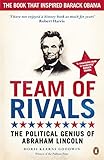
This is my review of Team of Rivals: The Political Genius of Abraham Lincoln by Doris Kearns Goodwin.

I was sorry to finish this engrossing study of the self-educated "prairie lawyer" who, despite a poverty-stricken childhood and youth spent in manual labour, which saddled him with the nickname "the rail-splitter" in later life, managed not only to win the 1860 presidency against much more experienced and illustrious rivals, but to persuade them to work in his cabinet.

The author may view Lincoln through somewhat rose-tinted spectacles – his homely anecdotes for every occasion must have been irritating at times, his tardiness in sacking the preposterous waste of space, General McClellan must have cost many lives and considerable resources, and his inducement of northern Democrats to "swing the vote" in favour of the emancipation of slaves amounted to bribery -even if for a noble cause.

Yet, this seems like nitpicking against the tide of evidence for Lincoln's greatness. He combined unusual integrity, courage, resilience, patience, and a lack of personal vanity and pettiness which made him "above" displays of malice, or the bearing of grudges. In addition to a gift for clear and simple communication, aided by a sharp wit, he applied logic and pragmatism to every situation before making a decision, and all these factors combined to give a distinctive management style which must have been unusual for his day – quite laid-back, egalitarian, consultative and delegating, avoiding a blame culture – although he saw it as his duty ultimately to make the crucial decisions himself.

His rivals are also developed as complex characters – such as the urbane, sociable Seward who was so complacent about winning the presidency that he went off on a long holiday in Europe instead of campaigning, or the pompous Salmon Chase – who disliked his fishy name, but at least wasn't called "Philander" like his sadistic uncle – who obsessively machinated to get elected in '64, unable to appreciate his lack of popularity, yet had a genuine concern to abolish slavery, and was one of the first to welcome the former slave Douglass into his home.

The book really "took off" for me in the chapters on the origin and progress of the Civil War. Although triggered by the issue of slavery – which the southern states wished to retain, and extend to the developing western regions, the ostensible reason was to maintain the unity of the young Republic, which had to prove to the world the value and viability of "true" democracy.

Although the repetition of some details helps the reader to keep track, this would be unnecessary if Goodwin had undertaken a final editing to make the text more concise and streamlined. A list of key characters, time-line of main events, and clearer maps placed at the front for easy reference would have helped. However, these defects apply to most serious history books and biographies, and overall I recommend this as very informative and more gripping than many historical novels.

⭐⭐⭐⭐⭐ 5 Stars

Fascinating topic- shame about the purple prose

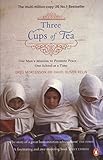
This is my review of Three Cups Of Tea by Greg Mortenson,David Oliver Relin.

I was more interested than I expected to be in this account of the American Greg Mortensen's obsession with building schools in the remote, mountainous northern areas of Pakistan and Afghanistan. This was despite the often toe-curlingly cringe-making journalese and frequent fulsome adulation of Mortensen – for some reason never just called "Greg" by David Oliver Relin who actually wrote the book.

The book succeeds on three counts: it conveys the wild beauty of the landscape, it makes us appreciate the dignity, intelligence and humour of the tribal people who live in communities, close to nature, in a manner which seems morally superior to that of the commercialised western world, and it also provides quite an effective potted history of an area which affects us all, in the light of the activities of Osama Bin Laden, the endless war in Afghanistan and instability of the nuclear state of Pakistan. Reading between the lines, "Three Cups of Tea" also provides an intriguing study of how Mortensen's background and personality have equipped him to achieve his goal.

The journalist Relin was apparently hired to create a marketing tool – along with the children's and Kindle versions of the book – to raise money for the cause. This is fair enough in view of the compelling argument that building schools to reduce ignorance is one of the most effective ways of countering the rise of terrorism amongst the disaffected youth whose lives have been ripped apart by war, for which they largely blame the US.

I suspect that some anecdotes may have gained in the telling, not least because Relin takes the liberty of describing Mortensen's past thoughts, even his dreams, in as great detail as if they are his own, and recreates verbatim conversations from years ago. I was irritated on almost every page by the style – an overloaded lorry "fishtailing" up rutted tracks between mighty "daggered" peaks that "garlanded" the town, and so on; Mortensen pacing round "powerless" rooms, meaning that they had no electricity, or sleeping until "motionlessness awoke him" ….. Yet, if this book gives some gung-ho Islamophobic Americans pause for thought it will have served a useful purpose.

⭐⭐⭐ 3 Stars

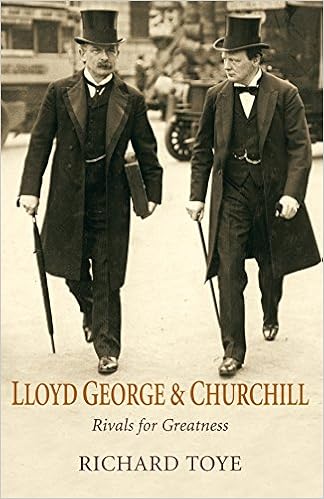
“Lloyd George and Churchill: Rivals for Greatness” by Richard Toye – The Goat and the Bulldog

This is my review of Lloyd George and Churchill: Rivals for Greatness by Richard Toye.

This for the most part very readable analysis of the surprising and complex “friendship” between two major political figures keeps to the point and, unlike many historical accounts summarises the key aspects of events very clearly, helping the reader to see the wood for the trees.

Lloyd George and Churchill lived through an unusually interesting and significant period: on an international scale, two world wars, the Russian Revolution, decline of the Turkish Empire, establishment of Israel, question of independence for India, to name a few. At home, there was the partition of Ireland, the attempts to reform the Lords, the rise of Labour, split and demise of the Liberals, attempts at coalition, votes for women, and first serious measures to provide pensions and unemployment benefit, leading to the creation of the welfare state. It is salutary to realise how many of these issues still remain to be resolved. The shifting relationships within the various coalitions seem very topical now. One should also mention the growing power and influence of the press barons – Northcliffe and Rothermere.

Against this background, which in many ways interested me most, we see the saga of the personal relationship between Churchill and Lloyd George. Initially the latter was “top dog”, a man whom Churchill admired, sought to emulate and surpass, and often relied upon, both as a means of getting office, and also as something of a mentor and emotional support. Largely because of the age difference, the tables were turned in World War 2: Churchill became the leader with power to offer Lloyd George a cabinet post, but the latter was “past it” – age having taken the edge off his ambition, and rendering him so pragmatic and “amenable to reason” that he seemed too much of an appeaser. For much of their political careers, both were widely despised and scorned as over-ambitious political troublemakers and schemers, although there was clearly a good deal of entertaining plotting and gossip from other quarters as well. Yet both seemed to have an energy and vision which were wasted when they were out of power.

Richard Toye has clearly set out to change the balance in modern public perception, which tends to revere Churchill more highly as the greater statesman, as exemplified by the dominance of his statue over Lloyd George’s at the Commons. Thus he consistently portrays Lloyd George as the subtler thinker and negotiator, more genuinely interested in social reform, not to mention his humour, charm and wit, whereas Churchill comes across as courageous to the point of foolhardiness, but a loose cannon, John “bull in the china shop”, whose reputation has been unduly inflated by his success as a rock-like war leader in the 1940s.

I recommend this biography with only two caveats: the passages quoting recollections of someone quoting someone quoting someone else are sometimes hard to follow, or tedious, plus for pages on end there are often references to the months when events occurred, but too few reminders of the year in question! Inevitably, Toye has left out a good deal of detail, but the rationale is his focus on the relationship between these two rivals.

⭐⭐⭐⭐⭐ 5 Stars