Turning a blind eye

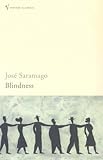
This is my review of Blindness by Jose Saramago.

I put off reading "Blindness" for a book group because the topic seems so bleak: an entire population becomes afflicted with a "white blindness", an authoritarian government tries in vain to contain the apparent contagion by imprisoning sufferers and those likely to be contaminated, but society degenerates rapidly into "primitive hordes" bent on survival.

Despite this, and a translation which may lack editing, after only one chapter into the book, I was hooked by the author's precise, dispassionate description of the first victim's experience of a sudden loss of sight, his reactions and relationship with others. In a kind of "La Ronde" chain reaction, the malady is passed on in an arbitrary way, with the focus on a small number of well-developed characters. One of these is the only one to remain sighted, which adds an extra twist to the plot e.g. should she reveal this fact, how can she remember to conceal it, how does her sight help the others to survive? She is of course well-placed to observe how people's normal inhibitions break down when they believe no one can see them.

The inevitable grim decline into anarchy is leavened with surprising acts of humanity and promising signs of people beginning to organise themselves as a rational means of surviving as long as possible.

Ironically, the aspect most likely to make me give up reading was the punctuation: no paragraphs or inverted commas. Once you realise that a capital after a comma is the start of a different person's comment, Saramago's technique certainly helps the meaning to flow more quickly into one's brain, but does give rise to occasional confusion over the speaker's identity. It's also harder to flick back and check on a point.

Saramago's tone is sometimes moralising e.g. over the promiscuous woman who has more empathy and compassion than other more upright citizens. He shows flashes of tongue-in-cheek humour, such as over people's tendency, even in a crisis, to pontificate about or latch on to theories of redemption on one hand or principles of organised systems on the other.

The characters find time to philosophise:

"We're dead because we're blind."

"Without a future, the present holds no purpose."

"Don't ask me what good and evil are, we knew what it was each time we had to act when blindness was an exception, what is right and wrong are simply different ways of understanding our relationships with the others, not that which we have with ourselves."

"Revenge, being just, is something human. If the victim has no rights over the wrongdoer, there can be no justice."

"Do you mean that we have more words than we need?" – "I mean we have too few feelings. Or that we have them but have ceased to use the words they express. And so we lose them."

"If I am sincere today, what does it matter if I regret it tomorrow?"

Despite all their patience and ingenuity, all the characters seem doomed to die prematurely of starvation and disease, yet, as Saramago observes, death is our ultimate fate anyway. I am left unsure that I have fully grasped the author's intended message: I think he is concerned about the abuse of power, but seems more preoccupied with the individual soul than mankind's pillage of the earth's resources. Whatever his intentions, the book certainly seems topical in our current unstable situation and stimulates ongoing discussion.

The story reminds me of Cormac McCarthy's "The Road", and in the same way, after a harrowing journey, ends on a perhaps surprisingly positive and upbeat note, paving the way to the sequel "Seeing" which I shall certainly read – but not straight away!.

⭐⭐⭐⭐ 4 Stars

Telling it like it is

This is my review of The Help (Film Tie-In) by Kathryn Stockett.

"The Help" on which the film is based is a page-turner with its skilful coverage of human resilience and the sowing of the seeds of rebellion as prejudice begins to crack in 1960s Mississippi, told through the viewpoint of two black maids, Aibileen and Minnie, and Skeeter, an idealistic but naive young white woman with ambitions to become a writer.

In the film, a strong cast of actors bring to life the key characters in the book. Aibileen is the narrator, compassionate and shrewd beneath her subservient air, until writing about her experiences as a general dogsbody and nanny for a succession of white children finally releases her into a sense of freedom. Then there is Minnie, a brilliant cook, but unable to hold down a job because of her feisty talk – yet she allows herself to be beaten by her drunken husband. The villain of the piece is the ghastly, control-freak Hilly, who rules her simpering white "friends" with a rod of iron, with the power to destroy the livelihoods of black servants (not merely her own!) who displease her.

The film version of "The Help" is true to the essentials of the original in that it is a chastening reminder of the casual prejudice of the American South as recently as the 1960s, and is often very moving, yet the poignancy is leavened with a good deal of humour. In view of the complexity of the book's plot, it has been necessary to leave out or compress many details – thankfully not the scene of Minnie trying to hoover the dust off a huge stuffed grizzly bear in an old colonial house. These omissions tend to be disappointing if you have read the book before seeing the film. In particular, I would have liked more of the very moving tales which the maids have to tell.

The film finds time to show not just the main theme of the humiliation and unjust treatment of black Americans but also the discrimination against young white women, who are expected to have no ambition above hooking a man. Skeeter is hired by the local newspaper, but only to write a column on cleaning!

I found some of the black maids' dialogues hard to follow, which is a pity as in the book they are often very funny and full of insight.

Perhaps the film's ending is a touch too sentimental and neatly "sown up", some of the subtle depth of the original has been lost, but overall it is worth seeing.

⭐⭐⭐⭐ 4 Stars

Sweet sorrow

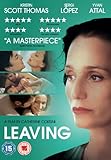
This is my review of Leaving [DVD] [2009].

This is a fresh and moving take on the familiar theme of an unfulfilled woman sacrificing family and properous home for her obsession with an unsuitable lover. We expect tragedy from the opening scene of Suzanne, played as subtly as ever by Kristin Scott Thomas, slipping out of bed and out of sight, only for us to hear a gunshot. The film is never tedious or depressing because of the well-paced plot and clearly drawn characters.

Our sympathies are divided. We feel for Suzanne as she seeks happiness away from her controlling husband, even though we know that she is being devious, selfish and on a practical note ill-advised in choosing an unsuitable lover in the shape of a "bit of rough" immigrant handyman with a prison record, with whom she has little in common apart from sex and whom she at times seems to manipulate for her own advantage, not considering the risks she is asking him to run on her behalf. Her actions, well-intentioned or criminal, tend to have unintended damaging consequences.

On the other hand, although he rides roughshod over his wife's needs, one feels for the husband who understandably in some ways tries to use his position of power and influence to cling on to the wife he wants to possess, and may genuinely love.

We also empathise with the lover, vulnerable despite his physical strength, and with Suzanne's teenage children, torn between their parents' distress, all put under pressure in the chain of events.

In short, this is an intriguing drama of complex emotions, well-acted, with an unpredictable twist at the end.

⭐⭐⭐⭐⭐ 5 Stars

Forster’s Epigone?

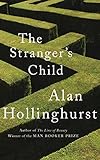
This is my review of The Stranger’s Child by Alan Hollinghurst.

Hollinghurst often reminds me of E.M.Forster with his nostalgia for the early C20 and his focus on the minute details of people's thoughts, observations of one another and interrelationships, all presented in well-crafted prose (apart from the odd clunky phrase like "she said carryingly").

Charismatic, arrogant and manipulative, the aristocratic Cecil Valance achieves a possibly undeserved popularity as a poet after his early death in the First World War. Can the truth of his life ever be told by biographers? This seems unlikely since even those who claim to know him have very different perceptions. In five separate sections separated by gaps of several years or even decades, the author aims to show the false nature of memory.

You could argue that Hollinghurst is daring in discarding many of the "conventions" of novel-writing. The development of a strong plot is given second place to what often reads like a series of short stories: portrayals of characters who make only brief appearances, or the description of quite minor incidents, evocative of past generations, but very amusing, ludicrous or in the style of a black comedy. The author tends to build up anticipation of a certain outcome, only for it not to occur, insofar as one can judge! Significant events are frequently no more than implied.

Although this book promises much, my growing suspicion that it would not deliver proved justified. It suffers from being too long, repetitive in its limited revelations and self-indulgent, not least in its campness – I grew tired of "blushing" and "giggling" men of all ages.

It does not bother me that most of the characters are very middle class , but there are certainly too many of them to relate to easily, and I was left feeling I had waded through an Oxford don's overblown soap opera fantasy.

I know that "the stranger's child" is a quotation from Tennyson's "In Memoriam" read aloud by Cecil in Part 1, and thanks to Roderick Blythe for explaining to me in the comment below its meaning in the title.

⭐⭐⭐ 3 Stars

Can’t turn a blind eye

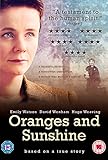
This is my review of Oranges and Sunshine [DVD].

The cruel deception of thousands of British children in care, misinformed that they were orphans and then transported to Australia as a cost-saving policy continued until as recently as 1970. A documentary of this would be shocking enough, but the director Jim Loach, carrying on his father Ken's tradition, achieves an even more powerful effect by making this a docudrama.

Emily Watson gives a convincing and moving performance as the determined real-life social worker Margaret Humphreys who discovered by chance that this injustice existed, and that many children had suffered hardship, even abuse, providing cheap labour for the Christian Brothers in Australia. Her establishment of the Child Migrants Trust has helped to put many naturalised Australians back in touch with their birth parents in Britain after decades of separation, but the indelible effects of childhood trauma often remain. We see the irony that Humphreys' dedication to making amends for the cruelty of others was often at the expense of giving enough time to her own children.

This thought-provoking and well-made film is worth seeing. It may leave you depressed for a while but we can't pretend ostrich-like that this never happened.

⭐⭐⭐⭐ 4 Stars

Lured off the Beaten Track

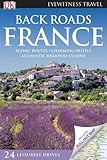
This is my review of Back Roads France (DK Eyewitness Travel Back Roads) by Rosemary Bailey,Fay Franklin,Nick Inman,Nick Rider,Tristan Rutherford,Tamara Thiessen,Kathryn Tomasetti.

Since the informative and beautifully presented DK Eyewitness guides tend to focus on the main tourist attractions, I was pleased to come across this book which encourages you to visit the spots favoured by those with local knowledge, which are often more picturesque or intriguing than the overcrowded and overhyped destinations on the "standard" itineraries.

I was drawn to this book by what looked like Grignan featured on the front cover, the picturesque town just off the Autoroute de Soleil from Lyons to Marseilles (which this book helps you to avoid!) with a fascinating weekly market, and hill-top castle with terraces overlooking lavender fields.

Of course, this guide will only serve to erode some of the special quality of as yet unspoilt places!

⭐⭐⭐⭐⭐ 5 Stars

Plus d’Entente Cordiale

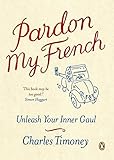
This is my review of Pardon My French: Unleash Your Inner Gaul by Charles Timoney.

Classified by topical subject and listed alphabetically from "a" for "apéro", this slightly tongue-in-cheek guide sheds light on the expressions in common use which you often don't find in text books, and sets them in context.

Although informative, the choice of terms seems quite arbitrary, and I would have preferred shorter explanations and more words. After all, you can glean a great deal for nothing on the online site french.about.com. Also, the book would gain enormously from the inclusion of a CD to give the sounds of words, but I realise that would add to the cost.

Despite my reservations, with Christmas approaching this would make an appealing gift for a friend keen to understand and speak more authentic French.

⭐⭐⭐⭐ 4 Stars

Wheeling off Course

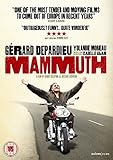
This is my review of Mammuth [DVD] [2010].

Forced to retire from his job at a meatpacking firm, Serge (Gerard Depardieu), a bloated, mammouth-like former hippy biker, long hair still straggling down his back in greying locks, is at a loss how to spend his time, and is reduced to petty wrangling with the supermarket assistant on the cooked meat counter.

After a life of dead end jobs, his pension record is patchy, and his wife Catherine (Yolande Moreau) sends him off on the bike he hasn't ridden for years to obtain evidence of past employment to fill the gaps. There follows a sequence of amusing or poignant scenes, involving meetings with unsympathetic bosses or puzzling round buildings long ago changed to an unfamiliar use, culminating in Serge's meeting with the artistic, and probably also autistic daughter of a former friend. At this point, I thought Serge begins to recover a sense of his lost youth, or perhaps a period of liberation he has never had. Like a motorcycle out of control, the story does not end here but careers on in ever more fanciful images. We see a naked Depardieu squatting at the side of a pool – leaving me only with the sense that it must be the mark of a great actor to be capable of such unashamed lack of inhibition. Returning from his travels in a flowing caftan, arms spread wide in a universal blessing, he seems to have had some kind of revelation, but what does it all mean? Perhaps you may feel intrigued to watch this and tell me.

⭐⭐ 2 Stars

What’s in a name?

This is my review of The Submission by Amy Waldman.

In a competition to design a suitable memorial to the victims of 9/11, the jury members choose a garden. When the envelope is opened to reveal the identity of the architect, he turns out to be a Mohammad Khan, a name likely to inflame feelings in the jittery aftermath of the disaster. As the chairman stalls for time, the situation is leaked to the press, and a media storm breaks. The real-life outcry over the plan to open a mosque near Ground Zero after this book was published shows the credibility and prescience of the theme.

In a tightly plotted tale, Amy Waldman introduces us to a large cast of characters representing a wide range of opinions, and develops their distinct personalities and motives with some skill. There is Claire, the rich and beautiful widow, not very representative of the other victims' families, who feels that the choice should stand on the basis of merit, and to ensure the fair operation of the system. Paul Rubin, the chairman, wants to persuade Khan to withdraw, so as to minimise trouble and safeguard his own reputation as a "safe pair of hands". Sean, the ne'er-do-well handyman whose brother's death has given him status and purpose to defend the memory of the firemen who perished at the Twin Towers, voices the widespread simple prejudice against any muslim involvement in the memorial. Governor Geraldine Bitman, who seems a caricature until one remembers Sarah Palin, wants to gain political advancement out of attacking Khan. In the other camp, the American muslim activist Issam Malik sees Khan's case as a source of publicity for his cause.

Issues are aired in ding-dong dialogues which often read like the script of an earnest play, presenting us with both sides of a range of arguments. Many assume the worst of Khan without knowing anything about him. In fact he is a sensitive man free from any fanaticism or subversive intent, but proves his own worst enemy in stubbornly insisting on his right to the award, whatever the cost. Then, he progresses to wanting the right not to explain himself to those who leap to thinking the worst of him.

Although I was gripped by the plot and unable to predict the end, Waldman's tendency to reveal her profession by drifting into jarring journalese proved a frequent source of irritation. Also, some of the final scenes in which people "shift sides" appeared a little rushed to me. I felt that the dramatic international scale storyline fizzles out as various characters vanish from the page, but at the very end, decided that the subtle ending is exactly right, with its focus on the failure of communication between two individuals who in many ways have much in common – both appreciate the beauty of a minimalist garden subject to Islamic influences which in turn draw on previous ideas of peace and harmony.

You realise at the end that the ambiguity of the title is also quite subtle. Life is not a simple question of winning or losing…….

⭐⭐⭐⭐ 4 Stars

Navel-Gazing

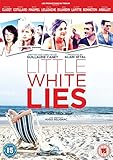
This is my review of Little White Lies [DVD].

This French approach to a "Three Weddings and a Funeral" type drama introduces us to a group of mainly thirty-something longstanding friends. Although shocked when one of them is seriously injured in a motorcycle crash, the rest decide not to be deflected by his coma from their plan to spend a seaside break at the holiday home of Max, a successful restaurant owner. Older than the others, Max is a tense and driven control freak, who forms the focus of many of the more amusing scenes, not least when another character, obsessed with his own sexuality, confesses the love for Max that he has been desperately trying to conceal.

Most of the group members turn out to have secret problems and to be telling each other "little white lies". There is the young man who drives the others mad as he agonises over how to keep his girlfriend and gets totally confused when they offer conflicting advice. Even the successful actress is found to be troubled by her "biological time clock" and failure to find the right man.

Despite the many amusing, and occasionally moving situations, I can understand why some people have been left cold, or irritated, by the unrelenting navel-gazing and angst of privileged people who don't really have much to moan about.

I agree that the film is too long, and probably self-indulgent towards the end. The only thing that really bugged me is the sentimental English pop music included in what are meant to be solemn moments- perhaps this doesn't sound so crass to French people who don't appreciate the banality of the lyrics!

⭐⭐⭐ 3 Stars