And Sometimes They Were Very Sad

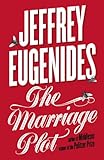
This is my review of The Marriage Plot by Jeffrey Eugenides.

Not having reading anything by Eugenides before, I was curious to discover what has made him a Pullitzer prize-winner.

This is the story of the triangular relationship between three young Americans who meet at university in the early 1980s: Madeleine, a diligent student of English literature, but lacking in a sense of direction, falls for the brilliant, charismatic but manic depressive biologist, Leonard. Meanwhile, after a brief friendship which comes to nothing, Mitchell loves her from afar, and seeks escapism in religious theory, and a circuitous journey to India to work as a volunteer for Mother Theresa.

The novel is a modern take on the "marriage plot", seen by one of Madeleine's English professors as the dominant theme of novels up to 1900, based on the idea that women could only achieve success through marrying men, ideally with money, after which they "lived happily ever after" or endured their fate, since there was no easy escape route via divorce.

The author's technical talent is displayed through some vivid and imaginative descriptions, and his sharp ear for dialogue. The recreation of the events and attitudes of the 1980s rings true, and brings back memories for those who lived through them. Many scenes are funny or poignant. In particular, the analysis of Leonard's manic depression in its various phases strikes close to the bone and often makes for unbearably painful reading.

Ironically, it is the at times almost manic nature of the writing which weakens the structure of the novel, so that the whole may seem less than the sum of the parts. Eugenides spirals off at a tangent where his imagination leads him. For instance, in the early chapters he launches into structuralism and specific works like Barthes' "A Lover's Discourse" without considering or caring how many readers will be able or willing to follow him. In fact, I only needed to "google" for a few minutes to fill the essential gaps in my knowledge, or to check later that the custom-printed wallpaper on Madeleine's bedroom wall was based on a real set of stories about "Madeline" by Ludwig Bemelman. When it came to the genetics of yeast I just let Leonard's explanations wash over me. However, although I have learned more about literature from this book, and extended my vocabulary ("chancre", "pentiment", etc), I feel that the lengthy digressions have been at the expense of the narrative drive.

There is also the author's tendency to meander back and forth in time, which means that many important events are reported, rather than enacted, which would have made them more dramatic.

I was left feeling that I had read a series of on occasion brilliant short stories or thumbnail sketches, held together by a loose plot which at times seems to be about the pain, loss and waste caused by manic depression, although I am sure that is not meant to be the main point. If Eugenides had focused more tightly on the three main characters and developed their interactions more fully, I think I would have cared more about their dilemmas, particularly Madeleine's and Mitchell's.

⭐⭐⭐⭐ 4 Stars

A Muggle of Fopdoodles

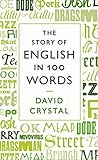
This is my review of The Story of English in 100 Words by David Crystal.

Inspired by a recent radio series on "The History of the World in One Hundred Objects , David Crystal has selected one hundred words, ranging widely over time and place to reflect the diversity of English. He readily concedes the arbitrary nature of his choice, and that everyone would choose a different hundred.

Entertaining as ever, Crystal's choice of words begins with "roe", one of the first words to be written down in Old English on the bone of a deer, and ends with "twittersphere", topical when the book went to print, but already superseded by more recent creations. You actually get more than 100 words, since he uses one to spark off a host of related ones. "Sudoku" is a cue for the Japanese words which have entered our language, such as "bonsai"; "Americanism" is a chance to compare different terms for the same thing on opposite sides of the Atlantic; "gaggle" is a collective noun prompting others, such as the intriguing "wisp of snipe"- Crystal suggests such words are the result of a group of medieval monks' parlour game on a cold evening.

He devotes separate chapters to basic words like "and" or "what", to those which have changed meaning like "wicked", to words coined by Shakespeare like "undeaf", lost words like "fopdoodle", those which are right or wrong according to the age like "ain't", "portmanteau" words like "brunch", taboo words and so on.

Crystal is no cultural snob, accepting "Jamaican English" on a par with the original, noting that the inhabitants of the British Isles form only a fraction of English speakers round the world. Similarly, he welcomes the dynamic nature of the language, accepting the inevitable demise of regional dialects along with the rise of "Essex speak" or "Hindi Cockney".

This book could make a good Christmas present, or enlighten younger readers whom Crystal suggests tend to have a smaller vocabulary simply through having lived a shorter time. However, I found the approach a bit too flibbertigibbetish – Crystal might approve this new adjective culled from a Middle English world, and the book will prove far too popular for him to mind my criticism that it is somewhat lightweight. I would have preferred it if he had concentrated on a more solid theme, such as the influence of foreign words on the English language.

⭐⭐⭐⭐ 4 Stars

Changing Perspective

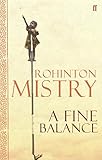
This is my review of A Fine Balance by Rohinton Mistry.

From the opening scene of passengers on an overcrowded train, Rohinton Mistry reveals his mastery of storytelling. The book reminded me at first of another modern classic, “A Suitable Boy” but proves to be much darker. The main characters suffer terribly and the powerful and corrupt for the most part seem to prosper unpunished, although the bleakness is made endurable by a mixture of irony and humour, unexpected moments of beauty and joy, combined with curiosity as to where the plot will twist next.

Like a modern Dickens or Zola, Mistry’s flowing style carries us through a complex and densely-woven plot, set mainly during the “State of Emergency” in mid-1970s India. He focuses on four main characters who form an unlikely bond: the low caste tailor Ishvar and his belligerent nephew Om, who have come to the unnamed “city by the sea” to make a living; Dina, the beautiful, spirited widow who prefers to maintain a poverty-stricken independence rather than accept a suitor arranged by her bullying brother; her lodger Maneck, forced to study refrigeration technology since the economic changes which have reached even the foothills of the Himalayas are threatening the survival of his family’s general stores.

With incidents of caste hatred, slum clearance, forced labour and sterilisation, Mistry reveals the strengthen and resilience of the human spirit: how those who are already poor manage to endure further hardship, corruption, and the cruelty of both the powerful and of those who do their bidding and impose crass laws through their own need to survive.

What makes this book great is Mistry’s ability to change the reader’s perspective on life – his power to cause a materialistic westerner to view life differently, to question accepted values and to feel more empathy and even respect for those who become beggars and slum-dwellers.

⭐⭐⭐⭐⭐ 5 Stars

You reap just what you sow

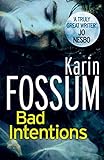
This is my review of Bad Intentions (Inspector Sejer) by Karin Fossum.

In this short gripping novel, you suspect the identity of the "culprits" from the outset, so that the intrigue lies in the "how" and "why". Like many Scandinavian crime writers, Karin Fossum is preoccupied with psychology, questions of motivation, guilt, reactions to grief, cause and effect, rather than straightforward crime and its detection.

The story begins, perhaps a little cornily on Friday 13th, with three somewhat unlikely friends staying in a log cabin beside the lake ominously named Dead Water. Their relationship is implied in the first couple of pages: Axel Frimann, materially successful, dominant and manipulative; Philip Reilly, shambling and unambitious, prone to losing himself in books and drug-taking and evading responsibility; Jon Moreno, fragile and sickly, tortured with anxiety which has led to his hospitalisation, possibly delusional in his vague mistrust of old friends whom he does not want to let down.

Only two of them return from rowing on the lake, and the drama develops from there. Fossum's "villains" tend to have complex characters, so that she often succeeds in making you like them against your will, even wanting them to escape justice. In this case, my sympathy was limited, and I had none for the rather crudely drawn character of Axel.

Although I don't think this is Fossum's best work, and both some characters and plot threads could have been developed more, the story has moments of real tension, is often moving, and provides insights into Norwegian society – young people lacking much entertainment apart from drink and drugs, the vulnerability of immigrants living alone or in small isolated family units and underlying it all the implications of living in a freezing winter climate.

Fossum's aim seems to be simply to create a stark moral fable on the destructive nature of guilt, and the need for atonement, and in this she succeeds.

⭐⭐⭐⭐ 4 Stars

A Diverse Century of Poetry beginning and ending in Strife

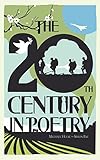
This is my review of The 20th Century in Poetry by Michael Hulse,Simon Rae.

The fact that these 400 pieces form only a fraction of those written in the C20 is a salutary reminder of the richness of this century for poetry. The dramatic changes of this period probably make the poetry more diverse than for any previous century: not just in the themes and issues covered, but also in the progression from poetry that must rhyme and scan with metre, to the blank verse which had become the norm post World War 2.

The poems are presented in the order of first publication, starting in 1900 with Hardy’s “Darkling Thrush” in which he is struck by the incongruous beauty of the bird’s song in a bleak landscape which forms a metaphor for the Boer War – which he subtly does not mention specifically. The year 2000 is marked at the end with Kit Wright’s poem “Hoping it Might be So” which hopes for a utopian world without evil, hinting at the holocaust with the line “For at least six million reasons or else no reason”. The last poem is Jeffrey Harrison’s “Pale Blue City” which provides a beautiful description of New York seen from a plane during takeoff, with the paired towers of the Trade Center (deliberate US spelling!) still standing and the poignant wish “I want it all to stay like this”.

Some poems seem included since they form part of a standard “canon” like both John Masefield’s “Sea-Fever”, and his “Cargoes”, William Owen’s “Dulce et Decorum est” , or Dylan Thomas’s “Do not go gentle into that good night”. On this basis, of course, we are all likely to regret the omission of some favourite poems!

The choice of lesser known works is inevitably arbitrary, reflecting the subjective personal preferences of the editors Michael Hulse and Simon Rae. Poems included share the common factor of describing some event, or topical situation for each year of the century. Many of the later poems selected seemed fairly unremarkable to me, or a bit too laboured, but I made some discoveries to note, such as “Sportsmen” by Keith Douglas, the World War 2 poem, half admiring and half despairing over the misplaced courage of men who persist in going off to war as if it were a game. It’s also good to be reminded of the power of an epic-style poem like “Flannan Isle”, commemorating the unexplained disappearance of three lighthouse keepers in the Outer Hebrides.

The need to reflect real events, rather than choose poems which speak to the reader, may have been a straitjacket. Yet, overall, it is an interesting anthology to explore, very well-indexed with brief biographical notes on the poets.

⭐⭐⭐⭐ 4 Stars

Compelling Theme, Mediocre Delivery

This is my review of Stasiland: Stories from Behind the Berlin Wall by Anna Funder.

I came to this much-hyped book with high expectations. The stories of East Germans who lived the wrong side of the Berlin Wall provide a chilling reminder of how the Stasi stalked, persecuted, imprisoned and tortured those suspected of subversion or guilty of infringing the petty and oppressive restrictions of a state dominated by bigoted control freaks.

We read of the talented student who was failed in her examinations and denied employment because she had an Italian boyfriend; the woman who was denied the right to visit her sick child in hospital, separated from him by the arbitrary construction of the wall, unless she agreed to lure into a trap a young west German who had been helping people to escape: she refused and was haunted by the decision for the rest of her life; the man who resigned in disgust from the Stasi, only to find himself falsely represented to his wife as a pornographer, on which false grounds she was forced to divorce him, or risk losing access to her son.

The author is good on the bizarre operations of the large number of Stasi agents. "Touch nose with hand or handkerchief" meant, "Watch out, subject is coming!" East Berliners could be fined simply for having a television aerial angled towards the west. It will take an estimated 375 years at the current rate of work to piece together all the files torn in pieces by the Stasi as they tried to cover their tracks when the wall came down. Far too many of former Stasi members still hold positions of influence in society. The final irony is that some people voice a highly selective nostalgia for a time when prices were lower, and life more secure for those who managed to toe the line.

Sadly,the writer often distracts us from the full horror, pain and lunacy of the stories with her clunky, jarring prose. In the final acknowledgements, she names the "great friends who provided a much needed sense of normal life" in Berlin. So, why do they not feature in the book? Why does she portray herself as a loner apart from beery pub crawls, who rents a soulless under-furnished flat in Berlin? Too many of the characters, in particular the small number of ex-Stasi men, seem caricatures and many of the stories do not ring true at times. My charitable conclusion is that this is because they are in some cases a pastiche of reality, but the truth here must be more telling than any contrived story.

In short, this is an important and compelling theme, marred by mediocre delivery.

⭐⭐⭐ 3 Stars

Slapstick Art?

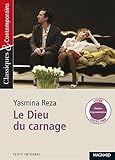
This is my review of Le Dieu Du Carnage by Yasmina Reza.

Young Bruno Houillié has come off worse in a scrap with 11-year old Ferdinand Reille. Somewhat on the defensive, Bruno's parents Annette and Alain are invited to the Houilles' residence, where the pedantic and overprotective Véronique soon gets their backs up. The continual distraction of Alain's mobile, on which he feels bound to deal with some urgent legal matter involving a possibly harmful medical drug being taken coincidentally by Michel Houille's mother, aggravates the situation.

In this comedy of middle class manners, the veneer of politeness soon breaks down as, fuelled by alcohol, the characters sink to insults and acts of petty violence of the type you might associate more with the dysfunctional and underprivileged, or even primitive people living in a lawless African state of the type Véronique likes to write academic texts about. As the cynic Alain says, "…je crois au dieu du carnage. C'est le seul qui gouverne." – "I believe in the god of carnage. He's the only one in charge!"

The original purpose of the meeting is continually disrupted by digressions, with characters going off at Pinterish tangents, highlighting the absence of effective communication.

The play follows the classical theatre's advocacy of the three unities: of time, place and action i.e. it is simply a single prolonged, acrimonious meeting. What might otherwise be a scene change are marked by the word "flottement".

I look forward to Roman Polanski's forthcoming film version of this play, with Jodie Foster, Kate Winslet and John C Reilly (also Christof Waltz) and plan to read Christopher Hampton's translation to check my understanding of some of the more obscure comments.

However, although I think the basic idea for this play is interesting, it left me cold, unlike the author's "Art", which I found witty and amusing. In this case, the funny points, such as Alain's incessant phone calls and the rising irritation of the others, become tedious through repetition. Apart from the wrangling over the two sons, which I found entertaining and realistic, other topics are often introduced in a clunky way and pursued in a dialogue that seems unnatural. One character's reduction to vomiting seems a bit too slapstick. Having made its point fairly early on, the play does not seem to progress much and there in no striking climax.

In short, I was somewhat disappointed.

n.b. This edition by Magnard in the "Classiques et Contemporains" Series has useful explanatory notes on the script, and interesting further information and discussion topics at the end.

⭐⭐⭐ 3 Stars

A Snowstorm in a Paperweight

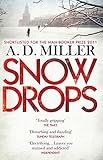
This is my review of Snowdrops by A. D. Miller.

I can understand why "Snowdrops" reached the Booker Shortlist, but also why some people think is should not have done so.

On the plus side, Miller puts his firsthand knowledge of Russia to good use by recreating the tasteless materialism and perpetual undercurrent of violence and sleaze in the raw capitalism following the collapse of Communism. He describes well how individuals are inexorably contaminated by exposure to corruption, even if they think themselves to be morally superior, or immune.

In what turns out to be a psychological drama rather than a crime thiller, the narrator Nicholas, a thirty something commercial lawyer posted from London to Moscow, builds up tension as he is gets ever more entangled with the beautiful Masha and her younger "sister" Katya. Even though he suspects they are not what they seem, he suppresses any doubts and passively goes along with them in providing legal support for what is on the surface a simple property exchange without questioning their actions.

I like the introduction to a new vocabulary: "minigarch" for a rich Russian who isn't quite in the oligarch league, "krysha" for the shady character who provides protection and "fixes" things, or "elitny" to describe a smart restaurant or club. Miller is also good on all the different kinds of snow – from the light, damp October snow called "mokri sneg", through the deep heavy snow falling overnight "like a practical joke", the mounds of snow which make walking an obstacle, and finally the end-of-May snow… by which God lets the Russians know he hasn't finished with them yet". He brings home how the weather dominates Russians' lives through the course of the almost unbearably long and cold winters and the all too short hot summers.

There are some striking descriptions of places e.g. of the Moscow river, "the ice on the river was buckling and cracking, great plates of it rubbing and jostling each other, as the water shrugged it off, a vast snake sloughing of its skin."

Likewise, the sharp descriptions of people e.g. of a man who has allowed himself to become corrupted, " He was a short, pale man with thick hair, thick Soviet glasses and worried eyes. I suppose if you wanted to you could say he looked like a sort of compressed and stunted version of me."

On the down side, I wondered whether it was advisable to tell the reader quite so often that certain characters are liars or cheats, or to imply what is about to happen. It might have been more powerful to have left the reader to deduce all this, and only have Nicholas acknowledge his own culpability at the end. As it is, the climax of the book proves underwhelming, like a balloon that fails to burst with a startling bang because so much air has leaked out of it already.

Overall, this is an impressive "first novel". Much of the writing is good, as is the basic plot idea. However it is a quick, absorbing, mildly thought-provoking and moving read rather than the shattering emotional experience it could have been.

⭐⭐⭐⭐ 4 Stars

“The Brooklyn Follies” by Paul Auster – “Never underestimate the power of books”

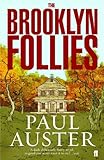
This is my review of The Brooklyn Follies by Paul Auster.

“The Brooklyn Follies” reminds me what a skilful wordsmith Paul Auster is: he can capture startling insights, create intriguing characters and describe a beautiful spring day with memorable originality.

Page after page is a pleasure to read until some unconvincing note trips the reader up.

This is the gently rambling tale of the sixty-year old Nathan, at a loose end after surviving a cancer scare, who decides to pass the time compiling “The Book of Human Folly”, a collection of every “blunder, ……. embarrassment , every idiocy, every foible and inane act” of his own and others’ lives. This is an opportunity for Auster both to exercise his fertile imagination, and to regale us with the lists of facts that he likes to record.

I enjoyed the first part of the book in which Nathan, revelling in his rediscovery of the diverse street life of Brooklyn, renews contact with Tom, the brilliant young nephew who has lost his way in life, and gets to know his flamboyant bookshop employer Harry who is not all that he seems, and who in due course reveals a risky plot to make himself rich. I liked their “deep”, but humorous philosophical discussions, in one chapter written like a play.

With the arrival of Nathan’s great-niece Lucy, pretending to be mute, I felt the plot begin to get ragged. Some opportunities for drama are missed, plotlines are resolved too quickly, or become frankly implausible, and I agree with reviewers who think Auster goes in for far too much “telling” rather than “showing”. It’s also just occurred to me that he may not be very good at portraying convincing female characters. I have come to the conclusion that he is not very interested in structuring a plot, creating suspense or working towards a grand denouement – he just loves playing with words and using them to create interesting situations or explore ideas as the fancy takes him, so that the parts are greater than the whole.

I appreciated his swipes at Bush Junior and manipulative American preachers. I was not so keen on the frequent lapses into a corny, wisecracking tone, perhaps meant to convey Nathan’s New York background.

This seems an intentionally lighthearted book, a kind of homage to Brooklyn, in which the follies of the characters rival the contents of Nathan’s unfinished book, but Auster can never totally dispense with the dark undercurrents of reflection on the meaning of life.

⭐⭐⭐ 3 Stars

Et Tu Stephen?

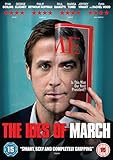
This is my review of The Ides of March [DVD].

What do you do if your idol seems to have feet of clay? How do you take revenge and at what price when others try to destroy your prospects to protect their own?

Ambitious yet idealistic young press manager Stephen Myers (Ryan Gosling) is convinced that he has found a man he can trust and admire in the form of Governor Mike Morris (George Clooney), a charismatic, liberal Democrat candidate running for the US Presidency.

For all his confidence and self-assurance, Stephen has a lot to learn about the ruthless tactics of those who have been in the game longer. Matters begin to go awry when the main Democrat rival's strategist, Duffy, makes a bid for Stephen's talents. Morris's campaign manager, Zara, sets a surprisingly high store by loyalty and a pushy journalist, Ida Horowicz, adds to Stephen's problems. There are tense encounters with sharp dialogue delivered by some great actors, not least Philip Seymour Hoffman and Paul Giamatti in the roles of Zara and Duffy. A further twist is provided by Stephen's unwise affair with a beautiful young intern.

The storyline is slow-paced at first, with a good deal of mumbled jargon likely to make a non-American viewer long for subtitles, although one can get the gist. The plot speeds up and becomes gripping, then ends abruptly, leaving you first surprised, then caught up in considering the issues raised before the inevitable "but what about?" questions surface as you begin to see flaws in the plot.

Overall, this is an absorbing political drama about issues of loyalty, how the desire for power corrupts, to what extent the ends justify the means. The modern fable raises some complex moral issues and leaves you to decide what is likely to happen next and why.

⭐⭐⭐⭐ 4 Stars