Her gemstone eyes

This is my review of New Selected Stories by Alice Munro.

Why is Alice Munro regarded widely described as one of the greatest female short story writers, yet also perhaps read less than this accolade would suggest?

This selection from five collections covering the decade 1998-2009 displays the key aspects of her writing. On one hand, stories which are often as long as 30-40 pages, loosely plotted to allow digressions into the lives of various characters, generally lacking in suspense or dramatic endings, or pithy punchlines. On the other, very acute observation of human behaviour and empathy with their thoughts and emotions, a strong sense and apparent love of the Canadian landscape and seasons, and a deceptive rambling in stories which maintain a clear underlying purpose and momentum.

I particularly enjoyed "The Bear came over the Mountain", about a sensitive and creative woman whose Alzheimer's has become sufficiently serious for her husband to place her in a home. When she forms an attachment to another resident, is this a kind of revenge for her husband's serial infidelity? What makes this story interesting is that it is written from the husband's perspective. Although sad in places, this is too insightful and at times sharply witty to be depressing.

On a lighter note, I appreciated "Chance" about an academically inclined but uncertain young woman on the brink of her adult life and possible career, who responds to a letter from a married man she has met by chance on a train. To what extent is she choosing her fate?

The three stories selected from "Too much Happiness" were the ones I enjoyed most in that collection: the woman who has suffered terribly from a controlling man, the woman estranged from a son whom she loves who drifts into a lifestyle she finds alien, and, most gripping of all, the widow who has to deal with a sinister guest.

I found it hard to get into the first story "The Love of a Good Woman" which seemed quite disjointed with too diffuse an opening section for me. "My Mother's Dream" written apparently from the viewpoint of a baby is also highly original and imaginative, but not to everyone's taste.

Perhaps one is most drawn to the stories which reflect one's own experience, so that the range of Munro's topics make it likely that there will be something for everyone. Also, each story gives a great deal to discuss, as we are likely to come away with some different perceptions of each tale.

⭐⭐⭐⭐ 4 Stars

A Tennessee Hardy

This is my review of The Cove by Ron Rash.

This short novel, which has more real content and lasting power to move the reader than many much longer works, has introduced me to Ron Rash whose writing I shall make a point of seeking out in the future.

The prologue – a device which I normally find superfluous – holds many of the keys to his power as a writer: the clear, economical, unassuming prose; the ability to create a sense of place and people; a suggestion of mystery or menace to hook your interest. There is the rural wilderness of some Tennessee backwater, the isolation and superstition of the local people, who have hung protective charms at the entrance to the dark cove into which the sun never shines, where bad luck strikes the inhabitants, the one spot where locals are happy to see a Government official survey prior to flooding it for a future TVA reservoir.

Ron Rash has already begun to hook me with the yarn of this outsider unravelling some tragedy from the past, when he shifts back in the main body of the story to the life of Laurie Stanton, doomed to grow up in the cove after her father's unwise purchase of cheap land where the chestnut woods prove diseased. Shunned by the nearby townsfolk because of an unsightly birth mark, even regarded by some as a witch, this sensitive, bookish girl gives up any thought of education and escape to run the domestic side of the small farm. Her brother Hank, returned wounded with a lost hand from the First World War in distance Europe, is bent on doing up the farm prior to his marriage. He is only too glad to use the services of Walter, the young camper whom Laurie finds lying sick in the woods, after being drawn by his skilful flute-playing. Walter's inability either to speak or to read and write do not prevent his becoming a companion to this lonely young woman.

And so the framework is set up for a tightly plotted, often moving yarn with some moments of high tension. All the threads are brought together for the dramatic climax, which leaves you guessing over some major points to the last page, and even after that with a good deal to reflect on about say, the nature of loss and of life, in which intense personal relationships may be of great value, whilst they are also in the scale of things – the dark, massive cliff of the cove – of no significance at all.

The story is an interesting take on how the lives of ordinary people can be affected by a war on the other side of the world. Rash is good on what sounds like the authentic period detail, including life on a fairly primitive farm. He is very convincing in getting inside the head of a young woman, and his main characters are mostly well-developed with strong, realistic and varying emotions. Perhaps Walter's thoughts remain unclear and some of the minor players tend towards stereotypes, but overall this is a gripping story which succeeds both as popular and literary fiction.

⭐⭐⭐⭐⭐ 5 Stars

On with the Motley

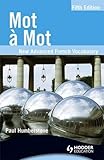
This is my review of Mot a Mot Fifth Edition: New Advanced French Vocabulary by Paul Humberstone.

Although I believe this is designed for AS level students, with more advanced vocabulary for A2 shown in bold, it is also useful for adult students with a grasp of the basics, who want to have at their fingertips the turns of phrase needed in conversation or written exercises.

I like the way the material is themed: phrases to enrich conversation, e.g. "A mon avis" or "Je ne suis pas d'accord"; some common synonyms and easily confused "false friends" like "versatile" in French which means "volatile" in English; aspects of everyday life, even into such details as emotional life, sun worshipping, eating disorders and tobacco addiction;topics of conversation such as many aspects of the workplace, politics, the tabloid press, celebrity, the environment – it's hard to think of a neglected aspect.

Since this is not a dictionary, it may be hard to locate a particular word, or check if it is even listed, so I see this as a book to browse, say when waiting for a bus, or to consult before embarking on a conversation or essay on a specific topic.

If you had mastery of all the entries, your French would be quite impressive. It is true that it can be hard to learn from lists of phrases. To get more than the general benefit of reading the entries several times, you probably need a learning strategy: for instance, to stimulate one's brain, suggest the French for an English phrase before looking at the version given. Another approach is to practise using each phrase in a specific example.

On a "little and often" basis, I hope this handy reference book will make a noticeable difference to my French over the next few months.

⭐⭐⭐⭐⭐ 5 Stars

A Broad Approach to Independent Learning

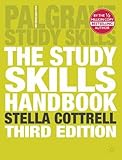
This is my review of The Study Skills Handbook (Palgrave Study Skills) by Stella Cottrell.

This very accessible and attractively presented book must be based on a good deal of experience and thought as to how to make a subject which many find dry, or tend to underestimate, as clear and interesting as possible for a wide range of students or adults interested in studying for themselves.

It goes beyond the usual topics of structuring a report or presenting statistics to the broader issues of time management, understanding one's own learning style, working with others, analysing and planning ahead, online learning and generally working with effective independence. The specific focus is on preparing for university, but it is clear that all the skills covered will be equally useful in work, preparing presentations, reports and for meetings etcetera, and also to marshall the skills to move on to management.

You may find some of the little cartoons a little silly and arguably a waste of space but they may help cement a few points, and there is still plenty of useful information

This is the kind of book you are likely to retain after graduation as a future prompt to good practice.

⭐⭐⭐⭐⭐ 5 Stars

Missing the Beat

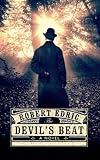
This is my review of The Devil’s Beat by Robert Edric.

Since "In Zodiac Light" caught my imagination, I have persevered in attempting Robert Edric's novels, which have also appeared on the shortlists (or longlists) of several literary prizes.

Set in 1910, this story describes a public investigation into claims that a group of teenage girls have been possessed by the devil. Clearly, this echoes the Salem Witch Trials, but compared to the fireworks and high drama of Miller's "The Crucible", it is a damp squib.

A few scenes are quite dynamic, as when the investigator Merrit and Doctor Nash (perhaps the liveliest character) are pursued by journalists on their way to view some graffiti related to the case, but most of the chapters make turgid reading, with very stylised, unnatural exchanges.

Chapter 6 begins, "The opening of the inquiry proved to be the disappointment Merrit always knew it would be." And so this proves to be the case for us as well. But why tell us this and then prove it with a laboured description? There was no hint beforehand that Merrit expected to be disappointed. Wouldn't it have been more dramatic if this had come as a surprise?

Although earlier books like "In Zodiac Light" or "Gathering the Waters" contain passages of striking, finely observed prose, I could not find many further examples here. The characters are developed as distinct personalities but one is told too often what to think about them, as opposed to deducing this for oneself. Individuals are portrayed as weak, domineering, clever, stupid, devious as the case may be, without much opportunity for the reader to sense any nuances in behaviour, or to note any changes over time.

They also all talk in the same highly articulate fashion. Since the setting is an imaginary Nottinghamshire town, I would expect the local characters to have more of a regional turn of phrase.

As in previous books, Edric creates a sense of anticipation, but the plot fails to deliver much action or insight. Unlike other reviewers, I found the ending quite subtle and effective, but the business of getting there required too great an effort. There is too much plodding detail to engage one's interest.

I had to suspend disbelief over the clumsy operation of the inquiry, with Merrit asking leading questions and getting wrong-footed like a novice. The way the other panel members were allowed to interrupt and pontificate made the whole process into an elaborate word game rather than a realistic inquiry.

Other reviewers have spoken of the background of interesting social change, but this did not seem to me to have been developed much.

Edric comes across as a deeply committed writer but for me, this novel lacks the vital spark, deep purpose, quicksilver wit , power to move or original idea, any one of which would set it apart as a good novel. Yet, on reflection, there is the framework for a gripping story, calling for a lighter touch, more ambiguity on the way rather than at the end, and scope for the reader to speculate, to be misled, and then be drawn, along with some of the main characters, to reassess the situation, rather than have prejudices confirmed.

I would recommend instead his previous "A London Satryr" as being more original and better plotted.

⭐⭐⭐ 3 Stars

Seeing Blindly

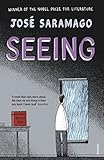
This is my review of Seeing by Jose Saramago.

Translated from the Portuguese, "Seeing" by the Nobel prize winner Saramago was published in 2004 as a sequel to "Blindness" which came out nine years previously.

"Seeing" can be read as a "standalone" although the final section makes more sense and has more poignancy if you have read "Blindness" which describes the rapid social breakdown after a nameless city is struck down by an epidemic of blindness in which everything appears white.

Whereas "Blindness" contains passages of almost unbearable but plausible violence and degradation, "Seeing" seems quite mild at first, more of a political satire. After a city election in which 83% of the votes casts are blank (parallel with white blindness?), the Government is uncertain how to respond to this apparent act of mass subversion, and takes a number of crass measures in which democracy and freedom are steadily crushed. Beneath the figurehead of a benign President, the Prime Minister assumes ever more roles as a sinister intelligence service exerts control in the background. The irony which seems to escape their leaders is that, far from breaking out into crime and disorder as predicted, people seem to behave much better when left to their own devices without being governed. Also, if they really start trying to organise themselves against the state, it is because they have been driven to it.

In a country like Portugal which experienced recent dictatorship, Saramago's vision seems very apposite, and his tendency to write in allegories is understandable. What is more, in view of recent unsettling events, growth of international monopolies and centralisation, endless proof of corruption and concealment, our growing disillusion with traditional parties and politicians, Saramago's parody seems very relevant.

The facetious style of "Seeing", so that at one point the author implies he is wondering how to finish the novel, makes the occasional acts of brutality all the more chilling, and because you know that Saramago is capable of utter ruthlessness, the anticipation of violence and tension can be quite high. Yet the novel is often very funny, such as the dialogue in which the interior minister, insisting on the code-name albatross inflicts bird names on his unfortunate superintendent (puffin) and all the other parties mentioned. This is all the more ironical since Saramoga never describes any of his characters by name.

This brings me on to the style, which was quite effective in "Blindness" by creating a flow of words to carry you through the horror, but which in "Seeing" can be quite confusing. I refer to the lack of paragraphs, to the exhausting multiple-clause sentences, and the suspension of normal punctuation of speech with inverted commas and a new line for each speaker.

"Seeing" has much more dialogue than "Blindness" and some sharp, amusing , play-like exchanges were marred for me by the problem of working out who is speaking. Even when I attempted to do this, I still wasn't always sure, and the rhythm of reading was destroyed in the process. It's also hard to refer back to a point in the dense mass of text without any "landmark" line breaks.

Whereas "Blindness" left me feeling upbeat – perhaps that the ending was "too happy" – "Seeing" had a more depressing aftertaste. Another of Saramoga's ironies. Despite the effort required to read him and the numerous often tedious digressions, Saramago's books are thought-provoking and last in one's memory.

⭐⭐⭐⭐ 4 Stars

A Jolly Hunter with a Mixed Bag of Grouse

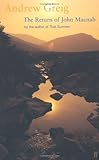
This is my review of The Return of John Macnab by Andrew Greig.

This modern update of John Buchan's 1920s classic recounts the attempt of three men who have become jaded with life to spice it up with a wager to poach game "by fair means" and return it to three large Scottish estates, including Balmoral: the loser in each case will pay a donation to charity and cast a vote for "the political party of the winner's choice". You need to suppress the question of why on earth any estate owner should honour a one-sided wager imposed on him. Also, apart from a desire to expose the shortcomings of the laws on access to the Highlands, aren't there a host of more worthwhile challenges to achieve?

The plot is quite intriguing, with an unpredictable yet satisfying ending, and the author conveys his deep knowledge and love of the Scottish Highlands, where the blue hills resemble hump-backed whales.

Greig becomes at times the all-knowing narrator, observing that a scene may not have occurred quite as described, or that a certain character who is mentioned in passing will never appear, and that the young daughter of one of the men will remember in seventy years' time the nostalgic pleasure of listening to the adults plotting how to escape from the gillies with the poached game. This writing ploy only served to distance me from the drama.

The word "nostalgia" is key, along with "sentimentality" and "escapism", which may be the book's appeal for many readers, but I felt with growing unease that I was reading a mixture of "The Famous Five Never Grow Up and Go to Scotland" and a male take on a "Mills and Boon" romance, in which the female love interest is a jolly tomboy who holds her drink but can act the femme fatale when required, with something deeper and finer underlying all this. This plucky heroine Kirsty, whom I sensed I was meant to love, irritated me continually, such as when she kept calling herself "a silly old tart" and, when she should have been totally incapacitated by drink, leaping up to perform old pop songs uninvited to an apparently enraptured pub audience and guess what, her maybe love interest, the reserved and moody Neil can spring into a vaudeville act at the drop of a hat too!

The conversations between the female characters struck me as particularly unnatural and cringe-making plus many small points grated, such as the unlikely fact that dishy, middle-class dark horse Neil is godfather to dyed-in-the-wool left-wing agitator Murray's daugher Eve. This seemed to me to reveal the author's unconscious assumption of conventional, "establishment" values which the book purports to flout – I'm taking this too seriously, I know.

The suspense depends a good deal on revealing only slowly, or not until the last minute, what is afoot, but the resultant short, fragmented scenes cutting between various characters make the narrative tedious when it is unclear what is going on for pages on end.

Eventually, in the middle of a bitty account of an attempt to capture some grouse, I lost patience and skimmed to the end to be able to discuss the novel at a book group.

⭐⭐ 2 Stars

“Maigret et le corps sans tête”: Another World from “Engrenages”


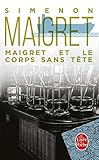
This is my review of Maigret Et Le Corps Sans Tete (Ldp Simenon) by Georges Simenon.

The propeller of an overladen canal barge catches up a package containing the severed hairy arm of a man, a novelty since it is usually women who are cut up and thrown in the Seine. The rest of the corpse is brought to the surface by a wonderfully named “schaphandrier” or diver, apart from the head which would reveal the victim’s identity.

After a diet of frenetic modern detective thrillers which seek to set an ever-moving goalpost for ingenious , often extreme, violence, no holds barred sex and ever more cynical and amoral detectives, it makes a pleasant change to be reminded of the slow-paced world of le commissaire Maigret, in which police practice and the painstaking collection of evidence in a DNA-free world are described meticulously. There is always time for a glass or two of wine or spirits, and he always remembers to phone his wife if he is likely to be too late home to eat the cassoulet she has prepared.

Although the plots may be slight and lacking in high drama or dramatic chases, Maigret thinks himself into the psyche of suspected victims and murderers, trying to understand the motivations behind a crime. If someone tells him the answer, he feels rather peeved, but convinced he could have worked it out for himself.

I also like the description of the atmosphere of the police station and the politics of the workplace – the over-cautious “juge d’instruction” who puts pressure on Maigret to make arrests before he is ready. He would prefer to leave the suspects to stew a little, worrying over whether they will be caught and more likely to make slips and give themselves away.

To add to the unexpected subtlety of the writing , there is the atmosphere of 1950s Paris – the dusty bistro with its canvas sunshade and influx of customers when the factory shift ends, the butcher who will look after a suspect’s cat provided it doesn’t fight with his own, the shrewish concierge who rushes to the defence of the neat widower who cannot possibly be a murderer , the bartenders keen to close up after selling liqueur brandies into the small hours, the ramble along the banks of the Seine in a vain attempt to walk of the effects of too much alcohol.

Although I found the ending a little flat and abrupt, the slow path towards it engrossed me completely, plus I learned a good deal of clear, well-expressed, verlan-free French.

⭐⭐⭐⭐ 4 Stars

Beyond Adlestrop

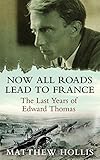
This is my review of Now All Roads Lead to France: The Last Years of Edward Thomas by Matthew Hollis.

I read this as much to find out about a period, in this case the development of the “New Poetry” of the early C20, as about the poet in question, in this case Edward Thomas. However, this biography requires a strong interest in Thomas and familiarity with his work.

A poet himself, the author is good on showing you Thomas composed, striking out lines and on occasion suffering from “poet’s block”.

I was interested to see how the now famous poets of the day formed a kind of community of fellowship, rather than work in isolation.

The friendship with Robert Frost which helped move Thomas from a prose writer to a poet caught my attention. Even more so, I was intrigued by the depressive personality which Thomas himself felt might be a necessary condition for his work, raising the question of whether he could have been so creative in a modern age where drugs are so widely prescribed as a solution.

The author is very honest in showing how the generally gentle and sensitive Thomas was often driven to thoughts of suicide, cruel words and neglectful treatment of his patient wife Helen: one can understand his pent up frustration over having been trapped in marriage after getting her pregnant while still an undergraduate, missing out in the process on the expected First in History which would have given him an academic career and the financial security to look after his three children with the freedom to write creatively without worrying about having enough money.

Although I wanted to admire this book, it did not engage me as it should have done. I think this was because of the rather disjointed structure, and the tendency to cram too many disparate famous names and unassociated facts into a passage.

However, I think that lovers of Thomas will enjoy it and it has certainly left me with the intention of reading more of his poetry.

⭐⭐⭐⭐ 4 Stars

The price of truth

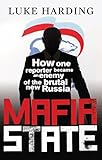
This is my review of Mafia State: How One Reporter Became an Enemy of the Brutal New Russia by Luke Harding.

After mastering Russian with impressive speed, Luke Harding spent about four years based in Moscow as a foreign correspondent for "The Guardian". Making the most of opportunities to travel which he clearly found fascinating, Harding was more energetic and courageous than many of his colleagues, in reporting on the growth of corruption and undemocratic "vertical power" under Putin, crushing the opportunities opened up by Gorbachev's "perestroika". He describes unflinchingly how former KGB agents (siloviki) have gained key positions in the Kremlin, with the recently formed FSB (Federal Security Service) as insidious as the KGB and if anything even more of a law unto itself.

Regular readers of the "quality press" will already know how journalists like Anna Politkovskaya have been shot in broad daylight for investigating and writing about the truth, how Litvinenko was poisoned in London by Russians who brought polonium into the UK to put in his tea, and how the "oligarchs" who made vast fortunes out of Russian privatisation are now salting away their wealth in places like London. Harding builds on all this to explain how Russia is hardening back into an authoritarian state in which senior politicians enrich themselves, links with international organised crime grow, freedom of speech is crushed and the gaps between rich and poor widen.

Harding's outspoken stance attracted adverse attention from the FSB from the outset. He repeatedly found evidence of his flat being entered – not to steal anything, but leaving a window open next to his son's bed in a high rise flat, tampering with a computer screen, even following the old trick of placing a sex manual beside his own bed – weird signals to unnerve him and his family. Eventually, he was told he would have to leave because of some irregularity in his paperwork, a convenient and overused charge, and he was refused entry, his visa stamped "annulled" on a return flight to Moscow. Perhaps Harding's cardinal sin in the eyes of Putin and his henchmen was the journalist's inevitable association with the US embassy cables critical of Russia published as "Wikileaks" in "The Guardian".

"Mafia state" is written with the air of breathless haste of an article written to meet a deadline, but, as a book, requires more careful editing. Passages often seem disjointed, and although the chapters are themed, they tend to dodge back and forth in time rather confusingly, with continual use of the present tense for past events an added distraction. Harding's courage may include a touch of foolhardiness, and his apparent surprise at being thrown out of the country appears a little naive.

In the interests of balance, he could have shown a greater understanding of the fear, ignorance, insecurity or conditioning which may explain the lack of democracy and suppression of freedom in the Former Soviet Union. Also, perhaps we are not quite as politically and even morally superior as we like to assume.

I would have liked a bit less on Harding's family members (details no doubt included to bring home the reality of the harassment they suffered in Russia) and more on the background to some of the issues covered, in particular the political upheavals in the various outlying republics. A few more maps would have been invaluable. In fact, I found some good ones on Google images which increased my grasp of the geopolitics a good deal.

Overall, this is an important record of some alarming trends of which we need to be aware, even as our leaders are in the invidious position of turning a blind eye because of the perceived need to work with Russia on the world stage, and Harding has done us a service in putting himself on the line to expose the truth. I also have him to thank for introducing me to the wonderful "Peredvizhniki" painters who captured the beauty of C19 rural Russia.

⭐⭐⭐⭐ 4 Stars