Filmic Marmite

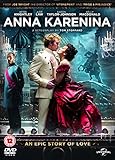
This is my review of Anna Karenina [DVD].

Since it is impossible to do justice in a two hour film to such a celebrated classic, with its focus on inner thoughts, it is probably a good decision to try a different take, in this case the ploy of setting most of the scenes in a theatre, not just on the stage but in the wings, the walk-ways above the podium, the stalls and so on.

So, the audience is watching a film of a play of a book. This has the benefit of conveying a sense of the restrictions and conventions which may have driven Anna to "break out" and give expression to her love for Vronsky, but which also made it impossible for her to be accepted by society afterwards. On the other hand, the theatrical confines may make some scenes seem too stylised, artificial and therefore less moving e.g. the whispered gossip and disapproval of Anna's affair. I was also often unconvinced by the frequent technique of freezing minor characters into the pose of statues, to highlight say, the image of Anna and Vronsky falling in love as they dance together in a world of their own.

I was glad not to need subtitles, since many scenes are quite visually complex, requiring close attention to pick up all the fleeting impressions used to convey a good deal. Tom Stoppard's script is very effective, clear and unpretentious. I could hear every word, which is often not the case. There are some striking scenes such as a horse race in the theatre in which an audience becomes a crowd of real people, only to be replaced by characters painted on a stage backdrop.

All the actors perform well. Jude Law is at last acting the wronged husband rather than the lover, and paints a sympathetic portrait of the industrious, upright bureaucrat, who tries to suppress his emotions and follow the rules, gives way to understandable hatred and vengeance, but who shows a good deal of decency and compassion in the end.

I have heard some criticism of the casting of Vronsky, but was surprised to find that it worked with Aaron Taylor-Johnson convincing as a striking young man with whom Anna might become infatuated physically.

Anna's predicament did not move me as it should have done, apart from her grief over being separated from her son. It must be a weakness in the film that I ended up feeling more sympathetic towards Karenin and even Vronsky than I did for Anna who often seems spoilt, capricious and ultimately deranged. I agree that a sense of injustice over the harsher treatment meted out to her as a "fallen woman" is enough to drive anyone off the rails. Beautifully dressed to the bitter end, she contrasts with the youthful Kitty, who settles for a life of rural bliss with Levin, the aristocratic landowner who chooses to work alongside the freed serfs and shelter his sick revolutionary brother – i.e. lead a practical life with some real worth.

Although I sympathise with those who may find the director Joe Wright's approach too contrived, this film held my interest, and gives scope for a good deal of discussion.

⭐⭐⭐⭐ 4 Stars

Shades of Ruritania

This is my review of The Scapegoat [DVD].

I read Daphne Du Maurier's "The Scapegoat" too long ago to recall how true this new TV drama/DVD is to the original. It is an entertaining psychological not-quite thriller, if you can accept the implausibility of two identical but apparently unrelated men meeting by chance, and one deciding to foist his identity on the other.

John, the Welshman without family ties who has just lost his teaching post finds that, in becoming Johnny he has gained a palatial family home, an army of respectful servants, an adoring wife and cute daughter. However, it soon becomes apparent that he is a scapegoat, since he has also been lumbered with a family business in crisis, and somehow managed to estrange both his sister and brother. Then there is the ultra-efficient and possibly sinister servant, always dressed in black, a younger version of Mrs Danvers lurking in the background.

Much of the initial entertainment lies in seeing how on earth John will manage to gain acceptance from close relatives and friends who ought to know him too well to be fooled, especially since he does not know the way to his mother's bedroom, is unclear how to distribute the presents he seems to have brought, and never knows which of the women he meets will be one of Johnny's lovers.

Although they may look so alike, the two men have very different personalities and values. So, the drama begins to focus on how John will act as he begins to learn more about the business and the individual family members.

A lightweight story on the surface proves to have hidden depths, assisted by a strong cast and careful reconstruction of life in the early 1950s, down to the novelty of the first television set.

⭐⭐⭐⭐⭐ 5 Stars

“Lawyers, I suppose, were children once”

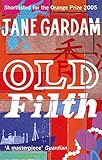
This is my review of Old Filth by Jane Gardam.

The misleading title "Old Filth" refers to the nickname derived from international lawyer Edward Feathers' joke on himself: "Failed In London Try Hong Kong". The book begins with him in old age knocked off course by the sudden death of his wife Betty. The chapters, each of which is often a short story in its own right, then shift back and forth in time from the death of Filth's mother giving birth to him in Malaya, leaving his father, still traumatised from the First World War, unable to give him any love. Imaginative, original, often very funny, the underlying sad theme of this story is how the "Raj orphans", shipped back to England "for their health" were often neglected, even abused, and left unable to form sound emotional relationships.

From the first page, you feel in the hands of a very skilful writer, confident in her ability to write on a theme which may at first seem unappealing. However, I was actively hooked from the point at which Filth discovers that his worst enemy in the legal world has come to live next door to him. Some of the humour arises from whole scenes, such as Filth's hair-raising drive across England to meet a cousin – more of an expedition for him than finding his "way round the back streets of Hong Kong and the New Territories". At other times it is more subtle, arising in dialogues and little asides. Gardam is adept at letting the true, often colourful or moving aspects of Filth's supposedly dull life slip out gradually, but you have to concentrate hard not to miss something. A dark undisclosed secret haunts the book with the anticipation of some final climactic revelation, from which the fact you can guess it long beforehand does not detract unduly.

To nitpick over mild criticisms, there is a slight inconsistency in the style in that some chapters are pure farce, and therefore entertaining rather than moving, whereas others are a seamless blend of comedy and poignancy. I found the "Albert Ross" character very unconvincing, and the details in the last part of the book seem rather rushed compared to the beginning.

Yet, overall, it is well-constructed, a bold attempt by a sensitive female writer to enter into the mindset of an emotionally repressed, highly logical but unimaginative man, resulting in an unusual and original read. I shall look out for more of Jane Gardam's work, starting with "The Man in the Wooden Hat" which tells the story of Betty's life. This sequel may also explain some of the gaps in "Old Filth".

⭐⭐⭐⭐ 4 Stars

No Exit?

This is my review of Shadow Dancer [DVD] [2012].

Probably still traumatised by guilt over her part in a tragedy which occurred in her childhood, Colette takes part in terrorist activities as a member of a family with hardline IRA sympathies. When she falls into the hands of British agents, Colette is vulnerable to pressure to become an informer, because of her concern to maintain her relationship with her son.

Set mainly in the 1990s, this tense, complex thriller is visually very effective, creating a strong sense of the close-knit, claustrophobic community from which it is hard for people to break free. We see how John Major's moves to make peace had little appeal to those for whom dissidence has become a way of life.

I did not mind the slow pace of the film and would have found it compelling, despite a few too many twists to be entirely plausible, if certain key events and the identities of some of the characters had been made a little clearer, and if I had been able to hear what the actors were saying. It was not just a question of Irish accents, since Clive Owen and most of his colleagues also mumbled, often incomprehensibly. Only Owen's boss, Gillian Anderson with a posh English accent uttered every word with crystal clarity.

Since Andrea Riseborough in particular puts in a fine sensitive performance as Colette, a woman trapped by circumstance, it is a pity the director did not pay more attention to the vital issue of audibility. If you see this film, make sure it is as a DVD with sub-titles.

⭐⭐⭐ 3 Stars

All things pass

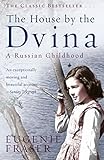
This is my review of The House by the Dvina: A Russian Childhood by Eugenie Fraser.

Her memories of distant childhood perhaps sharpened with age, Eugenie Fraser became an admired author at the age of 80 with a fascinating account of early life as the daughter of a Russian father and Scottish mother, living mainly in Archangel near the Arctic Circle and "midnight sun", in the final years of the Tsar's Empire and the chaos of the Russian Revolution.

Some of her best anecdotes were related to her by relatives, such as her grandmother's courageous journey across frozen wastes, braving frostbite and wolves, despite being eight months' pregnant to beg for clemency from the Tsar to release her husband from prison. At first, it irked me that the author never seemed to question the Tsar's right to exert such power, nor the comfort and luxury in which her family lived. However, having built up strong images of an idyllic childhood, her descriptions of the stupid bureaucracy, incompetence, and gross injustice perpetrated after the Revolution greatly increased my sympathy for her viewpoint. I was impressed by her bitter analysis of the Allied Intervention during World War 1, which only supported the White Army temporarily because it was anti-German, since "in reality the Allies did not care what government took over Russia". As her step-uncle bitterly commented, "Why did they come at all? We shall pay a heavy price for this."

In the middle of the book, I began to find the introduction of an endless succession of Russian relatives too much to take. I grew bored by her preoccupation with trivial matters while "glossing over" important issues such as her parents' relationship. Yet I am glad that I persevered because of the poignant and thought-provoking, not to say exciting, final chapters. She shows not only the intensity of the will and ingenuity to survive, abut also how the strongest spirit may break under intense hardship.

I am sure that many readers will enjoy without criticism the evocation of a lost past, with the exhilaration of the sleigh ride across the frozen Dvina, the camaraderie of the communal baths where even the wealthy went to wash, the observance of rituals and the colourful characters in a large extended family.

Throughout the tale there are continual comparisons between northern Russia and Dundee in Scotland, where Eugenie was fortunate enough to be able to take refuge.

⭐⭐⭐⭐⭐ 5 Stars

Practising to Deceive

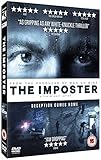
This is my review of The Imposter [DVD].

Thirteen-year-old Nicholas disappears in rural Texas and turns up just over three years later in Spain. His sister flies over and accepts him readily. But the audience is told from the outset that he is in fact a twenty-three-year-old imposter. How does he manage to fool her, and convince us that the situation is plausible? Why would the sister allow herself to be duped? Where is the real Nicholas?

This documentary mixes current interviews, past TV and home movie clips and reconstructions to weave an intriguing tale in which information is dribbled out cleverly to arouse our interest and shift our viewpoints continually.

The filming is often blurred through the use of old film footage, or the desire to make the reconstructions more convincing. At a few points the picture broke up to such a degree or the screen went black so that I thought our dodgy local film projection had failed again. Apart from this questionable attempt to add to the sense of confusion, "The Imposter" is an effective film with an unusual approach to the tragedy of the children who disappear and the long-term effects on their families.

⭐⭐⭐⭐ 4 Stars

“Pure”: No master but reason?

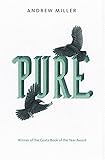
This is my review of Pure by Andrew Miller.

This unusual and imaginative take on the France of 1785, with unrest brewing in the streets of Paris and mines of the north, introduces us to Jean-Baptiste Baratte, the insecure young engineer from the provinces who is given the unwanted task he cannot refuse – the removal of the ancient cemetery of les Innocents, which is polluting the air and soil, threatening the cellars of the surrounding houses. It is not just a question of making the air “pure” but also on another level of relieving France of the corruption of the monarchy and the dead hand of the church, as indicated by one of Miller’s well-chosen quotations: “The time will come when the sun will shine only on free men who have no master but their reason”. We know, of course, that the imminent French Revolution will be flawed by the atrocities of men like Robespierre, just as we can appreciate our foreknowledge of the fate of the kindly Doctor Guillotin who assists Baratte.

The detailed account of the macabre operation of clearing bones rotting metres deep is saved from becoming too oppressive by Miller’s ability to create vivid pictures of the life of the Paris streets, combined with a cast of colourful characters, not to mention the slightly sinister cat Ragout, equally at home in a charnel house as on a lady’s lap.

Although some readers may be troubled by odd events which may be hard to explain, at least they provide scope for discussion. This is quite a dark read at times, with unsettling whiffs of necrophilia, yet also soft-centred, as in the portrayal of the perhaps too good to be true, refined tart Heloise. I found a good deal of wry humour in the book, such as the earnest and upright Jean-Baptiste allowing himself to get caught up in a drunken escapade to paint political slogans on city walls, calling himself “Beche”, but keeping shtum and feeling vaguely proud when the name “Beche” continues to appear for months afterwards.

Sometimes I felt Miller is playing to the gallery to boost book sales, but overall this is skilfully plotted, very well-written with many striking images, and some interesting points raised for you to mull over as regards say, how we may be corrupted by unpleasant tasks, how we may sell our souls, humiliate ourselves or others in the pursuit of ambition, and so on.

⭐⭐⭐⭐⭐ 5 Stars

The cost of knowing best

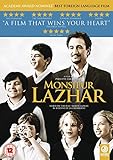
This is my review of Monsieur Lazhar [DVD] [2011].

In this well-acted and subtle French Canadian drama a school head, desperate to find a replacement quickly for the teacher who has tragically hanged herself, hires the courteous but persistent Bachir Lazhar, without asking too many questions about his past.

Despite his rather traditional teaching methods, and the fact that his pupils are traumatised by the death of their form teacher, not least because it was one of them who first saw the body and raised the alarm, Lazhar succeeds in establishing a rapport with his class. Although he is a quiet and reserved man on the surface, we come to realise that Lazhar has a kind of honesty which drives him to question authority, be it in the regime of his former homeland or in the school. In this case, he is unable to accept the decision not to discuss the suicide with his pupils, whatever the cost to himself of not "towing the line". Does he compound his problems through an unconscious arrogance? Or is it just that he is accustomed to a system where teachers are respected and allowed to speak frankly to parents?

This film explores human relationships in a moving and realistic way. For instance, we see how a bright child suffers because her well-intentioned single mother is too busy pursuing her career to pay her daughter enough attention, or how a lonely young teacher's advances towards Lazhar are rebuffed and she retreats, embarrassed but still not knowing that he is a widower still grieving for his wife.

An entertaining film with a serious and thought-provoking heart, which stays in your mind for some time afterwards.

⭐⭐⭐⭐⭐ 5 Stars

From Dust to Dust

This is my review of Nostalgia for the Light [DVD] [2010] [Region 1] [US Import] [NTSC].

This patchily brilliant documentary is packed with striking images of the Atacama desert, where ancient rock carvings and bodies of native Indians, C19 miners and more recent victims of state brutality are preserved by the intensely arid climate, which also enables distant stars to be viewed in great profusion with unusual clarity. Using a poetic voice-over, the film attempts to draw parallels between the astronomers' search for knowledge of our galactic past, using high-tech telescopes installed in the desert, archaeologists investigating a more recent history amongst the rocks, and the current harrowing search by a small number of ageing women still searching for the remains of their loved ones who disappeared in the 1970s.

I tend to agree with an earlier reviewer who felt that the attempt to link astronomy with political repression does not entirely work, although I think that it could. To use the study of the stars to remind us that the dust from which we come and will return is very old and possibly extraterrestrial in origin is one way of helping us come to terms with terrible events and move on. The power and pathos of the film would have been increased for me by less use of repeated shots of simulated stardust, firm editing of interviews, such as the rather tedious exchanges with scientists gamely trying to respond to the arty questions posed, and omission of some rather lengthy contrived or staged shots. I think the film was meant to have a dreamlike quality, but at times I found it too slow. The tone of the voice-over tends at times to be a little too mawkish, but that is a matter of taste. Also, perhaps too many points are spelt out as to what we should be thinking, when we are well able to form conclusions for ourselves.

It is clearly important that the atrocities of Pinochet's regime should not be forgotten, not least in the UK where our Government gave sanctuary to a man guilty of dreadful crimes. The unusual environment of the Atacama provides an opportunity to tell the story in the distinctive way chosen here.

⭐⭐⭐⭐ 4 Stars

Crossing the line

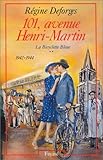
This is my review of La Bicyclette Bleue (Le Livre de Poche) by Regine Deforges.

The first in what I believe to have become a saga of ten novels, it is easy to see the initial resemblance to "Gone with the Wind". In Lea, daughter of a wealthy vineyard owner, we have a spoilt, sexually alluring young woman who is set on the one man she cannot have, Laurent, the pale and frankly not very interesting neighbour who insists on honouring his longterm commitment to marry his frail, and to Lea pathetic, cousin Camille.

Any similarities to Margaret Mitchell's famous work do not matter, since we have the different location of France on the brink of World War 2 with all its potential for drama – initial complacency followed by the horrors of bombing, the shame of occupation, temptation to collaborate and the dangers of taking part in the resistance. Yes, this story is riddled with implausible coincidences, and could be a candidate for a bad sex award, but it's excellent for testing and extending one's knowledge of French – full of idioms and useful vocabulary, with a good pace and clear development of a variety of complex, flawed characters to provide continuous interest. There are some genuinely moving and shocking moments, as well as humour. I have also learned more about, for instance, the differences between the occupied and "free" zones established by the Germans working with Pétain, and realised how families were often split over the issue of giving support to either Pétain or De Gaulle.

It may not be great literature, I might feel a bit sheepish about spending time on it if I were French, but recommend it as an enjoyable way of improving one's French from a base of A Level.

⭐⭐⭐⭐ 4 Stars