But still the heart doth need a language

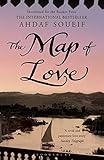
This is my review of The Map of Love by Ahdaf Soueif.

Lonely and at a loose end after her return to Cairo, Amal assists the thirty-something American Isabel Parkman to translate some of the papers left by her great-grandmother Lady Anna Winterbourne who married an Egyptian nationalist a century before at a time of great political unrest when Egypt was still "under the yoke" of the British Empire. Fascinated by Anna, Amal begins to reconstruct her story, although it is often hard to know where fantasy ends and real scenes from the past begin. To a lesser extent, she applies the same approach to Isabel's meetings with Amal's suave elder brother with whom she is becoming infatuated.

The prospect of gaining a perspective on Egyptian history and politics seen through the eyes of an Egyptian woman, the author Ahdaf Soueif, is what drew me to this book, although I agree that the combination of somewhat soft-centred romance with serious historical and political comment may cause it to fall between two stools. The theme of examining love affairs between different cultures across generations against a complex political background is very ambitious, and perhaps the price paid is that the reader's attention is stretched over too many people, rather than engaged with a few fully developed central characters.

The author's style may be typically middle eastern and therefore all part of the experience to be gained, but I found my growing impatience with it a real barrier to reading the book. Despite my strong desire to like this novel, I felt smothered by its embroidered wordiness, the often banal dialogues and overdetailed descriptions as a substitute for dramatic action, the convoluted structure clanking back and forth in time. At one point Soueif goes off at a tangent on the nature of colour and the impossibility of defining the point at which, say, blue becomes green. Why not simply express this fascinating idea in a few pithy words on the lines of, "How strange that one cannot see exactly when blue turns into green"?

This is, as a reviewer described another of her books, an acquired taste. If you enjoy long, slow, rambling, gentle even in the midst of violence, reflective family sagas with frequent little digressions this may well appeal. Also, apart from its length, this could be a good choice for a book group as it provides scope for discussion of both plot and style, and is likely to divide opinion.

⭐⭐⭐ 3 Stars

Challenging the Extrovert Ideal

This is my review of Quiet: The power of introverts in a world that can’t stop talking by Susan Cain.

"Quiet" will strike a chord if, in an attempt to secure a job, you have ever claimed in a personality test to prefer going to a party to reading a good book, only to find that you still come out with an introvert's score.

Susan Cain makes an interesting comparison between the "Culture of Character", which valued those who were serious, disciplined, modest and honourable (think of a Jane Austen hero) and the "Culture of Personality" with its emphasis on impressing people and influencing them which developed Dale Carnegie style in C20 America to feed an economy based on mass production and sales. The latter obviously tended to encourage "charismatic leadership" and the desirability of employing extroverts. Cain produces a vivid description of Harvard Business School, where the young men "stride, full of forward momentum" and the women "parade like fashion models, except they are social and beaming". "Good luck finding an introvert round here," they quip.

Yet, there is growing evidence of how assertive people who are allowed to take decisions, often on the basis of inadequate knowledge, just because they sound confident, frequently make serious errors which they would have avoided if only they had listened to an introvert. The unwise investments made in the recent financial collapse, and the decision to fight the Iraq War come to mind. By contrast, introverts may make surprisingly effective leaders in organisations where there is a need to be receptive to the ideas of staff undertaking complex tasks.

Cain discusses how introverts may need to "act extrovert" to achieve their ends but also urges them to claim the acceptance to be themselves, not criticised for "working slowly and deliberately", liking to concentrate on one task at a time, and being "relatively immune to the lure of wealth and fame", often called "reward orientation". In a perhaps rather utopian section, she suggests how education could be adapted to meet the needs of introverts e.g. not so often forced to work in large noisy groups with continuous interaction.

I particularly enjoyed the introduction, which provides the gist of the book as is often the case, and the wonderfully entertaining Chapter 2 featuring the "hyperthymic…extroversion-on-steroids" guru Tony Robbins as he sets out to "unleash the power within" at a minimum of $895 a head. This book often seems to be more a dissection of American culture than about introversion.

Although I was initially very impressed with "Quiet", I soon found that the anecdotes seem rather long-winded and corny, the scientific theories a little oversimplified and some of the examples given of introversion appear subjective and open to question. To be fair, this is probably the reaction of an introverted Brit to a relatively over-chatty, populist American approach.I began to skim through, looking for the key observations which could in fact be summarised in a single colour supplement article. Yet, if Cain succeeds in stimulating more people to read about psychology, and induces a few extroverts to think more positively – even gain a little more awareness – about introversion, this book will have achieved a good deal.

⭐⭐⭐⭐ 4 Stars

A Modern Rival to Maupassant

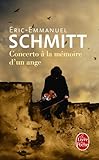
This is my review of Concerto a la memoire d’un ange by Eric-Emmanuel Schmitt.

His ingenious plots on a wide variety of original themes, each ending with an unpredictable twist combine with his uncluttered prose to make the French-Belgian Eric-Emmanuel Schmitt's short stories gripping and memorable. His success as a dramatist assist him in creating tight structures and dramatic scenes with realistic dialogues.

For me, "The Poisoner" (L'Empoisonneuse) is a near perfect short story in its structure and style. Marie Maurestier, acquitted of the murder of three husbands and a young lover, is the object of speculation and some fear in the local community. The local butcher beckons her to the front of the queue to get her out of his shop as fast as possible. She arouses neither sympathy nor affection because of her sharp tongue, but is also valued as a local tourist attraction. Then, Gabriel, a handsome and dedicated young priest comes to take charge of the church, with dramatic results. Schmitt cleverly manipulates our changing attitudes to Marie and Gabriel. Examining motives and moral issues from every angle in his fluid prose, he builds up a sense of tension and compulsion to read quickly to the end to learn the outcome.

In the shortest tale, a tough seaman receives a message to the effect that one of his daughters has died – but which one is it? In a prize-winning novella which gives the book its title, an ambitious young pianist is driven almost mad with jealousy over the superior technique of an impossibly virtuous and unworldly violinist. In some ways this story is too contrived but still absorbing. Finally, we see the effects of a woman's decision to tolerate no longer the philandering of her corrupt husband who just happens to be the President of France. This last story seems most influenced by Schmitt's embracing of Catholicism in later life. Yet, although all the stories perhaps inevitably have a strong moral basis, he never preaches, and is often unflinching in subjecting his characters to fate, yet is essentially positive.

⭐⭐⭐⭐⭐ 5 Stars

Lo Levin leaping

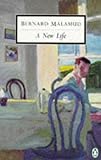
This is my review of A New Life (Penguin Twentieth Century Classics) by Bernard Malamud.

I owe my discovery of Bernard Malamud to Jonathan Raban's quotations in "Driving Home" from "A New Life" to capture vivid impressions of the landscape in the area round Seattle, such as the wide skies in which the clouds are "a clash of horses and volcanoes".

Drawing on his own experience of working in Oregon Community College, Malamud introduces us to city bred Levin, who tries to escape from New York, where a sense of failure drove him to drink, by seeking a new life teaching English in the parochial world of a vocational college in the mythical state of Cascadia. Malamud describes with wry humour Levin's frustration over being forced to teach grammar from the soul-destroying primer which has enriched the ageing head of department who is so dime-pinching with his staff.

After a halting and wimpish start, Levin begins to gain confidence, but it is not until events begin to unravel that he realises that he has lost the sense of "being in control" which he briefly enjoyed. We sense from the outset that things are unlikely to work out well for the accident-prone, awkward Levin. Acute loneliness will drive him to unwise liaisons, and his desire to achieve something in his life will cause him to stand out from the herd at the wrong time and in the wrong way. Yet, by describing Levin's personality and thoughts in such detail, Malamud brings him alive as a man for whom we can often feel sympathy, even respect.

"Flight flew in him. He wasn't fleeing yet fled, unable to determine whom he was running from, himself or X. He blamed the flight, paradoxically a pursuit of feeling, on the fact that too much had happened in too short a time."

Published in 1961, the writing is on the cusp between an older style of presenting events in strict order, with detailed explanations, and a more modern directness about e.g. sex, and passages of near poetry, with a touch of "stream of consciousness". Malamud has a knack for comical situations, all the more so for being unexpected, his dialogues are realistic, and his observation of people razor sharp.

In the well-constructed plot, incidents along the way return to haunt Levin, creating at times a real sense of tension. You know that the most you can hope for is a bittersweet ending, but you care about Levin and want him to achieve a new life, even if not what he had planned.

This is a true classic, one of the novels worth keeping to reread and extract all Malamud's wisdom. I think he may be one of the greatest C20 American writers, yet one of those most at risk of being forgotten.

⭐⭐⭐⭐⭐ 5 Stars

Borgen C18 Style

This is my review of A Royal Affair [DVD] [2012].

I join in the praise of this Danish, Swedish and Czech co-production which deserves to be more widely promoted than is likely. Both entertaining and moving, it is based on a true story little known in England, of how in the eighteenth century an English princess was packed off to marry the young Danish king, Christian V11, who proved to be mentally ill at a time when there was little understanding or treatment available for his condition.

We see examples of the ludicrous situation in which his crazy wishes are imposed on his subjects, because he is a monarch "whose word is law". Since his young wife has to endure his cruel and humiliating behaviour, it is not surprising that she falls for Struensee, the charismatic physician brought in to keep the young man under control. Struensee is an interesting character: he forms what appears to be a genuine friendship with Christian, his desire for a more equal society seems sincere, and gives him interests in common with the young queen from a country which is already a parliamentary democracy and relatively "free-thinking", but is he corrupted by the power gained from having the king's ear? Do his ends justify his means? The pain created by the complex "love triangle" is also explored, with all three arousing some sympathy in this skilful production.

Beneath a well-constructed plot, there lie some complex moral issues which may linger in your thoughts for some time. It is also interesting to see how Denmark has progressed from being a repressive and backward feudal monarchy as recently as the C18.

⭐⭐⭐⭐⭐ 5 Stars

A Question of Justice

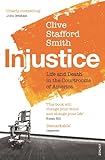
This is my review of Injustice: Life and Death in the Courtrooms of America by Clive Stafford Smith.

I was drawn to this book through admiration for lawyer Clive Stafford Smith's dedication to fighting and exposing injustice. It focuses on the case of Kris Maharaj who was sentenced to death for the murder of two business associates in 1986, and as at 2012 has spent a quarter of a century in security gaols, his sentence having been commuted to life on a technicality. As a formerly successful businessman, a British subject whose racehorse once beat the Queen's at Royal Ascot, Maharaj is a far cry from the usual Death Row inmate: poor, black and ill-educated.

By covering the case from every aspect, witness, prosecution, defence and so on, Stafford Smith shows in detail how a man who appears to be innocent could have been found guilty. Maharaj's main error seems to have been that, overconfident of acquittal, he hired a cheap fixed fee defence lawyer. To get a reasonable hourly return, this man cut corners e.g. failing to call vital witnesses to prove an alibi, giving prosecution witnesses an easy ride, not digging out evidence held by police which would have indicated that Maharaj was framed for murders actually committed by a Colombian drugs cartel. There is a also a suspicion that the defence lawyer himself may have been intimidated. Add to this a corrupt judge and police at various points, and a prosecution "conditioned" to regard defendants as guilty and determined to "refashion the evidence to fit their view of the truth", and we see how the guilty verdict was a foregone conclusion.

Stafford Smith also explains how the appeal system is loaded against the defendant. For instance, evidence which was not challenged in the first trial cannot be raised on appeal. This practice is meant to discourage appeals which diminish the public's regard for the legal system, leading the author to observe, "Yet presumably the state should only be allowed to impose punishment if the punishment is just." A further problem is the lack of state funding, to finance either fair trials for penniless defendants in the first place or their appeals.

The author cites the chilling statistic that on average judges he canvassed would accept an 83% level of belief in a person's guilt as sufficient for a conviction "beyond all reasonable doubt". This is enough to lead to the execution of more than 500 innocent people currently on Death Row. Since an academic study shows that two-thirds of "capital cases" feature serious errors leading to a new trial, a fifty-fifty coin toss procedure would lead to a more reliable outcome!

Without undue sensationalism, the author makes a powerful case against the death penalty, but even if you support it, he raises clear concerns over the operation of the justice system in the US, where lawyers, politicians and police are tarnished by shoddy practice and too many have lost sight of the example they should be setting as a large and powerful democracy. We cannot know to what extent his case may be biased in favour of Maharaj, and explanations are at times too compressed when he is trying to present arcane arguments in a book which sets out to be more gripping than many courtroom crime novels. Yet, more than a hundred pages of small-print notes at the end add weight to his evidence.

Overall, "Injustice", which should disturb everyone who reads it, is a major contribution to the cause of keeping alive what freedom and democracy ought to be about.

Comment Comment | Permalink

⭐⭐⭐⭐⭐ 5 Stars

“A long journey out of the self”

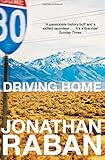
This is my review of Driving Home: An American Scrapbook: An Emigrants Reflections Pb by Jonathan Raban.

I discovered Jonathan Raban through “Arabia”, confirmed his brilliance in “Bad Land” and read “Driving Home” in the hope of rekindling some of the old magic. This is a collection of essays published in magazines and newspapers in the period 1991-2009, following his decision, as a middle-aged “Brit” to move to Seattle.

For me, Raban is at his best as a travel writer, the observant rolling stone who combines descriptions of landscapes and people met in passing with history, politics and culture to create a vivid sense of place. This is typified by the essay used for the book title, in which Raban drives a round trip from Seattle “a western city built in the wilderness and designed to dazzle” , over the Coastal Range and the Cascades, across various river valleys to the dead level plateau of the Christian Right where it is “a big thing to raise a tree”, since only stunted sagebrush grows there naturally. To give us background, he weaves in anecdotes about the explorers Lewis and Clarke, and introduced me to two neglected literary talents, the poet Roethke and the novelist Bernard Malamud, whose writing captured the spirit of the north-western states.

Raban’s political articles on the aftermath of 9/11, the newly elected Obama and characters like Sarah Palin are entertaining, informative but perhaps not as “striking” as some of his other work since so much has already been written on them by others, plus this material will date quite fast.

His essays on famous literary figures probably require some prior knowledge of their work. For instance, I enjoyed the article on the in many ways rather unpleasant Philip Larkin, and was interested to learn how much he feared death and pleased to be taught to appreciate his poem “Aubade”. However, the piece on William Gaddis left me cold and caused me to begin to skip in search of essays with more immediate appeal.

In the main, Raban can make watching paint dry interesting, but the occasional piece requires too much effort to be worth the trouble. The least successful category seems to me to cover those on a specific theme like “On the waterfront” which appears too much of a contrived exercise in writing.

If these essays were thrown together in a single book to earn a few bucks, I don’t blame Raban. His tendency to write articles based on his daughter, or to name-drop holidays with “the Therouxes” detracts somewhat from his writing.

Despite a few reservations, there are sufficient excellent passages in this book to make it worth reading and keeping on one’s shelf to revisit later.

⭐⭐⭐⭐⭐ 5 Stars

The passion of geriatrics

This is my review of Mrs Palfrey At The Claremont: A Virago Modern Classic (Virago Modern Classics) by Elizabeth Taylor.

This well-structured tale of an elderly widow seeing out her days in the 1960s as one of a group of lonely and under-occupied paying guests at a London Hotel may not sound a very engaging theme. Everything hinges on Elizabeth Taylor's renowned skill as a novelist. From the outset I was struck by examples of her original, acerbic wit, and strong sense of the humour of the incongruous. We are told that our heroine Mrs Palfrey "would have made a distinguished-looking man and sometimes, wearing evening dress, looked like some famous general in drag." She had a "magnificent calm" and was "unruffled" to find her first home as a young bride "more than damp" from the floods "with a snake wound round the banisters to greet her".

Depressed but stoical in the company of the small-minded, gossipy group of paying guests, who tend to use cruelty, alcohol or eavesdrop "with ears sharpened by malice" to assuage their own loneliness, Mrs Palfrey is saved by a chance meeting with Ludo, a charming and essentially decent young penniless writer. For all her conventional past, Mrs Palfrey is attracted by the young man's natural sense of mischief and vitality, without losing her commonsense. United by a surprising and unexpected friendship, they do each other good turns, although would Mrs Palfrey be quite so well-disposed to Ludo if she knew she was a source of notes for his first novel based on her own comment on the Claremont Hotel, "We aren't allowed to die here"?

The book is inevitably a little dated in reflecting the prejudices of early sixties Britain, but any real weakness lies in scenes like the fraught drinks party which descends into pure farce. Although witty, this lacks the subtle observations and real insights into the mixture of small joys, sorrows and missed opportunities of ordinary life which mark most of the novel.

Despite the room for optimism in an ending which leaves something to your imagination, this is a sad book. It is not only a portrayal of old age as a time when one feels useless, superfluous and often in pain, but also a comment on how an exaggerated concern with convention and respectability can limit one's life unduly. Elizabeth Taylor died comparatively young in her early sixties, and was perhaps glad to escape the darker or drearier aspects of ageing.

⭐⭐⭐⭐⭐ 5 Stars

A question of survival

This is my review of La bicyclette bleue, Tome 2 : 101, avenue Henri-Martin : 1942-1944 by Régine Deforges.

In this sequel to "La Bicylette bleue" we see the feisty young "femme fatale" Lea Delmas enduring France under occupation in World War 2. The story is realistic as we see her struggling with a lack of food, the agony of not knowing what is happening to friends fighting with the Resistance, the uncertainty of how much to believe the news on the radio. Less plausible is the ability of suave teflon-coated superman François Tavernier to turn up in the nick of time to save her in a tight spot – and if not him, the slimebag Raphael Mahl, for whom we are supposed to have a soft spot because of his artistic nature and devotion to Lea. Tavernier's patronising male chauvinism towards Lea is possibly excusable for the 1940s, but I would like more detail on the nature of his important work and source of wealth.

Although I might be more critical if French were my first language, this is what you might call "a cracking yarn", eventful with many ingenious twists, by turns moving, tongue-in-cheek humorous and deeply shocking – the author has a vivid imagination. It provides a very entertaining way of extending one's vocabulary and knowledge of idioms.

Otherwise, what I have gained most is a greater appreciation of what it is like to be occupied, how lucky we are in England that this has not occurred for a thousand years, and how divided families are likely to be, with every reaction from total collaboration for personal gain, through passive acceptance out of fear of reprisals, to commitment to resisting, whatever the cost. So Lea switches between staying in Paris to support her sister Françoise who has had a baby by a German officer and accepting all the material benefits of this connection, to living back in the beloved family vineyard at Montillac, where her friend Camille is in continual illicit contact with her husband Laurent, deeply involved in the Resistance.

I shall certainly read the series up to the end of World War 2, but am less sure that my interest will last through all ten novels in the saga.

⭐⭐⭐⭐ 4 Stars

The deadly ticking of a thousand hungry clocks

This is my review of The Rum Diary (Bloomsbury Classic Reads) by Hunter S. Thompson.

Written when the author was little more than twenty and based on personal experience, this is the tale of Paul Kemp, cynical, hard-drinking journalist who takes up a post on the San Juan Daily News, a rag produced on the Caribbean island of Puerto Rico.

At first I was reluctant to read this book group choice, imagining it would be a prolonged drunken rant. Although said to be an example of "gonzo" journalism – "bizarre, crazy, exaggerated, subjective and fictionalized style" to use a dictionary definition, from the outset I was struck by Hunter Thompson's remarkably spare and lucid, razor-sharp style ( for one who is rarely sober) and the sense of anticipation that something interesting is going to happen. In fact, the book is short enough for one not to feel let down by the slightness of the plot which is not really the point.

As you might hope for a reporter, Thompson is very strong on creating a sense of place : "old Spanish Puerto Rico..where one part of the city looked like Tampa (Florida) and the other ….like part of a medieval asylum". The whole paragraph is much better than this but too long to quote. Or there is the description of his drive to a friend's house during which he encounters for the first time the native Puerto Rico: "I was not prepared for the sand road.. I went the whole way in low gear, running over land crabs, creeping… through deep stagnant puddles, bumping and jolting in ruts and chuckholes…"

This is a backwater that attracts conmen, petty crooks, failures and drifters, like Kemp – all at times subjected to his remarkably perceptive analysis for such a young man. The author describes very effectively the kind of disillusion with small town America that drives a man to travel the world, uncertain what he is seeking, often making astute observations, but always a rootless outsider.

At times I grew tired of the drunkenness, which led to some unsavoury if realistic incidents: the looting of a liquor store during a carnival, which reminded me of the UK city riots of 2011, or a man casually beating up his girlfriend. I could not work out whether the chauvinism displayed to some extent by Kemp and even more so by his wild colleague Yeamon was an unconscious product of the 1950s or meant to be a parody of male insensitivity.

I could not say that I liked this book, but the quality of the writing impressed me. I could have wished he had applied this talent to a less drink-sodden world. He would probably have said that the rum helped him to write. Yet he was all too aware of the "quiet deadly ticking of a thousand hungry clocks, the lonely sound of time passing" and perhaps being wasted, but he lacked the will power to avoid this.

⭐⭐⭐⭐⭐ 5 Stars