No one emerges with credit

This is my review of A Line in the Sand: Britain, France and the struggle that shaped the Middle East by James Barr.

James Barr blends academic research with journalistic flair to remind us of the shabby deals and ostrich-like expediency which led to the crises still bedevilling the Middle East. Using anecdotes and well-judged quotations, he brings alive the out-dated imperialistic wranglings of Britain and France, both scrambling to fill the vacuum left by the collapse of the Ottoman Empire.

The "line in the sand" refers to the infamous Sykes-Picot Line agreed secretly in 1916, which ran from Acre on the coast to Kirkuk near the then Persian frontier, with no regard for the Arab tribes inhabiting what appeared to be mostly useless desert. The British were interested in Palestine and Jordan south of the line mainly as a means of securing Suez and the route to India. To the north, the French demanded what is now the Lebanon and Syria to ensure they did not lose out to the British in a land which might yield rich oil reserves. Matters went awry from the outset with T.E. Lawrence's famous assault on Damascus in Syria – a blatant attempt to undermine the Sykes-Picot agreement by enabling the Arabs to gain territory in land coveted by the French.

Barr opens with his shock on discovering how, while British soldiers were fighting in World War 2 to save France, the French were supplying arms to the Haganah, the Jewish militia dedicated to creating a separate state of Israel. However, the British seem to have been equally perfidious at times – agreeing with a shameful vagueness over details to support Sharif Hussein of Mecca in his ambitions for an Arab Empire to include Syria which lay north of the fatal line. As someone observed "we are rather in the position of hunters who divided up the skin of the bear before they had killed it." The British desire to give Arabs independence in French-controlled Syria and Lebanon was always tempered by the reluctance to give Arabs in Palestine the same freedom – until it was too late.

Also, long before the French took the idea of a Jewish state seriously, the wily Lloyd George had come round to supporting Zionism in the hopes of encouraging American Jews to put pressure on the US to enter the First World War on the Allies' side, plus he thought the Jews might be of more assistance to the British in Palestine than the fragmented Arab tribes. Yet, by the 1940s, the situation was reversed with the British trying somewhat ineptly to protect the Arabs in Palestine and contain the violence of freedom fighters like the Irgun.

Barr does a mainly excellent job in steering us through the dramas of T.E. Lawrence, De Gaulle, the alarming Orde Wingate, plus a host of others who interfered in the Middle East, with varying degrees of understanding, cynicism, short-termism, and sadly often misplaced "vision". Concluding with the British evacuation of Jerusalem in 1948, Barr helps us to appreciate the complexity of the situation, all the different angles. Apart from the final quotation that "other people's countries…must be left to their own salvation," I do not recall that he suggests clearly the course that should have been taken, but this may be for the good reason that there was no clear solution.

Small improvements would have been the inclusion of a "timeline" of key events, a glossary of major players and groups involved, and perhaps a brief summary of the situation in Palestine in previous centuries, all designed to help anchor the "general reader".

⭐⭐⭐⭐⭐ 5 Stars

Cracking a pig’s egg

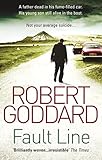
This is my review of Fault Line by Robert Goddard.

I have a weakness for Robert Goddard's novels which are notable for their highly convoluted intrigues and often original themes based on some historical or topical issue, in this case the china clay industry, in decline around St Austell in Cornwall but apparently expanding in South America, which the author manages to link with dastardly deeds in Naples and the beautiful island of Capri which he of course makes you want to visit.

Although I understand why some reviewers feel that his novels produced annually have become pot boilers in danger of burning dry, it seems to me that, following on the heels of "Blood Count", "Fault Line" confirms a return to form as regards plot, although I wish that Goddard would make the effort to edit some of the triteness out of his prose.

In Jonathan Kellaway we have a likeable and convincing character who displays integrity and presence of mind, the very qualities which encourage more devious people to make use of him, asking favours which ensnare him in precarious and even dangerous sitations in the process. The plot is quite well-structured and deftly revealed. I agree that some aspects of the denouement are implausible, but isn't that often the case with this type of thriller? With a main plot perhaps a little less extraordinary than is often the case with Goddard, I worked out fairly early on what the explanation must be, but was not left disappointed at the end since there was a thought-provoking final twist I had not foreseen.

This is a page turner and an enjoyable read, relying on suspense and tension rather than sex or violence.

⭐⭐⭐⭐ 4 Stars

Paying the price

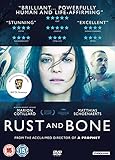
This is my review of Rust and Bone [DVD].

"Rust and bone" apparently refers to the taste sensed by a fighter after being punched in the mouth. It reflects the violent prizefights which form a thread running through this French film based on a short story by a Canadian author, Craig Davidson.

At the outset we see Ali, a hard up drifter with appealing small son in tow, trying to find work in the South of France. Employed as a bouncer, he extricates from a brawl Stephanie, an attractive young woman who intrigues him with her unusual job as a trainer of killer whales. Both share a love of physical pursuits and a desire to take risks and court danger.

Without introducing to many spoilers, this film is about the course of their relationship, underlying which is an exploration of how we may learn to cope with terrible adversity, yet also reassess our values and develop the ability to express our emotions after some major trauma. With some painful and moving moments, the film is never sentimental or mawkish.

Ali's strengths are linked to his weaknesses. He is a fearless risk-taker but often inconsiderate and negligent. He is easygoing, non-judgemental, free of prejudice, capable of acts of great kindness, but is often selfish, not seeming to care about others, not thinking through the consequences of his actions.

The drama is set against the background of poor working class people, often immigrants, struggling to make a living on the margins of society and the law, a subject which preoccupies the director Jacques Audiard judging by his earlier films e.g. "The Prophet" and "The Beat my Heart Skipped," both serious, moral yet also marked by an extreme violence which one senses must fascinate or excite the Director. I was at times made to feel a voyeur watching some intimate scenes, although I do not think this was the Director's intention.

The acting of all the main players is expressive and convincing, the filming skilful and realistic. My four stars recognise the quality of the piece, although I cannot say I enjoyed it.

⭐⭐⭐⭐ 4 Stars

A Striking Variation on “Death in Venice”

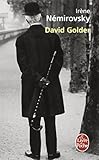
This is my review of David Golder (Le Livre de Poche) by Irene Nemirovsky.

In her spare prose, Irene Nemirovsky portrays in vivid and minute detail the thoughts and final acts of David Golder as he faces up to the death he has always feared. Having escaped as a youth from poverty in Russia, Golder has ruthlessly gained a vast fortune, but has nothing to spend it on, save the extravagances of his wife, who uses luxuries as a substitute for the love he cannot give her, their daughter Joyce who has been spoiled with material goods, and all the hangers on whom the rich attract.

On the surface, all the main characters are despicable, calculating, self-seeking and unlikeable. However, Irene contrives to evoke from us some pity for all of them, in particular Golder. Although this is to be honest a rather depressing book, there are some unexpectedly moving and beautiful scenes, evoking long-lost places and lifestyles of 1920s Europe and Russia. Nemirovsky is worth reading for the quality of her writing.

I have read reviews which attack Nemirovsky for her anti-semitic tone. Although Jewish herself, she converted to Catholicism and wrote for anti-Jewish publications, yet this could be excused as an attempt to escape persecution – one which failed since she was deported to Auschwitz where she died of typhus. I admit that at times, I find it hard to believe that she is not "a self-hating Jew" in the prejudiced and negative descriptions she often employs. Apart from the fact she may only be conveying the views of other characters, there is a subtle humanity in her writing – she seems to me to describe characters warts and all, with all their flaws and vulnerability, without a trace of sentimentality.

⭐⭐⭐⭐ 4 Stars

Rising from the ashes

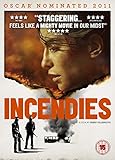
This is my review of Incendies [DVD] (2010).

Although her twin brother Simon is initially reluctant to take part, Jeanne sets out to fulfil her mother’s dying wish for her children to find the father they presumed dead and the brother they never knew they had. This involves the culture shock of a journey from Canada to an imaginary country, very close to the Lebanon in having a brutal civil war between Christians and Muslims, with the added pressure of Palestine-like refugees. Through a mixture of interviews and flashbacks, the convoluted plot is revealed. The film is an indictment of the arbitrary violence of war in which ordinary people are corrupted and driven by suffering and loss to avenge themselves on third parties, at the same time somehow retaining a capacity for love and even forgiveness.

There is particularly fine acting from the mother and daughter, with the actresses so similar in looks that at times I confused them, which in a way contributes to the plot. The portrayal of the lawyer who assists them is also a fine performance.

I was prepared to suspend my disbelief over some coincidences reminiscent of a Hardy plot, but at the end when I should have been left moved I found myself trying to work out the ages of the characters, who in their relationships to each other seem to be either too old or too young. The director could have overcome this easily with some better casting of “minor” characters and employment of a skilful makeup artist.

Based on the Lebanese-Canadian writer Wajdi Mouawad’s play entitled “Scorched” the plot lends itself to a film. Although flawed and contrived, it is a striking piece.

⭐⭐⭐⭐ 4 Stars

Caught in the current

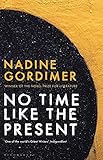
This is my review of No Time Like the Present by Nadine Gordimer.

Having admired years ago Nadine Gordimer's anti-apartheid novels which won her the 1991 Nobel Prize for Literature, I was impressed to find that, approaching ninety, she is still writing, dissecting the state of "free" South Africa.

This is the tale of a mixed-race couple adjusting to a world in which they no longer need to conceal their relationship, but also find that the freedom to make choices and lead a "normal" life often highlights cultural differences they did not notice when plotting undercover dissidence, plus there is the growing realisation that their new black leaders succeeding Mandela are often deeply flawed and corrupt, to such an extent that it might even be preferable to emigrate, the supreme irony in view of what Steve and Jabu have sacrificed for their country.

Although I wanted to like this book, to learn from Gordimer's deep knowledge and insights into South Africa, the stream of consciousness style proved a barrier that soon became insuperable. When I managed to tune into the fragmented phrases alternating with garrulous paragraphs, I could see that I was being enabled to sense the characters' diverse, fleeting thoughts as directly as if they were my own. However, the reading process becomes an exhausting labour rather than a stimulating pleasure, with the too frequent distraction of phrases that are oddly convoluted to no purpose, and dizzy-making switches from one heavy subject allusion to another.

Gordimer's style seems to have evolved over the decades, so one has to assume the current phase is deliberate. The prose reads as if written or typed "as it comes" without any attempt at honing or editing. In the end, I decided with great reluctance to abandon the effort for the time being – a great pity since there is a need for thought-provoking novels on the new South Africa based on first hand observation and understanding.

⭐⭐⭐ 3 Stars

“The Lifeboat” by Charlotte Rogan – The Will to Survive

This is my review of The Lifeboat by Charlotte Rogan.

This opens with Grace Winter on trial for some unspecified crime on board a lifeboat after the sinking of a luxury liner en route from England to the States in 1914. We expect murder at least and possibly cannibalism. Since a plea of insanity may be the best option, Grace is asked by her lawyers to write a detailed account of events on Lifeboat 14. This is a good literary device, although it requires the reader to suspend disbelief that a recent survivor of a prolonged trauma would be capable of producing such a coherent and analytical record – Grace may of course be an unreliable narrator.

Charlotte Rogan is very ambitious in her decision to interweave Grace’s recollections of events on Lifeboat 14 with those of her earlier life, aboard the ship before it sank, and details of the trial afterwards. This courts the risk of defusing moments of high drama and the effects of the oppressive hardship on the lifeboat, day after day, as well as that of confusing the reader. In the event, I found the gradual revelation of events intriguing, even if it was disappointing to find some threads unresolved rather than somehow woven into the denouement.

I agree with reviewers who feel that the full horror of the experience is at times underplayed, but the author succeeds in showing the changing relationships between the passengers, the shifting power play, the way gossip morphs into facts which can be used to depose a failing leader. Although these issues could have been developed more fully, Rogan prompts us to reflect on what makes a survivor, the extent to which the normal codes by which we live are a veneer, the situations in which killing some people to save a large number overall could ever be justified.

I found this book a page turner, despite reservations that at the most dramatic points, or when discussing complex philosophical points, the prose, although clear and accessible, does not seem quite equal to the task, if you set the bar at a high level. I did not mind Grace’s rather pragmatic, analytical approach nor the lack of the kind of crazy, poetical fantasy one finds in the lifeboat of “Jamrach’s Menagerie” since Grace’s thinking represents that of a “born survivor”. This is intimated by her honest admission that, after the financial ruin of her husband, she planned the seduction of the wealthy Henry Winter away from his long-term fiancée to marry her instead.

I felt that the quality of the writing tails off a little in the final chapters which seem a little too disjointed. The book might have benefited from being longer to give more scope to develop its complex themes, or perhaps it would have been enough to work more on the prose in some key chapters.

As a first novel, this is very impressive. For plot and insight, this book scores highly and the prose is just adequate to sustain these.

⭐⭐⭐⭐ 4 Stars

Who caries?

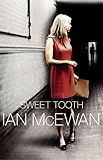
This is my review of Sweet Tooth by Ian McEwan.

"My name is Serena Frome….and almost forty years ago I was sent on a secret mission for the British security service. I didn't return safely. Within eighteen months…I was sacked having disgraced myself and ruined my lover."

These opening sentences hooked me, although I might have preferred not to know all this information in advance. Then, I found myself trying to engage with Serena as I waded through page after page of dense description of the "telling" variety, in the voice of a sixty-something, upper middle-class woman looking back to her early life with a somewhat cold objectivity as if writing about someone else – a voice which I did not find quite convincing (an interesting point to debate when you have finished the book). Small things bothered me, such as the way Serena always referred to her father as "the Bishop", or did not bother to go to one of his services during a visit home at Christmas. Surely even an atheist daughter would make it to a carol service for old times' sake? Or her parents would have had something to say?

I kept reading only because the writer is the celebrated Ian McEwan, and being about the same age as him and Serena it was interesting to be reminded of the political and social ferment of the `70s which I did not fully appreciate at the time, so I wonder how much Serena's lists of events and comments on them mean to younger readers.

This novel seems to fall between three stools. Presented as some kind of spy thriller, it proves somewhat low key and unexciting. This could be realistic in that a young woman in the MI5 of the 70s was likely to be given only mundane tasks, but does not make for a great read. As a sometimes polemical take on the life and times of the 1970s, this novel might have made more impact as a series of Jonathan Raban type essays. It may succeed best as being in fact another sort of novel altogether about the art of writing. In this respect, Serena's analysis of her lover's ingenious short stories provides one of the most interesting aspects of the novel, although I felt no doubt unintentionally patronised by the suggestion that someone like Serena who loves reading but has never studied English may be impeded by not knowing how to "read" a challenging text.

The final twist may redeem the book a little, but I did not find "Sweet Tooth" as original as say "Enduring Love" nor as well-constructed as " The Innocent".

⭐⭐⭐ 3 Stars

A British Alice Munro?

This is my review of The Lighthouse (SALT MODERN FICTION) by Alison Moore.

In an attempt to take his mind off his failed marriage, the oddly named Futh (this appears to be both a German surname and urban slang) leaves England for a short walking holiday along the Rhine, but this only gives him too much time to brood on his sad childhood, dominated by his mother leaving home when he was about twelve. On his first evening at the ominous-sounding Hellhaus – literally "light house" – Hotel, Futh meets Ester with a parallel tale of an unhappy marriage and the price of passive acceptance of life.

In deceptively simple, plain and painstaking, unpretentious prose, Alison Moore dissects Futh's appearance, his thoughts, motivations, the events which have shaped him. All this is conveyed through his memories, behaviour, conversations with others, so we may come to different conclusions since the author never tells us what to think. Even the dramatic climax is ambiguous.

I believe the author has had success writing short stories, and this is very evident in the way that most incidents are like small, self-contained stories in their own right. In what is still a relatively short first novel, Moore has managed to produce what proves to be a tightly-structured overarching narrative, even if Futh seems to be bumbling around, often lost, much of the time.

Some readers have found Futh intolerably dull and the novel too mundane, but you could argue that the whole point is to make a very ordinary and in some ways unappealing man the subject of a story which may have all the pathos and ironical chain of cause and effect of a more flamboyant tragedy. Moore displays the power of an understated story, on a par with a first-rate minimalist painting or musical score.

There is perhaps a little too much symbolism e.g. the heavy use made of Muriel Spark's description of "the tall lighthouse sending out kindly beams which some took for welcome instead of warnings against the rocks" or the Venus flytraps. I admit this is not a page-turner, except towards the end when I knew that the "something bad" indicated at the beginning was about to occur. If you like action-packed thrillers or romance, this is not the book for you. It is also deeply sad, definitely not "feel-good", although Futh's continual failures – even the ducks don't want to eat his bread- is just about saved from becoming unendurable through the narrator's frequent flashes of wry humour. At times, I was reminded of Mr. Bean.

I agree that it is hard to believe that Angela would marry a man like Futh, but since she is seen through his eyes, we know he is too damaged himself to be capable of empathising with her or grasping the complexity of the emotions which drove her to marry him. In the same way, his perception of his relationship with Kenny is clouded by his own emotional stunting. All this may demonstrate the subtlety of Moore's writing, when you pause to think about it.

I admire this novel without much liking it, and suggest it as a good choice for a book group if you are interested in discussing the craft of writing, debating what makes a good ending, and understanding polarised viewpoints.

⭐⭐⭐⭐⭐ 5 Stars

A Dip at the Shallow End

This is my review of Swimming Home by Deborah Levy.

A beautiful, mentally sick young woman is caught swimming naked in the pool of a French villa rented by a famous poet, his dysfunctional little family, his wife's old school friend and her unappealing husband. Why is the young woman invited to stay when this is so clearly unwise? Just what form will the inevitable resultant tragedy take? Or will it simply prove to be a lightweight farce?

Although this may not be an entirely original scenario, there is plenty of scope for a compelling drama for which the author creates a cast of potentially interesting characters. The plot is revealed obliquely, in short chapters with continually changing viewpoints, disjointed scenes like fragments of glass which are often quite surreal. This approach may be what led to the Man Booker shortlisting, but combined with a style that flits in a sometimes jarring fashion between parody and caricature, psychological drama and even a touch of magic realism, the result left me feeling unengaged with and unmoved by the main characters, although I thought the adolescent Nina and the lonely old doctor observing them all from her balcony were well drawn.

At first, I was annoyed by the author's habit of telling the reader too soon and too baldly what is going to happen. I later realised that she is often setting red herrings in our path, which could be quite clever, except that the climax proves too abrupt and inadequately foreshadowed and explained. Then the final chapter seems too much of a sentimental footnote.

I think the book may improve on a second reading, but it was seriously marred for me by a lack of subtlety in the development and some surprisingly gauche prose, which read as if the author wrote what first came into her head without any reflection and redrafting. These factors would have caused me to give up midway if the novel had not been so short and Booker-listed. I believe that Deborah Levy has achieved success as a playwright and perhaps this story would work well on the stage, although it would be hard to create the sets for some of the locations which add flavour to the story.

⭐⭐⭐ 3 Stars