Authors collect materials in the living of their lives

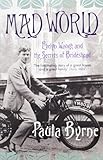
This is my review of Mad World: Evelyn Waugh and the Secrets of Brideshead by Paula Byrne.

This very readable biography of Evelyn Waugh focuses on his fascination with the aristocratic Lygon family and the ambiance of their ancestral home Madresfield, which inspired his famous novel "Brideshead Revisited". Paula Bryne recaptures the poignancy of the drama to rival a Shakespearean tragedy in which the cultivated and socially conscious Earl Beauchamp, one of the last Liberal grandees, was driven into exile because of his blatant homosexuality,a victim to the hypocrisy of the day and the jealousy of his brother-in-law, the Duke of Westminster. On the other hand, Beauchamp seems to have used his powerful position to prey upon attractive young servants, rather in the style of a modern celebrity disc jockey.

Paula Byrne paints a sympathetic portrait of Waugh, highlighting his wit, companionship and loyalty to those he liked or admired, his special gift for platonic friendships with women, his courage and cheerful resourcefulness under pressure, "for he liked things to go wrong". Admitting that he was snobbish and often sharp-tongued, she makes allowances for him continually: his outrageous comments were often "meant to be jokes", when in later life he played the part of the crusty lord of the manor "in love with the past" he became a parody of himself, but the knowledge that hosts he thought he was entertaining found him a bore "broke his spirit".

It is interesting how biographies differ. Perhaps wisely for the sake of the length and coherence of the book, the author glosses over his friendships with other writers like Grahame Greene, his unconventional conversion to Catholicism, his possibly neglectful or exploitative relationships with his second wife and children, and the details of the alcoholism and drug-taking which aged him prematurely, drove him into periods of temporary insanity and eventually killed him "before his time". She makes light of the selfishness as when, it must have been through lack of thought, he accidentally started a fire in his father's precious bookroom.

Whom is one to believe? Hugh Carpenter's biography claims that Waugh was not given men to command in World War 2 because he found it hard to relate to working class soldiers. Paula Byrne makes light of Waugh's insistence when in the Royal Marines on "etiquette and proper procedures" and his attempt "to convince the young men how much better the world was before the invention of electricity".

One of the most interesting aspects of the biography is speculation on the extent to which Waugh's writing drew on his own experiences, places he had visited but most particularly the people he knew, often amalgamated to create a character.

With only minor reservations over some repetition which suggests a lack of editing, this book sets Waugh in context and is an inspiration to read more of his work for the humour and quality of the writing, even if much of the social comment now seems very dated.

⭐⭐⭐⭐ 4 Stars

The Hunt – Guilt of Innocence

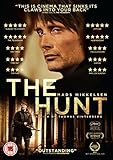
This is my review of The Hunt (Jagten) [DVD].

In yet another subtle and well-acted Danish film, we see how Lucas, the only male assistant to provide a bit of rough and tumble in a nursery school, finds himself sacked, charged by the police and a pariah in his tight-knit community when a normally truthful child appears to confide to the head teacher that Lucas has sexually abused her. From the outset we are given clues as to other events in the child’s life which might be affecting her actions, but which cannot be known to those investigating the issue. Through a series of all too believably blundering attempts to “do the right thing”, Lucas is condemned from the outset, wild rumours multiply as people are carried away by “groupthink” to turn against him.

The film skilfully points the finger at others who might be letting Lucas carry the blame for their own misdeeds, and even arouses our own occasional doubts as to his innocence. However, for the most past we feel outrage on his behalf, and a helpless sense of his compounded fate. All the main characters display some depth and changes in their emotions – in the case of Lucas, his natural gentleness and passivity giving way to bursts of retaliation.

The drama is set against a background of the deer hunts which bind the men together in a macho culture which may of course brutally cast out someone who seems to have broken a taboo, and the availability of guns adds a continual underlying threat of violence or tragedy. The film has the entertaining knack of following what seems like a happy event with a sudden twist back into suffering for the unfortunate Lucas.

Although the prejudice and hysteria in the community may seem a little exaggerated, the ending does not baldly “spell everything out” but leaves areas of ambiguity to provide food for thought. What should you do in a delicate situation which you cannot ignore but in which no action can be taken without damaging either the potential victim or the possible perpetrator, perhaps irrevocably? How can adults communicate effectively with confused children who may wish both to please them and conceal things from them, and also lack the language to express their feelings? How often do we make judgements without knowing the full facts, or even realising that this is the case?

Comment Comment | Permalink

⭐⭐⭐⭐⭐ 5 Stars

Flawed Genius

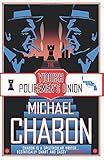
This is my review of The Yiddish Policemen’s Union by Michael Chabon.

What would have happened if a long-forgotten proposal in 1940 to give the Jews a temporary homeland in Alaska had come to pass? How will the Americans deal with the prospect of having to absorb millions of Jews who have failed to emigrate in time when the "Reversion of Sitka" occurs after the agreed sixty years are up?

In what first appears to be a Chandler-type cynical detective thriller, but which twists at times into a Bashevis Singer evocation of the culture of the Jewish shtetl, or a soft-centred rom-com-soap of family life, Chabron sets free his vivid imagination to create in some detail the world of "the Frozen Chosen" in an incongruous ambiance of halibut factories, cherry pie and vast pine forests.

The stereotypical antihero Detective Landsman, driven to drink through grief over his lost child and estranged wife, is still sufficiently professional to care about the death of a drug addict in what looks like a "cold-blooded execution". His often unauthorised investigations lead him into the archaic world of a "black hat rebbe" or rabbi who bears close resemblance to a mafia boss. The rather thin plot meanders to the denouement with the reader in my case mostly hooked by the sparkling pyrotechnics of Chabron's original prose, although at times his bold verbal experiments fall flat, or fizzle out, so that I can understand why this book has divided opinion quite sharply.

Many readers have complained about the frequent Yiddish words peppering the text. Although I found that they add a flavour and music to the prose, and you can usually guess what they mean, it was informative but too distracting to keep looking them up, so I agree that there is a case for brief footnotes. Similarly, the many references to Jewish culture could have been explained in an appendix e.g. the Tzadik ha-Dor or Messiah expected once in every generation, or the fascinating "boundary maven" whose job it is to define with lines of string the "eruvs" or areas which enable orthodox Jews "to get round the Sabbath ban on carrying in a public place, and walk to shul with a couple of Alka-Seltzers in your pocket, and it isn't a sin".

This book is riddled with wry humour of questionable taste, and is often very funny and clever, but also poignant. It is perhaps too long, and self-indulgent in its lack of editing. The author sidetracks too much into minor scenes and descriptions, loses the plot in the sinister wilderness of the Pearl Strait but glosses so quickly over some of the main facts that I had to reread bits to check I hadn't missed something.

⭐⭐⭐⭐ 4 Stars

Spinners Spun

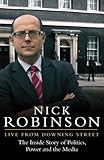
This is my review of Live From Downing Street by Nick Robinson.

My admiration for Nick Robinson's great sense of humour, impressive intelligence and public speaking skills as displayed in a promotional talk led me to purchase this book. It provides an interesting explanation of the influences which moulded him and how he trained for his profession, set in the context of broadcasting in general, with a timely reminder of the BBC's contribution to free speech.

Although careful not to spill too many beans on members of the current government, he provides a store of anedotes on former key figures – a paranoid Wilson, on-a-mission Thatcher and not-as-stupid as people think Bush.

If you have followed the news closely since long before Robinson became a journalist in the 80s, you may be a little disappointed to find this is a rehashing of what you already know. The casual reference to names of current media figures may tend to make the book date fairly rapidly.

However, if you enjoy an entertaining if fairly superficial read, or have come to "the news" recently and would like to learn more of "the background", I recommend "Live from Downing Street".

⭐⭐⭐⭐ 4 Stars

Limited expectations more than met

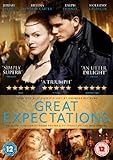
This is my review of Great Expectations [DVD] [2012].

It is hard to "give away the plot" of such a well-known Dickens classic but for those who do not know it I shall limit myself to the following: as a small boy, the orphan Pip is terrified by an escaped convict into smuggling him food and a file; the eccentric Miss Havisham summons Pip to her gloomy mansion as a playmate for her beautiful but cold adopted daughter Estella, whom she has brought up to break men's hearts; made dissatisfied with his humble lot through his contact with Estella, Pip is delighted to learn that he has "great expectations", a fortune from an anonymous benefactor and so can escape to a new life in London.

The film is true to the original novel in its main points, and is visually striking, in particular the scenes of the desolate Kentish marshes by the Thames where Pip's uncle runs a smithy, and the vivid contrast of London in all its grimy vibrancy. There is excellent acting from Ralph Fiennes, who conveys a sense of the convict's violence, but also his worthy aspirations and dignity. Jason Flemyng is effective as the simple but honest, decent and stoical blacksmith Jo Gargery, and Robbie Coltrane is suitably brisk and cynical as the lawyer Jaggers, who keeps dark secrets close to his chest. Jeremy Irvine makes a sensitive and sympathetic handsome hero, showing Pip's development in the difficult process of becoming a gentleman and coping with the source of his wealth. I was left unsure how convinced I was by either Miss Havisham or Estella: the problem is that the former is deranged and the latter is meant to have a heart of ice. Some of the minor characters failed to engage me. Pip's rival Bentley Drummle resembled an Elvis-lookalike bad lot out of the wrong age.

Stripped of Dickensian language, the plot is inevitably very contrived, and riddled with unlikely coincidences. The direction seemed a little rushed and unclear in places. Yet, overall, the film tells a good yarn, and is genuinely moving at times in exploring issues of class, revenge and the complexity of human nature.

⭐⭐⭐⭐ 4 Stars

In too deep

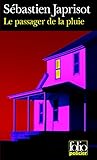
This is my review of J’AI Lu: Le Passager De La Pluie (Folio Policier) by Japrisot.

Unusual in being written as a novel after the script of what became a celebrated prize-winning film, this contains verbatim in the style of a play the dialogue used on screen. The descriptions are intensely visual – evoking the rocky coastline of southern France, the experience of driving in the rain, with a growing sense of menace as the heroine Mellie Mau, a lonely child bride addicted to dressing in white, becomes uncomfortably aware of the presence of a sinister stranger dropped off in her small home town. She finds herself involved in a crime which she may be able to conceal from her possessive husband, who perhaps did not appear to be such a chauvinist in the 1960s when the story was written, but then another shrewd stranger appears on the scene, with an almost telepathic ability to work out what she has done. It is just a question of forcing her to admit it….

This short novel is a page turner, full of twists and high tension and working towards a neat and convincing ending. The book just escapes being corny. Some of the violence seems a bit gratuitous, and at times I found it hard to take the male characters' tendency to resort to brute force with a casualness which was perhaps more acceptable when the film was made. There is a little character development as we learn about the troubled childhood which has perhaps stunted Mellie's maturity and fed her capacity to lie, about rhe uneasy relationship with her mother and the reason's for Mellie's submission to an older and domineering husband. At the same time, we gain respect for her stubborn courage.

An easy read – even for a foreigner reading it in the original French – a lightweight story on the surface, there is more to this than first meets the eye.

Comment Comment | Permalink

⭐⭐⭐⭐ 4 Stars

Elena – Just Deserts

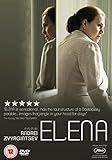
This is my review of Elena [DVD].

After such a slow start that I began to wonder if the projection had jammed, this proves to be an absorbing character study of a second marriage between Vladimir, a wealthy sexist pensioner and Elena, his former nurse, now a useful housewife and occasional bedmate. In this unequal relationship, Elena seems at first resigned to her dull yet comfortable routine, but we begin to see the quiet subversiveness with which she uses her credit card to provide food for her waster of a son, his long-suffering wife and children who live crammed into a grim concrete block of flats. Although aware of her son’s flaws, she does not see why his children should suffer, when Vladimir’s own wayward daughter is indulged through an accident of birth. Perhaps we see here a residue of the Communist ethos surviving in a fractured modern Russia where the less able languish in poverty whilst the successful live on a par with the most prosperous parts of the capitalist west. Certainly, the camera lingers on shots of both smart inner city streets and the sordid subways leading to rubbish-strewn wasteland round giant cooling towers cheek-by-jowl with high rise slums.

The film builds to quite a tense and absorbing drama, but disappointed me by an inconclusive and perhaps intentionally amoral ending which could have been more poignant, disturbing, surprising, ironical according to the turn of events chosen.

I believe that this film started off in the west on an apocalpytic theme, but was modified away from this when transferred to Russia, perhaps retaining a nihilist aspect. A little too long with a few superfluous scenes – such as the shot of a nurse stripping a bed or perhaps I missed the point – this is a visually striking, psychologically quite subtle film with an ending which I suspect will divide opinion.

⭐⭐⭐ 3 Stars

Too bogus

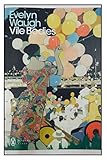
This is my review of Vile Bodies (Penguin Modern Classics) by Evelyn Waugh.

Does the classic which brought him fame and fortune show why Evelyn Waugh was described in his lifetime as the most important British writer of his day? Certainly, his style is very articulate and witty, although at times a little too silly and dated for modern tastes. This is a darker version of P.G. Wodehouse, with a failure driven to sudden suicide, and a young woman who implies sex by talking about the pain it gives her.

Readers will differ as to which passages they find the funniest. For me, apart from those I cannot give away, it was the exaggerated but telling description of the motor race to which the "hero" Adam and his friends are invited. "The real cars that become masters of men, those creations of metal who exist only for their own propulsion through space, for which the drivers clinging precariously at the steering wheel are as important as his stenographer to a stock-broker."

In the loosely structured plot which seems to be a staccato succession of incidents not necessarily "going anywhere" we are introduced to the "bright young things" of the 1920s. They are hedonistic, selfish, lacking in direction, engaged in a haze of party-going – "Masked parties, Savage parties, Victorian parties, Greek parties…parties where one had to dress as somebody else…..tea parties at school where one ate muffins and meringues and smoked crab, parties at Oxford where one drank brown sherry and smoked Turkish cigarettes, dull dances in London, and comic dances in Scotland and disgusting dances in Paris – all that succession and repetition of massed humanity.. Those vile bodies."

But beneath all the frivolity there is the sad undercurrent that these young people reject the values of the older generation who sent their children to die in the First World War, but have nothing in which to believe instead. Since this book was published in 1929, Waugh is quite prescient in foreseeing the next world war which is the "Bright young things'" fate. As the Jesuit Father Rothschild observes – the author never having met a Jesuit at the time – "…there is a radical instability in our world order, and soon we shall all be walking into the jaws of destruction again, protesting our pacific intentions."

Waugh was quite critical of the book, one cannot know how sincerely. The more sombre nature of the second half and Adam's brittle relationship with Nina may reflect the fact that Waugh's first wife, "She-Evelyn", left him for a so-called friend whilst he was writing "Vile Bodies", a blow from which he found it hard to recover. It is interesting to speculate just how autobiographical some of his books were, with many of the characters modelled on people he knew.

What troubles me a little about "Vile Bodies" is not being sure just how ironical Waugh intended to be. He was himself a heavy drinker, a socialite and a snob who looked down on "the masses". Perhaps he was a creature of his times, but one cannot help feeling that he was a clever man who, as in this case, frittered his talent on fairly lightweight themes.

⭐⭐⭐⭐ 4 Stars

“No part deformed out of mind..as is the inward, suspicious mind”

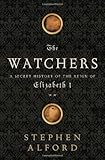
This is my review of The Watchers: A Secret History of the Reign of Elizabeth I by Stephen Alford.

In one of those histories that reads like a novel but is based on thorough research, "The Watchers" leaves us in no doubt that behind the swashbuckling exploits of Drake and Raleigh, the routing of the Armada and Shakespeare's vivid dramas, Elizabethan England was a violent and precarious world in which to live, operated like the forerunner of a police state. This was a response to very real threats: Elizabeth was regarded as an illegitimate, heretic queen not merely by the Pope but also the powerful Catholic rulers of Spain and France; the brutal 1572 St Bartholomew's Day massacre of French Huguenots was an ominous sign of what English Protestants could expect if Elizabeth was deposed in a foreign invasion. Many of the leading aristocratic families in England were Catholics prepared to support plots against Elizabeth. Her Catholic cousin Mary Queen of Scots was an ever-present threat ready to take her place.

As chanted from a book of common prayer, "Save us from the lions' mouth, and from the horns of the unicorns: lest they devour us and tear us in pieces."

With reference to surprisingly detailed records of intercepted letters, drafts thereof, and the various ciphers or codes used, Stephen Alford describes how most of the hundreds of Catholic priests who infiltrated England were mainly intercepted to be martyred, imprisoned or deported. He traces the careers of men like Thomas Phellipes, cryptographer, linguist and right-hand man of Sir Francis Walsingham who in turn worked for the Queen's leading minister, Lord Burleigh who wrote, "there is less danger in fearing too much than too little". Phellipes worked with a succession of agents, some "double", and helped to unmask a succession of intrigues, of which perhaps the most infamous was the "Babington Plot" which led to the controversial beheading of Mary Queen of Scots. With a fascinating regard to the rule of law, Walsingham was prepared to falsify evidence against Mary, but there was an insistence on a trial with reasonably convincing evidence, even though Elizabeth would have preferred a neat unofficial murder which would have left her clear of authorising the killing of another "crowned head".

The text is often repetitious, which pads it out unduly, but also helps to reinforce the main points, although some of the plot explanations are a bit long-winded. The list of "Principal Characters" and "Chronology" are useful for the general reader, with detailed notes for the academic.

⭐⭐⭐⭐ 4 Stars

Argo – Ah go on!

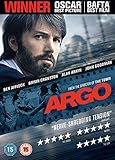
This is my review of Argo DVD [2013].

Ben Affleck has succeeded in both playing the lead role and directing an entertaining drama with “box office appeal” which also carries a serious undercurrent for those who seek it. Depending on one’s age, he reminds us of, or introduces us to the Iran hostage crisis in 1979 when fifty plus Americans were taken hostage at their embassy in Tehran by students calling for the deposed Shah to be returned for trial. This film focuses on the side issue of the six Americans who managed to escape and took refuge secretly with the Canadian ambassador, and of the CIA agent who devised what seemed like a ludicrous plot for their release by having them pose as a Canadian film crew assessing Iran as a location for a sci-fi film, “Argo”.

Affleck shows the boredom and fear of living in hiding for days with no prospect of escape as the Iranian authorities sift shredded photographs which will eventually prove that six hostages are missing. Clips of the torture of some American detainees are interwoven with chilling effect into the scenes of Tinseltown razzamatazz of a promotional exercise to raise interest in the bogus film. The final scenes are filled with tension but seem to have been hyped up since the original was insufficiently exciting to meet the expectations of current audiences. The ending was marred for me by a roller-coaster of too many coincidences – things, both good and bad, just happening to occur either to ramp up the fear or save the day.

⭐⭐⭐ 3 Stars