Good mix of polished intrigue and pathos

This is my review of Dancing on the Edge [DVD].

This has all the trademarks of a Poliakoff drama: immaculate, beautiful upper crust people in artistically posed scenes, long meaningful looks, and an obsession with photographs. Yet despite the often slow pace, the dialogues are much sharper than I expected and it also has quite a tight, intriguing and at times tense plot. This is what probably made me enjoy it more than any previous work by Poliakoff, together with its focus on an interesting and little-covered aspect of 1930s Britain, in which we see the mercurial rise and sad fall of a talented band of black musicians. After catching the eye of Stanley, an ambitious young music journalist, they gain bookings at the once grand now gradually decaying Imperial Hotel and even attract the attention of the Prince of Wales and his brother before tragedy and scandal destroy their budding popularity. The prejudice the players face is probably quite realistic for the period, and borne with great dignity by the suave and super-controlled pianist Louis. And of course, there is the alternating rhythm and pathos of the music played with such verve beneath the distinctive rainbow arch of The Imperial.

⭐⭐⭐⭐⭐ 5 Stars

Greene without the Catholic angst

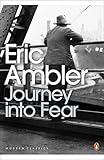
This is my review of Journey into Fear (Penguin Modern Classics) by Eric Ambler.

It is easy to see why this recently reissued thriller set in 1940 was a bestseller and suspenseful film. Ambler captures the fear mixed with defiance and the frequent sense of unreality experienced by an arms engineer who finds himself the prey of a hired assassin. There is also the anticipation of the unexpected twists the author casually throws in at the end of an uneventful chapter, and the suspicion that no one may be quite what they seem. Some characters are mere caricatures, but others are more interesting, such as the henpecked Frenchman who expressed communist sympathies to annoy his wife, only to find himself converted to them "for real".

Described as "Graham Greene without the Catholic angst" this is a quick and absorbing read, neatly plotted, which offers more than you may expect in terms of moments of drama and "tight corners" from which escape seems possible.

⭐⭐⭐⭐ 4 Stars

Media-man’s fee-good potboiler

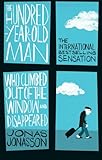
This is my review of The Hundred-Year-Old Man Who Climbed Out of the Window and Disappeared by Jonas Jonasson.

If you can suspend your disbelief that a hundred-year-old man could climb out of a window, drag a heavy suitcase and knock a young healthy person unconscious with a blow from a plank, you may enjoy this tale of his adventures on the run, evading arrest as he accumulates a motley group of new friends. The plot is quite slight, with so little description and character development that it has to be padded out to full novel length by alternating chapters on major incidents in Allan's past life, mainly encounters with the great and the bad – not only a string of American presidents, but Franco, Mao Tse-tung and Stalin, mostly seduced by Allan's apparent knowledge of how to make an atomic bomb.

Allan's affable amorality left me uneasy. Although his stoicism in times of adversity is impressive, and you have to admire his ability to "think on his feet", his periods of wealth and good fortune are based on the proceeds of other people's corruption and criminal activity, including murder or manslaughter, about which he is very casual. I believe this is meant to be a "feel-good novel", but it has an underlying darkness, such as the fact that Allan was one of the mental patients castrated under the infamous former policy of the Swedish government which is generally regarded as so liberal and progressive.

There are some humorous moments, but the plotting is cartoonish. What really grated on me was the quality of the writing. It may have suffered in translation from the Swedish into English but the pedestrian style and wording reminded me of a tired dad at the end of the day making up a bedtime story in the knowledge that it doesn't matter what rubbish he comes up with – all his child really wants is a bit of his attention. The work struck me as slapdash, with a few "continuity errors" and a trite ending as if the author just ran out of steam.

I had to read this for a book group and am relieved that it only cost me 20 pence to download on Kindle.

⭐⭐ 2 Stars

Hole in the middle

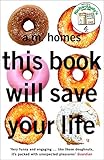
This is my review of This Book Will Save Your Life by A. M. Homes.

Despite the gimmicky marketing-ploy title, this makes a promising start. Fifty-something Richard has used his wealth gained in the finance industry to create a self-contained modern bubble in a Beverley Hills-style Los Angeles suburb, with original Rothko and de Kooning paintings adorning the walls, a personal trainer to design his health programme, a nutritionist to prescribe unappetising organic concoctions, and a patient housekeeper to wait on him hand and foot.

An excruciating pain which provides a reminder of his mortality and lands him in A&E provides the trigger for a renewed urge to connect with the teenage son and workaholic wife he left years ago, for reasons which never become entirely clear, since he clearly loves them both. This is accompanied by a desire to engage with people – everyone he happens to meet – starting with Anhil, seller of donuts which would give his nutritionist a horror-induced heart attack. It seems a little unlikely that someone who has been so reclusive would be able to make the change with such ease. Also, Richard's ability to buy his way out of any problem – even if his house is falling down he can afford to rent another super dwelling – reduces one's sympathy for him.

There are some moving moments and the dialogue is often sharply funny, as when a woman who has run Richard over while he is walking on foot to a store demands, "Why didn't you just drive like a normal person?" This is all part of the author's desire to show the materialism and folly of American society. Yet there is a puzzle here because when, for instance, Richard is able to buy a couple of brand new cars as presents, there is no hint that the author sees this as questionable "conspicuous consumption" even though she implies at the end that the American way of life is unsustainable and will bring environmental chaos.

Having made her point as regards Richard early on, I began to feel from the "horse in the hole" incident that she had lost her way, stringing together a chain of often unconnected and sometimes implausible events or pointlessly "tacky" sexual encounters. I wonder whether the author's real strength may lie in short stories.

Although "it all comes together" finally in a neat ending, like the donuts on the cover, the novel is overall somewhat directionless, with a hole at its heart.

⭐⭐⭐ 3 Stars

Surveying all the monarchs

This is my review of Flight Behaviour by Barbara Kingsolver.

"Flight behaviour" is wordplay to cover both the orange monarch butterflies deflected from their usual migration patterns by the effects of climate change, and a Tennessee farmer's wife, symbolically also flame-haired, seeking to escape from the trap of her marriage to a kind but dull husband still ruled by his domineering parents.

Although her small daughter Cordelia has been nicknamed "Cordie", Dellarobia does not shorten her own distinctive name. An ill-judged attempt at adultery is averted when she is amazed by the sight of a lake of fire which proves to be great clusters of butterflies clinging to tree trunks on the wooded slopes above her home. My interest was hooked when I realised that the incredible details of these insects and their life cycles are based on fact, the author being a trained biologist with a mission to inform us through fiction.

The arc of the overall story is strong, and Barbara Kingsolver explores some interesting themes, such as the varying attitudes to the butterflies when a team of scientists come to study them. The locals, for instance, tend to reject climate change because the popular media play it down, but the strongly religious community feels that the butterflies may have some special significance, even to the extent of questioning the right of Dellarobia's father-in-law's to earn much-needed cash from felling the trees in which the butterflies have chosen to winter.

"The Poisonwood Bible" is a hard act for the author to follow, but I found "Flight Behaviour" hard-going, partly because it often gets bogged down in detail and long-windedness, crying out for a good edit. Although she is capable of sharp, funny dialogue and powerful descriptions, too often the prose grated on me – clunky and folksy in a way I had not expected, although I wondered whether it was intentional to convey a sense of a traditional "hillbilly" community, resistant to change. So, my four stars are for an original and thought-provoking storyline rather than the quality of the writing which often disappointed me.

⭐⭐⭐⭐ 4 Stars

Overblown nostalgia

This is my review of Une Enfance Creole 1/Antan D’enfance (Collection Folio) by Patrick Chamoiseau.

The first part in a trilogy by the prize-winning author from Martinique, Patrick Chamoiseau, captures the spirit of life in the capital of Fort-de-France fifty years ago: the stultifying heat, fear of fire in the communal wooden houses contrasting with the need to deal with leaks in the rainy season, ravages of a cyclone, colour and chaos of the markets and uproar of occasional riots. He recreates the preoccupations of a sensitive small child in a constrained world, dissecting insects and playing with forbidden matches under the stairs, terrified in the dark by demons and the three-legged phantom horse, fascinated by tales of the shop-keeper who married a sorceror but made the mistake of burning his abandoned skin so that he could not return to her in his "normal" life.

Although these anecdotes may sound entertaining in retrospect, I found the book hard-going and tedious. This was owing to the many Creole terms which I had to keep stopping to look up, sometimes without success, and the pretentious language which grated when applied to childhood memories. I was irritated by the author's decision to call himself "le négrillon" all the way through, and I often felt that he was investing his pre-school self with adult observations, say on the sales techniques of the Syrian shopkeepers, and embellishing some points to the extent of making things up. There was little sense of any characters apart from the powerful and dominating mother figure who despite working every hour of the day was often short of cash, so she had to resort to sending her son out shopping in the hope that his appeal would soften the hearts of shop-keepers reluctant to add yet more expenditure to her credit tab. There is occasional pathos, say in the mother's frustrated childhood desire to be a singer, and we wonder what sorrows the father may have been trying to drown in rum at every opportunity.

⭐⭐⭐ 3 Stars

Impressive Sitrompol

This is my review of Borgen – Series 2 [DVD].

Although now established undeniably as a soap opera, Series 2 of Borgen is not afraid to tackle such issues as who should represent Denmark as an EU Commissioner, rejected as too dry by the compulsively odious Michael Laugesen, Editor of the tabloid rag "Ekspres". In a fast-moving tightly woven plot which manages to cover many issues, both political and domestic, we see Birgitte Nyborg both steelier, more calculating and ruthless as she gains experience in the exercise of power, but also personally more vulnerable in seeking excuses not to sign her divorce papers, unable to face up to the fact that her husband Philip wants a permanent split. The effect of this on their children is also handled sensitively.

A major parallel thread is the evolving relationship between the ambitious, idealistic journalist Katrine and the talented but emotionally scarred spin doctor Kaspar, who loses his emotional detachment when a right-wing move to reduce the age of criminal responsibility touches a raw nerve from his troubled past.

Although a few plot twists may seem implausible, this is absorbing drama, by turns tense, humorous and moving, with some interesting character development and consistently high standard of acting including at the level of minor characters, such as Birgitte's humourless PA who demonstrates that efficiency may count for less than empathy – serving Birgitte's long-suffering young son Magnus a bitter lemon – or the psychiatrist caught smoking in her private office to relieve tension.

Some of the political scenes are rushed through at a frenetic pace which proves hard to absorb via subtitles, and my opinion that "Borgen" is not a good advertisement for coalition government has not changed, but it has reinforced my respect for a small nation with an understandable pride in its essentially liberal-minded, progressive, democratic and egalitarian values.

⭐⭐⭐⭐⭐ 5 Stars

Just Observe

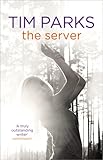
This is my review of The Server by Tim Parks.

Drawing on his own experience of transcendental meditation, Tim Parks transports us into the mind of Beth, impulsive, provocative, sensuous twenty-something former singer in a pop band who has spent the past nine months in the incongruous role of server cooking, cleaning and setting a good example for a group of meditators on a ten day Buddhist retreat.

It is a strict regime: segregation of the sexes, no talking or touching, hours of exerting the "strong determination" to sit motionless in painful poses, focusing on breathing with the daily brainwashing from recordings made by the guru Dasgupta, "who preaches against self-regard in a self-regarding way". There is a consistent tone of scepticism, a flippancy, which may upset strong advocates of meditation. Despite this, Parks conveys a clear and strong sense of the process of meditation.

Although she used to have no trouble losing herself in music, and wishes ardently to change herself through meditation, Beth's thoughts keep slipping back to speculating about the other inmates, whom she cannot resist winding up and leading astray on occasion, or brooding on her clearly troubled past life. Some recent trauma has driven her to the retreat, and Parks skilfully drips out the facts to hold our attention.

Sometimes I found this book too contrived, too much of a master class in creative writing by an expert published author, rather than a sincere examination of human dilemmas. The detailed descriptions of the routines at the retreat are sometimes tedious, although this may have been the author's intention. Since he builds up a strong sense of tension, moving towards an anticipated dramatic, perhaps shocking and unpredictable ending, I was a little disappointed by the final chapters which have a kind of banality, making the experience in the retreat seem lightweight.

However, it is an original, well-constructed story and in the midst of the wry, jokey humour, there are some convincing characters and many telling observations on life and relationships.

⭐⭐⭐⭐ 4 Stars

Vote on a knife-edge

This is my review of Lincoln [DVD].

Based on Dorothy Kearns excellent "A Team of Rivals", this film is wisely focused on a specific period to make it more manageable, namely the final few months of the traumatic American Civil War and Lincoln's controversial decision to pass a "Thirteenth Amendment" giving a blanket freedom to all slaves, rather than try to end the bloodshed by negotiating a peace with the South which stopped short of abolition.

Clearly designed to instruct us, the film proves heavy-going at times: some of the political debates and meetings are couched in complex language of the day delivered at speed and so hard to absorb, some complicated points could have been made a little clearer and some sets are perhaps realistic for the period but too dark to engage the viewer. Spielberg may be guilty of making a fascinating situation unduly dull.

I have heard reviewers criticise the lack of significant black anti-slavery campaigners who were active at the time, and this appears to be a serious omission. The opening scene of Lincoln fraternising with soldiers spouting his speeches struck me as contrived, and the decision to report rather than show Lincoln's assassination at the end also seemed a missed dramatic opportunity, and underplayed the irony of his untimely death before he had a chance to manage the peace.

On the plus side, there are strong performances from the lead actors with Daniel Day Lewis unquestionably outstanding, his high-pitched voice apparently a deliberate choice based on research. He conveys Lincoln's charisma: his "common touch", lack of affectation, penchant for telling stories (which drove some people mad), very broad-minded approach with a desire to hear different sides of the argument which laid him open to a charge of indecisiveness, but occasional flashes of steel. We see something of his oratory and obvious integrity, although he was capable of quite cynical wheeler-dealing, in this case employing shady characters to persuade Democrats (we have to keep reminding ourselves that this was the pro-slavery party) to vote for the Thirteenth Amendment in return for government posts.

Although the film is not as moving as it should be, there are some effective scenes such as Lincoln's son concluding that he must fight, Lincoln arguing with his wife over his son's right to fight in the war or Lincoln reviewing the horrors of battle first-hand. There is a little humour in some of the repartee, although I found the scenes with the three fixers trying to get Democrats to vote against slavery bordered on slapstick.

⭐⭐⭐⭐ 4 Stars

Life and Death under Occupation

This is my review of La bicyclette bleue, Tome 3 : Le Diable en rit encore : 1944-1945 by Régine Deforges.

This third part of "La Bicyclette bleue" saga covering 1944-45 is darker than the earlier novels in its focus on the hardship and uncertainty of war. Lea Delmas is forced to grow up quickly, putting her fun-loving self-indulgence on hold as she becomes so involved in the Resistance that she can no longer live openly at her family estate without fear of being denounced.

This novel seems to be a homage to the Resistance, and the author succeeds in portraying the particular horror and sadness of a country invaded with little prospect of regaining freedom, and the sometimes fatalistic courage of those who continued to risk their lives for this cause. We continue to see Lea's family and employees at Montillac divided in their loyalties. Regine Déforges does not shrink from ramming home the tedium of a lengthy occupation or from killing off a number of key characters close to Lea.

There are some scenes of real tension, including the disruption of the joyful celebration of De Gaulle's march into Paris, as snipers on the roof of Notre Dame send people running for cover. I learned some interesting history from the novel such as how some French collaborators, perhaps fearing their fate if they tried to remain at home, volunteered to fight on in Germany with the SS even after the liberation of Paris, in a desperate last ditch attempt to defeat the Russian communists in a war that was clearly lost.

Although the plot flags a little at times, Déforges manages to keep pulling a new twist out of the bag to hold one's interest, even if it is only another unannounced appearance of hunky lover Francois Tavernier, macho to the point of creating unease (but it's all right because Lea likes it), who somehow manages to accomplish unspecified missions of great importance without risking his life much, and has no qualms about obtaining the best luxuries the black market can supply. There are as ever too many unlikely coincidences: A meets B on the point of perishing in battle, then dies in turn just after meeting C who is able to pass on news about A to D.

Although I might be more critical of this drama if written in English, it is an excellent means of developing one's French, and is quite moving and informative in places.

⭐⭐⭐⭐ 4 Stars