This site will share with you hundreds of book and film reviews written since 2009. Also a chance to discuss these reviews together with some of my creative writing to be added.
The "Fugue" String Quartet have played together for a quarter of a century, so it is a shock when the founder member, cellist Peter, announces that he has early-stage Parkinson's disease so will need to retire. Reacting with a mixture of denial and doubts as to whether they can continue without him, or wish to do so, the bombshell releases negative forces in the rest of the group – long-suppressed rivalry, jealousies and resentment surface abruptly.
With beautiful filming of Central Park in the snow and the interior of spacious old brownstone apartments, the main characters all put in convincing and moving performances, not least in their ability to appear to play string instruments, although I have no idea how a skilled musician would view this. The scenes are based on the rehearsal of Beethoven's last String Quartet, Opus 131, a fitting background to the theme of the film. It seems to convey very convincingly the joys and sacrifices of life in a close-knit quartet in which one must sink one's individuality to achieve the benefits of collaboration and the chance to perform far more, at a more satisfying level, than might be the case as a soloist – a point I had not considered.
Although it may appeal mainly to older viewers who are close to experiencing the effects of ageing and intimations of mortality themselves, there is also a good deal of humour with some tense moments, as normally highly disciplined musicians act out of character and indulge themselves with potentially disastrous consequences.
Luke, a young man whose only assets are good looks and skilful motorcycle stunt riding, finds that he has made a girlfriend pregnant. He is filled with an unexpected urge to care for his son, even if it means breaking the law to obtain enough money to persuade Romina to leave her current man.
Although you may think you are in for a cops and robbers tale which is bound to end in tragedy, the plot switches abruptly to a new theme about police corruption, centred on a fresh main character, Avery, the ambitious young officer who wants to combine police work with his legal qualifications to achieve high political office. Luke and Avery are opposites, one poor and disadvantaged, the other wealthy with influential connections. Yet both have a son of the same age, and ironically, in his pursuit of personal success, Avery may be the less caring, with what could be disastrous consequences. These are developed in the third part of the film, which moves on to include the next generation.
With a rambling and at times under-edited structure, the whole piece feels like watching three separate films played sequentially. Although I agree with those who have found it overlong, there are some moments of high tension. Some of the scenes seem very realistic and natural as well as moving, although the final section involving the teenage sons is less convincing. Overall, it is about the effects of class and fate, and a modern interpretation of the timeworn theme of how "the sins of the father are visited upon the son".
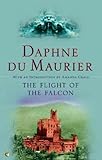
Armino Fabbio, a competent but jaded tour guide, feels responsible for the death of someone perhaps recognised from his childhood. This takes him back to Ruffano, the quaint Italian hill town of his birth, which revives memories not only of the destructive effects of World War 2 on his family but also of his domination by Aldo, the charismatic elder brother shot down as a pilot.
Despite a promising beginning and my huge admiration for gripping psychological dramas like "Rebecca" or "My Cousin Rachel", I was sufficiently unengaged by this novel to notice with disappointment the flaws: two-dimensional characters, stilted dialogues, unlikely coincidences, some rather tedious surfeit of detail. Yet many passages are brilliant, apparently effortless in their clarity and striking impact. I was also tantalised by my inability to grasp the geography of the place, and would have liked a streetmap.
Published in 1965, twenty-seven years after Rebecca, this novel may be a bit dated, the work of a popular novelist still spinning yarns in the style of earlier decades, without any further development as a writer. In spite of my reluctant reservations, although I guessed the key twists in advance, and some of the plot is a bit ludicrous, I was gripped eventually – I think by the idea of Fabbio being able to pass himself off as a stranger in familiar territory, even with people he once knew. This intriguing aspect of "false identity" is often employed by Du Maurier.
I found Fabbio an emotionally cold character, which could be attributed to his dysfunctional childhood, but was interested to read that Du Maurier herself often seemed rather chilly and remote.
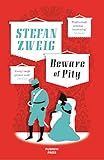
Set in the Austro-Hungarian Empire just before the outbreak of the First World War, a story which you might expect to find dated proves very gripping. It is written from the viewpoint of Anton Hofmiller, as he looks back ruefully to the time when, as a young cavalry officer, emotionally undeveloped after spending his adolescence in army training, he was first flattered to be wined, dined and treated with unwonted respect in the house of a wealthy local aristocrat, then moved by the plight of the teenage daughter of the house, paralysed by an unspecified illness.
Although you may guess the general direction of the tale it is remarkable for the depth with which Zweig explores the narrator’s complex emotions, and for the vivid evocation of a world about to end – the privileged, snobbish, ritualistic ostrich-like world of the ossified Austro-Hungarian army. He describes with great realism the joys of riding in close formation with one’s men, or galloping freely across the countryside, the huge social pressure to conform in this community rife with gossip and banter bordering on bullying. The book reminds me strongly of Roth’s “The Radestky March”.
If the style sometimes seems anti-semitic, this must be a reflection of the times, since Zweig was himself a Jew. I admit to finding the emotional intensity overwhelming at times, although Zweig has a gift for taking you to the limit of endurance and then introducing a fresh development which releases the tension and shifts you to a contrasting mood – which may in turn become too much. In view of Zweig’s suicide during World War 2, a few years after this book was written, one wonders how much it reflects the overwrought emotional rollercoaster of his own thoughts.
I understand why some reviewers feel the plot is too slight for a full length novel, but on balance Zweig “carries it off” as a psychological study and period piece. I could have done without the “frame” device used, apparently quite popular in the early C20, i.e. to commence with another narrator describing how he meets Hofmiller who implausibly recounts the story in great detail.
Recommended for reading on Kindle.
⭐⭐⭐⭐ 4 Stars
Beware of Pity (Stefan Zweig’s classic novel) (B-Format Paperback)
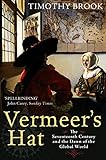
The idea of using paintings mainly by Vermeer as a cue to explore aspects of the development of trade in the seventeenth century and "the dawn of the global world" is an interesting approach. Although I was expecting the focus to be on the Dutch East India company, there is a good deal about French and Portuguese colonisation.
One problem for me was that the links often seem too tenuous. Vermeer's hat serves as "the door inside the painting which we will open", the point being that it is probably made of beaver which became available when the Frenchman Champlain began to trade with the Huron Indians in the course of his search in what is now Canada for a route through to the Pacific and the wealth of China. Too much of the commentary on the paintings is speculation: "..we don't know whether he owned that particular hat".. his wife was hard up after his death "and might well have sold it" and so on.
There's a kind of banality in much of the analysis: "the stories I have told in these pages have revolved around the effects of trade on the world, and on ordinary people. But between the world and ordinary people is the state which was powerfully affected by the history of trade and had powerful effects in turn". Isn't the reader likely to know this already? Is this an example of an academic underestimating the general reader?
Perhaps an avoidable downside of its thematic approach, the book rambled too much for me and I was left frustrated by the dullness of what could have been gripping.
This explores the tension between two brothers: Isaïe who lives the quiet life of a shepherd in a remote Alpine village after suffering brain damage following a tragic accident which cost him his career as a respected guide, and Marcellin, the much younger ne'er-do-well brother on whom he dotes. A life-changing drama is triggered by a plane crash on the icebound mountain above the village. I assume Troyat had some knowledge of mountaineering, since the book describes a nail-biting ascent. The story is well-constructed with strong dialogue revealing the psychology of the two men and vivid, original prose. The most striking aspect of this powerful novella is the description of the ice and snow at high altitude in changing weathers and times of day, and the hallucinatory effects these can wreak on a lone traveller.
Fearing Russian designs on India in "The Great Game", the British tried to gain influence in the potential Achilles' heel of Afghanistan. Ignoring expert advice, they chose the wrong side in reinstating the honourable but hidebound Shah Shuja whom they imagined would be more malleable than the shrewd reigning monarch Dost Mohammed.
If this regime change reminds you of more recent events, there are also parallels in the lack of strategic planning and a "longer view", and neglect of the topography, climate and culture of the area. In breathtaking arrogance admittedly combined with crazy courage, the first 1839 British invasion of Afghanistan set off in winter, ignoring the several feet of snow in the mountains, omitting to clear rough terrain for gun carriages or to protect themselves against ambush and constant sniping once they entered the narrow mountain passes. The problem was compounded by the thousands of camp followers, women and children with presumably no means of support if they stayed behind.
If the detail is often overwhelming, the quirky truth which is stranger than fiction grips one's attention: three hundred camels needed to carry the military wine cellar whilst elsewhere troops could not advance owing to lack of camels to transport vital supplies. One regiment even brought its own foxhounds, which somehow survived to hunt jackals later!
It is all the more poignant that, having reached Kabul after suffering terrible privations yet still gaining the upper hand, the army squandered its advantage under dithering leadership so that in the ill-advised, typically chaotic eventual retreat only one man made it back to Jalalabad, not counting the thousands left behind as captives.
In what resembles an epic novel, Dalrymple describes how the British sent an Army of Retribution to salvage a little honour by taking brutal reprisals which would now be regarded as the most vicious war crimes, but in the end the government wrote off the vast sums spent on the unsuccessful regime change.
Apart from the numerous astonishing anecdotes and vivid character studies, one of the most interesting aspects of the book is the extensive quoting from the colourful prose of the historians of the day: "Abdullah Khan Achakzsi…..launched an attack like a fierce lion or the serpent that inhabits the scented grass".
Although Dalrymple supplies a list of all the main characters with accompanying explanations, I found this too indigestible as an opener, and recommend keeping your own notes of "who's who".
My only criticism is the inadequate maps. Also, apart from the reduced weight, this is less suitable for a Kindle in that maps and family trees are illegible on the small screen, plus it's too fiddly checking out details from previous pages as is often necessary in this type of book. It's also harder to appreciate on the Kindle that the main text is shorter than it seems, the last 30 per cent of the book being notes.
This is a fascinating account, although it focuses narrowly on 1839-42. For a wider sweep, try "Butcher and Bolt" by David Loyn.
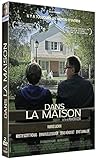
A jaded teacher of literature is stirred out of boredom by the one piece of written homework that stands out from the rest. He and his wife are intrigued by the boy’s account of making friends with a fellow student in order to get inside his comfortable middle-class world, to see what it is like “in the house”, “dans la maison”. Each episode ends with the tantalising “à suivre”, “to be continued….”
Although, like her husband, hooked on the stories, the wife is uneasy about the ethics of all this. Is the boy’s objectivity somewhat chilling, his behaviour sinister, or are the accounts even true? An unsuccessful writer himself, the teacher suppresses any doubts in what becomes an obsession to develop the boy’s talents as a writer. Does the teacher have other subconscious motives? In the relationship between the teacher and the student, who is being manipulated? A parallel thread is the wife’s entertaining attempts to make a success of the avant garde art gallery which she manages.
Well-acted with some original visual techniques and a witty dialogue, this combines comedy, suspense, pathos with a dash of surrealism to create one of the best films I have seen for a while, all the more so for being unexpected.
Although I read this in French, which I would recommend for the natural, unpretentious style and vivid idioms, these comments may be useful for the English version.
An early feminist with the confidence of a senator's daughter, left-wing with a career in a Paris museum, two grown up sons, divorced from her artist husband, when the Vichy government decided to collaborate with Hitler, Agnes Humbert felt obliged to take action. Her "Journal de Résistance", for practical reasons probably written mainly after many of the events covered, is less about her work typing and distributing propaganda, and much more an account of life as a political prisoner, sent to Germany as a slave worker.
She makes us aware of the ingenuity of prisoners, their overwhelming desire to communicate, and the poignant rapid adaption to a state in which one can barely remember any other way of life. She describes in detail lying on the floor to enable one's voice to pass under the cell door, making a ball out of fruit wrappers, only for a sadistic guard to hear the sound of her playing with it and transfer her to a dirtier cell with no window as a punishment.
The grimmest section is the record of life operating the machinery in a rayon factory, which meant exposure to acid, blistering the skin, damaging eyesight and affecting breathing. This may well have contributed to Humbert's death later in her sixties. Despite her efforts to produce shoddy goods (reels of silk with hidden knots) I could not help noting the irony that her factory work probably contributed more to the Nazi cause than the activities which landed her in prison damaged it.
The final part shows her resilience, regaining a joie de vivre very quickly once freed. Her spirit uncrushed, she challenged the local German women to set up a soup kitchen and hospital for everyone in need, regardless of origin, and was pro-active in denouncing local Nazi activists. Her scathing view of the Poles is a little hard to understand, although one can sympathise with her irritation over the Americans' lack of vigour to see justice done, and their preference for "taking the easy path", not having suffered in war as she had done. At the end, she showed a degree of tolerance, able to see that some Germans were good people despite lacking the courage to resist Hitler.
A beautiful young woman remains clinically depressed even after her husband is released from jail for insider training. A failed suicide attempt brings her to the attention of a caring but ambitious psychiatrist (Jude Law) and it seems we are set for an exposé of the US drug industry, by turns reducing everyone to casual pill popping, often ruining the lives of vulnerable patients whose sickness is relieved only at the price of grim side effects, and corrupting medical professionals in the process. In short, this starts off very much in the same vein as the director Soderbergh's crusading Erin Brockovich with its attack on corporate environmental polluters.
Halfway through, the film takes a sharp turn to become a complicated and fast-moving thriller of the type which causes you to risk missing a point if you spend too much time trying to work out the previous clue. It was entertaining at the time but left me feeling dissatisfied with too many somewhat implausible plot twists.
This is well-acted, skilfully filmed, is hard to review without giving away too much of the plot but would have been much more powerful if it had kept to the moral dilemmas of modern psychiatric medicine.